Nikko Travel Guide: Shrines, Nature and Overnight Choices
Choose your next morning first: forest shrines, lakeside views or a mountain walk.
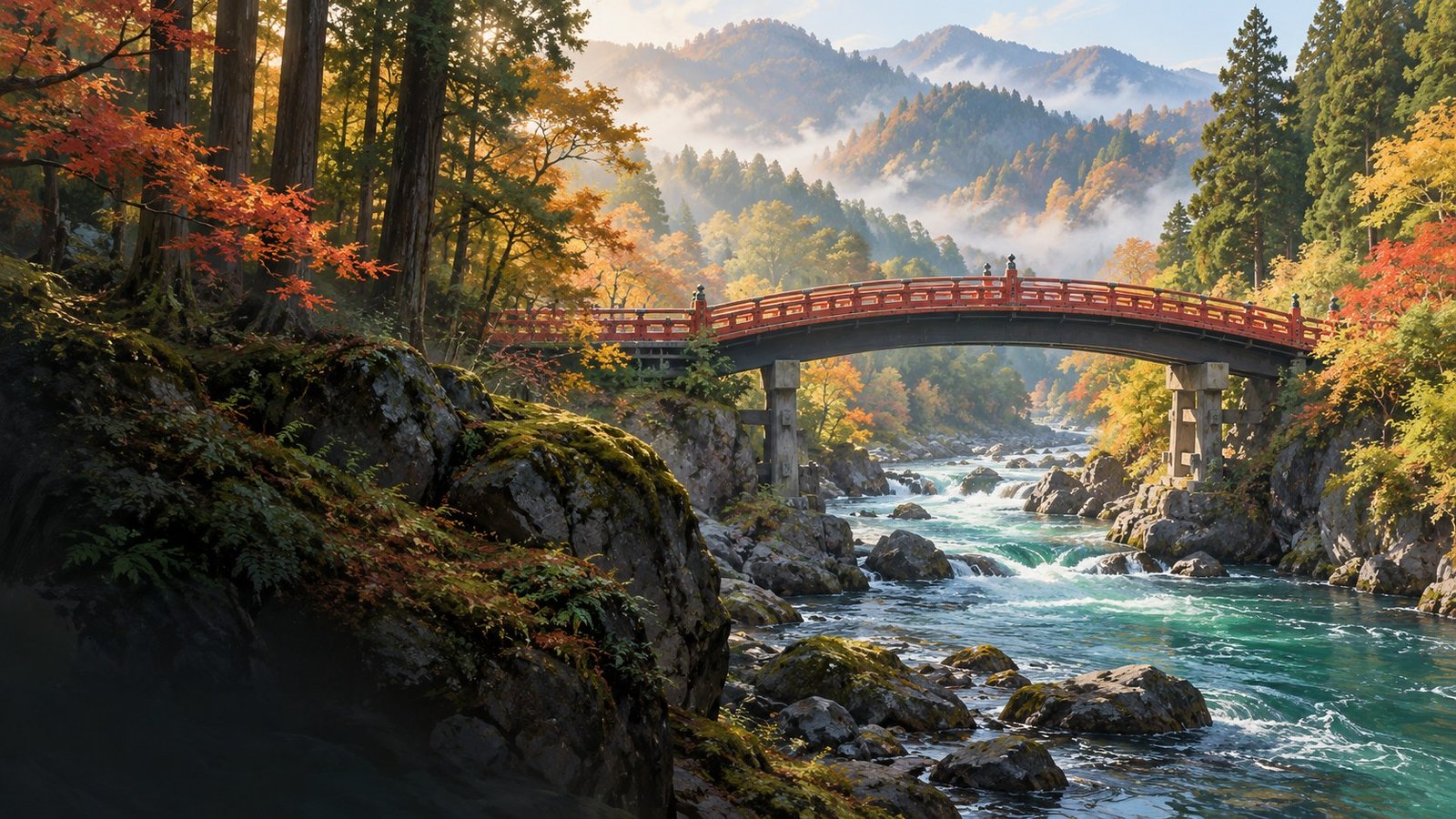
AI-created editorial illustration of Nikko’s Shinkyo bridge and forested river setting; an illustrative scene, not a photograph.
A useful Nikko travel guide starts with geography. The World Heritage shrines and temples form a connected historic area, but a hotel described as being in Nikko might instead place you by Lake Chuzenji, in an upper mountain hot-spring village or beside the Kinugawa River. Those are different holiday bases, with different journeys attached. [1][2]
For a first visit, give the shrines a proper day and decide whether you also want lake scenery, a substantial walk or time in an onsen. One overnight stay can join culture and scenery; two nights give nature more space. The best booking is usually the one that puts you near tomorrow morning’s main activity.
This article contains affiliate links. If you make a booking or purchase through them, Taylor’s Trailblazing Travels may receive a commission at no extra cost to you.
Central Nikko
Stay near the stations for arrivals, or near the heritage area for an early shrine visit.
Chuzenji Onsen
Sleep above Irohazaka when your priority is a morning by the lake.
Two nights
Separate shrine time, lake scenery and a proper upper mountain walk.
Akechidaira
The ropeway is closed for renewal; the operator plans reopening in September 2027. [13]
Nikko travel guide: choose your base first
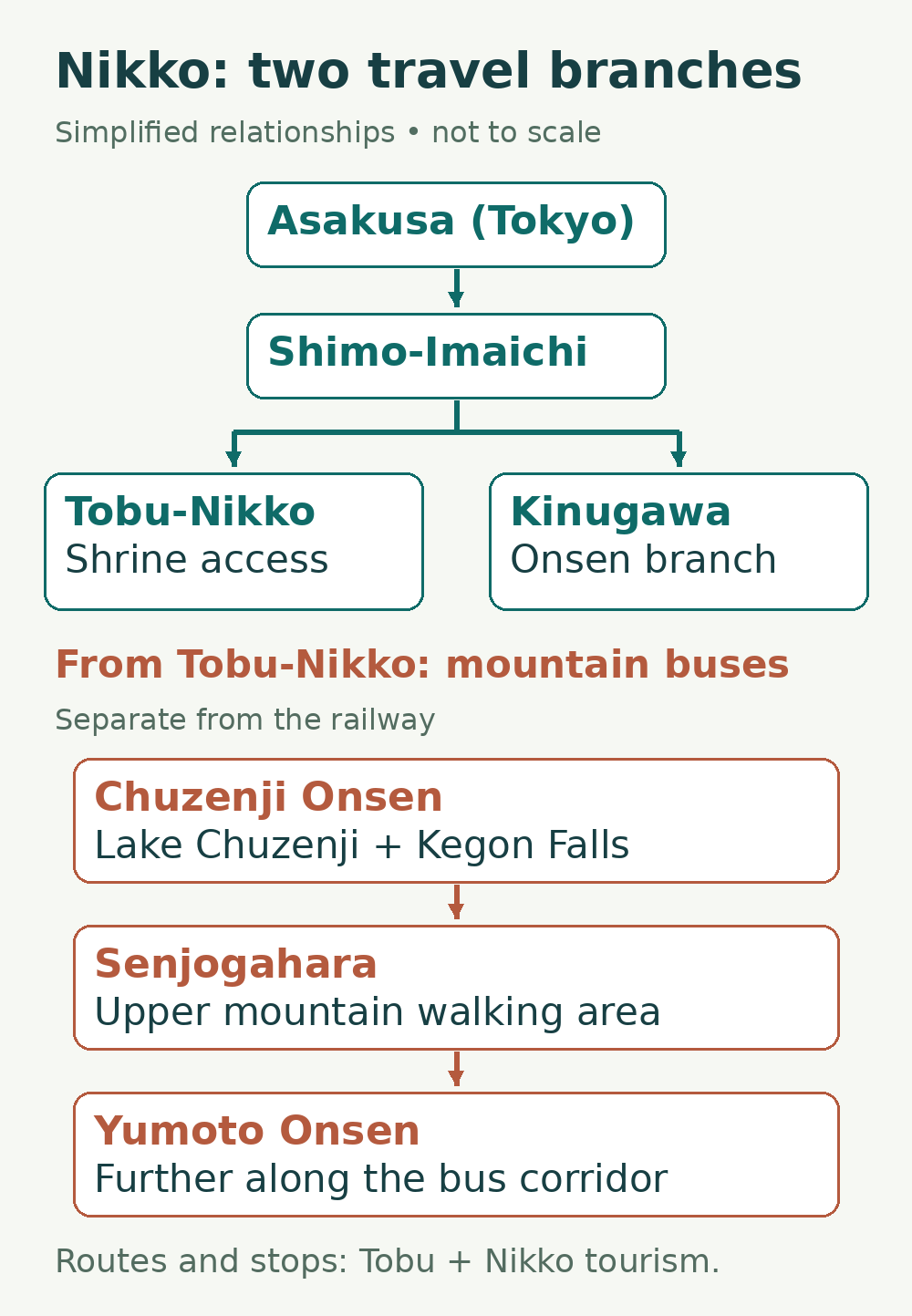
Central Nikko has the railway arrival points and the historic shrine district. Oku-Nikko is the higher area containing Lake Chuzenji, Kegon Falls and the Senjogahara wetlands; Yumoto Onsen sits farther along the mountain bus corridor. Kinugawa occupies a separate railway branch. Treat the region as several connected areas, rather than one compact town. [2][3][4][5]
| Base | Choose it for | The trade-off |
|---|---|---|
| Central Nikko | Toshogu, Rinnoji, Futarasan and straightforward railway access | A lake or wetland day starts with an uphill bus journey |
| Chuzenji Onsen | Kegon Falls, lakeside time and a mountain setting | You must descend to reach the main shrines and railway stations |
| Yumoto Onsen | A quieter onsen stay with upper mountain walks as the focus | The longest journey from the central stations; less convenient for a brief shrine visit |
| Kinugawa Onsen | A resort hotel, hot-spring downtime or nearby theme parks | It is an additional branch of the trip, not a shortcut to Lake Chuzenji |
Within central Nikko, make a second choice. Station-side accommodation is practical with luggage and an early train. A property near the heritage area makes more sense when the shrines are the reason for staying. Check the actual walking route and bus stop: a town name or distance measured in a straight line is not enough.
Book for tomorrow morning. If you want the lake before the main arrival crowds, stay at Chuzenji the previous night. If you want unhurried shrine time, stay in central Nikko. Moving hotel once can be worthwhile on a longer visit; on a single overnight trip, choose the priority and keep the other day simpler.
How many nights, and what fits together?
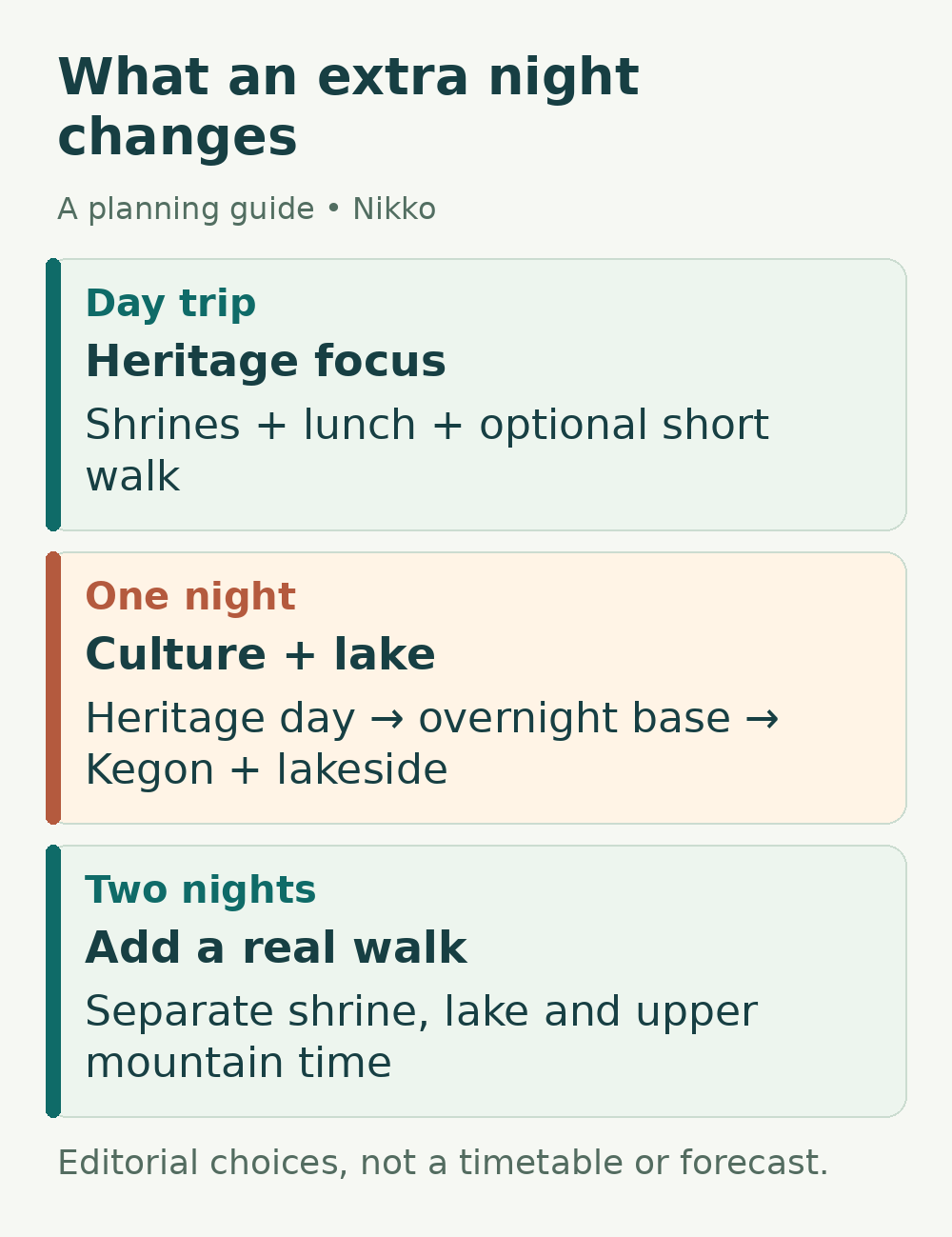
These groupings assume arrival from Tokyo, ordinary sightseeing fitness, public transport and no major disruption. The time blocks are planning allowances, not published tour durations. Build the exact sequence around your travel date’s buses, admission hours and accommodation check-in.
Day trip: make it a heritage day
Arrive early, visit Toshogu and your preferred Rinnoji buildings, pause for lunch, then add Futarasan or a short riverside walk if time allows. Allow roughly four to six hours in the central sightseeing area, including meals and movement. A long Tokyo return journey already occupies a large part of the day; the lake deserves its own time.
One night: shrines plus a lake morning
Use the first day for the main shrines, then move to Chuzenji with enough margin for the inn’s dinner time. On the second morning, pair Kegon Falls with a short lakeside walk and lunch before descending. If you prefer one base near the stations, stay centrally and make the lake a separate excursion, accepting the extra morning journey.
In peak autumn traffic, transfer uphill earlier and reduce the first day’s shrine list. Trying to finish every temple and then squeeze a mountain transfer before dinner is the fragile part of this plan. The tourism authority specifically recommends an overnight stay near the lake to avoid repeating the morning approach through Irohazaka. [17]
Two nights: add nature without racing
Allow one day for heritage, one for Kegon and the lake, and one substantial block for Senjogahara or the Yumoto area. Two nights at a mountain base suit a nature-led trip with the shrines visited on arrival or departure. One central night followed by one mountain night suits travellers who value an early start in both areas.
Choose a Kinugawa night because the hotel or resort activities appeal. Adding it to a two-night shrines–lake–wetlands plan creates another transfer and takes time away from the main reason for visiting.
The shrine district: choose depth over a long checklist
The UNESCO property brings together Toshogu, Futarasan-jinja and Rinnoji. It does not mean that every attraction across Nikko National Park belongs to the World Heritage site, or that one ticket admits you everywhere. [1][7]
Toshogu: the main architectural visit
Toshogu enshrines Tokugawa Ieyasu and is known for its elaborate carvings, including the three monkeys, the sleeping cat and the richly decorated Yomeimon Gate. Give yourself time to look closely, rather than treating it as a single building to photograph. [6]
For a first visit, allow around two hours as an editorial starting point, longer for queues, a slower pace or the museum. The shrine-only adult ticket is ¥1,600; the museum is a separate choice. Prices were checked on 17 October 2026. [6]
If you prefer booking before you arrive, check the Toshogu entry ticket on GetYourGuide. This product requires exchange at Tobu-Nikko Station Tourist Center before going to the shrine. It also requires a live smartphone web screen: a screenshot or printout does not replace it. Check collection hours and the final price. It is less convenient if you are already staying beside the shrines. [20]
Rinnoji and Futarasan: different reasons to stop
Rinnoji’s Sanbutsudo and Taiyuin have separate tickets and a combined option. Taiyuin’s grounds merit time of their own; the temple suggests 30–60 minutes for that visit. Its ¥900 adult combination ticket covers Sanbutsudo and Taiyuin, but sales finish earlier than ordinary closing time: 14:30 from April to October and 13:30 from November to March. Check event restrictions before relying on late entry. [7]
Futarasan adds the area’s mountain-worship tradition to the shogunal story. Its sacred garden is a separate ¥300 adult admission. Visit because the setting and religious context interest you, rather than assuming every ticket is compulsory. [8]
For help interpreting the buildings and selecting a manageable route, compare this customisable Nikko tour with a licensed guide on Viator. The basic tour meets in Nikko and is on foot; private transport is not included. Agree the sites, admissions and any taxi or bus costs before committing. [21]
A quieter finish beside the river
Kanmangafuchi Abyss offers a riverside path lined with Jizo statues. It is a separate walk from the main religious complex, so add it when you still have daylight and walking energy. Save mountain scenery for another day rather than turning a pleasant central visit into a succession of hurried bus connections. [9]
Lake Chuzenji, waterfalls and the upper mountains
The easiest pairing: Kegon Falls and the lake
Lake Chuzenji sits 1,269 metres above sea level. Its full perimeter hiking course is about 25 kilometres, so a short lakeside stroll and a circuit of the lake are very different plans. For a first visit, choose a limited section near your arrival point and leave time simply to enjoy the water and mountain setting. [3]
Pair it with Kegon Falls. The elevator to the lower viewing area costs ¥600 return for an adult and does not require a reservation; the operator lists 08:00–17:00 from March to November and 09:00–16:30 from December to February. Check conditions on the day before paying for a viewpoint in poor visibility. These details were checked on 17 October 2026. [10]
Akechidaira Ropeway is closed for renewal. The operator plans to reopen in September 2027. Do not include the ropeway in a 2026 route or pay for a tour on the assumption that the ride will operate; confirm any replacement itinerary. [13]
For a proper walk: Senjogahara
Senjogahara’s marshland trails offer a different landscape from the cedar-covered shrine district. Tourism information describes accessible-to-beginners nature walking here, but winter involves snow conditions and snowshoeing. Select a route from the current visitor-centre information rather than treating an all-season attraction listing as confirmation of ordinary walking conditions. [11][12]
Reserve a half-day block for the chosen walk, bus connections, food and pauses. That is an allowance to build around, not a claim that every trail takes the same time. A shorter walk is a better choice if you must descend and catch a reserved train later that day.
Yumoto Onsen is the more purposeful base when upper mountain walking and hot springs are central to the trip. The visitor centre gives a typical bus journey of about 85 minutes from the Nikko stations; staying there buys you a mountain morning, while making station access a larger commitment. [5]
Before walking, check the latest trail and bear information, remain on designated boardwalks and avoid feeding wildlife. The visitor centre advises turning back in thunder or heavy rain and warns against walking on frozen lakes. Carry the route and return-bus details offline. [12]
Getting to Nikko and choosing the right pass
From Tokyo, Tobu limited expresses from Asakusa and the direct JR–Tobu services from Shinjuku take about two hours. Local-train journeys from Asakusa generally take longer. A separate approach uses a shinkansen to Utsunomiya and the JR Nikko Line onwards; that can suit an existing Japan Rail Pass, but compare the whole day’s route before buying any pass specifically for Nikko. [2]
Your Tokyo hotel-to-station journey and the transfer from Nikko’s station to your first sight come on top. Reserve the limited express service you actually intend to use and distinguish a base fare or travel pass from the additional limited express ticket.
| Option | Published price / validity | When to compare it |
|---|---|---|
| NIKKO PASS world heritage area | ¥3,000 / 2 days | A central shrine visit, including the covered railway branch towards Kinugawa |
| NIKKO PASS all area | ¥8,000 / 4 days | Travel beyond the shrine district to Chuzenji and the upper mountain bus area |
These passes are for foreign travellers; Japanese nationals accompanying them can also purchase one. [14][15]
Both include one round trip between Asakusa and Shimo-Imaichi and specified local transport. Limited express supplements and shrine or temple admission are extra. The All Area Pass also has seasonal inclusions, including the Lake Chuzenji sightseeing cruise; do not count an activity as a saving unless you will use it and it operates on your dates. [14][15]
The adult price difference is ¥5,000. That does not automatically make the larger pass good or bad value: compare your planned extra buses, any boat ride and the separate bus-pass options. A four-day validity window does not require a four-day stay.
Compare Tokyo–Nikko listings on 12Go alongside Tobu’s own tickets. Check whether the product is a point-to-point journey, a pass or a private transfer, which station it uses, and whether a reserved limited express seat is included. Use the operator’s timetable to plan the journey; listing availability and displayed prices vary by date. [23]
Mountain buses: check the destination, then the return
Tobu’s C route ends at Chuzenji Onsen; Y and YK services continue towards Yumoto. Check Tobu Bus’s Nikko route and timetable page, which links the current seasonal English timetable. Some routes and stopping patterns vary by date. [16]
Identify the return you want and an earlier backup before starting a walk. In heavy autumn traffic, a tight bus-to-train connection is a poor plan even when the normal timetable appears to allow it.
If a single Tokyo day is all you can spare and organised transport matters more than lingering, compare this Tokyo departure shrine-and-waterfall tour on GetYourGuide. Its published itinerary includes brief lake time and a full coach day. Confirm the meeting point, ticket inclusions and luggage rules; the operator may alter the schedule for traffic or weather. [22]
When to visit: match the season to the area
Autumn colour moves through the region with elevation. The official tourism guide describes colour beginning in Oku-Nikko from late September, with the shrine district and Kinugawa typically later, around early November. Those are seasonal patterns, not a forecast for a particular travel date. [17]
The practical issue is congestion. Nikko’s tourism authority warns that the normally roughly 45-minute journey towards Lake Chuzenji has sometimes taken around four hours during the busiest autumn periods. An early start helps, but staying near the area you want to explore is the stronger defence against losing the morning on the road. [17]
Summer suits a nature-focused visit, with the higher lake and mountain areas offering a different setting from Tokyo. Spring needs more care when a plan reaches upper trails: check actual snow and path conditions rather than assuming that city sightseeing weather describes the mountains. Winter can suit a deliberate hot-spring stay, but a snow-season route needs its own equipment and transport checks. [3][11][12][18]
On a two-night visit, keep the order of your lake and walking activities flexible. Choose the clearer, calmer day for the view or longer walk. Do not build the entire stay around one weather-dependent sight.
Book the stay, then build a transparent budget
Once the area is settled, compare the same dates and room conditions on Agoda’s Nikko accommodation page and Booking.com’s Nikko accommodation page. These are broad destination searches, so use the map and check the actual address against your chosen base. A low price across the region can create an expensive or inconvenient transfer. [24][25]
Questions that matter more than the hotel photograph
- Is dinner included, and by what time must you arrive for it?
- Is the price per room or per person, and are meals, taxes and children included?
- What is the nearest bus stop or station, and does any hotel shuttle require booking?
- Does the bath arrangement mean a shared onsen, a reservable private bath or a bath in your room?
- Do the room, bath and approach meet your mobility, sleeping and tattoo-policy requirements?
For a mountain inn, choose a meal-inclusive plan if its dining arrangement suits you. Check dietary needs directly before booking. In town, yuba, soba and seasonal local food provide good reasons to leave a proper lunch break in the route; yuba is a local speciality. [18]
| Visit | Adult price |
|---|---|
| Toshogu shrine-only entry | ¥1,600 |
| Rinnoji Sanbutsudo + Taiyuin combination | ¥900 |
| Kegon Falls elevator return | ¥600 |
| Selected admission total | ¥3,100 |
Add your train or pass, supplements, local journeys, accommodation and food. The subtotal excludes the sacred garden, bridge crossing, museum, boat trips and other optional visits.
Example planning calculation, not a price quote: if two adults share a ¥16,000 room for one night, allow ¥6,000 each for food across two days, buy the ¥8,000 All Area Pass and choose the ¥3,100 admissions above, the result is ¥25,100 per person before limited express supplements and other extras. The room and food figures are adjustable assumptions. Replace them with your actual quotes; a meal-inclusive ryokan changes both lines, and another transport combination may cost less.
For comparison, raising that assumed room price to ¥30,000 adds ¥7,000 per person when shared by two. This is why checking the right area, meal plan and cancellation terms is more useful than chasing a universal daily budget.
Small arrangements that protect the trip
Keep enough yen for the admissions you intend to buy: the tourism authority currently identifies cash-only ticket counters at Toshogu and Futarasan. Carry the accommodation’s Japanese address, dinner deadline and arrival instructions where you can reach them without a connection. [6][8]
Mobile data helps with bus changes, translation and the live screen required by some tickets. If your existing plan does not cover Japan affordably, explore Airalo and select a Japan eSIM. Check that your phone is eSIM-compatible and network-unlocked, then choose the data allowance and activation terms that suit your trip. Keep maps and essential booking details offline as well; buying data is not a guarantee of reception on every mountain path. [19][20]
Reduce the route if you arrive late. The easiest cuts are an optional museum, a longer riverside walk or an extra lake stop. Avoid solving a delay by shortening the return-connection margin or missing a booked dinner.
Final choices before you book
Can you enjoy Nikko with limited walking?
Yes, with an individually planned route. Start with the buildings, viewpoints and bath facilities you most want to use, then ask each venue and transport provider about steps, gradients, seating and access. The sightseeing groupings in this guide are not certified step-free routes. A private vehicle can reduce transfers, but does not establish accessibility inside a historic site.
Does a private guided tour include a car?
Check the exact product. The custom Nikko tour linked above is a walking tour in its basic form; transport and admissions need separate consideration. A tour that starts in Nikko also does not remove the need to arrange your journey there from Tokyo. [21]
Which choice gives a first visit the best balance?
For shrines alone, make a focused day trip or stay one night centrally. For shrines and scenery, choose one overnight stay and pair the heritage day with Kegon Falls and a manageable lakeside visit. Add a second night when a real walk, unhurried onsen time or weather flexibility matters. Keep Kinugawa as a conscious resort choice, and book the area that gives your favourite part of Nikko the best hours of the day.
Sources and planning notes
This is a research-led guide. Official tourism bodies, transport operators and attraction information inform the factual advice; base choices, pacing and explicitly labelled budget examples are editorial planning judgements. Sources checked on 17 October 2026. Recheck current prices, conditions and operating notices for your travel dates.
- Nikko City Tourism Association — Shrines and Temples of Nikko
- Nikko City Tourism Association — Getting Here & Around
- Nikko City Tourism Association — Lake Chuzenji Hiking
- Nikko City Tourism Association — Kinugawa-Kawaji Onsen
- Ministry of the Environment — Nikko Yumoto Visitor Center guide
- Nikko City Tourism Association — Nikko Toshogu Shrine
- Nikkozan Rinnoji — Admission information
- Nikko City Tourism Association — Futarasan-jinja Shrine
- Nikko City Tourism Association — Kanmangafuchi Abyss
- Kegon Falls Elevator — Opening hours and prices
- Nikko City Tourism Association — Senjogahara Hiking
- Nikko Yumoto Visitor Center — Hiking precautions
- Nikko Kotsu — Akechidaira Ropeway operating information
- Tobu Railway — NIKKO PASS all area
- Tobu Railway — NIKKO PASS world heritage area
- Tobu Bus — Nikko routes, notices and seasonal timetables
- Nikko City Tourism Association — Autumn foliage and congestion
- Nikko City Tourism Association — First-time visitors
- Airalo — Staying connected in Japan
- GetYourGuide — Toshogu entry ticket with station exchange
- Viator — Customisable Nikko tour with a licensed guide
- GetYourGuide — Tokyo departure Toshogu and Kegon Falls tour
- 12Go — Tokyo to Nikko listings
- Agoda — Nikko accommodation
- Booking.com — Nikko accommodation
Illustrations in this article were created for Taylor’s Trailblazing Travels. Third-party photographs, where used, are credited beside the image or in the source list.