Where to Stay in Hiroshima: Station, Downtown or Peace Park
Choose a base around the time you will spend in the city—not simply the station where you first arrive.
- Three base choices
- Five hotel examples
- Two traveller profiles
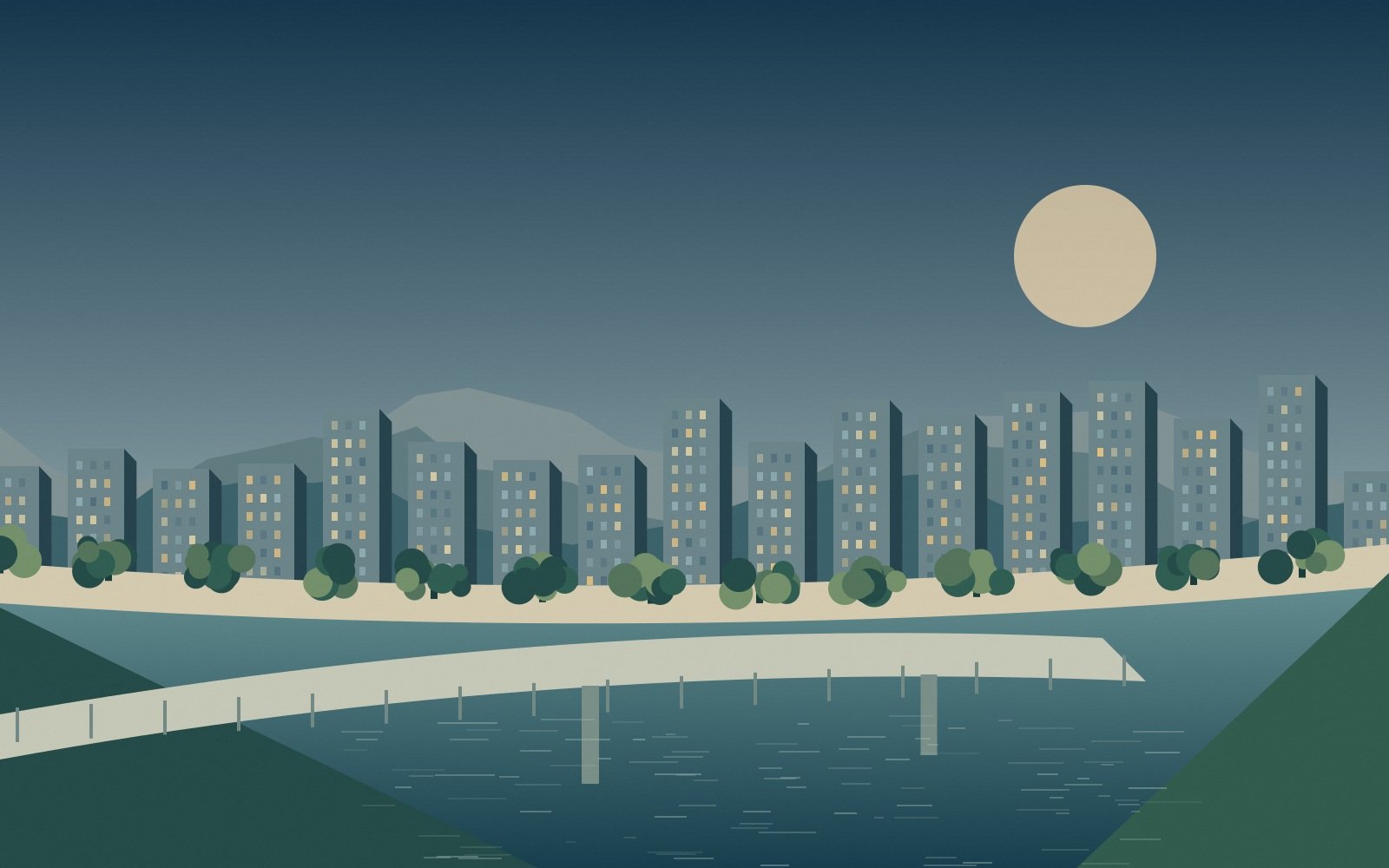
Original stylised Hiroshima riverside illustration; not a photograph or a view from a recommended hotel.
Hiroshima’s hotel decision is a choice between arrival convenience and the places where you want to spend your time. A late train and an early departure favour a station base. A longer city visit gives more weight to evening walks and access to the memorial area.
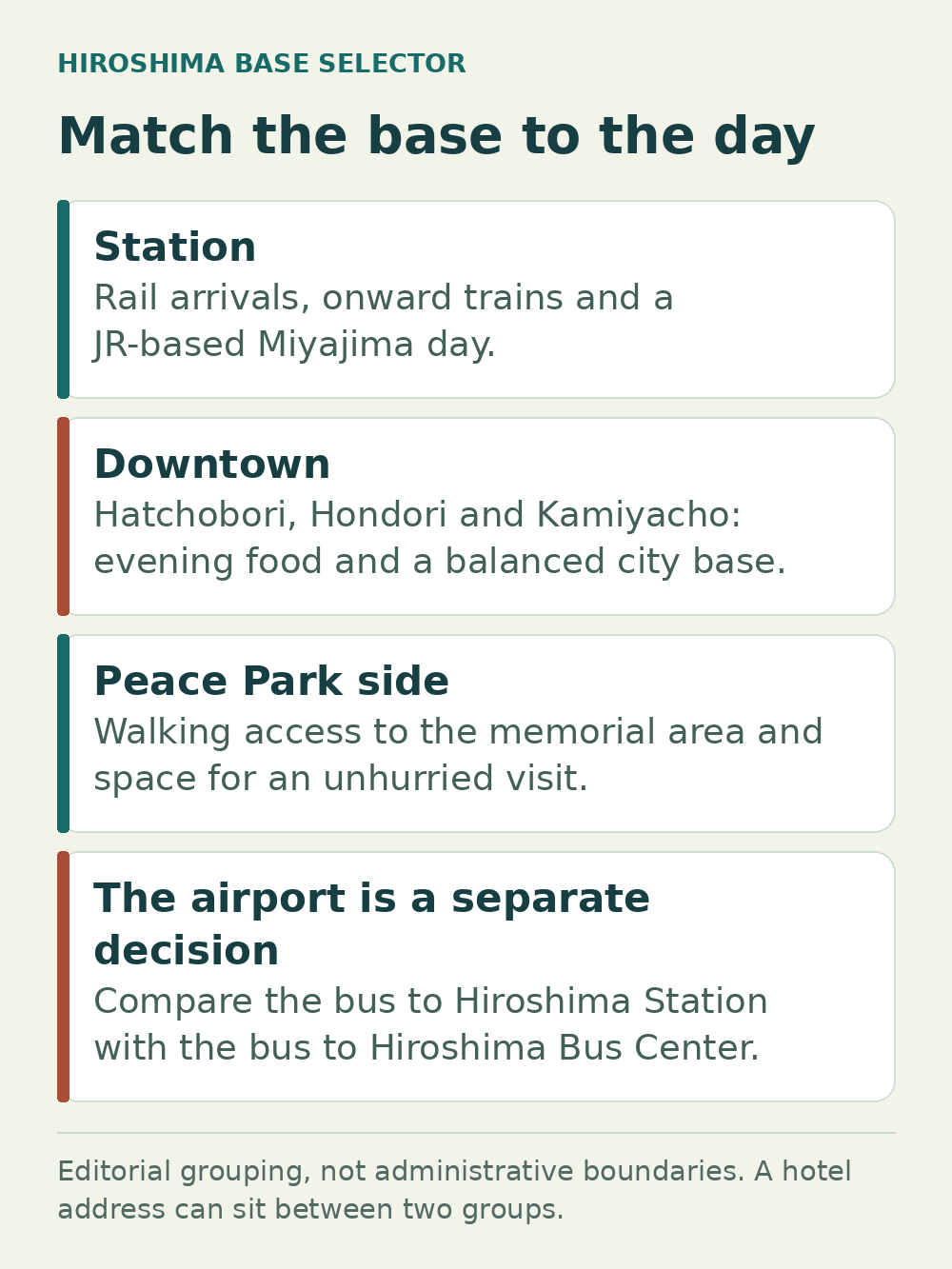
The three zones below are practical editorial groupings, not rigid district boundaries. Some hotels sit between downtown and the Peace Park side. Use the hotel’s actual entrance and your own route to decide, then compare the room rather than expecting a neighbourhood label to answer everything.
This guide contains affiliate links. Taylor’s Trailblazing Travels may earn a commission when you book through them. Recommendations are chosen to help with the accommodation decision.
Rail-heavy trip
Start at the station when several journeys begin on JR.
City evenings
Consider downtown when restaurants and a walk home matter.
Memorial-focused visit
Protect time for the Peace Park area without a rushed transfer.
Airport arrival
Check which city-end bus stop best serves the hotel.
Where to stay in Hiroshima: compare the three bases
| Base | Choose it for | Check the compromise |
|---|---|---|
| Hiroshima Station | Late rail arrivals, early onward trains and several regional rail journeys | You may travel back into the central sightseeing and restaurant areas repeatedly. |
| Downtown: Hatchobori, Hondori, Kamiyacho | A balanced city visit with varied evening options | The actual hotel-to-station connection becomes part of arrival and departure. |
| Peace Park side: nearby riverside and Otemachi streets | A memorial-led visit and an unhurried walk back to the hotel | An onward rail journey or a JR-based Miyajima visit needs a separate connection. |
The zones overlap in practical use. RIHGA Royal is a useful example of a western-central hotel that serves both downtown and the memorial-area decision; THE KNOT is an Otemachi example on the Peace Park side. Their published locations are more informative than a generic city-centre badge.[4][5]
At the station, check the side and the full hotel name
Hiroshima’s tram terminal moved into the station building’s second-floor central atrium on 3 August 2025. Older instructions that automatically send you to a street-level terminus can therefore be misleading. Follow current tram signs and the hotel’s access directions.[2]
Hotel Granvia Hiroshima South Gate is on the south side and has direct station access. It is separate from Hotel Granvia Hiroshima on the north side; the South Gate hotel explicitly warns guests to check which property they booked.[1]
Why this matters with bags
Do not arrange a pickup using only “Granvia”, or assume the north and south hotels share a reception. Save the full name, side of the station, entrance instructions and the destination address in Japanese. Allow time to leave the correct concourse even when the hotel is station-connected.
The station choice becomes stronger with a late arrival, an early onward train or multiple railway day trips. It becomes less important when you arrive in the afternoon, stay several nights and spend most of that time west of the station. Compare the whole stay, not only the first ten minutes.
Five hotel examples, each with a different role
The shortlist illustrates locations and booking questions. It is research-led rather than based on personal stays, and the order is not a quality or price ranking. Dates, room categories and availability were not fixed for a live quote.
Hotel Granvia Hiroshima South Gate: station-connected on the south
Its official guide describes direct access above JR Hiroshima Station and to the second-floor tram platform. This makes it a clear example for travellers who want station access without confusing it with the older north-side Granvia.[1]
Compare the exact room and the route from your arriving platform. Connected does not mean there are no lifts or corridors between the train and reception. Check Granvia Hiroshima South Gate
Hotel Granvia Hiroshima: the separate north-side option
The original Hotel Granvia Hiroshima is on the station’s north side, not in the South Gate property. Include it in the comparison when your arrival, airport-bus plan or preferred room points to that side.[1]
The practical choice is between two real addresses, not between two labels for the same hotel. Do not infer that amenities, room types or package inclusions are shared.
Hotel Intergate Hiroshima: a Hatchobori-area base
Intergate’s official facilities page gives a three-minute walk from Hatchobori tram stop. It also lists luggage storage before check-in and after checkout, useful when you want a city afternoon without carrying cases.[3]
This is a sensible example for an evening-focused downtown stay. The three-minute figure is from the tram stop, not from Hiroshima railway station. Compare Hotel Intergate Hiroshima
RIHGA Royal Hotel Hiroshima: western-central access
RIHGA’s published location places it near Hiroshima Bus Center and Kamiyacho, making it worth comparing for an airport-bus arrival and a central-city stay. Use the official approach guide to connect the bus stop, street level and hotel entrance.[4]
It can serve travellers who want to balance downtown with the memorial area rather than be based beside the railway. Compare the final room category and any extra charges, not simply the size of the building. Check RIHGA Royal Hiroshima rooms
THE KNOT HIROSHIMA: an Otemachi base on the Peace Park side
THE KNOT publishes its address at 3-1-1 Otemachi and gives roughly three-minute walks from Chuden-Mae and Fukuromachi tram stops. That is a different city position from a station hotel.[5]
Start here when walking back from the memorial area matters more than immediate JR access. Check the room, reception arrangements and the precise route that suits your luggage and mobility. See THE KNOT’s official access instructions
Use a transparent traveller-weighted comparison
A base can be a good choice for one itinerary and a weak choice for another. The following original model makes that change visible. The scores are editorial fit judgements, not guest-review scores, measured journey times or claims about every hotel in an area.
| Base | Rail convenience | Evening convenience | Memorial-area access |
|---|---|---|---|
| Station | 5 | 3 | 2 |
| Downtown | 3 | 5 | 4 |
| Peace Park side | 2 | 4 | 5 |
For a rail-led visit, give rail convenience 60% of the weight, evenings 20% and the memorial area 20%. For a memorial-led visit, use 10%, 20% and 70% respectively. Multiply each score by its weight and add the results.
| Base | Rail-led visit | Memorial-led visit |
|---|---|---|
| Station | 4.0 | 2.5 |
| Downtown | 3.6 | 4.1 |
| Peace Park side | 3.0 | 4.5 |
For example, the station’s rail-led result is (5 × 0.60) + (3 × 0.20) + (2 × 0.20) = 4.0. Its memorial-led result falls to 2.5 because the trip’s priorities changed, not because the hotel became worse.
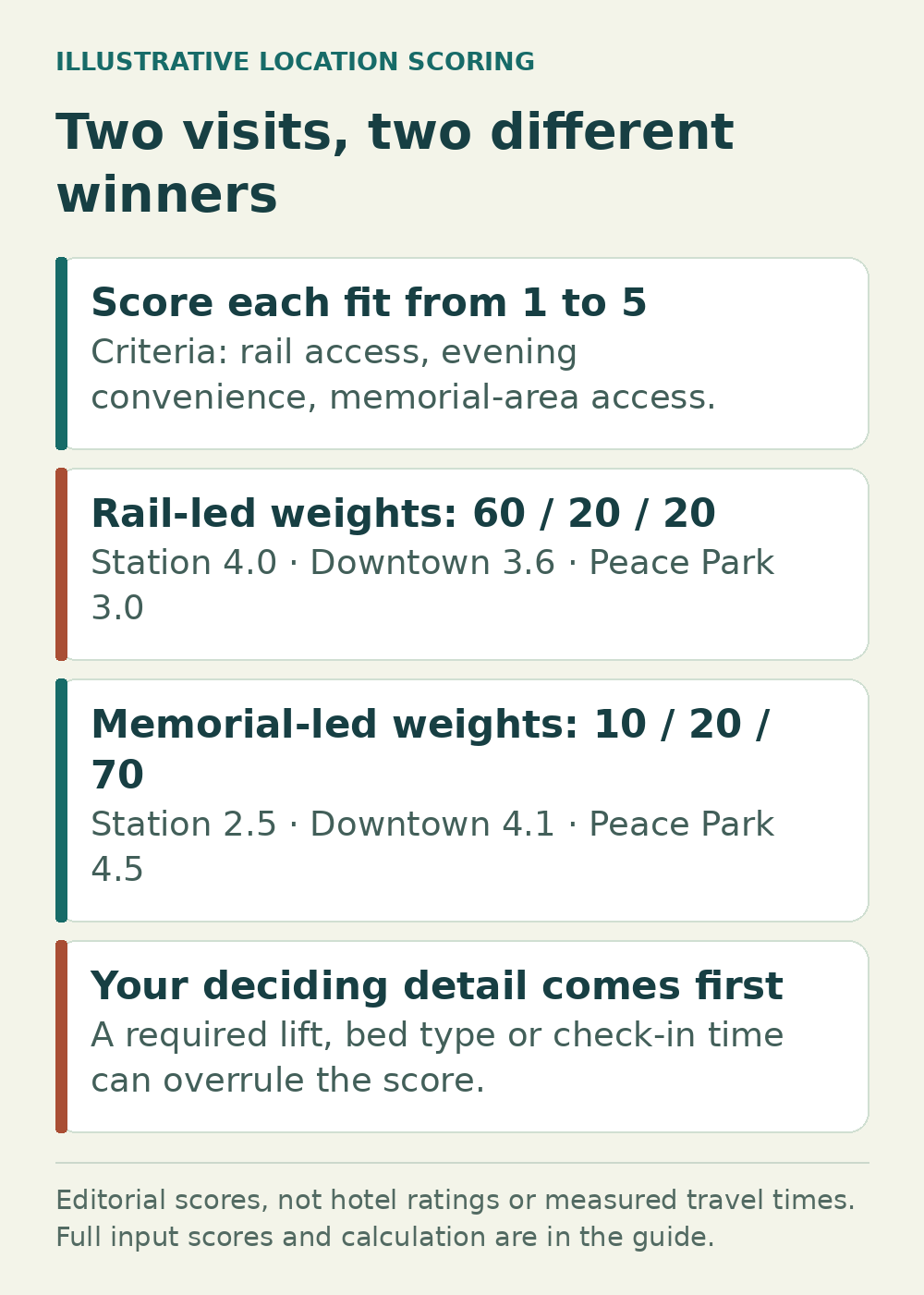
Reject a candidate before scoring if it fails a non-negotiable requirement: suitable beds, an essential lift route, confirmed late check-in or an acceptable cancellation condition. Those requirements matter more than a small difference between 4.0 and 4.1.
For a two-night visit with one city day and one regional day, downtown often becomes the natural comparison point. For one late arrival followed by an early train, the station’s practical advantage may be decisive. Neither outcome requires changing hotels within the city.
Fit airport and Miyajima journeys around the chosen base
Arriving through Hiroshima Airport
The airport’s timetable overview lists buses to Hiroshima Station’s Shinkansen Gate and Hiroshima Bus Center. Its indicative travel times are 45–50 minutes and 55 minutes respectively, with road conditions and the actual service affecting the journey.[6]
Choose the city-end stop that works for your hotel; do not automatically take the station bus and then cross town again. For a morning flight, check the first suitable departure from that stop and allow for road disruption, bag handling and the airline’s required airport arrival time.
Making Miyajima a day trip
A JR-based journey to Miyajima uses Miyajimaguchi as the mainland ferry approach. Hiroshima Station can therefore suit a stay with several rail journeys, while a downtown hotel adds a connection to the rail route or requires a different public-transport plan.[8]
A city hotel and an island overnight solve different needs. Do not move all your bags for one night merely because a day trip looks busy: compare the atmosphere you want after the day visitors leave against the meal, ferry and luggage arrangements an island stay requires.
Compare room fit and the final bill
For each candidate, collect a total for the same room occupancy and dates. Compare usable bed arrangements, room space, breakfast for each guest, cancellation conditions and luggage handling. Do not convert a room photograph into a promise about the category you are about to reserve.
Hiroshima Prefecture began charging accommodation tax on 1 April 2026. The rate is ¥200 per person per night when the tax-exclusive accommodation charge is ¥6,000 or more; below ¥6,000 it is not charged. The qualifying amount is the room-only charge including associated service fees, but excluding meals and consumption tax.[7]
For two qualifying adults staying two nights, the simple tax calculation is 2 × 2 × ¥200 = ¥800. Ask whether this is in the displayed total or payable separately. A meal-inclusive package requires the hotel’s allocation of the room charge; do not divide the gross dinner-and-room price and assume that is the tax base.
Compare location costs honestly too. A slightly less expensive hotel can lose its advantage after additional taxis or an awkward early departure. A hotel with more space can still be good value even when it adds a manageable tram ride. Without actual dates and room requirements, a fixed “best-value hotel” label would hide more than it explains.
Protect the pace of the visit
Leave room for an unhurried memorial visit rather than treating the museum and park as a box to fit between transport connections. A nearby hotel can help when your group needs a rest afterwards. That is an itinerary preference, not a claim that every riverside street is quiet.
For a step-free stay, verify the room and the whole arrival route separately. Ask about bathroom thresholds, bed height, lifts and the hotel entrance; a general accessibility listing does not show whether a particular room is appropriate. Intergate lists a universal room, but availability and suitability still need confirmation.[3]
Families should check child ages, bedding and breakfast charges. For a late arrival, ask how luggage storage, reception and meal options work at that time. A hotel beside a daytime shopping attraction may not solve a late dinner or an early breakfast requirement.
Keep noise questions specific: road-facing or railway-facing room, floor, neighbouring facilities and the party’s sensitivity. Neither a central location nor an upper floor guarantees silence.
Questions before booking
Is Hiroshima Station too far from the Peace Park area?
It is a transport connection rather than a doorstep relationship. That may be entirely acceptable for a rail-heavy visit, but a memorial-led city stay gives stronger reasons to compare western-central hotels.
Which Granvia is beside the tram platform?
Hotel Granvia Hiroshima South Gate advertises direct access to the second-floor tram platform. Hotel Granvia Hiroshima is the separate north-side property; check the complete booking name.[1]
Should I split nights between the station and downtown?
Usually avoid a city hotel change for a small access advantage. Consider it only when an unusual arrival, departure or room requirement makes the extra packing and luggage work worthwhile.
Does a hotel described as “Miyajima” mean I sleep on the island?
No. Check the pin and address. Mainland Miyajimaguchi and Hiroshima city can appear in a wider island-trip search, but only an island property gives you a night on Miyajima itself.
The decision to make
Use the station for a rail-led visit, downtown for a balanced city stay, and the Peace Park side when memorial-area time is the priority. Then check the full hotel name, the actual room and the arrival route. Choose one workable base rather than adding a hotel move simply to improve a small part of the map.
How this guide was researched
Official hotel and transport sources establish locations, access and dated tax information. The three-zone grouping and weighted-fit scores are original editorial tools, not measured journey times or hotel ratings. No personal stay, live inventory check or future transport guarantee is implied. Editorial review: 18 October 2026.
Sources
Hotel, transport and tourism sources are listed below. Access instructions, taxes and booking conditions can change. Hotel walk times are provider estimates; original models are labelled separately.
- Hotel Granvia Hiroshima South Gate — official access and north/south distinction
- Hiroshima Electric Railway — new station tram terminal opening, 3 August 2025
- Hotel Intergate Hiroshima — official facilities and access
- RIHGA Royal Hotel Hiroshima — official location guide
- THE KNOT HIROSHIMA — official access guide
- Hiroshima Airport — public-transport timetable overview
- Hiroshima Prefecture — accommodation-tax scheme overview
- JR West Miyajima Ferry — mainland access guide
- 12Go — Osaka to Hiroshima route comparison
Illustrations in this article were created for Taylor’s Trailblazing Travels. Third-party photographs, where used, are credited beside the image or in the source list.