Tokyo Travel Guide: Best Areas, Highlights and Trip Planning
Find a useful base, explore one part of the city at a time and leave space for the Tokyo you discover along the way.
- Neighbourhoods before hotel names
- Three grouped sightseeing days
- Transport choices that fit the route
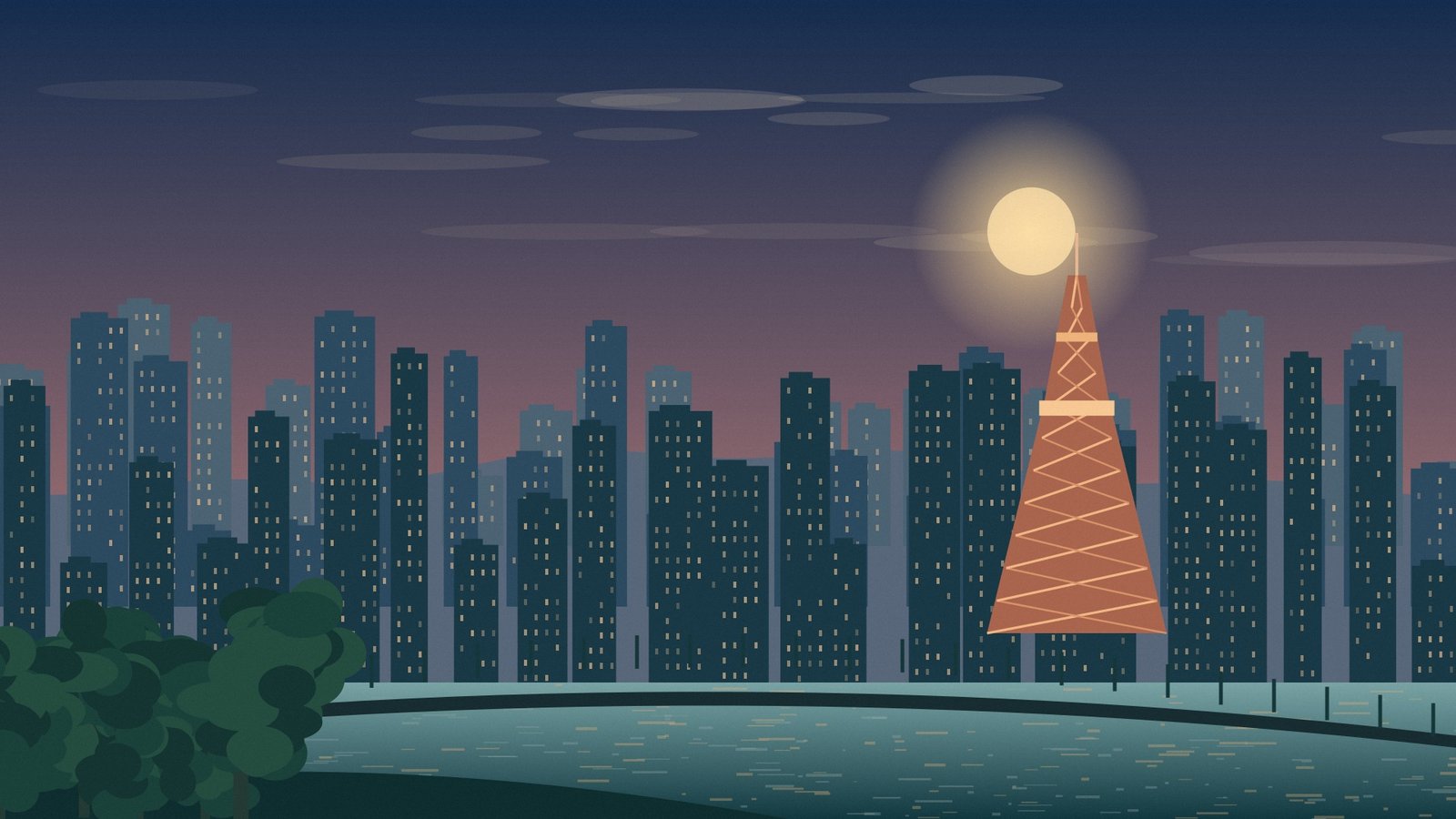
Original Tokyo-inspired editorial illustration. The skyline is stylised and does not identify a real observation point or reproduce a photograph.
Tokyo is easier to enjoy when you stop treating it as a single centre with a checklist radiating outwards. Choose the districts that match your interests, connect nearby places into days, and then choose a hotel that makes those journeys comfortable.
This Tokyo travel guide is a city-wide starting point: where to base yourself, which highlights belong together, how to organise transport and what deserves advance attention. The suggested night count, day groupings and hotel-location model are editorial planning tools, not a claim that there is one correct way to visit.
This guide contains affiliate links. If you book or buy through them, Taylor’s Trailblazing Travels may earn a commission at no extra cost to you.
One well-chosen base
You do not need to change hotels just to see another district.
Three area days
Group east, west and a central or interest-led day.
Compare total effort
The station entrance and walking route matter as much as the district name.
Keep one flexible slot
Leave room for weather, fatigue or somewhere you want to revisit.
Decide which Tokyo you want to spend time in
Pick three interests before choosing an area: historic streets and museums, contemporary fashion and design, food and city evenings, gardens, specialist shopping or a particular exhibition. Then mark a small number of relevant places on a map. A cluster is a more useful hotel-search clue than the phrase “central Tokyo”.
The western districts include Shinjuku’s shopping, entertainment and large transport interchange, and Shibuya’s crossing and contemporary city culture. Ueno offers a different emphasis around its park, museums and Ameyoko shopping area. Tokyo Station and Marunouchi combine a major rail hub with a central business and shopping district.[1][2][3][4]
You can visit across these areas without moving hotels. The aim is not to stay next to everything—it is to reduce awkward journeys for the things that matter most. Build in one slow meal or unplanned walk each day rather than assuming every hour belongs to an attraction.
Choose a useful base, then inspect the exact address
| Area | Best starting fit | What it makes easier | What to check |
|---|---|---|---|
| Shinjuku | Shopping, varied evenings and a western-city itinerary. | Access to a major interchange and a broad range of nearby city experiences.[1] | Which side of the station, which exit and how the final walk feels for you. A district name does not guarantee a quiet street. |
| Shibuya | Contemporary culture, fashion and a lively evening setting. | Time around Shibuya, with Harajuku and Omotesando interests nearby.[2][5] | Street noise, slopes, station navigation and the actual route with luggage. |
| Ueno | Museums, a park-focused day and an eastern-city emphasis. | Ueno Park, museum choices and Ameyoko.[3] | Whether the listing means JR Ueno, Keisei Ueno or another nearby station. |
| Asakusa | Historic atmosphere and a base near the Sensō-ji area. | An unhurried start or evening around this part of eastern Tokyo.[6] | The specific station and the journey to your western-city plans. |
| Tokyo Station / Marunouchi | Onward rail journeys and a central-city base. | Starting near the main station and its surrounding shopping and business streets.[4] | The entrance that serves your train and the walk from that entrance to the room. |
| Nearby central districts | A balance of dining, shopping and cross-city journeys. | A compromise when neither east nor west dominates your list. | Choose an actual station and test your journeys; “near Tokyo Station” can cover very different walks. |
For a family, check the permitted occupancy, bed arrangement and usable floor space of the room you can actually reserve. For a quieter stay, inspect the street rather than assuming a business district or a high floor guarantees silence. For accessibility, check station exits, lifts, pavements, room access and bathroom arrangements as one connected journey.
Calculate the cost of a longer hotel walk
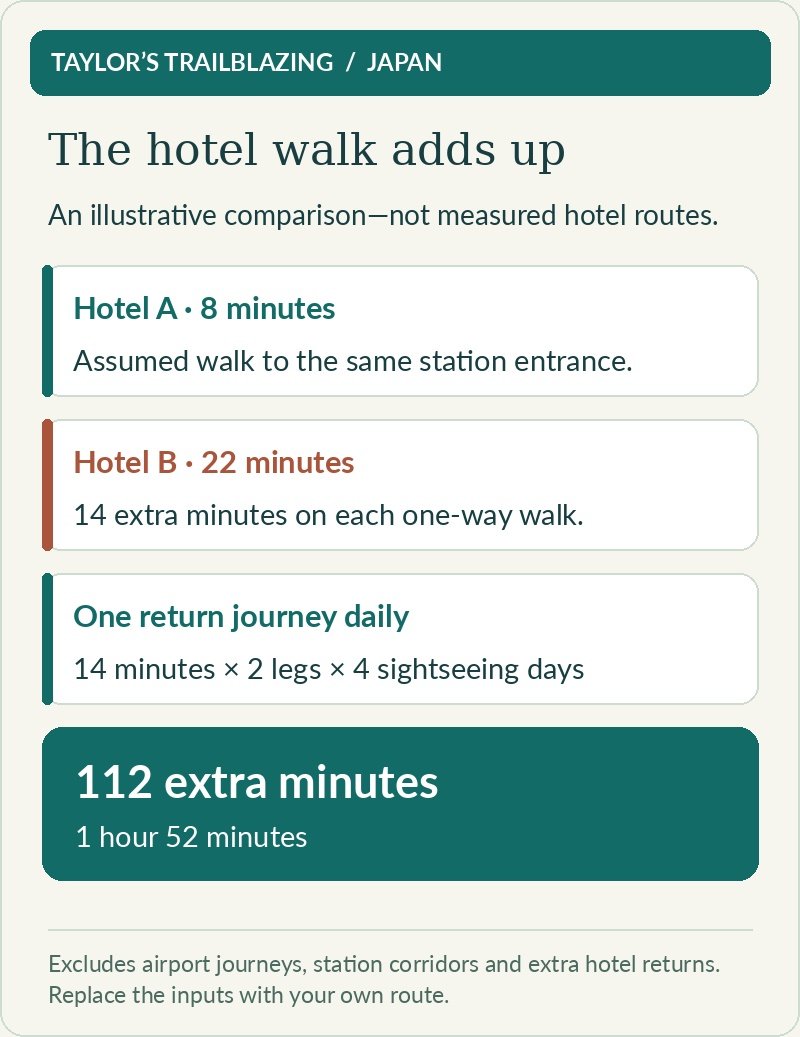
A cheaper room is not necessarily worse. Make the extra effort visible before deciding. Our example assumes two otherwise suitable hotels using the same station entrance: Hotel A is an eight-minute walk away; Hotel B is twenty-two minutes away. Both times are invented planning inputs, not measured routes.
With one return journey per day across four sightseeing days, the difference is (22 − 8) × 2 × 4 = 112 minutes of additional walking. That is one hour and fifty-two minutes. It does not include the airport journey, station corridors or extra returns to the room.
If you enjoy the walk and the saving is worthwhile, choose the farther hotel. If you expect heat, heavy bags, fatigue, a pushchair or frequent breaks at the room, the closer option may deliver greater value. Replace the assumed minutes with your own realistic route; a mapping estimate is not a personal mobility assessment.
This test is especially helpful when a listing sounds close to a famous station but uses an entrance far from the line you will take. The district can be right while the address is wrong for your trip.
Group the highlights into three manageable days
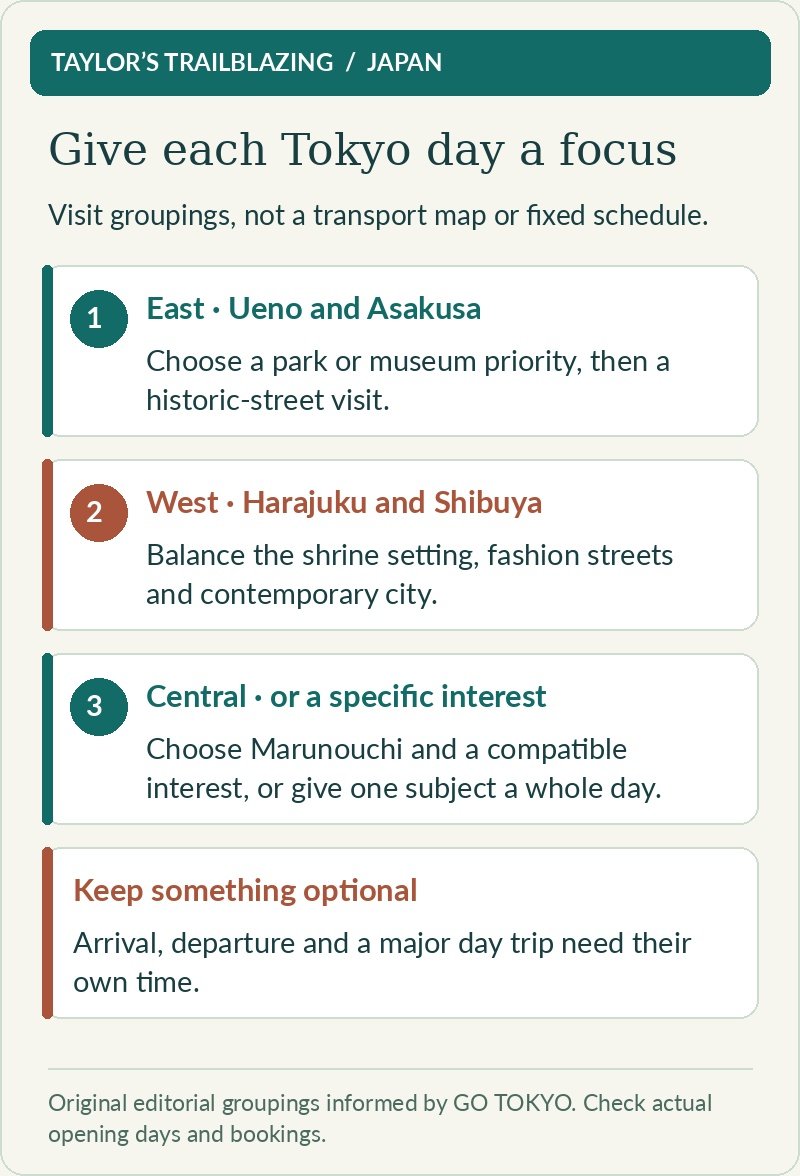
Use the following as flexible geographical groupings, not a minute-by-minute schedule. They assume you have three full sightseeing days. Arrival, departure, a theme-park visit or a substantial day trip needs its own space. Check opening days and timed bookings before fixing the order.
Day one: Ueno and Asakusa
Give the first half of the day to Ueno Park and one museum or a slower neighbourhood wander, then use local transport to continue towards Asakusa for Sensō-ji and its surrounding streets. These areas offer park, collection and historic-street interests without forcing an immediate jump to western Tokyo.[3][6]
Choose one major museum rather than assuming you will skim several. Leave time for lunch and the connection. An additional viewpoint or riverside outing is optional; remove it when the first two areas already make a satisfying day.
Day two: Harajuku and Shibuya
Start with the contrast between Meiji Jingu’s setting and Harajuku’s fashion streets, then choose how far to continue into Omotesando or towards Shibuya. The official Harajuku guide places shrine, shopping and contemporary culture within this wider area; Shibuya adds its crossing and changing skyline.[5][2]
A fixed observation-deck visit can become the day’s anchor. Check the actual ticket and weather conditions rather than making the entire day depend on a sunset photograph. Add Shinjuku on a different evening when that suits your hotel; it need not be another compulsory stop in an already full day.
Day three: central Tokyo or your strongest interest
Tokyo Station and Marunouchi are a useful central starting point. An Imperial Palace-area walk requires distinguishing publicly accessible areas and garden opening arrangements from access to the palace itself. Choose a compatible shopping, architecture or dining interest afterwards rather than assuming the whole palace complex is freely open.[4][6]
Alternatively, give this day to the specialist interest that brought you to Tokyo: an exhibition, design shops, food exploration or a prebooked experience. Do not add a distant attraction just to make the itinerary resemble somebody else’s list.
Use the transport network without buying the wrong pass
Tokyo journeys can involve JR, Tokyo Metro, Toei Subway and other operators. Check the line, destination direction, platform and station exit, not just the station name. GO TOKYO’s transport guide is a useful starting point for the different systems.[7]
The Tokyo Subway Ticket covers Tokyo Metro and Toei Subway, not every train in Tokyo. At this review, the operator lists adult tickets at ¥1,000 for 24 hours, ¥1,500 for 48 hours and ¥2,000 for 72 hours. Compare only the journeys covered by that ticket; JR rides and separate airport services should not be counted as savings from it.[8]
A reloadable transport card or another accepted payment method can be convenient without making the journeys free. Choose a pass when your actual route and its validity justify it, not because it has “Tokyo” in the name. Recheck the operator’s current sales conditions and prices before purchase.
Airport arrival and the final transfer
Haneda and Narita both serve Tokyo, but Narita is farther outside the city. Rail, bus and taxi choices need comparing against the actual hotel and arrival time, rather than against an abstract city centre. Use the official airport-access guide and check the final service you could realistically catch after formalities and luggage collection.[9]
For a late arrival, a simpler first-night address may be worth more than a small room saving. On departure, leave the day centred on reaching the correct airport and terminal; a distant final outing adds an avoidable dependency.
Book the experiences that need structure—and leave the rest open
Reserve a trip-defining timed attraction, specialist class or restaurant when its official sales arrangements require it. Read the cancellation policy, meeting location, language, accessibility information and exactly what is included. “Tokyo tour” can mean very different things: a walking introduction, transport-heavy excursion or a specialist activity.
Keep ordinary district exploration, café stops and weather-sensitive walks flexible. A paid plan is useful when it solves a real need; it is not a reason to replace every unstructured hour with a reservation.
Plan meals and spending as part of each area day
Tokyo supports many kinds of food experience, from neighbourhood restaurants to department-store food halls and specialist dining. Use food as a reason to explore an area rather than repeatedly crossing the city for single dishes.[11]
Build a daily budget from the meals you intend to eat, transport on the actual route, one or two paid priorities and discretionary shopping. Price hotels separately for your own dates. Avoid treating a city-wide “from” rate as evidence that a suitable room exists at that price for your party.
For dietary or allergy requirements, prepare clear information and confirm ingredients with the provider; a translation app or photograph cannot certify suitability. For a high-priority meal, research its reservation process directly. For the other meals, keep a few suitable options in the area you will already be visiting.
Carry a workable payment backup and check your bank’s foreign-use charges before departure. The useful budget is the total in the currencies you will actually pay, not a single daily figure that quietly excludes trains, admissions and the accommodation bill.
Adjust the plan for season, stamina and your group
Japan’s seasonal conditions vary by region. For Tokyo, allow for summer heat and humidity, wetter periods and shorter winter daylight rather than assuming the same walking plan works all year. Check the local forecast close to the visit; spring blossom and autumn colour are possibilities with variable timing, not guaranteed appointments.[12]
In difficult weather, shorten outdoor blocks and select an indoor priority near the same part of the city. With children or limited stamina, reduce the number of major sights, keep meal stops predictable and choose rooms that allow a practical rest. For step-free travel, verify each station exit and attraction route rather than assuming a station’s lift serves every exit.
On a four- or five-night visit, do not automatically spend the spare day outside Tokyo. Use it to return to a district, follow a specialist interest or recover from an energetic start. A day trip earns its place only when you want it more than another day in the city.
Tokyo planning questions
Is Shinjuku always the best place to stay?
No. It is a strong starting point for some western-city plans, but Ueno, Asakusa, Shibuya or a central district may fit your priorities better. Test the actual address and evening routine rather than choosing by reputation alone.
Can I see Tokyo in two days?
You can have a worthwhile two-day visit by choosing two area groupings and omitting the rest. It is not a comprehensive city visit. Keep arrival and departure time outside those two full sightseeing days when comparing plans.
Does the Tokyo Subway Ticket cover the Yamanote Line?
No. Its published coverage is Tokyo Metro and Toei Subway. The Yamanote Line is a JR service, so do not include those rides in the ticket’s saving calculation.[8]
Should I book two Tokyo hotels to experience east and west?
Usually not for a short first visit. Changing rooms adds luggage and check-in work. Choose one useful base and organise separate area days unless a particular stay is itself an important part of the holiday.
Choose a base that supports your version of Tokyo
Pick a small set of interests, group them geographically and choose the room that makes those days comfortable. Keep timed bookings purposeful and the rest adaptable. Tokyo does not need to be completed; it needs to be given enough space for the places you actually care about.
Official tourism, transport and provider sources were reviewed on 17 October 2026. The area-fit assessments, suggested night count, three-day grouping and 112-minute calculation are original editorial guidance. No hotel stay or journey was personally tested for this article, and no travel-date availability is claimed.
Sources
Source information reviewed on 17 October 2026. Recheck operating arrangements, prices and advice for your travel dates. Booking links do not establish live availability or guarantee a particular outcome.
- GO TOKYO — Shinjuku neighbourhood guide
- GO TOKYO — Shibuya neighbourhood guide
- GO TOKYO — Ueno neighbourhood guide
- GO TOKYO — Tokyo Station and Marunouchi
- GO TOKYO — Harajuku, fashion and culture
- GO TOKYO — Walks and tours for a first visit
- GO TOKYO — Getting around Tokyo
- Tokyo Metro — Tokyo Subway Ticket scope and prices
- GO TOKYO — Airport access
- GetYourGuide — Tokyo activities and tours
- GO TOKYO — Food and drink in Tokyo
- JNTO — Weather and geography
Illustrations in this article were created for Taylor’s Trailblazing Travels. Third-party photographs, where used, are credited beside the image or in the source list.