Lake Kawaguchiko Travel Guide: Fuji Views and Lakeside Planning
Choose a practical base, protect your morning view and give the lake time beyond a single photograph.
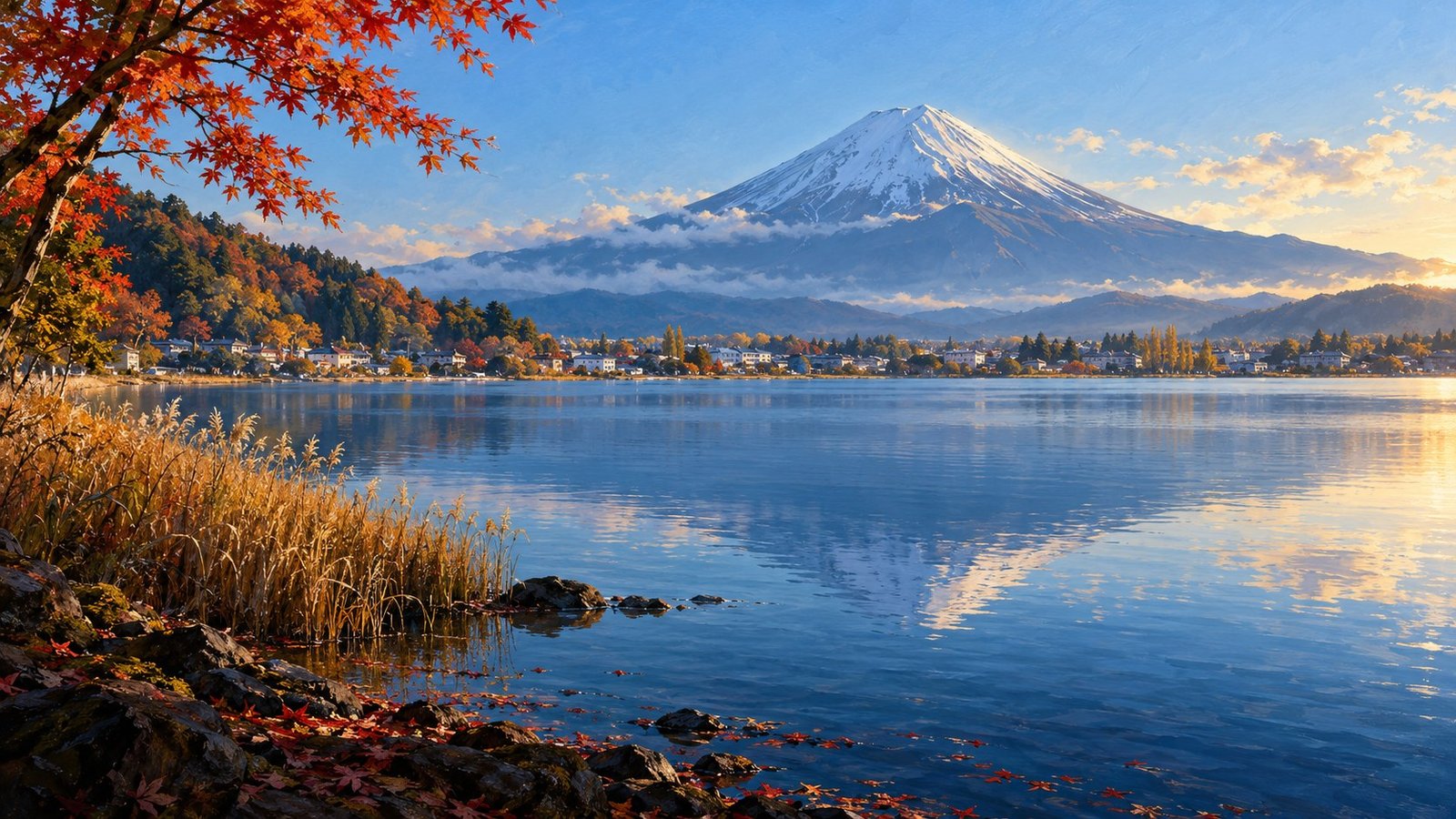
AI-created editorial illustration inspired by a north-shore outlook across Lake Kawaguchiko towards Mount Fuji; not a photograph or a promise of clear conditions.
For a first visit to Lake Kawaguchiko, one night is a sensible starting point; two nights give you more freedom to work around the weather. The lake combines Fuji views with museums, hot springs and waterside time, and Japan’s national tourism organisation identifies it as the most accessible of the Fuji Five Lakes from Tokyo. [1]
This Lake Kawaguchiko travel guide focuses on the decisions that shape the visit: which shore to stay on, what fits comfortably around your journey, and when a paid viewpoint or boat ride adds something to your day.
This article contains affiliate links. If you make a booking or purchase through them, Taylor’s Trailblazing Travels may receive a commission at no extra cost to you.
One or two nights
One night covers the lake well; a second gives you a full day and another morning.
Access or outlook
Match your hotel’s exact location to your arrival time and preferred morning walk.
Book the return
Keep a confirmed departure and leave time to get back from the lakeside.
Use a clear moment
Take an available view early; keep museums and meals as flexible parts of the day.
How long to allow at Lake Kawaguchiko
The following is an editorial pacing recommendation for a first visit, assuming you use public transport and want time beside the lake rather than a succession of brief photo stops.
- A day trip suits a short Japan itinerary when you are happy to choose one lakeside area and one additional activity. The journey occupies a substantial part of the day, so a clear Fuji view has to be a possibility you welcome rather than a result you require.
- One night is the most useful compromise. Arrive around lunchtime, explore one part of the lake, settle into your accommodation and keep the following morning available for the view.
- Two nights suit photographers, slower travellers and anyone who wants a ryokan stay or a separate outing towards Saiko or Fujiyoshida. You gain a full day without checking out, but persistent cloud can still cover both mornings.
If museums, food and a relaxed stay would hold little appeal without Fuji, keep your booking terms flexible where practical. Another night is worth buying for the experience you will enjoy, with the extra viewing opportunity as a benefit.
Choose your shore before choosing your hotel
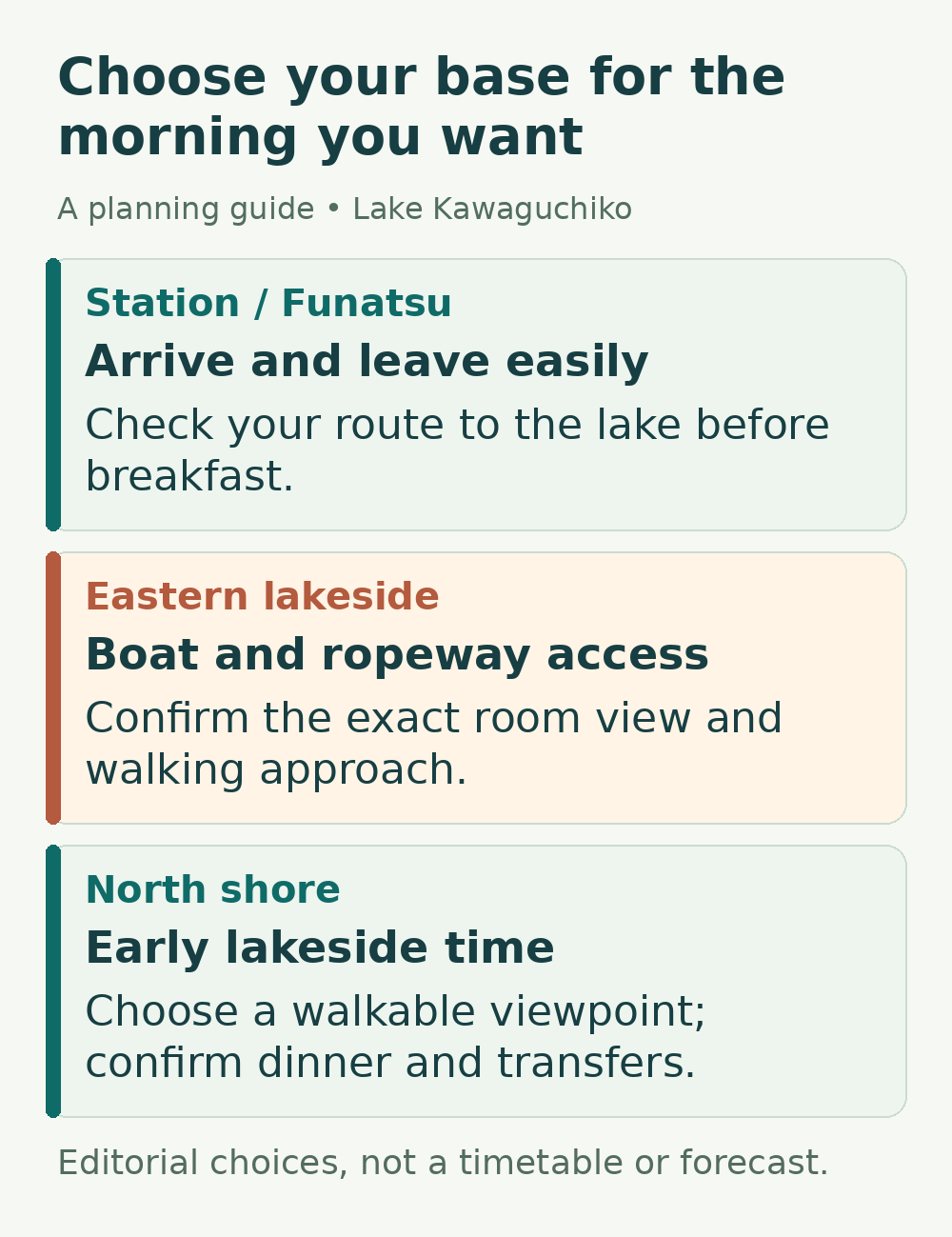
Kawaguchiko Station is the arrival point for most independent visitors, but the lake is a further walk or ride. The ropeway on the southeast side is roughly 15–20 minutes away on foot; Oishi Park is on the north shore and has an approximately 30-minute Red Line bus connection from the station. These are useful orientation points, not hotel transfer promises. [2][3]
| Area | Choose it for | Check before booking |
|---|---|---|
| Station and Funatsu | An easy arrival with luggage, an early departure and convenient access to onward transport. | The walking route to the lake and how you will reach your chosen viewpoint before breakfast. |
| Eastern lakeside | A stay focused on the water, ropeway and nearby boat departures. | The exact room outlook, distance from the pier and any uphill approach to the property. |
| North shore: Kawaguchi or Oishi | Early lakeside time and views across the water towards Fuji, with a museum or garden outing. | A safe walk to the shore, hotel shuttle arrangements, dinner options and the return to the station. |
The north shore is an area, not one compact hotel district. A property near the museums and a property near Oishi Park can produce different walking days. Put the hotel, your intended viewpoint and the relevant bus stop on the same map.
Pay for the room you actually want
Read the description of the exact room category. A lake-facing room, a Fuji-facing room and a property with a viewpoint in a shared area answer different needs. Ask whether the bath is communal, privately reservable or in the room, and whether your rate includes dinner and breakfast. Confirm the latest arrival time if dinner is included.
Use Agoda’s Fujikawaguchiko accommodation search and Booking.com’s Fujikawaguchiko stays to compare locations and equivalent room offers. Both are destination searches rather than a recommendation of every property shown. Compare the same occupancy, meals and cancellation terms before deciding. [4][5]
Build your plans around Fuji’s visibility
JNTO advises heading to the north side of the lake in the morning, before haze and cloud tend to build later in the day. It also identifies winter as a favourable season for clear Fuji views. These are broad patterns, not a forecast for your dates. [1][6]
Choose your season for the whole trip. Spring blossom, early-summer flowers and autumn colour give the lakeside another focus; Oishi Park’s planting includes lavender and autumn kochia. Flower and leaf conditions vary, so check local updates close to departure instead of booking around a photograph’s appearance. [1][2]
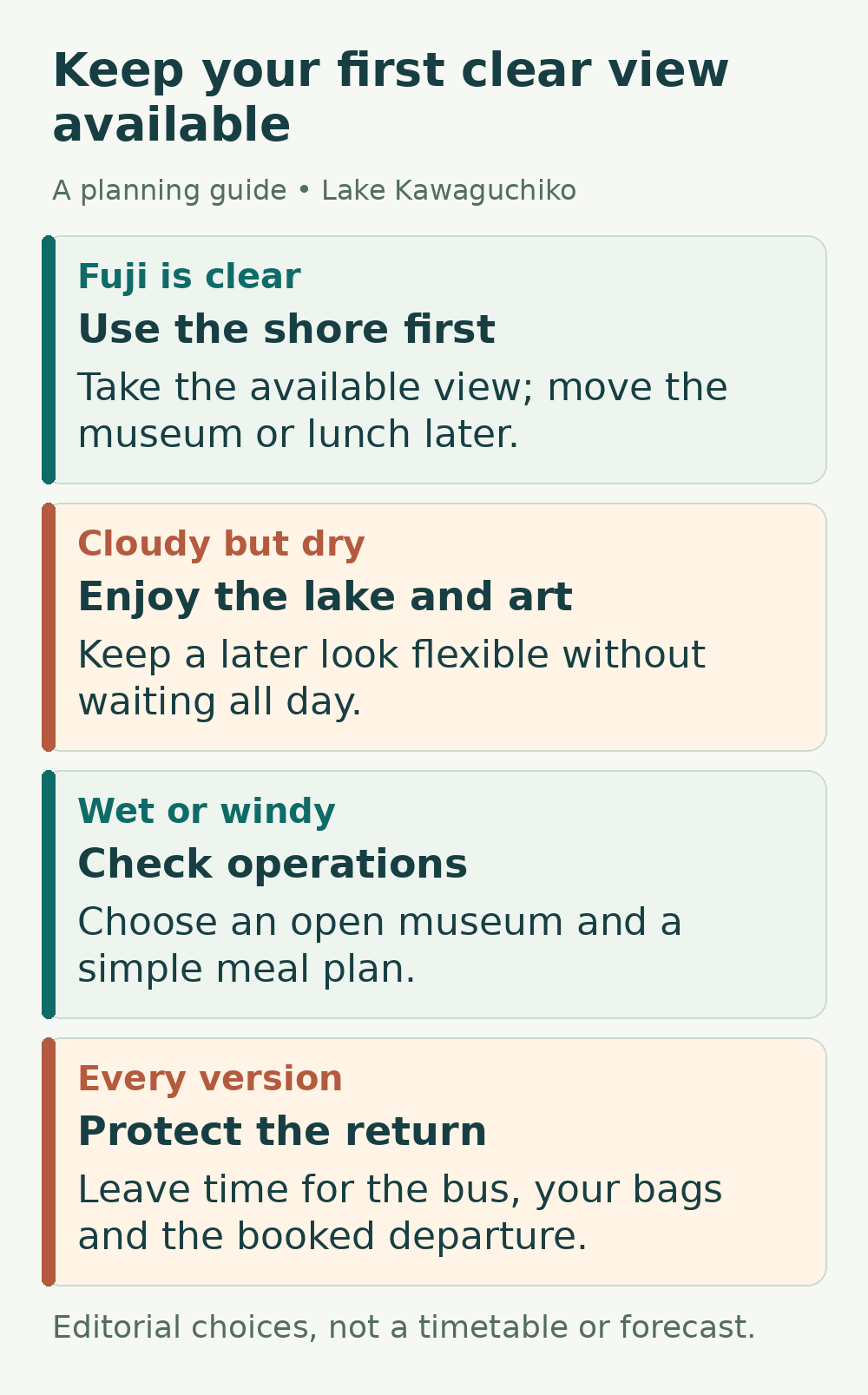
On arrival, make one simple decision. If the mountain is clear, take the view you can reach comfortably before committing to an indoor stop. If it is hidden but the weather is dry, enjoy the lake or a museum and look again later. In persistent rain or strong wind, choose indoor time and check transport operations before setting off.
Check a local forecast and a current live camera together. The ropeway’s official website has an observatory camera and operating notices. A clear camera image describes that moment; it does not guarantee the next hour. [7]
Group the sights into two manageable lake outings
North shore: Oishi Park, art and an unhurried lunch
Oishi Park is a useful first stop for the classic composition of lake beneath Fuji. The park is free to enter and has lakeside paths, seasonal planting and a neighbouring Natural Living Center. Allow time to walk and sit as well as take pictures. [2]
For a cultural stop, the Itchiku Kubota Art Museum concentrates on the artist’s kimono work. It gives the outing substance even when the mountain is hidden. Its official visitor information lists adult admission at ¥1,500 and publishes its opening calendar; check that calendar before making it the centre of a wet-weather day. [1][8]
For lunch, look for hoto, the regional dish of broad wheat noodles and vegetables simmered in miso-based broth. Ask about stock and other ingredients if you have dietary requirements; a vegetable-filled bowl does not establish that the broth suits your diet. [9]
Southeast shore: choose your boat trip and ropeway deliberately
The Mt. Fuji Panoramic Ropeway takes about three minutes to climb to its viewpoint. That is the ride time, so leave room in the day for reaching the station, queuing, looking around and descending. Choose it when the elevated outlook interests you and operations and conditions are suitable. [10]
The Appare sightseeing boat makes an approximately 20-minute circuit. The Ensoleillé Oishi Park Line serves a different purpose: it links Funatsu and Oishi piers in roughly 15 minutes each way. The first is a short outing on the water; the second can form part of a lakeside route. Check the actual departure and return times before choosing either. [11][12]
Checked 17 October 2026: the ropeway announces shorter operating days on 21–22 October and 25–26 November, and a planned maintenance closure on 7–18 December 2026. Wind and other adverse weather can also suspend operation. Recheck the official notice for your travel date. [7]
A good half-day need not include both a cruise and the ropeway. Pick the experience you want, then leave time for lunch and the journey back. If you use the Oishi shuttle in one direction, establish your bus or boat return before boarding.
Getting to Kawaguchiko from Tokyo
For most visitors, the useful choice is between a direct highway coach and a train from Shinjuku. Add your journey across Tokyo and the transfer from Kawaguchiko Station when comparing them.
| Option | What to expect | Planning judgement |
|---|---|---|
| Shinjuku highway coach | The route’s advertised journey is around 1 hour 45 minutes; the published adult single fare is ¥2,200. [13] | A straightforward direct option. Allow for road delays and reserve the return as well as the outward trip. |
| Direct Fuji Excursion train | Through service from Shinjuku to Kawaguchiko, with journeys around two hours depending on the departure. [15] | Useful when you prefer rail. Reserve the intended service and follow the carriage shown on your ticket. |
| Train with a change at Otsuki | JR East describes Kaiji or Azusa followed by a Fujikyu local train as an alternative when the through service is full, taking about 2½ hours. [16] | A workable fallback, with a transfer and separate ticket or pass checks. |
The national Japan Rail Pass does not cover the Fujikyu Line section. Some regional passes have different coverage, so check your exact pass before buying another ticket. A transport IC card alone does not replace a required limited-express ticket. [16]
There is a recent booking change to know: from 1 October 2026, Fujikyu-operated Shinjuku services moved to Fujiyama Connect. Highwaybus.com handles Keio bookings, although some Keio seats are also sold through Fujiyama Connect. Follow the operator’s booking link and manage changes through the platform where you booked. [14]
For an additional comparison of Tokyo departure points and bus options, check Tokyo–Kawaguchiko buses on 12Go. Compare the final price, luggage rules and exact arrival stop with the official operator’s offer. This is a route search, so enter your own date. [17]
Getting around the lake without losing the day to transport
The Red Line sightseeing bus is the main starting point for the northern lakeshore. The Green Line serves the Saiko area; the Blue Line extends towards Shojiko and Motosuko. Regular sightseeing buses do not require reservations, and the operator warns that traffic can delay them. [18]
Plan outward and return legs as a pair. Save the stop name and last useful departure, then leave a spare connection before a booked coach or train. For an early photograph, choose accommodation within a practical walk of the shore or arrange transport in advance; do not assume the sightseeing bus starts when you want to leave.
Choose a pass after choosing the route
The common Red, Green and Blue Line pass is advertised at ¥1,500 for one day or ¥2,000 for two days per adult, checked 17 October 2026. Single fares are also available. Add the fares for your intended rides and buy the pass when its coverage and cost suit that plan. [18]
Do not assume this ticket includes every bus around Mount Fuji, the ropeway, boats or the railway. Trips towards Oshino and Yamanakako use a different route family, so check the ticket coverage for that outing separately. [18][19]
Fujikyu accepts major compatible transport IC cards on its regular local and sightseeing buses. Anyone who needs step-free boarding should contact the operator before travelling: vehicle type, stop layout and crowding can affect what is possible. A bus shown on a route map is not an accessibility guarantee. [19]
A flexible one-night stay, with a useful second-night option
This suggested sequence assumes arrival around lunchtime, accommodation beside or reasonably near the lake, and a departure later the next day. The time allowances are planning choices, not published tour or transport schedules.
Arrival day: settle in, then follow the available view
- Agree luggage storage with your accommodation before starting a lakeside outing.
- If Fuji is clear, go to the shore you most want to see. Otherwise start with the museum or lunch. Allow roughly 60–90 minutes for a relaxed park visit, with transport time added.
- Choose a boat trip or the ropeway only if there is enough time to enjoy it and still reach your accommodation comfortably.
- Keep the evening simple. If your stay includes dinner, protect its arrival deadline rather than adding a distant final stop.
Next morning: keep the most valuable part flexible
Look at the conditions before breakfast if your accommodation makes that practical. A hotel close to your intended lakeside path makes this easier. Later, explore the part of the lake you missed, eat lunch and collect your bags with time to spare before departure.
A missed view is not a reason to spend the entire day waiting at one viewpoint. Use the museum, a short lakeside walk and a leisurely meal as the core of the day when conditions stay poor.
With two nights: add one separate outing
Keep the middle day for one excursion or a slower version of the lake plan. A second night works especially well when the accommodation itself is part of the trip. It also leaves your final morning free of an immediate long-distance arrival, without promising different weather.
What to budget for transport and sightseeing
Accommodation will depend on the dates, room category, meals and bathing arrangements you choose. Price that exact stay first, then add the transport and activities that fit your plan.
| Item | Published amount | Budget implication |
|---|---|---|
| Shinjuku–Kawaguchiko coach | ¥2,200 each way [13] | Two singles total ¥4,400 at this fare. |
| Red/Green/Blue Line pass | ¥1,500 for one day; ¥2,000 for two days [18] | Compare against the individual rides you will use. |
| Ropeway return | ¥1,000; announced ¥1,200 from 1 November 2026 [7][10] | Keep this optional when the view or operating conditions are poor. |
| Boat choices | Appare ¥1,000; Oishi shuttle ¥1,000 one way [11][12] | A return shuttle journey needs two one-way fares. |
| Itchiku Kubota Art Museum | ¥1,500 [8] | A substantial indoor stop can be your main paid activity. |
For a concrete example, two coach singles, the two-day bus pass, a ropeway return and museum admission total ¥8,900 per adult using the fares above, or ¥9,100 after the announced ropeway increase. This is a calculated transport-and-admission subtotal, not a complete holiday budget or a claim that the pass is your cheapest option. Add your room, meals, travel within Tokyo and any taxis or boat trips.
When comparing accommodation, a dinner-inclusive offer may remove a separate evening journey. Check the full payable total and inclusions; a cheaper room some distance from your plans may require additional transport.
Choose one extension, or use a tour for a clear purpose
The other Fuji Five Lakes are optional extensions. The Green Line makes Saiko a logical direction for another day, while the Blue Line serves Shojiko and Motosuko; Oshino and Yamanakako sit on the Fujikko-go network. Choose the destination you most want to experience and check its return connections before adding another. [18][19]
A regional map can make all the lakes look like one outing. For a first stay, the stronger choice is usually one lake explored properly, with one additional area if your time allows. A full sightseeing day also deserves its own meal breaks and time for slow transport.
When an organised option helps
If you are making a single day trip from Tokyo and want the intercity travel and stops arranged together, compare Lake Kawaguchi tours on GetYourGuide. The page includes different departures and itineraries, so check time actually spent at the lake, pickup location, admission inclusions and the policy if Fuji is hidden. [20]
For visitors already staying locally, this private Kawaguchiko-area tour on Viator is a different option: its listing describes a private guide, vehicle and pickup within the local area. It does not offer pickup from Tokyo, Hakone or Mishima. Check that your accommodation and intended stops are covered before booking. The practical benefit is arranging several local transfers around your interests. [21]
Continuing towards western Japan
The reserved Mishima–Kawaguchiko Liner connects the lake with Mishima, with an advertised journey of roughly 80–90 minutes. This can be worth comparing when planning an onward rail journey instead of returning to Tokyo. Choose the complete connection first and leave a generous margin: the bus operator explicitly warns of road delays. [25]
The practical details that make the visit easier
Save your accommodation’s location, the Japanese name of your return bus stop and your booking confirmation. Keep a usable offline copy of the local map and timetable, particularly if your plan includes an early outing or a distant lakeshore.
Mobile data is useful for maps, translating notices and checking operating changes. If your existing mobile plan does not suit the trip, compare an Airalo eSIM and select Japan. Airalo offers Japan plans, but check the package’s activation rules and your exact device: it must support eSIM and be network-unlocked. [22][23]
Photograph from places intended for visitors, use crossings and leave pavements and private entrances clear. The town has published traffic-safety guidance after problems associated with station-area photography and points visitors towards other photo locations. Follow current signs and barriers rather than a social-media shot. [24]
- Before booking: choose the shore, exact room, meal plan and cancellation terms.
- Once travel dates are fixed: reserve the outward and return intercity journeys.
- Before the outing: check the museum calendar, ropeway notices and the boat or bus timetable you intend to use.
- On the day: use a clear view when it appears, and keep the rest of the visit worthwhile in its own right.
For a first stay, one night with an easy lakeside morning is a sound choice. Add a second when the slower pace, accommodation or one extra excursion deserves the time. That gives the visit a clear shape while keeping time for Fuji when conditions allow.
Sources and planning notes
This is a research-led guide. Official tourism bodies, transport operators and attraction information inform the factual advice; base choices, pacing and explicitly labelled budget examples are editorial planning judgements. Sources checked on 17 October 2026. Recheck current prices, conditions and operating notices for your travel dates.
- Japan National Tourism Organization – Lake Kawaguchi
- Fujikawaguchiko Tourism Federation – Oishi Park
- Japan National Tourism Organization – Mt. Fuji Panoramic Ropeway
- Agoda – Fujikawaguchiko accommodation search
- Booking.com – Fujikawaguchiko accommodation search
- Japan National Tourism Organization – Explore the Fuji Five Lakes
- Mt. Fuji Panoramic Ropeway – current operating notices
- Itchiku Kubota Art Museum – visitor information
- Fujikawaguchiko Tourism Federation – local food and seasonal flavours
- Mt. Fuji Panoramic Ropeway – fares and visitor information
- Fuji Five Lakes Steamship – Appare fares and sailing information
- Fuji Five Lakes Steamship – Ensoleillé Oishi Park Line fares and timetable
- Keio Highwaybus.com – Shinjuku–Fuji Five Lakes fares and boarding points
- Fujikyu Bus – Shinjuku–Kawaguchiko booking changes from 1 October 2026
- JR East – Fuji Excursion 7 timetable
- JR East – Fuji Excursion alternatives when fully booked
- 12Go – buses from Tokyo to Kawaguchiko
- Fujikyu Bus – Kawaguchiko, Saiko, Narusawa, Shojiko and Motosuko sightseeing buses
- Fujikyu Bus – sightseeing bus practical information
- GetYourGuide – Lake Kawaguchi tours and activities
- Viator – local private Mt. Fuji and Kawaguchiko tour
- Airalo – Japan eSIM plans
- Airalo – device compatibility
- Fujikawaguchiko Town – visitor photography and traffic information
- Fujikyu Bus – Mishima–Kawaguchiko Liner
Illustrations in this article were created for Taylor’s Trailblazing Travels. Third-party photographs, where used, are credited beside the image or in the source list.