Hakone Travel Guide: How to Explore the Hot-Spring Region
Pick a base, leave time for a bath, and treat the famous loop as a flexible plan.
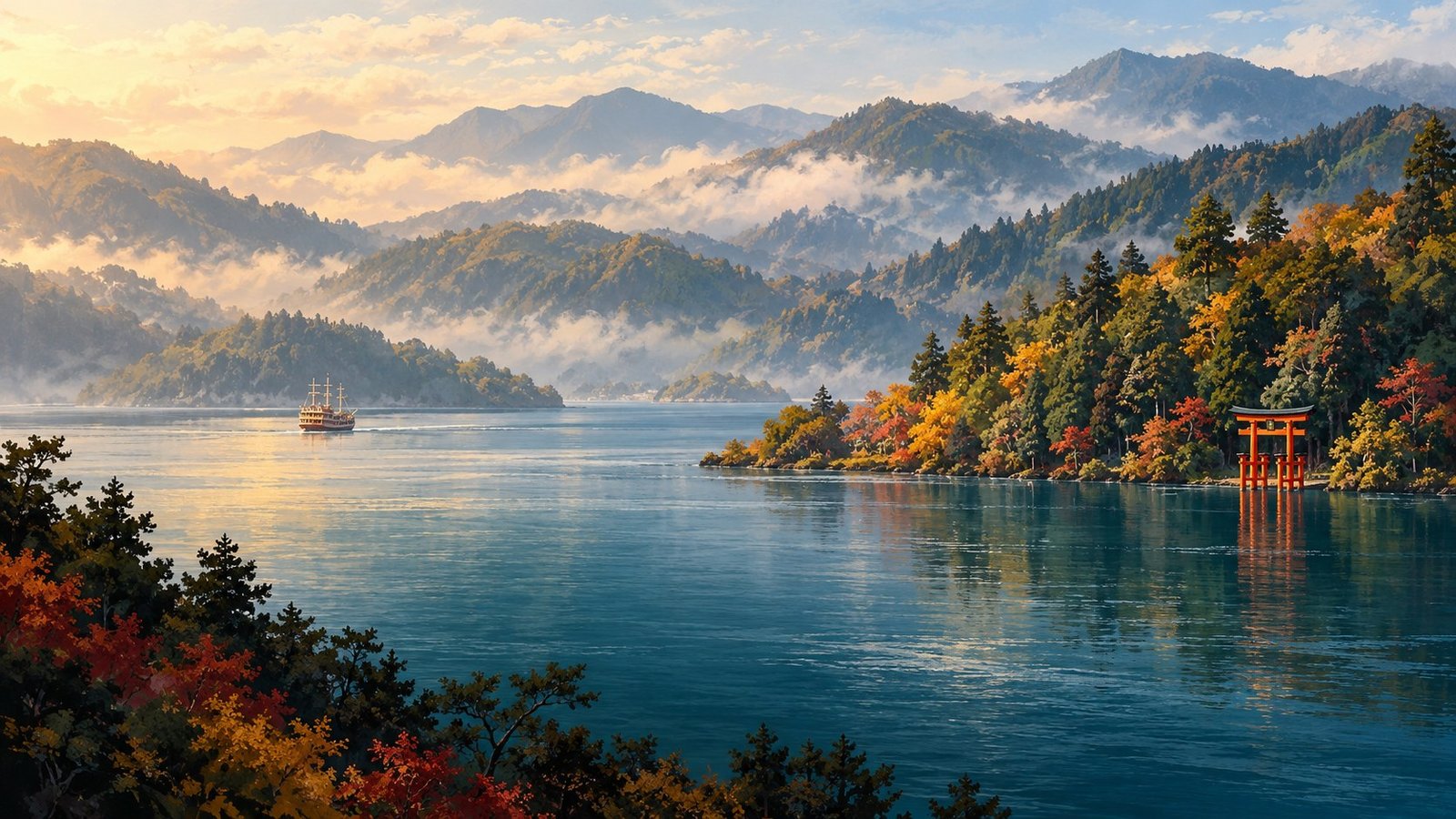
AI-created editorial illustration inspired by Lake Ashi and Hakone’s wooded shores; an illustrative scene, not a photograph of a verified viewpoint.
A useful Hakone travel guide starts with a choice: are you coming for a hot-spring stay, a circuit of the mountain and lake, or both? Hakone spreads across valleys, upland villages and Lake Ashi, so the name on a hotel listing tells you less than its nearest station or bus stop. [1]
For most first visits, one night gives the trip a better balance. Enjoy a museum or lakeside walk, arrive at your ryokan with time to bathe, then use the next day for the weather-dependent sights. Two nights make sense when you want a slower stay or another chance at clear views.
This article contains affiliate links. If you make a booking or purchase through them, Taylor’s Trailblazing Travels may receive a commission at no extra cost to you.
1–2 nights
One for a ryokan evening; two for slower sightseeing and weather flexibility.
Hakone-Yumoto
A useful base when a short stay or onward train makes the arrival leg important. [1]
Gora
The railway meets the cable car here; check the slope and shuttle to your actual hotel. [2]
Bath time
Build the sightseeing around your accommodation’s check-in and dinner arrangements.
Hakone travel guide: choose your base first
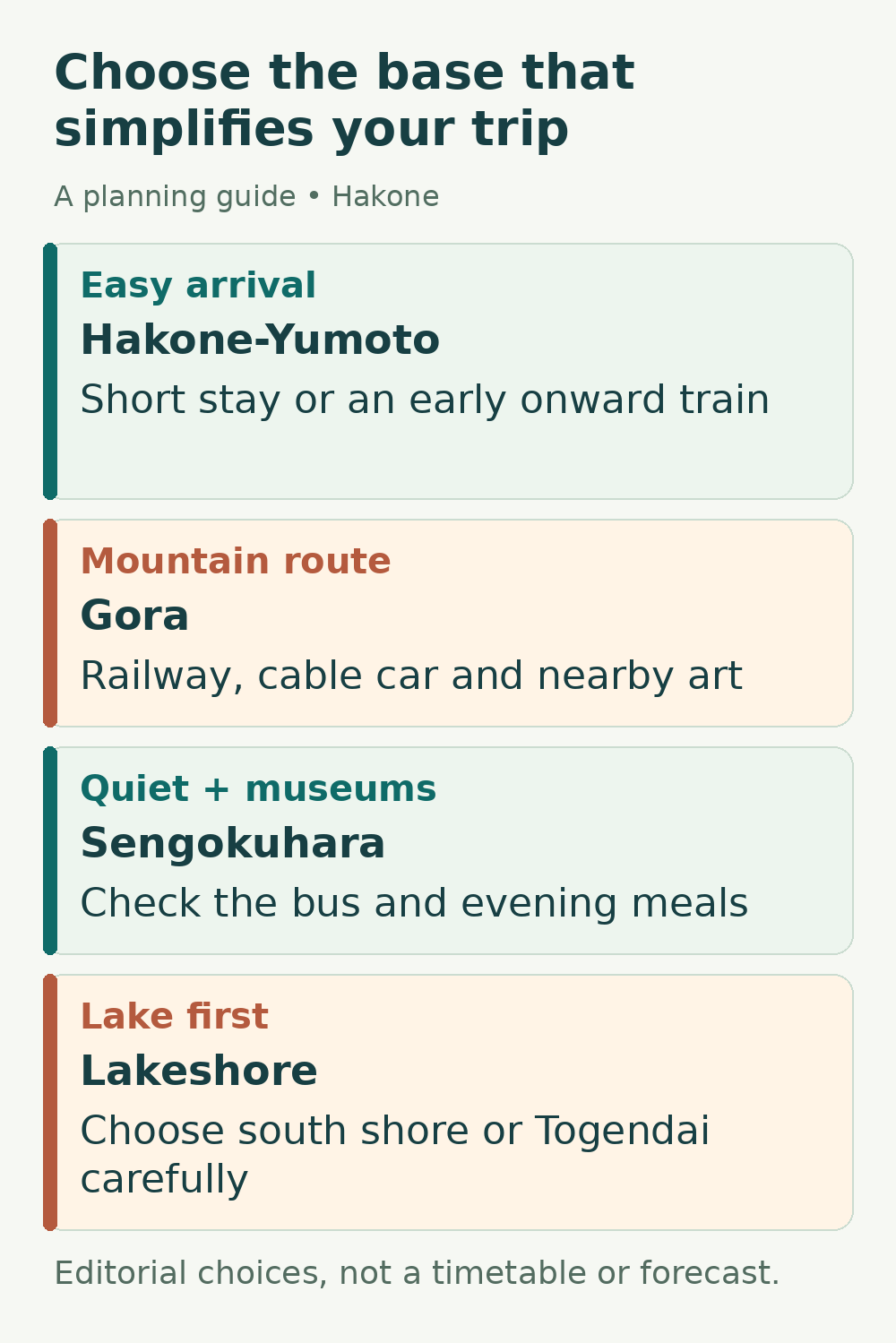
The following choices are editorial judgements based on three practical questions: how many transfers your arrival requires, which sights you want nearby, and how easily you can reach the hotel for dinner. They are not a ranking of hotel quality. Check the property’s own access instructions before booking. [1][2]
| Base | Choose it for | Trade-off to check |
|---|---|---|
| Hakone-Yumoto | A short first stay, an easy rail arrival, or an early onward journey. | You still need to travel uphill for the mountain sights. A Yumoto address does not guarantee a level walk from the station. [1] |
| Gora | A mountain-route morning, the Open-Air Museum area, and a ryokan stay. | Steep streets can make a short map distance awkward with luggage. Confirm the shuttle or cable-car stop. [2] |
| Sengokuhara | A quieter, more spacious setting and a museum-focused visit. | The mountain railway does not reach this area. Check the precise bus route and evening meal arrangements. [2] |
| Moto-Hakone or Hakone-machi | The southern lakeshore, shrine and historic-road sights. | Arrival depends on a road or lake connection. Verify the stop or pier nearest your accommodation. [1][8] |
| Togendai or northern lakeshore | A stay centred on the lake and the ropeway end of the route. | This is a different base from Moto-Hakone. Check the hotel’s land connection as well as the boat timetable. [6][8] |
For a one-night trip with a late arrival, prioritise a simple transfer over a distant view. If your chosen ryokan is the main reason for coming, let its location determine the sightseeing. Miyanoshita also deserves consideration when a particular historic hotel appeals; both railway and bus access are available. [2]
Once you have chosen an area, compare the same dates, occupancy and meal plan: search Hakone stays on Agoda and compare Hakone accommodation on Booking.com. These searches cover the wider region. Use the map, then check whether a private bath is attached to your room or booked separately.
How much time should you allow?
A day trip: choose the loop or a slower theme
A day trip is workable if you arrive early and accept that the transport circuit is a substantial part of the experience. Pick the mountain-and-lake route with short stops, or combine one museum with a bath. Trying to add a long museum visit, a full loop and a leisurely onsen to the same day leaves very little slack.
As a planning allowance, keep about seven to eight hours within Hakone for a loop with lunch, queues and a couple of stops, before adding the journey from your Tokyo hotel. This is an editorial time budget, not an operator’s journey time. If you arrive late morning, shorten the plan immediately.
One night: a good first-visit balance
On day one, arrive around lunchtime, deal with luggage and choose one museum or a modest lakeside outing. Reach the accommodation in time for its check-in and dinner arrangements. On day two, take the loop, or its shorter alternative, before leaving. Reverse the sightseeing days if the forecast favours your arrival day.
Two nights: time to enjoy the accommodation
Use the middle day for the weather-dependent circuit. Give the arrival afternoon to your local area, and the final morning to breakfast, another bath or a nearby attraction. Staying in one hotel avoids using the extra time on another check-out and transfer.
These suggestions assume normal transport, a manageable day bag and no long-distance departure immediately after the last attraction. Add time for mobility needs, children, bus congestion or a hotel away from the main routes.
Build a loop you can shorten
The familiar mountain-first sequence is Hakone-Yumoto to Gora by train, Gora to Sounzan by cable car, the ropeway via Owakudani to Togendai, a cruise to the southern lakeshore, then a bus back towards Yumoto. The transport links are real; the best direction depends on your starting point and that day’s conditions. [6][8]
Mountain first
This is a sensible starting plan from Gora when the ropeway is running and the mountain views are clear. Visit Owakudani while conditions suit, then cross the lake. Add the shrine only if the boat and return-bus timetable leave comfortable time. Full-length ropeway journeys require a change at Owakudani; queues and sightseeing come on top of riding time. [7]
Lake first
From Yumoto, take a bus to Moto-Hakone or Hakone-machi, explore the southern shore, then cruise towards Togendai. Continue over the mountain only if there is adequate time before the ropeway closes; otherwise use the road connection back. Starting at the lake changes the order of your day, but cannot guarantee shorter queues. [8]
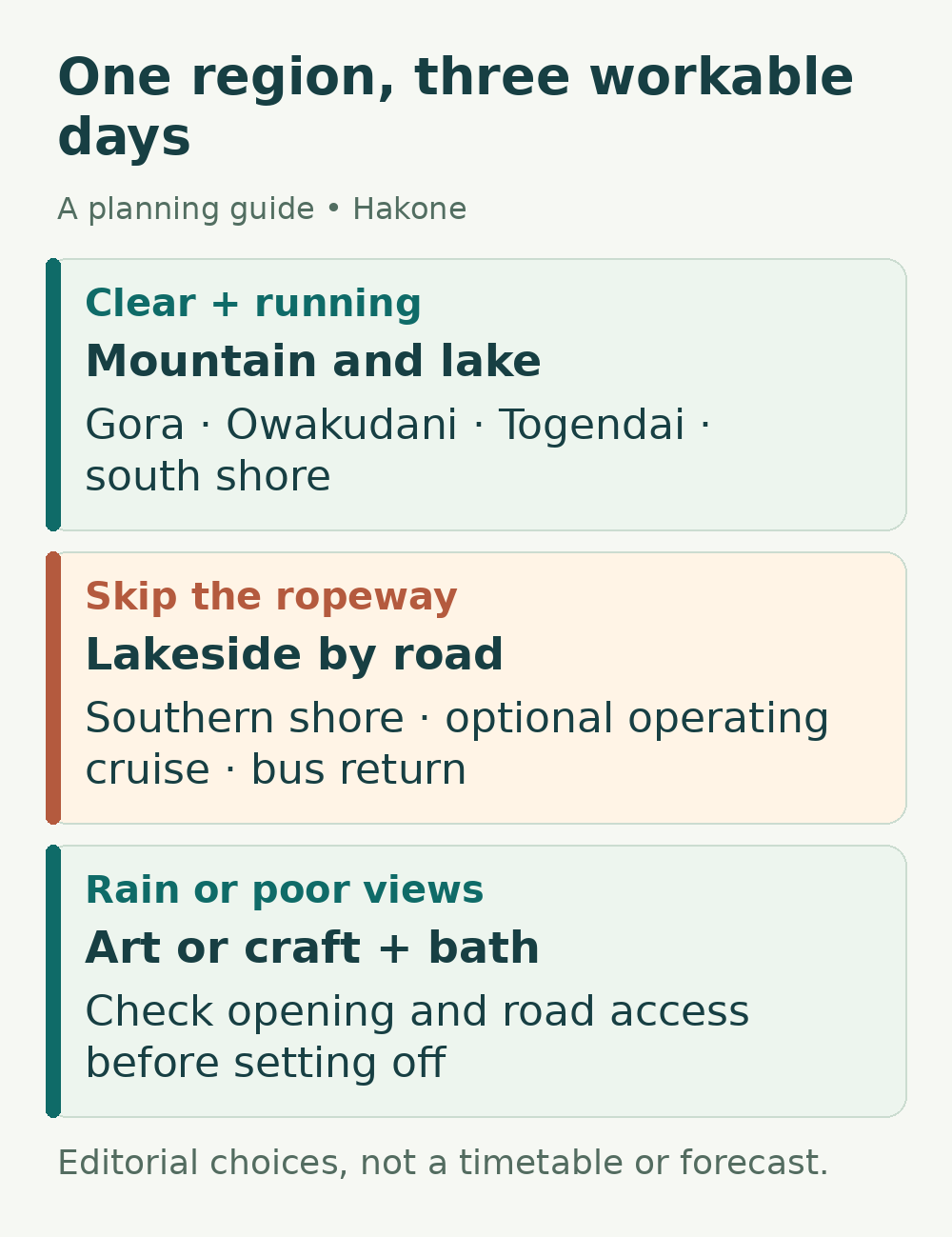
| Conditions | A workable response | What to leave out |
|---|---|---|
| Clear and operating normally | Start with the mountain or lake section nearest your base; keep lunch and transfer slack. | A second major museum on the same loop day. |
| Ropeway unavailable or unsuitable | Use a road-based lakeside outing, with a cruise only if it is running; return by bus. | Owakudani and the mountain crossing. |
| Poor visibility or persistent rain | Choose Pola or a booked craft activity, lunch and a bath, provided roads and facilities remain open. | View-chasing and a long exposed walk. |
| Severe weather or wider disruption | Follow operator advice and reduce travel; ask your accommodation about safe local options. | An improvised attempt to complete the circuit. |
The ropeway’s published hours, checked on 17 October 2026, are 09:00–17:00 from February to November and 09:00–16:15 in December and January. Weather and maintenance can suspend it. Check the official transport information and timetable search before leaving, and again before crossing to the far side of the lake. Do not treat a closing time as your arrival target. [6][7]
Owakudani’s volcanic gas affects who can use the ropeway. The operator prohibits travel between Sounzan and Ubako for people with allergic asthma, bronchial, lung or heart conditions, pacemakers, or who feel unwell. It also asks particularly sensitive travellers, including pregnant visitors, babies and young children, and older people, to consider not riding. Read the operator’s current guidance before planning this section; a service running normally does not remove these restrictions. Checked 17 October 2026. [9]
Choose experiences that fit the route
Owakudani and Lake Ashi: scenery with an alternative
Owakudani is the volcanic-landscape stop on the ropeway route. Mount Fuji can be visible from the ropeway and valley in clear conditions, but it should be a bonus rather than the only reason for the trip. On Lake Ashi, the Hakone Sightseeing Cruise links Togendai with Hakone-machi and Moto-Hakone; allow roughly 25–40 minutes on the water for a crossing, plus waiting and boarding. [7][8]
Open-Air Museum: give the art proper time
Build a generous visit around the outdoor sculptures and indoor galleries instead of treating the museum as a station stop. An editorial allowance of two to three hours is reasonable for travellers who enjoy art; reduce something else that day. Because much of the visit is outdoors, Pola is the more practical choice for sustained heavy rain.
The Open-Air Museum publishes hours of 09:00–17:00, with final admission at 16:30. Adult admission is ¥2,000 at the museum or ¥1,800 online, checked 17 October 2026. Compare the museum’s own ticket with any pass-holder offer before buying. [10]
Pola: a useful museum day in the highlands
Pola provides an indoor alternative near Sengokuhara. Its official access page lists a free shuttle from Gora as well as the tourist-attraction bus; check the return departure before entering. The former direct TP bus from Odawara and Yumoto is no longer operating. [12]
Adult admission is ¥2,200, with published hours of 09:00–17:00 and last admission at 16:30, checked 17 October 2026. Exhibition changes can close the whole museum: announced closure dates include 1 December 2026 and 8–26 April 2027. Check its calendar before making this your wet-weather plan. [11]
Shrine, old road and local craft
At Hakone Shrine, visit the precincts as well as the lakeside red gate. The Heiwa no Torii dates from 1952; the shrine’s history is much older. A photograph at the shore is only one part of the visit. [13]
A section of the Old Tokaido Road adds historical context to a lakeside day. Choose a section that matches your footing and the weather: the old paved route is not a substitute for an easy, level promenade, and the full walk deserves its own plan. [14]
For something hands-on, view the Hakone yosegi-zaiku craft experience on GetYourGuide. The listed guided outing starts at Hakone-Yumoto and lasts about 2½ hours, including travel and a marquetry workshop. Check the available start time and inclusions; it is an activity to schedule, rather than a spare five-minute stop. [19]
Choose your hot spring before choosing the room
For a ryokan stay, establish how you want to bathe. A communal bath, a private bath reserved for a time slot, and a bath attached to your bedroom are different experiences. Ask whether the exact room and plan include your preferred option, whether the water is a hot spring, and whether private slots must be booked in advance.
A dinner-and-breakfast plan can make the evening easier, especially if your accommodation is remote. Confirm meal times, dietary requirements and the latest arrival the property will accept for dinner. A beautiful room loses much of its appeal if the day’s sightseeing leaves you rushing straight into the meal.
A practical day-use option: Hakone Yuryo
Hakone Yuryo is a day-use bath facility, with no overnight accommodation. It has communal baths and bookable private open-air baths, reached by a short free shuttle from Hakone-Yumoto. It makes a useful choice when a ryokan is outside your budget or you want a bath before returning to Tokyo. [15][16]
The operator says it lifted tattoo-based bathing restrictions on 1 April 2025. Its rules still prohibit swimsuits and bathing by people in nappies; it directs families with pre-school children to private baths. Confirm the child’s eligibility and suitable room before booking. Other Hakone properties set their own tattoo rules. Checked 17 October 2026. [15]
Private rooms have different capacities, with bookings starting at two hours. For wheelchair users, the operator describes access to the entrance of a universal-design private room; that is not a promise of an assisted transfer into the bath. Ask specifically about the facilities and help your party needs. [16]
Getting there and choosing the right ticket
Start with your arrival station
From Shinjuku, Odakyu’s Romancecar provides a direct reserved-seat train to Hakone-Yumoto. Check the selected departure: the advertised journey is about 80 minutes, but the published timetable also contains longer runs. Ordinary Odakyu services avoid the limited-express charge, with a longer trip and no guaranteed seat. [3]
From Tokyo Station, the Tokaido Shinkansen to Odawara followed by the local connection is another option. If your wider Japan journey already brings you to Odawara, price the local Hakone pass separately instead of buying an unused Tokyo return. [5][12]
For a further booking comparison, check Tokyo–Hakone options on 12Go. Inspect the actual product, departure point and arrival point: a rail pass, a reserved train ticket and a private transfer are different purchases. Use the operating railway’s timetable for the journey you intend to take.
What the Hakone Freepass covers
The pass covers unlimited use of eight specified transport types within the designated area, including the mountain train, cable car, Hakone Ropeway and Hakone Sightseeing Cruise. Selected bus routes are included; Izu-Hakone buses are excluded. The Shinjuku version also includes one return journey on the Odakyu section to Odawara. Check the coverage map, since every bus or boat displaying the word Hakone is not automatically included. [4]
| Starting point | 2 days | 3 days |
|---|---|---|
| Shinjuku | ¥7,100 | ¥7,500 |
| Odawara / local Hakone area | ¥6,000 | ¥6,400 |
For the Romancecar between Shinjuku and Hakone-Yumoto, add the reserved-seat limited-express supplement in each direction you use it: ¥1,200 per adult each way at the standard advertised rate. Odakyu lists a ¥50 reduction for an express e-ticket bought through EMot Online Tickets. The Freepass does not itself reserve a Romancecar seat. [3]
The Freepass is most attractive when your intended sightseeing uses several of its transport modes. If you only want Yumoto and a bath, or a museum reached by train, compare ordinary fares and the narrower official passes before buying. Museum discounts are not blanket free admission, and a transport pass does not put you ahead of a boarding queue. [4]
Budget for the trip you actually want
The accommodation and meal plan are usually the choices to settle first. Compare the final total for your party, including any listed taxes, dinner, breakfast and private-bath charges. A headline room price without meals is not directly comparable with a ryokan package that includes them.
| Item | Assumption | Amount |
|---|---|---|
| Hakone Freepass | 2-day version from Shinjuku | ¥7,100 |
| Romancecar supplements | Two adult journeys at ¥1,200 | ¥2,400 |
| Open-Air Museum | One adult same-day ticket | ¥2,000 |
| Subtotal | Before accommodation, food, baths and other extras | ¥11,500 |
Online ticket reductions can lower that example. Conversely, extra museums, a day-use bath, taxis and luggage delivery raise it. If sightseeing spans three days, the adult Freepass upgrade is ¥400; the additional room night and meals are the larger budgeting decision. This comparison is arithmetic from the ticket prices, not a forecast of hotel rates.
When a guide adds value
A guide is useful when you want interpretation and help tailoring a day around specific interests. View the Hakone private licensed-guide tour on Viator for one locally starting option. The listing describes a walking tour using public transport or taxis; a private vehicle is not included. Agree the route, admissions and transport costs before committing, particularly if avoiding Owakudani or minimising walking. [18]
Book the fixed points, leave the scenery flexible
- Reserve the accommodation and confirm dinner, dietary needs, bathing arrangements and the last practical transfer.
- Choose any reserved train, private bath or guided activity around a realistic arrival time.
- Keep the order of your outdoor sightseeing adjustable until the weather and service picture are clearer.
Luggage, seasons and the details that change the day
Keep luggage out of the sightseeing loop
Odakyu describes a baggage-delivery service from Hakone-Yumoto to participating accommodation. Its published station drop-off deadline is noon; return collection at the station starts at 13:30. Check your hotel’s participation, bag limits and the current arrangements, especially if departing earlier. Storage and hotel delivery are separate services. Checked 17 October 2026. [20]
Choose the season for an experience
Autumn brings foliage and Sengokuhara’s silver grass; higher areas are cooler, so take a warm layer even when Tokyo feels mild. Seasonal displays vary by location and year. Winter’s shorter ropeway hours also reduce the margin for a late start. A clear-day photograph cannot tell you what visibility will be like during your own stay. [7][21]
Check the last few metres
For reduced mobility or a pushchair, check the route from the stop to the hotel entrance as carefully as the train journey. Gora’s slopes, shrine approaches and old-road surfaces can matter more than the distance. Ask the property or attraction about steps, gradients, lifts and bathing access that apply to your actual booking. [2][13][14][16]
Have access to changing information
Save your accommodation’s address and contact details, plus the relevant transport pages. If you need mobile data beyond your existing roaming plan, compare Japan data options through Airalo; select Japan after opening the store. Check device compatibility, network-unlock status, activation rules and the plan’s coverage before purchasing. Keep essential directions available offline too. [22]
A few final planning questions
Do you need to hire a car?
For the main railway, ropeway and lake circuit, the connected public transport is sufficient. A car can help with a remote accommodation choice, but first consider the hotel shuttle and the bus route. If driving, check parking and road conditions rather than assuming it removes peak-period congestion. [2][6][7]
Can a guide or a private transfer guarantee Mount Fuji views?
No. Transport can change where you go and how comfortably you travel; it cannot guarantee visibility or override closures. Choose a paid excursion for its itinerary, interpretation or convenience, and make sure you would still enjoy the day without a Fuji view. [7]
What is the best first-trip plan?
Book one night in Yumoto if simple arrival matters most, or Gora if the mountain route is your priority. Choose the bath and meal plan carefully, allow one main sightseeing programme per day, and keep a museum or lakeside alternative ready. Add a second night when you want to linger at the accommodation or preserve a second opportunity for clear weather.
Use the first-time Japan travel guide to fit this stay into your wider journey.
Sources and planning notes
This is a research-led guide. Official tourism bodies, transport operators and attraction information inform the factual advice; base choices, pacing and explicitly labelled budget examples are editorial planning judgements. Sources checked on 17 October 2026. Recheck current prices, conditions and operating notices for your travel dates.
- Hakone Tourist Association — Hakone areas
- Hakone Tourist Association — Where to stay in Hakone
- Odakyu — Limited Express Romancecar tickets and timetable
- Hakone Navi — Hakone Freepass
- Odakyu — Hakone Freepass prices and options
- Hakone Navi — Getting around Hakone and transport status
- Hakone Navi — Hakone Ropeway
- Hakone Navi — Hakone Sightseeing Cruise
- Hakone Ropeway — Volcanic gas precautions and safety measures
- Hakone Open-Air Museum — Visit us
- Pola Museum of Art — General information
- Pola Museum of Art — Access
- Hakone Tourist Association / Japan Tourism Agency — Hakone Shrine
- Hakone Tourist Association — Old Tokaido Road
- Hakone Yuryo — Official visitor information
- Hakone Yuryo — Frequently asked questions
- Hakone Tourist Association — How to enjoy onsen
- Viator — Hakone customised private tour with a licensed guide
- GetYourGuide — Hakone yosegi-zaiku craft experience
- Odakyu — Baggage services
- Hakone Navi — Autumn seasonal highlights
- Airalo — Japan eSIM options
Illustrations in this article were created for Taylor’s Trailblazing Travels. Third-party photographs, where used, are credited beside the image or in the source list.