Kamakura and Enoshima Day Trip from Tokyo
A temple morning, a coastal train ride and an island afternoon—with room to change the plan.
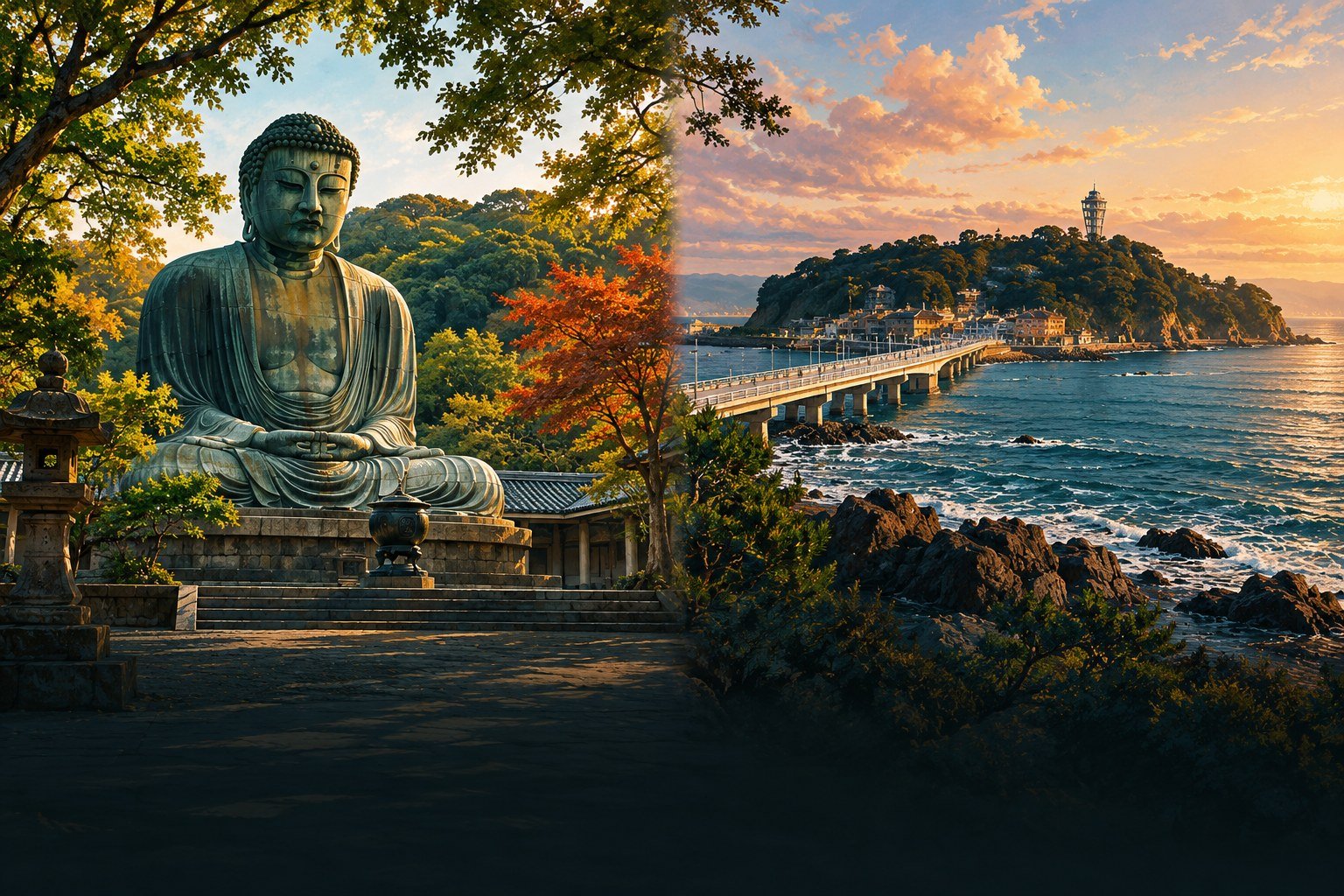
Original AI-assisted editorial illustration pairing Kamakura and Enoshima; two separate scenes.
A Kamakura and Enoshima day trip from Tokyo works particularly well when you want a change of scene without changing hotels. The reward is variety: a shrine approach in central Kamakura, the Great Buddha and Hasedera around Hase, then sea air on Enoshima.
The important choice is how much of each place to attempt. This route prioritises a satisfying temple visit and an island afternoon, with a clear point at which to drop a stop. The clock times below are editorial planning allowances, not a booked tour or guaranteed train connections.
This guide contains affiliate links. Taylor’s Trailblazing Travels may earn a commission when you book or buy through them, at no extra cost to you.
Planning decision 01
Start with Kamakura
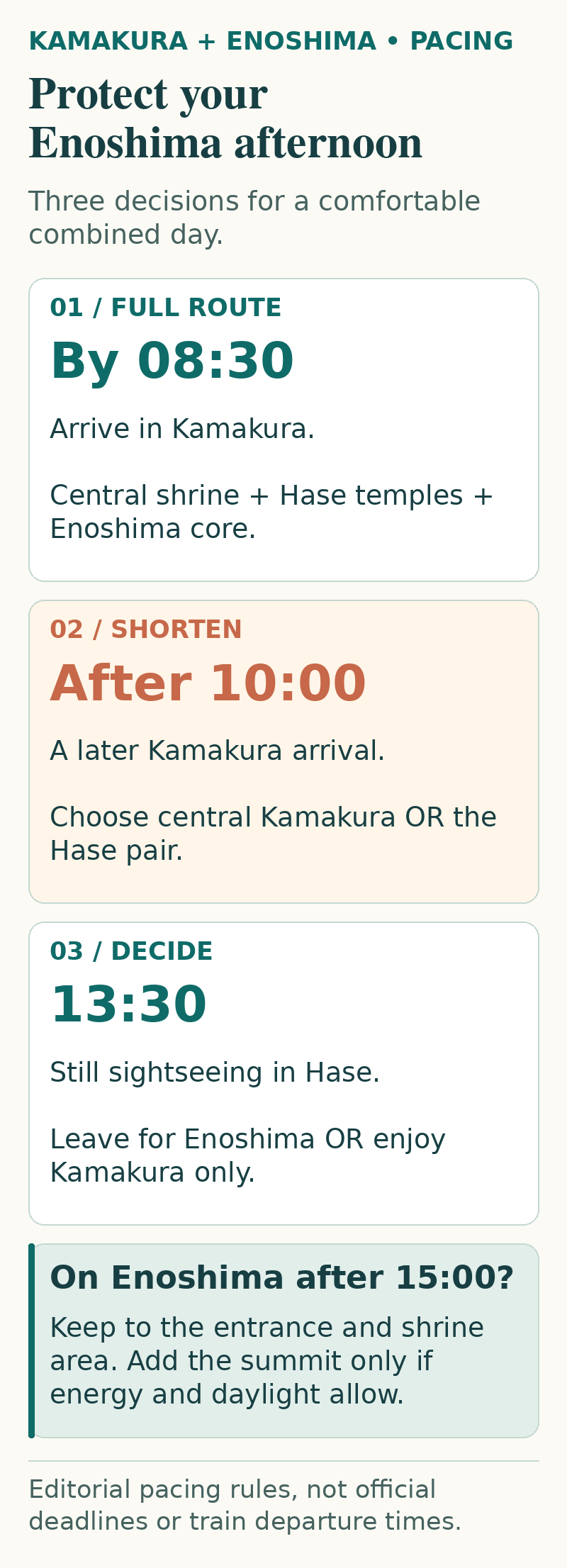
Arrive around 08:30; after 10:00, shorten the temple morning.
Planning decision 02
Protect the afternoon
Use 13:30 at Hase as the decision point for the island visit.
Planning decision 03
Buy for your route
A local rail pass may cost more than this itinerary's individual rides.
Planning decision 04
Expect steps
Enoshima's Escar helps uphill; the return still involves stairs.
A realistic Kamakura and Enoshima day trip route
Use three anchors: central Kamakura, the two nearby Hase temples, and Enoshima’s entrance-to-summit area. The basic railway sequence is Kamakura → Hase → Enoshima. The final Tokyo-bound leg can leave via Fujisawa, avoiding another journey back along the coast.
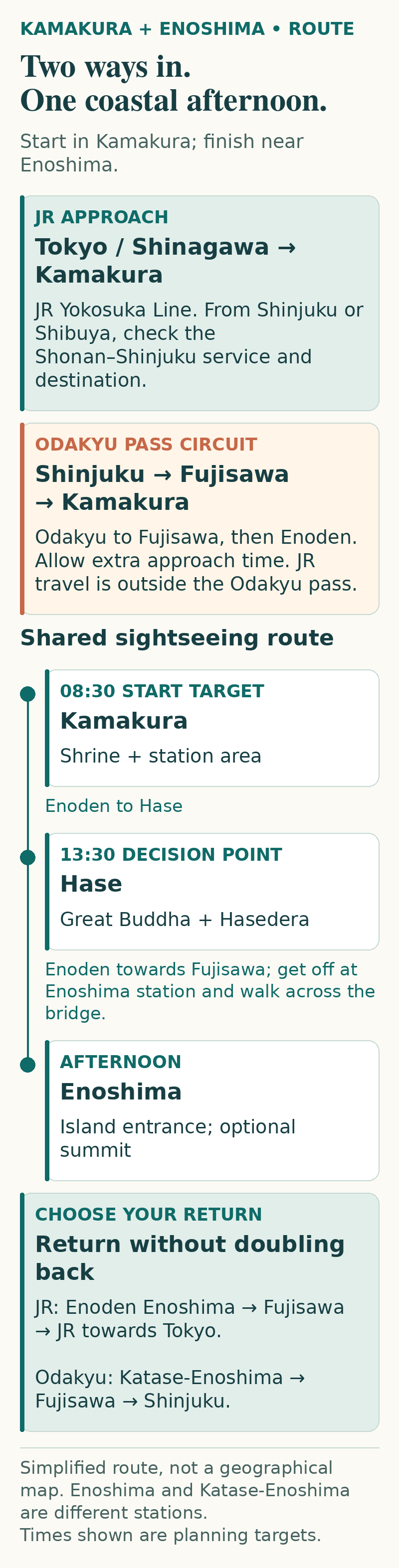
| Time | Plan | Keep the day workable |
|---|---|---|
| Around 07:00 | Leave a central Tokyo hotel. | Check a journey that reaches Kamakura around 08:30. An Odakyu approach may require an earlier start. |
| 08:30–10:00 | Tsurugaoka Hachimangu, then return towards the station via Komachi-dori. | Browse shops as they open; postpone a long shopping stop. |
| 10:00–10:30 | Enoden to Hase; walk to Kotoku-in. | Allow for the station change and a missed departure. |
| 10:30–12:15 | Great Buddha, then Hasedera. | About 45 minutes at Kotoku-in and an hour including the walk to Hasedera are starting allowances. |
| 12:15–13:15 | Lunch around Hase; return to the station. | Choose a shorter queue if lunch starts eating into the afternoon. |
| 13:15–14:15 | Enoden towards Fujisawa; get off at Enoshima and walk towards the island. | This hour covers waiting, riding and the approach walk; it is not the train journey alone. |
| 14:15–16:30 | Island shopping street, shrine area and an optional summit/Sea Candle visit. | Choose the far-side caves only by replacing other stops. |
| 16:30–17:15 | Descend and walk to the appropriate return station. | Leave earlier if you want the descent in daylight. |
| From about 17:15 | Return towards Tokyo. | Allow roughly 90–120 minutes to your hotel as a planning buffer; check your actual connections. |
The full local sequence allows about eight to nine hours around Kamakura and Enoshima. Add the hotel-to-station legs and journeys at both ends before deciding that this is a comfortable day for your group. A late dinner reservation in Tokyo offers more flexibility than a fixed early one.
Back to top ↑Choose JR or Odakyu before buying a pass
| Starting situation | Useful approach | Main trade-off |
|---|---|---|
| Near Tokyo or Shinagawa station | JR Yokosuka Line to Kamakura: about 60 minutes from Tokyo or 50 minutes from Shinagawa. [1] | A direct start for the temple morning; Enoden and island transport are separate. |
| Near Shinjuku or Shibuya | Check a JR Shonan–Shinjuku connection towards Kamakura. Services have different southern destinations; some require a change at Ofuna. [1][2] | Choose the actual destination and connection, rather than boarding any train with the line name. |
| Starting and finishing at Shinjuku; prioritising pass value | Odakyu to Fujisawa, then Enoden towards Kamakura. Return from Katase-Enoshima through Fujisawa on Odakyu. | The approach reaches the coast from its western end and adds Enoden travel before the temple morning. [3][4] |
What the Enoshima–Kamakura Freepass covers
The adult pass from Shinjuku is ¥1,640 for one day. It includes one Odakyu return journey between the departure station and Fujisawa, unlimited Enoden travel, and unlimited Odakyu travel between Fujisawa and Katase-Enoshima. JR trains, attraction admissions and the Romancecar limited-express supplement are separate. Buying this pass does not make a JR arrival in Kamakura part of the package. [3][4]
For the suggested Kamakura-first sequence, an Odakyu traveller continues on Enoden from Fujisawa to Kamakura in the morning. If that produces too late an arrival, start with the Hase temples and omit central Kamakura. Check the timetable before committing to the circuit.
Does the ¥800 Noriorikun pay off?
The Enoden-only Noriorikun costs ¥800 per adult. For this route, Kamakura–Hase is ¥200 and Hase–Enoshima is ¥260: ¥460 together. Even adding Enoshima–Fujisawa at ¥220 produces ¥680. These illustrative individual fares total less than the day pass before attraction benefits; recheck the selected station-pair fares before purchase. The pass becomes more appealing with extra rides or worthwhile discounts; it is not an automatic saving. [5][6][7]
For the return, choose Enoden Enoshima → Fujisawa → JR if that suits your Tokyo base, or Katase-Enoshima → Fujisawa → Odakyu towards Shinjuku. Enoshima, Katase-Enoshima and Shonan-Enoshima are different stations. Pin the correct one before leaving the island. [4][7][12]
Back to top ↑Keep the temple morning focused
Tsurugaoka Hachimangu and the station area
From Kamakura’s east exit, the shrine is about a ten-minute walk according to the local tourism association. Give the whole out-and-back visit considerably longer, especially if you stop along the approach. The suggested 90-minute window includes the shrine and a short return browse; museum visits need extra time. [8]
The Great Buddha and Hasedera
Kotoku-in’s open-air Great Buddha makes a compact first stop in Hase. The temple gives a seven-minute walk from Hase station and roughly five minutes onwards to Hasedera. Treat these as baseline walking times; crossings and crowds can lengthen them. [9]
Hasedera deserves the longer visit for its grounds and upper-level views. [3] If your group prefers one unhurried temple, choose it or Kotoku-in and use the recovered time for lunch. There is little benefit in paying for both if everyone is rushing through.
| Stop | Admission | Normal opening and final entry |
|---|---|---|
| Kotoku-in | ¥300; entering the statue costs an additional ¥50. | 08:00–17:30 April–September; 08:00–17:00 October–March. Final grounds entry 15 minutes before closing. Statue interior closes at 16:30, with entry until 16:20. [9] |
| Hasedera | ¥400 for ordinary temple entry. | 08:00–17:00 July–March, final entry 16:30. April–June: closes 17:30, final entry 17:00. [10] |
During peak hydrangea viewing, Hasedera has a separate ticketing process for its hydrangea path, including advance timed applications. Check the temple’s seasonal notices if that path is your main reason for visiting; ordinary entry alone may not deliver the visit you have in mind. [16]
Back to top ↑Give Enoshima an afternoon, with one optional extension
After reaching Enoshima station, allow time to reach and cross the bridge, browse the island approach and climb towards the shrine and summit. The Sea Candle operator’s access guide places the garden about 25 minutes from Enoden Enoshima station using its described route; stops and queues make a longer allowance sensible. [12]
For this combined day, the useful core is the entrance area, a shrine visit and the summit if your legs and the weather cooperate. The Sea Candle observation tower is a paid option. If visibility is poor, a meal or a shorter coastal walk may add more to your afternoon than another ticket.
The Escar does not remove the descent
The paid Escar is an uphill escalator system. The operator explicitly says there is no downward service and visitors return by stairs. Pushchairs must be folded or left at the first section under the operator’s arrangements. Plan for the return before deciding to go up. [13]
The Iwaya caves are a separate extension on the far side of the island. If these are your priority, drop a temple or other island stops and check their current opening status first. The Benten-maru boat can link the bridge area and the far-side shore, but departures are irregular and require checking on the day. Keep enough time and energy to walk back; do not make an assumed boat departure essential to your return. [15]
Back to top ↑Use these cut-offs when the day slips
These are editorial pacing rules, designed to preserve a worthwhile afternoon. They are deliberately earlier than attraction closing times.
| Your position | Decision | What it protects |
|---|---|---|
| Arriving in Kamakura after 10:00 | Choose central Kamakura or the Hase pair for the morning. | A proper lunch and enough island time. |
| Still sightseeing in Hase at 13:30 | Leave for Enoshima, or consciously choose a Kamakura-only day. | Avoiding two hurried destinations. |
| Reaching Enoshima after 15:00 | Keep to the entrance/shrine area; choose the summit only if daylight and energy allow. | A relaxed descent and return journey. |
| A long queue or a tiring climb | Remove the next optional stop. | Your meal, water break and return buffer. |
The Enoden timetable currently shows daytime departures about 14 minutes apart at Hase. Missing one departure therefore matters; adding several short photo stops can consume the slack in the plan. Keep the coast as something to enjoy from the train unless one particular stop is a priority. [11]
If you want the northern temples, a long lunch, the Great Buddha and a full Enoshima walk including the caves, split the places into two days. The combined route is strongest when you enjoy a selected portion of each.
Back to top ↑Build a budget from the route you will actually take
| Item | Yen | Basis |
|---|---|---|
| Enoshima–Kamakura Freepass | 1,640 | Published adult Shinjuku price. [3] |
| Kotoku-in and Hasedera | 700 | ¥300 + ¥400 ordinary entry. [9][10] |
| Lunch | 1,500 | Planning allowance; choose a restaurant within it. |
| Drinks and a snack | 500 | Planning allowance. |
| Base total | 4,340 | Transport, both temples and the above food allowance. |
| Optional Sea Candle and full Escar | +1,300 | ¥800 + ¥500 standard individual fees. [14] |
| Total with both extras | 5,640 | Before any applicable pass benefits or combined tickets. |
This is a planning example, not a quoted package price. It excludes transport to Shinjuku, Romancecar supplements, shopping, the statue interior, hydrangea-path charges, caves, aquarium and evening events. JR travellers should substitute the fares for their actual departure and return stations.
The operator also lists a ¥1,100 daytime Sea Candle set that includes the tower, all three Escar sections and the garden. This is ¥200 below the separately priced ¥1,300 allowance above. The set permits garden access until 17:00 on event days; check the operator’s conditions if you plan to stay later. [14]
The Samuel Cocking Garden is normally free before 17:00; on event days a fee applies to staying or leaving after that time. A late sunset or illumination visit can therefore change the budget. [14]
Back to top ↑Adapt the route for rain, children or less walking
For ordinary rain
Replace the island summit and caves with Enoshima Aquarium, or stay in Kamakura with one temple and a leisurely lunch. The aquarium’s published 2026 standard hours finish at 17:00, with final admission one hour earlier; adult entry is ¥2,800. Check that day’s hours, and give it a proper afternoon instead of adding it after the full route. [17]
If the aquarium becomes your chosen afternoon, check Enoshima Aquarium admission on GetYourGuide. The current listing is non-refundable, so confirm the date and ticket conditions before paying. [20]
If wind, sea conditions or official disruption notices make the coast unsuitable, change the day rather than trying to recover a preselected attraction list. The bridge and exposed viewpoints are part of the outing, so a forecast of poor coastal weather changes its appeal.
For fewer steps
Choose Kotoku-in and a sit-down lunch, followed by the mainland seafront or aquarium. Leave the island summit and caves optional. A small day bag is easier to manage than luggage, and regular seated breaks are more useful than trying to compensate with a late start.
Fewer steps does not establish a fully accessible route. Kotoku-in provides a barrier-free route but advises assistance because parts of the grounds remain difficult. At Hase, wheelchair or pushchair users alighting from a Fujisawa-bound train should tell staff at their boarding station so the temporary sloped exit can be opened. Confirm individual access needs with the railway and attractions. [6][9]
For younger children, keep one temple and one coastal activity as the day’s commitments. A beach stop or aquarium visit can replace the second temple or the island climb. This keeps the same outing useful when attention or energy runs out sooner than expected.
Back to top ↑When a guided or private trip is worth considering
Independent rail travel suits travellers who want to change the plan as they go and keep the cost close to the example above. A group excursion can reduce the work of navigating, but its stop lengths and meeting times control your day. Check the actual itinerary: visiting Enoshima does not necessarily include the summit or caves.
For a group that needs adjustable pacing
A private vehicle can make it easier to agree a shorter sequence and organise pick-up from Tokyo. GetYourGuide lists a customisable Kamakura and Enoshima private van trip. Confirm your desired stops, pick-up area, total duration, admission costs and whether you are booking a driver or a guiding service. The vehicle does not remove steps within the attractions, and road traffic can affect the day. [1][18]
For either kind of excursion, make the important question concrete: how much time is available at the attraction you most want to see? A longer list of named stops can still mean a shorter visit to each.
Back to top ↑Questions that can change your plan
Can I reverse the route and visit Enoshima first?
Yes. That can suit an Odakyu arrival or a preference for the coast in the morning. Set a firm departure from Enoshima so you reach Hase well before the temple entry limits. If the island runs long, choose one temple; do not rely on reaching both just before closing. [9][10]
Do I need a ferry to reach Enoshima?
No. The normal walking approach crosses Enoshima Bentenbashi Bridge. The Benten-maru is an optional connection to the island’s far-side shore, with irregular departures. [12][15]
Will I see Mount Fuji?
It is possible from Enoshima’s viewpoints when visibility allows. The tourism office describes Fuji views from the Sea Candle, but clear visibility is a condition, so treat the view as a bonus. Choose this day for the temples and coast even if Fuji stays hidden. [19]
Can I keep an early evening booking in Tokyo?
Only after working backwards from the booking location and your chosen return connection. For a firm 18:00 commitment, shorten the island visit substantially or choose one destination. The sample route does not promise a Tokyo arrival by 18:00.
Back to top ↑The most useful version of the day
For a first combined visit, arrive early in Kamakura, give the Hase temples enough time, and reach Enoshima with the afternoon still ahead of you. Buy transport for the complete circuit you intend to travel, including the return.
Keep one rule above the rest: at 13:30, decide what kind of afternoon you want. A focused Kamakura day or a shorter island visit can both be excellent outcomes. Preserving time to look around is what makes the combination worthwhile.
This itinerary combines published railway and attraction information with editorial allowances for walking, meals and delays. Timed allocations and food budgets are planning estimates. Fares, opening arrangements and seasonal notices were reviewed on 18 October 2026; recheck them for your travel date.
Back to top ↑Sources and research
Reference links used for this article and editorial analysis reviewed on 18 October 2026. Check current fares, opening arrangements and services for your travel date.
- Kamakura City Tourist Association: accessTokyo and Shinagawa access; road congestion.
- JR East: Shinjuku southbound Shonan–Shinjuku timetableOctober 2026 service destinations; check the timetable for your date.
- Odakyu: Enoshima–Kamakura FreepassPass price and Romancecar supplement requirement.
- Odakyu: Freepass coverage and conditionsJapanese; one return to Fujisawa and the unlimited local zone.
- Enoden: Noriorikun one-day passAdult price, validity and attraction benefits.
- Enoden: Hase stationFares, local access and arrangements for wheelchair and pushchair users.
- Enoden: Enoshima stationFujisawa fare and station information.
- Kamakura City Tourist Association: Tsurugaoka HachimanguShrine access and visitor information.
- Kotoku-in: official visitor informationGreat Buddha, access, admission, hours and accessibility.
- Hasedera: admission and accessJapanese; ordinary admission and seasonal opening hours.
- Enoden: Hase timetablePublished daytime departure spacing.
- Enoshima Sea Candle: accessJapanese; station approaches, bridge and Escar route.
- Enoshima Sea Candle: frequently asked questionsJapanese; uphill-only Escar and pushchair rules.
- Enoshima Sea Candle: tickets and feesJapanese; tower, Escar, garden and event admission.
- Discover Fujisawa: Iwaya caves and Benten-maruCave visit and irregular boat departures.
- Hasedera: hydrangea-path advance admission announcementTemple-issued announcement; Japanese; seasonal path admission process.
- Enoshima Aquarium: official English visitor information2026 hours, final entry and standard admission.
- GetYourGuide: customisable Kamakura private van tripProvider listing; compare the selected option and inclusions before booking.
- Discover Fujisawa: Samuel Cocking Garden and Sea CandleViewpoints and weather-dependent Mount Fuji views.
- GetYourGuide: Enoshima Aquarium admission ticketSpecific admission option for the aquarium alternative; current listing is non-refundable. Check the selected date and ticket conditions.
Illustrations in this article were created for Taylor’s Trailblazing Travels. Third-party photographs, where used, are credited beside the image or in the source list.