Japan with Toddlers: Practical Family Trip Planning
Fewer hotel changes, a proper daily reset and bookings that account for the smallest traveller.
- One main outing a day
- 10 days · 9 nights · 2 bases
- Check rooms and child fares
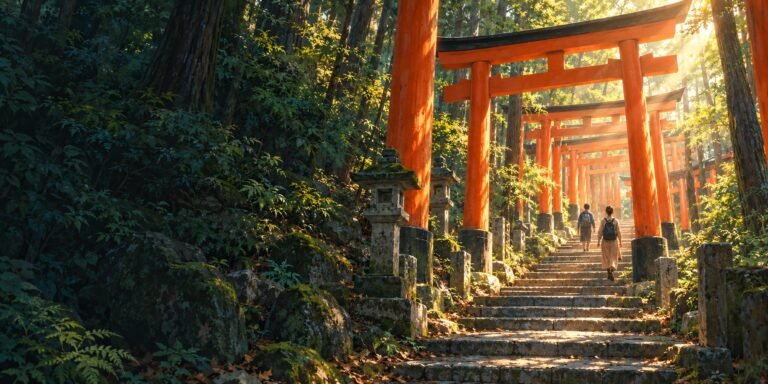
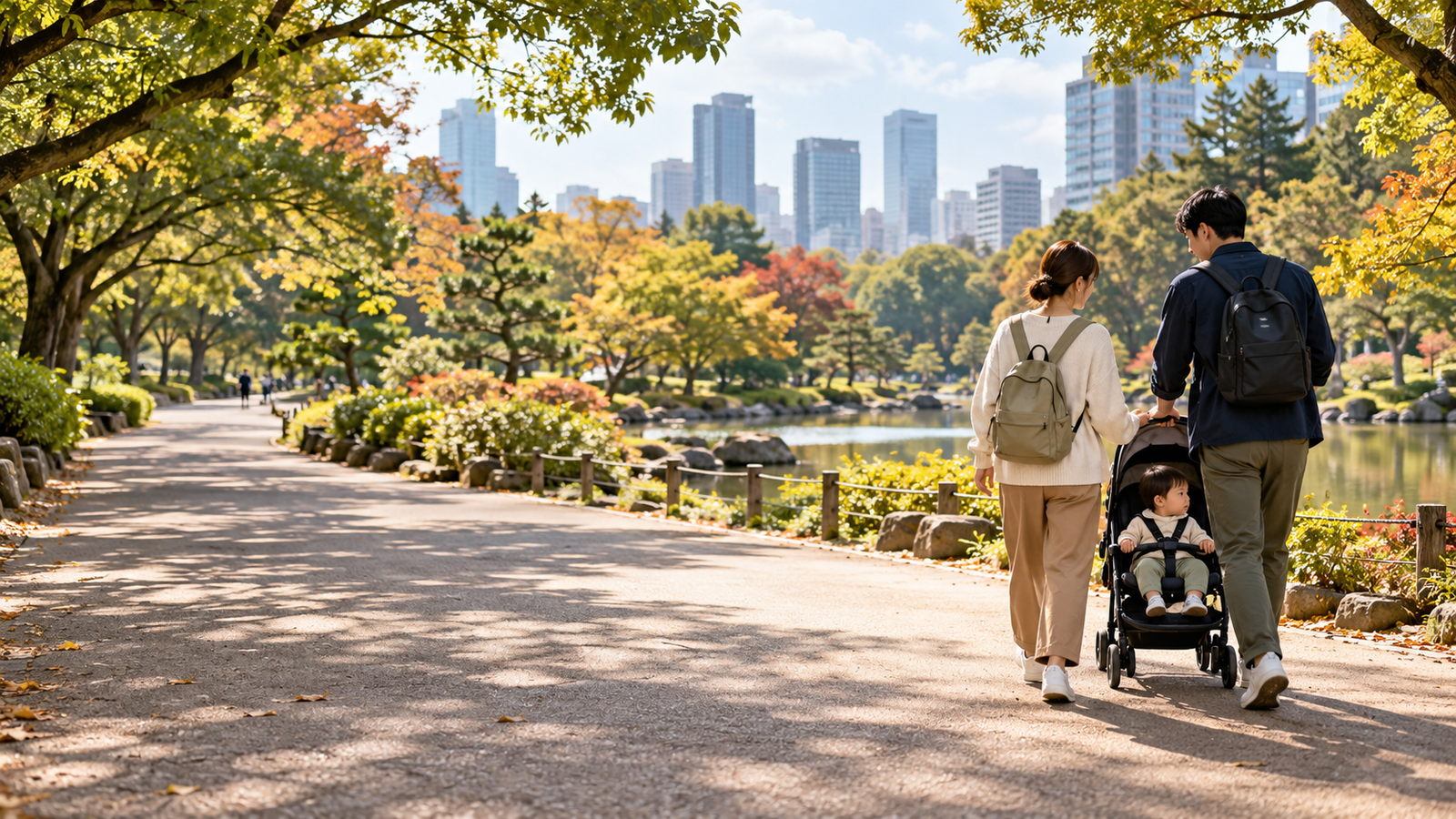
AI-created family-travel illustration; it does not depict Karen Taylor, her family or a personally visited location.
Japan with toddlers is easier to plan around an ordinary day than a list of famous sights. A room you can return to, a reliable meal and somewhere to move freely often decide whether an ambitious outing works. The useful question is how much travelling your family can comfortably repeat tomorrow.
This guide focuses on young children who still need close supervision, regular breaks and help with meals. It draws on operator, attraction and travel-health guidance alongside original planning examples. Recheck age, admission and transport rules for your own dates. Age rules differ between airlines, hotels and rail operators, so enter your child’s actual age for every booking.
Choose a base you can return to easily
Start with the room and its immediate surroundings. JNTO identifies changing and nursing facilities in many department stores, malls and larger stations, but that does not establish that every nearby building has the facilities you need. Save specific locations around the hotel and your main outings. [1]
Use a simple return-to-room check: can you reach the hotel from the day’s main activity without a complicated interchange, a long queue or carrying the pushchair up stairs? Set a return-time limit that suits your child, then test the actual journey. A station’s nearest marked exit may differ from its lift entrance. Tokyo Metro explicitly warns that the step-free route may not be the shortest one. [2]
Swipe the table sideways to compare all columns.
| Base to investigate | Why put it on the shortlist? | What should decide the booking? |
|---|---|---|
| Tokyo: Ueno / Okachimachi | A useful starting point if a kitchen-equipped apartment and Ueno-area outings feature in your plans. | Compare the property’s actual lift access and room layout, then test your chosen day trips. A convenient neighbourhood does not make every hotel convenient. |
| Kyoto: Kyoto Station / Umekoji | Investigate this grouping if rail arrival and a Railway Museum outing matter more than staying beside a particular temple. | Check the hotel-to-station journey and how you will reach your other activities. Do not treat all of Kyoto as a short walk from the station. |
| Osaka: Umeda or Tennoji | Compare these as possible city bases when your shortlist includes indoor food choices or southern Osaka outings. | Choose using your own destinations and the correct station exits. A large interchange can add effort even when the map distance is small. |
These are editorial starting points, not accessibility ratings or a ranking of every hotel area. Pick Kyoto or Osaka as the main Kansai base for a short stay. A day trip is optional; it does not have to become another hotel move.
Do a map check before paying
Save the hotel entrance, usable station lift, one straightforward evening meal and one nearby place for a break. If the plan only works when your toddler skips a nap, revise the plan.
A realistic ten-day, nine-night family plan
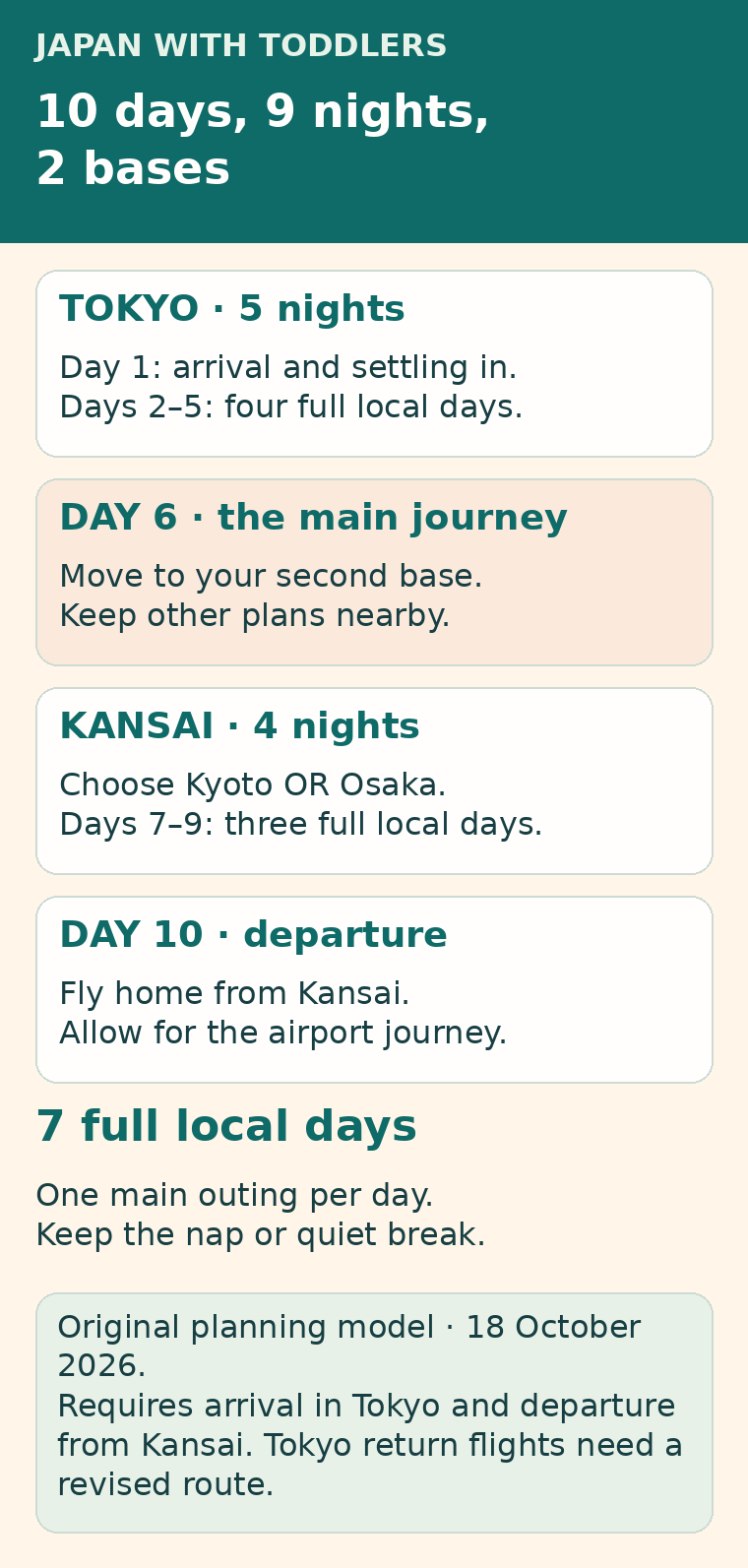
This original planning model assumes arrival in Tokyo on day one and departure from Kansai on day ten. Nights count accommodation in Japan; the flight out is separate. Check whether that flight pattern works for your dates before booking the rooms.
Two bases, one intercity move and seven full days without that move.
Swipe the table sideways to compare all columns.
| Days | Where you sleep | What the day needs to achieve |
|---|---|---|
| Day 1 | Tokyo, night 1 | Arrive, reach the hotel, eat and settle. Keep sightseeing optional. |
| Days 2–5 | Tokyo, nights 2–5 | Four full local days. Choose one main outing each day and preserve the daily break. |
| Day 6 | Kyoto or Osaka, night 6 | Travel to the second base, check in and keep the remaining plans close by. |
| Days 7–9 | Same Kansai base, nights 7–9 | Three full local days. Add a day trip only if the travel suits the family. |
| Day 10 | Departure | Allow for the airport journey and airline check-in requirements. |
If both flights use Tokyo, this exact plan needs changing. Allow a return journey and a sensible final-night location, or spend the holiday in one region. Do not squeeze the return transfer into an already full sightseeing day simply to retain nine named attractions.
A morning landing does not guarantee morning room access. Ask about the booked check-in time. If immediate access is essential, discuss an extra preceding night with the hotel and confirm that it will hold the room for your arrival.
Give each day a repeatable rhythm
Use the morning for one main activity, eat before the family becomes too tired, then return for a nap or quiet break. Keep a nearby afternoon walk optional and dinner straightforward. This is a scheduling suggestion, not a promise that jet lag or naps will follow a timetable.
On the first full day, choose an outing you can shorten. On a transfer day, the journey is the main plan. For help adjusting the trip length, use the guide to how many days to spend in Japan and remove activities before adding hotel changes.
Confirm the room, the beds and the child’s place
Compare the total price for your whole family using the same dates and child age on each site. A room shown for two adults is not confirmation that it can accommodate a toddler. Bed sharing, an additional bed and a cot are different arrangements, with different limits.
- Confirm the child is recorded on the reservation and whether any child charge is payable locally.
- Check the actual bed layout, available floor space and bathroom arrangement.
- Ask whether a cot is suitable for your child’s age and size, available for your dates and confirmed in writing.
- Check where the pushchair can be stored without blocking the room entrance.
- Distinguish an in-room washing machine from shared coin laundry, and a kitchenette from a restaurant breakfast.
A specific apartment option to compare
MIMARU Tokyo Ueno Okachimachi lists a 38 m² Apartment with four single beds, as well as other layouts. Its official property page lists a kitchen and dining table, fridge, microwave and shared coin laundry. Select the room type deliberately; facilities and bed layouts shown across a property’s photographs are not necessarily all in one room. [6]
MIMARU’s general policy allows up to two children aged six or under to share existing beds without counting towards adult room capacity. Its limited cots have age restrictions, so confirm the arrangement for your particular child and booking rather than treating the policy as a cot guarantee. [5]
Compare the same MIMARU property
Enter your dates, all guests and the child’s age, then compare the room, total price and cancellation deadline. These links are accommodation searches for this property, not a checked rate or availability promise.
Check MIMARU Ueno Okachimachi on Agoda Check MIMARU Ueno Okachimachi on Booking.comIf you use the Taylor’s trip itinerary planner to organise nights, add children and their ages on the booking website before comparing hotel totals. The planner’s hotel search currently uses adults and rooms.
Make flights, trains and pushchairs fit together
Check the child’s age on every flight
Airline age rules can change the fare and seating arrangements during the holiday. British Airways requires a child to have a seat on flights on and after their second birthday, with special booking arrangements when that birthday falls during the journey. Check your operating airline’s policy, including partner flights, before paying. [20] Check the family’s documents against current Japan entry guidance for British travellers and the official rules. [19]
Free rail travel does not include a reserved seat
On the Shinkansen services covered by smartEX, children aged one to under six generally travel free without their own seat, but using their own reserved seat requires a child ticket. A third infant accompanying one paying adult or child also needs a ticket. These rules should not be assumed to cover every local operator. [3]
For a long journey, price the toddler’s own reserved seat and decide whether that space is worth the extra cost. Choose the train around a workable meal and break, then check where the pushchair and luggage will go. JR Central explains the available baggage arrangements; using a reserved oversized-baggage space requires the appropriate reservation. Do not assume the space behind any last-row seat is available to you. [4]
Compare the Osaka transfer for the whole family
If your second base is Osaka, compare Tokyo–Osaka options on 12Go, then check the child’s seat, total family fare, stations and cancellation terms against booking directly with the operator. The link covers Tokyo–Osaka; it is not a Tokyo–Kyoto search.
Compare Tokyo–Osaka transport on 12GoUse the accessible route through the station
Tokyo Metro permits unfolded pushchairs on trains and asks passengers to use suitable free space while considering others. Hold the pushchair and use its brake on the platform. Use lifts where possible; remove the child and fold the pushchair if using an escalator, following the operator’s instructions. Ask station staff when the lift route is unclear. [2]
A familiar compact pushchair can cover longer walks; a carrier, if suitable for your child and comfortable for you, offers another option where the pushchair is awkward. You do not need to buy both solely for Japan. Practise folding and carrying what you already own while managing the luggage you intend to take.
If hiring a car, arrange an appropriate child seat with the rental company. JAF states that children younger than six must use a child seat; confirm the exact equipment in advance. For a booked road transfer, ask specifically about a suitable seat rather than assuming the vehicle will carry one. [14]
An airport transfer with a child-seat option
For the Kansai airport journey, this GetYourGuide listing offers private transfers to or from Osaka or Kyoto and lists one baby seat as included. Confirm that the seat suits your child’s age and size, that your exact pickup area is covered, and which charges apply before paying. A listing is not confirmation that your requested seat is reserved. [22]
Compare the Kansai airport private transferPlan meals and everyday supplies before hunger decides
Keep a familiar meal option near the hotel and carry supplies for the arrival journey plus a reasonable delay. A kitchen is useful only if it solves your family’s actual needs: reheating food, preparing a simple breakfast or eating quietly before the day starts.
Japanese supermarkets and shops will not necessarily stock your usual brand, texture or nappy size. Check where you can replenish supplies after arrival, while bringing the specific items your child relies on. Before packing food, check Japan’s animal and plant import rules; meat, fruit and other controlled ingredients should not be assumed exempt because they are in a child’s meal. [12]
Department stores and larger shopping centres can be useful places to look for feeding and changing facilities. Check the particular building’s floor plan and opening hours. A nursing room, a changing table and hot water for feeding are separate facilities, so confirm the one you need. [1]
Choose food by ingredients and preparation
Ask what is in the full dish, including stock, sauce and toppings. For allergies, download the Consumer Affairs Agency’s Food Allergy Communication Sheet before travelling and discuss ingredients and shared preparation with staff. Its English guidance explains Japanese food labels; a translated menu photograph is not a substitute for a clear answer from the kitchen. [21]
For young children, follow familiar food-preparation precautions abroad. The NHS advises upright, supervised eating, suitable cutting of small round foods and removal of fish bones; whole nuts and popcorn are unsuitable for under-fives. A meal break with the child properly seated is easier to manage than continuous eating while sightseeing. [13]
Make one meal dependable
Choose the day’s easiest meal in advance, then let the adults’ more adventurous food stop fit around it. If a restaurant cannot meet your child’s needs, change the restaurant rather than relying on a dish name or removing an obvious topping.
Choose an outing you can shorten
These are three researched options with useful family facilities, not a programme to complete. Book only what fits the child’s age and the day’s travel. Save the current official page before committing to a timed ticket.
Swipe the table sideways to compare all columns.
| Outing | Why investigate it? | The practical decision |
|---|---|---|
| Tokyo Toy Museum | The Baby Wood Playroom is for children aged zero to two, with a one-hour reserved session. | Children aged three and over, including siblings, cannot use that room. Choose the appropriate museum areas for the whole group, check admission arrangements and build the journey around the session. [7] |
| Kyoto Railway Museum | The museum lists a children’s play area, nursing and changing facilities, and limited pushchair loans. | Confirm the current opening day and required tickets. Keep enough energy for the return journey instead of feeling obliged to see every exhibit. [8] |
| Osaka Aquarium Kaiyukan | The entrance building has baby-care facilities, with further nursing facilities elsewhere. | The aquarium recommends leaving pushchairs at its storage point and accepts only specified pushchair types inside. Ramps form much of the route, but some changes of level need staff guidance to a lift. Check the current access information before choosing it for a pushchair-dependent day. [9] |
Book the museum admission that fits your family
Compare Kyoto Railway Museum adult admission on GetYourGuide with the museum’s own booking options. The listing is non-refundable. Children under three enter free; ages three to five have a separate ¥200 admission category, and older children have their own rates. Confirm the museum’s current tickets before booking. Optional simulator and steam-train experiences have separate ticket arrangements. Check current terms before choosing a date. [23] [24]
Compare Kyoto Railway Museum adult admissionPair a booked outing with a nearby, flexible break instead of a second distant attraction. A play space, a short walk or time in the room can be a complete afternoon. With two adults, consider taking turns over a museum room or shopping stop while the other stays with the toddler nearby.
For rain, choose an indoor plan that still has a manageable door-to-door journey. A distant indoor attraction does not solve a tiring transfer. For hot weather, shorten exposed walks and use cooler parts of the day; JNTO describes much of Honshu and Kyushu as hot and humid in summer. Check local conditions rather than assuming a park will provide a comfortable all-day plan. [16]
A worked family budget you can change
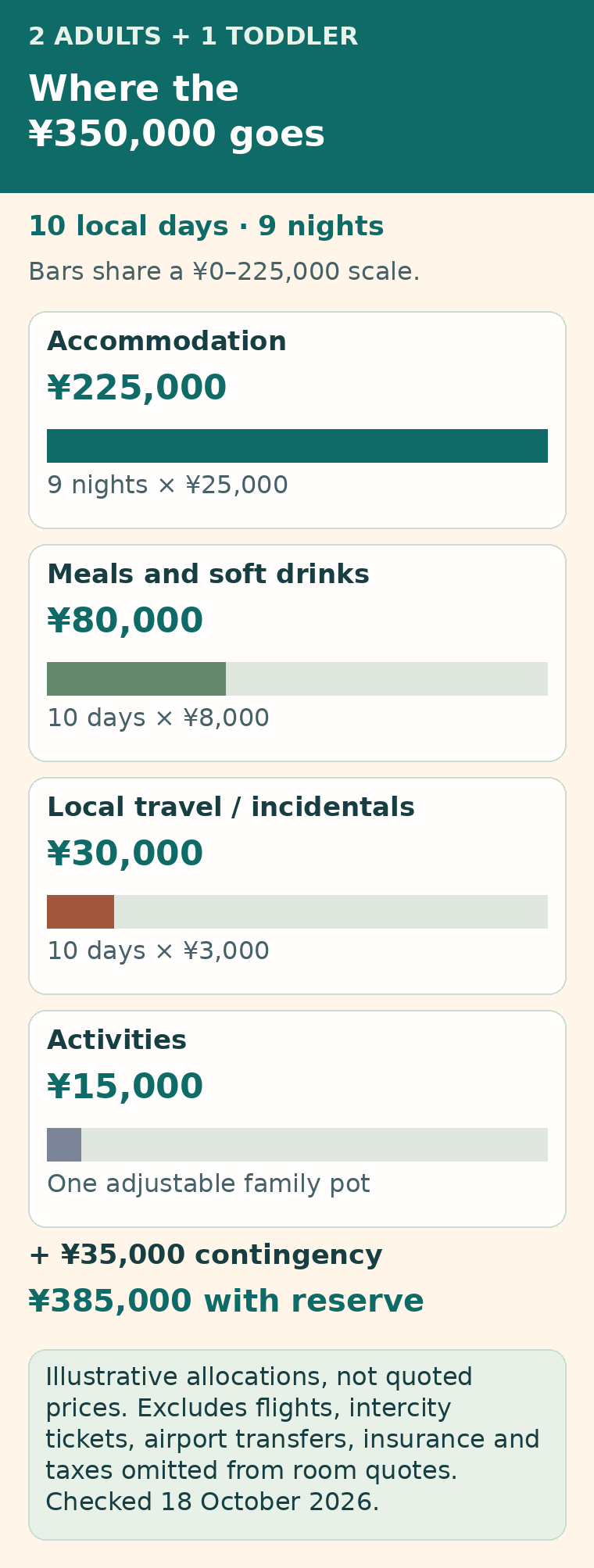
This is an original allowance for two adults and one toddler over ten local days and nine nights, prepared on 18 October 2026. It is not a market average, a hotel quote or the cost of the MIMARU example. Replace the inputs with your own room and activity prices.
Swipe the table sideways to compare all columns.
| Item | Assumption | Family allowance |
|---|---|---|
| Accommodation | 9 nights × ¥25,000 | ¥225,000 |
| Meals and non-alcoholic drinks | 10 days × ¥8,000 | ¥80,000 |
| Local transport and everyday incidentals | 10 days × ¥3,000 | ¥30,000 |
| Activities | A separate pot for the chosen outings | ¥15,000 |
| Subtotal | Local-spending model | ¥350,000 |
| Contingency | 10% of the subtotal | ¥35,000 |
| Model including contingency | Before the exclusions below | ¥385,000 |
International flights, intercity rail tickets, airport transfers, travel insurance and any taxes or fees omitted from your room quote are excluded. Price them separately. The daily food and incidentals amounts apply to all ten days, including partial arrival and departure days, to keep the model simple and leave some flexibility.
Room choice has the largest effect in this example. Increasing the room allowance to ¥35,000 adds ¥90,000 across nine nights: the subtotal becomes ¥440,000 and the total with a fresh 10% contingency becomes ¥484,000. An extra bed, confirmed cot fee or additional room charge belongs in the accommodation input.
Keep the working figures in yen and convert using the rate and payment fees available when you book. The Japan trip-cost guide for UK travellers helps place these local costs alongside the rest of the holiday. If the total is too high, reduce hotel moves and optional paid outings before removing essential sleeping space or transport arrangements.
The final checks that make arrival easier
Check travel-health advice at least eight weeks before departure where possible, and make sure the insurance covers your child and the planned trip. FCDO’s Japan health page explains how to obtain medical help. Check the ingredients and quantity of any medicines against Japan’s import rules; medicines sold legally at home can still require permission or be restricted in Japan. [10] [11]
- Save each family member’s booking details, current entry documents and the hotel address in an accessible offline form.
- Reconfirm the sleeping arrangement, any essential equipment and the hotel’s check-in arrangements.
- Download the first airport-to-hotel journey, the appropriate station lift information and the first day’s simple meal option.
- Keep enough everyday supplies accessible during the journey without unpacking the main case.
- Save the insurer’s assistance number. In Japan, call 119 for an ambulance. JNTO’s 24-hour Visitor Hotline offers English-language assistance on +81 50 3816 2787; it does not replace the emergency service. [10] [15]
Keep maps and booking details available
Compare your existing mobile allowance with a Japan eSIM before buying another plan. Airalo offers Japan options; confirm that your exact device supports eSIM and is unlocked, then check the selected plan’s coverage, data, validity and activation terms. Do not assume a data plan includes ordinary voice calls. [17] [18]
View Airalo and choose a Japan eSIMKeep the first evening simple enough to work after a delay. The most valuable preparation is knowing where the family will sleep, eat and pause when nobody wants another decision.
Questions before you go
Is one week in Japan too short with a toddler?
It can work if you choose one base and accept a smaller sightseeing plan. Count usable local days after arrival and departure, then decide whether the long flight is worthwhile for your family. Adding a second city does not automatically make the shorter holiday more rewarding.
What if my child no longer naps?
Keep the break but change its form. Quiet play, reading or an unhurried snack in the room can give everyone a reset without trying to force sleep. The important planning choice is leaving space between outings.
Can one adult manage Japan with a toddler?
Plan for what one person can carry, fold and supervise at the same time. Choose fewer transfers, a room with a straightforward arrival route and activities that can be shortened. Rehearse the luggage and pushchair combination before the trip; reducing what you carry may help more than adding another accessory.
Should every day include an attraction made for children?
No. Choose some activities for the adults, but check that the setting, duration and return journey suit the toddler too. A brief garden visit followed by a proper break can fit better than a full day at an attraction labelled family-friendly.
Karen’s planning takeaway
Build the trip around a room that works, one main outing and a dependable daily break. For the first visit, the two-base example is a useful ceiling on movement, not a target you must reach. A quieter Japan holiday with time to eat, play and recover can leave the whole family ready for the next day.
Sources and further reading
The numbered sources identify official and provider information relevant to the facts in this guide. Recheck changing prices, timetables and opening rules for your trip; routes, allowances and decision tools are editorial planning examples.
- JNTO: travelling with children
- Tokyo Metro: travelling with a pushchair
- smartEX: tickets for infants and young children
- JR Central: baggage and reserved oversized-baggage space
- MIMARU: room, child and equipment policies
- MIMARU Tokyo Ueno Okachimachi: official property and room information
- Tokyo Toy Museum: admission and Baby Wood Playroom arrangements
- Kyoto Railway Museum: facilities for visitors with children
- Osaka Aquarium Kaiyukan: nursing rooms and pushchair access
- FCDO: Japan health advice
- Japan Ministry of Health: bringing medicines into Japan
- Embassy of Japan in the UK: bringing animal and plant products into Japan
- NHS: preparing food safely for young children
- Japan Automobile Federation: road rules and child seats
- JNTO: Japan Visitor Hotline
- JNTO: summer weather and travel
- Airalo: Japan eSIM plans
- Airalo: eSIM-compatible device requirements
- FCDO: Japan entry requirements
- British Airways: child tickets, birthdays and travel documents
- Consumer Affairs Agency: food labelling and allergy communication sheet
- GetYourGuide: Osaka/Kyoto private Kansai airport transfer and seat inclusions
- GetYourGuide: Kyoto Railway Museum admission terms
- Kyoto Railway Museum: official admission categories and optional tickets
Illustrations in this article were created for Taylor’s Trailblazing Travels. Third-party photographs, where used, are credited beside the image or in the source list.