Ishigaki Island Travel Guide: Beaches, Ferries and Yaeyama Excursions
A practical island base, a beach for each purpose and ferry plans that leave room for the sea.
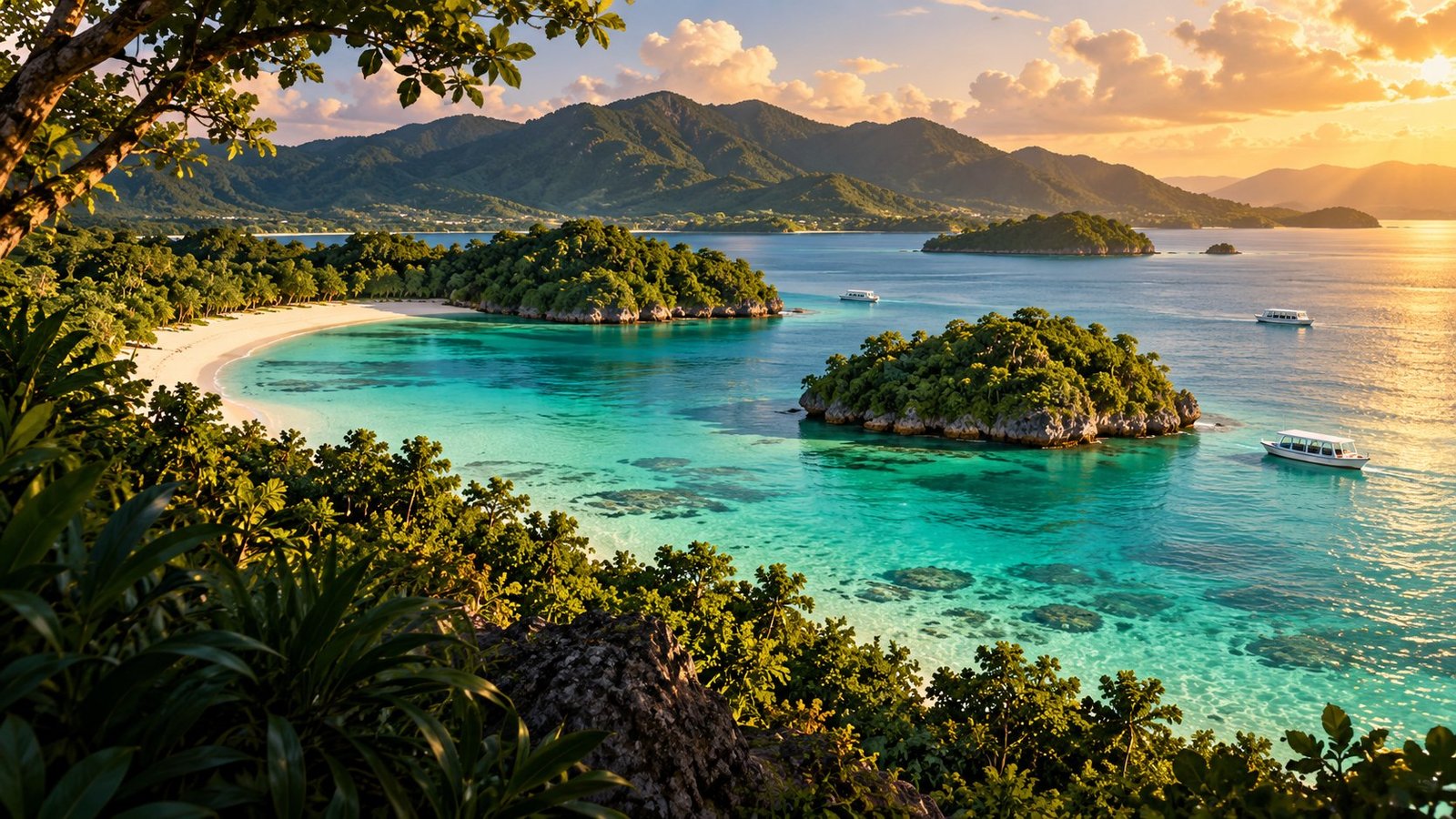
Original AI-created illustration inspired by Kabira Bay on Ishigaki; not a documentary photograph.
Ishigaki is both a destination and the departure point for a wider island trip. Its city and accommodation hub sit in the south, while coastal viewpoints, beaches and small settlements spread around the island. Ferries open up the neighbouring Yaeyamas, including Taketomi and Iriomote. [1]
The useful question is how much of your holiday you want to spend on Ishigaki itself. A remote beach stay and several early ferry departures pull your plans in different directions. This Ishigaki Island travel guide starts with that choice, then separates scenic beaches from swimming spots and shows how to make the main excursions fit.
Some links in this guide are affiliate links. Taylor’s Trailblazing Travels may earn a commission if you book or buy through them, at no extra cost to you.
Frequent ferries
Stay near the port
A town base makes early departures and changing plans easier.
A fuller first visit
Five nights
Four full days leave one day that can move with the weather.
Two Iriomote gateways
Choose the port
Uehara and Ohara require different onward arrangements.
Before your flight
Return to Ishigaki
Keep the final night on the island and review disruption risks.
Ishigaki Island travel guide: choose your base and nights
Choose the base around your main activity, then look for rooms. The matrix below is an editorial planning comparison: it prioritises access to ferries, convenient beach time and the amount of driving required. It is not a hotel ranking.
| Your priority | Base to favour | The trade-off |
|---|---|---|
| Two or more ferry excursions; no car for most days | Central Ishigaki, within a manageable walk of the ferry terminal | Practical departures and evenings; arrange separate journeys to the beaches. |
| Swimming, pool time and a single island excursion | Maesato or Fusaki resort area | Build the holiday around the property, and budget for port transfers on ferry days. |
| Kabira scenery and quieter northern coast days | Kabira or a carefully chosen northern stay | Check meals and transport before booking; repeated trips to the southern port reduce the benefit. |
Accommodation is concentrated in the south, with additional guesthouses and boutique stays around the island. Use the location map when you compare Ishigaki accommodation on Agoda or check Ishigaki stays on Booking.com; both links cover the island, rather than a shortlist beside the port. Compare the same room occupancy, meal arrangements and cancellation terms. [1]
Count full days, not calendar dates
Three nights usually leave two full days: enough for Ishigaki and one neighbouring island. Four nights give three full days, so Ishigaki, Taketomi and Iriomote can each have their own day, with little spare capacity. Five nights give four full days and a useful opportunity to rearrange a cancelled outing.
These recommendations assume arrival and departure days mainly involve travel. For a short stay, one base avoids another round of packing. With a week or more, splitting town and beach nights becomes more worthwhile; put ferry excursions together during the town stay.
From the airport to the right part of Ishigaki
Painushima Ishigaki Airport and Ishigaki Port Ferry Terminal are separate places. At the airport, check the bus destination: the official access page lists Azuma routes towards town and the terminal, Karry Kanko’s direct route 55, and route 11 towards Yonehara and Kabira. The airport’s indicative taxi journey to the ferry terminal is about 25 minutes; waiting, traffic and luggage collection are additional. [2]
Karry Kanko advertises an adult single fare of ¥550 on its direct airport bus, checked on 17 October 2026. Cash and contactless credit-card payment are listed; transport IC cards and QR payments are not accepted. Check the current timetable against your flight rather than assuming the service covers every arrival. [3]
For an arrival-day ferry, work backwards from the operator’s check-in requirements and leave room for a flight delay, baggage collection and the road transfer. A short nominal drive does not make a tight flight-to-ferry connection dependable. If the connection is marginal, book the first night on Ishigaki.
Car, bus or organised sightseeing?
A hire car gives the most control over stops on an Ishigaki sightseeing day. It adds little value while you are on a ferry excursion, so compare a short rental with paying for unused days and parking. UK licence holders need the 1949 International Driving Permit alongside their UK licence and insurance documents; arrange the permit before leaving the UK. [4]
Without a car, choose fewer stops around actual bus departures or use a tour. You can check the half-day Ishigaki scenic tour on GetYourGuide: its advertised route combines Nagura mangroves, a Kabira glass-bottom boat and the Oganzaki/Uganzaki lighthouse. Confirm the meeting point, language, age limits and whether each stop is operating for your date. [5]
Choose beaches by activity, not by the photograph
Kabira Bay: views and a glass-bottom boat
Make Kabira a scenery stop, with time to walk to the viewpoints and, if operating, take a glass-bottom boat. Swimming from the main sightseeing beach is not allowed. That restriction is compatible with separately organised water activities in permitted parts of the bay; a tour listing is not permission to enter the water from the beach yourself. [6]
For a relaxed day, pair Kabira with a nearby coastal stop rather than promising yourself the whole island. Travellers who will not snorkel can still make this the main water-viewing experience of the trip.
Yonehara: a natural reef with real hazards
Yonehara’s reef is attractive to snorkellers, but JNTO warns of strong currents and the absence of lifeguards and jellyfish nets. It should not be treated as a supervised swimming beach for beginners or children. [7]
Use a reputable local guide if you want to snorkel here, ask about the conditions and your ability, and accept a different site or cancellation. Ishigaki City’s rules call for flotation such as a life jacket or wetsuit and protection with a rash vest. They also prohibit damaging or collecting coral, feeding wildlife and taking sand or coral fragments away. Keep fins clear of the reef and avoid entry when the water is too shallow to float above it. [8]
Maesato and Fusaki: check the managed swimming area
Maesato Beach, beside ANA InterContinental Ishigaki Resort, has designated swimming areas and a beach rental operation. The resort publishes visitor information, including charges for towels and beach furniture. Check staffing, operating hours and permitted activities for your date; a beach visit does not automatically include hotel pools or other facilities. [9]
Fusaki provides a netted swimming area, but the resort explains that strong wind and waves can carry hazardous marine life over the net. Low tides can also restrict swimming or activities. Choose it for an organised beach setting, while still asking the beach staff where and when to enter. [10]
For scenic driving beyond the main beaches, Tamatorizaki Observatory and the northern Hirakubozaki lighthouse are useful candidates. Put the far north on its own unhurried drive, rather than attaching it to a morning ferry outing. [1]
A guided water day
If you want to combine paddling with a reef outing, compare Kabira paddling and Phantom Island snorkelling on Viator. The listed PiPi excursion pairs Kabira Bay SUP or canoeing with a visit to Hamajima, commonly called Phantom Island, and snorkelling nearby. Check pickup coverage, swimming requirements, equipment and the cancellation policy for your chosen option. This is an active outing; a glass-bottom boat is the better starting point if you prefer to stay out of the water. [27]
Which Yaeyama excursion should you choose?
Taketomi is the straightforward first island outing. Iriomote is the stronger choice for a planned nature activity, but requires more attention to ports and transfers. Choose one full-day priority rather than treating every ferry route as another stop on a checklist.
| Destination | One-way crossing | Adult return | Planning fit |
|---|---|---|---|
| Taketomi [11] | About 15–20 minutes | ¥1,880 | Village exploration and a beach stop; half a day or a leisurely full day. |
| Iriomote: Ohara [12] | About 40–50 minutes | ¥4,880 | Choose when your tour or accommodation specifies this port, or an agreed alternative transfer uses it. |
| Iriomote: Uehara [13] | About 45–55 minutes | ¥6,370 | Choose for activities or accommodation meeting here; retain a cancellation plan. |
Sailings calling at another island take longer. Use the ferry company’s dated timetable and check the Anei Kanko operating notice or Yaeyama Kanko Ferry operating notice before leaving. For an additional booking comparison, 12Go lists Ishigaki–Taketomi, Ishigaki–Ohara and Ishigaki–Uehara. Check the actual operator, terminal, total payable price and cancellation terms on your selected departure.
Should you add Hateruma?
Hateruma adds Nishihama Beach and a much more remote setting. Anei lists about 80–90 minutes each way on its larger high-speed vessel, or 60–70 minutes on its smaller high-speed boat. That is a substantial sea journey before you begin sightseeing. [25] [26]
Keep it for a longer, flexible trip if Hateruma itself is a priority. The operator warns that exposed routes, including Hateruma and Uehara, can suffer several consecutive days of cancellation. An overnight stay gives more time on an island but also leaves you dependent on a later return sailing. [18]
On a phone, swipe the diagram sideways to read its labels.
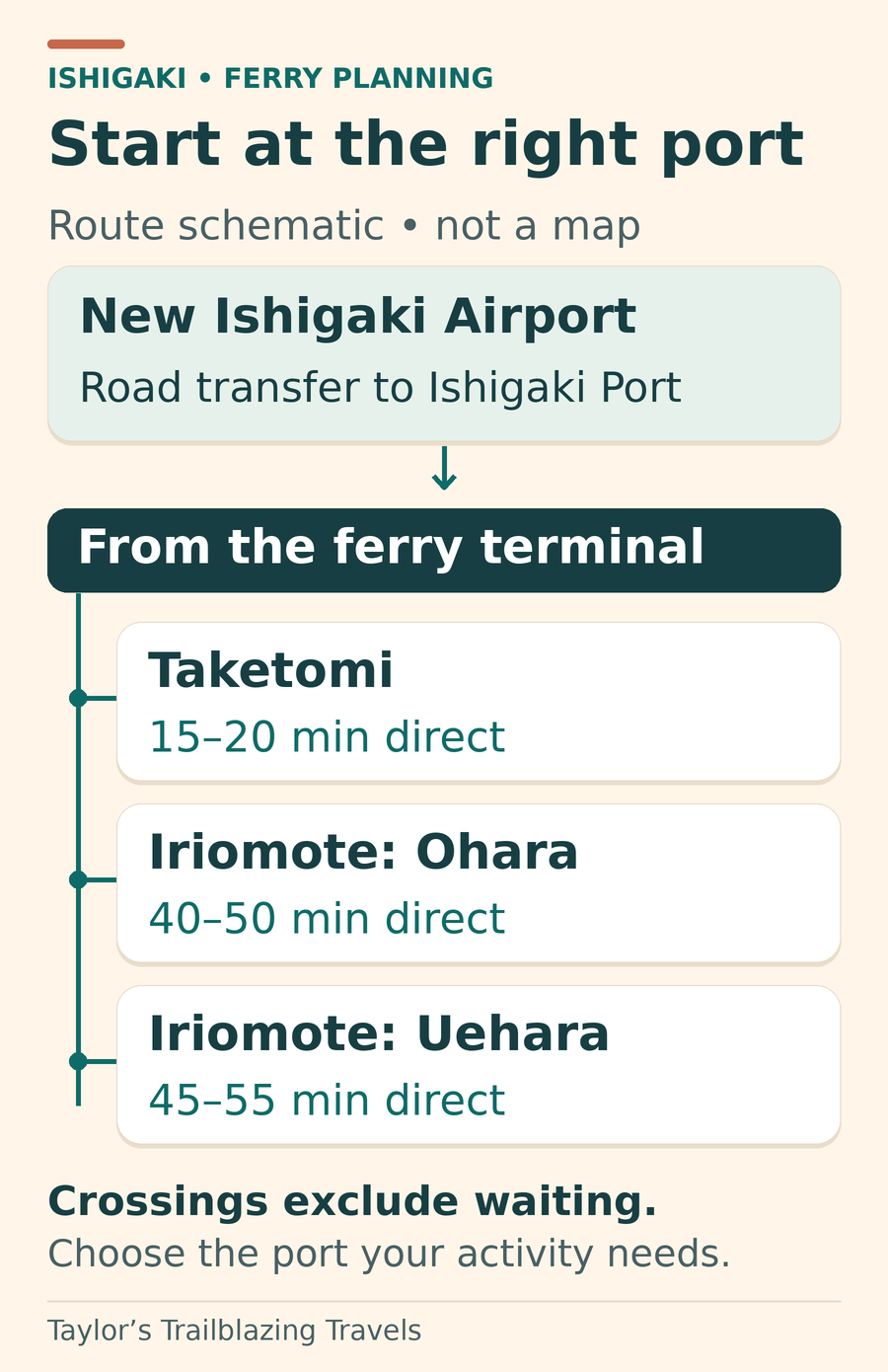
Taketomi: leave room for the village and the tide
Taketomi’s appeal is its compact village, red-tiled houses and coral-sand lanes. Walking or cycling works well for exploring: the official tourism guide places the village about a 15-minute walk from the ferry terminal. Do not mistake the short sea crossing for arrival directly at a beach. [14]
A manageable independent visit is: ferry to Taketomi, walk or arrange an island transfer into the village, have lunch, then choose a western beach stop before returning. Allow roughly four to six hours on the island for this version; that is an editorial allowance for an unhurried visit, not an excursion timetable.
Kondoi is the beach to investigate if you want a swim, subject to the tide and conditions. Kaiji is for the shoreline and its star-shaped sand: swimming is prohibited because of strong currents, and the sand should be left where it is. Nishi Pier is another scenic stop, but checking the last return boat takes priority over waiting for sunset. [14]
Arrange the return plan before wandering away from the harbour. If hiring a bicycle, find out where and when it must be returned and how you will reach the terminal afterwards. Leave space for shade, drinks and slower walking in the heat. For anyone who wants the quiet evening rather than a compressed day visit, a booked overnight stay is the more sensible approach.
Iriomote: book the activity before the ferry
Iriomote’s mangrove rivers and forest reward a focused day. Its two main ferry ports are Uehara in the north and Ohara in the south-east. Choose the port specified by your activity or accommodation. [15] [16]
Uehara cancellations do not mean a simple port swap
Yaeyama Kanko Ferry explains that the Uehara route is exposed to northerly winds, with cancellations particularly common in winter. Ohara’s route is more sheltered, so it may still operate. The company describes around 50 minutes by ferry to Ohara followed by around 60 minutes on its connecting bus to Uehara. [16]
To use Yaeyama Kanko’s cancellation bus, you need an Uehara ticket with its bus coupon; an Ohara-only ticket ends at Ohara. Online Uehara-ticket holders must collect the coupon at the staffed counter before boarding. Confirm space and the connecting departure. [16]
That is about 110 minutes moving, before check-in, waiting and your transfer from Uehara to the activity. Compared with a direct 45–55-minute Uehara crossing, the detour can add roughly an hour of travel alone. This comparison uses published estimates from different operators to explain the scale of the change, not to promise a through connection. [13] [16]
Choose one nature experience
For a day trip, book one activity with a clear pickup and return arrangement. Pinaisara Falls is within the restricted Hinai River field: advance entry approval and accompaniment by a guide authorised for that field are required. Confirm who handles the application before paying for other travel. Booking a ferry alone does not grant access. [19]
For a different combination, you can view the Iriomote mangrove and Yubu Island tour on GetYourGuide. The listing combines paddling with Yubu sightseeing and meets at Uehara or selected local accommodation. It has age and health restrictions, and language availability must be confirmed. Check whether your selected option includes the Ishigaki ferry, what happens if Uehara closes, and which return sailing the activity can realistically meet. [20]
Choose two or more Iriomote nights if you want several guided activities or time after the day visitors leave. It reduces repeated crossings but requires a proper return buffer. Keep the final night before your Ishigaki flight on Ishigaki itself; worsening forecasts may justify returning earlier. No single spare night guarantees protection from a prolonged disruption.
Five nights, with a usable weather alternative
Okinawa’s usual rainy period falls around May and June, while typhoons are a particular planning concern from summer into autumn; the tourism authority highlights June to October, especially August and September. [21] Winter adds a separate problem for the exposed Uehara ferry route. [16] Choose dates around the activities you value, rather than expecting a month with guaranteed calm seas.
The plan below assumes five nights, arrival on day one and departure on day six, with four full days between. It uses one town base and gives each substantial excursion its own day. Reserve activities that need advance booking, but choose flexible terms and discuss possible date changes.
| Day | When conditions allow | If the plan changes |
|---|---|---|
| Arrival | Transfer to town, check in and have an easy evening. | Keep prepaid activities off this day. |
| First full day | Iriomote excursion, if its ferry and activity can operate. | Confirm an Ohara alternative with both providers or move the excursion. |
| Second full day | Kabira, then a carefully chosen beach or scenery stop. | Switch to town-based indoor activities if conditions or access make the coast unsuitable. |
| Third full day | Taketomi, allowing an unhurried return. | Use an Ishigaki activity and try Taketomi on the spare day if it is safe and operating. |
| Fourth full day | A rescheduled outing, beach time or a northern drive. | Let lower-priority sights go; keep your final night on Ishigaki. |
| Departure | Transfer to the airport with your airline’s required margin. | Follow airline updates and arrange extra accommodation if needed. |
Rainy afternoon versus severe weather
For ordinary rain with safe travel conditions, Euglena Mall brings shops, cafés and local food into a compact town visit. Its shopping association also highlights rainy-day craft experiences. Yaeyama soba, with its rounded straight noodles and simple toppings, makes a useful lunch to build that afternoon around. Check individual opening times. [23]
A typhoon is different. Official guidance is to avoid sightseeing, stay away from beaches and follow warnings; ferries can remain disrupted longer than flights. A sea cancellation can also signal conditions unsuitable for another water activity. Check the Japan Meteorological Agency, the ferry operator and your accommodation, and remain sheltered when advised. [22]
On a phone, swipe the diagram sideways to read its labels.
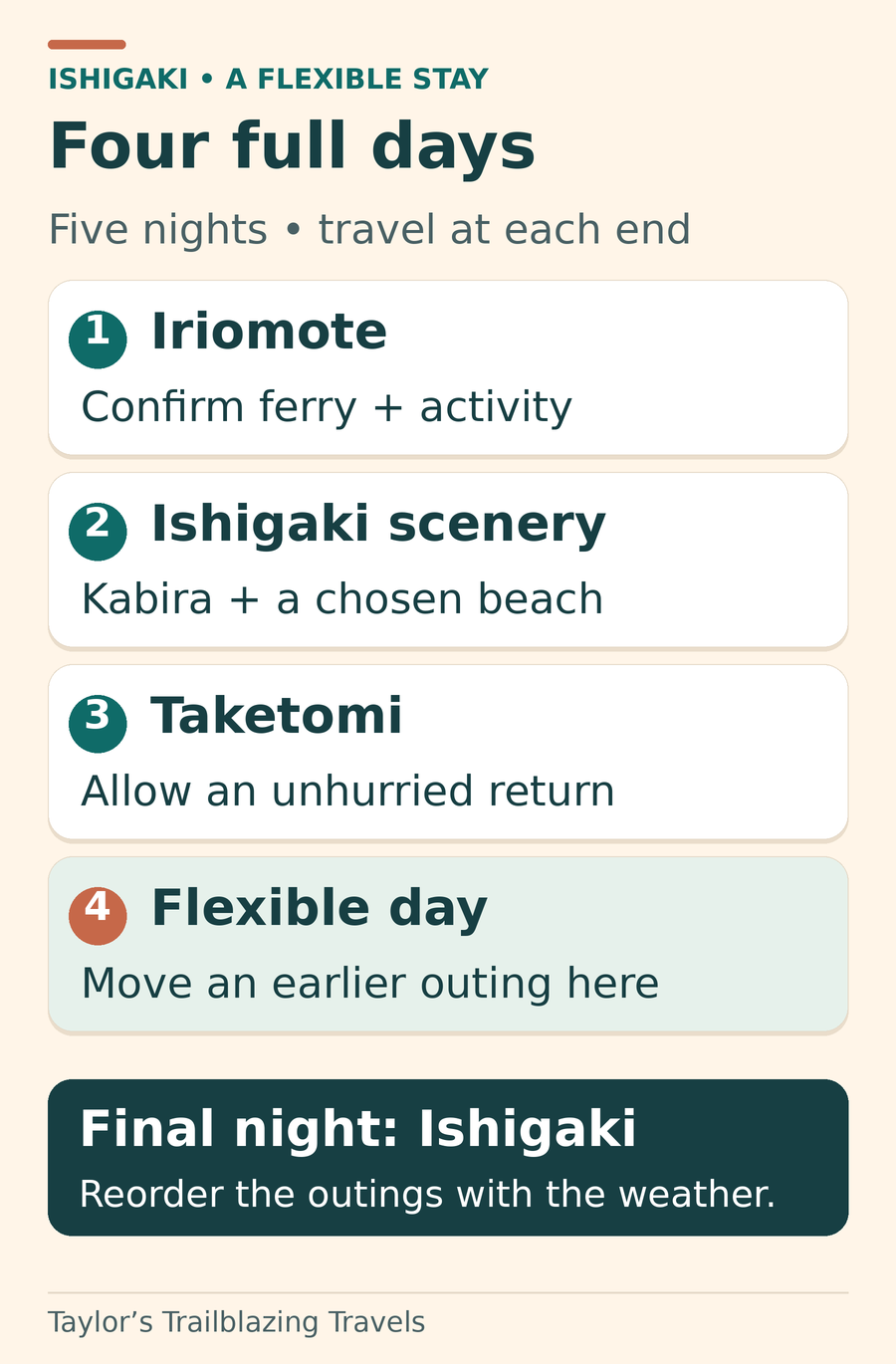
Spend on the parts that make the trip work
Start with the overall shape of the trip: room location, airport transport, the two excursions you care about and one flexible day. A cheaper room becomes less attractive if it repeatedly requires a long paid transfer to the harbour.
Using the adult return fares above, Taketomi plus Uehara totals ¥8,250 per person in ferry tickets; Taketomi plus Ohara totals ¥6,760. These are calculated examples from Anei Kanko’s advertised fares checked on 17 October 2026, not complete day-trip prices. Tours, admission, transfers, food and any changed fuel adjustment are additional. Choose the Iriomote port for your activity, rather than its lower fare. [11] [12] [13]
Before booking, compare room cancellation deadlines with ferry and activity terms. A weather-related refund for one booking does not automatically cover another. Confirm dinner arrangements for an isolated stay, and arrange vehicle hire or guided sightseeing once your ferry days are settled.
Connectivity and the small practical details
Save ticket instructions, meeting-point maps and your accommodation contact details offline. Mobile data helps with operational updates and translation, but should not be your only way to retrieve a booking while travelling.
If you need a data plan, check Airalo and select Japan to compare Japan eSIM options. Check your handset’s eSIM compatibility and unlocked status, the package’s coverage and activation conditions, and whether it includes calls or only data. A country coverage listing cannot guarantee reception on a particular beach, boat or forest trail. [24]
Carry some yen for small purchases and contingencies, a charged phone, drinking water and the clothing requested by your activity operator. Check beach facilities before leaving a town base. A change of clothes and a dry bag for existing essentials are more useful than discovering wet luggage just before the return ferry.
Useful questions
Can I use one ferry company’s ticket on another company’s boat?
Do not assume so. Anei Kanko says its tickets are valid only on its own sailings; its former shared high-speed ticket arrangement with Yaeyama Kanko Ferry ended in 2020. Check the operator on both outward and return reservations. [17]
Can I visit Taketomi and Iriomote in one day?
Some organised combinations and limited inter-island services make it possible, but the shorter island visit becomes tightly tied to the boat timetable. For independent travel with a proper Iriomote activity, use separate days. When buying a combined excursion, confirm exactly how long you spend in each place and who manages transfers; Anei advises at least 30 minutes between boats. [18]
Is Ishigaki still worthwhile if I do not want to swim?
Yes, if you enjoy coastal scenery, village exploration and leisurely time around town. Build the trip around a Kabira boat outing, a northern drive or guided scenic tour, and Taketomi. Choose your beach hotel for the setting and facilities you will actually use. A trip whose main promise is daily snorkelling would be a poorer match.
Make the next planning decision
For a first visit centred on exploring, choose five nights near the ferry terminal, plan Taketomi and one specific Iriomote activity, and give Ishigaki a full sightseeing day of its own. For a beach holiday, reverse those priorities: stay by the beach and choose just one ferry outing. In both versions, the best extra booking is time you have left free to change the plan.
Sources and checks
Research-led planning guidance, with original itinerary and decision analysis. Sources below were consulted on the dates shown. Recheck operating information, prices, access rules and booking terms for your travel dates.
- Visit Okinawa Japan: Ishigaki IslandChecked 17 October 2026.
- Painushima Ishigaki Airport: buses and taxisChecked 17 October 2026.
- Karry Kanko: Ishigaki airport direct busChecked 17 October 2026.
- UK Foreign, Commonwealth & Development Office: driving in JapanChecked 17 October 2026.
- GetYourGuide: Ishigaki half-day scenic tour with transfersChecked 17 October 2026.
- Visit Okinawa Japan: snorkelling guide and Kabira Bay restrictionsChecked 17 October 2026.
- Japan National Tourism Organization: Ishigaki beaches and Yonehara safetyChecked 17 October 2026.
- Ishigaki City: Yonehara coast visitor rulesChecked 17 October 2026.
- ANA InterContinental Ishigaki Resort: Maesato BeachChecked 17 October 2026.
- Fusaki Beach Resort: beach swimming areas, nets and tidesChecked 17 October 2026.
- Anei Kanko: Ishigaki–Taketomi timetable and faresChecked 17 October 2026.
- Anei Kanko: Ishigaki–Iriomote Ohara timetable and faresChecked 17 October 2026.
- Anei Kanko: Ishigaki–Iriomote Uehara timetable and bus changesChecked 17 October 2026.
- Visit Okinawa Japan: Taketomi IslandChecked 17 October 2026.
- Visit Okinawa Japan: Iriomote IslandChecked 17 October 2026.
- Yaeyama Kanko Ferry: travelling when Uehara sailings are cancelledChecked 17 October 2026.
- Anei Kanko: passenger questions and connecting-bus conditionsChecked 17 October 2026.
- Anei Kanko: booking conditions and cancellation risksChecked 17 October 2026.
- Taketomi Town Iriomote Ecotourism Promotion Council: Hinai River and Pinaisara Falls accessChecked 17 October 2026.
- GetYourGuide: Iriomote mangrove paddling and Yubu Island tourChecked 17 October 2026.
- Visit Okinawa Japan: weather and practical questionsChecked 17 October 2026.
- Visit Okinawa Japan: typhoon precautionsChecked 17 October 2026.
- Ishigaki Central Shopping District Association: Euglena MallChecked 17 October 2026.
- Airalo: Japan eSIM plansChecked 17 October 2026.
- Anei Kanko: Ishigaki–Hateruma timetableChecked 17 October 2026.
- Visit Okinawa Japan: Hateruma IslandChecked 17 October 2026.
- Viator: Kabira Bay paddling and Phantom Island snorkellingChecked 17 October 2026.
Illustrations in this article were created for Taylor’s Trailblazing Travels. Third-party photographs, where used, are credited beside the image or in the source list.