Okinawa Main Island Travel Guide: Regions, Beaches and Getting Around
Choose the right stretch of coast, then build a trip that fits the island’s distances.
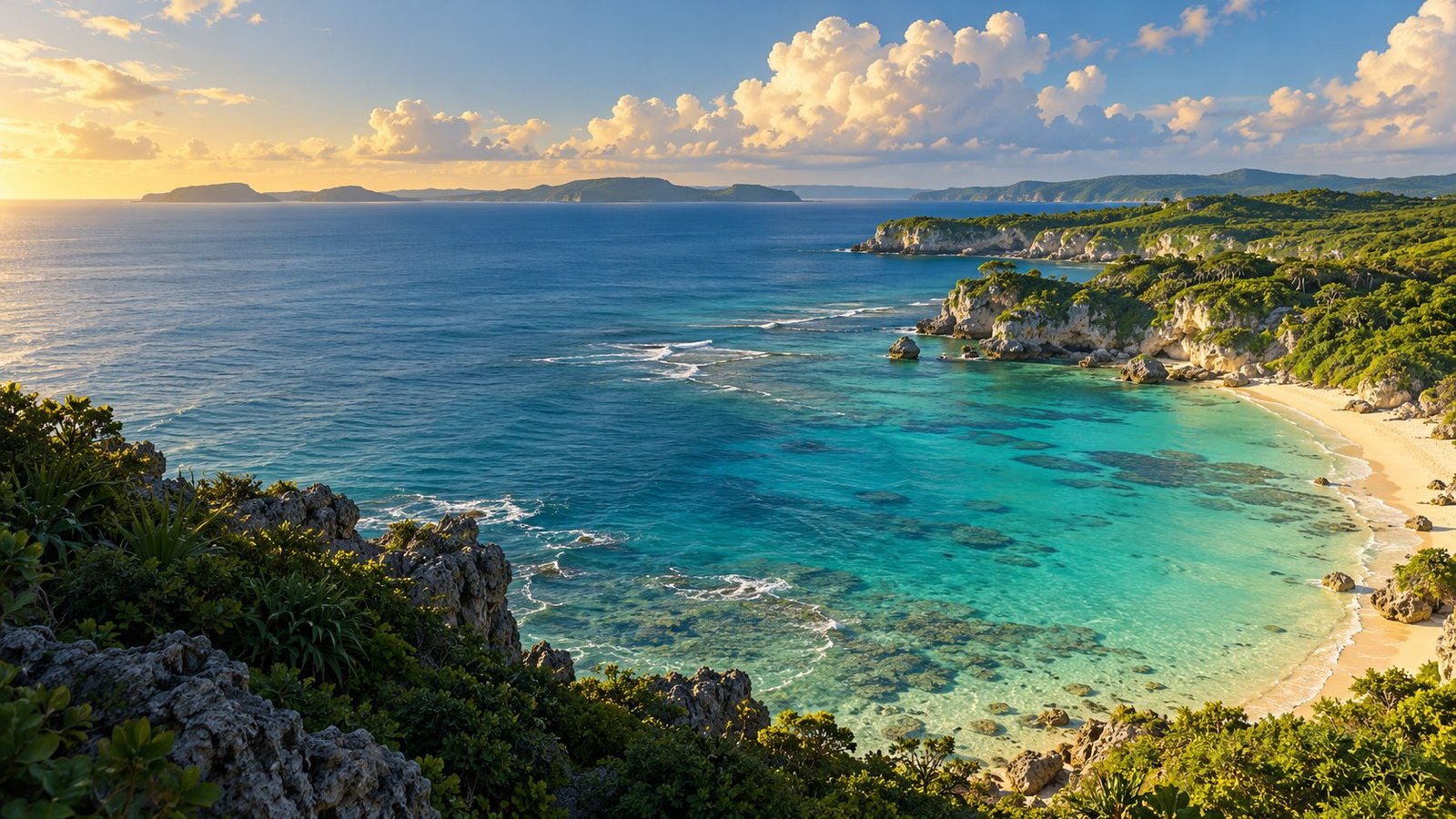
Original AI-created illustration inspired by Okinawa Main Island; not a documentary photograph.
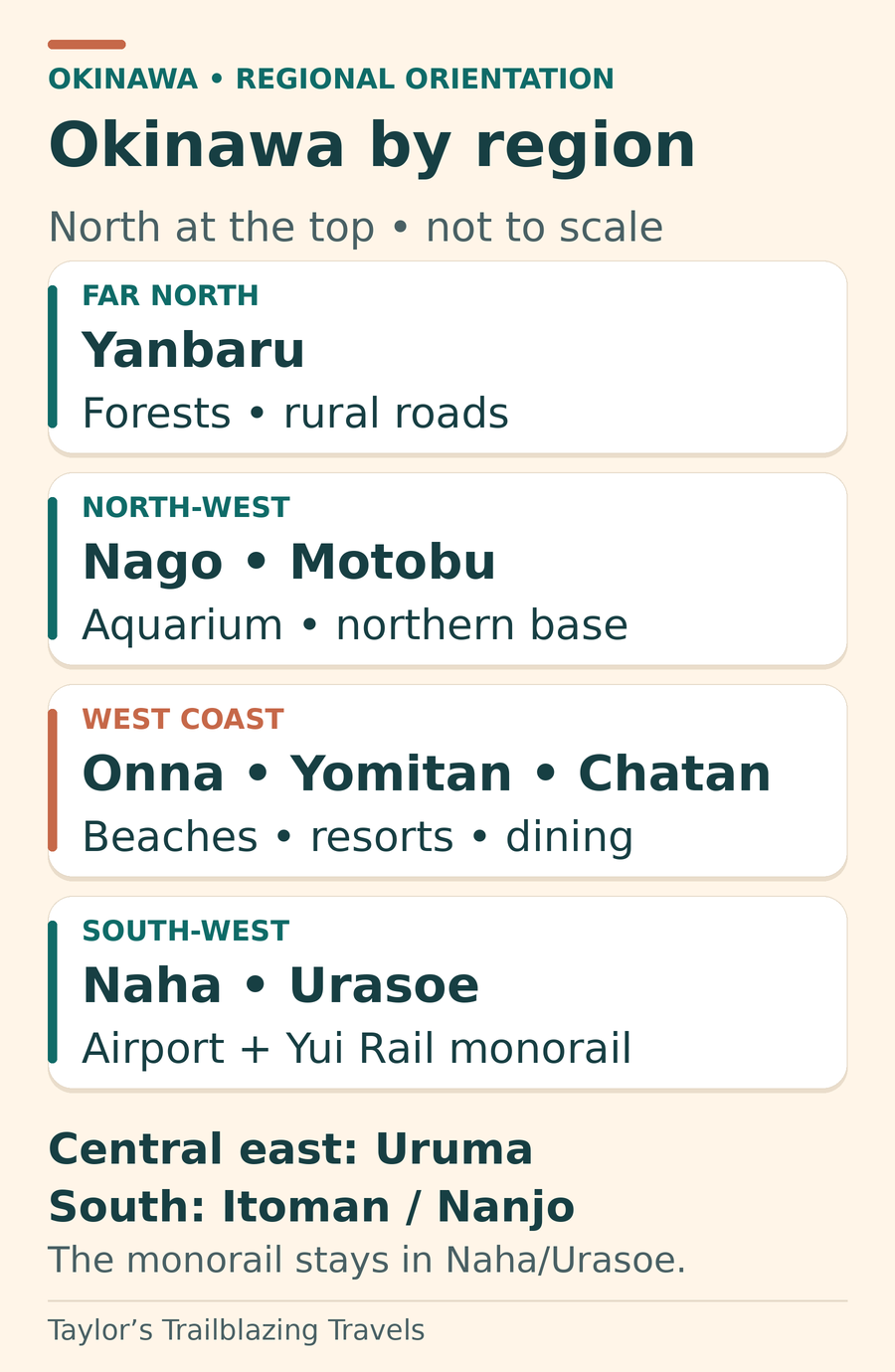
An Okinawa main island travel guide needs to start with geography. Naha’s streets, Chatan’s seafront, the Onna resorts and the forests of Yanbaru support very different holidays on the same long island. [1] [3] [5] [6]
The best plan is the one that places your accommodation near the experiences you care about. Decide how often you want to move, how you will travel and whether a beach is for swimming or simply part of the scenery. The region selector and day groupings below turn those choices into a manageable trip.
Some links in this guide are affiliate links. Taylor’s Trailblazing Travels may earn a commission if you book or buy through them, at no extra cost to you.
A visit without driving
Naha
Choose city sights and a specific northern excursion.
Beach-led stay
Onna
Check swimming access at the actual beach beside your hotel.
Northern sights
Motobu
Stay closer when northern sightseeing fills several days.
A long island
Group your stops
Account for the return journey before adding another region.
Okinawa main island travel guide: choose your base first
The island stretches more than 100 kilometres from north to south. The useful question is where you want to start and finish most days: city streets, a resort beach or the northern countryside. [1]
This selector weighs three practical criteria: access without a car, the setting outside your accommodation and proximity to your main activities. It is an editorial planning framework, rather than a hotel ranking.
| Base | Choose it for | Transport and compromise |
|---|---|---|
| Naha, south-west | City food, shopping and Ryukyu heritage; arrival and departure nights. [7] | The monorail serves Naha and Urasoe, including the airport. Best starting point for a varied trip without driving; long northern outings need planning. [2] |
| Chatan, central west coast | Seafront dining, American Village and an evening promenade. [6] | A useful compromise if you want beach time and restaurants together. Airport buses serve the area, but the monorail does not. Check your exact hotel stop. [6] [2] |
| Yomitan, central west coast | Pottery, Zakimi Castle ruins and beach resorts. [30] | Choose it for a slower mix of crafts and coast. Match the hotel to your transport: being in the same village does not mean attractions are walkable. |
| Onna coast, north-west | A resort-led holiday, organised marine activities and coastal scenery. [3] | Good when the hotel and its beach are part of the holiday. With no car, confirm airport service, meals and activity pick-ups before booking. |
| Nago or Motobu, north-west | Northern sightseeing; choose Motobu for Ocean Expo Park and Bise. [4] [8] | A strong second base for more than one northern day. Direct arrival buses do not provide frequent connections to every local attraction. [4] |
| Yanbaru, far north | Forests, mangroves, walking and a quieter rural stay. [5] | Best when nature is the priority and you can drive or arrange guided transport. It is a specialist base rather than an easy all-island compromise. |
A three-question decision
- Will you drive? If not, choose Naha for varied sightseeing, or a specifically served Chatan/Onna hotel for a more settled holiday.
- Do you want a beach close to your room or a choice of restaurants each evening? A beach resort favours the first; Naha or central Chatan makes more sense for the second.
- Have you planned two or more full northern days? Consider moving north rather than repeatedly returning to Naha.
For a city base, compare Naha stays on Booking.com and Naha stays on Agoda, then check the walking route to the station or departure point you will use. For a resort stay, compare Onna stays on Booking.com and Onna stays on Agoda. These are area searches: the room, meal plan, beach access and cancellation terms still need checking individually.
On a phone, swipe the diagram sideways to read its labels.
How many nights, and when to split your stay
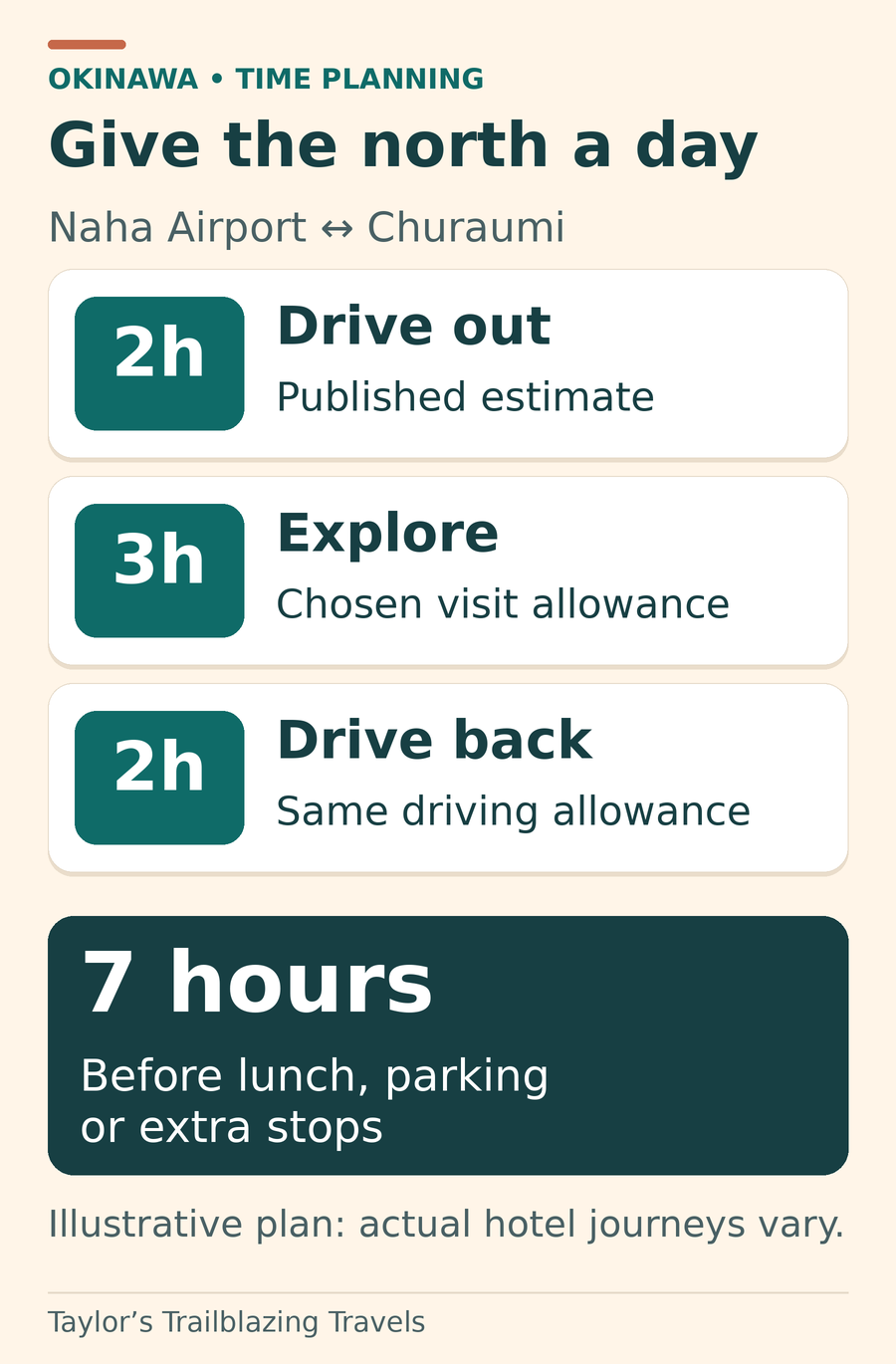
Allowing five to seven nights is a useful starting recommendation for a first visit combining culture, northern sights and actual beach time. Three nights can work well for a smaller plan; adding places does not add usable days.
| Time available | Practical scope | Base strategy |
|---|---|---|
| Three nights | Naha and one major outing, or a focused beach break. | Usually one base. Avoid trying to include the far north, south-coast history and several swimming beaches. |
| Five nights | Naha, one west-coast day, one northern day and some flexibility. | One base works for a compact plan. Split Naha and the coast if the hotel stay is an important part of the trip. |
| Seven nights | Two city/south days, two or three coast/north days, plus space for weather and slower visits. | Two bases usually offer a better balance: Naha plus Onna, Motobu or Yanbaru according to your priorities. |
For an early flight, put the last night in Naha. For a later flight, weigh the convenience of staying on the coast against the extra departure-day buffer you need. A car return and any depot-to-terminal transfer belong in that buffer.
On a phone, swipe the diagram sideways to read its labels.
Getting around: the monorail, buses and car hire
Naha is the easy part without a car
Yui Rail runs from Naha Airport to Tedako-Uranishi, serving stations including Asahibashi, Prefectural Office, Makishi, Omoromachi and Shuri. It does not continue to Chatan, Onna, Nago or the aquarium. Choose accommodation by its actual walking route to a useful station, then use the official station information for your travel date. [2]
Match the bus to the job
Local buses, airport limousine buses, airport shuttles and sightseeing coaches serve different purposes. A limousine service can be especially useful when it stops at your resort; a local bus might get you close to an attraction but leave another walk or connection. [9]
| Option | When it works | Check before committing |
|---|---|---|
| Airport limousine bus | Airport to a named resort hotel. | The hotel is served, the bus fits your arrival and the return operates early enough. |
| Okinawa Airport Shuttle | Naha–Onna–Nago–Motobu corridor. [10] | The specific departure calls at your stop. Rapid services skip several Onna stops; not every service reaches the airport or aquarium. |
| Local bus | A small number of stops with a verified timetable. | Both directions, the final departure, payment method and the walk from stop to entrance. |
| Sightseeing coach | One northern day without driving. | Actual boarding point, admission inclusions and time at your priority attraction; you follow the tour timetable. |
| Private transfer or taxi | Luggage, a group, or a journey poorly matched to buses. | Pick-up instructions, exact destination, luggage capacity, child seats if needed and the full price. |
The Airport Shuttle timetable in force at this review covers 15 October 2026 to 31 January 2027. Its rapid and stopping services differ, so check the live operator timetable rather than copying the first departure you see. [10]
For a Chatan stay, Naha Airport–Chatan private transfers on 12Go provide a way to compare a prearranged taxi with the buses serving the area. For a northern base, Naha Airport–Nago bus options on 12Go offer a bus comparison alongside the official shuttle. Choose your date and inspect the exact arrival stop; these pages cover the named journeys, not every hotel transfer. [27] [28]
Hire a car for the days it earns its place
A car is particularly useful for linking northern villages, inland attractions and separate stretches of coast. Yanbaru has infrequent public transport, while local buses around much of the Motobu Peninsula are also limited. [4] [5]
Consider spending your Naha days without one, then collecting it for the coast or north. Compare the whole cost: rental, the selected insurance and excess cover, fuel, tolls, parking and any one-way fee. Ask how electronic toll payment works and allow time for the collection process.
For visitors using a UK driving licence, FCDO guidance requires a 1949 International Driving Permit, your UK licence and insurance documents; obtain the permit before leaving the UK. Japan drives on the left. Rental firms can impose additional age or experience conditions, so check those with the company. [11]
When a northern coach tour makes sense
If one northern day is enough, compare the northern sightseeing coach tour on GetYourGuide with the HIP-HOP A Course listing on Viator. The reviewed listings describe an approximately 10½-hour outing with Churaumi, Kouri Island and further stops. That is a sightseeing day with fixed stops; it does not leave the freedom of a northern overnight stay. [24] [25]
A direct return bus can be better if you mainly want the aquarium and Ocean Expo Park. Choose the tour when several of its stops appeal; compare the actual boarding point and inclusions before deciding.
Choose a swimming beach that fits your region
Separate a day at a managed beach from sightseeing beside the sea. The six choices below are useful planning anchors across the island, rather than a claim that one beach suits everyone. Listed seasons and facilities were checked on 17 October 2026; weather, tides and the operator can change access on the day.
| Beach and area | Useful for | Season and practical trade-off |
|---|---|---|
| Naminoue, Naha | A short city-beach visit. | Listed swimming season: mid-April–October; free entry, paid parking. Choose it for convenience to a Naha itinerary. [12] |
| Araha, Chatan | Beach and park time alongside a Chatan stay. | Listed season: mid-April–October; free entry and parking. The adjacent park makes this a useful family option, although swimming still depends on the supervised area and conditions. [13] [6] |
| Zanpa, Yomitan | A swim on a Yomitan day or near your west-coast accommodation. | Listed season: 1 April–31 October; free entry and parking. Combine local sights sensibly rather than travelling across the island just to compare beaches. [14] |
| Nabee, Onna | An Onna beach stop with a named Airport Shuttle stop nearby. | Listed season: 1 April–31 October; free entry and parking. Check that your chosen shuttle actually calls at Nabee Beach Mae. [15] [10] |
| Emerald, Motobu | Beach time near Ocean Expo Park. | Listed season: 1 April–31 October; free entry and parking. Current operator guidance restricts swimming to Asobi Beach and prohibits snorkelling. [16] [17] |
| Okuma, Kunigami | A beach component during a far-northern stay. | The listing permits year-round swimming subject to seasonal hours and conditions. Entry is paid for non-guests; the fee includes parking. Confirm day-visitor arrangements. [18] |
The listings identify lifeguards and jellyfish nets at these beaches. Those facilities are seasonal operating arrangements, not a promise that every part of the shoreline is supervised or that the sea is safe whenever you arrive. [12] [13] [14] [15] [16] [18]
For an Onna resort beach, read the specific hotel’s visitor policy. Some beaches are free to use and others charge, while facilities and activities vary. Ask whether beach use, loungers, parking and pool access are included in your booking, and whether the swimming area operates on your dates. [3]
Build days around neighbouring sights
Choose one principal area per day, with one main visit and one or two optional additions. These are suggested groupings based on geography, not a promise that every stop can be completed by public bus. If swimming is the main event, protect the time for it.
| Day area | A sensible combination | What to leave for another day |
|---|---|---|
| Naha and Shuri | Shurijo Castle Park for Ryukyu heritage; later Kokusai Street and a meal in Naha. [7] | A long drive north. Keep time for the castle grounds and the journey back to the centre. |
| Southern history | Okinawa Peace Memorial Park and another Itoman-area history visit, with a relaxed meal. [23] | Trying to cover every Nanjo cave, sacred site and beach as well. Give memorial visits unhurried attention. |
| Yomitan | Yachimun no Sato pottery workshops and galleries, Zakimi Castle ruins, then Zanpa if conditions allow. [30] [14] | Churaumi and the far north. Shops and swimming have their own opening hours. |
| Onna coast | Choose Cape Manzamo plus one beach, or make a guided marine activity the main outing. [3] | Filling the day with several beaches just because they share a coastline. |
| Motobu | Churaumi and Ocean Expo Park, with Bise’s tree-lined lanes if time remains. [4] [8] | Adding Cape Hedo as a casual extra. For a slower alternative, use a separate day for Nakijin and the bridge-connected Kouri area. [4] |
| Uruma, central east | Katsuren Castle ruins and a selected drive over Kaichu-doro to the connected islands. [29] | Assuming an east-coast beach stop is on the way to a west-coast attraction. |
| Yanbaru | A booked forest or mangrove activity, or a dedicated Cape Hedo outing. [5] | Combining every northern trail and cape in one circuit. The eastern roads require slow driving; wildlife can cross. [5] |
Shuri’s main hall: check the date of your visit
The rebuilt Seiden at Shurijo Castle is scheduled to open to the public on 23 November 2026. As of this October review, that is a future opening. The park has announced timed advance reservations for the Seiden interior; the other paid-area facilities are a separate access question. Check the official booking guidance for your dates rather than assuming a park ticket guarantees entry to the hall. [22]
A workable six-night outline
For a mixed trip with a car for the rural days, one option is two nights in Naha, three in Onna or Motobu, then a final Naha night. Use the first part for the city and a chosen southern outing; the middle for a northern sightseeing day, a beach day and a short stop during the transfer. Keep the last evening simple before flying. If you land late and want full days for both Naha and the southern memorials, add a city night or reduce the coastal programme.
Choose Onna for more time at a resort; choose Motobu for a fuller northern programme. If Yanbaru is the main reason for travelling, give it its own nights and reduce the southern list. Travellers staying without a car should book the coast transfer first, then arrange local outings that actually collect from their base.
Weather, swimming and the sea: leave room to change plans
Choose the season for the holiday you want
Okinawa has a humid subtropical climate, with long summers and milder winters. The rainy season is usually around mid-May to late June; winter northerly winds can make it feel cooler. A walking-and-culture trip has different weather requirements from a swimming holiday, and a mild forecast does not mean the nearest beach is operating. [19]
For a beach-led trip, start with the swimming dates at your chosen beach, then check the wider forecast and activity arrangements. For cooler-season travel, prioritise heritage, food, pottery and countryside, treating any swim as conditional. These choices are more useful than declaring a single best month for every traveller.
Keep the water rules simple
- Swim in designated areas while they are open and follow lifeguard instructions.
- For snorkelling, use permitted areas or an organised excursion, wear a life jacket and stay with a companion.
- Do not cross the reef edge, stand on coral or feed fish. Avoid low-tide swimming where it risks coral damage or injury.
- Box jellyfish are typically seen from May to October; choose protective swimwear and supervised, netted areas rather than assuming shallow water is harmless.
- Use shade, sun protection and regular drinks; leave the water if unwell or tired. For a maritime emergency call 118; for an ambulance call 119.
These precautions follow Okinawa’s official marine-safety advice. [21]
A typhoon changes the day completely
Typhoons can interrupt flights and ferries, suspend buses and the monorail, and make road travel dangerous. Follow local warnings and your accommodation’s advice; stay away from the coast and avoid non-essential outings until warnings are lifted. Check the official weather and transport links before setting off. [20]
Keep at least one uncommitted slot if a marine activity matters to you. An indoor attraction can be a normal rainy-day option when travel is safe; it is not a reason to go out during a severe-weather warning. October is not a guarantee against typhoons. [11] [20]
Book the parts that determine the rest of the trip
Price the base and its transport together. A room that looks cheaper can lose its advantage if every meal or outing requires another transfer. Equally, paying for a resort is easier to justify when you have left time to use it.
- Choose your two or three priority days, then locate them on a map.
- Confirm flights into Naha and decide whether your final night needs to be near the airport.
- Compare accommodation with the transport attached: bus stop or parking, dinner options and actual beach access.
- Reserve the necessary car, transfers or day tour; check cancellation terms and collection points.
- Check dated attraction rules, beach notices and the weather again shortly before travel.
For a car day, divide the total vehicle cost by the number travelling, then compare that per-person amount with return fares and any taxis needed. Keep admission, food and beach equipment separate on both sides of the comparison. This avoids treating either the headline car price or a single bus fare as the full cost of the day.
Make navigation available before you arrive
Save hotel addresses, bus stops and essential confirmations offline. If you need mobile data for maps and translation, browse Airalo and select Japan. Check phone compatibility, the selected Japan package’s coverage, validity and activation instructions before purchase; do not assume a data package includes a local telephone number. [26]
Useful questions
Can I see Okinawa main island without hiring a car?
Yes, if the itinerary follows available transport. Naha, a served coastal hotel and a northern coach outing can form a practical trip. A multi-stop exploration of rural Yanbaru or scattered Motobu sights needs more advance arrangement because local services can be infrequent. [2] [9] [4] [5]
Are Naha and Okinawa City the same place?
No. Naha is the prefectural capital in the south-west; Okinawa City, including the Koza area, is a different place in central Okinawa. When booking a room or transfer, check the address and map pin rather than relying on the word Okinawa. [1] [32]
Can I snorkel at Emerald Beach?
No: Ocean Expo Park’s published rules prohibit snorkelling at Emerald Beach. Use it for the swimming permitted by the operator, and arrange a separate suitable excursion if seeing reefs is your priority. [17]
Is a beach hotel enough for a comfortable trip without a car?
Only after checking the detail. Confirm the transfer from Naha Airport, the beach entrance, nearby or on-site meals, and the meeting point for any booked activities. A hotel being listed in Onna does not tell you whether those journeys work on foot or by bus.
Can I add Ishigaki as another main-island day trip?
Treat Ishigaki and the Yaeyama islands as a separate part of the trip. Flights from Naha connect to the Yaeyama islands; they are not connected by the main island’s road network. Allow for the airport journey and time on the island rather than assuming an easy extra beach stop. [31]
Make the next planning decision
Start with your most important day: a resort swim, Ryukyu heritage or northern nature. Put your base near that priority, then add nearby experiences and confirm the transport. A smaller plan with time beside the sea will usually serve you better than repeated journeys across the island.
Sources and checks
Research-led planning guidance, with original itinerary and decision analysis. Sources below were consulted on the dates shown. Recheck operating information, prices, access rules and booking terms for your travel dates.
- Okinawa Convention & Visitors Bureau: Okinawa Main IslandChecked 17 October 2026.
- Yui Rail: official route and station informationChecked 17 October 2026.
- Okinawa Convention & Visitors Bureau: Onna CoastChecked 17 October 2026.
- Okinawa Convention & Visitors Bureau: Motobu PeninsulaChecked 17 October 2026.
- Okinawa Convention & Visitors Bureau: YanbaruChecked 17 October 2026.
- Okinawa Convention & Visitors Bureau: ChatanChecked 17 October 2026.
- Okinawa Convention & Visitors Bureau: NahaChecked 17 October 2026.
- Okinawa Churaumi Aquarium: access and parkingChecked 17 October 2026.
- Okinawa Convention & Visitors Bureau: Okinawa by BusChecked 17 October 2026.
- Okinawa Airport Shuttle: current schedules and faresChecked 17 October 2026.
- UK Foreign, Commonwealth & Development Office: Japan safety and securityChecked 17 October 2026.
- Okinawa Convention & Visitors Bureau: Naminoue BeachChecked 17 October 2026.
- Okinawa Convention & Visitors Bureau: Araha BeachChecked 17 October 2026.
- Okinawa Convention & Visitors Bureau: Zanpa BeachChecked 17 October 2026.
- Okinawa Convention & Visitors Bureau: Onna Seaside Civil Park Nabee BeachChecked 17 October 2026.
- Okinawa Convention & Visitors Bureau: Emerald BeachChecked 17 October 2026.
- Ocean Expo Park: Emerald Beach opening areas and rules (Japanese notice)Checked 17 October 2026.
- Okinawa Convention & Visitors Bureau: Okuma BeachChecked 17 October 2026.
- Okinawa Convention & Visitors Bureau: climate and seasonsChecked 17 October 2026.
- Okinawa Convention & Visitors Bureau: typhoon precautionsChecked 17 October 2026.
- Okinawa Convention & Visitors Bureau: enjoying Okinawa safelyChecked 17 October 2026.
- Shurijo Castle Park: Seiden reopening, admission changes and reservations (Japanese)Checked 17 October 2026.
- Okinawa Convention & Visitors Bureau: Itoman and NanjoChecked 17 October 2026.
- GetYourGuide: Naha northern Okinawa sightseeing tour and Churaumi AquariumChecked 17 October 2026.
- Viator: Okinawa HIP-HOP BUS A CourseChecked 17 October 2026.
- Airalo: Japan eSIM options and compatibility informationChecked 17 October 2026.
- 12Go: Naha Airport to Chatan taxi optionsChecked 17 October 2026.
- 12Go: Naha Airport to Nago bus optionsChecked 17 October 2026.
- Okinawa Convention & Visitors Bureau: UrumaChecked 17 October 2026.
- Okinawa Convention & Visitors Bureau: YomitanChecked 17 October 2026.
- Okinawa Convention & Visitors Bureau: getting around Okinawa and island flightsChecked 17 October 2026.
- Okinawa Convention & Visitors Bureau: Central Okinawa Main IslandChecked 17 October 2026.
Illustrations in this article were created for Taylor’s Trailblazing Travels. Third-party photographs, where used, are credited beside the image or in the source list.