Amed Snorkelling Guide: Shore Access and Reef Etiquette
Choose the bay, understand the exit and leave the reef exactly as you found it.
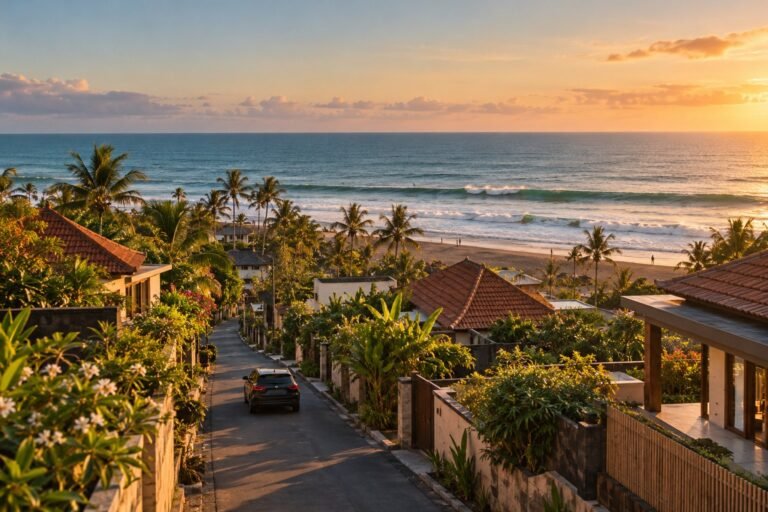
Original Amed-inspired landscape illustration; not a photograph or a guide to a particular entry point.
An Amed snorkelling guide should begin on the beach, not with a promise of turtles. The useful questions are where you can enter without crossing coral, whether you can return comfortably, and who will help you judge the conditions. A beautiful bay is not automatically a suitable swim that morning.
This guide compares three commonly discussed locations and provides a practical way to plan an outing. It is research-led planning advice, not a swimming lesson, a live sea assessment or a substitute for an appropriately qualified local guide.
This article contains affiliate links. Taylor’s Trailblazing Travels may earn a commission from qualifying bookings or purchases, at no extra cost to you.
Amed is an area, not one interchangeable beach entry.
An easy-looking outward swim says little about the return.
A boat captain and an in-water guide are different roles.
No standing, touching, feeding or collecting.
An Amed snorkelling guide to choosing the right bay
Amed lies on Bali’s eastern coast and is promoted as a snorkelling destination by Indonesia’s tourism authority. However, a hotel described as being in Amed does not identify the beach outside its door. Choose the bay first, then check the actual accommodation pin and meeting point. [1]
| Location | Why consider it? | What to clarify before entering |
|---|---|---|
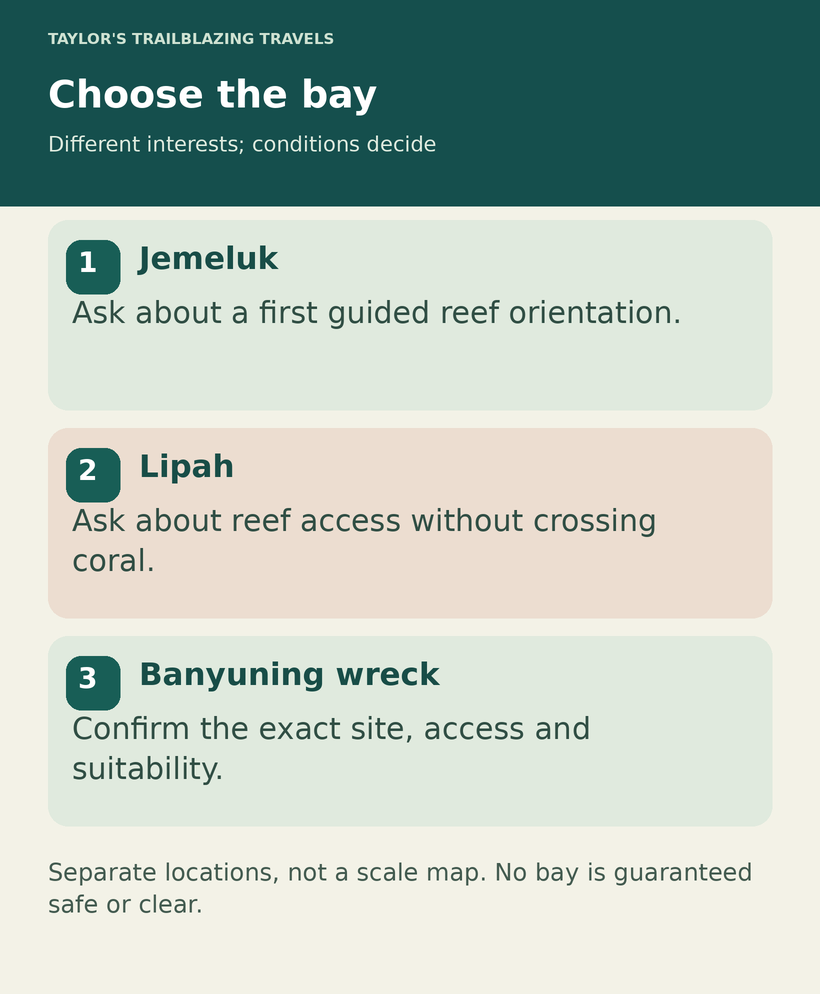
| Jemeluk Bay | An initial guided orientation to reef and artificial structures | The precise beach access, boat routes and agreed swimming boundary. [2] |
| Lipah Bay | A reef-focused outing with shallow coral areas | Where the sand entry remains clear; avoid walking over the coral. [3] |
| Japanese Wreck, Banyuning | A specific wreck interest rather than a general beach swim | Confirm the Banyuning location, access surface and conditions at the wreck. [4][5] |
Jemeluk’s underwater structures are not an invitation to climb, sit on or pose against them. Lipah has coral gardens, but the presence of shallow coral makes careful entry more important, not less. The wreck is an exposed marine structure rather than a playground: do not touch it, enter openings or swim below obstructions. [2][3][5][7]
Local names and tour labels can be inconsistent. Send a map pin or ask the operator to name the village and meeting beach. A package mentioning both Lipah and the Japanese Wreck normally refers to separate stops; do not use the words as interchangeable navigation instructions. [4][8]
Plan the exit before the first swim
Shore access removes the boat transfer, not the need for a safety plan. A sensible conversation begins with the whole route: where you enter, where you intend to turn, where you return and what happens if conditions change. BSAC advises checking local conditions, safe entry and exit points, and alternatives rather than relying on appearances. [6]
Four questions that need real answers
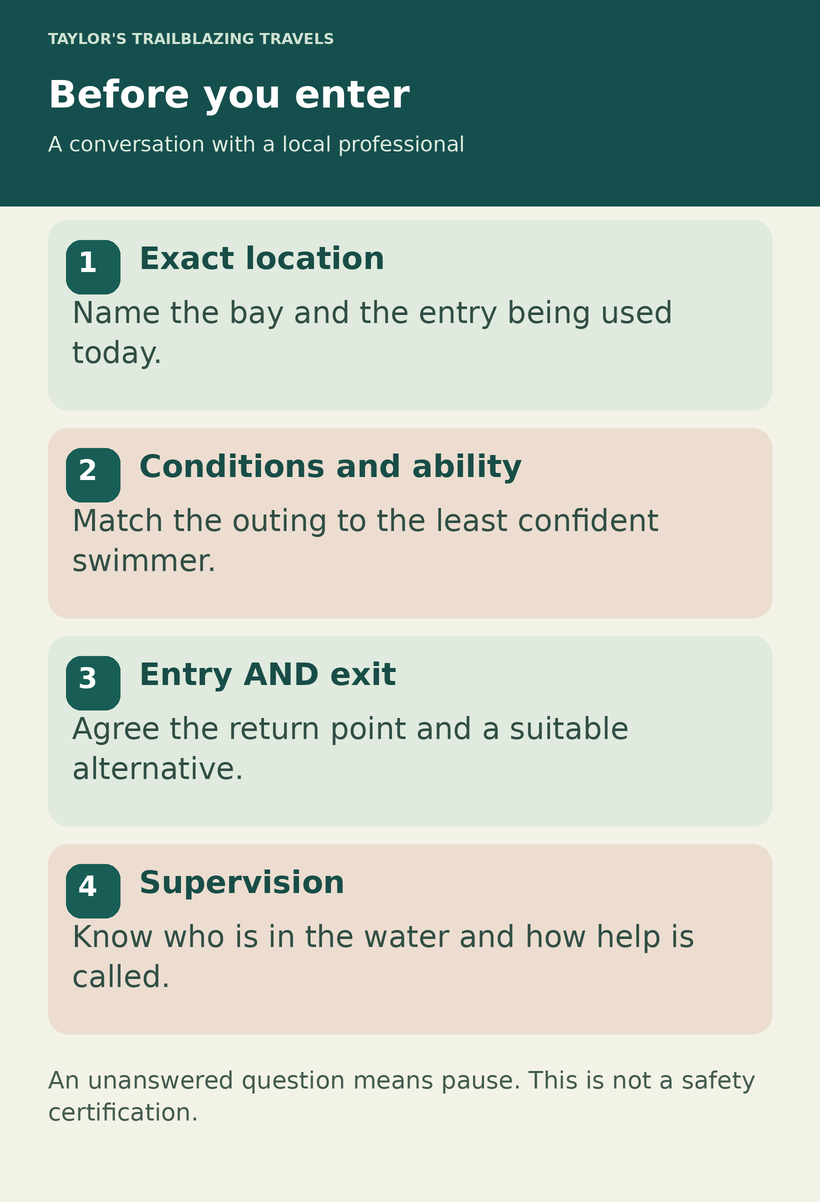
First, which exact entry is being used today? Ask someone who has assessed that site, not simply someone selling equipment. Second, are the sea state, visibility and boat movements suitable for the least confident person in the group? Third, is the return route and exit manageable for that person? Fourth, who is supervising and how will help be summoned? These questions organise a briefing; they cannot certify a swim as safe.
Describe relevant limitations before the outing: confidence in open water, difficulty balancing on stones, fatigue, and any medical advice affecting swimming. A guide should help decide whether the plan needs to change or should not proceed. Do not attempt to solve an unsuitable entry by buying different shoes or by following more experienced swimmers.
Unclear current, an uncertain exit, an uncomfortable participant or missing supervision is a reason to postpone, choose a suitable alternative with the guide, or stay ashore. Paying for a tour does not oblige you to enter.
BSAC recommends at least three people for independent snorkelling: a buddy pair in the water and a lookout ashore. Commercial arrangements should provide meaningful supervision too. Ask how a guide manages different abilities and what the shore or boat support actually does. A lifejacket is not a replacement for swimming ability, appropriate conditions and supervision. [6][8]
Shore outing, private guide or multi-stop boat?
Choose the format according to the problem it solves. For a first visit, a guided shore orientation can answer the practical questions that a boat itinerary may rush past. A boat can connect separate sites without road transfers, but adds boarding, motion, recovery and supervision questions. Neither format is automatically safer.
| Your situation | Useful starting enquiry | Avoid assuming |
|---|---|---|
| Confident swimmer, new to Amed | A local guided introduction at one suitable bay | Familiarity with a swimming pool means familiarity with this sea |
| Mixed-confidence pair or family | A small-group or private session matched to the least confident swimmer | Everyone must complete the same route |
| Experienced snorkellers seeking variety | A boat trip with flexible stops and clear in-water supervision | Four advertised stops will be suitable on the day |
| Non-swimmer or difficult access needs | An honest suitability discussion before any payment | Flotation or a private boat automatically makes the activity appropriate |
Amed Dive Center advertises local snorkelling services and is a useful direct enquiry option. Ask for the actual group size, equipment, meeting point and supervision arrangements rather than inferring them from the word “guided”. [9]
For a boat-based comparison, the GetYourGuide four-site listing includes snorkelling equipment, a local guide and a boat, and excludes non-swimmers from its suitability description. That does not establish that every reader can join, that every stop will operate, or that transport from your hotel is included. Confirm the exact option and whether the guide stays in the water with your group. [8]
This booking option is an alternative to shore access, not a requirement for seeing the reef. Read the selected cancellation terms, weather policy and pickup arrangements before committing; provider descriptions and inclusions have not been independently tested. Confirm the exact live option before paying.
Reef etiquette starts with what you do not touch
Keep your body, fins and equipment clear of the reef. Do not stand on coral for a rest, even when it appears rock-like, and do not collect shells, coral or other marine material. Feeding fish and chasing animals change the encounter for the animal, not just for the photographer. UNEP advises visitors to avoid damaging contact and wildlife disturbance. [7]
Make the photograph optional
For an unfamiliar site, start without a camera. Once you are comfortable, a photograph should never require approaching an animal, crowding other swimmers or losing awareness of the agreed route. When a turtle or fish moves away, let the encounter end. The absence of a sighting is not a reason to keep extending the swim.
Ask the operator where resting is possible without touching living reef. Never treat water shoes as permission to walk across coral. Keep loose equipment secured in the way demonstrated by the guide, and accept an instruction to leave the water before tiredness becomes a problem. [6][7]
Choose practices, not green-sounding labels
Useful questions include whether fish are fed, how boats avoid reef damage and whether guests receive a no-contact briefing. Green Fins distinguishes assessed Certified Members from Digital Members working through online environmental improvement; membership is not a medical or operational safety guarantee. Check the current type rather than treating any green badge as universal approval. [10]
Sun protection still matters. Cover suitable areas with swim clothing and seek shade between sessions. Do not regard an unverified “reef-safe” claim as permission to use any product carelessly or as a substitute for respectful behaviour in the water.
Give the shore decision enough time
For a snorkelling-focused short stay, consider two or three nights in the Amed area rather than making the whole experience depend on one tightly timed stop. This is an editorial pacing suggestion: extra nights create another opportunity to ask about conditions, not a guarantee of good visibility.
A useful first morning is deliberately modest: meet the guide, check equipment and entry, complete only the agreed outing, then review whether another bay adds anything. On the following day, change location only when your interests, ability and the conditions justify it. Avoid swimming between bays simply to tick off the list.
| Part of the appointment | Time reserved | Purpose |
|---|---|---|
| Travel from nearby accommodation | 20 minutes | An assumption to replace with your real pickup estimate |
| Equipment, briefing and entry assessment | 30 minutes | Resolve questions before the activity |
| Flexible outing and rests | 60 minutes | Actual water time agreed locally; stop earlier whenever needed |
| Rinse, change and return | 40 minutes | Avoid racing straight to another booking |
| Total | 150 minutes | Two hours 30 minutes reserved, not two hours 30 minutes swimming |
Accommodation searches are broad area searches, not confirmation of shore access. Compare Amed stays on Booking.com with Agoda’s Amed map, then ask the property which named beach it serves, how you reach it and whether the route involves steps or road transport. A sea view alone answers none of those questions.
For a wider route, the Itinerary Pace Checker can help you count moves and enter your own door-to-door estimates. It does not assess sea conditions or certify a snorkelling plan.
Compare the complete outing, not only mask hire
Ask for a written total covering guide, equipment, flotation where appropriate, transport, boat if used, and any locally collected access or parking charge. Clarify whether the quote is per person, per group or per boat. There is no single verified Amed-wide fee schedule in this guide; obtain the current total for your actual outing.
Before paying, inspect the fit and condition of the equipment with the provider. Tell the guide about glasses, contact lenses or other requirements before arrival rather than assuming a suitable alternative is waiting. Take water, sun protection and something dry for afterwards, while leaving valuables secured on land or under an agreed arrangement. [6]
Buying a snorkel set is not automatically better than using a properly fitted rental. Equipment that has never been tried can create a new problem on a short holiday. Spend first on suitable instruction, supervision and a manageable plan; specialist kit purchases should follow a specific need.
Save the meeting pin and operator contact offline. Travellers needing mobile data can browse Airalo and check its Indonesia plans, after confirming device compatibility, network information and activation terms. A mobile connection is useful for land logistics, not an emergency system on the water. Indonesia plans are offered, but reception at a particular beach is not verified here. [11]
Questions worth settling before you go
Can children join?
Possibly, but a general family label is not enough. Obtain the operator’s age and swimming requirements, correct equipment sizes and supervision plan for the individual child. Do not make a confident adult’s willingness the test of a child’s suitability.
Does early morning guarantee calm water?
No. A preferred departure time is not a forecast. Ask about that day’s conditions and listen to the site assessment rather than turning a general travel tip into a fixed rule. [6]
Can you snorkel the Japanese Wreck without scuba certification?
The site is marketed for snorkelling as well as diving, but that does not make every part accessible or appropriate. A surface outing should remain within the guide’s limits; do not enter the structure or improvise breath-hold descents. [5][8]
What is the most useful thing to book first?
For someone new to Amed, start with a suitable local guide or operator conversation, then choose accommodation near the agreed bay. Reverse that order only when the stay itself is the main purpose and snorkelling is optional.
Prefer one well-briefed outing at a suitable bay over a rushed collection of sites. Keep the exit, supervision and no-contact rules central; treat a cancelled swim as a sensible holiday decision, not a missed obligation.
Sources and editorial method
Last editorial review: 2 November 2026. Provider statements describe their advertised services, not an independent inspection. Comparisons, checklists and worked examples are original editorial analysis; illustrative inputs are labelled where used.
- Indonesia Tourism: snorkelling in Amed
- Amed Jepun Divers: Jemeluk Bay
- Amed Jepun Divers: Lipah Bay
- Villa Adi: separate Amed snorkelling locations, including Banyuning
- Amed Jepun Divers: Japanese Shipwreck
- British Sub-Aqua Club: snorkelling planning and safety tips
- UN Environment Programme: protecting coral reefs on holiday
- GetYourGuide: Amed private four-site snorkelling listing
- Amed Dive Center: local snorkelling services
- Green Fins: environmental membership and assessment
- Airalo: Indonesia eSIM plans
Illustrations in this article were created for Taylor’s Trailblazing Travels. Third-party photographs, where used, are credited beside the image or in the source list.