Indonesian Food for First-Time Visitors: What to Try and How to Order
Recognise the dishes, build a satisfying meal and ask the questions a menu name cannot answer.
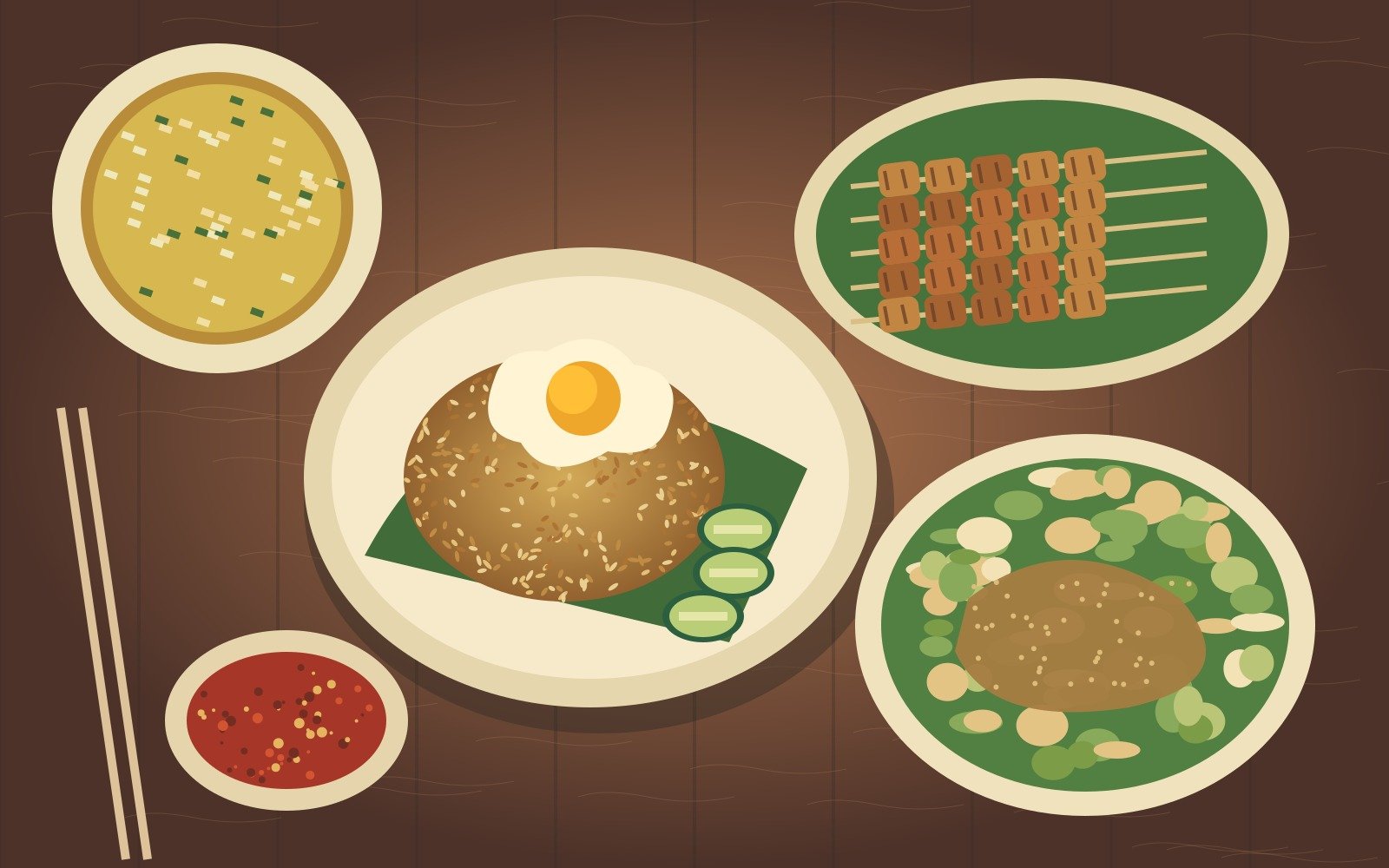
Original food illustration. Individual dishes and ingredients vary by recipe and kitchen.
Indonesian food for first-time visitors is easiest to approach as a set of choices, not a checklist of everything to eat. A rice dish, a soup, a grilled skewer and a rich braise produce very different meals, even when the menu is unfamiliar.
Start with a recognisable main, add one contrasting texture or flavour, and ask about the sauces and accompaniments. This guide explains familiar national staples alongside regional examples, then gives a practical ordering sequence. It does not assume that a dish has one fixed recipe or that a familiar name guarantees it meets a dietary requirement.
Some links in this guide are affiliate links. Taylor’s Trailblazing Travels may earn a commission if you book or buy through them, at no extra cost to you.
One main, one contrast
Avoid ordering several dishes with the same sauce or texture.
Ask before cooking
Removing sambal later cannot undo chilli already in a dish.
Follow the place
Treat Bali and Java specialities as different food traditions.
Check the whole plate
Sauces, stock, toppings and shared equipment matter too.
Indonesian food for first-time visitors: a useful starting menu
The table is an orientation guide, not a ranking or a promise of identical recipes. It deliberately mixes straightforward first orders with dishes that reveal a different texture or regional tradition. Confirm ingredients with the actual kitchen.
| Dish | What to expect | The useful question |
|---|---|---|
| Nasi goreng | Fried rice, often with a chosen protein. [1] | What is mixed in, and is an egg included? |
| Mi / mie goreng | Fried noodles with varying additions. [1] | Which noodles, sauce and protein are used? |
| Sate / satay | Skewers; the meat and accompanying sauce vary. [1] | Which meat, which sauce, and is rice separate? |
| Soto ayam | Chicken soup with regional differences. [1] | What is in the broth and what comes alongside? |
| Rendang | A deeply seasoned Minangkabau-style preparation, commonly beef. [3] | Which protein and how spicy is this version? |
| Gado-gado | Vegetables with peanut dressing and often tofu, tempeh or rice cake. [2] | What is in the sauce and the toppings? |
| Tempeh / tempe | Fermented-soybean food prepared in different ways. [12] | How is it seasoned and what is added? |
| Nasi campur | Rice with an assortment of accompaniments. [5] | Which items are included, and what is the total? |
| Gudeg | A Yogyakarta-associated young-jackfruit dish. [4] | What accompanies the jackfruit? |
| Babi guling | Balinese roast pork. [6] | What is included on this particular plate? |
For an uncomplicated first lunch, choose one main that appeals and ask about the unfamiliar elements. You do not need to begin with the mildest possible dish, but understanding what is on the plate makes it easier to discover what you enjoy.
Spelling varies, so mi and mie, or sate and satay, may describe the same broad type of food. Do not let a familiar spelling override the restaurant’s explanation of its own version.
Build a meal with contrast rather than duplication
A first meal becomes more interesting when it contains contrast. If the main is rich and heavily sauced, add a simple vegetable preparation rather than another rich dish. If the main is a soup, consider whether you actually need a second large rice or noodle plate.
Read this graphic
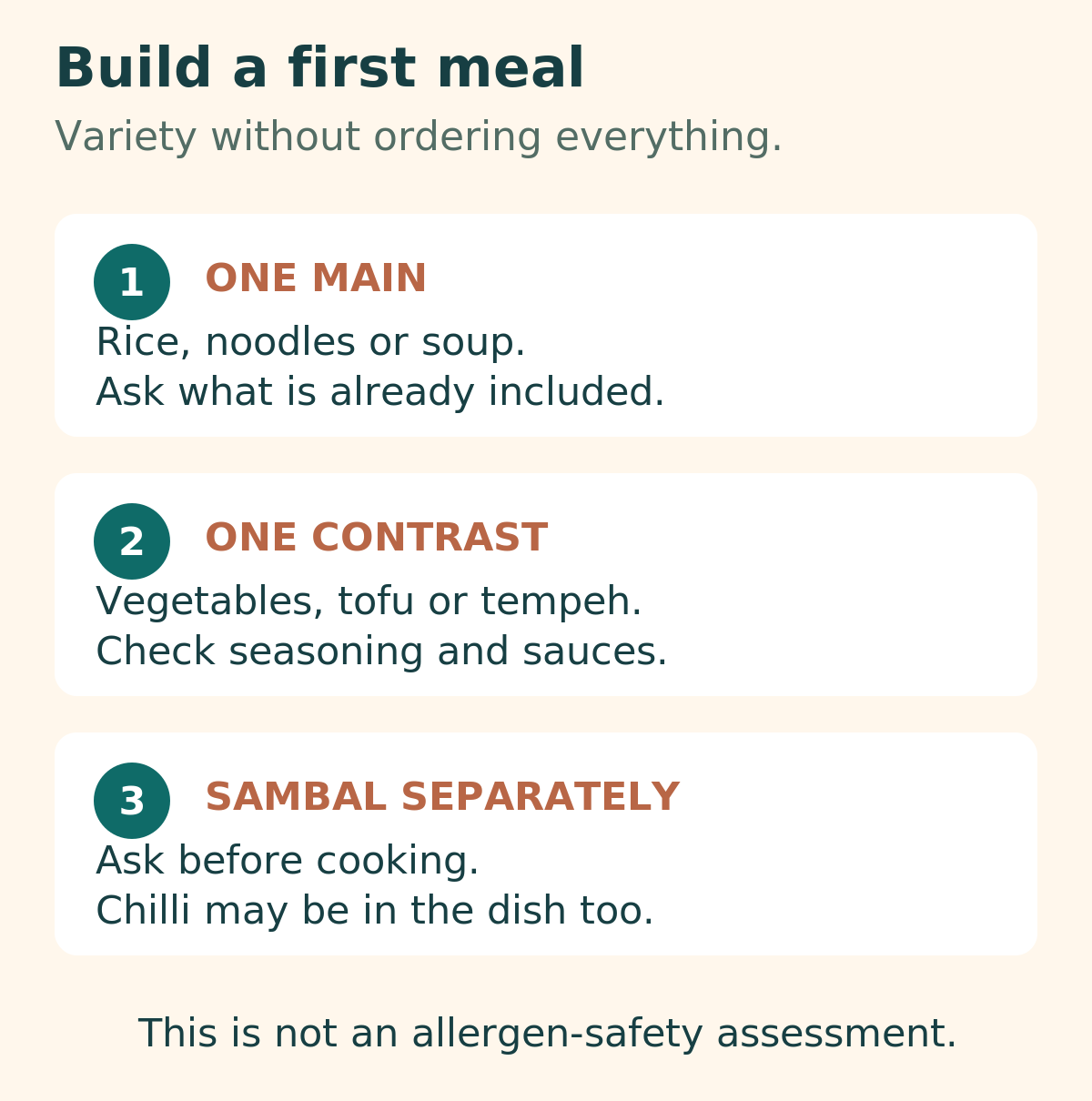
Three-part meal method: choose one main, add one contrasting vegetable or tofu dish, and request sambal separately before cooking.
The one-main, one-contrast method
Choose the principal dish first. Then ask what it already includes: rice, vegetables, egg, crackers or a small condiment may be part of the order. Add one missing element only after that. This original ordering method helps prevent accidental over-ordering without turning a meal into a rigid nutrition formula.
For a mixed group, let each person identify one dish they genuinely want, then remove duplicates. Two dishes that sound different in English may still produce similar meals once their sauce and accompaniments are explained.
Three workable first-meal patterns
A rice-led meal might be a modest portion of nasi goreng plus a separate vegetable dish, after checking the ingredients of both. A soup-led meal might be soto with the rice or side offered by that kitchen. A sharing meal might pair one portion of sate with a vegetable dish and enough plain rice for the group.
These are combinations to discuss, not dietary-safe orders. Portions and included accompaniments vary. Ask the server whether the proposed order is sensible for the number of people before adding several extras.
Leave room to change your approach at the next meal. Enjoying familiar fried rice on arrival does not prevent trying a regional speciality tomorrow; neither choice is a test of how adventurous a traveller you are.
Let regional specialities add something different
Rendang and a richer meal
Rendang is associated with the Minangkabau cooking tradition of West Sumatra, using coconut and spices in a long cooking process. It offers a different experience from a quickly cooked rice or noodle dish. [3] Order it because that flavour profile appeals, not because a popularity claim says everyone must like it.
When the accompanying dishes are unfamiliar, ask which ones balance the richer main and how the meal is priced. A small, well-explained selection is more useful than ordering every available preparation on the first attempt.
Gudeg in Yogyakarta
Gudeg makes young jackfruit the centre of a distinctive meal, but a plate can also include chicken, egg or beef-skin accompaniments. The plant-based main ingredient therefore does not make every gudeg meal vegetarian. [4]
Ask which elements are in the complete serving. Travellers who enjoy sweeter savoury flavours may find this a particularly interesting contrast with a chilli-led dish tried elsewhere.
Babi guling in Bali
Babi guling is roast pork associated with Bali. It belongs in a regional food discussion, not in a claim that Indonesian cooking follows one uniform religious or dietary pattern. [6] Travellers avoiding pork should choose a different dish and still check the surrounding kitchen practices relevant to their needs.
There is no need to cross an island for a single “must-eat” name unless food is a major reason for the journey. Explore what is available where you are staying, then let a particularly interesting food experience justify an outing.
Read the menu, then order in four checks
Start with the base, identify the protein, ask how it is prepared and clarify the extras. These plain-English translations are for everyday ordering; they are not substitutes for professionally prepared allergy communication.

Read this graphic
Menu words grouped into base, protein, cooking method and extras, including nasi, mi, ayam, ikan, goreng, bakar, sambal and telur.
| Menu word or request | Plain meaning | What still needs checking |
|---|---|---|
| Nasi / mi | Rice / noodles | Type of noodles and added ingredients |
| Ayam / sapi / babi | Chicken / beef / pork | Stock, mixed fillings and sauce |
| Ikan / udang | Fish / prawns or shrimp | Other seafood ingredients and shared preparation |
| Goreng / bakar | Fried / grilled | Oil, marinade, glaze and toppings |
| Telur / tahu / tempe | Egg / tofu / tempeh | Seasoning and the rest of the plate |
| Tidak pedas, ya | Not spicy, please | Whether the dish can actually be made without chilli |
| Sambalnya dipisah, ya | The sambal separately, please | Chilli already present in the main dish |
| Berapa harganya? | How much does it cost? | Portion size and included accompaniments |
| Bungkus | Packed to take away | How soon it will be eaten and safe storage |
A clear first order might be “Nasi goreng ayam, tidak pedas, ya”, followed by a question about what is included. Pointing to the exact menu item helps. Before food is prepared, make sure the server has understood the change rather than simply acknowledged the order.
Sambal describes a chilli-based condiment, not one universal recipe. Requesting it separately can make heat easier to manage, but it does not undo chilli in a marinade, stock or pre-cooked sauce. For strong dislikes as well as dietary needs, explain the ingredient rather than relying only on “not spicy”.
Online translation can help with a simple question. For anything medically important, use reliable prepared communication and a discussion with the kitchen rather than an improvised translation.
Vegetarian, vegan, halal and allergy checks
A vegetable-heavy appearance is not a complete recipe. The Indonesian Chef Association’s published nasi campur example includes vegetable preparations with shrimp paste and chicken seasoning, and a tofu preparation containing egg. That is concrete evidence for asking about hidden additions, not a claim that all versions contain them. [5]
For vegetarian or vegan meals, check the main ingredient, cooking stock, sauce, condiment and garnish separately. Ask whether the kitchen can make the required version before ordering. Removing a visible piece of meat does not change a sauce already made with animal ingredients.
For halal requirements, do not assume a dish or restaurant qualifies because of its country, name or lack of obvious pork. Ask for relevant current certification or a clear explanation that meets your own requirements. A label on one item does not automatically describe the entire kitchen.
Food allergies need a different level of preparation
Discuss the trip with your allergy clinician, follow your prescribed emergency plan and carry the medication you have been advised to take. Allergy UK recommends planning ahead and using translation cards to communicate food allergies abroad. [9]
Explain the exact allergen and ask about cross-contact through shared pans, utensils, oil and preparation surfaces. If the kitchen cannot confirm what you need, do not rely on the meal being “probably fine”.
Choose a place where there is time and willingness to discuss the requirements. A quieter conversation before service may be more helpful than trying to resolve a complex request at a busy counter.
Choosing where to eat and understanding the bill
Use the menu, the available explanations and the visible food handling to make a decision. A long queue is evidence of popularity, not a hygiene certificate, while a high price is not proof of careful preparation.
At a small eatery or counter, ask whether the price covers one complete plate or whether each selected accompaniment is charged separately. When food is brought without an explicit order, clarify the charging arrangement before starting. This avoids assuming that a service style encountered in one place works identically everywhere.
Read price shorthand carefully
On a rupiah menu, 25k commonly means 25,000 rupiah. Check the stated currency and whether the displayed figure includes the full charge. Where a menu uses “++” or lists additional charges, ask for the final amount rather than assuming a universal percentage.
For a group, agree whether everyone is ordering individually or sharing. Keep track of extra drinks, side dishes and second orders; these are easy to overlook when comparing an apparent meal price with the eventual bill.
Build the food allowance in the travel budget calculator from prices you have actually checked, allowing separately for ordinary meals and any special class or dinner. A national average would not describe every island, venue or travel style.
Carry a practical payment option for the particular place and ask before ordering when card payment is essential. The useful question is whether that venue accepts your payment method now, not whether Indonesia is described as a “cash” or “cashless” destination.
Food and water precautions without giving up the experience
Follow food-and-water precautions rather than relying on luck or a venue’s reputation. Prefer food cooked thoroughly and served hot, wash hands before eating and be cautious with raw or inadequately chilled items. TravelHealthPro explains that these steps reduce risk but cannot eliminate it. [7]
The FCDO advises that tap water is not safe to drink in Indonesia. Use an appropriate safe drinking-water source. Ask about ice rather than assuming its appearance proves how it was made; sealed drinks or drinks made with freshly boiled water can be simpler choices. [7][8]
Freshly cooked food is not the same thing as food that has been sitting warm for an unknown period. Watch how it is prepared and stored, and choose another option when the handling gives you reason for concern.
For takeaway food, think about the time before eating and access to appropriate storage. Buying a large meal before a long, hot transfer is a different situation from eating it promptly at the table.
Travellers with additional health needs should seek individual pre-travel advice rather than relying on a general food guide. This article is intended to improve ordering decisions, not to diagnose illness or replace medical guidance.
Good preparation should leave more room to enjoy the meal: know what you ordered, have water you trust and avoid letting hunger force a decision you would otherwise question.
When a cooking class or guide is worth booking
A class can be worthwhile when you want to understand ingredients, ask questions about preparation and leave with a clearer sense of how dishes differ. It is less compelling when the main goal is simply an inexpensive meal.
For the Bali part of a trip, cooking-class comparison pages provide a starting point. Check the actual menu, whether the experience is hands-on, the group size, transport arrangements and any market visit. A class advertised as suitable for a dietary preference still needs a separate discussion about your precise requirements. [10]
Ask how much of the advertised session is spent travelling or shopping rather than cooking. During rainy weather, clarify which parts are under cover; a covered kitchen does not make the route to it weather-proof.
Save essential addresses and menu notes offline. A data plan can help with everyday translation and finding the agreed meeting point, but it is not a substitute for an allergy card or a human conversation. Airalo offers Indonesia eSIM options; check device compatibility, unlocking, coverage and activation terms before buying. [11]
There is no need to book a paid food experience for every stop. A thoughtfully ordered ordinary meal can teach a great deal when the kitchen has time to explain what it serves.
Common mistakes, final questions and a first-order plan
Is Indonesian food always very spicy?
No single description covers the whole cuisine. The more useful question is whether the particular dish can be prepared to the heat level you want. Ask before cooking, and distinguish a separate condiment from chilli already in the recipe.
Is gado-gado automatically vegan?
No. Its vegetable-and-peanut identity does not confirm every sauce, topping or accompaniment. Check the complete version being served rather than relying on a broad food description. [2][5]
Can children start with the same dishes?
Choose a portion, texture and heat level that suit the child, with the same ingredient checks you would use elsewhere. A familiar-looking rice dish can be a useful starting point, but it still needs explanation.
Should you order everything recommended in this guide?
No. Choose a few contrasting dishes across different meals. Repeating something you enjoyed is not a missed opportunity, and ordering excessive food adds little understanding.
For the first order, select one main, ask what is already included and add one contrast only where needed. Clarify sauce, heat, dietary requirements and price before the kitchen starts. That small conversation is the most useful confidence-builder.
Explore the Indonesia food-and-culture hub for the next stage of the trip, and let each destination introduce something different rather than treating the whole country as one menu.
Sources and research notes
Key sources independently checked on 2 November 2026; other references are retained for further reading. Recheck changing advice, terms and conditions before travel.
Dish descriptions establish broad identities, not fixed recipes. Ingredient examples and health guidance come from the sources below. Meal combinations, ordering steps and simple translations are editorial aids, not medical advice or allergen guarantees.
- Indonesia Travel – popular Indonesian foodsBasic identities of rice, noodle, skewer and soup dishes; advertised restaurant prices are not reproduced.
- Indonesia Travel – Gado-Gado BetawiVegetables, peanut dressing, tofu, tempeh and rice-cake context.
- Indonesia Travel – Rendang MinangkabauMinangkabau origins and the coconut-and-spice cooking tradition.
- Indonesia Travel – Yogyakarta gudegJackfruit preparation and common animal-based accompaniments.
- Indonesian Chef Association – Nasi Campur recipeConcrete examples of shrimp paste and chicken seasoning in vegetable, tofu and tempeh preparations.
- Indonesian Permanent Delegation site – reprinted CNN food overviewRegional dish context, including Balinese babi guling; old venue advice is not used.
- NaTHNaC / TravelHealthPro – Food and water hygieneFood handling, safe drinks and hand-hygiene precautions.
- FCDO – Indonesia health adviceTap-water advice and links to destination health information.
- Allergy UK – Travelling with allergiesPreparation, translation cards and communication about food allergy.
- GetYourGuide – Bali cooking classesDestination-specific class comparison page; individual menus and inclusions require checking.
- Airalo – Indonesia eSIMsIndonesia data-plan availability as a planning option, not a coverage guarantee.
- Indonesia Tempe MovementTempeh as a traditional Indonesian fermented-soybean food.
Illustrations in this article were created for Taylor’s Trailblazing Travels. Third-party photographs, where used, are credited beside the image or in the source list.