Mount Batur Sunrise Trek: Fitness, Guides and Safety Planning
Decide whether the mountain walk suits your group before you commit to the early pickup.
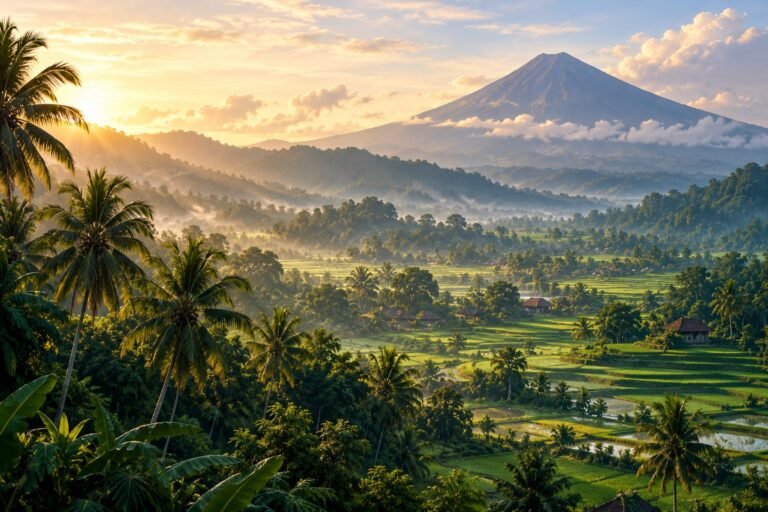
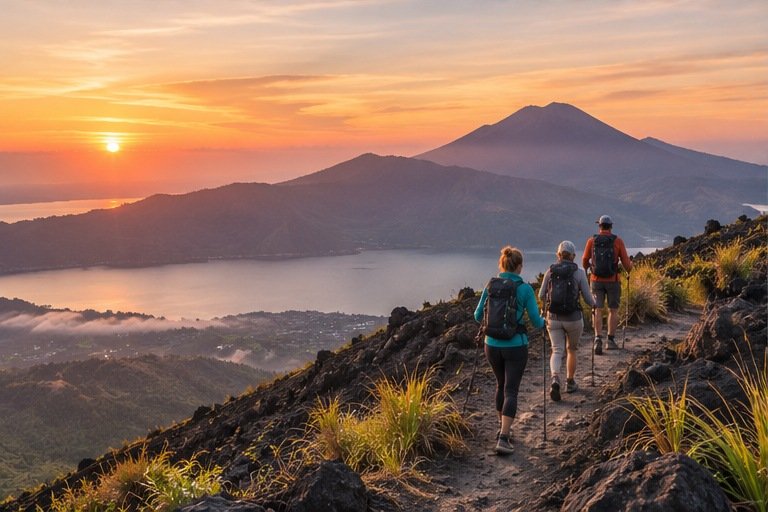
Original illustrative mountain scene inspired by the Batur landscape; not an exact trail or verified viewpoint.
The Mount Batur sunrise trek starts long before daylight, but the decision should start well before the holiday. The useful questions concern the route, your ability to walk it comfortably, the guide and the conditions – not just the view promised in a tour photograph.
Some links in this guide are affiliate links. Taylor’s Trailblazing Travels may earn a commission when you book or buy through them, at no extra cost to you.
Ask for the actual route
Mountain elevation is not your elevation gain.
Allow a whole morning
Collection and optional stops add to the walk.
Use three separate checks
Permission, personal readiness and conditions all matter.
Keep a real alternative
A viewpoint breakfast may better match your aims.
Is the Mount Batur sunrise trek the right outing for you?
The Mount Batur sunrise trek is best considered a mountain walk with an unusually early start, not a sunrise viewpoint reached with a little walking. It can suit a first-time hiker who is comfortable with sustained uphill effort and the descent afterwards, but a beginner-friendly sales label does not establish personal suitability. The operator information consulted describes an uphill route on volcanic terrain. [1]
Batur is an active volcanic landscape in the Kintamani area. UNESCO gives its height as 1,717 metres, while the Smithsonian’s current profile lists 1,711 metres; around 1,700 metres is sufficient for planning here. Neither figure is the ascent from your trailhead, and neither tells you whether the route is open on a particular morning. [2][3]
This is a planning guide, not a live volcanic-alert or trail-opening bulletin. Confirm the latest official restrictions and the actual route with a licensed local guide before committing. An available booking slot is not an authority’s safety clearance. [4]
| Your situation | Sensible starting decision | What still needs checking |
|---|---|---|
| Regular walker, comfortable on hills and descents | Consider a guided sunrise hike | Route, pace, weather and permission |
| Reasonably active but no recent hill walking | Discuss a realistic route before paying | Uneven footing, group pace and turnaround plan |
| Uneasy in darkness or on loose ground | Consider a daylight alternative | It may be longer or hotter, not easier |
| Significant mobility limitation or concern about exertion | Prefer a non-hiking viewpoint unless suitably advised otherwise | Vehicle access, steps and individual needs |
| Main aim is a scenic breakfast rather than a climb | Compare a permitted viewpoint visit | Current access and view conditions |
These are editorial planning categories, not medical clearance or a fitness test. Anyone uncertain about exertion because of a health condition should seek individual advice before booking.
Understand the effort before accepting a beginner label
The descent is part of the decision
A guide can manage the route and group, but cannot make the walk physically effortless. Ask about the chosen trail’s surface, elevation gain, walking distance and expected moving time. Those details matter more than a single mountain height or a claim that thousands of beginners have completed it.
Think about a recent walk that required both a sustained climb and a careful descent. Were you comfortable on the return, or already relying on others to get down? That is useful information to give the guide. It is not a formal pass-or-fail test and should not be used to override a health professional’s advice.
If you have no relevant recent experience, build some ordinary hill-walking familiarity before the trip rather than discovering your tolerance at night. Use footwear you already know, and be honest about balance, knee comfort and how frequently you need to stop.
Group pace changes the experience
Ask how many walkers share a guide, whether ability levels are mixed and what happens when somebody needs to turn back. A vague answer such as “the guide helps everyone” does not explain how the rest of the group is supervised.
A private arrangement may offer more control over pace, but does not change the ground or the weather. Request a clear turnaround plan and an alternative that does not pressure the slowest person to continue simply because the group wants sunrise photographs.
What the early morning actually involves
One operator’s published example starts trekking around 04:00, schedules sunrise breakfast around 06:00 and finishes the mountain section around 08:30. Its hotel collections begin earlier and vary with location. These are provider-specific approximate times, checked on 1 November 2026, not a year-round sunrise schedule. [1]
BMKG’s Bali forecast publishes sunrise information and weather warnings; use the date-specific information with your guide’s plan rather than treating 06:00 as a universal sunrise time. [5]
| Stage | What to ask before booking | Why it matters |
|---|---|---|
| Hotel collection | Exact pickup, vehicle sharing and other stops | Collection time is not arrival at the trailhead |
| Briefing and equipment | Toilet stop, light check and route explanation | Do not start simply to catch up with a late group |
| Uphill walk | Expected pace, rest stops and turnaround point | A slower walker needs a plan, not encouragement alone |
| Sunrise stop | Safe permitted viewpoint and time spent waiting | Clouds and crowds can change the experience |
| Descent | Route, supervision and rendezvous | The outing is not finished at the summit |
| Return | Actual destination and any additional attractions | Hot springs or shopping stops change the length of the day |
Protect the previous evening
Pack and check the pickup details before dinner, keep the evening simple and avoid pairing the trek with a late night out. Also leave room afterwards. A plan that adds a full afternoon of sightseeing can be unrealistic even when the mountain section ends in the morning.
There is no prize for arranging the most demanding day of the holiday. The better question is whether you will enjoy the climb, return safely and still have enough energy for the rest of the trip.
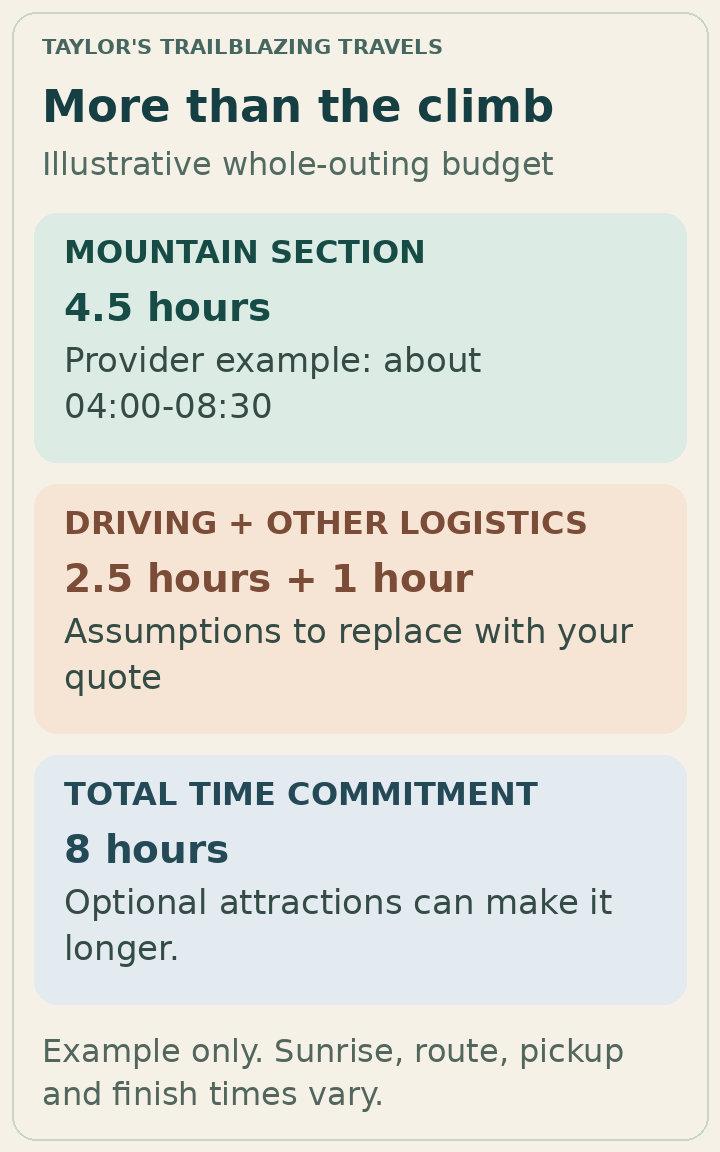
The diagram uses an original illustrative budget: 4.5 hours for the mountain section, 2.5 hours for all driving and one hour for briefing and other logistics equals eight hours. Only the 4.5-hour mountain block is drawn from the operator’s example; the other inputs are assumptions. Replace them with your actual arrangements. Longer pickups or optional stops increase the total.
A guide, a permitted route and a clear cancellation decision
Bali’s published tourist code calls for licensed guiding at attractions and respect for sacred sites. Arrange an identifiable operator and ask who will guide your actual walk, rather than assuming that a transport booking includes a qualified mountain guide. [6]
The UK’s travel advice says volcanic exclusion zones can change at short notice and directs travellers to MAGMA Indonesia for status updates. A historical eruption record, an old blog post or a seller’s calendar is not a substitute. [4]
Use three independent checks: the route is currently permitted; the group is suited to that route; and the conditions are acceptable. Failure at any one stage should stop the plan. The other two cannot compensate.

Ask who makes the final weather decision, when you will be contacted and what happens financially if the operator cancels. Distinguish cancellation by the provider from your decision to withdraw, because the terms may differ. Save the confirmation and the provider’s contact details offline.
Never choose a guide who offers to bypass a closure, enter a restricted crater area or continue despite an official warning. Stay on the agreed route and keep away from crater edges, openings and gas or steam vents; the aim is a mountain view, not a closer encounter with volcanic activity.
Equipment that solves the actual problems
Footing, darkness and changing comfort
Ask the operator what is provided and in what condition. A functioning head torch keeps your hands free, but you still need to test its fit and battery before walking. A phone torch is a poor main plan because it occupies a hand and uses a device you may need for contact later.
Choose broken-in footwear with grip appropriate to the expected surface. Bring a layer for standing still and suitable rain protection, rather than dressing only for the temperature at your beach hotel. The example tour listing specifies hiking shoes and a jacket and lists a head lamp and trekking pole among its inclusions; confirm your own option rather than assuming all operators supply the same kit. [7]
Put your phone and spare layer in a dry inner bag. Carry water, an appropriate snack and any personal medication, discussing quantities and requirements with your guide. Check whether food is before the walk, at the viewpoint or afterwards; “breakfast included” does not answer that.
Keep the bag manageable
Bring enough to meet your needs without packing for every possible photograph. Heavy camera equipment is a poor trade-off when it interferes with steady walking. Keep straps secured and stop in an appropriate place before taking a picture.
Also check where luggage will remain if you are moving hotels. Do not assume a shared transfer can carry large cases, leave them unattended or deliver them to an unrelated destination without agreement.
Weather, insurance and when to choose another plan
Check BMKG warnings for the relevant area, not only a weather icon labelled “Bali”. Heavy rain, lightning, poor visibility and the guide’s assessment of the route should influence the decision. Indonesia’s official travel guidance warns that volcanic conditions and exclusion zones can change quickly. [4][5]
Cloud is not the same thing as unsafe weather: a safe but cloudy outing may still go ahead under the booking terms. Conversely, a clear forecast is not a reason to ignore a local restriction. Agree what happens in both situations before the deposit becomes non-refundable.
Ask your insurer whether your policy covers the planned activity, altitude and any relevant evacuation or rescue costs. Do not assume ordinary holiday cover includes every mountain activity. Australian government travel advice specifically recommends checking insurance and functioning equipment for adventure activities. [8]
Treat unusual illness, significant fatigue or an inability to walk steadily as reasons to stop and tell the guide, not problems to conceal until the viewpoint. The itinerary should accommodate a conservative decision. Photography, sunk costs and the wishes of the rest of the group are not safety criteria.
What a tour price should include
A useful quote identifies the hiking route, licensed guide, transport, pickup area, admissions or permits, equipment, food and any optional hot springs visit. It also explains the group size and cancellation terms. A low figure without those details is not yet comparable with an inclusive tour.
One operator advertised Rp1,600,000 for two people when checked on 1 November 2026, equivalent to Rp800,000 each. That is a dated example of its own offer, not a market average, a live quote for your dates or a fee payable at the trailhead. Reconfirm the inclusions and final amount directly. [1]
The Mount Batur trek and hot springs listing on GetYourGuide is another comparison option. Transfer and entrance arrangements depend on the selected option, and the listing has its own age and health exclusions. Check those conditions before paying rather than treating this link as a recommendation for every walker. [7]
Add the outing’s actual quote and any overnight stay to the Travel Budget Calculator. Do not double-count an entrance charge or transfer already included in a package.
Ubud, the south coast or a Kintamani overnight?
Staying near the mountain can reduce the pre-dawn transfer, but moving hotels also costs time. The decision depends on the exact property and trailhead, not merely whether the accommodation’s address says Kintamani.
A two-night stay may be worthwhile when the wider landscape is an interest and you would enjoy the area even if the hike does not happen. Moving for a single night solely to chase a sunrise can create pressure to proceed when flexibility would be better.
Compare the map locations in Booking.com’s Kintamani search and Agoda’s Kintamani-area accommodation. Ask the guide to confirm collection from the chosen property, including any difficult access road. These are accommodation searches, not endorsements of individual stays or proof of trail proximity.
Where two hotel offers look similar, the Hotel Comparison Calculator can include the extra transfer charges you enter. It does not retrieve current prices or assess hiking access.
Alternatives when sunrise hiking is not the right fit
A permitted caldera-view breakfast can deliver the landscape without the ascent. Check the access route, opening arrangements and steps at the actual venue; a non-hiking activity is not automatically accessible.
A jeep outing is also a different experience, not a vehicle ride to the hiking summit by default. Ask for the exact viewpoint, road conditions and vehicle access. Do not choose it on the assumption that the photographs show the same destination as a summit trek.
Daylight walking removes the need to ascend in darkness, but can involve a longer itinerary and different heat exposure. Bali Eco Trekking advertises an after-dawn programme whose walking begins after a sunrise breakfast and continues into the afternoon. That is evidence that an alternative exists, not proof that it is easier or currently permitted on your date. [9]
The best alternative is one you would enjoy independently, not a consolation activity bought in a rush after a cancelled pickup.
Questions to settle before the deposit
Can I do the trek without a guide?
This guide recommends a licensed local guide and compliance with the current local access arrangements. Do not plan around online accounts of other people walking independently. The relevant question is what is permitted and appropriate for your route now. [6]
Will the sunrise definitely be visible?
No. The walk can reach an appropriate viewpoint without producing an unobstructed sunrise. Read the weather and cancellation terms and decide whether the landscape and walk would still justify the early start.
Is the quoted mountain height the amount I have to climb?
No. Elevation above sea level and elevation gained during a hike are different measurements. Ask the operator for the route’s starting point, ascent and descent; those are the figures that help you evaluate the effort.
Can children join?
Operators set different requirements. The example GetYourGuide tour excludes children under ten, but that is not a universal rule or proof that every older child is suited to the hike. Discuss the child’s experience and supervision before booking. [7]
Should I arrange an airport departure afterwards?
Avoid making the mountain outing depend on a tight return for a flight. Traffic, a slower descent or a changed route can remove the spare time. Keep a separate departure-day plan rather than treating the advertised finish as a guarantee.
The sensible booking decision
Book the Mount Batur sunrise trek when the mountain walk itself appeals, your group is realistically prepared, and a licensed guide can confirm a permitted route with an acceptable weather and turnaround plan. Choose a different outing when darkness, terrain, exertion or the lost sleep makes the experience a poor match.
The main mistakes are comparing only the ticket price, interpreting “beginner” as “effortless”, confusing a mountain height with the climb, and assuming a booking platform certifies today’s access. A good decision answers those questions before the alarm is set.
Sources and fact-checking notes
Research-led planning advice; no trek or guide has been personally tested for this article. Operator itineraries and prices are examples, not confirmed availability. The eight-hour model combines a provider mountain-duration example with explicitly assumed driving and logistics. A current Batur-specific MAGMA bulletin could not be independently retrieved during review; no claim about the current alert level or trail opening is made.
Sources reviewed on 1 November 2026. Recheck prices, rules, access and booking conditions before travel.
- Explore Mount Batur: published itinerary and pricing example.
- UNESCO: Batur Global Geopark.
- Smithsonian Global Volcanism Program: Batur profile.
- UK FCDO: volcanic restrictions and Indonesia safety advice.
- BMKG Denpasar: Bali weather and sunrise information.
- Bali Governor: Circular 07 of 2025, tourist code.
- GetYourGuide: sunrise trek and hot springs option conditions.
- Australian Government: Indonesia adventure-activity advice.
- Bali Eco Trekking: after-dawn alternative programme.
Illustrations in this article were created for Taylor’s Trailblazing Travels. Third-party photographs, where used, are credited beside the image or in the source list.