Where to Eat in Tokyo: Food Neighbourhoods by Taste and Budget
Choose the right streets for seafood, noodles, shared plates or a special meal—and leave room in the day to enjoy them.
- 8 food areas
- Meal budgets in yen
- 2 manageable food outings
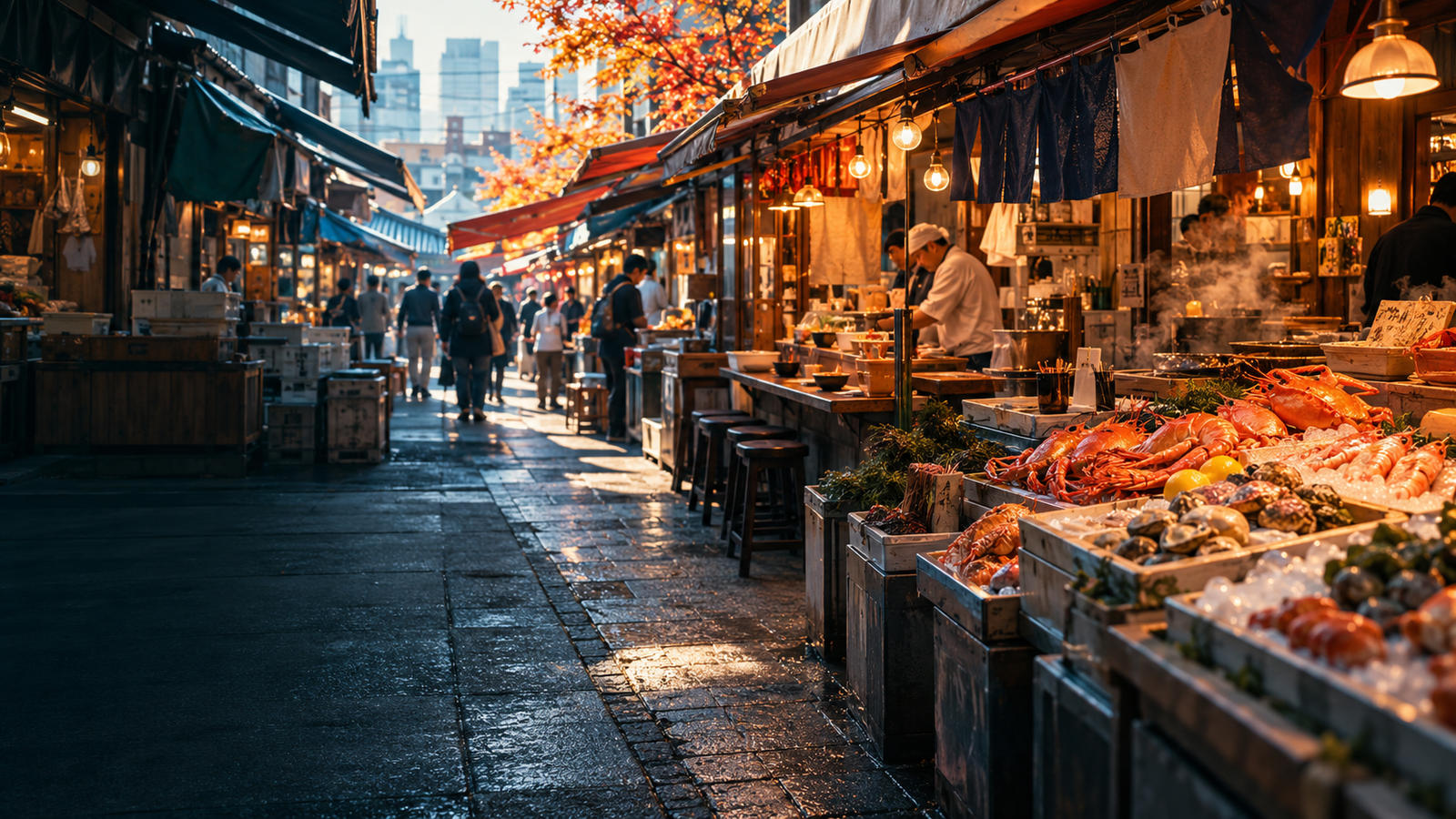
AI-generated illustration inspired by Tokyo’s food streets; it does not depict a verified restaurant or a personal visit.
Deciding where to eat in Tokyo gets easier when you start with the meal you want. A market tasting morning, a quick bowl of noodles and a long evening in an izakaya need different amounts of money, time and planning.
This guide compares neighbourhoods by food focus, spending flexibility and the kind of outing they suit. The recommendations draw on official Tokyo tourism information, market rules and current venue pages. The budget examples and suggested outings are editorial planning tools; individual menus and your appetite determine the final bill.
Where to eat in Tokyo: choose your food neighbourhood
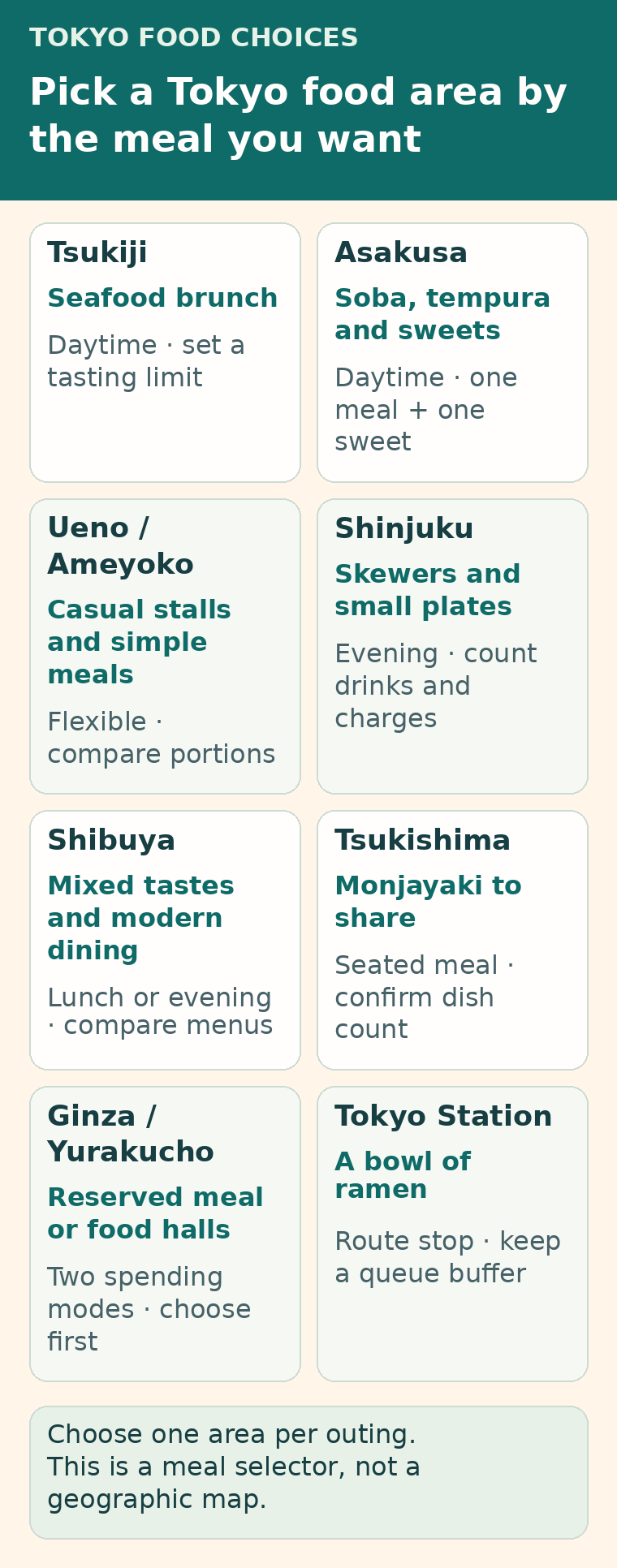
The selector weighs food focus, the most useful time to visit and how easily you can control spending. “Budget friendly” means there are practical ways to keep an outing simple; it is not a promise that every restaurant in the area is inexpensive.
Eight starting points, selected for different eating decisions. Venue details checked 18 October 2026.
Swipe the table sideways to compare all columns.
| Area | Go for | Budget and practical trade-off |
|---|---|---|
| Tsukiji | Seafood, sushi and a market brunch | Choose one priced meal first; premium individual bites can quickly use the snack budget. Mainly a daytime outing. [2] |
| Asakusa | Soba, tempura and traditional sweets | A seated lunch plus one sweet gives the visit a clear spending limit; allow time for the temple streets. [1][4] |
| Ueno / Ameyoko | Casual stalls, simple meals and a lively market | A useful lower-budget starting point. Crowds and limited seating can make grazing less relaxing. [5] |
| Shinjuku | Yakitori, izakaya dishes and ramen | Good for an evening; drinks, extra plates and cover charges change the bill. [6][12] |
| Shibuya | Mixed tastes, modern dining and regional Japanese food | Compare menus within a compact area; choose by the dishes offered rather than the busiest entrance. [7] |
| Tsukishima | Monjayaki cooked on a tabletop griddle | Works well as a shared, seated meal. Agree the number of dishes and ask about minimum orders. [8] |
| Ginza / Yurakucho | A reserved meal, food-hall browsing or an izakaya evening | Two different spending modes: set a ceiling for Ginza dining, or choose simpler food halls and nearby small-plate places. [9][10][12] |
| Tokyo Station | Ramen fitted around a train journey | Easy to make one bowl the main meal; keep time for queues and finding the correct exit. [11] |
Use this order to decide: dietary requirements → preferred food → time of day → total meal allowance. If the first requirement rules out the obvious local speciality, find a suitable restaurant first and build the neighbourhood visit around it.
Tsukiji, Asakusa and Ueno: give daytime food a proper place
Tsukiji: a seafood morning with a spending limit
Tsukiji’s outer market remains a food destination; the former inner wholesale market moved to Toyosu. Choose Tsukiji when you want shops and a meal within the same visit. Treat a trip to Toyosu as a separate plan with its own access and visitor arrangements. [13]
The outer market recommends visiting between 09:00 and 14:00 and notes that many shops close on Sundays and some Wednesdays. Professional buyers take priority before 09:00. Individual opening days vary, so check the market calendar and any restaurant you particularly want. [2][3]
Start with a visible menu and decide whether sushi or a seafood bowl will be the main meal. Then choose any extra tastings from the money left. Buying several premium snacks before lunch makes the eventual bill much harder to judge. Choose another district if seafood does not appeal to most of your group.
A guide can help if your priority is understanding unfamiliar ingredients and choosing tastings. This Tsukiji guided food walk on GetYourGuide lists seafood and meat tastings. Check the current inclusions and meeting instructions before booking. The provider says it cannot accommodate vegetarian, vegan, halal or gluten-free needs and lists mobility restrictions, so it is suitable only when the whole group fits those conditions. [17]
Asakusa: one traditional meal, then sweets
Asakusa makes sense when food shares the day with Senso-ji and the surrounding streets. Soba and tempura are good starting points for a seated meal; Nakamise provides traditional snacks and sweets. Look beyond the main approach to the temple when choosing lunch, including the restaurant streets around Rokku Broadway. [1][4]
Give the meal its own slot. A succession of sweets is enjoyable, but may leave you wanting another full lunch. For a mixed group, agree on a restaurant first and let each person choose a small extra afterwards. A famous venue with a long queue is worthwhile only if that specific meal is a priority.
Ueno and Ameyoko: flexible, casual eating
Ameyoko runs towards Okachimachi beneath and beside the railway corridor. The market combines food shopping with stalls and restaurants, and Tokyo’s tourism guide highlights its inexpensive street food. That makes it a useful choice after Ueno’s parks or museums. [5]
Decide whether you want a seated lunch or a tasting wander before ordering. If the group needs a rest, a proper table has more value than squeezing in another stall. Check each displayed price and portion; a market setting alone does not establish value.
Shinjuku, Shibuya and Tsukishima: choose the evening you want
Shinjuku: skewers and a lively small-plate meal
Omoide Yokocho sits by Shinjuku Station’s west exit. Its own association describes a concentration of yakitori and grilled-offal restaurants, alongside other bars and eateries. It is a useful place to look when the small-counter atmosphere is part of the attraction. [6]
Small premises reward flexibility. Two people who can sit at a counter have different needs from a family or a large group wanting adjacent seats. Ask about the menu, smoking arrangements, any cover charge and minimum orders before sitting down. An otoshi, the small starter brought to the table, may carry a charge. [12]
Keep one ramen alternative in the same part of Shinjuku if the alleys are too crowded or the available menus do not suit. Set a drink allowance separately from the food budget; otherwise a few modest plates can turn into an unexpectedly expensive evening.
Shibuya: useful when everyone wants something different
Shibuya suits a group choosing between several styles of meal after shopping or sightseeing. MIYASHITA PARK’s Shibuya Yokocho offers regional Japanese dishes, including noodles, dumplings and grilled skewers; Oku-Shibuya has restaurants and bars away from the immediate crossing. [7]
Pick one compact part of Shibuya and compare menus there. Moving between several large dining complexes to find a meal that satisfies every preference can consume the evening. For quieter conversation, decide that requirement before joining a lively shared dining venue.
Tsukishima: make the cooking part of dinner
Tsukishima Monja Street specialises in monjayaki: a loose flour-based batter with vegetables and optional toppings, cooked on a hot iron plate. Many restaurants also serve okonomiyaki. Ask staff to explain the cooking process if it is unfamiliar. [8]
This is a good option for people happy to share dishes and take their time. Check what toppings are included and how many dishes the table must order. The hot cooking surface needs close attention around children, and shared griddles may be unsuitable for particular allergy requirements.
Ginza and Tokyo Station: spend deliberately or keep the meal simple
Ginza and Yurakucho: separate the occasion from the postcode
Ginza is a sensible place to research a special sushi or other carefully planned meal. Some small counter restaurants require reservations, so start with the restaurant’s own current booking instructions. Check the total course price, extras, cancellation terms and dietary policy before committing. [9]
A lower spending limit still leaves a useful Ginza food outing. Matsuya Ginza’s depachika, or basement food hall, has groceries, prepared food, bento and sweets. Buy selectively and establish where you can eat before choosing takeaway food. [10]
Nearby Yurakucho offers another style of evening, with izakaya and regional food venues. Apply the same checks on drinks and seating charges as in Shinjuku. A Ginza lunch, food-hall browse and Yurakucho dinner can serve very different budgets even within this central area. [12]
Tokyo Station: a useful destination when the route already fits
Tokyo Ramen Street is in First Avenue Tokyo Station on the Yaesu side, outside the ticket gates. The operator’s shop guide lists the individual ramen businesses and their opening hours. Use that guide to choose a menu before heading down into the complex. [11]
Allow time to reach the platform afterwards. If you have a fixed train, choose a queue limit in advance and keep a nearby fallback. For an unhurried noodle lunch, fit the stop into a Tokyo Station or Marunouchi visit instead of placing it just before departure.
Build a food budget around the meal that matters most
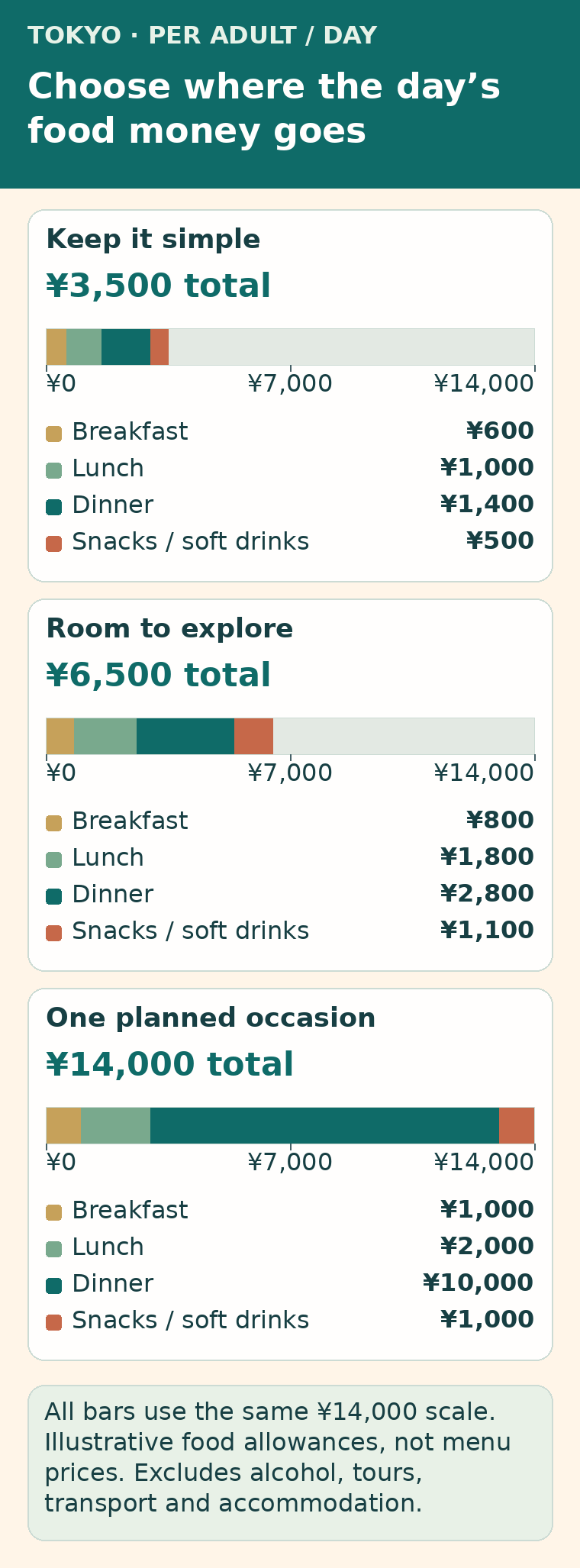
These are illustrative allowances per adult for one day, designed to help you distribute money. They are not a survey of menu prices, a quoted package or a guarantee that a particular restaurant fits. Amounts are in Japanese yen; adjust them using the menus you actually choose.
Editorial food-budget examples, prepared 18 October 2026. Excludes accommodation, transport, tours and alcohol.
Swipe the table sideways to compare all columns.
| Daily style | Breakfast | Lunch | Dinner | Snacks / soft drinks | Total |
|---|---|---|---|---|---|
| Keep it simple | ¥600 | ¥1,000 | ¥1,400 | ¥500 | ¥3,500 |
| Room to explore | ¥800 | ¥1,800 | ¥2,800 | ¥1,100 | ¥6,500 |
| One planned occasion | ¥1,000 | ¥2,000 | ¥10,000 | ¥1,000 | ¥14,000 |
The first plan needs straightforward meals and careful choices. The middle plan leaves more room for market extras or a longer dinner. The last reserves most of the day’s money for one meal; some tasting menus cost considerably more, so replace the allowance with the actual total before booking.
Use a simple rule: choose the main meal, price its extras, then distribute what remains. In the ¥6,500 example, replacing the ¥2,800 dinner with a ¥5,000 meal increases the day to ¥8,700 if everything else stays the same. Two adults following the original ¥6,500 plan would allow ¥13,000 together.
Keep a separate line for alcohol and any cover or service charges. A restaurant with a clear set-meal total is easier to compare with your budget than a headline price for one small plate. Pay particular attention to whether prices are per person, per dish or per course.
Fit these food allowances into the whole holiday using the Japan trip-cost guide for UK travellers.
Two food outings that leave room for queues and decisions
These are flexible planning sequences, with generous time assigned to browsing, ordering and finding your way. They are not timed tours. Check shop opening days and shorten the route if an essential meal takes longer.
Seafood and food halls: Tsukiji to Ginza
- Start around 09:30 in Tsukiji, after the market’s priority period for professional buyers. Allow about 90 minutes for browsing and one main seafood meal. [2][3]
- Give yourself a 30-minute allowance to walk towards Ginza, including navigation and stops. The areas are walkable; adjust this allowance to your chosen restaurant and food hall rather than treating it as a measured journey time. [13]
- Allow 45 minutes for a food-hall browse, then 45 minutes for coffee, a sweet or a rest. Check the department store’s opening time for your day. [10]
That makes a 3½-hour outing: 90 + 30 + 45 + 45 minutes. It works particularly well when you want variety without another large meal immediately after brunch. If you book the guided Tsukiji walk, use its actual duration and finish time instead of this independent schedule.
A Shinjuku evening with one main meal
- Save two suitable places in the same station-side area before leaving your accommodation: a preferred small-plate restaurant and a simpler fallback.
- Allow roughly 30 minutes to orientate yourself and compare the menus, then 90 minutes for dinner.
- Leave a final hour for a nearby dessert, one additional stop or the journey back. If dinner overruns, use that spare hour rather than rushing through the meal.
The three-hour allowance includes flexibility, not a promise of immediate seating. Travellers who want nightlife can extend it after checking their actual return transport. Those who want a calmer evening should choose a bookable seated restaurant from the outset.
Dietary needs, ordering and market manners
Find a suitable kitchen before choosing the district
Vegetable dishes are not automatically vegetarian: stocks, sauces and toppings may contain fish or meat. JNTO advises being specific about excluded ingredients, including dashi. For a vegan ramen option, T’s Tantan currently lists its Gransta Tokyo branch on basement level B1, outside JR Tokyo Station’s ticket gates. Check the current branch location when planning; older descriptions can refer to its previous position. [14][16]
For food allergies, download the Japanese Consumer Affairs Agency’s Food Allergy Communication Sheet and use it to discuss ingredients and shared equipment with staff. A vegetarian label or an online translation does not establish that a dish is safe for a particular allergy. If staff cannot confirm a critical requirement, choose another meal. [15]
If Korean cooking or halal food is the priority, consider Shin-Okubo. Its Korean restaurants and nearby Islam Yokocho offer a different food focus from the eight starting points above. Confirm each restaurant’s ingredients and any certification you require. [20]
Make the visit easier for everyone
- At Tsukiji, eat inside the premises or in a designated eating space, keep large luggage out of the lanes and ask before photographing stalls. [3]
- Carry some yen and check card acceptance before ordering; Tsukiji explicitly notes that payment arrangements differ by shop. [2]
- At small bars, establish any cover charge, ordering requirement and total price before settling in. [12]
- Save the restaurant name, branch and address in Japanese. Check the floor and entrance as well as the nearest station.
Mobile data helps with branch addresses, menu translation and changing plans when a queue is too long. If your UK plan does not provide suitable roaming, browse Airalo and select Japan. Airalo offers Japan eSIMs; compare the data allowance and validity, check the plan’s activation instructions, and confirm that your phone supports eSIM and is network-unlocked before buying. [18][19]
Choose your base and make the right bookings
Choose accommodation with the end of the day in mind. If several evenings centre on Shinjuku or Shibuya, a convenient local base can reduce the effort of getting home after dinner. If you prefer eastern Tokyo’s daytime visits and earlier nights, compare Ueno or Asakusa. Check the actual walk from the station and your restaurants to the hotel; a district name covers more than one street.
Compare Tokyo accommodation on the map using your dates, total room price and cancellation needs. Both links below open a Tokyo-wide search, so select your preferred neighbourhood before choosing a property.
Compare Tokyo stays on Booking.com Compare Tokyo stays on Agoda
Reserve when a particular restaurant is central to the trip, the group needs specific seating or dietary arrangements, or the venue’s own instructions require it. For a flexible casual meal, a shortlist with one nearby alternative often gives a better day than multiple fixed reservations.
Before confirming a meal or tour, check the full price, cancellation terms, exact branch, meeting point, dietary limitations and expected finish time. Arrive with the booking details accessible offline. Above all, leave enough appetite and time for the meal you chose the neighbourhood to enjoy.
Questions before you go
Do Tokyo restaurants expect a tip?
Tipping is not customary in Tokyo. Pay the stated bill, including any disclosed cover or service charge. If you have booked a tour, check that provider’s own information rather than assuming a restaurant custom applies to the activity. [1]
Are these neighbourhoods only good for their named specialities?
No. Sushi, noodles and other widely eaten dishes are available across the city. The specialities help narrow your starting point; a suitable restaurant near your existing plans can be a better choice than an extra cross-city journey. [1]
Can we share meals to keep the cost down?
Ask before relying on sharing as a budget strategy. Check whether a price is per dish or per person and whether each diner must order a meal or drink. This is especially useful at small counters and tabletop-griddle restaurants, where seating and ordering rules differ between businesses.
Karen’s planning takeaway
For a balanced first taste of Tokyo, plan a Tsukiji morning, an Asakusa or Ueno lunch and a Shinjuku evening on different days. Swap in Tsukishima if cooking a shared dish appeals, or Ginza if one carefully chosen reservation matters more than several casual stops. Let one meal anchor each outing, then keep the rest flexible.
Sources and further reading
The numbered sources identify official and provider information relevant to the facts in this guide. Recheck changing prices, timetables and opening rules for your trip; routes, allowances and decision tools are editorial planning examples.
- GO TOKYO — Food & Drink in Tokyo
- Tsukiji Outer Market — Hints for Shopping
- Tsukiji Outer Market — Visitor manners and guidance
- GO TOKYO — Asakusa area guide
- GO TOKYO — Ueno and Ameyoko
- Shinjuku Nishiguchi Shopping District Promotion Association — Omoide Yokocho
- GO TOKYO — Shibuya area guide
- GO TOKYO — Tsukishima Monja Street
- GO TOKYO — Ginza area guide
- GO TOKYO Gourmet — Food halls, ingredients and kitchenware
- First Avenue Tokyo Station — Official shop guide and access
- GO TOKYO — Exploring yokocho alleyways
- GO TOKYO — Tsukiji area guide
- Japan National Tourism Organization — Vegetarian and vegan guide
- Consumer Affairs Agency — Food Allergy Communication Sheet
- T’s Restaurant — Current T’s Tantan branch list
- GetYourGuide — Tsukiji food walk, inclusions and restrictions
- Airalo — Japan eSIM options
- Airalo — Device compatibility
- GO TOKYO — Okubo and Shin-Okubo
Illustrations in this article were created for Taylor’s Trailblazing Travels. Third-party photographs, where used, are credited beside the image or in the source list.