Where to Stay in Kampot: Town Centre or Riverside Lodge?
Stay close to spontaneous meals and town life, or make the river and the lodge part of the holiday.
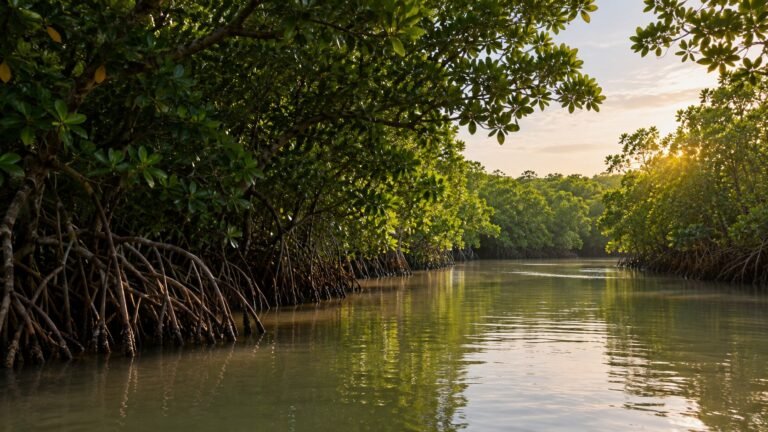
AI-generated illustration inspired by the Kampot upriver setting; it is not an exact viewpoint or a photograph of a named lodge.
The best place to stay in Kampot depends on what you want to come back to: a choice of restaurants outside the door, or a riverside seat where you are happy to spend the rest of the afternoon. Both can work beautifully, but they create different days.
Start by separating the town’s waterfront from lodges farther upriver. A central hotel can have river views, while a riverside lodge can require a deliberate journey into town. The word “riverside” alone will not tell you which holiday you are booking.
This guide contains affiliate links. If you book or buy through them, Taylor’s Trailblazing Travels may receive a commission at no extra cost to you.
Town works well when you want to choose dinner as you go.
Central waterfront and upriver lodges are different locations.
Confirm whether the view belongs to your room or a shared terrace.
Count the town trips before choosing an outlying lodge.
Where to stay in Kampot: start with your likely days
Kampot’s old-town streets and central waterfront make one connected area to investigate. The Old Market and riverfront are useful reference points, while lodges upriver need to be assessed by their individual entrances and road journeys. The local town guide provides an orientation to the central street grid. [6]
Swipe within the table to see all columns.
| Your trip | Likely better starting point | Why it fits |
|---|---|---|
| One or two nights, with sightseeing and meals out | Town centre | Less time arranging small transfers and more flexibility around arrival and departure. |
| A river outlook without giving up evening choice | Central waterfront hotel | The river can be part of a town stay; check which rooms have the view. |
| Several days with reading, resting and meals at the property | Upriver lodge | You have time to use the setting that persuaded you to book. |
| A pool is essential but you dislike relying on transport | A town hotel with a pool | You do not have to move upriver to have a place to relax. |
Before opening hotel listings, write down three things: how many evenings you want in town, how much daytime you expect to spend at the accommodation and whether you are happy to arrange rides. Those answers narrow the choice more usefully than a long list of attractive properties.
Then check the actual address. Booking districts are broad labels, and a property’s photograph may show its best shared terrace. Neither establishes how your room will feel or how easily you can leave for dinner.
Back to top ↑Choose town for easy meals and an adaptable short stay
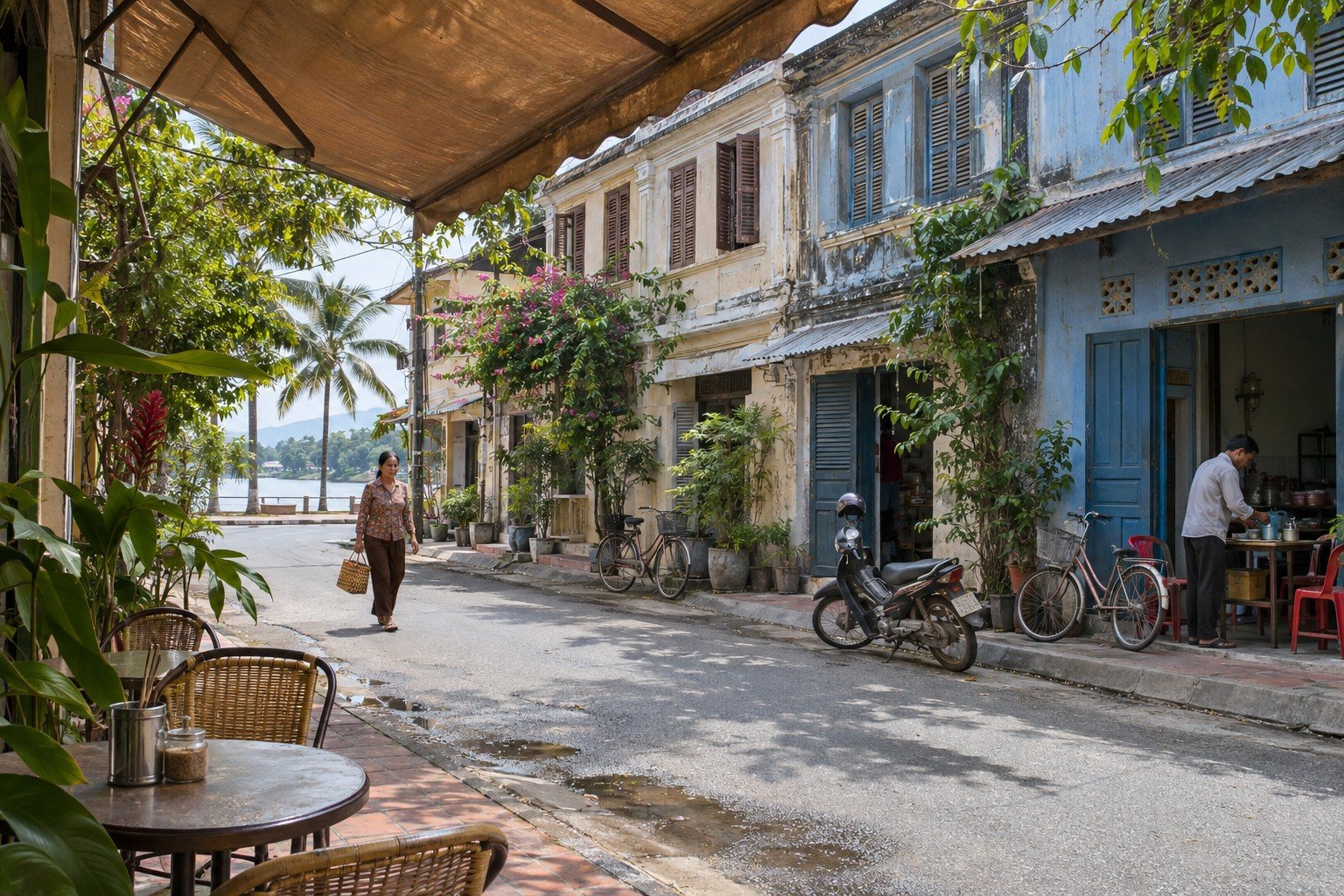
A town base works especially well when Kampot is one stop in a larger Cambodia trip. You can arrive, drop your bag and decide how to spend the remaining daylight without organising another journey first. If a planned outing changes, there is still a straightforward day to be had close to the hotel.
It is also a practical choice if you expect to eat somewhere different each night. Staying near the places you will use makes a short return to the room easier, whether that is for a rest, a shower or forgotten rainwear.
What town does not guarantee
A convenient address does not promise a quiet bedroom. Ask whether the room faces the road, a courtyard, a restaurant or another property’s communal area. Read recent room-specific comments, especially if you have an early departure or are sensitive to music.
Nor does a central pin establish step-free access. Check the entrance, floor and route to breakfast. Someone who can comfortably walk a short distance in cool weather may still prefer a ride in strong heat or rain; leave room in the budget for that choice.
The central waterfront offers a useful middle option: river atmosphere with town close at hand. Pay for a confirmed river-view room only if the view is something you will enjoy from the bedroom. Otherwise, a shared terrace and a comfortable room farther back may be enough.
Back to top ↑Choose an upriver lodge when you want time there
A lodge can be the right choice when Kampot is your breathing space between busier stops. The advantage is being able to linger: a slow breakfast, reading in the shade and a relaxed afternoon without feeling that you should be moving on.
That works less well if you plan to leave early every day and return only after dinner. In that pattern, you pay for a setting while adding several transfers to reach the activities and meals you actually want.
Test how much lodge time your itinerary leaves
For a two-night visit, sketch the three days before choosing. Arriving late on the first day, taking a full-day outing on the second and leaving early on the third gives you little daylight at the property. The same two nights with an early first-day arrival and a free second afternoon are a different proposition. Count usable mornings and afternoons, rather than nights alone.
Sabay Beach gives a useful concrete example. Its own information places it upstream from town and describes a tuk-tuk ride into Kampot of about 20 minutes, arranged through reception. Treat that as the hotel’s approximate guide, checked on 15 November 2026, and confirm the journey for your arrival time and current conditions. [3]
Ask about the room, the food and the sound
Before choosing any lodge, find out whether dinner is available every night of your stay, whether the menu and prices suit you and how late the kitchen serves. A wonderful view is less useful if you discover after arrival that every meal needs an extra ride.
Ask about neighbouring venues, music, boats and any events on your dates. “Away from town” is a location description, not a soundproofing guarantee. For a light sleeper, the room’s position may matter more than the distance from the centre.

Be equally precise about the view. Request photographs of the exact room category and ask whether the river is visible from the bed, the balcony or only a communal terrace. A garden-facing room can be a good choice; the problem is paying for one while expecting something else.
Back to top ↑Three researched examples that show the choices
These are starting points for comparison, chosen to illustrate different ways to stay in Kampot. They are not ranked, personally reviewed or checked for availability on your dates. Property information was reviewed on 15 November 2026; compare the room description and final terms before reserving.
Rikitikitavi: central waterfront atmosphere
Rikitikitavi gives its address as Riverside Road and has a terrace restaurant overlooking the river and mountains. Its published rooms differ: the Superior option has two levels, while family and twin layouts provide other arrangements. A view from the restaurant should not be assumed to be the view from every bedroom. [1]
Consider it when you want a town stay with somewhere pleasant to sit by the river. Check the exact layout if stairs or separated sleeping spaces matter. Compare Rikitikitavi on Booking.com and Rikitikitavi on Agoda using the same guest numbers and room type.
Hotel Old Cinema: town convenience with a pool
The hotel’s official booking information describes a historic-area property built within an old theatre and cinema, with a pool and air-conditioning. Room size is a meaningful choice here: the listed Standard Double is 13.5 square metres, whereas the Superior King is 26 square metres. The smaller category may suit a brief solo stay better than a couple planning plenty of time indoors. [2]
Look at Hotel Old Cinema on Agoda or Hotel Old Cinema on Booking.com. Check floor, balcony and room measurements against the selected offer; do not assume all rooms resemble the largest photograph.
Sabay Beach: let the river setting shape the stay
Sabay Beach’s published description offers air-conditioned rooms, an on-site restaurant and a choice of settings: two rooms near the river and seven in its mango garden, including treehouse options. The name refers to a riverside property, not a seaside hotel. [3]
Compare Sabay Beach on Agoda with Sabay Beach on Booking.com. It is worth considering if you will spend time at the lodge. If you expect two or three town visits a day, price the transport first and consider a more central base.
Back to top ↑Count the town trips before comparing the price
The cost difference is not just room rate. A cheaper lodge may lose its saving through repeated rides, while a dearer lodge can still be worth it when the setting is the experience you want.
For a clear comparison, imagine two adults sharing one room for three nights. In the example below, breakfast and taxes are treated as equal, and the lodge’s return ride is assumed to cost US$10 for the vehicle. Replace both room rates and the transport amount with actual quotes.
Swipe within the table to see all columns.
| Plan | Rooms | Additional town transport | Total |
|---|---|---|---|
| Town hotel at US$50 a night | US$150 | US$0 if the planned town trips are on foot | US$150 |
| Lodge at US$40 a night; one return trip during the stay | US$120 | US$10 | US$130 |
| Same lodge; three return trips | US$120 | US$30 | US$150 |
| Same lodge; six return trips | US$120 | US$60 | US$180 |
Here, three return trips use up the US$30 room saving. Eating at the lodge most evenings preserves both the saving and your downtime. Going into town twice a day changes the answer.
Time adds another useful check. If a particular lodge takes 20 minutes each way, three return trips mean two hours travelling, and six mean four hours, before waiting. This is a planning example, not a promise for every property. Ask for the route and likely timing from your actual lodge.
Put your own offers into the hotel comparison calculator, including breakfast, mandatory fees and transport in the same currency. A return tuk-tuk quoted for the whole group belongs in the group’s other costs for the stay, rather than being multiplied by every guest.
Keep tour transport and arrival transfers separate unless they genuinely differ between the two options. If a tour already collects you at the lodge, that trip is not an extra town ride. The point is to compare the stay you will take, not to make one location look cheaper through uneven assumptions.
Back to top ↑Confirm the last part of the journey
For an outlying lodge, ask where the driver should turn off, whether a normal car can reach the entrance and whether recent weather has changed the approach. Save the hotel’s map pin and phone number, and give reception your likely arrival time.
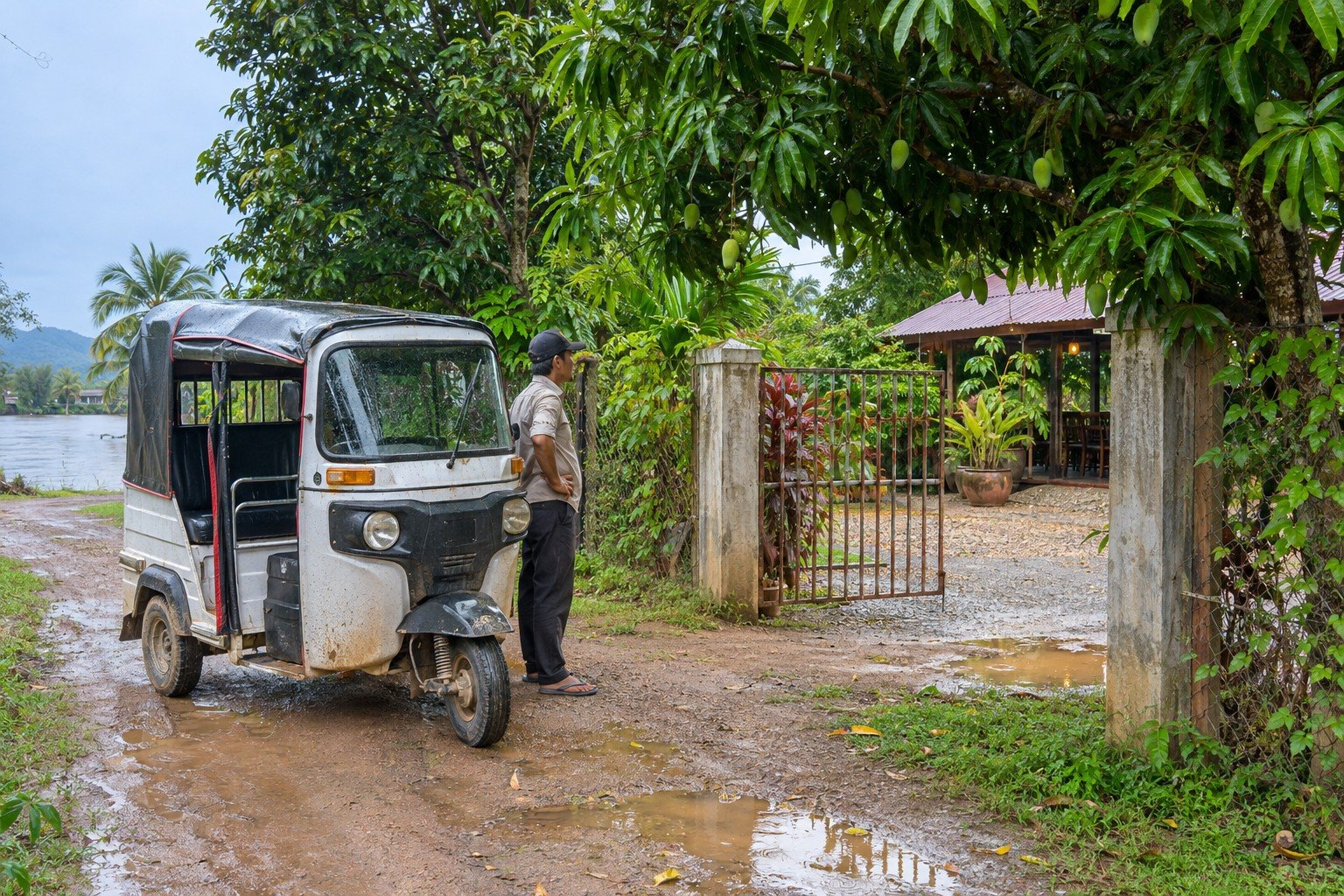
If you are arriving from Phnom Penh, compare Phnom Penh to Kampot transport on 12Go and check the exact arrival point on the service you select. The route listings include different operators and arrival arrangements; do not assume a ticket into Kampot includes onward travel to a lodge. [5]
Ask your accommodation to quote that final leg. For the departure, work backwards from the operator’s required check-in time, then allow for the hotel-to-stop journey and a sensible margin. Do not treat a town-centre departure time as the time to leave an upriver room.
Keep the evening return simple
Before heading out, agree whether the same driver is returning, where you will meet and how you will contact them. A promise to “find something later” is less comfortable at a secluded entrance than it is in a busy street.
The FCDO highlights greater road risks after dark. A lodge should not depend on renting a scooter when you lack the experience, licence or insurance for it; arrange suitable transport instead. [4]
Back to top ↑Make sure the lodge or hotel suits the people travelling
Start with the things that would genuinely spoil the stay: too many stairs, insufficient sleeping space, a room that is too warm for you or no suitable evening meal. Deal with those before choosing between two attractive views.
- For families, confirm the number of beds, whether children count towards room capacity and any charges for extra bedding.
- For reduced mobility, ask about the full route from the vehicle to the room, bathroom, dining area and pool. “Ground floor” does not answer all of those questions.
- For light sleepers, ask about the nearest communal terrace, evening venue and room position.
- For anyone planning to work, ask for a recent connection check from the room or work area; a Wi-Fi symbol alone does not establish reliable calls.
A river view is not a swimming-safety assessment
Enjoying the water from a terrace is different from entering it. The FCDO warns about strong river currents and recommends local advice before water activities. Ask about current conditions, supervision and suitable equipment; a lodge’s attractive photographs do not establish that swimming is safe that day. [4]
With young children, check barriers, steps and the distance between the room and open water. If a pool is a major reason for booking, confirm that it will be open and usable during the stay.

Choose the base that fits most of your stay
Is it worth splitting two nights between town and the river?
Usually not. Moving takes time out of a short visit, and room readiness may leave a gap between checkout and check-in. Choose one base, then arrange a meal or outing that gives you a taste of the other setting.
When does a split stay make sense?
On a longer visit, it can work if you deliberately want two different rhythms: some town nights for outings and restaurants, followed by several lodge nights with less planned. Before reserving, add the transfer, possible minimum stays and the inconvenience of packing again.
Can you stay upriver without riding a scooter?
Yes, if the property can arrange transport that suits your plans and budget. Get a quote for town returns and your arrival and departure. Choose the lodge only once those arrangements make sense for you.
For a short first trip, town is the most adaptable starting point. A central waterfront hotel is a good compromise when the river matters but you still want easy evenings. Choose a lodge when you are looking forward to spending time there and have settled the journeys that come with it.
Continue planning your stops through the Cambodia travel hub.
Back to top ↑Sources and checks
Researched and reviewed on 15 November 2026. Recheck opening times, access and prices before travelling.
- Rikitikitavi — official hotel and room overview — Riverside Road address, terrace restaurant and different room layouts. (Checked 15 November 2026.)
- Hotel Old Cinema — official booking information — Official site redirects to the hotel’s Cloudbeds booking page. Historic-area location, pool, air-conditioning and room-size descriptions. (Checked 15 November 2026.)
- Sabay Beach — official accommodation, location and services — Upriver setting, room positions, air-conditioning, restaurant and the hotel’s approximate 20-minute tuk-tuk journey into town. Water-quality marketing claims are not treated as safety advice. (Checked 15 November 2026.)
- UK Foreign, Commonwealth & Development Office — Cambodia safety and security — Road risks after dark, river currents and taking local advice before water activities. (Checked 15 November 2026.)
- 12Go — Phnom Penh to Kampot — Route listings and operator-specific departure and arrival points; no hotel transfer is assumed. (Checked 15 November 2026.)
- Kampot Guide — old town and riverside orientation — Independent local guide to the old-town grid, Old Market area and central waterfront. (Checked 15 November 2026.)
Illustrations in this article were created for Taylor’s Trailblazing Travels. Third-party photographs, where used, are credited beside the image or in the source list.