Koh Kong Mangroves: Planning a Peam Krasaop Day Trip
Current advice first, then a practical plan for a future walk through the mangroves or a locally arranged boat trip.
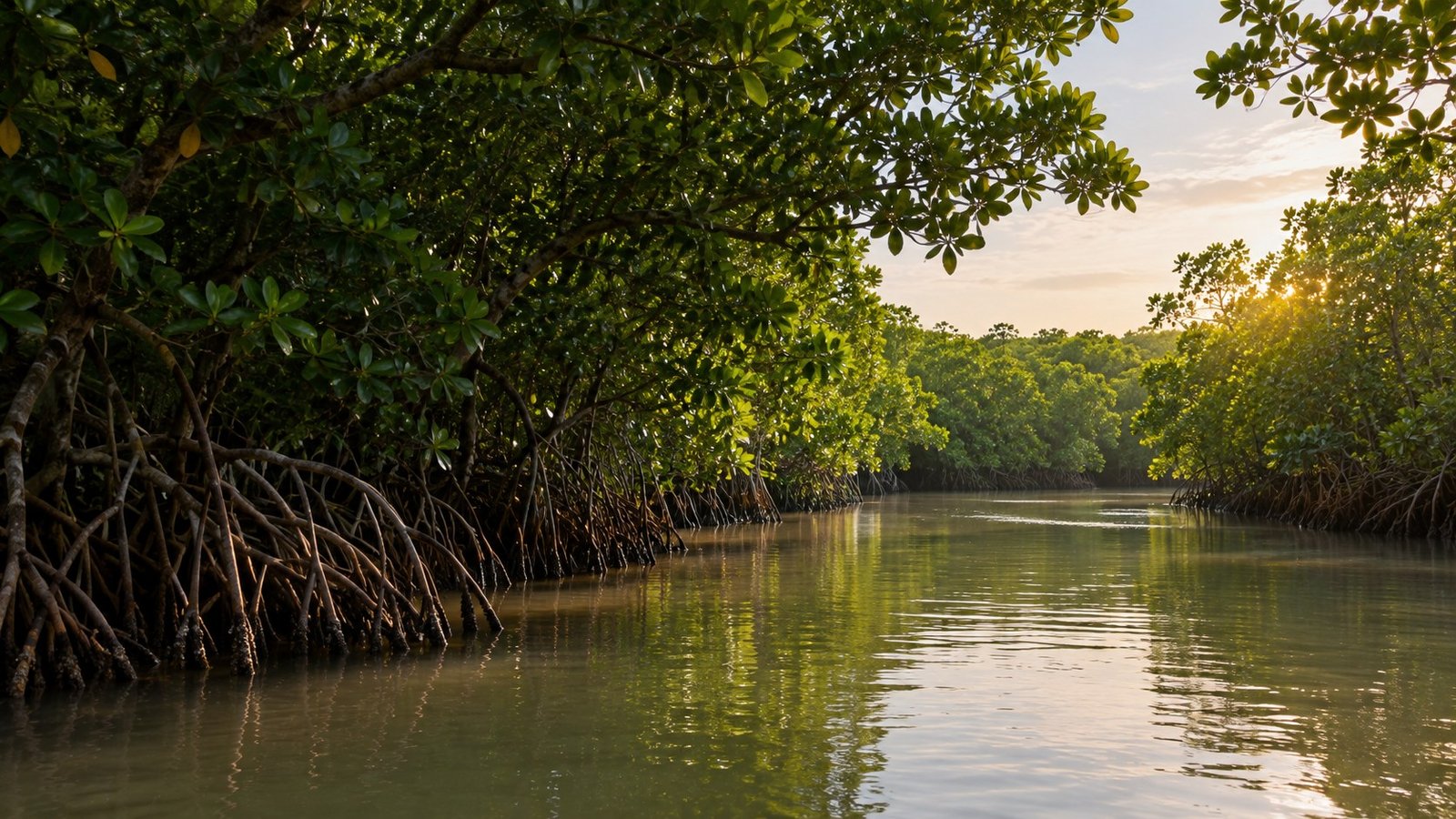
AI-generated illustration of a mangrove channel; it does not show current conditions at Peam Krasaop.
A Peam Krasaop mangrove day trip needs two decisions: whether a Koh Kong visit is appropriate, and what you want to do when conditions allow. For the first decision, the current travel warning takes priority. For the second, a walk and a boat outing offer different ways to spend your time. This guide helps you keep a future visit realistic, without treating old descriptions of paths, bridges or boat services as proof that they are operating today.
For roots, leaves and a visit you can shorten, once the path and access are confirmed.
For the channel landscape, with an agreed route, suitable tide and properly fitting lifejackets.
Build the day around confirmed access and local advice, with room to change the plan.
First, decide whether to make the trip
The FCDO also reports that Cambodia–Thailand land crossings remain suspended. A cross-border route through Koh Kong should not be treated as available, and travel against FCDO advice can affect insurance cover. [1]
Keep this outing on a future-trip list. Before committing money, reread the official advice for your complete route and check your insurer’s terms. A claim that an attraction is open does not resolve a warning affecting the town used as your base. If the advice changes, you will still need fresh confirmation of visitor access and boat operations.
What the mangrove visit involves: walk, boat or both
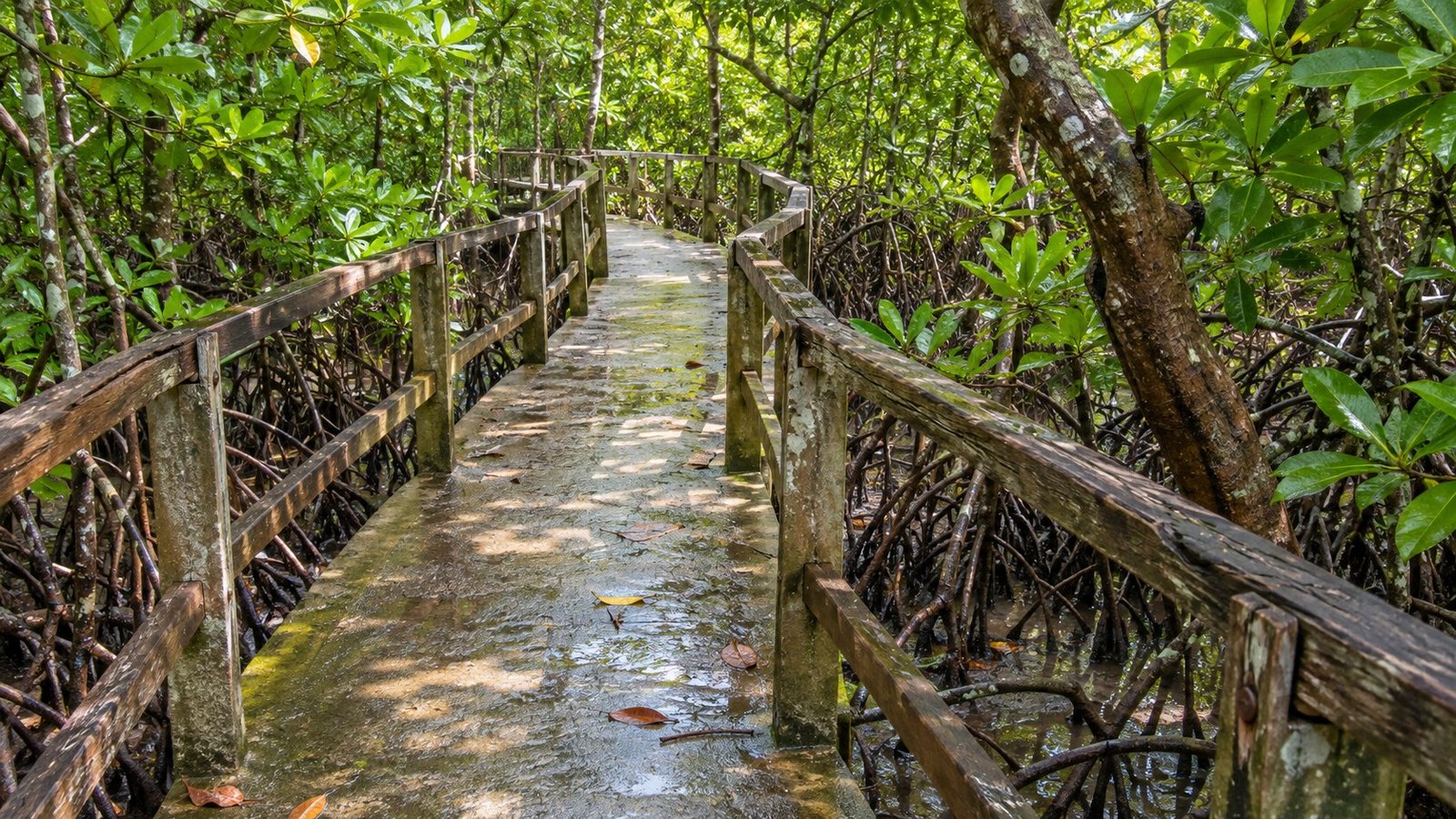
The commonly described visitor area is Boeng Kayak, within Peam Krasaop Wildlife Sanctuary. Travelfish’s publicly accessible guide, updated in August 2025, places it roughly 7–8km outside Koh Kong town and describes an approximately kilometre-long walk on elevated concrete and wooden sections. Treat those details as orientation, rather than a current route inspection. [3]
A 2013 report also describes a suspension bridge, observation tower and locally operated boat trips. Those are historical descriptions: current opening hours, fees, bridge condition and access to individual structures remain unconfirmed. [4]
Swipe within the table to see all columns.
| Your priority | Best starting choice | What to settle before going |
|---|---|---|
| Looking closely at roots and foliage | Walk | Which path sections are open and where you can turn back. |
| Seeing the wider channel landscape | Boat | The actual route, boarding point, duration and tide window. |
| A flexible outing with children | A short walk first | Railings, steps, toilets and a manageable return; child-sized lifejackets if adding a boat. |
| Limited mobility or difficulty boarding | Decide after an access conversation | Recent photographs, surface gaps, steps, seating and the height of the boat entry. |
| A substantial nature-focused day | Walk plus boat | Enough time for both without rushing the return journey. |
A boat is not automatically the easier choice for someone who struggles with walking. Boarding, balance and getting out again may be the decisive obstacles. Likewise, the word “boardwalk” does not establish step-free access. Describe your particular needs and ask for current photographs of the route and landing.
When comparing longer excursions, ask exactly where they go. Koh Kapik Ramsar Site overlaps the sanctuary, but a visit carrying that name should not be assumed to be the Boeng Kayak walk. IUCN describes the overlap and wider mangrove habitats. [5]
Build a time budget around the visit you want
Reserve the outing as the main activity of the day if you want to walk and take a boat. That leaves room for a changed tide window, a slower pace or a local recommendation to shorten the route. Avoid attaching it to a tight onward departure.
The example below sets aside time for an unhurried visit. These are chosen planning allowances, not measured walking times or an advertised tour. Replace them once you know the available route.
Swipe within the table to see all columns.
| Part of the visit | Walk only | Walk and boat |
|---|---|---|
| Arrival, payment and access questions | 15 minutes | 15 minutes |
| Walking, looking and photograph stops | 75 minutes | 75 minutes |
| Rest and refreshments | 20 minutes | 20 minutes |
| Boat outing, if a suitable option is offered | — | 60 minutes |
| Spare time for waiting or a slower pace | 30 minutes | 30 minutes |
| Total on site | 2 hours 20 minutes | 3 hours 20 minutes |
Add both road journeys to those totals, using a quote for your actual accommodation and meeting point. Ask whether the driver waits, what extra waiting costs and how the return is arranged. A map distance cannot tell you the full door-to-door time.
If a suitable boat route takes longer than this example, extend the day or shorten the walk. For your wider Cambodia itinerary, the itinerary pace checker can help you compare nights and travel hours you enter yourself.

Ask about tides and boat arrangements before agreeing a price
There is no useful universal answer to “what is the best tide?” without knowing the proposed route. Ask the boat operator which water level suits that route, what the latest workable departure is and whether the return uses the same channel. A tide table alone does not confirm that a particular landing or passage is usable.
Get a clear answer to these questions before accepting a future booking:
- Route: where will the boat go, where will it stop and where will you get off?
- Timing: when do you board, how long is the outing and what return time is agreed?
- Conditions: who decides to cancel or turn back, and what happens to your payment?
- Safety: is there a properly fitting lifejacket for every passenger, including children, and will everyone wear one?
- Price: is the quote for the whole boat or each person, and does it include the guide, entrance charge and any village stop?
The FCDO warns that accidents have involved overloaded or poorly maintained boats in Cambodia. [7] Decline a boat that looks overloaded or cannot provide appropriate lifejackets. Keep the walking option separate so that declining the boat does not mean feeling obliged to abandon the whole visit.
For photography, ask what the proposed timing means for visible roots and water around the trees. Choose an enjoyable, workable route over a promised perfect photograph. Wildlife should remain a possibility, never the reason to accept an unsuitable departure.

Make the mangroves themselves the point of the visit
Peam Krasaop is a working coastal environment. UNEP-WCMC’s account of the local fishing community explains how mangrove-associated fish and other seafood support household food supplies and livelihoods. The forest’s value extends well beyond a scenic walk. [6]
Build pauses into your visit. Look at the relationship between roots, mud and water, then ask a local guide how people use and protect the surrounding channels. A useful conversation might cover fishing seasons, changes in catches or the work involved in maintaining visitor access. You do not need to travel farther simply to make the outing feel substantial.
Keep to authorised paths and landing places, take litter away and avoid touching or collecting plants and animals. Ask before photographing people, homes or fishing work. If a village stop is offered, establish whether residents welcome visitors and whether a local host is involved.
Choose a guide or boat operator for clear explanations and responsible conduct. Do not book on the strength of a promise to find a particular dolphin, bird or other animal: this guide has no current evidence supporting reliable sightings.

Get a complete local quote
For a future visit, ask your accommodation to put you in touch with the visitor-area organisers or an identifiable local guide. Confirm who actually provides the service, rather than assuming that an agent’s use of “community tour” explains where the money goes.
A useful written quote should separate the return transfer, waiting time, visitor admission, guide, boat and meals. Check the currency, whether each amount is per person or per group, the payment method and the cancellation terms. Ask which parts are paid directly to local providers.
No current entrance fee or boat tariff is quoted here because neither has been reliably confirmed. An old low price can create the wrong expectation, especially when it is unclear whether it covered a shared boat, a private boat or admission alone.
When conditions support visiting and you have actual quotes, put your expected GBP spending into the travel budget calculator. Convert any local-currency quotes using your chosen payment provider first; the tool does not fetch exchange rates. Keep a little flexibility for an agreed change of route, while checking the extra cost before accepting it.
Pack lightly and settle the return plan
Bring drinking water, a sunhat, insect repellent, a light rain layer and a secure bag for a phone or camera. Wear footwear with grip that you are comfortable using on potentially wet surfaces. You do not need a specialist shopping list for a short mangrove outing.
Before leaving your accommodation, check the forecast and ask about conditions on the access road. The FCDO notes that monsoon storms can disrupt Cambodia’s roads. [7] Use local information for that day rather than assuming a calendar month guarantees suitable conditions.
Agree a visible collection point and a return time with your driver. Save the contact details offline, confirm what to do if the boat plan changes and keep enough time to return in daylight. If a walkway section is closed or damaged, turn back; do not improvise a route through the vegetation.
For now, retain these questions for a later trip and revisit the travel advice before making arrangements. The Cambodia planning hub is the starting point for the site’s wider country coverage.

Your questions answered
Is the Peam Krasaop mangrove walk open now?
Current opening and access have not been confirmed. The postponement recommendation concerns the present travel warning affecting a Koh Kong town base; it is not a claim that the sanctuary has officially closed.
Can I visit without a boat trip?
A walking-only visit is the sensible option to enquire about if your interest is the forest close up. Confirm which sections are open, any entrance conditions and how your return transfer works before travelling.
How much does a Peam Krasaop day trip cost?
Get a dated quote for your party and chosen route. Admission, road transport, guide and boat may be separate charges. Confirm the total and what it covers before agreeing to pay.
Should I book a boat in advance?
Once travel advice and access support a visit, ask locally about availability and tide windows. Agree the route, inclusions and cancellation terms before paying, then reconfirm conditions on the day.
Sources and checks
Sources checked on 15 November 2026. Recheck changing travel advice, transport and booking details before travelling.
- FCDO: Cambodia travel advice — warnings and insurance. Current border-area warning, suspended land crossings and insurance implications. Checked 15 November 2026.
- FCDO Cambodia travel advice map, edition 7. Briefing map for the warned area and Koh Kong town; not a precise map of sanctuary boundaries. Checked 15 November 2026.
- Travelfish: Koh Kong’s mangroves. Publicly accessible orientation for Boeng Kayak, distance and walkway description; page updated August 2025. Checked 15 November 2026.
- Strategic guidelines for sustainable tourism on the Khmer coast (2013). Historical description of visitor structures and locally operated activities, especially printed page 20. It does not confirm current operation. Checked 15 November 2026.
- IUCN: Mangrove habitat restoration at Koh Kapik Ramsar Site. Explains the overlap between Koh Kapik Ramsar Site and Peam Krasop Wildlife Sanctuary. Published May 2022; checked 15 November 2026.
- UNEP-WCMC: Mangroves and the Peam Krasaop Fishing Community. Mangrove fisheries, food security and local livelihoods. Checked 15 November 2026.
- FCDO: Cambodia — safety and security. Boat-safety and weather-related road-disruption context. Checked 15 November 2026.
Illustrations in this article were created for Taylor’s Trailblazing Travels. Third-party photographs, where used, are credited beside the image or in the source list.
Back to the top ↑