Tegallalang Rice Terraces: How to Visit Without Rushing
Choose the experience first, then leave enough time for the view, the path and the way back.
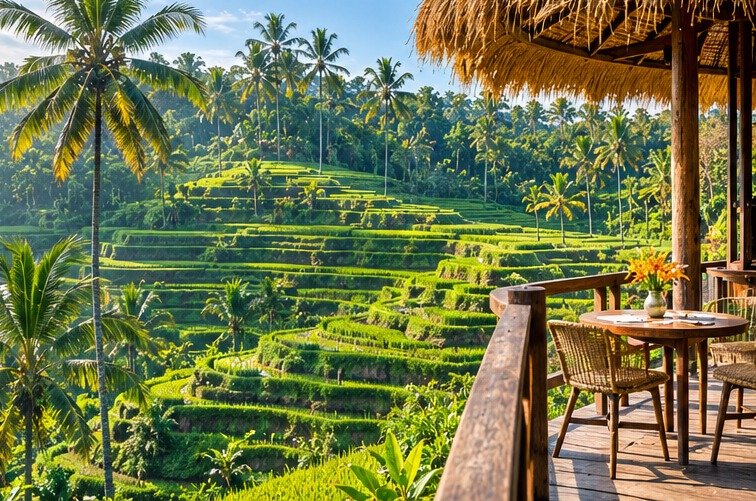
An original Tegallalang-inspired illustration. Field appearance, crop stage and visitor facilities vary.
Some links in this guide are affiliate links. Taylor’s Trailblazing Travels may earn a commission if you book or buy through them, at no extra cost to you.
Tegallalang Rice Terraces can be a short stop with a camera or a slower visit that lets you notice the landscape. The difference is not necessarily an earlier alarm. It is choosing the right entrance and experience, checking the route, and refusing to squeeze the return climb into time you have already promised to another attraction.
The tourism board describes terraces in a valley north of Ubud, with views from above and paths descending into the landscape. [1] Start by deciding whether you want to look, walk or buy a commercial attraction package. Those are different visits, with different access needs and costs.
Viewpoint, field walk or attraction package: do not assume one ticket covers all three.
The worked model gives three hours on site, excluding travel.
Descending is only half the walking decision; save energy for the return.
Ask what your particular entrance or package actually includes.
Tegallalang Rice Terraces: choose the visit you actually want
Do not navigate only to a general place name and assume the first ticket offered is the visit you had in mind. Ask for the entrance or business name, what area the payment covers and the route you can use. Different operators promote different experiences in the Tegallalang area.
| Visit style | Choose it when | What to check |
|---|---|---|
| Viewpoint and a seated break | You mainly want the landscape or need a lighter visit | Vehicle drop-off, steps, seating, toilet access and any food or entry charge. |
| Field walk | You want to spend time within the landscape | Open paths, gradients, surface, permitted route, return climb and charges. |
| Commercial attraction package | Swings, rides or designed photo spots are the main interest | Exactly which entrance, activity eligibility, queues, extras and exclusions. |
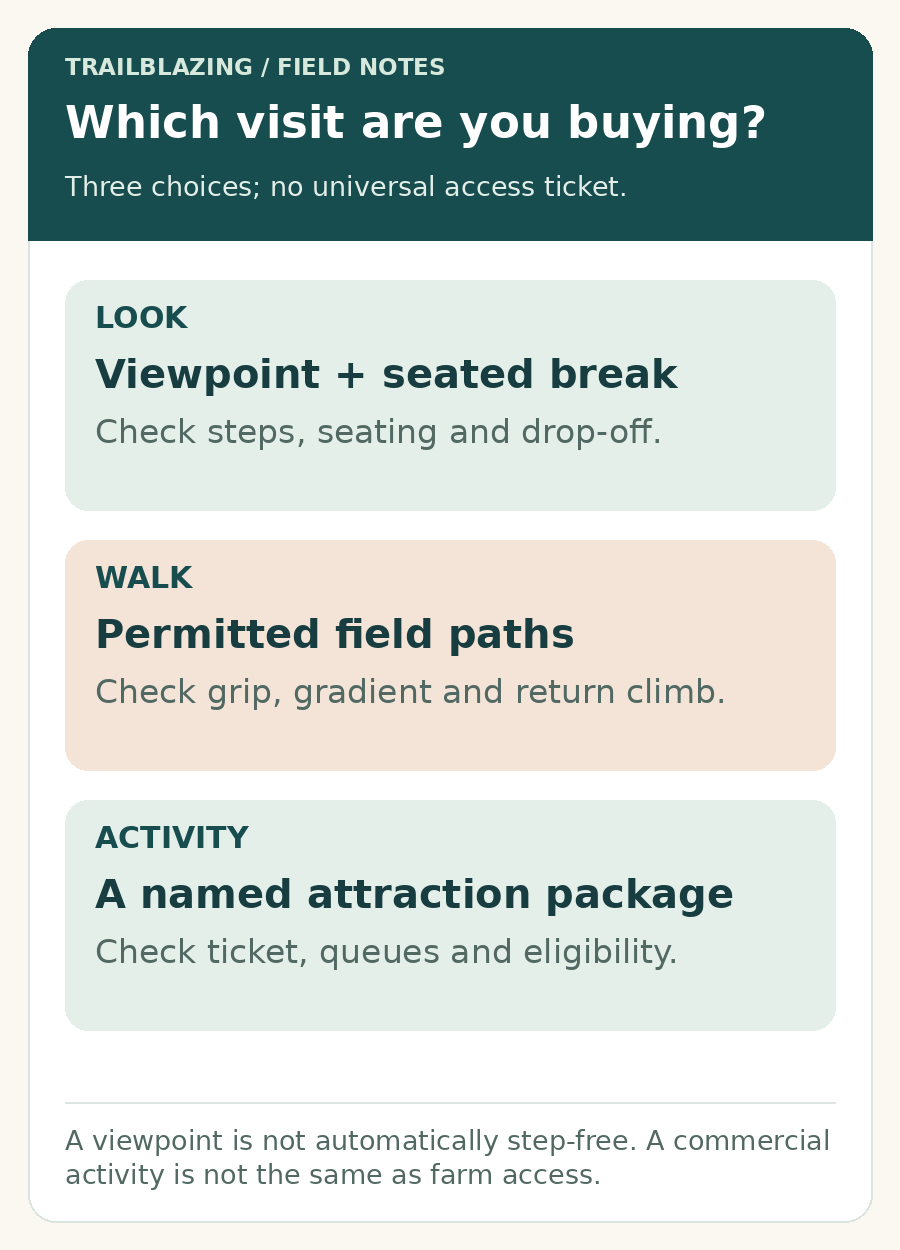
A viewpoint visit is not an inferior version of the walk. It can be the best choice for someone interested in the overall landscape, travelling with a group of mixed abilities or avoiding a demanding climb. Equally, a visitor who enjoys walking may prefer a simple farm visit over a package built around staged photographs.
A working landscape, not one interchangeable attraction
The steps in the terrain are part of a cultivated landscape. Mupu Rice Terrace describes itself as a family-owned rice farm and explains cultivation practices alongside the cultural dimension of farming. [3] Where access is offered, you are still visiting a place with work, water management and local responsibilities beyond tourism.
UNESCO’s Bali inscription concerns named cultural landscapes and water temples associated with the subak system, including the Pakerisan and Catur Angga Batukaru landscapes. [2] The wider importance of subak should not be turned into a blanket claim that every commercial entrance, swing or Tegallalang viewpoint is itself an individually listed World Heritage property.
Look at how water moves and how paths and field edges are used, not only at the repeating shapes. A local explanation can make a short visit more rewarding. Ask before entering working plots or photographing people closely, and do not stand among the crop to recreate an image.
Field appearance changes with farming. Rather than booking a month expecting guaranteed bright-green rice, ask the chosen farm or host what the current landscape looks like. A wet or recently worked field is not a failed version of the attraction; it is part of the reason the landscape exists. [3]
A three-hour visit, with the return climb included
The following is an original relaxed on-site model. It is not a promised route length or an official recommended duration. It assumes the paths are open and appropriate for your group, and that you want both a walk and a seated break. Add all driving time separately.
| Part of the visit | Minutes | Purpose |
|---|---|---|
| Confirm entrance, price and route | 10 | Know what is included before starting. |
| First viewpoint | 20 | Look at the terrain and identify the return direction. |
| Descend and explore permitted paths | 60 | A flexible walking allowance, not a distance target. |
| Return climb | 25 | Keep time and energy for the way back. |
| Rest and refreshments | 35 | Use a place that fits your chosen entrance and budget. |
| Unallocated buffer | 30 | For pauses, queues or shortening the walk without rushing. |
| Total on site | 180 = 3 hours | Travel to and from Tegallalang is additional. |
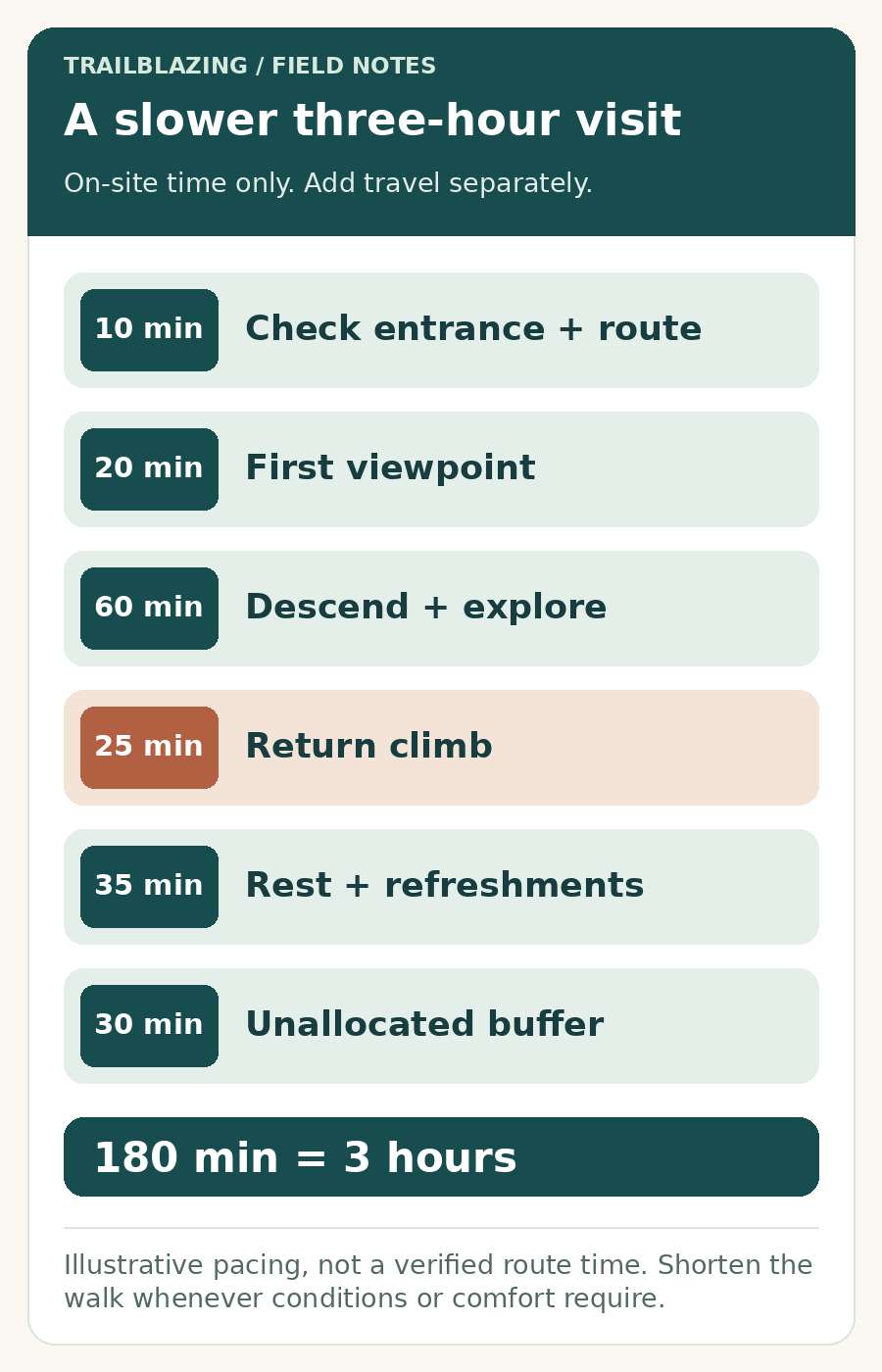
The most useful part of this model is the protected return. Set a turnaround time before descending and change the plan if the climb looks more demanding than expected. A family or anyone managing fatigue may need a shorter path and a longer rest. There is no benefit in meeting a diagram’s walking allowance at the expense of comfort.
For a viewpoint-only outing, remove the descent and climb rather than filling their time with additional attractions. For a commercial ride package, replace the field-walk block with the actual activity and queue allowance. Do not add a swing session and still expect the same finish time.
When combining this with other Ubud plans, use the Itinerary Pace Checker with your own transport estimate and activity hours. It does not know whether a terrace path is open or how quickly your group will walk.
Choose the time of day and organise the return
The national tourism page places Tegallalang north of Ubud and quotes a short drive, but a broad tourism description is not a traffic forecast from your hotel. [1] Ask your driver for a realistic door-to-entrance allowance, including the exact meeting point and parking. Do not turn a map’s best-case estimate into an appointment at another venue.
An earlier visit can leave more flexibility later in the day, but confirm when your intended entrance actually accepts visitors. Mupu published 07:00-18:00 daily when checked on 1 November 2026. [3] Those are that operator’s stated hours, not a guarantee that every field path, restaurant or nearby attraction follows the same schedule.
Choose a time that suits the forecast, your walking ability and the day’s other commitments. Lower light can be appealing for photographs, but arriving at the end of the day leaves less recovery time for a slow return. Avoid building a visit around an unsupported promise of “no crowds” at a precise minute.
Make the collection plan specific
Agree whether the driver waits, how waiting time is charged and where you will be collected. Save a map pin or photograph of the meeting place. Tell the driver if you change entrances; a generic message saying “at the rice terraces” may not identify the same location.
For messaging and maps, check your existing roaming arrangement first. Airalo offers Indonesia data plans; browse Airalo and choose Indonesia when comparing options, after checking your device and plan conditions. [8] An offline meeting point is still useful because buying data does not guarantee reception everywhere.
Do not change hotels for this visit alone
An Ubud base can make a focused visit easier to organise, but a new hotel move just for the terraces is rarely the simplest first step. Consider the rest of your Ubud days before choosing where to stay.
Tickets, farm access and commercial packages are different
There is no single all-inclusive price asserted in this guide for every Tegallalang entrance. Ask the chosen business or access point what the payment buys, whether another section costs extra and whether food, parking or an activity is included. Keep your receipt rather than assuming a wristband or voucher is valid everywhere.
As a concrete distinction, Alas Harum’s own attraction page advertised an entrance ticket at IDR 70,000 when checked on 1 November 2026. It says that this entrance does not include Cretya Ubud, and its ride listings state separate charges and conditions. [4] That is an Alas Harum product, not a universal fee for walking any Tegallalang rice field.
| Charge or booking | Ask this |
|---|---|
| Farm or path access | Which route is open, and are further payments needed on that route? |
| Viewpoint or restaurant | Is the charge admission, a food purchase, a minimum spend or something else? |
| Swing or other ride | What are the age, height, weight and other safety restrictions for this exact activity? |
| Tour package | How long is actually spent here, which entrance is used and which fees are excluded? |
| Vehicle and parking | Is waiting included, and where will collection happen? |
A shorter official-looking price list copied by another website may not describe the same business or date. Ask the person selling the ticket to identify the product clearly. The purpose is not to avoid all charges; it is to pay for the experience you chose and understand where the money is going.
For an independent visit, a confirmed driver and payment at the chosen entrance may be all you need. For a pre-booked tour, do not assume that “rice terraces included” supplies the three-hour on-site model above. Many excursions combine several attractions. [5][6]
Walking, accessibility and photography without pressure
Check the surface and gradient before committing to a descent. The tourism board describes walking down into the valley and crossing towards fields on the opposite side. [1] That description is not an access assessment for your day: rain, maintenance and local restrictions can change the route.
Choose shoes with secure fit and suitable grip, carry water and keep your bag light enough to leave your hands free. Stop before an uncomfortable section rather than assuming the next step will make the rest easier. A guide may explain the route, but your own limits still matter.
For limited mobility or mixed-ability groups
Ask the chosen venue for the route from vehicle drop-off to the actual viewing or seating area. Request the number of steps, handrails, surface and accessible toilet details. “Viewpoint” does not automatically mean level access, and a terrace restaurant may also involve stairs.
Let the group split only when there is a comfortable, agreed waiting place and a clear return arrangement. Do not leave someone at an unknown entrance while everyone else disappears down a path. A seated visit together can be a better experience than separating the group to complete a walk.
For photography
Use permitted paths and viewpoints. Wait without blocking a narrow route, ask before making close photographs of workers and do not move offerings or farm equipment. A photograph is not worth entering crops or leaning beyond an edge.
For paid swings or other activities, read the operator’s restrictions for the exact ride. Alas Harum publishes different eligibility conditions for different attractions; one activity’s limits should not be applied to another. [4] Participation is optional, and a field visit does not require a ride photograph.
What to pair with the visit, and what to leave out
The easiest pairing is a meal and a flexible afternoon. You do not need another major attraction to justify travelling to the terraces. An unhurried visit has already used walking time, attention and energy.
A nearby pre-arranged cultural visit can work when the route genuinely fits, but use its own opening and access information. Keep a timed workshop out of the immediate aftermath of an uncertain walk. If your class is the main priority, place the terrace visit on another day rather than making the teacher wait for your driver.
For a family, the practical second stop may be the accommodation pool or a comfortable lunch rather than a waterfall with another descent. Photographers may prefer a second quiet viewing period to a distant landmark. A local explanation of farming can provide more depth without adding another location.
If rain prevents the walk, first decide whether an accessible viewpoint or sheltered meal still makes the visit worthwhile. Otherwise choose a confirmed indoor activity elsewhere. Paying for a transfer does not oblige you to continue onto a poor surface.
Questions that make the final decision easier
How long should I allow?
For a relaxed field walk and rest, start with two to three hours on site plus travel. The three-hour model is a planning example, not a rule. A viewpoint visit can be shorter, while photography, a slower return or commercial activities can justify more time.
Do I have to buy a swing ticket?
No swing is part of this guide’s essential rice-field visit. What your chosen operator bundles is a separate question. Ask for the access-only or viewpoint option where available rather than assuming a ride is compulsory.
Will the terraces be green when I visit?
Do not rely on a seasonal promise for a specific plot. Ask the farm or venue about the current crop stage and look for a recent, correctly located image. Cultivation and harvest change the appearance; the landscape is not maintained to match one promotional photograph. [3]
Is Tegallalang the same as Jatiluwih?
No. They are different rice-landscape destinations with different locations and visitor arrangements. UNESCO’s inscription and its named components should be checked directly when World Heritage status is part of your interest. [2] Do not add a transfer between the two as though they were adjacent entrances.
Can I make this a completely step-free visit?
Only after confirming a specific route and venue. The general place name does not establish accessible parking, paths, toilets or seating. Ask for photographs or a short route video when those details determine whether you can visit.
Is a guide necessary?
Not for every viewpoint visit. A guide can be useful for understanding farming and choosing a permitted walking route, especially when you have particular interests or access needs. Agree the route, time and charge before setting off.
Return to the Indonesia travel hub for the wider itinerary, rather than letting one attraction dictate every night of the trip.
Sources & editorial approach
Independent editorial review: 2 November 2026. The selection, suggested plans and labelled calculations are research-led editorial judgements, not reports of personal visits, measured journeys or live offers. Confirm changeable fees, access, schedules and booking conditions before travelling.
- Indonesia Ministry of Tourism: Tegallalang location, valley and walking context.
- UNESCO World Heritage Centre: the named Bali cultural landscapes and subak system.
- Mupu Rice Terrace: family-run farm, working practices and published hours.
- Alas Harum: its own entrance price and separate attraction conditions.
- GetYourGuide: Tegallalang visitor activity and excursion options.
- Viator: Ubud-to-Tegallalang day-trip listings.
- Indonesia Ministry of Tourism: respectful visits to working rice landscapes.
- Airalo: Indonesia data plans and device-compatibility links.
Illustrations in this article were created for Taylor’s Trailblazing Travels. Third-party photographs, where used, are credited beside the image or in the source list.