Koh Kong and the Cardamom Mountains: A Practical Nature Travel Guide
Choose a base, arrange the final transfer and leave enough time for the nature trip you actually want.
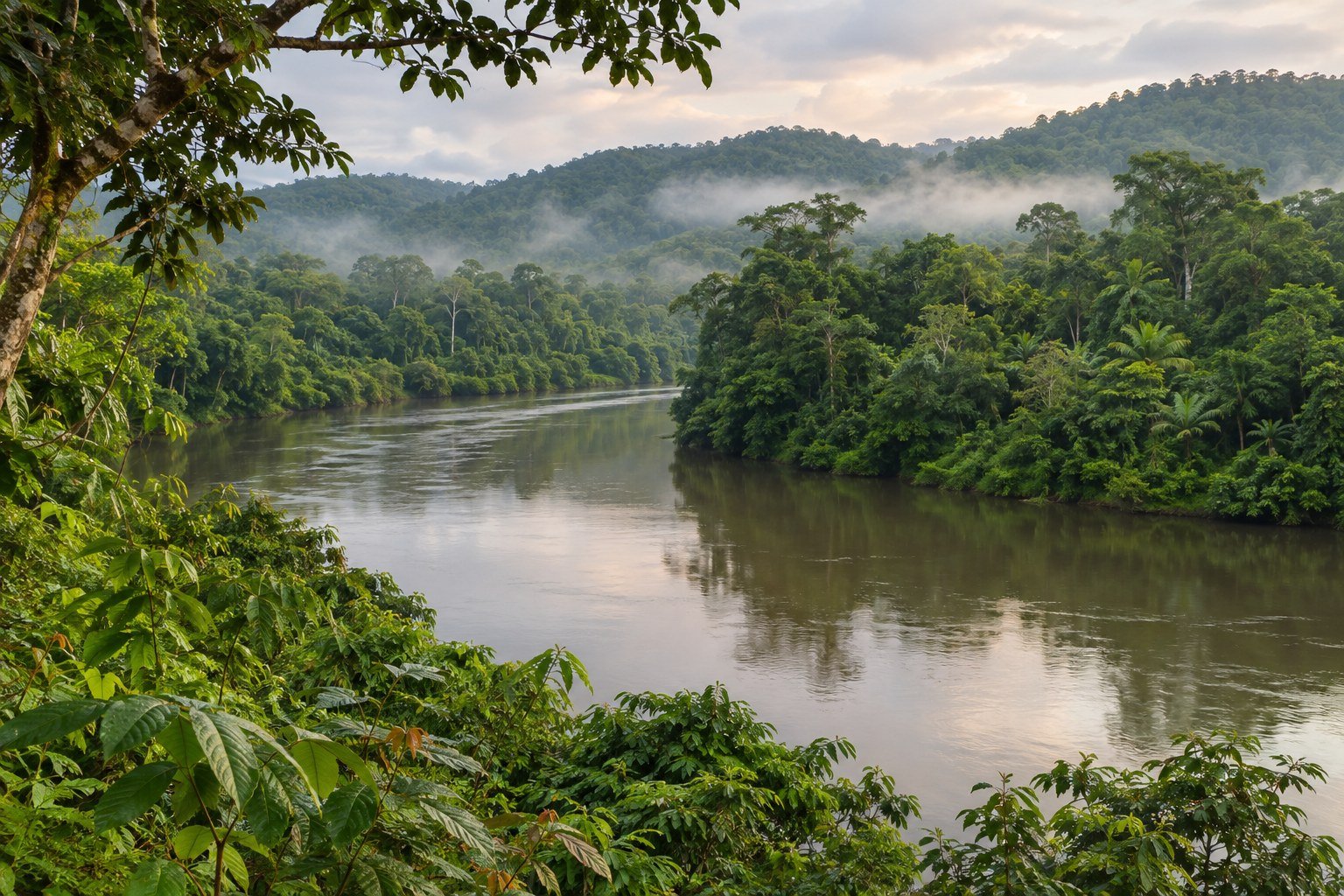
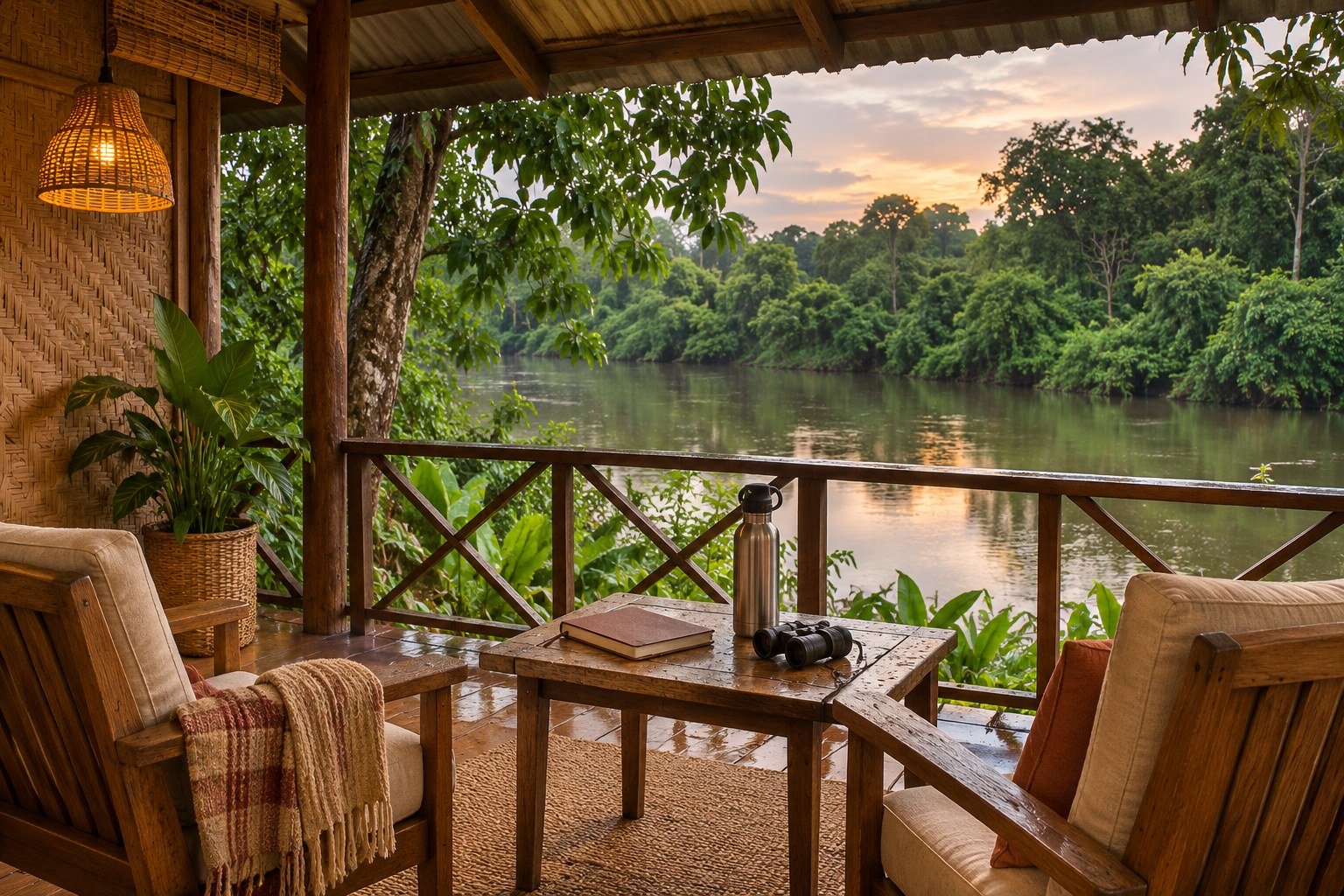
AI-generated illustration of the Cardamom region’s river and rainforest landscape.
A Cardamom trip works best when you know which kind of stay you want. A village guesthouse, a quiet river retreat and a guided forest camp can all be rewarding, but they involve different journeys, comforts and costs. This Koh Kong and Cardamom Mountains guide helps you choose between them.
First, check the border advice. On 14 November 2026, FCDO advised against all but essential travel within 20km of Cambodia’s land border with Thailand, and land crossings remained suspended. Koh Kong town is close to that border; leave it out of a leisure itinerary while this advice applies. Check both your chosen base and the entire approach route.[1] [2]
Some links in this guide are affiliate links. If you book or buy through them, Taylor’s Trailblazing Travels may earn a commission at no extra cost to you.
Base
Choose the village, river or camp experience before comparing rooms.
Time
Three nights leaves two full days between the transfers.
Arrival
The right roadside stop and final pickup matter as much as the main journey.
Price
Compare rooms, meals, guides, boats, road transfers and taxes together.
Choose your base before you book the room
The most useful distinction is between a village stay, a river retreat and a forest camp. Each can put nature at the centre of the visit, but the comfort, activities and arrival arrangements differ. Pick the experience you want to wake up to; moving between several bases can take away the quiet time you came for.
Scroll within the table on a small screen.
| Base | Choose it for | Settle before paying |
|---|---|---|
| Chi Phat | Community-arranged walks, village life and a choice of simple accommodation. | The actual room, bathroom, guide, meals and final transfer from Andoung Teuk.[3] [4] [5] |
| Tatai River | A comfortable riverside base, shorter outings and time on the water. | The property’s landing point, boat times, included meals and suitability for your group.[6] |
| A Botum Sakor forest camp | A more structured stay combining accommodation, guided activities and river access. | The full package, age rules, footwear, luggage allowance and arrival at the correct pier.[7] [8] |
Chi Phat’s community programme offers homestays, guesthouses and bungalows. The published accommodation descriptions make clear that facilities can be simple, so ask specifically about the toilet, shower, fan and sleeping arrangement. A homestay is a good fit when sharing a household’s routines appeals; a private guesthouse room may suit you better if you want more independence.[5]
For Tatai, Canvas & Orchids is one example of a boat-accessed retreat. Its floating and land-based tents are different choices, particularly for families. You can compare Canvas & Orchids on Booking.com, then check the room type, meal plan and boat arrangements with the property.[6] [11]
Cardamom Tented Camp is another distinct option, reached through Trapeang Rung rather than Tatai. Compare the camp’s own packages before choosing: a room-only price and a guided two-night stay are different purchases.[2] [8]
For a wider comparison, search the broader Koh Kong area on Agoda. Check each property’s map, approach route and inclusions, and leave out stays within the current border-advice area. This search covers more than the river and forest bases discussed here.[10]
Put the road journey and final transfer in one plan
Ask your host for the meeting-point pin before buying transport. “Koh Kong” can describe the province or the border town; neither tells a driver which village junction or river landing you need. Arrange the approach from Phnom Penh or the Cambodian coast without continuing into the border-advice area.
Scroll within the table on a small screen.
| Destination | Main-road handoff | Final stage |
|---|---|---|
| Chi Phat | Andoung Teuk on National Road 48. | The community describes roughly 40–45 minutes by road or about two hours by boat. Confirm which is running and appropriate for you.[3] |
| Canvas & Orchids, Tatai | The property’s agreed meeting point at Tatai. | An arranged boat to the retreat; obtain the precise pickup instructions with the booking.[6] |
| Cardamom Tented Camp | The camp’s Trapeang Rung departure point off Road 48. | A boat journey of about 30 minutes. Tell the camp if you are arriving by bus so it can coordinate the handoff.[2] |
The Airbus operator page on 12Go lists Andoung Tuek, Trapeang Rung and Tatai among its stops. Use it to search your actual journey and date, then confirm the selected arrival point with both the operator and your host. Do not assume every service to Koh Kong will stop where you need.[13]
A private car can be worth comparing when several people share, luggage is awkward or you need a particular boat departure. Ask for a price covering your starting address, agreed breaks, luggage and the final meeting point. A cheap seat that misses the last suitable transfer can cost more once you add another night.
Work backwards from the boat
Cardamom Tented Camp’s published Trekker package has a 14:00 outbound boat. Choose a road journey that gets you there comfortably beforehand, with time for a late pickup or a slow stretch of road. If you land in Cambodia that morning, an overnight near your arrival city may be a better start than immediately chasing a fixed river departure.[8]
For example, if your driver estimates four hours and the host asks you to be at the pier by 13:00, leaving at 08:00 gives an hour beyond that estimate. Ask whether that is enough for your route and date. Add airport formalities separately; they are not part of the driving time.
Book the return handoff too. Tell the host about any onward ferry or flight before paying for it, and allow an overnight nearer the departure point when the connection would otherwise be tight.
Allow two full days if nature is the reason for coming
Three nights is a useful starting choice: an arrival day, two full days and a departure day. It gives you room for one main outing and one gentler day. Two nights can work for a focused package, provided you are happy with one full day between the transfers.
Scroll within the table on a small screen.
| Day | A sensible shape | What to keep flexible |
|---|---|---|
| Day 1 · arrive | Road and final transfer, settle in, discuss tomorrow with the guide. | An arrival stroll or river view rather than a distant activity. |
| Day 2 · main outing | Your agreed forest walk, guided village activity or river excursion. | The route and start time if weather or ground conditions change. |
| Day 3 · slower day | A shorter outing, cooking or village time, then an unhurried afternoon. | Use this as the alternative day for the main activity if necessary. |
| Day 4 · leave | Breakfast and the pre-arranged transfer back to the road. | Keep the next destination’s arrival plans light. |
This works best when you choose one base. Splitting three nights between Chi Phat and Tatai adds another packing day and another handoff, while leaving little time for either place. With more nights, a village stay followed by a river retreat can make sense because the two experiences are different.
Put every overnight stop into the Trip Itinerary Planner. Count the travel days as part of the holiday, even when the journey has pleasant scenery. If you only have one spare night between cities, save a remote forest stay for a longer trip.
Back to top ↑Choose the activity for the forest and the people
Chi Phat’s programme includes guided walks, cycling, birdwatching from the river and cooking activities. The range allows a gentler visit as well as longer treks. Contact the community office with your dates and interests so it can suggest a suitable day; a list on a website does not tell you which guide or route is available tomorrow.[4]
Wildlife Alliance describes Chi Phat as a community-based ecotourism project. Ask who provides the guiding, accommodation, transport and food included in your booking, and where payment goes. Clear answers about local work are more useful than a broad promise that every “eco” booking does good.[9]
Questions that help you choose
- Who will guide the trip, and which language will they use?
- How much walking is involved, including slopes, muddy ground and river crossings?
- Are village visits agreed with the people hosting them?
- What happens if weather makes the planned activity unsuitable?
- Which local services are included in the price, and which are paid separately?
Go for the forest itself: the light, sounds, plants and time away from traffic. Animal sightings should be a possibility, not a promise that shapes the entire booking. Keep your distance, avoid feeding or calling animals closer, and let a guide stop an encounter rather than pressing for a better photograph.
In villages, ask before photographing people or entering homes and places with cultural significance. Pay for the agreed service and let hosts decide what they want to share. A short visit arranged by a local guide can be more considerate than wandering into a household because a map marks the village.
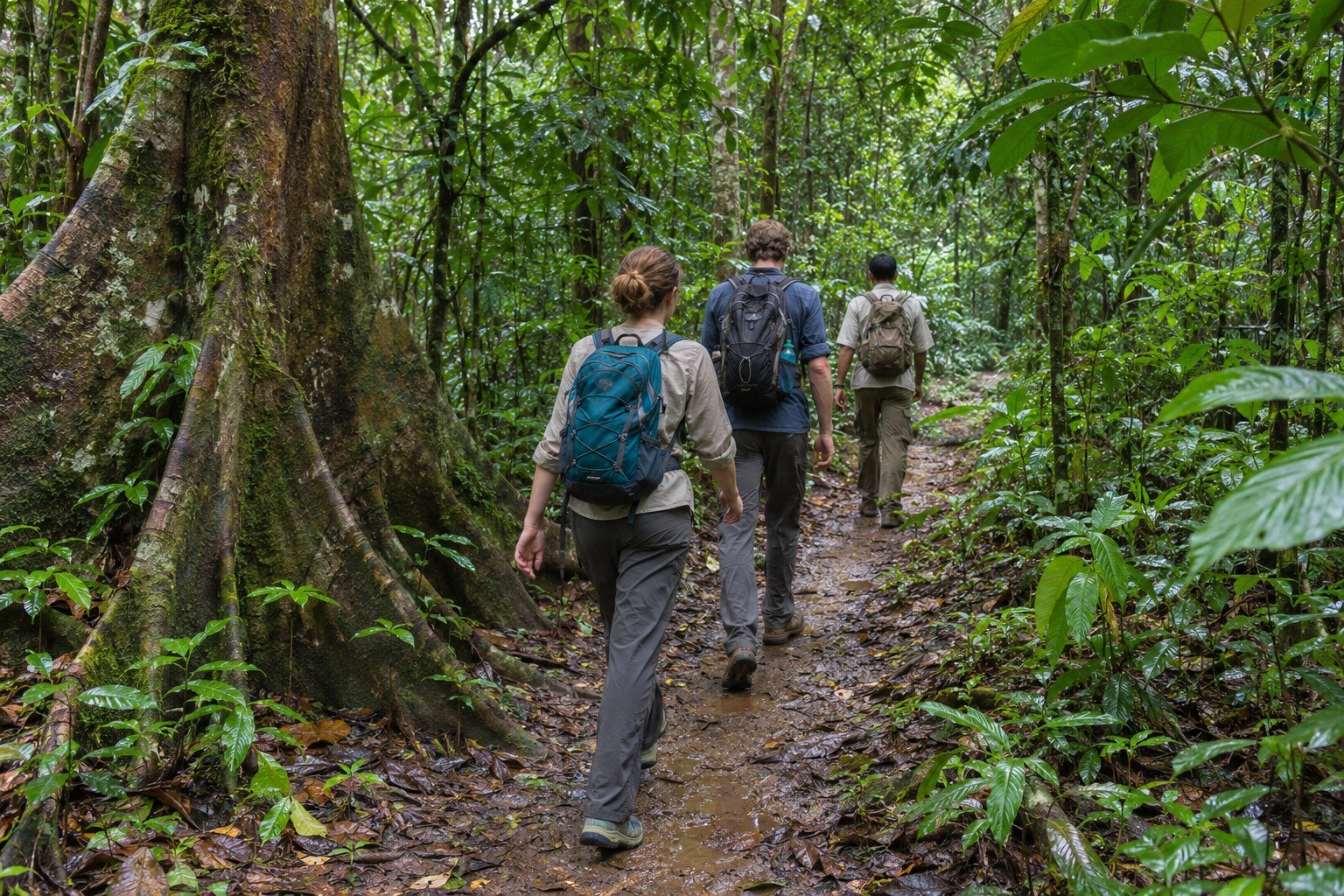
Longer treks need their own plan
The Cardamoms cover far more than the river bases along Road 48. Steung Areng has a separate community tourism programme. Treat it as another destination with its own access arrangements, rather than an extra stop to squeeze between Tatai and Chi Phat. Start with the Steung Areng community information and request a current route and quote.[14]
If your priority is mountain walking and an overnight camp, the two-day Khnang Phsa and Khnang Sampov trek on Viator is a different option. The listed itinerary leaves Phnom Penh, camps overnight and returns to the capital late on day two. The provider asks for strong physical fitness. Confirm walking distance, climbs, what you carry, bedding and the return time before committing.[15]
That listing also shows accessibility labels alongside its demanding fitness requirement. Anyone who needs step-free access or assistance should obtain a clear, written description of the actual trail and camping arrangements. Do not choose a mountain trek on the strength of a booking-page label alone.
A multi-day trek may be the highlight of an active holiday, but it gives you less freedom to change your mind midway through. If you are unsure about sleeping outdoors, heat or sustained walking, begin with a shorter guided outing from a base you are comfortable returning to.
Back to top ↑Compare the cost of the whole stay
The room rate is only one part of the budget. Put accommodation, meals, activities, road transfers, boats and taxes side by side. Check whether each price is per room, per person or for the whole vehicle. This makes a simple guesthouse and an organised camp package much easier to compare fairly.
A dated package example
For stays from 1 November 2026 to 30 April 2027, Cardamom Tented Camp advertises its two-night Trekker package at US$445 per person sharing a standard tent, excluding 10% VAT. The listed inclusions cover five meals, drinking water, guided hikes and the return boat from Trapeang Rung. Checked 14 November 2026.[8]
Scroll within the table on a small screen.
| Item | Amount |
|---|---|
| Two places at US$445 | US$890 |
| 10% VAT on US$890 | US$89 |
| Package total for two | US$979 |
| Still to budget | Road journeys to and from the pier, drinks and other extras, plus any activities outside the package. |
That total is for the two-night package, not one night or one person. Ask for a dated final quote and check the cancellation terms. Different tents, solo occupancy and different seasons have different advertised rates.
For a village stay, ask the community office for the same complete breakdown. A modest room may still be excellent value once guides and transport are added; the point is to compare what you actually want to do, not simply the two accommodation headlines.
Use the Hotel Comparison Calculator for actual room offers with matching dates and inclusions. For the overall holiday, enter your checked costs in the Travel Budget Calculator. That tool uses pounds, so convert your quotes first using the rate available to you.
Back to top ↑Choose the season around the activities you want
November to February is the starting point to consider if you prefer the cooler, generally drier part of the year. Rain can still alter a forest day, and local patterns vary. Cardamom Tented Camp’s advice also highlights hotter months and very wet late-season conditions; choose dates with the host rather than treating a country-wide weather summary as a trail forecast.[7]
For a wet-season visit, keep the main outing movable and choose accommodation where you would enjoy a quiet afternoon. Ask whether road access, the boat transfer and your particular walk are operating normally. A discount is less useful if the only activity you want is unlikely to run.
FCDO advises using a reputable jungle guide and warns about strong currents and dangerous conditions around water. Stay on established routes; mines and unexploded weapons remain a concern in rural Cambodia. Let current local conditions decide whether a river outing or walk proceeds.[16]
Pack shoes with dependable grip, light long clothing, rain protection and a way to keep essentials dry. Bring enough of any regular supplies for the whole stay. Ask the guide which equipment is provided before buying or carrying bulky extras.
Back to top ↑Be clear about comfort, meals and access
Before choosing a remote stay, decide what you need to sleep well: a private bathroom, a fan, a proper mattress, dependable charging or a particular diet. Ask about those details directly. “Tented” can mean very different rooms and facilities, and a lovely river view will not solve a room arrangement that does not work for you.
Food is part of that decision. Find out how many meals are included, where you eat and how much notice the kitchen needs for dietary requirements. At a boat-accessed property, the freedom to wander out to another restaurant may be limited; settle the meal arrangements before arrival.
Cardamom Tented Camp’s published rules exclude children under six, require an adult to accompany children aged six to fourteen, and require closed shoes for trekking. It also describes limited boat luggage capacity and solar power. Check your family’s needs and equipment with the camp before paying.[7]
Canvas & Orchids describes boat transfers, uneven ground and steps, and says it is not fully wheelchair accessible. Ask about the entire journey, including getting in and out of the boat and reaching the bathroom, rather than only whether the room is on one level.[6]
Agree how to contact the host if you are delayed. Save the meeting-point pin, phone number and booking confirmation offline. Browse Airalo’s eSIM store and select Cambodia if you need mobile data, after checking your phone and the selected plan. Airalo currently lists a Smart-network Cambodia option; ask the host which network works at the particular base.[12]
Remote access is also a reason to check your insurance covers the activities you have chosen and emergency evacuation. Ask the operator how it would arrange help and tell it about any assistance you need before travel, while there is still time to choose a different plan.
Questions to settle before booking
Can you arrive from Trat or Koh Chang overland?
Not while the Cambodia–Thailand land crossings remain suspended. Some older operator directions still describe that route. Use current official advice and a confirmed flight into Cambodia when planning from Thailand; do not build the trip around an assumed reopening.[1]
Does a Koh Kong hotel search mean the property is in town?
Not necessarily. Booking sites can group provincial properties under Koh Kong. Check the map, named village and transfer instructions. For the current border warning, the location and route matter more than the destination label on a search page.
Can a family enjoy the region without a long trek?
Yes, if the chosen base accepts your children’s ages and the activities suit them. Short guided outings and time at the accommodation may be enough. Confirm supervision around water, suitable life jackets and the room arrangement; age policies differ between operators.
Is one night worthwhile?
Only if the stay itself is the experience and both transfers fit easily. For a nature-focused detour, two nights is a more workable minimum and three gives breathing room. Choose one suitable base, book the arrival and departure together, and leave space for the forest to set the pace.
Back to top ↑Sources and checks
This guide uses current official advice and published operator information. The base comparisons and suggested pacing are our planning recommendations. Confirm transport, conditions and the final price for your dates.
- FCDO — Cambodia travel advice
Current 20km Thai-border advice, suspended land crossings and insurance implications. Checked 14 November 2026. - Cardamom Tented Camp — Getting to us
Road 48 access, Trapeang Rung handoff and boat journey. Older Thailand directions are superseded by current FCDO advice. Checked 14 November 2026. - Chi Phat — Getting here
Andoung Teuk access and road/boat stages. Reconfirm services; older onward Thailand text is not current travel advice. Checked 14 November 2026. - Chi Phat — Adventure programmes
Published walks, cycling, river activities and cooking options; availability requires confirmation. Checked 14 November 2026. - Chi Phat — Accommodation
Homestay, guesthouse, bungalow and forest-camp descriptions. Checked 14 November 2026. - Canvas & Orchids Retreat — FAQs
Room types, boat access, meeting point, facilities and mobility limitations. Checked 14 November 2026. - Cardamom Tented Camp — FAQs
Age and footwear rules, luggage, power and local seasonal information. Checked 14 November 2026. - Cardamom Tented Camp — Trekker package
Dated November 2026–April 2027 rates, VAT, package inclusions and boat timetable. Checked 14 November 2026. - Wildlife Alliance — Chi Phat community tourism
The organisation’s description of the Chi Phat community tourism project. Checked 14 November 2026. - Agoda — Koh Kong accommodation search
Broader accommodation comparison; check each property’s location, approach and inclusions. Checked 14 November 2026. - Booking.com — Canvas & Orchids Retreat
The named Tatai retreat’s accommodation listing; no dated room availability or rate is promised. Checked 14 November 2026. - Airalo — Cambodia eSIM options
Country-plan and primary-network information; this does not establish reception at an individual lodge. Checked 14 November 2026. - 12Go — Airbus operator page
Lists Andoung Tuek, Trapeang Rung and Tatai among operator stops; date-specific services require a fresh search. Checked 14 November 2026. - Wildlife Alliance — Steung Areng community tourism
A separate community tourism project in the Cardamom landscape. Checked 14 November 2026. - Viator — Khnang Phsa and Khnang Sampov private trek
Two-day Phnom Penh itinerary, camping, fitness requirement and conflicting accessibility labels requiring clarification. Checked 14 November 2026. - FCDO — Cambodia safety and security
Forest guiding, rural unexploded weapons and water-related risks. Checked 14 November 2026.
Illustrations in this article were created for Taylor’s Trailblazing Travels. Third-party photographs, where used, are credited beside the image or in the source list.