

7 Days in Cambodia: Siem Reap and Phnom Penh Without Rushing
Two cities, six nights and enough space to enjoy the days between journeys.
AI-generated illustration inspired by Angkor Wat; it is not an on-location photograph or a promise of a particular sunrise.
For a first week in Cambodia, I would spend three nights in Siem Reap and three in Phnom Penh, arriving in the first and flying home from the second. That gives Angkor two separate mornings, the capital two full days and the intercity journey a day of its own.
This itinerary counts day 1 as the day you land in Cambodia and day 7 as the day you leave. It therefore needs six hotel nights. Flights from home, overnight connections and the date you get back may require additional holiday time. The route suits travellers who want temples, food and city life without changing hotels every other day.
Some links are affiliate links. Taylor’s Trailblazing Travels may earn a commission on qualifying bookings or purchases, at no extra cost to you.
Six nights accounted for
Nights 1–3 in Siem Reap, then nights 4–6 in Phnom Penh.
Four full days to enjoy
Days 2, 3, 5 and 6 are free from intercity travel.
Choose both flight gateways
Compare arrival at SAI with departure from KTI before fixing hotels.
Start with the nights, then choose the sightseeing
The plan below is a suggested allocation, not a series of timed appointments. Swap the two Phnom Penh days if opening arrangements, energy or your interests make that preferable.
Swipe within the table to see all columns.
| Day | Main plan | Sleep |
|---|---|---|
| 1 | Arrive, transfer to your hotel, eat and settle in. | Siem Reap — night 1 |
| 2 | Angkor Wat and Bayon, with a long afternoon break. | Siem Reap — night 2 |
| 3 | Ta Prohm and, if wanted, one further temple; time in town afterwards. | Siem Reap — night 3 |
| 4 | Daytime coach to Phnom Penh; dinner near your hotel. | Phnom Penh — night 4 |
| 5 | National Museum, a meal and some everyday city life. | Phnom Penh — night 5 |
| 6 | Tuol Sleng if you wish to visit, with a quiet remainder of the day. | Phnom Penh — night 6 |
| 7 | Airport transfer and departure. Add a small local outing only if the flight leaves ample time. | No Cambodian hotel night in this plan |
Three nights give you two complete days between arrival and departure. Across both bases that makes four full days, plus one intercity travel day and the two flight days. A late landing does not invalidate the route; it simply removes day 1’s optional wander. An early flight on day 7 removes any final sightseeing.
Put the two stays into the Trip Itinerary Planner. It keeps your nights and dates together; check the transport separately, because the planner does not validate connections.
Back to top ↑Days 1–3: let Angkor set the pace
On day 1, make reaching the room the only essential task. Siem Reap’s airport shuttle goes to a town stop on 7 Makara Road in front of ACE School; it does not drop passengers at hotels.[4] Compare its final local ride with a direct pickup, especially after a tiring connection or with several bags.
The private SAI-to-hotel transfer option on GetYourGuide is one comparison. Supply your flight and accommodation details, and check luggage limits. The listing excludes wheelchair users and people with mobility impairments, so it is not a suitable default for every traveller.[5]
Give each temple morning a clear purpose
Use day 2 for Angkor Wat and Bayon within Angkor Thom. Start early if that suits your sleep, but make sunrise optional. Agree a return time with your driver and guide rather than accepting an ever-growing list of stops. A useful starting brief is “two main visits, time to look properly, back for a late lunch”. That is a planning request to confirm, not a standard tour duration.
On day 3, make Ta Prohm the main visit. Add one further temple only if you still want more. These temples are on Angkor’s established circuit information; you do not need to finish an entire named circuit to have a worthwhile morning.[3] Ask whether the price buys transport alone or also a guide: the person explaining a carving and the person waiting with the vehicle are different services.
The three-day Angkor pass costs US$62 and can be used across seven days; a one-day pass costs US$37.[2] For two temple days, US$62 is US$12 less than two separate one-day passes. Children under 12 are exempt; carry passport proof of age.[3]
Keep shoulders and knees covered and follow the site’s signed routes and restrictions.[6] Familiar shoes, water, sun protection and a light bag are more useful than adding another distant stop. If uneven steps or heat affect your mobility, ask for a route built around what you can comfortably manage before booking transport.
Leave the afternoons for lunch, a swim if your accommodation has a suitable pool, a café, browsing or simply resting. They are part of the itinerary’s value. If you return tired, the next activity can disappear without losing a prepaid ticket or the following morning’s start.
Day 4: allow the journey to be the day
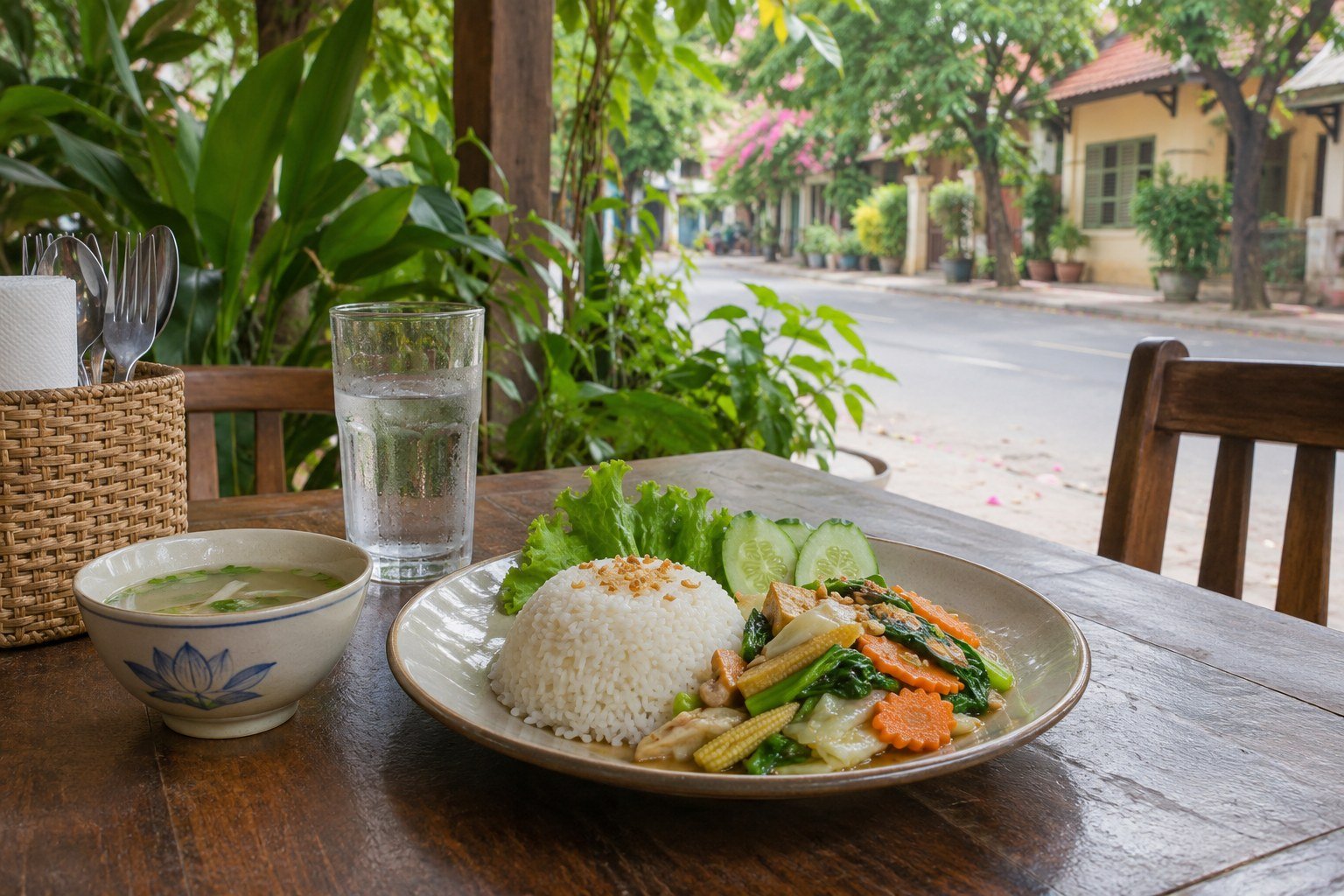
I would use a daytime coach on day 4. Giant Ibis advertises the Siem Reap–Phnom Penh journey at six hours.[1] My working allowance is 7½–8½ hours from leaving one hotel to reaching the next, including the local rides, boarding and an ordinary margin. That allowance is an editorial estimate; disruption can take longer.
Compare Siem Reap–Phnom Penh departures on 12Go, then check the operator, daytime seating, boarding office, arrival point and baggage terms for your date.[14] A service advertised as six hours does not include every minute between your two rooms.
Swipe within the table to see all columns.
| Part of the move | Time allowed |
|---|---|
| Hotel checkout, local ride and boarding | 1 hour |
| Advertised coach journey | 6 hours[1] |
| Arrival ride, check-in and a little margin | 1 hour |
| Total to set aside | 8 hours; not a promised arrival time |
With an early departure, you may have enough energy for a relaxed dinner and a short look around your new neighbourhood. I would keep the evening unbooked. A fixed performance or tasting menu makes a routine late arrival matter much more than it needs to.
A night bus changes the arithmetic: you would be sleeping in transit instead of using one of the six hotel nights, with possible early arrival and delayed room access. For this unhurried version, keep the hotel night and travel in daylight. If you compare a flight instead, count both airport rides and check-in time before deciding how much of the day it actually returns.
Days 5–7: give Phnom Penh two different days
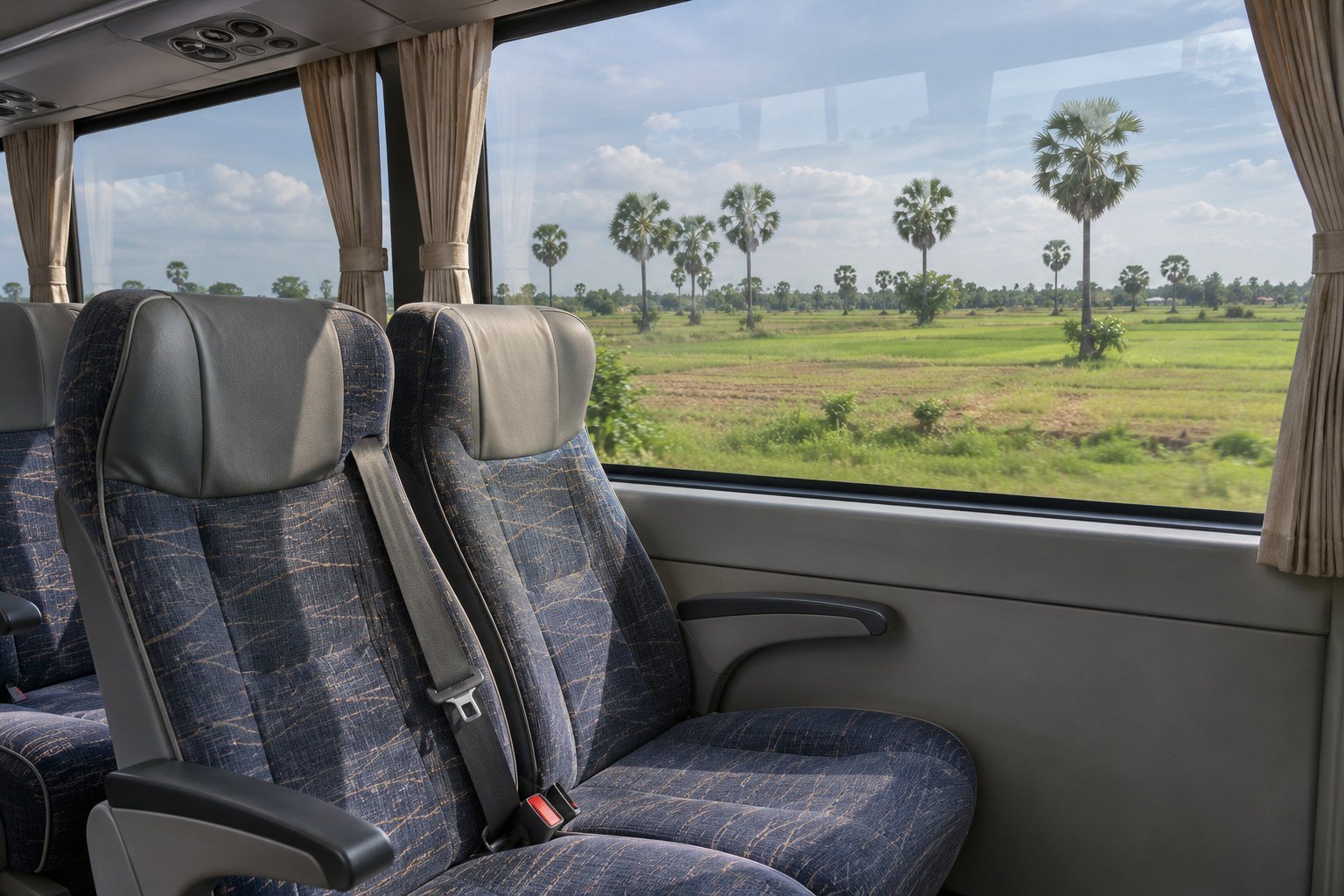
On day 5, start with the National Museum, then have lunch and leave the afternoon for a market visit, a café or a short riverside outing. The museum publishes daily opening from 8am to 5pm, with last admission at 4.30pm; foreign adults aged 18 and over pay US$10.[7] Check the current arrangements before setting out. You can enjoy the city without adding another major admission that afternoon.
Day 6 is the place for Tuol Sleng if you want to engage with this part of Cambodia’s history. Treat the visit as time for attention and reflection. The museum warns that its material may be unsuitable for children aged 14 and under; foreign adult admission is US$5, with an English audio guide costing a further US$5.[8]
You do not have to visit both Tuol Sleng and Choeung Ek. If both are a priority, the private Tuol Sleng and Choeung Ek trip on Viator provides a guide and vehicle, with admissions excluded. Ask for the full hotel-to-hotel timing: its published time at the two sites already adds to four hours before the journeys between them.[9] Leave the rest of the day clear.
For anyone who prefers to skip the memorial visit, reuse this day for the interests that emerged yesterday: more museum time, food, a bookshop or a leisurely meal. Families should choose an age-appropriate city day rather than treating difficult historical sites as compulsory stops. Ask individual venues about step-free access; a suitable vehicle alone does not establish access throughout a visit.
Day 7 is departure day. Phnom Penh flights now use Techo International Airport, code KTI, which replaced the former airport.[10] Give your driver the code and flight details, obtain a current pickup recommendation and work backwards from the airline’s check-in requirement. A late flight may leave a useful morning, but luggage storage and transport still need arranging.
Choose two useful bases and budget for the right number of nights
Stay in one room in each city. On a six-night trip, moving for a slightly different pool or view spends time packing, checking out and finding the next address. Choose somewhere that supports the planned days: reliable rest and easy pickups in Siem Reap; convenient meals and manageable journeys to your chosen sights in Phnom Penh.
Swipe within the table to see all columns.
| Base | What to check | Compare your dates |
|---|---|---|
| Siem Reap — 3 nights | Quiet room, air conditioning if wanted, breakfast timing and clear early pickup access. | Siem Reap on Booking.com or Siem Reap on Agoda |
| Phnom Penh — 3 nights | Exact map pin, nearby meals, room access and luggage storage before a late departure. | Phnom Penh on Booking.com or Phnom Penh on Agoda |
Compare the same occupancy and room type, including taxes, breakfast and cancellation terms. A very cheap room can be poor value if every meal requires a separate ride. Check accessibility with specific questions about steps, bathrooms and lifts, rather than relying on a general property label.
Count room nights separately from spending days
For an illustrative two-person budget, one £45 room for six nights costs £270. A personal allowance of £18 each for meals and drinks over seven days adds £252. Together that is £522, or £261 each. These are invented planning inputs, not current Cambodia prices or a complete holiday budget.
Add your actual flights, entry costs, insurance, six-night room total, intercity tickets, airport rides, local transport, guides and admissions. Two adult three-day Angkor passes alone add US$124; keep that currency separate until you convert it for your own budget. A £10 increase in the room’s nightly price adds £60 to the whole trip, whereas £10 extra per person per day adds £140 for two people over seven days.
Use the Travel Budget Calculator with six accommodation nights and seven spending days. Enter every cost in GBP; it does not convert currencies or fetch live prices.
Back to top ↑Change the emphasis without hiding another journey
The default split is deliberately balanced, but it can change without becoming a faster trip. The important question is which full day you are willing to exchange.
Swipe within the table to see all columns.
| Your priority | A workable change | What it costs |
|---|---|---|
| More temple time or a recovery day after a long flight | 4 nights Siem Reap + 2 Phnom Penh; transfer on day 5. | Phnom Penh has one full day, day 6. |
| Arrive in Phnom Penh and leave from Siem Reap | Reverse the route: 3 nights in each, travelling on day 4. | Airport transfers and the order of sightseeing must be rebooked. |
| Return flight from the same Cambodian city | Rebuild the final nights around returning to that airport city. | A second intercity move takes time from the four full days. |
| Add a beach or a third town | Extend the trip, or replace one of the two city stays. | It cannot fit this six-night plan without sacrificing its slower pace. |
If your round-trip airfare looks cheaper, compare that saving with the return transport, another hotel change and the day you lose. Do this before buying flights. I would not rely on a long intercity road journey on the same day as an important international departure.
Enter both versions into the Itinerary Pace Checker using your door-to-door hours. Its flags can expose a heavy travel day; they do not confirm a service will run.
Make the few bookings that protect the pace
Check entry rules for your passport before paying. For British citizens, the FCDO explains passport validity, visas and the separate electronic arrival card.[12] Use the official links from that guidance and check requirements again close to travel.
FCDO advises against all but essential travel within 20km of the Thai border; land crossings remain suspended.[11] This itinerary starts and ends by air. Do not add a Thailand land crossing on the strength of an old route listing.
Save your hotel addresses, pickup locations and booking contacts offline. If needed, browse Airalo’s eSIM store and select Cambodia. Check device compatibility, network information and activation terms before buying.[13]
- Choose the arrival and departure airports, then confirm that the dates really give you six nights.
- Reserve the two hotel stays with suitable change terms.
- Choose the day 4 departure and check both local transfers.
- Agree the scope of the two temple mornings and buy the correct pass.
- Keep the first evening, transfer evening and departure morning light.
The result should feel like a week in two places, with time to return to a café, sit down after the temples and give Phnom Penh more than a hurried final night.
Back to top ↑Sources and checks
- Giant Ibis — Siem Reap to Phnom Penh
Advertised coach journey. Checked 15 November 2026. - Angkor Enterprise — Available tickets
Pass prices and validity. Checked 15 November 2026. - Angkor Enterprise — Frequently asked questions
Temple circuits and child admission. Checked 15 November 2026. - Siem Reap Angkor International Airport — Airport bus
Town stop and transfer scope. Checked 15 November 2026. - GetYourGuide — SAI airport transfers
Private option and suitability limits. Checked 15 November 2026. - Angkor Enterprise — Visitor code of conduct
Dress and heritage-site conduct. Checked 15 November 2026. - National Museum of Cambodia — Visitor information
Opening and admission information. Checked 15 November 2026. - Tuol Sleng Genocide Museum — Visitor information
Admission, age guidance and access. Checked 15 November 2026. - Viator — Private Tuol Sleng and Choeung Ek trip
Itinerary, transfers and admission exclusions. Checked 15 November 2026. - VINCI Airports — Phnom Penh airport
Current Techo airport and code. Checked 15 November 2026. - FCDO — Cambodia travel advice
Border warning. Checked 15 November 2026. - FCDO — Cambodia entry requirements
British-passport entry guidance. Checked 15 November 2026. - Airalo — Cambodia eSIMs
Country-plan availability. Checked 15 November 2026. - 12Go — Siem Reap to Phnom Penh
Route comparison page; select actual dates. Checked 15 November 2026.
Illustrations in this article were created for Taylor’s Trailblazing Travels. Third-party photographs, where used, are credited beside the image or in the source list.


