Ipoh Cave Temples: Which Ones to Visit and How to Combine Them
A temple morning shaped around your interests, walking ability and the roads between the stops.
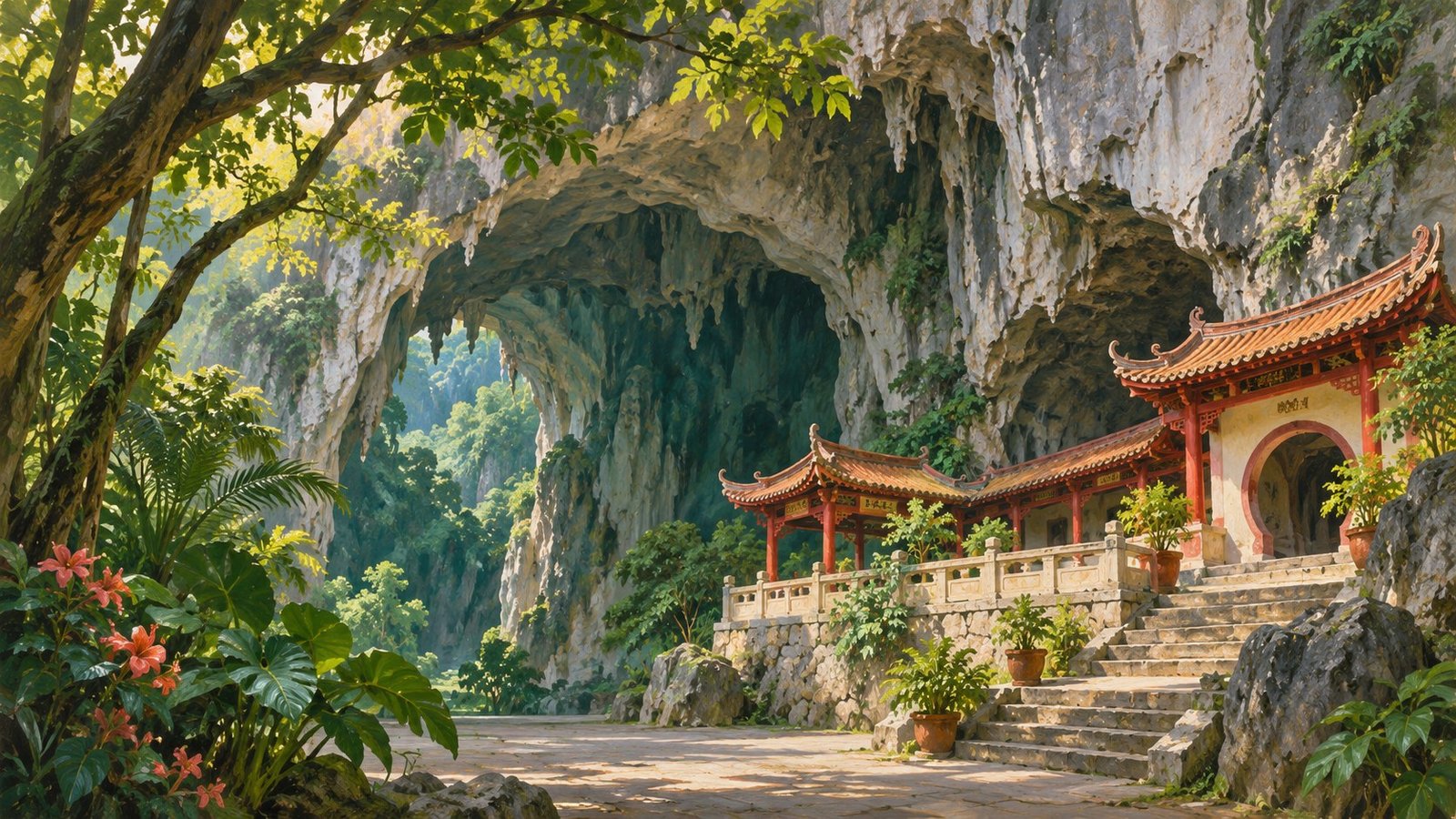
AI-created illustration inspired by Ipoh’s cave-temple landscapes; an interpretive scene, not a documentary view of any named temple.
The best visit to the Ipoh cave temples begins with choosing what you want to see: art inside a cavern, a quiet place of worship, a garden, or a climb. Those are different experiences, and trying to collect every temple name can leave little time for any of them.
This guide concentrates on choosing and combining the temples. Its time allowances are editorial planning estimates, not measured journeys or promised opening periods. The sites appear in Ipoh City Council’s places-of-worship directory; visits should fit around their religious purpose. [3]
Some links are affiliate links. Taylor’s Trailblazing Travels may earn a commission if you book or buy through them, at no extra cost to you.
Sam Poh Tong first, then Ling Sen Tong if open.
Reserve a separate drive across the city and extra time for any climb.
Confirm current opening and the exact areas available.
Ask about the entrance, interior, garden and optional stairs separately.
Which Ipoh cave temples fit your visit?
Use this selector by interest and available time. The recommendations are editorial judgements, not a ranking of religious importance. The time ranges refer to a deliberately unhurried visit on site; transport, waiting and a substantial climb are additional.
| Choice | Choose it when… | Time to reserve | Main trade-off |
|---|---|---|---|
| Perak Tong | Art and a possible climb matter more than collecting several stops. | 45–60 minutes before allowing for a longer climb. | It belongs to the northern part of the plan. |
| Sam Poh Tong | You want the anchor for a southern temple morning. | About 45 minutes. | Give it the earliest confirmed opening slot. |
| Ling Sen Tong | You want a contrasting companion to Sam Poh Tong. | About 25–30 minutes. | A useful addition, rather than a reason to rush the main visit. |
| Kek Lok Tong | A cave-and-garden visit is your priority and management confirms access. | About 60–90 minutes. | Keep a replacement plan if the cave or grounds are unavailable. |
If stairs are a deciding factor, choose the accessible parts of one site first and build outward from that. A short list that everybody can enjoy is more useful than a three-temple itinerary with an obligatory climb.
Back to top ↑What makes each stop different
Perak Tong: separate the cave visit from the climb
Tourism Malaysia describes Perak Tong at Gunung Tasek to the north, with murals, a Buddha figure and an ascending route. [1] Treat the climb as a separate decision after seeing the main space. Agree beforehand whether the whole party will climb, split briefly, or finish together below.
For a mixed-mobility group, do not let a viewpoint become the assumed climax of the visit. Ask which sections are open and where everybody can comfortably wait. A nominally short staircase can take much longer when pauses, photographs and the descent are included.
Sam Poh Tong: make time for the setting
Sam Poh Tong has an ornamental entrance garden and a rear tortoise enclosure, according to Tourism Malaysia. [1] Its value in this itinerary is the opportunity to slow down before moving to its neighbour. Look carefully, give worshippers space and avoid making the visit solely about a photograph at the rear.
Children may be interested in the animals, but keep them beside you and follow local instructions. Do not bring animals to release, handle them, or assume food sold or offered nearby is appropriate to feed them.
Ling Sen Tong: a contrasting neighbouring stop
Neighbouring Ling Sen Tong is Taoist, with colourful figures from Chinese mythology. [1] Choose it for that different visual and religious setting. Resist treating every figure as an interchangeable photo prop; a guide can be worthwhile if understanding the imagery is central to your visit.
Because the two stops belong together, you can shorten this visit if the first takes longer. That is much less disruptive than adding another drive simply to keep a fixed stop count.
Kek Lok Tong: confirm before committing
Tourism Perak identifies Kek Lok Tong and its gardens within the Gunung Rapat group. [2] EatiPoh reported a reopening on 3 October 2026 after a lengthy closure, together with new ramps and weather-related restrictions. This is secondary reporting; a current management notice, detailed access specification and new opening timetable were not independently confirmed for this guide. [4]
Telephone before travelling, particularly after heavy rain. Ask separately whether the cave, rear garden and intended route between them are open. Keep it as a conditional extension, not the single reason for a non-refundable journey. A report of ramps does not establish an uninterrupted wheelchair route.
Back to top ↑Combine the temples by road geography
Tourism Perak groups Sam Poh Tong, Ling Sen Tong and Kek Lok Tong around Gunung Rapat. [2] Perak Tong requires a separate northern journey. [1] The combinations below are editorial choices, not official routes between entrances.
A compact morning: Sam Poh Tong and Ling Sen Tong
Start at Sam Poh Tong once its opening is confirmed, then visit Ling Sen Tong if it is open. Arrange one pickup location the driver can actually reach. Allow three hours from leaving your central Ipoh base to returning, using the model in the next section.
This is the strongest choice when you have a train later, are travelling with children, or simply want to give each temple attention. It also leaves room to stop early without unpicking a complicated sequence.
A more varied half-day: the southern pair plus Perak Tong
Visit the southern pair first, then drive to Perak Tong. A sample allowance is 45 minutes at Sam Poh Tong, 30 at Ling Sen Tong and 75 at Perak Tong, plus 90 minutes across all driving, parking and pickup waits and 30 minutes of rest or slack: 270 minutes, or four and a half hours.
Those are planning inputs, not surveyed drive times. Obtain a local estimate for your actual base and traffic. If you want a substantial climb, extend the outing or remove Ling Sen Tong rather than spending the return margin.
A garden extension: add Kek Lok Tong after confirmation
Add around 90 minutes to the compact morning as an initial allowance: 60 for the visit and 30 for the extra road movement and waiting. Increase it if you want a slower garden circuit. If access cannot be confirmed, the compact pair still works on its own; there is no need to replace every cancelled stop.
Do not turn a temple outing into an unplanned limestone hike. Use public entrances, remain in the areas open to visitors and travel between separate entrances by the agreed road route.

Protect the half-day with a visible time budget
A temple list usually counts only the time inside. The following three-hour model deliberately reserves more than half the outing for everything around the two visits. It is designed for a central Ipoh start, pre-arranged road transport and no long climb.
| Part of the outing | Minutes | What it protects |
|---|---|---|
| Sam Poh Tong | 45 | Time to look around without making the rear area compulsory. |
| Ling Sen Tong | 30 | A different setting without adding another long journey. |
| All road travel, parking and pickup waits | 60 | The whole outward, between-stop and return process. |
| Rest and contingency | 45 | Toilets, water, a late pickup or a slower companion. |
The sum is 45 + 30 + 60 + 45 = 180 minutes. Replace the 60-minute transport input with a quote for your address; if that becomes 90 minutes, the same outing takes three and a half hours. Cutting the contingency to keep a train connection makes the plan more fragile, not faster.
Set a leave-by time for the final temple before departure. For an onward train, add the operator’s required arrival margin and your own luggage collection separately. None of those minutes is included in the temple model.

Opening hours, entrances and access checks
Tourism Malaysia’s published listings give Perak Tong as 08:00–17:00 daily, Ling Sen Tong as 09:00–18:00 daily and Sam Poh Tong as 08:00–14:00 Monday–Friday. These were checked on 6 November 2026, but are tourism listings rather than same-day temple confirmation; verify weekends, festivals and last access locally. [1]
That shorter Sam Poh Tong listing is the reason to put it first. Do not plan a late-afternoon arrival simply because another directory shows a later closing time. Do not apply an old Kek Lok Tong timetable to its reported reopening.
Tourism Perak publishes +60 5-255 2772 for Sam Poh Tong and +60 5-312 8112 for Kek Lok Tong. [2] If you cannot obtain an answer, ask your accommodation or driver to confirm the visit before setting off. An unanswered call is not confirmation.
Ask four specific questions: Is the entrance open on this date? Which interior and garden areas can visitors reach? Are there stairs, steep ramps or uneven thresholds between the drop-off and those areas? What is the last time to enter each section? Ask about toilets and a place to sit if either determines whether the outing is workable.
Photographs and the word “accessible” are too broad to answer those questions. Request current details for the route you intend to use, including the return to the car.
Back to top ↑Visit comfortably and give worship priority
Wear modest clothing that covers shoulders and knees, bring water and choose already comfortable shoes with reliable grip. If you already need replacement walking shoes, the Skechers UK outlet is one place to compare them before travel; check fit and the individual sole rather than assuming every style suits wet steps. Follow the instructions at each entrance about footwear and photography; do not assume every cave temple has identical rules. Keep voices low, avoid blocking prayer spaces and ask before photographing people.
Stay behind barriers and out of closed side passages even if someone else is entering. For a stair route, assess the descent before committing to the ascent. Wet surfaces, heat and fatigue can make a return harder than the outward walk suggests. Take breaks before they become urgent, and avoid using an umbrella where it obstructs others on narrow stairs.
Rain can affect both the walking surfaces and the day’s plan. MET Malaysia describes an October–November rainfall maximum across much of the peninsula. This is climate context, not a forecast for your outing. [9] Check current weather and temple conditions rather than treating the cave interior as a guaranteed wet-weather refuge.
For families, decide a simple rule before arriving: no climbing on statues, no running around ponds and no wandering into passages ahead of the adults. For anyone sensitive to incense or enclosed spaces, keep the visit flexible and stay close enough to leave comfortably. A shorter respectful visit is a complete visit.
Back to top ↑Choose transport that matches the temple plan
For the southern pair, a taxi or e-hailing journey with a clear return arrangement can be sufficient. For a north-and-south outing, ask for a driver quote covering the named stops, waiting time, parking, start and finish addresses, and any overtime. Confirm whether the price is per vehicle or per person.
A driver solves the road movements; an actual guide adds interpretation. Ask which service you are buying. If your purpose is a slow temple morning, a long sightseeing list with short stops may be worse value than a simpler car arrangement.
For travellers who also want a wider city day, compare this private Ipoh full-day tour on GetYourGuide: its listing includes Sam Poh Tong and Perak Cave Temple among several attractions. It is an eight-hour city outing, not the three-hour pair above. [6]
Alternatively, check the Ipoh Secrets heritage tour on Viator, which lists both temples alongside heritage and food stops. Both listings say they are not wheelchair accessible; neither is an accessible-transfer recommendation. [7] [6]
Before paying, agree the temple priorities, exact pickup, room for any mobility equipment and what happens if a site closes. Dates, final prices and available places were not checked. Do not assume a private tour automatically permits every itinerary change.
Back to top ↑Keep arrival, accommodation and local costs separate
An overnight in Ipoh is useful if it gives you a calm morning rather than a race from a distant arrival. KTMB lists the KL Sentral–Ipoh ETS route; use its current timetable and booking service for a particular train. [5] You can also compare Kuala Lumpur–Ipoh transport on 12Go, checking which station or terminal the chosen service uses.
If you need a room, compare the map and pickup practicality through Agoda’s Ipoh accommodation search and Booking.com’s Ipoh accommodation search. These are city searches, not endorsements of individual properties or checks of availability. A location that fits your meals, station and departure may be more useful than moving hotels solely to be close to one temple.
Keep the outing budget in separate lines: local transport and waiting, any confirmed entry or activity charges, refreshments, and optional donations. A free-entry listing does not make the whole outing free. No current taxi fare, donation amount or hotel price is assumed here; ask for the complete vehicle quote and compare it with the price for your party on a tour.
Use the Trip Itinerary Planner to organise the Ipoh stay and onward stop. It supports your own town or area when needed; use it for the sequence and nights, then add the temple timing and confirmed transport separately. It does not verify opening hours or guarantee a feasible connection.
Back to top ↑The checks that prevent a wasted journey
- Confirm the first temple’s opening, the sections you want to enter and the agreed pickup point.
- Save the exact temple names and entrances, rather than a general Gunung Rapat pin.
- Keep a screenshot of the return arrangement and the driver’s number.
- Make the longest climb optional and agree where companions will wait.
- Leave a conditional stop out if its status remains unclear.
Mobile data is useful for contacting a driver and checking a pickup, but save maps and addresses offline too. Airalo offers Malaysia plans for compatible devices. [8] If comparing an eSIM with your existing roaming plan, browse Airalo and select Malaysia; check device support, unlocking, validity and what the plan includes. The link opens its general store, and a data plan is not a guarantee of reception inside a cave.
Back to top ↑Your questions answered
Do I need to visit both Perak Tong and Sam Poh Tong?
No. One temple can be enough when your group needs a slower visit. Use the three-hour plan as the compact option; choose the longer combination only if its extra stop matters to you.
Can I walk from one cave temple to the next?
Assess the actual path and public entrances on arrival. Do not infer a walking route between separate sites from their positions around the same hill. Use the agreed road arrangement for any additional stop.
Is Kek Lok Tong definitely open again?
An October 2026 local report says it reopened, but this guide has not independently established a current management timetable or the condition of every area. Confirm directly before travelling and keep an alternative. The cave and garden may need separate access checks. [4]
Are the temples suitable without doing a big climb?
Plan around the areas your party can reach and enjoy, with any viewpoint climb optional. That does not mean a fully step-free visit: ask about the complete route from the car, thresholds, ramps, toilets and the return. General attraction descriptions do not provide that level of access assurance.
Choose your next step
For a first temple morning, book the southern pair and keep the three-hour allowance intact. Choose the longer north-and-south outing when Perak Tong is a priority, and increase the time if you intend to climb. Treat Kek Lok Tong as a worthwhile extension after direct confirmation. The successful combination is the one that leaves room to look, rest and respect the setting.
Sources and checks
Sources checked for this editorial review on 6 November 2026. Operator information supports the stated facts; suggested day groupings, spending allowances and decision frameworks are editorial planning judgements. Confirm time-sensitive details and actual booking terms before travelling.
- Tourism Malaysia — Cave-temple features, locations and published visitor hours
- Tourism Perak — Gunung Rapat temples and management contact numbers
- Ipoh City Council — Places of worship: temples
- EatiPoh — Reported Kek Lok Tong reopening, 4 October 2026
- KTMB — Electric Train Service routes and booking information
- GetYourGuide — Private Ipoh full-day tour and current itinerary
- Viator — Ipoh Secrets private full-day heritage tour
- Airalo — Malaysia plans and device compatibility information
- MET Malaysia — Climate and seasonal rainfall patterns
Illustrations in this article were created for Taylor’s Trailblazing Travels. Third-party photographs, where used, are credited beside the image or in the source list.