Peninsular Malaysia or Malaysian Borneo First? How to Choose Your Route
Choose the experiences that matter, then give the route enough nights.
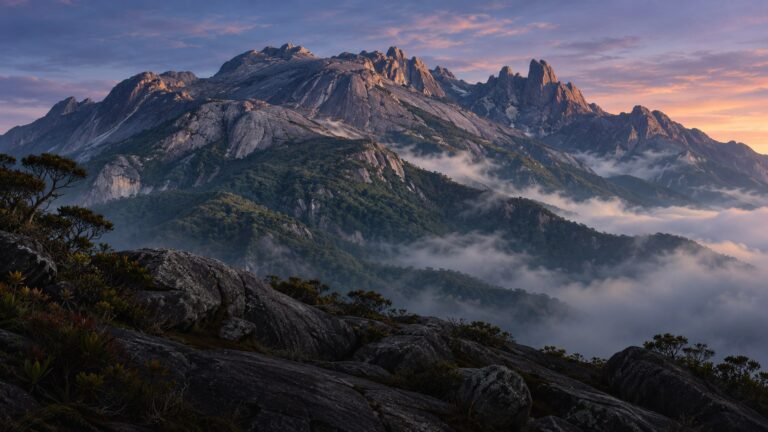
AI-generated editorial illustration combining two separate landscapes; not a photograph or a geographic view.
Choose Peninsular Malaysia first if your ideal trip combines cities, food, heritage streets and manageable overland journeys. Choose Malaysian Borneo first if rainforest and wildlife are the reason for going. You do not need to visit both halves to make a first Malaysia trip worthwhile.
The useful question is what you would most regret missing. A journey built around George Town and Kuala Lumpur needs a different rhythm from one built around a river lodge or Mulu’s caves. Start with that priority, then give it enough nights.
Some booking links in this guide are affiliate links. Taylor’s Trailblazing Travels may earn a commission if you book through them.
Food and heritage
Start with the Peninsula if city days and a straightforward overland route lead your wish list.
Wildlife first
Give Sabah its own share of the holiday instead of treating it as a hurried add-on.
Caves and Kuching
Consider Sarawak if a city base and a distinct Mulu stay sound more appealing than another beach stop.
Both halves
Protect time for the flight between them and choose one Borneo state for the first visit.
Peninsular Malaysia or Malaysian Borneo: what changes?
Peninsular Malaysia is the western part of the country; Malaysian Borneo comprises Sabah and Sarawak in the east. Travelling between them involves a separate journey, and visitors must carry their passport for East Malaysia’s immigration checks even when the flight is domestic.[9]
| Your main priority | Peninsula | Malaysian Borneo |
|---|---|---|
| Historic streets and urban exploring | Melaka and George Town offer UNESCO-listed trading-city heritage.[1] Build a route around the places whose history interests you. | Start from Kuching or Kota Kinabalu, then decide whether the next stop earns its transfer. Borneo need not mean a different lodge every night. |
| A holiday without several internal flights | The ETS corridor connects useful western Peninsula stops, including Kuala Lumpur, Ipoh and Butterworth.[2] | Concentrate on one gateway and its surrounding region. An ambitious multi-state route creates more transport decisions. |
| River wildlife | Do not choose a city-heavy itinerary and expect it to deliver the same experience as a wildlife-focused stay. | The Lower Kinabatangan in Sabah offers river-based wildlife watching.[3] Allocate time to the river itself, not just the transfer. |
| Caves and forest visits | Choose a specific nature stop alongside the city route; assess its access separately. | Sarawak’s Mulu has show caves and more demanding treks.[5] Decide which activity level you actually want. |
| A relaxed first visit | A small number of well-connected bases is a strong starting point. | A focused Kuching stay or a carefully arranged Sabah wildlife route can also work. Complexity comes from the itinerary, not simply the word “Borneo”. |
A Peninsula route is not automatically superficial, and a Borneo route is not automatically remote. The decisive difference is how much of the holiday depends on organised transfers, fixed activity departures or reaching a particular landscape.

Count complete days before adding another stop
Write down the nights you will actually sleep in Malaysia, excluding overnight flights. Then count separate hotel stays, including a return stay in the same city. A useful first check is:
Full days between arrival and departure dates = total nights − number of separate stays.
This is a simple calendar model, not a forecast of lost sightseeing time. Travel days may still contain a useful morning or evening. It shows how repeated check-ins reduce the number of days on which you can wake up, explore and return to the same room.
| Trip shape | Nights per stay | Full days within stays | Moves between stays |
|---|---|---|---|
| Three stays | 3 + 3 + 4 | 10 − 3 = 7 | 2 |
| Five stays | 2 + 2 + 2 + 2 + 2 | 10 − 5 = 5 | 4 |
The five-stop version gives up two complete base days before accounting for the length of any journey. That may be worth it for a special wildlife stay. It is less convincing when the extra stop merely offers another hotel and a rushed evening.
For seven nights, choose a compact Peninsula pairing or one Borneo region. Around ten nights permits a more varied route within either half. At roughly fourteen nights, splitting the holiday becomes easier to justify, provided the Borneo portion has a clear purpose. Families, travellers who need recovery time and anyone reliant on accessible transport should reduce moves further.
Use the Trip Itinerary Planner to organise your stops and dates. Enter each move as its own part of the plan; the organiser does not verify flight schedules, connections or availability.

If Borneo wins, choose Sabah or Sarawak next
Sabah for a wildlife-led trip
For a first wildlife itinerary, distinguish Sepilok from the Kinabatangan. Sepilok is a rehabilitation centre near Sandakan, with viewing opportunities around its nursery and feeding areas. Orangutans may not appear at feeding time when they find food in the forest. A visit is not a guaranteed sighting.[4]
The Kinabatangan is a different experience: guided river outings offer opportunities to observe animals in their habitat.[3] Giving the river two or three nights creates several opportunities to go out, whereas a single visit places more weight on one outing. That is an itinerary preference, not a promise of seeing particular species.
If wildlife is the main reason for travelling, start with the lodge’s actual transfer and activity arrangements. Fit city nights around that block. Do not add a distant beach purely to make the trip look balanced.
Sarawak for Kuching plus a deliberate nature stay
Kuching can be the main base rather than a one-night transit point. Nearby Semenggoh provides a chance to observe semi-wild orangutans; Sarawak Forestry distinguishes its current conservation and research role from the rehabilitation work now undertaken at Matang.[6]
Mulu deserves a separate stay. Its show caves and demanding routes such as the Pinnacles are different undertakings; a short cave visit does not imply suitability for a strenuous trek.[5] Check the flights and activity arrangements before committing to surrounding hotels. For services previously sold through MASwings, Sarawak’s transport ministry directs travel from 14 January 2026 to AirBorneo’s booking website.[7]
Choose Sabah if the river wildlife block leads your wish list. Choose Sarawak if Kuching and a Mulu stay are the combination you want. Both states offer more than these examples; the purpose here is to build a clear first route.
Back to top ↑Three route shapes to adapt
These are original night allocations, not pre-booked itineraries. They assume that the transport and accommodation you choose are available. Check arrival and departure airports before adopting them.
| Route | Night allocation | What it protects | Check before booking |
|---|---|---|---|
| Ten nights on the Peninsula | Kuala Lumpur 3; Ipoh 2; George Town 5. | A coherent western corridor and unhurried time in Penang. | Onward travel from Penang, or a separate return to your international departure airport. |
| Ten nights focused on Sabah | Kota Kinabalu 3; Sepilok area 2; Kinabatangan 3; Kota Kinabalu 2. | A substantial wildlife block and a return buffer before leaving. | Flights between Kota Kinabalu and Sandakan, plus lodge pick-up and drop-off arrangements. |
| Fourteen nights across both halves | Kuala Lumpur 3; George Town 3; Kuching 4; Mulu 3; departure gateway 1. | Six Peninsula nights and a focused Sarawak portion. | Connections into Kuching, Mulu flights and a realistic final gateway. Add buffer nights if separate tickets or limited services need them. |
The five-night Penang stay is intentionally generous. Shorten it if another stop matters more, but account for the extra move. In the combined route, one gateway night is an example, not a guarantee that a disrupted flight can be absorbed. A higher-stakes onward ticket may justify more.
Check the Peninsula leg before fixing hotel dates
Compare Kuala Lumpur–Penang transport on 12Go, then compare the relevant operator’s own timetable and terms. The route search includes different modes and terminals; it is not a single through-service to your hotel.
Let your dates influence the route
Check the season for your anchor destination before committing to the route. METMalaysia explains that the northeast monsoon can bring heavy rain and rough seas to the Peninsula’s east coast and parts of Borneo.[8]
Apply that information to your essential activity. If a beach or boat journey is the centrepiece, research that coast before choosing the rest of the route. If cities lead the trip, build indoor alternatives and flexible walking time. For a forest stay, ask the operator what happens when rain affects access or activities.
Do not assume Borneo is a dry alternative whenever the Peninsula is wet. Choose the specific destination first, then examine its seasonal pattern and current conditions. A forecast and an operator’s cancellation decision matter more for a particular boat departure than a broad monthly label.
Back to top ↑Compare complete trips rather than headline hotel prices
A lower room rate does not establish that one region will be cheaper. Build two quotes using the same number of nights and the same comfort standard. Include:
- Every flight and baggage allowance, including any return to your international gateway.
- Transfers between airports, stations, lodges and hotels.
- Meals, guiding and activities included in a wildlife or nature package.
- Entry charges, local transport and any extra night needed to protect a connection.
- Cancellation terms: a cheaper non-refundable plan carries a different commitment.
For the Sabah example, request the total lodge package price and its exact pick-up point before comparing it with a city hotel. For the Sarawak example, price Mulu transport and accommodation before deciding how much remains for Kuching. These are budgeting methods; no live prices are quoted here.
Compare a city base consistently
For a Kuching-led route, compare Kuching stays on Agoda with Kuching stays on Booking.com. Both links open city searches. Use the same dates, occupancy, room type and cancellation terms, and check the map against your planned outings.
Which half should come first?
Let the least flexible part of the trip set the order. A lodge departure, limited flight connection or specific activity booking may matter more than starting with the city. Compare the complete sequence in both directions before buying separate tickets.
Starting on the Peninsula is sensible if you want an easy opening city stay before committing to more organised travel. Starting in Borneo can be sensible when it secures the nature block you care about, leaving flexible city time afterwards. Neither order is universally better.
Two route checks for UK visitors
Carry your passport for travel into East Malaysia and its immigration checks.[9] As checked on 6 November 2026, FCDO advises against all but essential travel to eastern Sabah’s offshore islands and dive sites from Sandakan to Tawau, including Lankayan; that warning does not apply to mainland Sabah.[10] Read the current advice before adding any offshore stay.
Also ask what happens if an inbound flight misses the first lodge pick-up or a return boat is cancelled. A sensible answer may be an extra gateway night, a different operator connection or one fewer destination. Solve that before choosing the cheapest fare.
Back to top ↑Questions to settle before booking
Is Borneo too ambitious for a first Malaysia visit?
No. A focused itinerary with clear transfers can be more manageable than a crowded Peninsula circuit. The problem is trying to cover widely separated highlights without giving the journeys space.
Should a two-week trip include both Sabah and Sarawak?
It can, if Borneo is the whole purpose and the route is carefully planned. If the same holiday also includes a meaningful Peninsula stay, choose one state first unless you actively enjoy a faster pace. Fourteen nights is not fourteen interchangeable sightseeing days.
Can a single orangutan visit replace several wildlife nights?
It can suit someone who wants one focused visit, but it answers a different wish. A rehabilitation-centre visit and several guided river outings have different settings and rhythms. Neither guarantees the animals you hope to see.[3][4]
What is the strongest first-trip decision?
Pick the experience that would justify the journey even if the rest of the wish list disappeared. Build a Peninsula route around city and heritage time, a Sabah route around its wildlife block, or a Sarawak route around Kuching and your chosen nature stay. Add the other half only when the remaining nights can support it comfortably.
Continue with the Malaysia planning hub and the Malaysia transport hub when you are ready to check each leg.
Back to top ↑Sources and research notes
Sources reviewed on 6 November 2026. Night allocations, the pacing calculation and recommendations are original editorial planning judgements. Climate patterns are not forecasts; check current advice and operator arrangements before booking.
- UNESCO: Melaka and George Town, Historic Cities of the Straits of Malacca — heritage context.
- KTMB: ETS timetable effective 1 June 2026 — western Peninsula rail connections.
- Sabah Tourism Board: Kinabatangan Wildlife Sanctuary — river-based wildlife opportunities.
- Sabah Tourism Board: Sepilok Orang Utan Rehabilitation Centre — rehabilitation, visiting context and uncertain sightings.
- Sarawak Tourism Board: The Best of Mulu National Park — show caves and trekking options; its historic flight timetable is not used.
- Sarawak Forestry Corporation: Semenggoh Wildlife Centre — current conservation role and semi-wild orangutans.
- Ministry of Transport Sarawak: AirBorneo Booking Website Up — booking transition for travel from 14 January 2026.
- METMalaysia: Weather Phenomena — northeast monsoon rain and sea conditions.
- FCDO: Malaysia entry requirements — East Malaysia passport and immigration requirements.
- FCDO: Malaysia warnings and insurance — eastern Sabah offshore advisory.
Illustrations in this article were created for Taylor’s Trailblazing Travels. Third-party photographs, where used, are credited beside the image or in the source list.