Best Time to Visit Malaysia: Planning Around Two Coasts and Borneo
Pick the coast and experience first, then make the calendar work for your route.
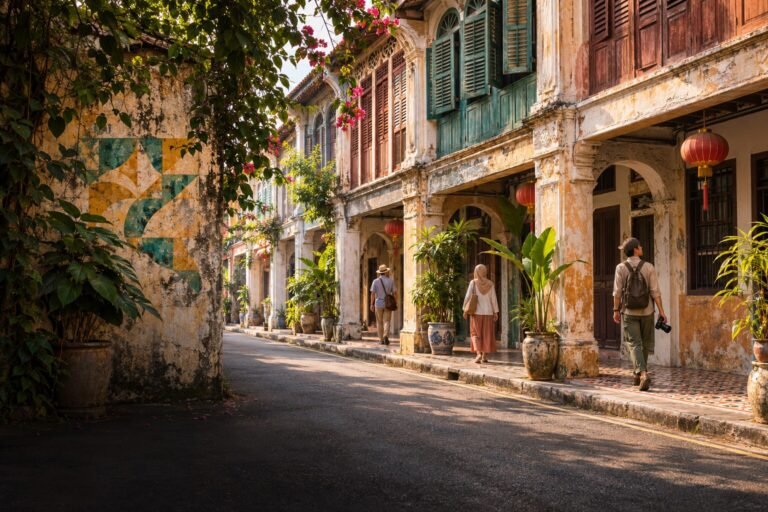
AI-generated editorial illustration of changing tropical weather; not a forecast or a location photograph.
The best time to visit Malaysia depends on which part of the trip matters most. A beach holiday, a city-and-food break and a rainforest journey need different calendars. Choose the coast or activity first, then build the rest of the route around it.
Quick answer
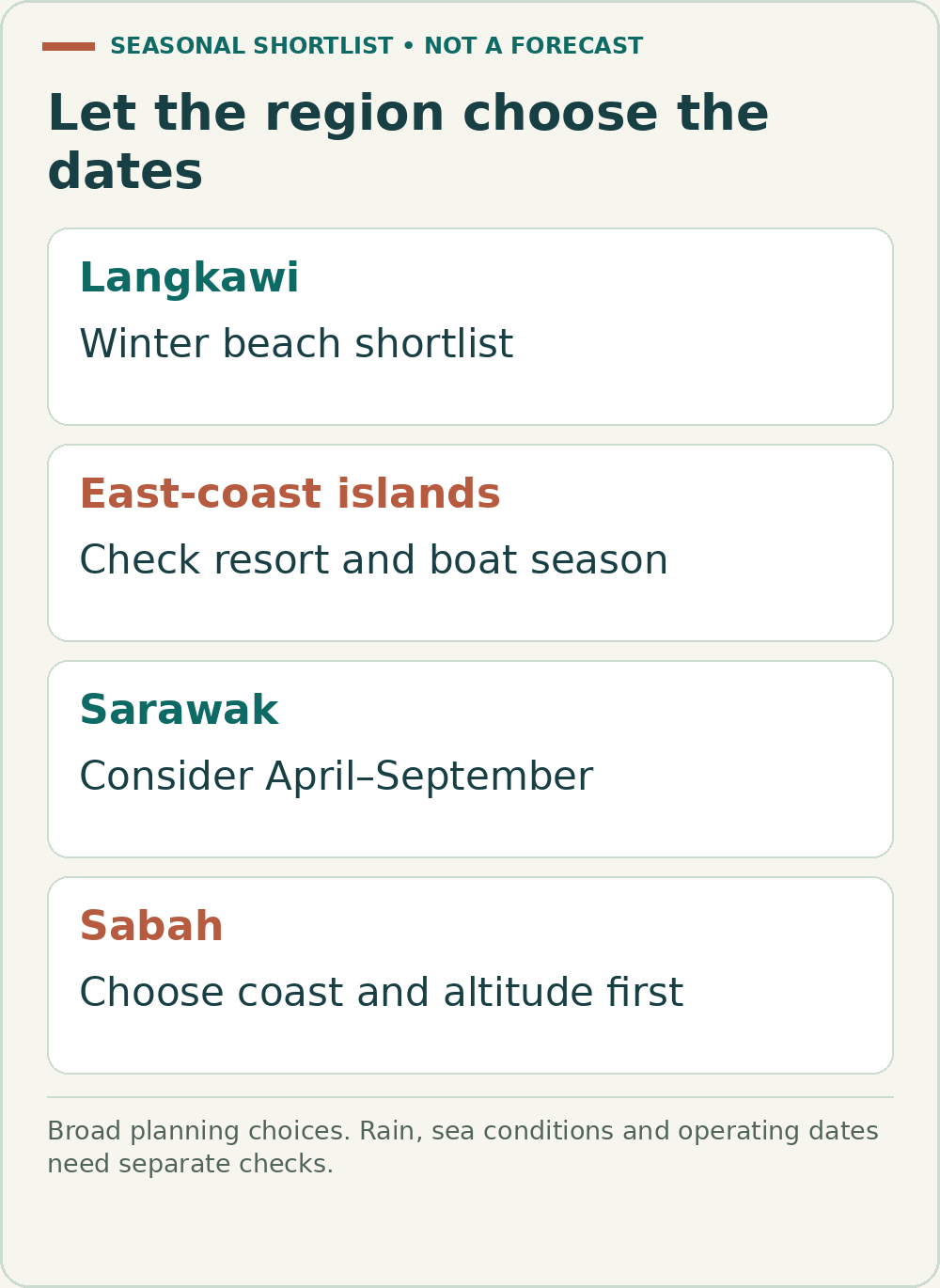
For a first shortlist, consider January–March for Langkawi, June–July for the peninsula’s east-coast islands, and April–September for a Sarawak trip. These are planning starting points drawn from regional climate guidance, not promises of sunshine. For Sabah, choose the actual coast, forest area or mountain before choosing a month. [1] [2] [3]
If your dates are fixed, change the region before adding extra flights in pursuit of a supposedly perfect Malaysian season.
Some links in this guide are affiliate links. Taylor’s Trailblazing Travels may earn a commission if you book through them, at no extra cost to you.
Beach first
Let the beach location set the calendar; fit city nights around it.
Forest first
Choose the actual park and activity, with room to rearrange outings.
Dates fixed
Keep the region flexible and compare a second workable route.
Boat required
Check operation and cancellation terms before paying for the room.
Best time to visit Malaysia by region
Use this table to narrow the search, then check your exact destination. The last column is editorial planning advice; the seasonal observations come from the sources shown. The Malaysia planning hub helps place those regions within a wider trip.
| Region | Seasonal evidence | How to use it |
|---|---|---|
| Langkawi | Tourism Malaysia describes November–March as its dry season. [1] | Shortlist January–March for a beach-led holiday. Compare dates and retain a wet-weather alternative. |
| Peninsular east coast | Most districts are driest in June–July and wettest in November–January. [2] | For Perhentian, Redang or Tioman, confirm both accommodation and the boat service; a climate window is insufficient by itself. |
| Kuala Lumpur, Penang and other western stops | Many mainland areas have wetter spells around April–May and October–November; local patterns differ. [2] | Build each day with an outdoor priority and an indoor alternative. Food, museums and neighbourhoods need less rigid scheduling than a boat excursion. |
| Sarawak | The Sarawak Tourism Board gives April–September as the broad drier period. [3] | Use it to shortlist dates for Kuching and wider exploration, then ask each park or operator about its own access conditions. |
| Sabah | Rainfall minima vary: February on the north-west coast, April on the north-east coast; southern Sabah is slightly drier in February–April. [2] | Check each stop separately. Do not transfer one coast’s calendar to a mountain ascent or a forest lodge. |
How the year changes
MetMalaysia places the north-east monsoon broadly in November–March and the south-west monsoon in late May–September. The former particularly affects the peninsula’s east coast, western Sarawak and eastern Sabah. The south-west monsoon is relatively drier across much of the country, with Sabah an important exception. Thunderstorms become more frequent during the April–May and October–November transition periods. [4]
The following is a calendar for making decisions, rather than a countrywide good-weather rating. Each period tells you what to investigate next.
| Months | Start your research here | Resolve before booking |
|---|---|---|
| January–February | A Langkawi beach stay, with mainland city nights. | Holiday dates, room terms and whether any proposed east-coast island stay operates. |
| March–April | Compare a west-coast plan with the actual reopening dates of east-coast resorts. | Transfer schedules at the edges of a resort’s operating season. |
| May–June | Compare east-coast island time and a Sarawak-focused trip. | Which experience is essential, and whether your onward travel allows changes. |
| July–August | Keep the shortlist regional: beach, Sarawak or a specific Sabah route. | Actual room and activity availability; avoid treating all Borneo stops alike. |
| September–October | A route with adaptable sightseeing and clear boat-cancellation arrangements. | Late-season resort operation and the cost of changing the itinerary. |
| November–December | Compare Langkawi and mainland options with a deliberately flexible programme. | Local warnings, east-coast closures and year-end travel dates. |
Do not move a trip by a single week expecting the weather to change neatly with the calendar. At a season’s edge, the resort’s written operating dates and your booking flexibility are more useful than a precise-looking colour on a generic monthly chart.
Back to top ↑Check the island’s operating season as well as the weather
Laguna Redang’s own FAQ describes a November–February period when many east-coast beach resorts close, with typical reopening in March. That is a reason to contact the property, not evidence that every island business shares identical dates. [5]
For an island stay, ask four questions before making the booking:
- Is the property open for every night requested, and are its restaurant and advertised activities operating?
- Which jetty and boat departure connect with the room booking?
- What happens to the room payment if the boat cannot run?
- Where will you sleep if the crossing is delayed in either direction?
A refundable room can still sit inside an inflexible journey if the flight or transfer is non-refundable. Read the terms for the whole chain. As a planning preference, keep the final night on the mainland before a costly onward flight when the preceding stay depends on a boat; the right buffer depends on the route and tickets.
Room availability does not confirm sea conditions
MetMalaysia’s marine-warning criteria distinguish risks to small craft, recreational activities and ferry services. Check current warnings and follow the operator’s cancellation decision, even during a generally favourable month. [8]
Give Sabah, Sarawak and mountains separate decisions
Sabah’s government describes rainfall as a year-round feature. A useful plan therefore allows for wet conditions even after you have chosen a sensible seasonal window. [6] For a forest visit, ask the lodge which outings can move between days, which need advance reservations and what replaces an excursion that cannot operate.
Think in terms of the experience you can repeat. A three-night base with several chances for a guided outing gives you more scheduling options than one night followed by a fixed flight. It does not guarantee sightings or eliminate weather disruption. Likewise, an indoor alternative is useful only if it is somewhere you would actually enjoy spending time.
Mount Kinabalu needs its own assessment. Sabah Parks requires a registered mountain guide, and a general coastal forecast cannot answer whether a specific climb should proceed. Use the park and guide’s current instructions and prepare for the demands of the booked ascent. [7]
Seasonal suitability also leaves travel advice unchanged. The FCDO currently advises against all but essential travel to eastern Sabah’s offshore islands and dive sites between Sandakan and Tawau, including Lankayan; that particular restriction excludes mainland Sabah. Check the current advice before planning a sea excursion. [12]
Back to top ↑Choose dates around the part of the holiday you would miss most
Use this four-step method when several regions look attractive. It is an editorial decision framework, not a forecast model or a numerical weather score.
- Name one anchor experience: five beach nights, a particular forest stay, a mountain ascent or a food-and-city journey.
- Find the realistic window for that experience, including operator dates and any relevant travel advice.
- Fit the more adaptable stops around it. Avoid adding a remote stop merely to fill a gap on the map.
- Keep one changeable day near the anchor activity where your leave allowance permits. Decide what you would do if the main outing cannot happen.
Two travellers with the same seven nights can make different choices
Suppose one couple wants five nights primarily for swimming and beach time, plus two city nights. Their coast should drive the date choice; a cheaper flight in a less suitable operating window would undermine the main reason for going. Another couple wants five nights of museums, neighbourhoods and food, with two nights by the sea. Their city plans and the practicalities of the short beach extension deserve more weight.
These are planning examples, not complete itineraries. Both allocations total seven nights, but neither establishes that a particular transfer works. Once the month and region are chosen, put the actual travel days into the Trip Itinerary Planner as a manual organiser and check transport separately.
When your dates cannot move
Make two plans using the same dates and approximate budget. For each, write down the experience you most want, its operating requirements, and an alternative at the same base. Prefer the plan whose alternative still feels like a worthwhile holiday. This is a more useful comparison than counting how many destinations can fit between your flights.
Back to top ↑Compare the actual dates, costs and cancellation terms
Malaysia’s official holiday calendar includes federal and state dates. Check the relevant year and states before choosing travel days; do not reuse a festival date from an older itinerary. [11] Public holidays and school breaks are prompts to compare availability, not proof that every hotel will cost more.
Price the whole trip on two or three possible date sets: international flights, domestic travel, accommodation and the activities that matter. Keep room type, baggage and cancellation terms comparable. A lower room rate loses its appeal if it requires a dearer flight or removes the flexibility you need.
Compare accommodation for your shortlisted dates
Use Agoda’s Langkawi accommodation search or Kuching accommodation search to compare date sets and individual room terms. For a second comparison, check Kuching stays on Booking.com using the same dates and occupancy. These are city searches; check the location, total price and cancellation deadline for the offer you choose.
Move from climate planning to local forecasts
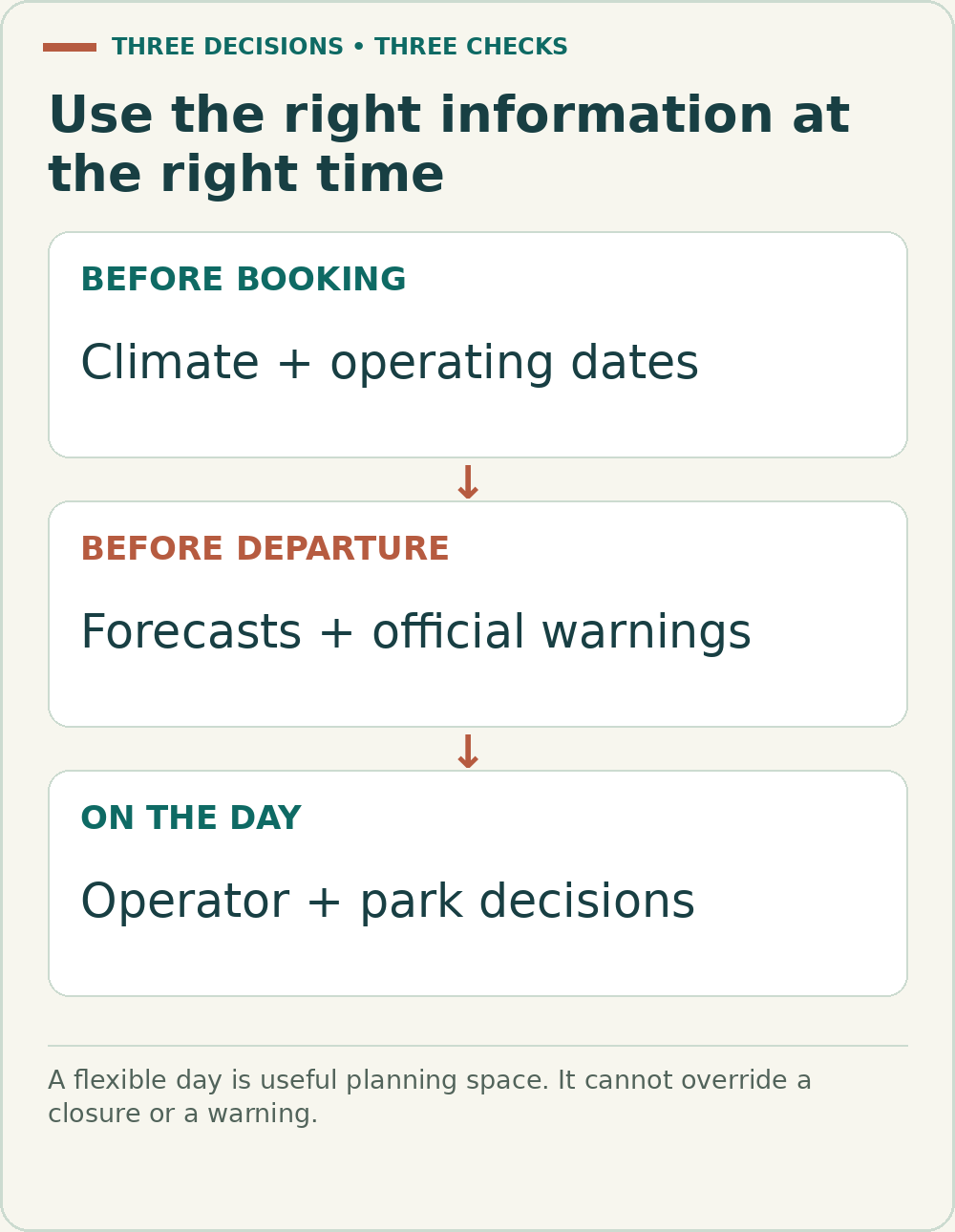
As departure approaches, use MetMalaysia’s destination forecasts and current warnings rather than treating this seasonal guide as a live forecast. Select the actual destination: a forecast for an arrival city may be of little use for a later forest or island stay. [9]
Rain is only one factor. FCDO guidance identifies regional haze as a potential travel and health issue, particularly during June–October, and links to Malaysia’s air-quality reporting. Check conditions near departure if you have respiratory concerns. [10]
For the day itself, leave exposed outings flexible when warnings apply. Keep a light rain layer, a way to protect your phone and documents, and a dry change of clothing accessible. Mountain equipment should follow the specific operator’s list. A bag packed for a beach break does not automatically suit a booked ascent.
The Malaysia When to Go hub is the place to return for the site’s seasonal coverage as you refine the route.
Questions before booking
Is there one month that works for the whole country?
No month removes all the trade-offs. Start with the least adaptable experience, then decide whether the rest of the journey still works. Adding both coasts and Borneo can create more compromises than it solves.
Should a wet forecast make me cancel?
Read the actual warning and speak to the operator about the planned activity. A shower during city sightseeing and hazardous conditions for a boat crossing require different decisions. Follow official restrictions and cancellation instructions.
Is the cheapest month automatically the best value?
Only if the trip still delivers what you want. Compare total costs and usable experiences, including the cost of a changed transfer or an extra overnight stay. No live fares or room rates have been assumed in this guide.
Make the final choice
Choose the region that suits your dates and your main activity, confirm it is operating, then reserve a route with a useful alternative. A well-chosen base and a little room to rearrange can matter more than a perfectly tidy month-by-month chart.
Sources and review notes
Sources checked on 6 November 2026. Climate windows are long-term guidance; operating dates, forecasts, warnings and individual booking terms require a fresh check. The route-selection method and seven-night examples are editorial planning analysis.
- Tourism Malaysia — Langkawi destination guide: climate.
- MetMalaysia — Malaysia’s climate and regional rainfall patterns.
- Sarawak Tourism Board — visitor FAQ.
- MetMalaysia — monsoons and other weather phenomena.
- Laguna Redang — resort FAQ and seasonal operating context.
- Sabah State Government — introduction and climate.
- Sabah Parks — Mount Kinabalu.
- MetMalaysia — strong-wind and rough-sea warning criteria.
- MetMalaysia — destination weather forecasts.
- FCDO — Malaysia health advice, including haze.
- Malaysian Cabinet Division — official public-holiday calendars.
- FCDO — Malaysia warnings and insurance.
Illustrations in this article were created for Taylor’s Trailblazing Travels. Third-party photographs, where used, are credited beside the image or in the source list.