

Silk Island from Phnom Penh: A Relaxed Half-Day Escape
One weaving visit, an easy island loop and a return plan that leaves room for the river.
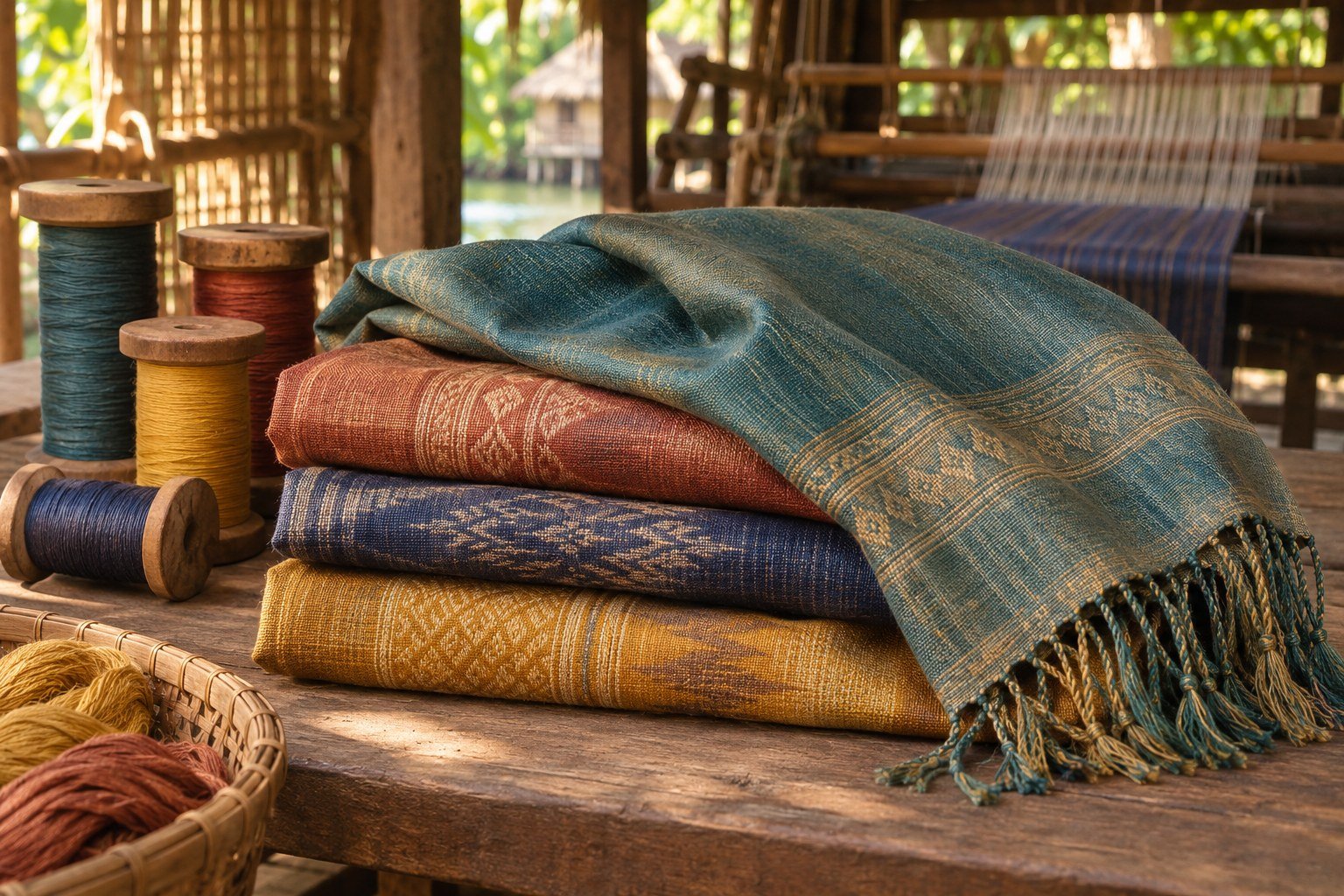
AI-generated illustration of an island weaving scene; it does not depict a particular artisan or workshop.
A Silk Island day trip is a good change of pace when you would rather watch someone work a loom than fit another large attraction into your Phnom Penh stay. Koh Dach is associated with weaving in and around raised homes, and the craft gives the outing a clear purpose.[1]
The most enjoyable half-day is a small one: a workshop that welcomes visitors, a short stretch of village lanes and a drink before returning. Decide those stops before setting off. Otherwise a simple outing can become a string of shopping stops, extra crossings and hurried explanations.
This guide contains affiliate links. If you book or buy through them, Taylor’s Trailblazing Travels may receive a commission at no extra cost to you.
Interest in weaving and a slower outing beyond the city.
One workshop, one short local loop and a break.
“Silk Island” programmes do not all use the same island or landing.
Your driver, ferry route and final drop-off belong in the same plan.
Is Silk Island worth your half-day?
Go if you are curious about how cloth is made, enjoy short local journeys and are happy with modest stops rather than a major monument. Grasshopper Adventures describes weaving beneath raised houses on Koh Dach; that is a more useful expectation than imagining a large museum with fixed demonstrations every few minutes.[1]
It is less suitable when you need a guaranteed return for a flight, want a fully sheltered outing, or mainly want to buy a scarf quickly. A shop in Phnom Penh may meet the last need with less travelling. There is also no need to move hotels for this trip.
Swipe within the table to see all columns.
| Your priority | Best approach | What to confirm |
|---|---|---|
| Understand the weaving | A guided visit with one substantial workshop stop | Who will explain the process and whether a demonstration is arranged |
| Gentle countryside time | Driver, short walk and a shaded break | Walking distance, seating and the option to shorten the route |
| An active morning | A guided cycling programme | Distance, surfaces, bike fit, helmet and help if you cannot continue |
| A quick souvenir purchase | Consider shopping in the city instead | Maker, material and price, wherever you buy |
Confirm which island and crossing you are booking
Koh Dach and neighbouring Koh Oknha Tei are different islands. The same broad “Silk Island” label can hide different routes, so ask for the workshop name and map pin as well as the tour title. The Koh Dach road approach described by the local destination guide uses Chroy Changvar Bridge, National Road 6 and a vehicle ferry; it does not mean every cruise or island tour starts at that landing.[2]
For an independent outing, have the driver confirm the current mainland landing, the crossing suitable for your vehicle and the onward workshop visit. A pin for the island is not enough when the visit you want is elsewhere. If booking a river cruise, ask whether it includes a shore visit and the transport from the landing to the weaving stop.
- Agree the pickup address and whether the driver stays with you.
- Ask which ferries are used outbound and on the return.
- Confirm passenger and vehicle charges, waiting and any extra drop-off fee.
- Check the workshop is expecting visitors on your date.
- Set a latest departure from the island and a fallback if the crossing changes.
Ferry waiting and boarding are part of the outing. Keep small local cash available, and confirm current fares locally rather than relying on an old quoted price.

A five-hour Silk Island day-trip plan
Start with a manageable morning rather than a long list of stops. Siem Reaper currently advertises a roughly four-and-a-half-hour tuk-tuk outing, which gives a useful scale for the day.[3] The five-hour example below adds room to choose your own pace; the individual blocks are planning allowances, not a ferry timetable.
Swipe within the table to see all columns.
| Part of the morning | Allowance | Keep this purpose |
|---|---|---|
| Hotel to the island, including the crossing | 60 minutes | Reach the agreed workshop area without a separate shopping detour |
| Weaving visit | 60 minutes | Watch, ask questions and browse if interested |
| Short village loop | 45 minutes | Choose walking or a drive according to heat and surfaces |
| Shaded drink or snack | 30 minutes | Rest before the return |
| Return ferry and journey to the hotel | 75 minutes | Keep this time protected |
| Unallocated time | 30 minutes | Absorb waiting or a slower workshop visit |
That is 300 minutes altogether. An 08:00 start gives a 13:00 planning target, subject to the route and conditions. If your hotel transfer is longer, leave earlier or shorten the village loop. Do not recover lost time by rushing the weaving visit or asking the driver to hurry.
For a particularly relaxed day, keep lunch for your return to Phnom Penh. A long island lunch, multiple temples and a full cycling circuit can all be pleasant, but they belong in a longer outing.

Choose transport for the day you want
Driver or guided tuk-tuk
A driver is useful when you want someone to handle the crossings and wait while you visit. A guide adds value when you want questions about weaving translated and explained. These are different services, so ask which is included. An open-sided tuk-tuk also means accepting road exposure and limited protection from heavy rain.
One comparison is the half-day Silk Island tuk-tuk tour on GetYourGuide. Its current listing describes four to five hours, hotel transfers, a ferry crossing and a weaving workshop; the English guide depends on the selected option. Check your hotel and chosen package before paying.[6]
Alternatively, compare the Silk Island Tuk Tuk Tour on Viator. It lists four to five hours and a meeting point at G Mekong Hotel, so do not assume door-to-door hotel pickup. Confirm the arrangements and the full bill for your departure.[5]
Cycling
Look at distance before the word “easy”. Siem Reaper’s current cycling programme lists about 20–25 km and approximately five hours.[4] That is a morning of riding, not just a gentle pedal between two nearby shops. Ask about traffic at the start, unpaved sections, suitable bikes and what happens if someone wants to stop.
Car or independent ferry visit
A car may suit travellers who need cooling and rest between stops, but its usefulness depends on the crossing, access to the workshop and the walking still required. Confirm those details rather than assuming the vehicle removes every barrier. Independent travel gives more flexibility if you already have the right landing, a confirmed host and a return plan.
Back to top ↑Make the workshop visit worthwhile
Ask the host what they are making today and which parts of the work take place there. A useful explanation might cover the thread, preparing the loom, weaving the pattern and finishing the cloth. It need not be a complete silk-production demonstration from start to finish. Siem Reaper describes visits to silk houses and traditional weaving; what is happening on your date needs confirming.[3]
Let the artisan finish a movement before asking a question. Ask before touching a loom, thread or unfinished cloth, and agree a demonstration fee if one applies. A quiet workshop is a working place, not a performance that must begin when visitors arrive.
Five questions before buying
- Was this particular piece woven here, and by whom?
- What is the fibre: silk, cotton, a blend or something else?
- Which stages were done locally, and where did the thread come from?
- What are the dimensions and washing instructions?
- What is the agreed price, and is payment going to the maker or the shop?
These questions help you understand a purchase; a local shop is not automatic proof that every item was made on the island. Look at the cloth you are buying rather than assuming it is identical to the one being demonstrated. Ask for the fibre and care details in writing when they matter to you.
Buying something you want or paying the agreed visit fee is enough. You can enjoy the explanation and politely decline a purchase. Ask adults before photographing them or their workspace. Follow ChildSafe’s guidance by avoiding disruptive school visits, unsolicited photographs of children and gifts handed directly to begging children.[7]
Compare complete quotes, not headline prices
Ask for a total for your actual group and pickup address. Put independent and organised options on the same basis: the return journey, ferries, vehicle charges, guide, workshop entry or demonstration, waiting and taxes. Then add food and optional purchases separately.
For example, two tour places at £40 cost £80. A private quote of £60 is only £20 cheaper if it covers the same things you want. If a guide and crossings cost another £25, the private option totals £85. Actual quotes depend on your date and arrangements.
Swipe within the table to see all columns.
| Ask about | Why it changes the comparison |
|---|---|
| Per-person or per-vehicle price | A low vehicle price may exclude the guide and admissions |
| Workshop fee and buying pressure | A paid demonstration should be clear before arrival |
| Pickup, waiting and return | A transfer to the ferry is not a full round trip |
| Weather changes and cancellation | Postponement, refund and a substituted route are different outcomes |
Once you have a quote, add the outing to your travel budget. Enter costs in GBP; the calculator does not convert currencies. Use the whole-group extras field for a single shared charge, and avoid counting it again in daily transport or activities.
Back to top ↑Keep the ferry, weather and walking manageable
Choose the cooler part of the day if heat bothers you, carry drinking water and have a rain plan. Before boarding, look at the boat and available lifejackets and be ready to decline an unsuitable crossing. FCDO warns about overloaded or poorly maintained boats and difficult river conditions.[8] A promised departure is not a reason to ignore conditions on the day.
The river is part of the setting, not a necessary swimming stop. Do not build the half-day around bathing or an exposed beach. You can enjoy a riverside break without adding an activity that needs its own safety judgement.
For limited mobility, ask for current photographs of boarding points, steps at the workshop, toilet access and places to sit. The destination guide notes uneven lanes and boarding that varies with water levels; the Viator example above is listed as unsuitable for wheelchair access.[2][5] Arrange assistance directly and specify the movements you need to avoid.
Families should ask about suitable vehicle seating, child-size lifejackets and the amount of walking before booking. Choose one engaging workshop visit over a long sequence of stops, and keep enough time to return if a child is tired. If the ferry is disrupted, shorten or abandon the outing rather than improvising an unfamiliar return near dusk.

Leave room for a good conversation
The strongest reason to visit Silk Island is the chance to spend time with a craft, with the journey and village setting around it. Give that visit a proper hour, choose transport that suits your group and settle the return before leaving Phnom Penh.
Go with a clear workshop stop and a flexible afternoon. If the craft does not interest you, the weather is poor or your schedule is tight, keep the half-day in the city. A good outing does not need every available stop.
Back to top ↑Practical questions
Do you have to buy silk during a workshop visit?
No. Ask about any visit or demonstration charge beforehand, then buy only if you want the item. Treat the agreed fee and an optional purchase as separate decisions.
Can you fit Silk Island before an afternoon flight?
A flexible sightseeing afternoon is a better match. The plan depends on road journeys and crossings, so do not use the example return time as a flight connection guarantee. Choose a city outing when departure timing is tight.
Will every visit show silkworms as well as weaving?
Ask the chosen workshop what is available that day. A weaving visit does not automatically include every stage of silk production, and the current work may differ from a tour photograph.
Should you combine Silk Island with Oudong?
Keep them separate if your aim is a relaxed half-day. Adding another substantial journey and hill visit changes the purpose and pace of this plan; ask for a new full-day itinerary instead of tacking it on.
Sources and checks
- Grasshopper Adventures — Silk Island weaving context
Used for Koh Dach and weaving beneath raised houses, not its older border-temple advice. Checked 15 November 2026. - Visit Cambodia — Koh Dach island and access overview
Independent destination guide; island distinction, approach and variable access. Local ferry fares and timetables must be confirmed. Checked 15 November 2026. - Siem Reaper Travel — Explore Silk Island & Local Livelihoods
Operator describes a guided outing of approximately 4.5 hours; individual workshop arrangements require confirmation. Checked 15 November 2026. - Siem Reaper Travel — Cycle the Mekong Island
Operator advertises approximately 20–25 km and five hours; check the selected departure. Checked 15 November 2026. - Viator — Silk Island Tuk Tuk Tour
Current tour title, duration, meeting point and accessibility. Checked 15 November 2026. - GetYourGuide — Phnom Penh Half-Day Tour to Silk Island by Tuk Tuk
Four-to-five-hour listing and option-specific guide/inclusions; reconfirm for your date. Checked 15 November 2026. - ChildSafe — 7 Tips for Travelers
Children, photography, school disruption and direct giving. Checked 15 November 2026. - FCDO — Cambodia safety and security
Boat standards and river conditions. Read the current advice before travelling. Checked 15 November 2026.
Illustrations in this article were created for Taylor’s Trailblazing Travels. Third-party photographs, where used, are credited beside the image or in the source list.


