
Oudong from Phnom Penh: A Historical Day Trip Worth Considering
A former royal capital, a real stair climb and a day that benefits from a slower pace.
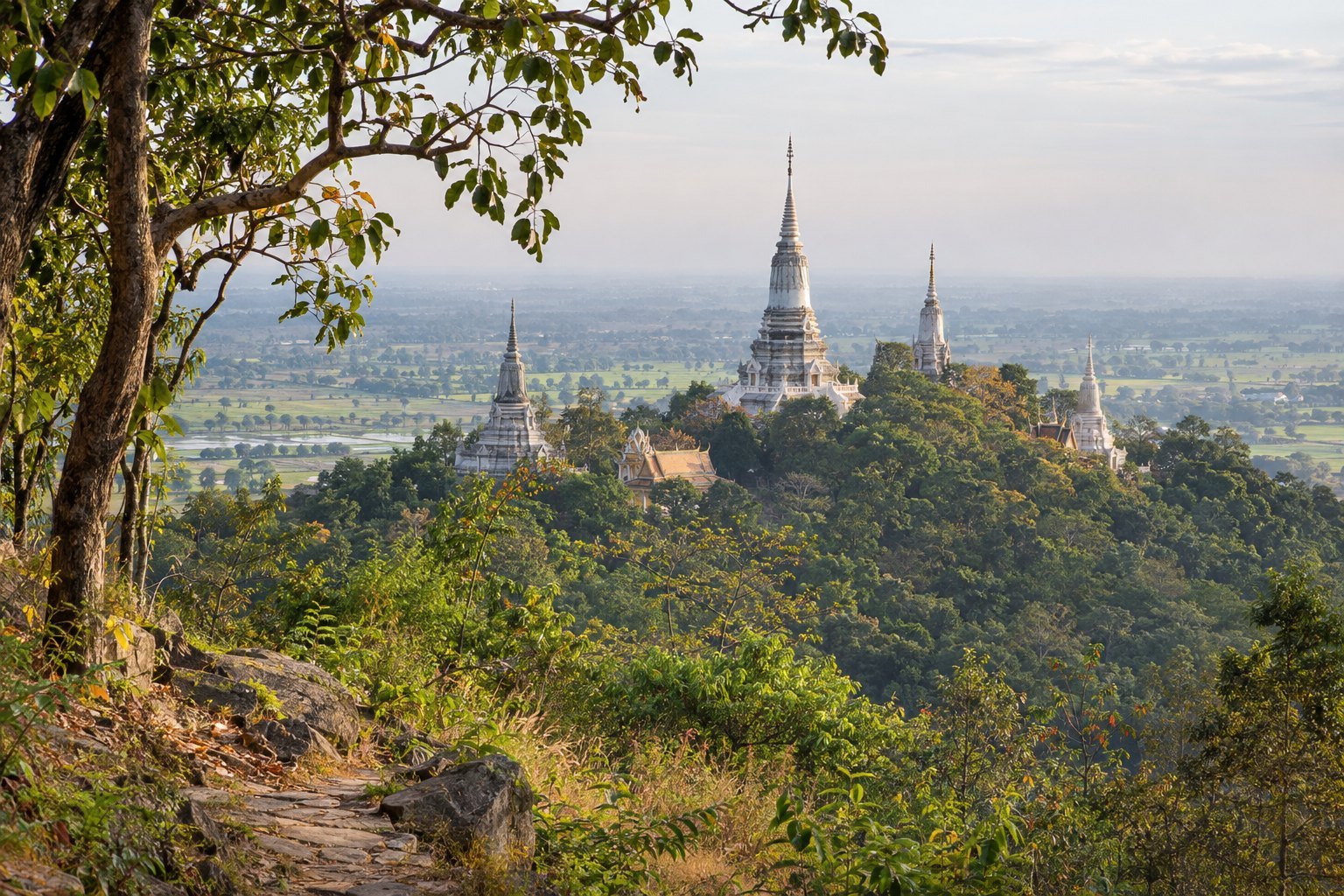
AI-generated illustration inspired by Oudong’s hilltop setting, not an exact architectural reconstruction.
An Oudong day trip from Phnom Penh is worth considering if you enjoy royal history, religious places and a countryside view earned on foot. The hill and its stupas make a meaningful change from the city, especially when a guide helps connect the monuments to Cambodia’s later royal history.[1]
It is less convincing as a compulsory extra on a short stay. Getting there takes time, and the hill visit involves a substantial climb. Make those two things part of the decision from the start, rather than discovering them after booking a “relaxing” countryside tour.
This guide contains affiliate links. If you book or buy through them, Taylor’s Trailblazing Travels may receive a commission at no extra cost to you.
Royal history, Buddhist monuments and views over the surrounding plain.
Hundreds of steps, followed by the walk back down.
Leave early and keep one optional stop rather than several.
Agree the vehicle, waiting time, guide and return pickup.
Who will get the most from an Oudong day trip?
Oudong suits travellers who want to understand a period of Cambodian history beyond Angkor. The former city and its sacred hill were important during the seventeenth to nineteenth centuries. What survives is a wider historic landscape, so arrive expecting stupas, shrines and traces of a former capital rather than a complete preserved palace.[1]
Swipe within the table to see all columns.
| Your priority | How well Oudong fits | Plan accordingly |
|---|---|---|
| Royal history and Buddhist architecture | Strong fit | Book a guide who will spend time at the monuments. |
| A countryside view and active morning | Good fit if you want the climb | Go early, allow breaks and keep the afternoon simple. |
| A gentle outing with very little walking | Limited fit for the standard hill route | Arrange specific ground-level visits before travelling. |
| Only one full day in Phnom Penh | Usually a lower priority | Choose the city sights that matter most before adding travel time. |
A useful test is whether you would still want to go if the view were hazy. If the answer is yes because the history and religious setting interest you, the outing has more to offer than a photograph from the summit.
Back to top ↑Build the day around the hill, not a long list of stops
A local private-transport operator allows about 1½ hours from Phnom Penh to Oudong. Your hotel location and traffic can change that considerably. A tour that adds Wat Phnom, a craft village and other temples is a different day from going directly to the hill.[3][4]
Swipe within the table to see all columns.
| Time | Plan | Why allow it? |
|---|---|---|
| 07:30–09:00 | Hotel pickup and road journey | Leave room for getting out of Phnom Penh. |
| 09:00–11:00 | Ascent, open monuments, views and descent | Two hours keeps the climb from becoming a race. |
| 11:00–11:45 | Lunch or a substantial rest break | Recover before deciding on anything else. |
| 11:45–12:15 | One nearby cultural stop, if open and wanted | Keep it optional; omit it if the hill takes longer. |
| 12:15–13:45 | Drive back to the hotel | Allow the same road time as the outward journey. |
| Until at least 14:15 | Leave the diary clear | A further 30 minutes for traffic or a slower visit. |
That is 6¾ hours in total: three hours on the road, two on the hill, 45 minutes for a break, 30 minutes for an optional stop and 30 minutes of contingency. A longer lunch or a slower climb can easily use the optional-stop time. The driver should know this in advance.
An early departure gives you more choice over the pace. It does not guarantee cool weather or empty paths. Before leaving, agree whether the return pickup is at the same entrance or a different descent point, and save that location on your phone.

Take the stair climb seriously
EXO Travel describes a route with 509 steps to the top and a different path down. Other itineraries round the figure to about 500. Allow for several hundred steps; the exact count depends on the route.[2]
Ask about the actual approach your driver or guide intends to use, the condition of the steps, available handrails and the descent. A vehicle reaching the foot of the hill does not tell you how much climbing remains. Likewise, a tour’s private status does not by itself make the route accessible.
Decide your turning point before you feel committed
Allow frequent pauses and keep enough energy for the descent. If the climb is becoming uncomfortable, turn back with your guide rather than continuing simply because others are ahead. Families should judge the day by the least comfortable walker, including how that person will manage the journey down.
Shoes that stay securely on your feet and have reliable grip are more useful than an outfit chosen only for photographs. Carry drinking water in a light bag and protect yourself from the sun. After rain, reassess the steps on arrival instead of assuming a pre-booked tour must follow its full route.

Royal stupas and a living religious landscape
Cambodia’s UNESCO submission describes royal stupas both on and at the foot of Phnom Oudong. The Ancient City of Ondong is on Cambodia’s UNESCO Tentative List.[1]
A good guide can help you distinguish a royal memorial, a worship space and the wider remains of the former city. That is a more rewarding focus than trying to memorise a long list of monument names. Ask which places are open, what you are looking at and where it is appropriate to enter.
Allow time to stop on the ridge and look across the surrounding plain. Then give the monuments the same attention: details of a stupa, the arrangement of a shrine and the way people use the place can be just as interesting as the panorama. Keep access routes clear when worshippers arrive.
Choose one nearby stop if you want it
Vipassana Dhura Buddhist Meditation Center appears in established operator itineraries and can provide a different setting after the hill. Its inclusion in a tour description is not permission to enter every building or photograph people at practice. Confirm visitor access with the guide or caretaker and accept a shorter visit when appropriate.[2]
Extra temples and craft stops are optional choices, not requirements for making the journey worthwhile. If you would prefer a long lunch and an early return, say so when arranging a private outing.
Choose transport for the whole outing
A return car with a waiting driver is the clearest option when you want a direct route and flexibility over breaks. Agree the full price and finishing time, and ask whether a separate guide is included. A driver who speaks English is not necessarily booked to guide the hill visit.
A tuk-tuk can suit travellers who enjoy a more open journey and accept the exposure to traffic, dust, heat or rain. It is not automatically the vehicle used on every low-cost tour. Ask for the precise vehicle, number of passengers and seating arrangement rather than relying on the word “transport”.
For a longer private day with more stops, compare the Oudong private tour on GetYourGuide. Its listing offers car or tuk-tuk options and an eight-hour-to-full-day duration. Check which stops you actually want before selecting the option.[4]
For a different format, check this guided Oudong outing on Viator. It advertises roughly six to seven hours, with a guide and shared transport. The provider says a departure with only two participants uses a tuk-tuk, so confirm that arrangement if you were expecting a car.[5]
Arrange the ride back before leaving Phnom Penh. An informal one-way drop-off gives you less control over the return, especially if you finish at a different stairway. Keep the driver’s contact details, hotel address and meeting-point photograph available offline.
Back to top ↑Compare the total price and keep a proper break
A driver-only quote and a guided day tour cover different things. Get the inclusions in writing, particularly vehicle, waiting time, guide, any site charges, parking, water and meals. Ask whether the amount is per vehicle, per person or for your whole group.
Swipe within the table to see all columns.
| Cost or condition | Question to ask |
|---|---|
| Return transport | Does the quote cover the hotel pickup, waiting and the complete return? |
| Guiding | Will someone explain the monuments and accompany the hill walk? |
| Site charges | Which entrances, parking charges or optional visits are included? |
| Food and drinks | Is lunch included, and can the stop accommodate our needs? |
| Changed plans | What happens if the hill route is closed or we decide against the climb? |
Ask about charges before you go and carry small cash for anything excluded from your tour. Keep voluntary donations separate from required fees. Published tour descriptions do not consistently explain which charges apply, so check what your own booking covers.
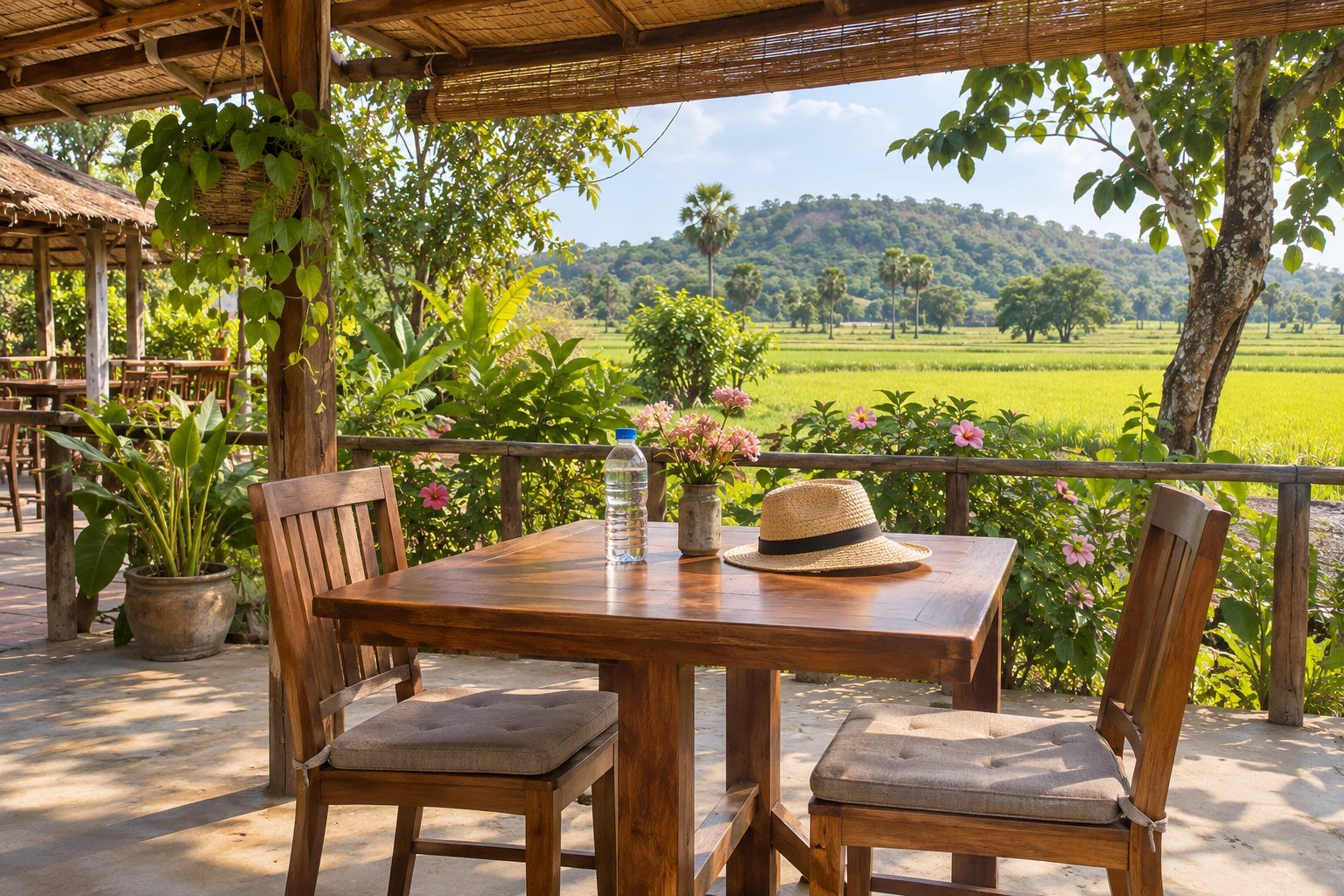
Plan a seated break after the descent instead of treating lunch as something to fit between attractions. Ask where the stop will be, whether it has shade and toilets, and whether you can choose a simpler meal or leave earlier. Add your actual transport and meal figures to the rest of the trip with the Travel Budget Calculator.
Visit respectfully and check access before travelling
Cover shoulders and knees at religious sites, and ask permission before photographing people, especially monks and other religious figures.[6]
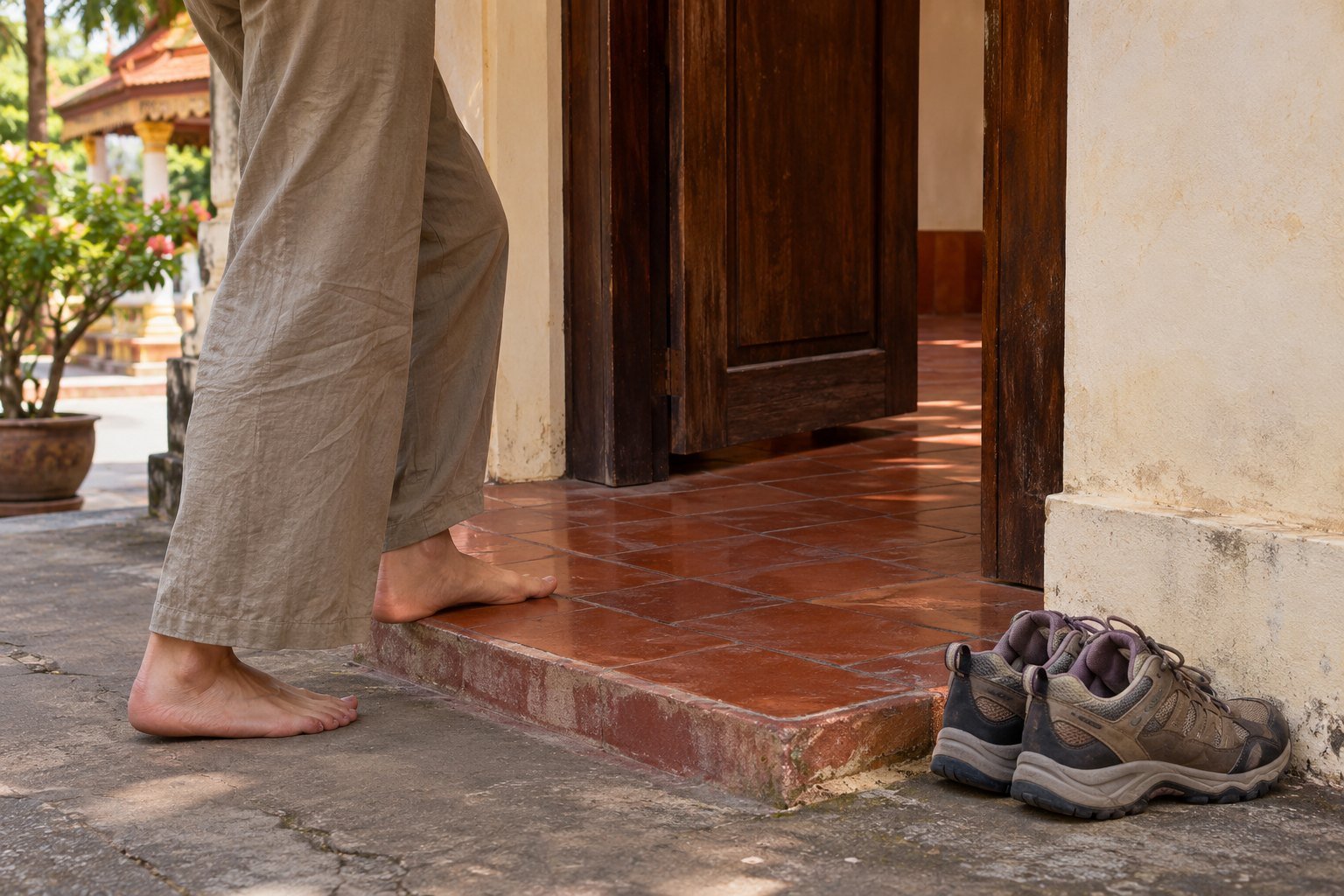
Follow local instructions about removing shoes, entering halls and approaching shrines. Keep voices low around worship and meditation. A ceremony can change where visitors may go; give it space rather than trying to continue a planned photo stop.
Ask the operator the day before whether any ceremonies, maintenance or local restrictions affect the hill or the optional centre. A published tour page is a useful starting point, but the person arranging the visit needs to confirm the current situation.
- Do not step onto monuments or disturb offerings for a better camera angle.
- Let people decline a photograph without having to explain.
- If a donation is invited, ask how to give it appropriately; avoid pressure to pay for access that was not agreed.
- Leave a closed room or restricted path out of the visit.
When Oudong deserves a place in your trip
Choose Oudong when you want an unhurried day of royal history and Buddhist heritage, with a substantial hill walk as part of the experience. Leave early, book the return properly and protect time for a rest after the descent.
If the stairs are the main worry, settle the alternative before you pay. If the history holds little interest and your Phnom Penh stay is short, keep the day for something you are more keen to see. Oudong is most rewarding when chosen for its own character rather than added because there is a blank square in the itinerary.
Back to top ↑Practical questions
Do I need to stay overnight in Oudong?
An overnight stay is unnecessary for the day plan here. Keeping your Phnom Penh accommodation avoids moving luggage for one outing. An overnight visit would be a separate choice, not a requirement for seeing the hill.
Is a guide essential?
Not for every traveller, but guiding adds value when royal history and religious context are your main reasons for visiting. Confirm that the person you book will accompany the hill visit, rather than providing only transport and a brief introduction.
Can I combine Oudong with Phnom Baset?
It is offered as a longer excursion,[7] but choose it only if you want another temple and hill visit. Ask for a complete time plan, including the extra walking, lunch and return. The simpler schedule in this guide does not include Phnom Baset.
What if the hill is too much on the day?
Use the fallback agreed with your operator: a shorter permitted visit, a specifically checked ground-level stop or an earlier return. Keep the driver involved so that choosing not to climb does not leave you without a comfortable place to wait or a ride back.
Sources and checks
- UNESCO — Ancient City of Ondong: Cambodian Tentative List submission
Historical landscape, royal stupas and Tentative List status; checked 15 November 2026. - EXO Travel — Oudong Mountain
Operator route includes the hill stairway, lunch and Vipassana Dhura; this is not an accessibility assessment. Checked 15 November 2026. - Phnom Penh Taxi Drivers — Oudong, silver village and Wat Vipassana tour
Travel-time and private-transport comparison; the website quote is not a confirmed booking. Checked 15 November 2026. - GetYourGuide — Oudong Mountain former-capital private day tour
Car and tuk-tuk options, route and duration; checked 15 November 2026. - Viator — Oudong Mountain full-day tour from Phnom Penh
Advertised 6–7-hour guided tour and the transport arrangement for a two-person departure; checked 15 November 2026. - FCDO — Cambodia: safety and security
Religious-site clothing and photography etiquette; checked 15 November 2026. - Viator — Oudong Mountain and Phnom Baset private tour
Confirms that the longer combined outing is offered; its itinerary is not the shorter suggested route in this guide. Checked 15 November 2026.
Illustrations in this article were created for Taylor’s Trailblazing Travels. Third-party photographs, where used, are credited beside the image or in the source list.


