Kampong Cham Travel Guide: Mekong Riverside and Quiet Detours
Make room for the river, a living temple and one well-chosen countryside outing.
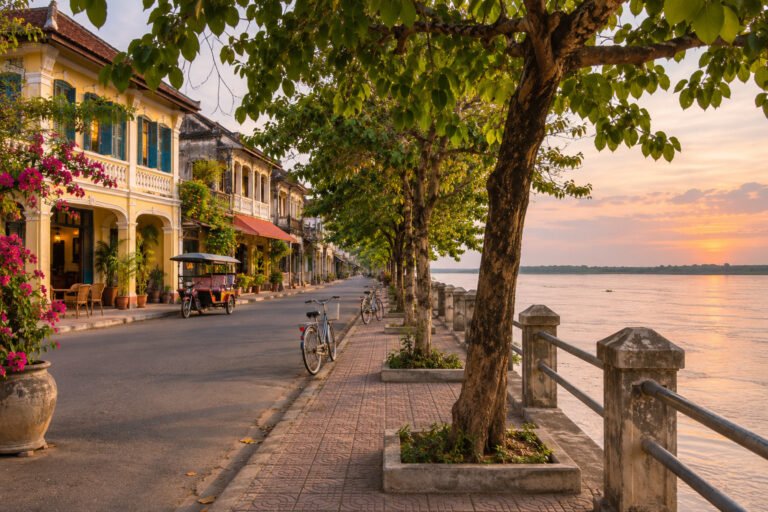
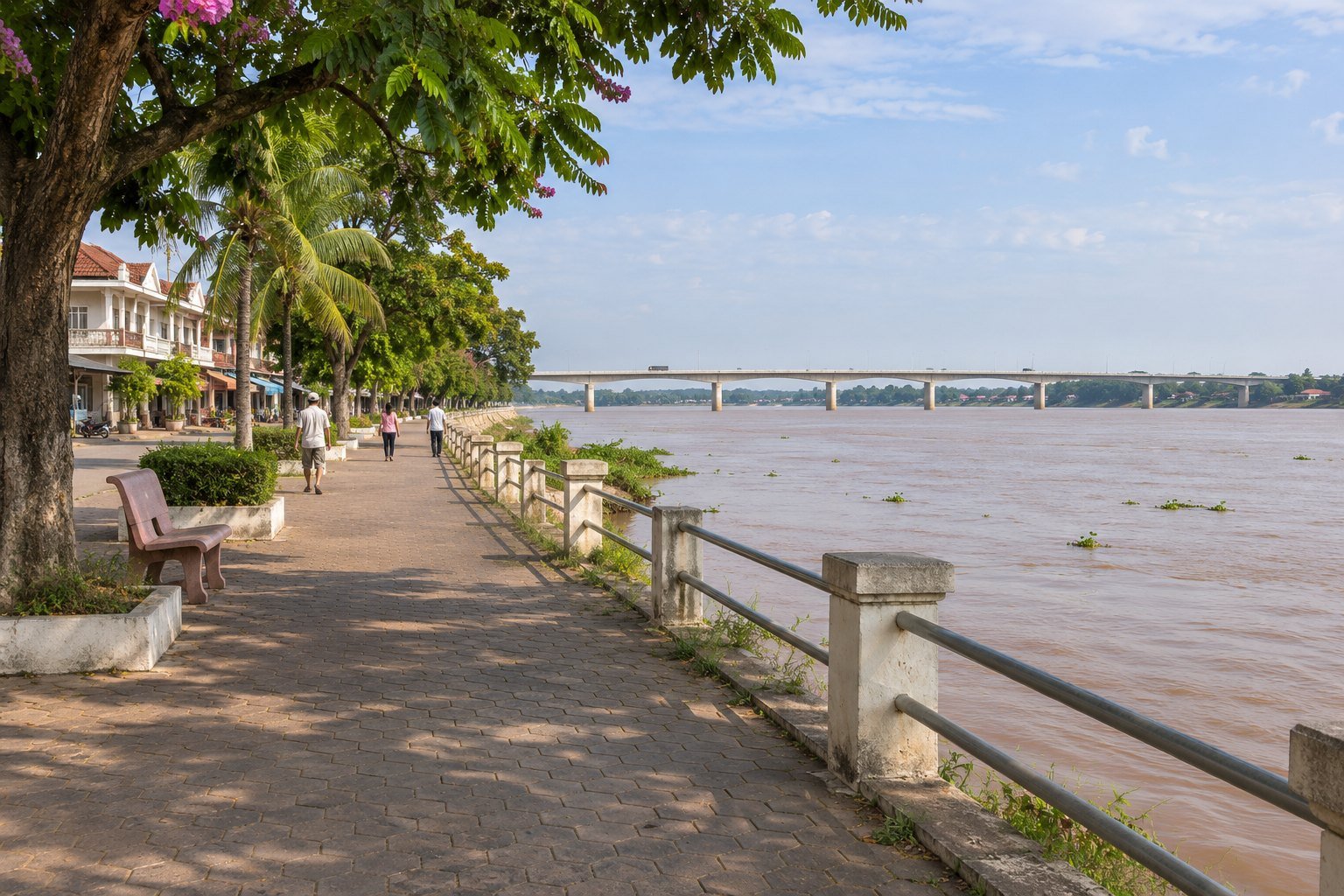
AI-generated illustration inspired by Kampong Cham’s riverfront and Kizuna Bridge.
Kampong Cham makes sense when a holiday needs a little breathing space. You can spend an evening beside the Mekong, visit a temple that remains part of local religious life, and leave the following morning for village lanes or a countryside visit.
This Kampong Cham travel guide helps you decide how much time to give the town and which detours earn their place. The most enjoyable short stay has a clear priority and room to linger over lunch.
This guide contains affiliate links. If you book or buy through them, Taylor’s Trailblazing Travels may receive a commission at no extra cost to you.
Travellers who enjoy river towns, ordinary streets and an unhurried outing.
Two nights give you a full day without sightseeing around check-out.
The riverfront is convenient; a rural retreat needs its own transfer plan.
Pick an island morning or a longer countryside trip before adding more stops.
Does Kampong Cham fit your Cambodia trip?
The Mekong gives the town its orientation. Kizuna Bridge crosses the main river and connects the road network with Cambodia’s north-east; the riverfront is a useful reference point when choosing accommodation.[1] For visitors, the appeal is the combination of a small urban base and excursions into the surrounding countryside.
Scroll sideways to read the full table.
| Your situation | A sensible choice | What to leave out |
|---|---|---|
| Passing through with an afternoon and morning free | One night near the river; a walk and Wat Nokor | A long countryside circuit |
| Want a change of pace after busy sightseeing days | Two nights; one main outing each morning | Trying to visit every temple and village |
| Interested in community tourism | Book Cheung Kok first, then arrange your nights around it | An unannounced visit expecting activities on demand |
| Have a short trip centred on Angkor and a beach | Consider keeping those existing bases | An extra hotel move just to collect another town |
For a route continuing towards Kratie or other north-eastern destinations, Kampong Cham can be a useful stop. For Siem Reap, check the onward journey before committing: the main westbound bus corridor runs through Skun, and direct services from Kampong Cham are more limited.[2]
Add the actual nights to the Trip Itinerary Planner and see what they replace elsewhere. It helps organise your stops; confirm the transport separately.
Back to top ↑Arrive with the last part of the journey arranged
From Phnom Penh, compare a daytime van or bus with a private car. The current Phnom Penh–Kampong Cham options on 12Go include these choices. Treat the duration on your selected departure as a starting point and leave the arrival day light.[3]
The drop-off matters as much as the headline journey time. Travelfish’s September 2026 transport review places Vireak Buntham’s Lom Hae office roughly two kilometres inland from the riverfront and warns against confusing Kampong Cham with Skun.[2] Send the arrival pin to your hotel and ask about a collection or local tuk-tuk.
- Check the exact departure and arrival offices, luggage allowance and check-in time.
- Keep the accommodation name, address and phone number available offline.
- For a private car, agree the total, any stops, waiting time and where the journey ends.
- Prefer daylight travel. The FCDO says road accident risks increase after dark.[11]
Walking, cycling or hiring a driver
Use walking for the central riverfront and short town outings. A bicycle can suit a locally agreed island route if you are comfortable with traffic and the day’s conditions. Check the brakes, tyres and fit, wear a helmet and carry water. A tuk-tuk or car is the more comfortable choice for linking countryside stops or avoiding a long ride in the heat.
Agree the return journey before leaving town. Show the driver the actual stops, ask whether they will wait, and confirm whether the price covers the vehicle or each passenger. A driver who gets you between places may not provide the historical explanation you would expect from a guide.
Back to top ↑Start with the riverfront and Wat Nokor
A riverside evening
Keep your first evening simple: walk a manageable stretch of the promenade, find somewhere to eat and settle your arrangements for the following morning. The riverfront has small eateries and coffee stalls, while the town market offers another place to look around.[6] There is no need to turn this into a long checklist.
Look at the river and Kizuna Bridge from public paths and viewpoints. JICA records the bridge’s opening in 2001 and its role in linking the banks.[1] Keep traffic and changing river levels in mind if you leave the main promenade.
Wat Nokor Bachey
Wat Nokor combines old sandstone and laterite structures with a later Buddhist pagoda inside the complex. It is still an active place of worship, which makes the relationship between the buildings more interesting than treating the site as an abandoned ruin.[4]
Allow roughly 45–75 minutes as a starting point, depending on your interest and which areas are open. Look at the gateways and stonework, then give worshippers space. Wear clothing that covers shoulders and knees, ask before photographing people, and follow local instructions about entering a prayer hall or removing shoes.[11]
If you have a guide, ask them to explain how the monastery uses the older buildings. That is a more rewarding question than trying to memorise dates from competing online descriptions.

Visit Koh Paen without relying on the bamboo bridge
Koh Paen, also written Koh Pen, offers village lanes, farmland and a change from the town streets.[6] Choose a modest loop with a local guide or your accommodation, leaving time to stop without rushing back.
Two different crossings are often muddled in travel descriptions. The seasonal bamboo visitor bridge depends on local arrangements and river conditions. A permanent concrete bridge was inaugurated in March 2018 to serve the island communities.[5] A photograph of the bamboo crossing does not tell you whether it is operating on your dates.
Ask your accommodation which crossing is open, what traffic it permits, whether there is a charge, and how your proposed route returns to town. If the bamboo bridge is absent, decide whether the village outing still appeals using the available road connection.
For a first visit, an early outing of around two to three hours is a comfortable planning target rather than a fixed circuit. Shorten it in strong heat or after heavy rain. Stick to established lanes, keep clear of working fields and household courtyards, and ask before taking close photographs.
The river is part of the view, not an automatic swimming stop. Cambodia’s river currents can be powerful, particularly when water levels rise.[11] Avoid walking out onto an unfamiliar sandbar simply because it appears in an older itinerary.

Choose the countryside outing that interests you most
Cheung Kok: arrange a community visit
AMICA describes Cheung Kok as a community tourism project developed with the villagers, with short guided visits, longer stays and handicrafts. Its visitor information recommends booking at least two days ahead.[7] Contact the project using its current details and ask what will be happening during your visit, the price and how to get there.
A working village has its own rhythm. Farming, family commitments and the season influence what you can see. Book a local explanation, ask permission for photographs and buy directly from makers when something appeals. Avoid treating a home or workshop as a public exhibition.
Handicrafts are part of the project’s own description, including textile work.[8] You can ask about them when booking, without assuming a particular craft demonstration will be available that day.

Phnom Pros and Phnom Srei: hills, pagodas and a climb
These neighbouring hills lie outside Kampong Cham. Phnom Pros has a road approach towards the top, while Phnom Srei involves steps; the area also contains places of remembrance linked to Khmer Rouge violence.[12] They suit a temple-and-viewpoint outing, but the exposed climb makes a cool start sensible.
Pair them with Wat Nokor if religious architecture is your main interest. If you are already tired of steps, choose the riverfront or a shorter village visit instead. Confirm the current approach and access with your driver rather than assuming a vehicle reaches every area.
Wat Hanchey: make the journey part of the outing
Wat Hanchey is a religious site with river views, included in local operator itineraries.[6] Give this northern excursion its own half-day allowance and discuss the stops with a driver. It is a better fit for someone who enjoys the journey and a slower temple visit than for someone trying to squeeze in a final sight before a bus.
Ask for a clear local quote. Hanchey Bamboo Resort publishes a tuk-tuk outing, starting from its resort; check the current itinerary and whether a town pickup can be arranged. Its published route is an option to discuss, not a promise that every listed stop will suit your day.
Back to top ↑Choose your base before comparing room prices
Scroll sideways to read the full table.
| Base | Why choose it? | Check before booking |
|---|---|---|
| Central riverfront | Easy evening walks and a practical starting point for short outings | Room position, road or entertainment noise, lift access if needed |
| Elsewhere in town | Useful if a particular room or guesthouse suits your budget | Walking route to dinner and the cost of local rides |
| A rural retreat | A stay built around countryside time and on-site activities | Transfers, meals, room cooling and return transport |
A town example to compare
LBN Asian Hotel gives its address on the riverside Sihanouk Boulevard, around 450 metres from Kizuna Bridge. When checked on 14 November 2026, its own website advertised a Superior Double from US$37 a night.[10] That is a starting rate, so check your dates, room view and cancellation terms.
Compare LBN Asian Hotel on Agoda with the same hotel on Booking.com and the hotel’s direct offer. Match the room, breakfast, taxes and refund terms before deciding which price is better.
What a rural stay adds
Hanchey Bamboo Resort places itself 25 kilometres north of town and gives a transfer time of 45–60 minutes. Its FAQ advertises a pickup from Smile Cafe at US$10 each way; confirm the vehicle, passenger allowance and current charge directly.[9]
On those published figures, the return transfer adds US$20 and roughly 90–120 minutes of travelling. That can be worthwhile for a relaxing stay there. It is less convenient if most of your plans involve returning to town.
Put your actual room quote, transfers, meals, local driver and any visit fees into the Travel Budget Calculator. Convert your quotes to pounds first: the tool uses GBP and does not fetch exchange rates.
Back to top ↑A short stay that leaves time to enjoy the river
These are suggested groupings for a town base, with time for meals and rest. Arrange transport and any community visit before relying on them.
Scroll sideways to read the full table.
| Part of the stay | Main plan | Adjustment |
|---|---|---|
| Arrival afternoon | Check in, take a short riverfront walk, settle the next day’s transport | After a late arrival, save the walk for morning |
| First full morning | Koh Paen outing, returning before the hottest part of the day | Choose a booked Cheung Kok visit if community tourism is the priority |
| Middle of the day | Lunch and a proper break | Keep this space when weather or transport runs late |
| Late afternoon | Wat Nokor, if you still want another visit, then dinner in town | Stay by the river if the morning was enough |
| Departure morning | Breakfast and onward travel | Add a short walk only after confirming the pickup time |
For a temple-focused stay, replace the island morning with Wat Nokor and the paired hills. For Hanchey, set aside a separate half day and remove another outing. A one-night version keeps the arrival evening and chooses just one activity the next morning.

Weather and comfort
Cambodia’s climate generally has a drier November–April period, with the coolest conditions around the winter months and the strongest heat towards the start of the rains.[13] December and January are sensible first choices if comfortable walking is your priority. Check a local forecast close to departure.
During wet weather, ask about lane conditions before cycling and be ready to change the outing. Carry water, sun protection, a light rain cover and small cash. Shoes with grip are useful for worn temple surfaces. Check steps, thresholds and vehicle access individually if mobility is a concern; an easy-looking map does not show all of them.
Three mistakes to avoid
- Booking a remote room and then making repeated trips into town.
- Building the day around an unconfirmed bamboo crossing or an unannounced village visit.
- Combining a long rural outing with a tight onward connection.
For most first visits, two nights near the river and one main countryside outing make a satisfying plan. Keep the remaining time for whichever part of Kampong Cham you enjoy most.
Back to top ↑Questions travellers ask
Can I visit Kampong Cham as a day trip from Phnom Penh?
It is possible, but it gives much of the day to the return drive. Choose a clearly agreed private itinerary with a small number of stops if an overnight stay is impractical. For the riverside evening and a slower morning, staying in town is the more comfortable choice.
Do I need to hire a motorbike?
No. A central base, walking and an arranged tuk-tuk or car can cover a short visit. A bicycle is an optional choice for a suitable local route, not a requirement for enjoying the town.
Will a countryside tour include a guide and admission?
Check the inclusions individually. Ask whether you are paying for transport, an English-speaking guide, waiting time, entries, food or a combination. Keep voluntary donations separate from required charges when agreeing the budget.
Sources and checks
Stay lengths and daily groupings are editorial suggestions for a short visit, informed by local operator information, transport research and the geography of the stops. Hotel and resort examples illustrate location trade-offs; they are not personal stay reviews. Prices and arrangements were reviewed on 14 November 2026.
- JICA — Kizuna Bridge project and Kampong Cham photographs
Kizuna Bridge and the Mekong setting. Checked 14 November 2026. - Travelfish — Kampong Cham transport, updated September 2026
Used for station locations and the westbound route distinction; reconfirm current departures. Checked 14 November 2026. - 12Go — Phnom Penh to Kampong Cham transport options
Select your dates and departure for the current fare and journey details. Checked 14 November 2026. - Cambodianess — religion and architecture at Wat Nokor, March 2026
Checked 14 November 2026. - Cambodian government Press OCM / AKP — Koh Pen concrete bridge inauguration
Historical report about the permanent concrete crossing. Checked 14 November 2026. - Hanchey Bamboo Resort — local tuk-tuk outing
Operator descriptions of local stops; arrange the current route and inclusions directly. Checked 14 November 2026. - AMICA — visiting Cheung Kok
Confirm dates and activities directly with the organiser. Checked 14 November 2026. - AMICA — Cheung Kok tourism and handicrafts project
Background to the community tourism and handicrafts project. Checked 14 November 2026. - Hanchey Bamboo Resort — location, transfers and practical FAQ
Transfer details checked 14 November 2026; obtain a current quote. - LBN Asian Hotel — official location and advertised starting rates
Advertised starting rates checked 14 November 2026. - FCDO — Cambodia safety and security
Checked 14 November 2026. - Tourism Cambodia — Phnom Srey and Phnom Pros
Independent tourism directory; confirm current access and charges locally. Checked 14 November 2026. - World Bank — Cambodia Climate Risk Country Profile
Historical seasonal patterns, not a forecast for a particular trip. Checked 14 November 2026.
Illustrations in this article were created for Taylor’s Trailblazing Travels. Third-party photographs, where used, are credited beside the image or in the source list.