10 Days in Cambodia with Children: Family-Friendly Pace
Two bases, short outings and enough time to stop while the day is still going well.
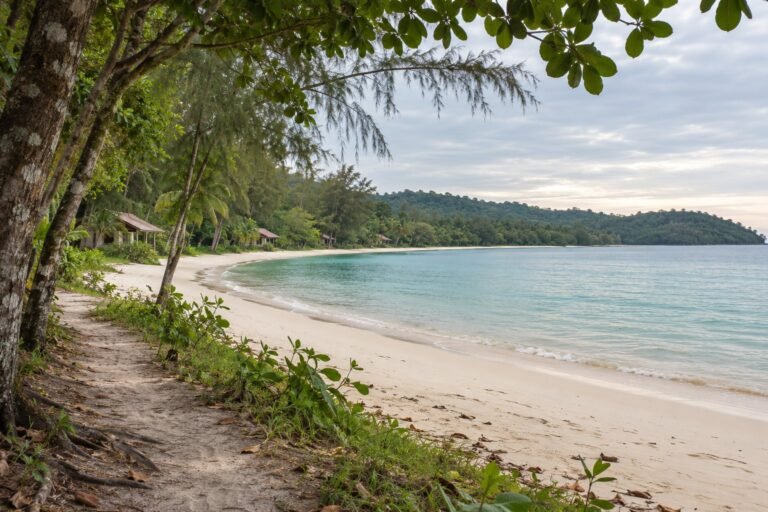
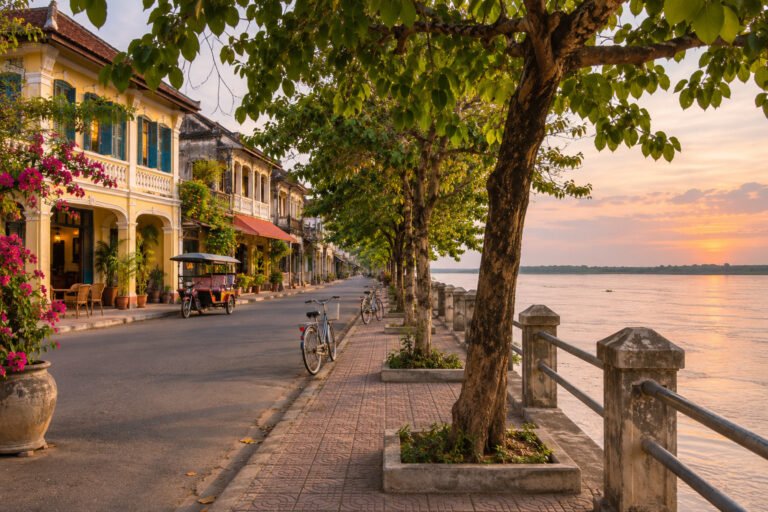
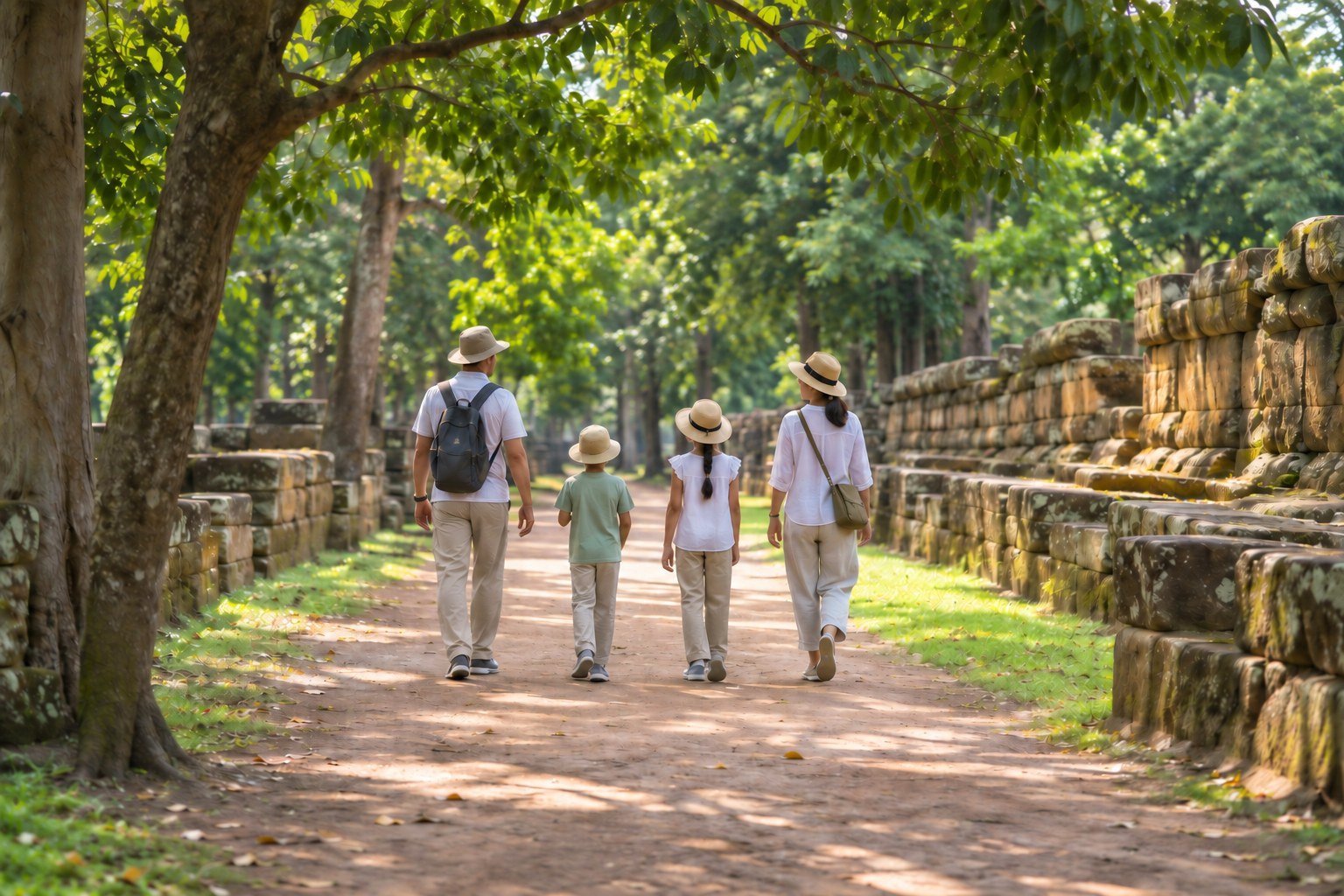
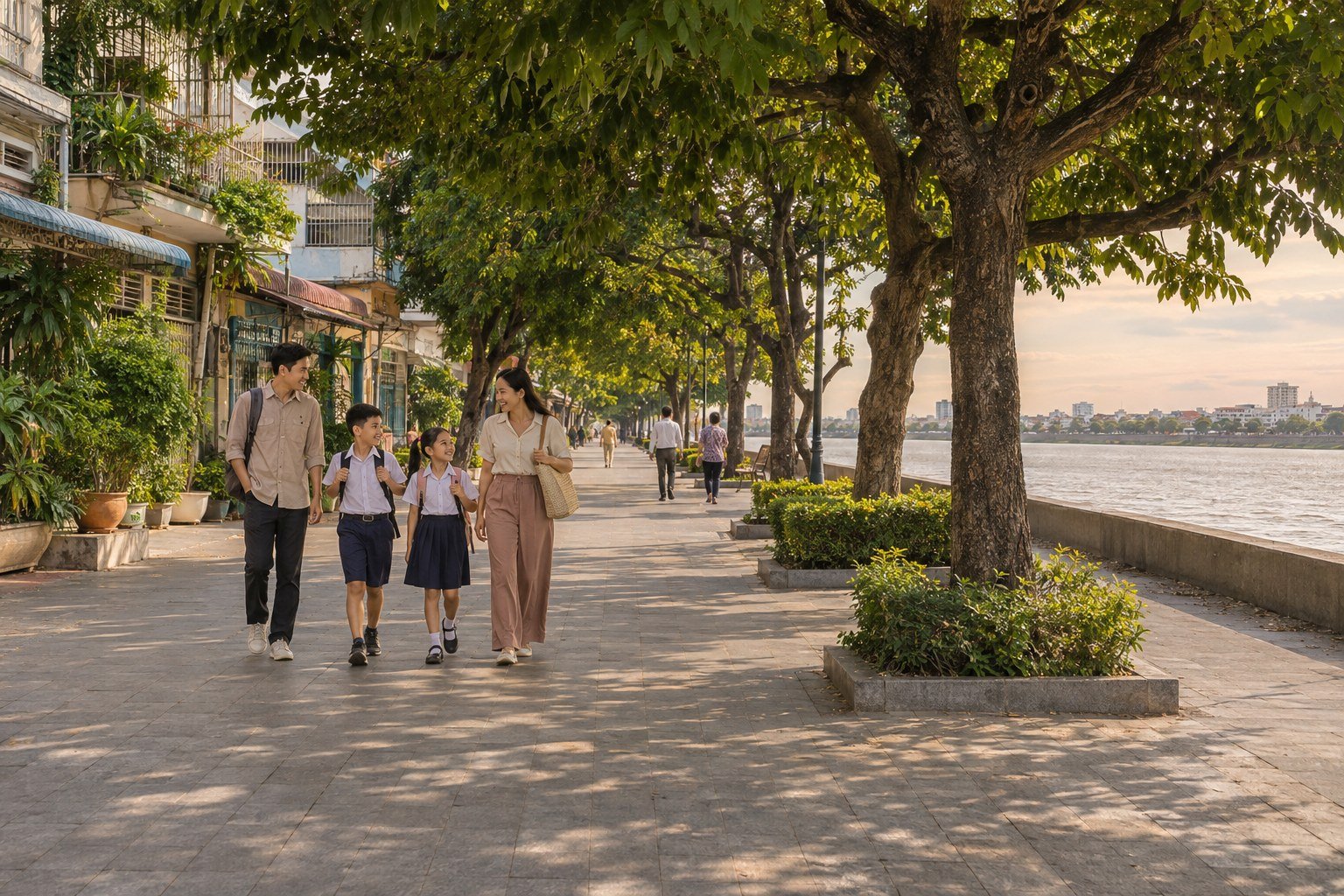
AI-generated illustration of an unhurried family morning; no particular temple route or real family is depicted.
Ten days in Cambodia with children can feel varied without being restless. The strongest starting plan is five nights in Siem Reap and four in Phnom Penh, with short temple mornings, a craft session, ordinary play and a proper rest in the middle of the day.
This guide uses primary-school-age children as its baseline and counts your arrival and departure days in Cambodia within the ten. The important choices are practical: whether the room really sleeps everyone, how the children will travel and which part of a day you will happily abandon when they have had enough.
This guide contains affiliate links. If you book or buy through them, Taylor’s Trailblazing Travels may receive a commission at no extra cost to you.
Seven full days in a base
The arrival, departure and one road day are accounted for separately.
One main outing a day
Lunch and a long break are part of the plan, with afternoon activities optional.
Confirm the whole family booking
Check every bed, child’s age, breakfast charge and required restraint before paying.
Choose a pace for your own children
This plan assumes two adults travelling with children aged roughly five to eleven. It gives Siem Reap five nights and Phnom Penh four, with one intercity move. You can see Angkor in two short visits, try a craft session and have city time without asking the children to handle a new hotel every other day.
Use one main outing per day. A second activity stays optional until everyone has eaten, cooled down and had a rest. Build the day around the child who tires first; adults can take turns going out later if that suits the family. A pool is a useful option, but a comfortable room and easy meals matter on days when nobody wants to swim.
Swipe within the table to see all columns.
| Family situation | Keep | Change |
|---|---|---|
| Under-fives or a regular nap | Two bases, the recovery day and the long midday break. | Shorten outings further; assess carrying, naps and the long road day before booking. |
| Primary-school ages | The baseline: one morning interest and room to stop. | Let children choose between two manageable options, rather than offering an unlimited list. |
| Older children and teenagers | The same nine-night structure. | Extend an outing when they want it; keep difficult historical material a separate family decision. |
These are planning choices, not developmental rules. A child who loves stone carvings may want a longer temple visit than a teenager who is tired after the flight. Decide the stopping point from how the family is doing on the day, rather than from how much a pass cost.
Back to top ↑The ten-day plan and its nine nights
The ten days include arrival and departure, so there are nine hotel nights. Days 2–5 and 7–9 are seven full days in a base; day 6 is the sole intercity travel day. This works with flights into Siem Reap and out of Phnom Penh. If your flights use the same city, recalculate the return journey before keeping this night pattern.
Swipe within the table to see all columns.
| Day | One main plan | Night |
|---|---|---|
| 1 | Arrive in Siem Reap; unpack, eat and rest. | Siem Reap 1 |
| 2 | Recovery day: a short town outing and time at the accommodation. | Siem Reap 2 |
| 3 | A short Angkor morning, then lunch and a long break. | Siem Reap 3 |
| 4 | Kiddo Clay Class, subject to age and collection confirmation.[4] | Siem Reap 4 |
| 5 | A second short temple morning; collect pottery if ready. | Siem Reap 5 |
| 6 | Travel to Phnom Penh; keep the evening simple. | Phnom Penh 6 |
| 7 | A short National Museum visit and a rest.[5] | Phnom Penh 7 |
| 8 | A playground morning at Coconut Park at Koh Pich, subject to current operation.[6] | Phnom Penh 8 |
| 9 | A flexible city day: repeat a favourite, move an outing or rest. | Phnom Penh 9 |
| 10 | Depart from Phnom Penh; no essential activity before the airport. | No night included |
The first full day is deliberately light. After an overnight flight, breakfast and a swim may be a better achievement than a sunrise excursion. Day 9 serves a different purpose: it can absorb a missed city activity without taking time from departure day.
If you want more temples, swap the craft day rather than extending every morning. If the children have had enough after the first visit, keep the second morning for town. The route remains coherent even when one planned attraction disappears.
Back to top ↑Make Angkor two manageable mornings
Start with a limited morning at Angkor Wat, then choose the second visit with the children’s interests in mind. Ask a guide or driver for a short route, the walking and steps involved, shaded stopping places and an agreed return time. “Private” should mean you can control the plan; it should not quietly become a full-day circuit because that is the operator’s default.
A one-day Angkor pass is US$37; the three-day pass is US$62, usable across seven days.[2] For two adults, the three-day option totals US$124; buying two single days each totals US$148. That saves US$24 for the planned two mornings. If you are certain you only want one visit, the two single passes instead total US$74.
Under-12s enter free; carry passports to prove age. They cannot visit the Upper Tower.[3] Do not build a family plan around a climb that some of the group cannot do. Check each child’s age on the travel date when buying anything, rather than using a general “family” label.
Cover shoulders and knees, stay off loose stones and avoid touching carvings or leaning on fragile structures.[7] Give children a simple looking task, such as choosing an animal carving or noticing how a doorway frames the view, while keeping hands away from the stone. A short visit with something remembered is a good result.
Sunrise is optional. Decide whether the early wake-up would add something the children will enjoy, and what you would remove later to compensate. Keep water and a snack accessible, agree how to leave early and return before everyone is exhausted. A distant extra temple is not a useful bonus if it removes the afternoon rest.
For a family comfortable with a longer morning, compare the private half-day Angkor tour on Viator. Its itinerary covers Angkor Wat and Ta Prohm over four to five hours, with a guide and air-conditioned transport; it is not wheelchair accessible.[18] Ask about a shorter route, suitable restraints, the full health restrictions and the separate park admission before booking. Keep the two shorter visits if that longer outing does not suit the children.
Back to top ↑Balance temples with making, play and city time
The Kiddo Clay Class is a two-hour session with adult supervision. Its current page lists firing as an extra and collection the following day at 6pm.[4] Book the exact children’s class and confirm the ages accepted and collection time in writing. Other pottery formats can have different firing arrangements, so do not assume every workshop can return a finished piece before you leave.
Day 4 leaves day 5 available for collection before the road move. Ask what happens if a piece is not ready, and whether taking an unfired item or arranging delivery is practical. The making can be the main experience; you do not need to promise a fragile souvenir to make the session worthwhile.

In Phnom Penh, give the National Museum a short, specific purpose: choose a handful of objects and let the children decide when they have seen enough. Its posted foreign admission bands include US$5 for ages 10–17 and US$10 for adults; confirm the charge for younger children when planning the family total.[5] Avoid budgeting every child at the same rate.
For day 8, the developer of Coconut Park at Koh Pich lists an outdoor playground, gardens and a splash pad.[6] Check which facilities are operating, any admission or session charges and age rules before setting out. A splash pad is optional; bring a change of clothes if using it and stay with the children. Leave after a satisfying morning instead of turning play into another long excursion.
Tuol Sleng’s museum warns that its material may be inappropriate for visitors aged 14 and under.[8] It is not part of this primary-school-age itinerary. With an older teenager, discuss the subject beforehand and decide separately whether to visit, with no pressure to treat it as an obligatory family stop.
Back to top ↑Make the long transfer a whole travel day
Giant Ibis advertises six hours from Siem Reap to Phnom Penh.[1] Reserve around seven and a half to eight and a half hours hotel to hotel for this plan, allowing for checkout, reaching the departure point, check-in, the ride and onward transport. That is an allowance, not a guaranteed journey time. Day 6 needs no other achievement.
Compare dated Siem Reap–Phnom Penh services on 12Go. Choose the actual daytime service and confirm seats, seat belts, toilet stops, luggage and the arrival address. Do not transfer amenities described for a sleeper service to a day coach. Pack the travel bag where you can reach it, with spare clothing, water, food and something familiar to do.
A private vehicle may make planned breaks easier, but confirm the vehicle and restraints before paying. CDC advises age-, height- and weight-appropriate restraints for children; suitable equipment and seat belts are not always available abroad.[12] Send the provider those measurements and ask exactly what will be fitted. “Infant seat available” is not confirmation of a suitable booster for an older child. If you bring a restraint, establish compatibility with the booked vehicle.
At Siem Reap Angkor International Airport, code SAI, the official bus reaches the town stop on 7 Makara Road; hotel drop-off is not included.[9] Compare the combined cost and effort of all seats plus the final hotel transfer, particularly after a late flight.
The private SAI hotel transfer on GetYourGuide excludes wheelchair users and people with mobility impairments; child restraints are not specified.[10] Get a specific answer about your family’s seating and bags before committing.
For departure, use Techo International Airport, KTI, for Phnom Penh.[11] Confirm the exact pickup time with the provider against your flight’s check-in requirements. Four nights in Phnom Penh already separate the intercity move from that flight, so there is no reason to add a long final-day excursion.

Check beds, occupancy and the whole room bill
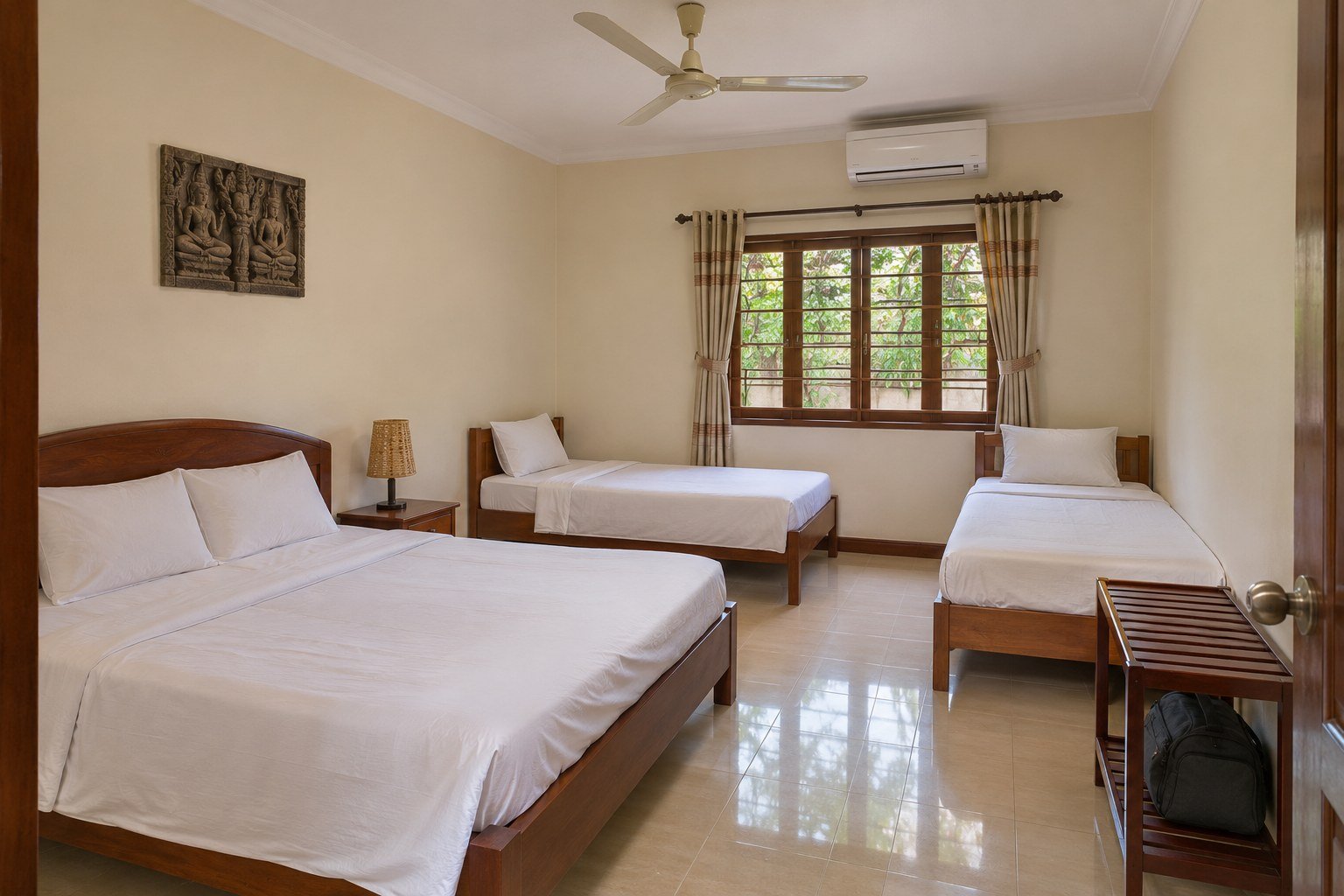
The most useful family-room question is “Where will everyone sleep?” Get the actual bed sizes and arrangement, the permitted occupancy and the total for the children’s ages. Two connecting rooms work only when the connection is confirmed; a request for rooms nearby is a different arrangement.
- Confirm whether the quoted room has a double and two separate beds, an extra bed or a shared existing bed.
- Check cooling, curtains, evening noise and whether the adults can sit somewhere while a child sleeps.
- Ask how children reach the pool and balconies, and what supervision you will need to provide.
- Confirm breakfast for every person, taxes, extra-bed charges and the cancellation deadline.
CDC highlights risks around accommodation, water and children’s access to hazards; do your own check on arrival rather than assuming a family label resolves them.[12] A room you can use comfortably during the afternoon is part of the itinerary, not merely somewhere to sleep.
Swipe within the table to see all columns.
| Offer, both confirmed for four people | Nightly total | Nine nights |
|---|---|---|
| £60 room + £15 extra bed + two £5 child breakfasts | £85 | £765 |
| £82 family room including all required beds and four breakfasts | £82 | £738 |
The second offer saves £27 across nine nights under these assumptions. Both must genuinely accept the whole family, and the example assumes identical tax treatment. It is not a quote for either city. In practice, compare the five-night and four-night stays separately, then add their totals; a cheap room in one city cannot fix an unsuitable room in the other.
Look at Siem Reap rooms on Booking.com and Agoda, then compare Phnom Penh family stays on Agoda. Enter both children and their ages, and inspect the actual room offer. Photos of a pool or the word “family” are not confirmation of the beds included in your rate.
The Hotel Comparison Calculator compares your entered offers in one currency. Include beds and breakfasts before deciding which total is lower.
Protect the heat, rest and swimming breaks
Cambodia’s heat makes the middle of the day a poor place to hide spare sightseeing. CDC recommends planning outdoor activity for cooler hours and breaking in air-conditioned places.[13] Keep the midday break even when a morning runs late; shorten the visit rather than pushing lunch and rest further back.
For swimming, an adult needs to supervise closely; accommodation may lack the pool barriers you expect at home.[12] Agree who is watching before entering the water and hand over that responsibility explicitly. A second adult nearby or a shallow-looking area does not make supervision automatic.
Arrange individual travel-health advice, ideally four to six weeks before departure, while still seeking advice if there is less time. The appropriate preparation depends on the children, their medical history and the actual itinerary.[14] Carry regular medicines in accessible luggage, details of any allergies and the information needed to contact your insurer or arrange care.
Use a simple daily decision: if everyone is rested, do the main outing; if one child is struggling, reduce it; if someone is unwell, give the day to recovery and seek appropriate medical advice. Day 2 and day 9 are deliberately available for this flexibility. You are not falling behind a timetable when you use them.
The Itinerary Pace Checker can compare your nights and entered door-to-door hours; it does not establish whether an individual child will enjoy the pace.
Back to top ↑Book the difficult details first
Start with the flights, then the two rooms, then the long transfer and airport pickups. Confirm the things that are difficult to fix at arrival: four-person occupancy, suitable beds, child restraints and a workable collection time for the craft session. Most short city outings can remain less rigid.
For British passport holders, check each child’s six-month passport validity, visa and separate free e-Arrival requirement within seven days before arrival by air.[16] Do not assume the adults’ paperwork covers everyone. Families using other passports should check the rules for each traveller’s nationality.
FCDO advises against all but essential travel within 20km of the Thai border, and land crossings are suspended.[15] This route uses flights into and out of Cambodia; check the latest advice and insurance for any additional travel you add.
Use the Trip Itinerary Planner to organise the nights. Its hotel searches use adults and rooms; add children, ages and sleeping arrangements on the booking website.
If using Airalo’s eSIM store, select Cambodia and check the device, activation and plan terms before buying.[17] Keep accommodation addresses and provider contacts available offline. If the adults split up for a rest or an outing, agree where and when to meet rather than relying entirely on a live connection.
A successful version of these ten days does not require ten different highlights. Two enjoyable temple mornings, something the children made themselves, a few good meals and enough rest can make the trip feel much fuller than a longer list completed tired.
Sources and checks
Sources checked on 15 November 2026. Recheck operating details and the terms of the particular service or rate before paying.
- Giant Ibis: Siem Reap to Phnom Penh — published journey duration.
- Angkor Enterprise: available tickets — passes and validity.
- Angkor Enterprise: frequently asked questions — children’s entry and tower restriction.
- Khmer Ceramics: Kiddo Clay Class — class and collection arrangements.
- National Museum of Cambodia: visiting information — admission age bands.
- OCIC: Coconut Park — listed facilities.
- Angkor Enterprise: visitor code of conduct — dress and conservation.
- Tuol Sleng Genocide Museum: visitor information — age-related content advice.
- Siem Reap Angkor International Airport: airport bus — town arrival point.
- GetYourGuide: SAI airport transfers — private option and restrictions.
- VINCI Airports: Techo International Airport — airport identity.
- CDC Yellow Book: travel with infants and children — restraints, water and accommodation.
- CDC Yellow Book: Cambodia — heat and timing.
- TravelHealthPro: Cambodia — pre-travel health advice.
- FCDO: Cambodia travel advice — current advice.
- FCDO: Cambodia entry requirements — British passport guidance.
- Airalo: Cambodia eSIM information — plan and device checks.
- Viator: private half-day Angkor temple tour — longer-morning alternative.
Illustrations in this article were created for Taylor’s Trailblazing Travels. Third-party photographs, where used, are credited beside the image or in the source list.