Cambodia Regions Explained: Where to Go on Your First Trip
Choose the places that suit your holiday, then leave enough time to enjoy them.
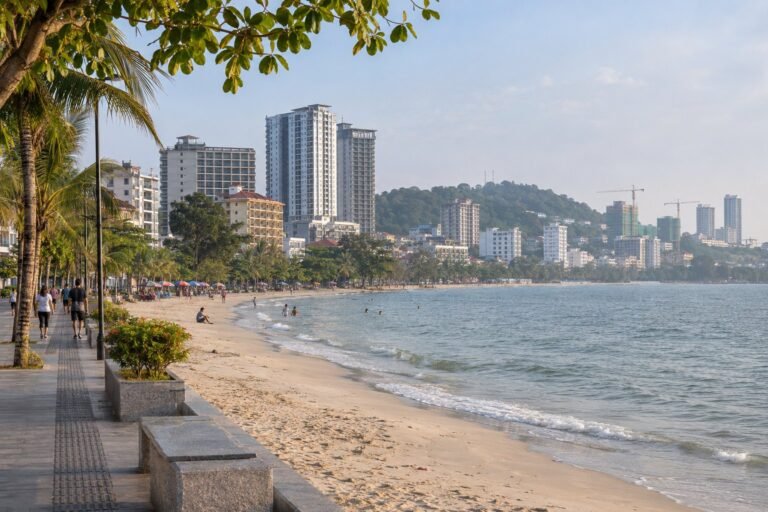
AI-generated illustration of Cambodian lowland countryside. Smaller-town stays can give a first trip a different pace.
Angkor, a beach and a few days in the capital can all fit into a Cambodia holiday. Adding a river town, an elephant project and a forest lodge is where the route starts to get complicated.
This guide explains what the main Cambodia regions add to a first trip. The aim is to help you choose a few places you actually want to spend time in, before you start comparing hotels and transport.
This guide contains affiliate links. If you book or buy through them, Taylor’s Trailblazing Travels may receive a commission at no extra cost to you.
Siem Reap is the base for Angkor. Give temple days their own time.
Battambang and Kampot offer different ways to slow down.
Choose a specific island beach and check its ferry landing.
Plan around a particular guide, project or lodge and its access.
Which Cambodia regions belong on your trip?
Cambodia’s tourism planning groups its main destinations around Siem Reap and Tonle Sap, Phnom Penh, the coast and the north-east. For visitors, it helps to split those broad zones into seven smaller planning areas. These are useful travel groupings, rather than official administrative regions.[1]
Travel advice checked 14 November 2026: the FCDO advises against all but essential travel within 20km of Cambodia’s land border with Thailand. It also says land crossings remain suspended and several border temples are closed. Check the current advice before adding a border-area excursion or an overland arrival from Thailand.[2]
Scroll sideways to read the full table.
| Area and useful base | Choose it for | Suggested stay | Main compromise |
|---|---|---|---|
| Siem Reap and Angkor | Khmer temples and heritage | 3–4 nights | Temple outings need transport and time away from the hotel |
| Phnom Penh and the central corridor | The capital, museums and modern history | 2–3 nights | City energy rather than a quiet retreat |
| Battambang and the western countryside | Food, smaller-city life and rural outings | 2–3 nights | Another change of base if your trip is short |
| Kampot, Kep and the southern islands | River stays, food or a beach break | 3–5 nights in your chosen part | Kampot, Kep and the islands are separate choices |
| The Mekong around Kratie | A river-town pause and responsible wildlife watching | 2 nights | A detour from the main Angkor–capital–coast route |
| Mondulkiri or Ratanakiri | Forest outings and a nature-focused stay | 3–4 nights in one province | Longer road travel and more advance planning |
| The Cardamom region and inland Koh Kong | A lodge or community-based forest stay | 2–3 nights, plus access time | Transfers and activities depend on the exact base |
Read the suggested nights as a way to compare choices. A traveller who wants five beach days should give the coast five beach days; they do not need to shorten that stay to collect another province.
Back to top ↑Siem Reap and Angkor: make room for the temples
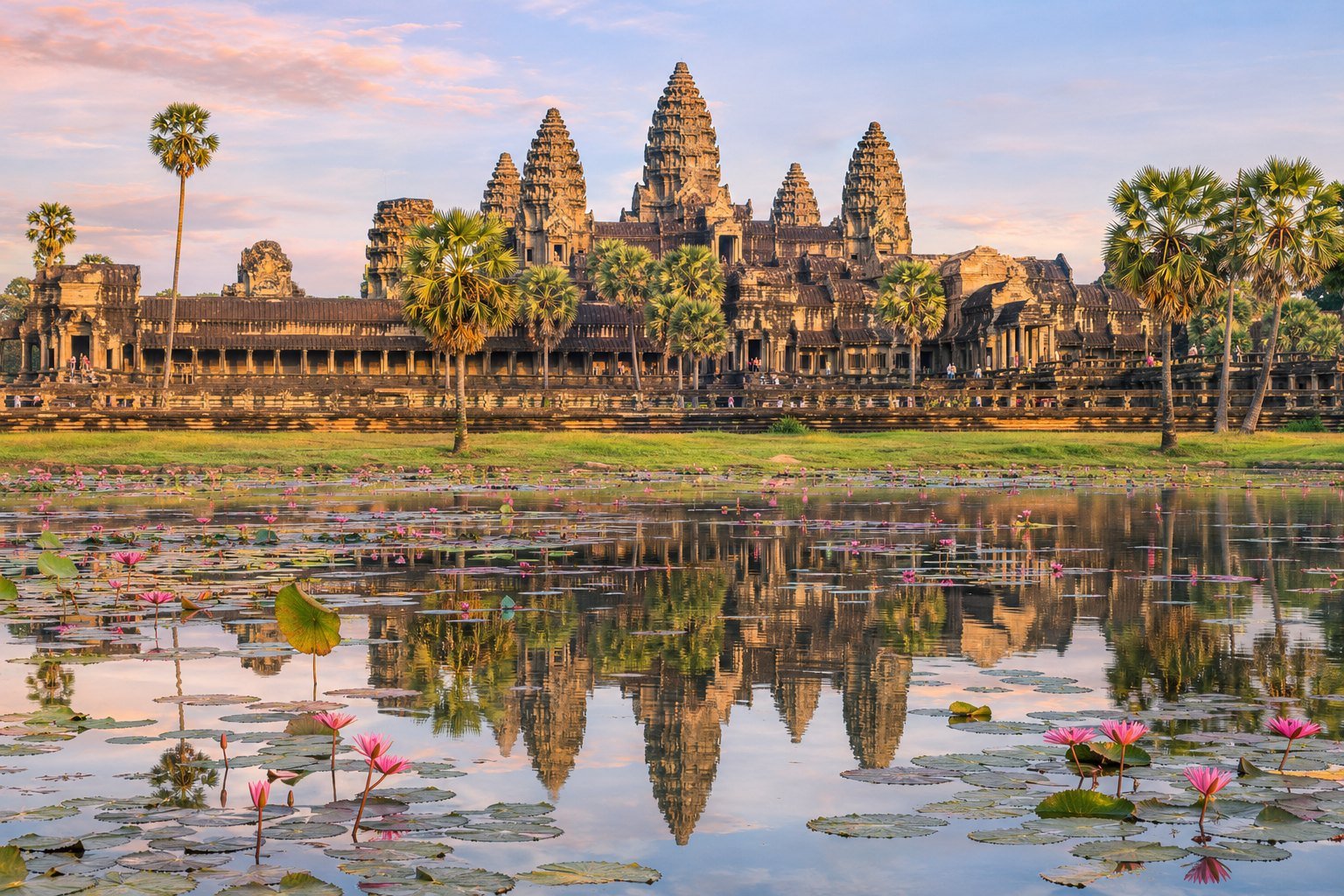
Siem Reap belongs near the top of a first-trip shortlist if seeing Angkor is one of your reasons for coming. Angkor is a large archaeological landscape containing many temples and historic structures, including Angkor Wat and the Bayon at Angkor Thom.[3]
That matters when you book a hotel. A room in Siem Reap is a base for outings, not a room from which you can assume every temple is a short walk away. Compare the hotel’s location with your pickup arrangements and decide whether you want easy evening access to restaurants or a quieter retreat.
How to use the time
Three nights can give you two main sightseeing days, depending on arrival and departure. A fourth night makes it easier to split temple visits, have a slower morning or leave time for the town. If you know that one substantial temple day will be enough, plan it carefully and use the rest of your holiday somewhere different.
For room searches, compare Siem Reap accommodation on Agoda with Siem Reap stays on Booking.com. These open city listings; enter your dates and check the map, final price and cancellation terms.
When comparing an Angkor outing, distinguish transport from a guided visit. A driver can take you between temples without providing a full historical tour. This Angkor tuk-tuk listing on GetYourGuide illustrates the choice: check the selected option for a licensed guide and whether admission is included before paying.[13]
Back to top ↑Phnom Penh: give the capital more than a transfer stop
Phnom Penh is the right choice when you want to understand more than Cambodia’s ancient temples. Tuol Sleng Genocide Museum, in the city, is the former S-21 detention and interrogation centre and a memorial to victims of the Khmer Rouge.[4]
Allow some space around a visit. It can be distressing, and there is no obligation to fill the rest of that day with more intense sightseeing. A quiet meal or an unhurried evening may be a better fit.

Two or three nights give the capital a purpose beyond changing buses. Choose an area that suits the places you plan to visit, then ask the accommodation about practical local transport. If traffic, noise or busy streets are difficult for you, prioritise the hotel setting and the journey to your main stops over the cheapest room.
For a short first visit, Siem Reap and Phnom Penh make a straightforward pair: one centres on Angkor’s heritage; the other adds the capital and modern history. Travellers who mainly want a quiet beach holiday may prefer a shorter city stay, but it is still worth making that a deliberate decision.
Back to top ↑Battambang: add food and countryside without chasing a headline sight
Battambang suits travellers who enjoy a smaller-city stop and food as part of the day’s sightseeing. UNESCO recognises it as a Creative City of Gastronomy, with local cuisine, rice-based foods and food projects along the Sangkae river central to that designation.[5]
Give it two or three nights if you want time for the town and a countryside outing arranged locally. That offers a different rhythm from another full day moving between major monuments.
For a first trip, its strongest role is a change of pace between larger stops. If you have only a week and Angkor plus Phnom Penh already fill it, adding Battambang can make the holiday feel like a sequence of departures. With more time, it becomes a useful third base for travellers who would rather explore food and everyday town life than add a beach.
Choose actual outings with a reputable local guide and check their locations against current travel advice. The name of a province is too broad to tell you whether an excursion goes near a restricted border area.
Back to top ↑The south: choose river, seaside town or island
The coast is often treated as one final stop on a Cambodia itinerary. In practice, Kampot, Kep and an island stay answer different questions.
Kampot or Kep for a slower mainland stay
Kampot is a useful choice for a trip built around river scenery and food. Pepper farm visits and tastings are part of the region’s tourism offer.[6] Kep is a separate seaside option nearby, rather than an island beach. Choose the accommodation setting you want first, then decide which outings justify leaving it.
If your ideal afternoon involves a café, a food visit and time back at the hotel, a mainland base may suit you better than taking a ferry simply because the route looks more adventurous.
Koh Rong or Koh Rong Sanloem for the beach itself
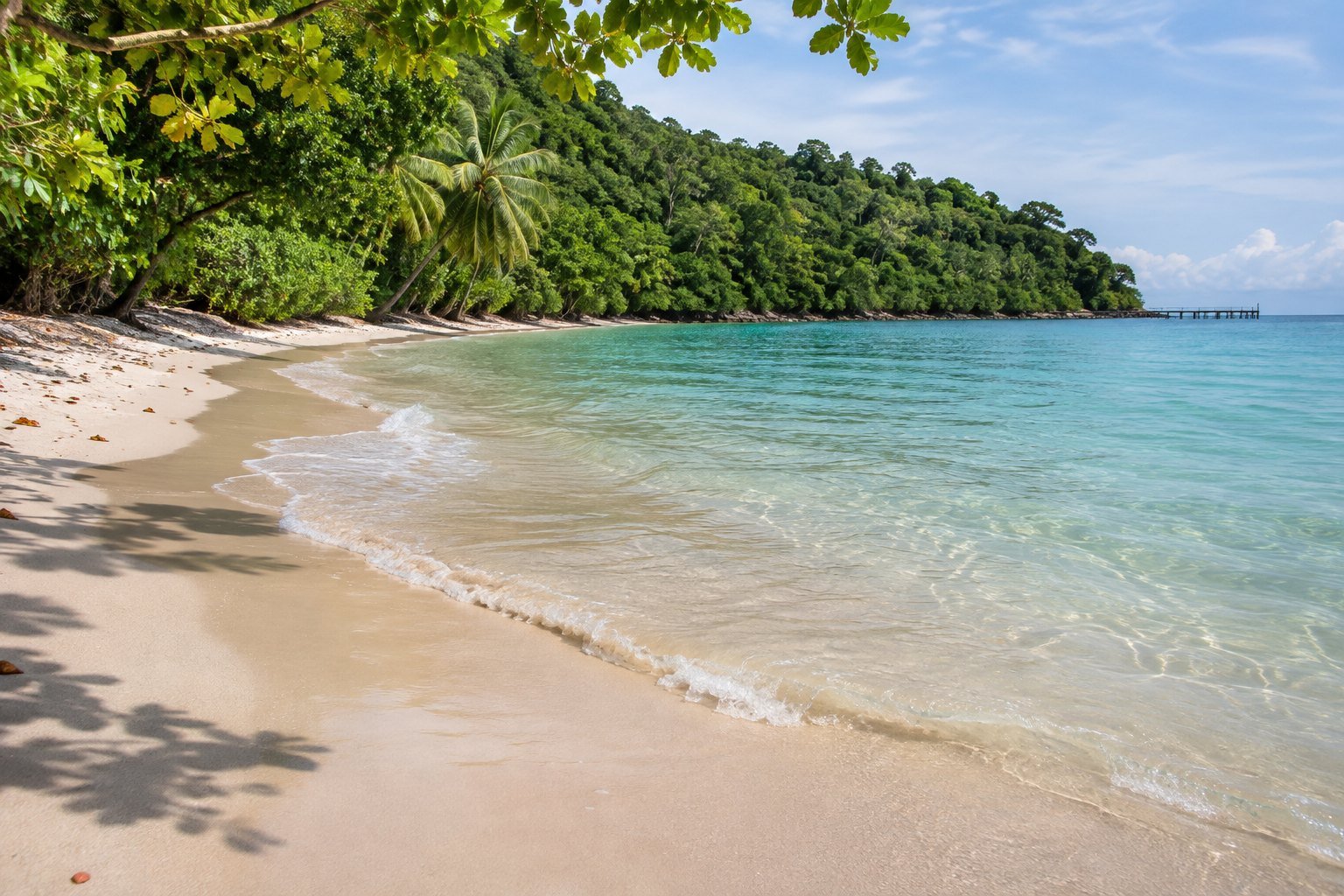
Choose an island when spending time beside the sea is a main purpose of the holiday. Ferry operators connect Sihanoukville with Koh Rong and Koh Rong Sanloem, with different island stops.[7] Match the landing to your accommodation before buying a ticket.
A cheap room on the wrong side of an island may be poor value once you add the transfer. Ask the property which pier to use, how you get from it to the room and what happens if you arrive after the normal transfer time.
For a long-haul flight home, a mainland buffer night is a sensible planning choice. It gives you more room to deal with ferry changes and road delays. If you only have two spare nights, weigh the travel involved against extending a mainland stay.
Back to top ↑The Mekong and north-east: go because nature matters to you
Kratie for a river-town stop
Kratie brings the Mekong into the trip. The river stretch between Kratie and Stung Treng is habitat for Cambodia’s remaining Mekong Irrawaddy dolphins.[8] A wildlife outing should allow patient observation and follow local conservation guidance; a sighting is never a promise.
A two-night stay can work as a pause rather than a hurried stop between buses. It is most appealing when the river is part of what you want to see, or when you are already planning a longer journey towards the north-east.
Mondulkiri or Ratanakiri for a nature-focused extension
Choose a specific experience before adding either province. In Mondulkiri, for example, the Elephant Valley Project describes an observation-based approach without riding, tricks, feeding or swimming with elephants.[9] Ask about walking conditions, transfers and the programme for your dates.

Ratanakiri offers a different base around Banlung, with Yeak Laom Lake east of the town.[10] It should not be treated as an interchangeable stop beside Mondulkiri simply because both sit in the north-east.
For a first trip, choose one province and give it a proper stay. Adding both makes more sense when you have time for the road journeys and a clear reason to visit each. If forests or wildlife are only a passing interest, the extra transfers may be less rewarding than another day in a region already on your route.
Arrange guided activities appropriate to your fitness and travel insurance. Ask about the terrain, walking duration, access to help and wet-weather alternatives before confirming a remote stay.
Back to top ↑The Cardamom region: choose the stay before the route
The Cardamom region and inland Koh Kong offer another way to include forests. Here, the exact lodge or community project matters more than a broad regional label. Two properties can have quite different access arrangements and activities.
Cardamom Tented Camp is one example: its published access instructions include a boat transfer from the mainland into Botum Sakor National Park.[11] That illustrates why a forest booking needs more planning than choosing a town-centre room.
Before reserving, ask where you will be collected, when you must arrive, which meals and activities are included, how the return journey works and whether the walking suits everyone in your group. Read current government advice alongside the operator’s directions; older descriptions of border access are not a reliable guide to what is open now.
For most first visits, choose between a substantial north-eastern nature extension and a Cardamom stay. You can visit both, but only if the time spent travelling between them is worth it to you.
Back to top ↑Turn a shortlist into a holiday you can enjoy
Start with one main reason for travelling, then add places that complement it. These combinations are suggestions for choosing regions, not fixed day-by-day itineraries.
Scroll sideways to read the full table.
| Your priority | A useful combination | What to leave out first |
|---|---|---|
| A first look at Cambodia in one week | Siem Reap and Phnom Penh | A distant third region unless it matters more than one of these |
| Culture with slower smaller-town days | Siem Reap, Battambang and Phnom Penh | An island detour added only for variety |
| Temples followed by time to rest | Siem Reap, the capital if wanted, then one southern base | Changing between several coastal hotels |
| A trip centred on wildlife and forests | Phnom Penh, then one well-chosen nature region | Trying to fit in every famous stop as well |
Count the moves, not just the nights
With nine nights and four different bases, you have three moves between hotels. With two bases, you have one. Those extra moves can cost you two substantial pieces of your holiday, even when the room-night total looks comfortable.
For scale, Giant Ibis advertises about six hours for the Phnom Penh–Siem Reap road journey.[12] If you add half an hour to reach the terminal, half an hour before departure and half an hour at the other end, that is roughly seven and a half hours before you settle into your next hotel. Allow more if traffic, stops or your pickup arrangements require it.
You can compare Siem Reap–Phnom Penh transport on 12Go, then check the actual operator, terminal, luggage rules and journey for your date. Do not turn a typical duration into a tightly timed onward connection.
Use the Trip Itinerary Planner to allocate nights to your chosen stops. If the route is starting to feel crowded, enter your own door-to-door transfer estimates into the Itinerary Pace Checker. The tools organise and assess your entries; confirm the journeys with transport providers.
Before you book the extra stop
- Can you explain what this region adds that your other stops do not?
- Have you allowed time to reach the hotel, rather than just the bus station or pier?
- Is there at least one day you actually want to spend there?
- Have you checked the exact location against current travel advice?
- Would one fewer hotel change make the holiday better?
A good first Cambodia route does not need every region. It needs enough contrast to feel interesting and enough time in each place to feel like a holiday.
Back to top ↑Questions travellers ask
Can I skip Angkor if temples are not my main interest?
Yes. A trip built around Phnom Penh, the coast or a nature stay can still have a clear purpose. If Angkor interests you a little, give it a considered visit; do not book several temple days simply because a standard itinerary includes them.
Should I stay in both Kampot and Kep?
Only if each stay offers something you want. On a short trip, one mainland base can be easier than packing up again. Ask about the journey to your intended outings, then compare that with the time lost changing hotels.
Does choosing fewer regions mean missing the real Cambodia?
No single route can represent a whole country. Spending longer in a few places gives you time for ordinary meals, quieter mornings and experiences beyond a list of major sights. Choose according to your interests rather than trying to prove how much ground you covered.
Sources and checks
Regional suggestions combine official geographical and cultural information with operator access details. Recommended stays and route combinations are editorial judgements for a first visit. The travel-time example adds a stated allowance to an operator’s published duration. Images are AI-generated illustrations; they are not photographs taken on location.
- Cambodian Ministry of Tourism — tourism roadmap, regional overview
Used for broad geographical groupings, not current entry rules or transport availability. Checked 14 November 2026. - FCDO — Cambodia travel advice and regional warnings
Checked 14 November 2026. - UNESCO World Heritage Centre — Angkor
Checked 14 November 2026. - Tuol Sleng Genocide Museum — official visitor information
Checked 14 November 2026. - UNESCO Creative Cities Network — Battambang
Checked 14 November 2026. - ASEAN and WIPO — Kampot pepper and tourism
Checked 14 November 2026. - Island Speed Ferry — destinations and services
Checked 14 November 2026. - WWF Cambodia — Mekong Irrawaddy dolphin habitat
Checked 14 November 2026. - Elephant Valley Project — visitor approach
Checked 14 November 2026. - ASEAN tourism — Lake Yeak Laom
Checked 14 November 2026. - Cardamom Tented Camp — getting to the camp
Used for the camp’s mainland and boat access; check current travel advice separately. Checked 14 November 2026. - Giant Ibis — Phnom Penh and Siem Reap route
Published journey duration; individual departures and road conditions can differ. Checked 14 November 2026. - GetYourGuide — Angkor tuk-tuk tour options
Provider listing, used to distinguish transport and guide options; not a personal tour review. Checked 14 November 2026.
Illustrations in this article were created for Taylor’s Trailblazing Travels. Third-party photographs, where used, are credited beside the image or in the source list.