

Cambodia · Wildlife choices
Ethical Elephant Experiences in Mondulkiri: How to Choose
Compare actual visitor policies, walking demands and published costs before deciding which elephant programme fits your values and your day.
AI-generated illustration of an Asian elephant; no named sanctuary or individual animal is depicted.
The most useful question is what visitors are invited to do with the elephants. In Mondulkiri, programmes described as sanctuaries can offer quite different activities. Decide your approach to contact first, then compare the walking, cost, community arrangements and booking terms.
This guide compares Elephant Valley Project and Mondulkiri Project through their published programmes, with independent welfare guidance where available. It helps you choose an experience from Sen Monorom without treating every rescue claim or forest setting as proof of the same standard.
Some links in this guide are affiliate links. If you book or buy through them, Taylor’s Trailblazing Travels may earn a commission at no extra cost to you.
Read the programme
Look beyond no riding to feeding, bathing and touching.
Match the walking
Ask about terrain and recovery options, not distance alone.
Check the evidence
Distinguish published policies from independent assessment.
Start with the visitor programme, not the sanctuary label
For an experience centred on observing elephants without feeding, bathing or handling them, Elephant Valley Project is the clearer fit among the two Mondulkiri programmes compared here. Its published visitor policy excludes those activities, and World Animal Protection lists it as elephant-friendly in its 2026 guide.[1][2]
World Animal Protection recommends observation-led venues and warns that words such as sanctuary or rescue centre do not establish good welfare. Its guide says the listed venue information was reviewed in December 2025. That is an independent assessment to consider alongside the current programme, not a guarantee about every future visit.[1]
Use three separate checks: what visitors are invited to do, what physical day you will have, and what evidence supports the community and conservation claims. Keeping those questions separate makes it easier to choose well without treating a logo, a low price or a moving rescue story as the whole answer.
The elephants in these programmes live under human care. A forest setting does not turn the visit into a wild-elephant safari. Plan to learn about individual animals and their care, rather than expect a staged performance or a particular photograph.
Back to top ↑Two real programmes, with different visitor contact
Both projects publish bookable visits from Sen Monorom. Their descriptions offer enough detail to identify an important difference before you start comparing dates or prices.
Scroll within the table on a small screen.
| Provider | Published visitor policy | What that means for your choice |
|---|---|---|
| Elephant Valley Project (EVP) | Observation in the forest; no tourist rides, tricks, feeding or swimming with elephants.[2] | Matches the observation-only approach used in this guide. The programme still involves walking and following the guide’s instructions. |
| Mondulkiri Project | No riding or tricks; its one-day tour explicitly includes hand-feeding and swimming beside elephants. It says participation is on the elephants’ terms.[3] | This is a contact-based programme. It does not meet the same observation-only preference, even if you personally decline an activity. |
These are statements about the published programmes, not allegations about staff or a substitute for an on-site welfare inspection. Mondulkiri Project’s own account says its elephants are not forced to interact or bathe on command. That claim should be attributed to the project, rather than presented as independently established.[4]
If you want no visitor contact, choose a programme designed around that condition. Opting out while the rest of a group feeds or swims with elephants changes your participation, but not the activity your booking helps fund. If a seller offers a separate observation-only departure, ask for its full programme in writing and apply the same checks.
Read the EVP visitor policy and the Mondulkiri Project one-day itinerary before enquiring. Similar names in search results can lead to different organisations, resellers or older programmes; check the operator named on the confirmation.
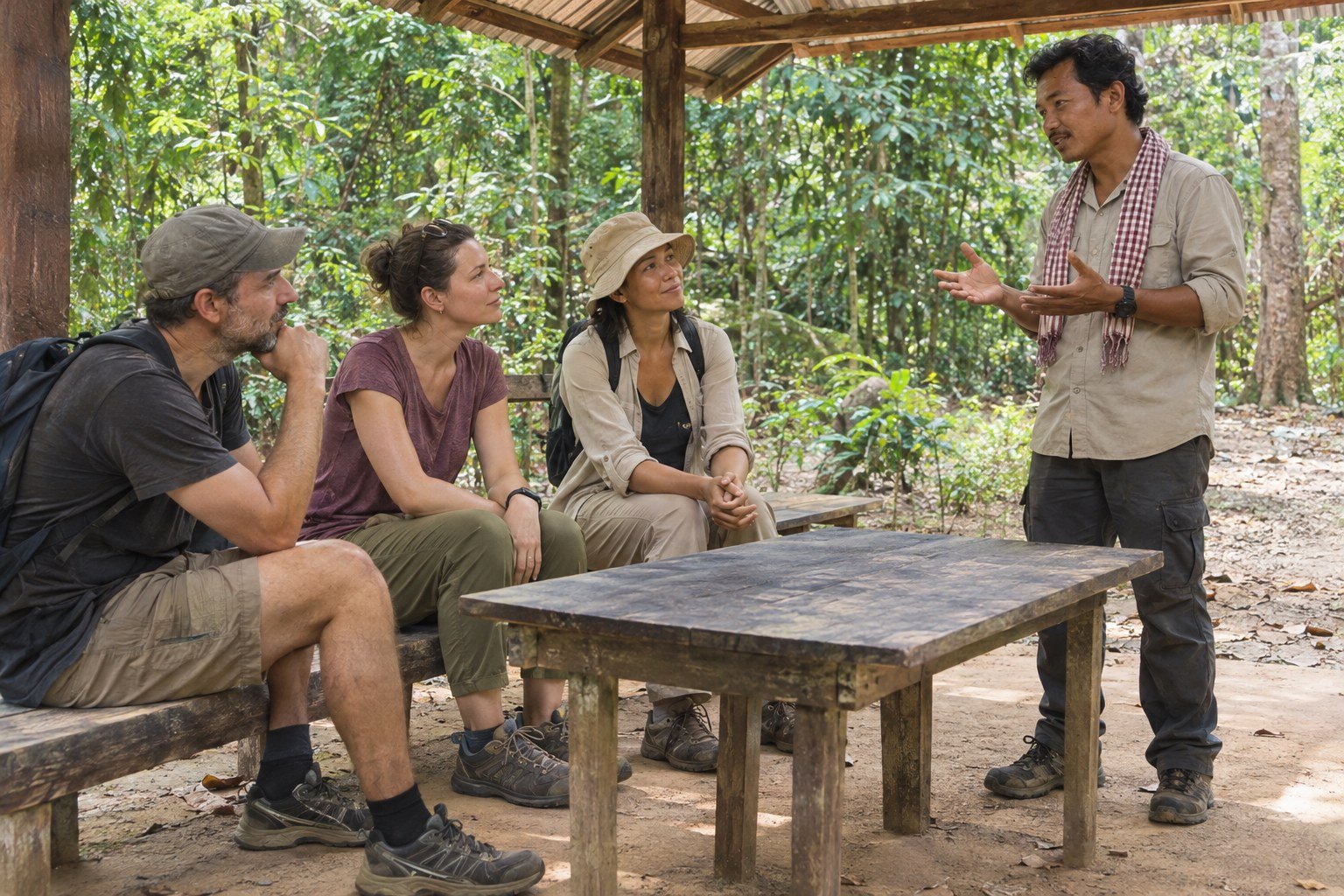
Ask questions that allow an elephant to have a quiet day
A good enquiry describes the experience you want, rather than asking only whether a project is ethical. For example: “We would like to observe without feeding, touching, bathing or riding. Is the whole departure run that way, and what happens if the elephants move away from us?”
Scroll within the table on a small screen.
| Question | Look for this in the answer |
|---|---|
| Can an elephant move away from the visitors? | A willingness to change the walking route or viewing position, without promising a close encounter. |
| What activities are visitors expected to join? | A specific daily programme, including any feeding, water activity, touching or photographs. |
| Who manages the animals and guides the group? | Clear roles for experienced carers and guides, plus a briefing explaining where visitors should stand. |
| What if our group cannot finish the walk? | A realistic alternative, early-return arrangement or an honest statement that the trip is unsuitable. |
| What evidence supports the project’s claims? | Named programmes, published policies and any identifiable independent assessment, with dates. |
Avoid paying for a promise that you will hug, wash, sit on or pose beside an elephant. Those promises make contact part of the product. An outing where you sometimes see an animal partly hidden behind vegetation can still meet the aim of observing its ordinary behaviour.
Animal care is different from an activity sold to tourists. EVP explains that trained mahouts may need close contact for care or safety. Do not interpret its no-tourist-riding policy as a claim that a staff member can never sit on an elephant; ask what you are seeing rather than drawing conclusions from an isolated photograph.[2]
Keep the response. If the programme changes when you arrive, you can refer calmly to the activity you agreed and ask for an alternative before joining. A precise written answer also helps everyone in your party share the same expectations.
Back to top ↑Choose the day by walking and time, then compare the price
The following are published adult foreign-visitor prices checked on 15 November 2026. Reconfirm your date, inclusions and payment terms before booking. The programmes differ, so a cheaper full day is not necessarily an equivalent alternative to a shorter observation visit.
Scroll within the table on a small screen.
| Programme | Price per person | Published activity and walking | Days |
|---|---|---|---|
| EVP Quick Trip | US$60 | One elephant-observation hike; 3–4 km. | Sunday–Friday |
| EVP Ele Lover | US$100 | Morning and afternoon elephant hikes; 5–8 km. | Sunday–Friday |
| EVP Explorer | US$75 | Morning elephants, afternoon forest hike; 5–8 km. | Monday–Friday |
| Mondulkiri Project one-day tour | US$50 | Valley walks, feeding and water activities; no distance specified on the itinerary. | Daily |
EVP includes VAT, transfers from Sen Monorom, guiding, lunch and water refills. Choose Quick Trip for the shorter walk; choose the longer day for its programme, without expecting closer contact.[5]
Mondulkiri Project lists lunch and drinking water, with pickup from selected guesthouses or an office meeting point. Its one-day itinerary warns that heavy rain can prevent river and waterfall activities. Ask about the walking surface and return arrangements instead of reading a general fitness label as an access guarantee.[3][6]
At those prices, two adults pay US$120 for Quick Trip, US$200 for Ele Lover or US$150 for Explorer. The extra elephant-observation afternoon costs the pair US$80. Choose it only if both people want the additional walking and observation time.
Do not fill a long day merely to make the ticket feel better value. Someone who is comfortable for a morning but tired by lunch may enjoy the shorter programme more. If no available outing meets both your welfare preference and your physical needs, choose another activity for the day.
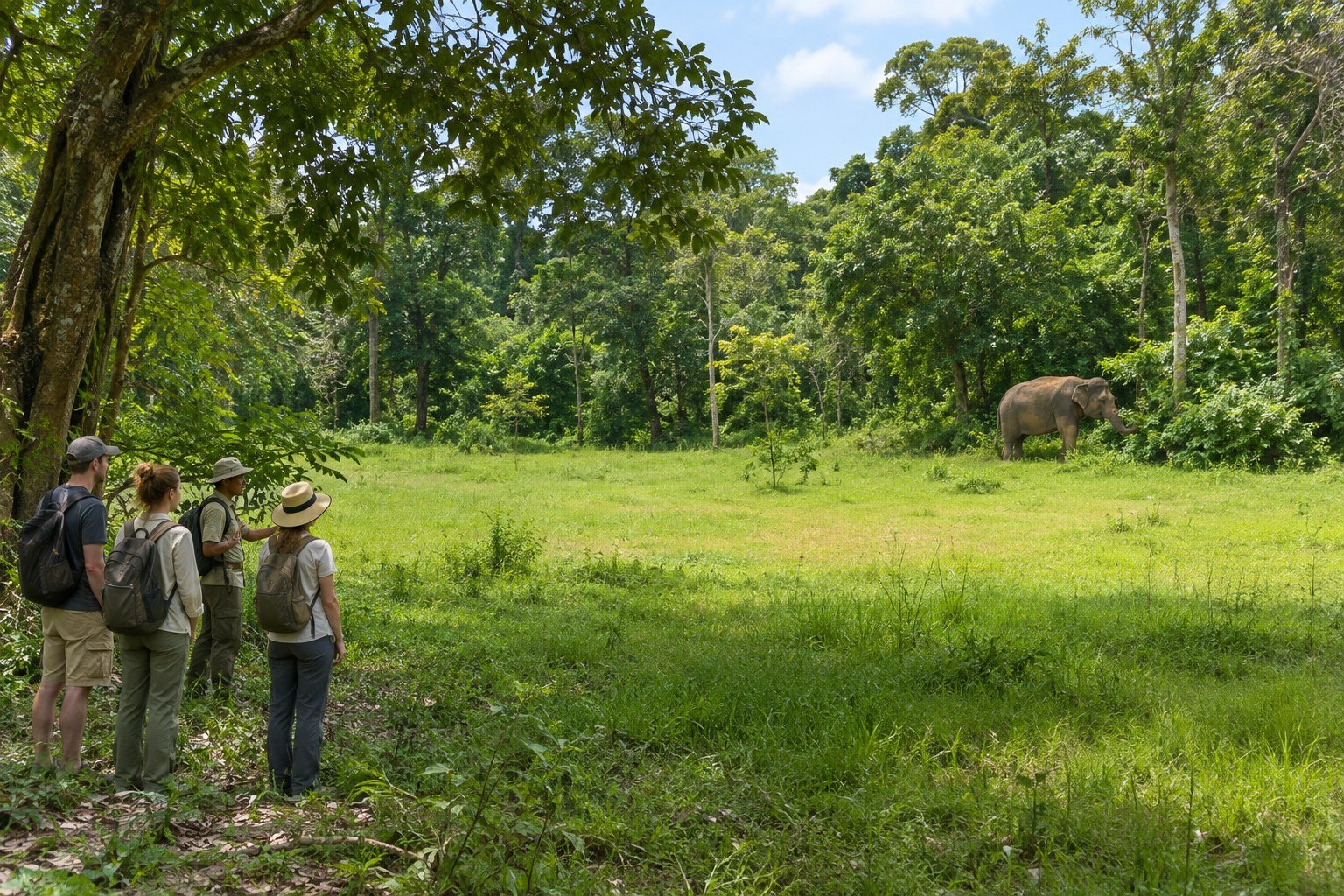
Describe your needs more precisely than “reasonably fit”
Tell the project how long you can comfortably walk, whether slopes or uneven footing cause difficulty, and whether you need frequent seated breaks. Ask about the actual route proposed that week, including the steepest section, slippery ground, any stream crossings and the way back to transport.
An advertised kilometre range does not describe every difficulty. Four kilometres with roots, gradients and pauses in humid weather can feel different from four kilometres on a pavement. A guide can give a more useful answer if you describe a normal walk you manage comfortably, rather than select a vague fitness category.
For a wheelchair user or anyone who needs step-free access, request specific information about vehicle entry, paths, toilets and viewing positions. Neither the forest setting nor the word accessible should stand in for those answers. Do not pay for an unsuitable trip on the assumption that staff will be able to improvise a solution.
With children, ask about the pace, the ability to stay quietly with the group, the minimum age for the selected programme and the child rate for their exact ages. Discounted admission and practical suitability are different questions. An adult still needs to be able to supervise the child while following the guide’s positioning instructions.
Wear footwear you already know is comfortable on uneven ground. Take the requested water bottle, sun protection and a small bag you can carry for the whole walk. Mention dietary requirements when booking and ask how they are handled, rather than rely on a general statement that lunch is included.

Check community benefit alongside animal welfare
EVP’s parent organisation, ELIE, describes local employment, compensation arrangements with elephant-owning families, community health support and school scholarships. These are its own programme reports; this guide does not audit their finances or attach a percentage of each ticket to a particular activity.[7]
Mondulkiri Project describes a Cambodian-founded project working with Bunong communities, and jobs for guides, elephant carers, drivers and cooks. It also says forest protection is a core aim. Those are meaningful topics to enquire about, while keeping the contact policy as a separate decision.[4]
Useful follow-up questions are simple: who owns or has agreed the use of the land, who guides visitors, how are elephant owners compensated, and what ongoing veterinary care is available? Ask for a published explanation where one exists. If a seller claims that a portion of your money supports a named community, ask what that arrangement involves.
Pay for guiding, food and services at the agreed rate, and ask before photographing people. A guide’s knowledge and work are part of the experience; a community should not be treated as an extra photo opportunity attached to the elephants.
Keep volunteering separate from the visitor decision. If you want to stay longer, ask what work is actually needed, who supervises it and what skills or commitment are required. The chance to perform a care task once should not be the reason to choose an elephant programme.

Confirm the programme before fixing the rest of the trip
EVP’s booking page says visits operate Sunday to Friday, with Saturday generally kept free of visitors for the elephants and local staff. Its enquiry form is not a confirmed booking. Get the date and chosen programme accepted before making non-refundable plans around it.[8]
EVP asks for payment at least a week ahead, states that cancellations within seven days are non-refundable, and requires travel insurance including medical evacuation. It may alter or cancel a visit for safety or other specified reasons. Read the current terms with the confirmation.[5]
Mondulkiri Project says payment is made on the tour morning and accepts US dollars, riel and credit cards, with a 2% card surcharge. Confirm any change or cancellation conditions directly. For two US$50 places, a 2% card surcharge adds US$2 to the US$100 tour total; any currency conversion or issuer charge is separate.[6]
Put the confirmed activity day into your trip plan first, then add arrival and departure. Aim to sleep in Sen Monorom before an early meeting, and allow a comfortable night after a full forest day if a long road journey would otherwise follow immediately.
For the journey from Phnom Penh, compare Phnom Penh–Mondulkiri road services and check the exact arrival point. Confirm the connection to your accommodation separately; a destination label is not a guarantee of hotel drop-off.[9]
Compare Sen Monorom accommodation on Agoda and Sen Monorom stays on Booking.com around the actual pickup or meeting point. Check early-morning access, breakfast arrangements and cancellation terms. A cheaper out-of-town room can add a paid return ride on the activity day.
If two room offers differ on pickup or breakfast, enter the complete prices in the Hotel Comparison Calculator using one currency. Include the transport you would really need, and keep the elephant ticket separate so that changing hotels does not accidentally change the programme you wanted.
Back to top ↑Let the briefing guide what happens on the day
Listen before approaching the viewing area. Ask where to stand, how the guide will signal a move and what to do if an elephant changes direction. Leave the space the guide requests, avoid surrounding an animal and keep to the agreed group position. A calm animal is not an invitation to move closer.
If an elephant is feeding, resting or behind vegetation, let that be part of the visit. Ask the guide about what it is doing rather than how to make it face the camera. Keep your own plans flexible enough for the animals’ movements to change the route or the view.
If a promised observation visit turns into a contact activity, decline the contact and speak to the guide or organiser. Do not argue beside an animal or try to intervene in its handling. Record the booking details and raise a specific concern afterwards with the operator or booking platform.
A useful review describes what visitors were invited to do, the quality of the briefing, how staff handled requests for closer photographs and whether the physical demands matched the description. Avoid deciding that an outing was poor simply because an elephant chose to walk away.
Back to top ↑Questions that often decide the booking
Does “no riding” mean an elephant experience is ethical?
It answers one part of the programme. Feeding, bathing, touching and staged photographs still need separate answers. Choose against the full visitor policy and identifiable welfare evidence, not a single phrase.
Is Mondulkiri Project the same as Elephant Valley Project?
No. They are separate organisations with different published programmes. Check the exact operator name and website on your confirmation, especially when another business arranges the visit.
Can I go only to watch at a programme that offers feeding?
You can ask to decline an activity, but that does not make the whole departure observation-only. If avoiding tourist contact is your priority, a programme designed around observation is the clearer choice.
What if the observation-only option is too expensive?
Compare a shorter programme first, including the complete cost of getting there. You can also choose a different nature outing and support a conservation organisation separately if you wish. An elephant experience is optional; there is no need to buy a programme that conflicts with your own priorities.
Are we guaranteed to see wild elephants?
No. These are visits to elephants living under human care. A separate wild-elephant encounter would involve different conservation, access and safety considerations; do not treat either programme as a promise of a wild sighting.
Back to top ↑Sources and checks
The comparison uses current operator descriptions and the identified independent welfare guide. The screening questions and recommendations are editorial judgements based on those policies. No visit or independent welfare inspection was carried out for this article.
- World Animal Protection — Elephant-friendly tourist guide 2026
Independent visitor-welfare guidance and named EVP listing; the page dates its venue review to December 2025. Checked 15 November 2026. - Elephant Valley Project — Sanctuary ethos
Operator’s visitor-contact policy and distinction between tourist activities and professional care. Checked 15 November 2026. - Mondulkiri Project — One-day elephant adventure
Operator’s published contact activities, US$50 price, pickup and weather qualifications. Checked 15 November 2026. - Mondulkiri Project — Our story
First-party claims about elephant choice, community employment and forest protection. Checked 15 November 2026. - Elephant Valley Project — Visit options
Published foreign-visitor prices, walking distances, days, inclusions and booking terms. Checked 15 November 2026. - Mondulkiri Project — Frequently asked questions
Published operating days, payment, surcharge, meals and practical arrangements. Checked 15 November 2026. - ELIE — Programme summaries
First-party account of elephant care and community programmes. Checked 15 November 2026. - Elephant Valley Project — Book your visit
Enquiry process, confirmation and Saturday rest day. Checked 15 November 2026. - 12Go — Phnom Penh to Mondulkiri
Actual road-route comparison page; individual services require date-specific checking. Checked 15 November 2026.
Illustrations in this article were created for Taylor’s Trailblazing Travels. Third-party photographs, where used, are credited beside the image or in the source list.


