Koh Rong with Children: Choosing Beach Accommodation Safely
Choose a stay that makes sleeping, eating and reaching the beach easier, with the room and transfer details clear before you book.
AI-generated illustration of a family beach stay.
Koh Rong with children works best when the ordinary parts of the day are easy: a room where everyone sleeps, meals within reach and a manageable route from the boat. A beautiful stretch of sand is a good start, but it cannot answer those questions for you.
Choose the room and arrival arrangements together. This guide compares real accommodation features, explains what to ask about water access and shows how a slightly dearer room can work out much the same once family extras are included.
Check beds, connecting doors, steps and the route outside; the room name alone is not enough.
Get the landing, meeting point and luggage help confirmed by the hotel before booking a ferry.
Choose manageable access and keep close adult supervision central to the plan.
Compare the whole family’s room, meals, extra beds and transfers on the same dates.
Build the stay around your children’s routine
Begin with what would make a normal day comfortable. A toddler who naps, a child who dislikes boat journeys and a teenager who wants independence need different things from the same island. The most useful shortlist is usually a small one, with clear answers from each hotel.
Swipe within the table to see all columns.
| Your situation | Prioritise | Ask before committing |
|---|---|---|
| Baby or toddler | A workable cot or sleeping arrangement, shade and a room you can leave securely closed. | How are the terrace, pool and sea separated from the room? Can the boat provide a lifejacket that fits? |
| Primary-school children | The agreed beds, easy meals and a transfer with little uncertainty. | Who meets the ferry, who handles bags and how far do the children walk? |
| Older children or teenagers | Enough sleeping space, agreed activities and clear boundaries. | Which activities accept their ages, and what equipment and supervision are included? |
| A child with particular care needs | Reliable answers about food, medication storage where needed and access to appropriate help. | Can the property meet those needs, and has your usual care team helped assess the itinerary? |
Keep the first day light. A beach walk, an early meal and time to settle into the room are often enough after a flight, road journey and ferry. For a short stay, one well-chosen base usually gives you more usable family time than moving between beaches.
If you would find a weather delay or a change of landing difficult to manage, consider a mainland beach stay for this part of the trip. The right choice is the one that leaves you comfortable with the journey as well as the room.
Back to top ↑Compare the actual room, not just the family label
Published room details checked on 15 November 2026. These examples show different layouts; they are not safety ratings or confirmed availability for your dates.
BeachWalk: two rooms with an internal door
BeachWalk’s Family Room with Garden View has two connecting rooms: a king bed in one, two single beds in the other, and separate bathrooms and balconies. Air-conditioning is listed.[1]
That arrangement can suit parents who want separate sleeping spaces while remaining connected indoors. Ask for photographs of both balcony doors and the route to the restaurant, and confirm that the booking names this exact room category. You can check BeachWalk’s rooms on Booking.com; enter every child and their age before comparing the total.
Long Set Resort: larger beds in one room
The Deluxe Twin Garden View at Long Set Resort is described as a 38 m² room with one king and one queen bed, a balcony and air-conditioning. An extra bed can be requested.[2]
This is useful if everyone is happy sharing a room; it gives a different kind of privacy from connecting bedrooms. Confirm the permitted occupancy, any extra-bed charge and the actual room position. Compare Long Set Resort on Agoda, taking care to distinguish garden, pool-view and pool-access categories.
The Royal Sands: separate bedrooms with a private pool
The Royal Sands’ two-bedroom Oceanview Pool Villa has two separate bedrooms with super-king beds and a private swimming pool.[3]
The extra space may appeal to an older family. With young children, the pool’s position and any barriers or lockable doors need close attention before choosing it. Ask for the layout rather than assuming a large villa is easier to supervise. View The Royal Sands’ accommodation on Agoda and compare the selected villa’s full terms with a direct hotel quote.
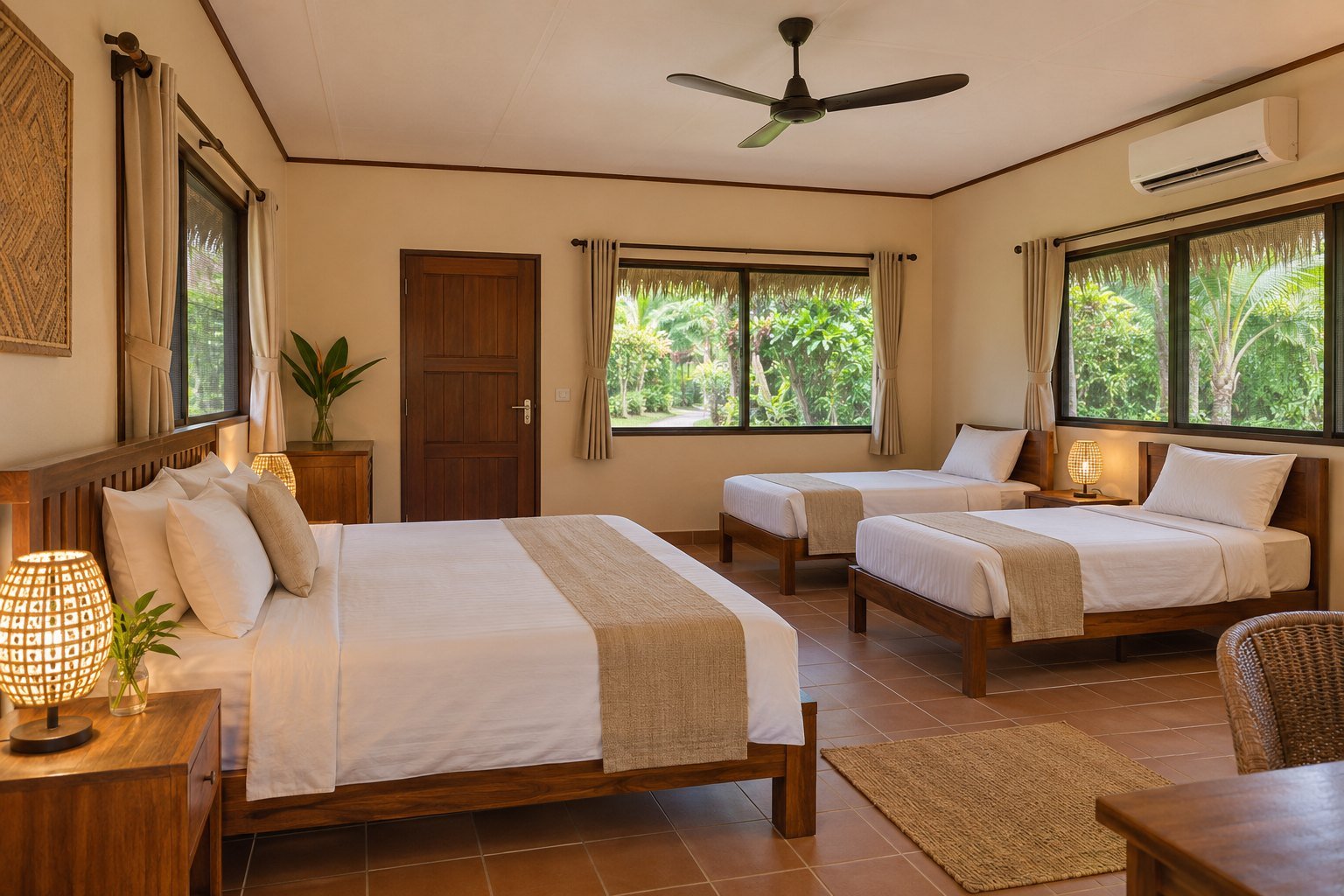
For any property, get the final arrangement in writing: room category, number and size of beds, cot or extra bed, bathrooms, air-conditioning, breakfast and the total for your actual party. A request for adjoining rooms is not the same as a confirmed connecting-room booking.
Back to top ↑Make the journey from boat to room clear
Ask the hotel which named landing to book and how you reach the room from there. Include the ferry company, date, luggage and anything you need for a pushchair or child who cannot walk far. Do this before treating an island-wide ferry search as a completed transfer plan.
BeachWalk describes a roughly 400-metre beach walk from Long Set Pier and offers staff help with luggage when arranged ahead.[5] A short distance across sand can still matter when you are carrying bags and keeping hold of a small child.
The Royal Sands illustrates why the travel month matters. Its published May–October arrangement uses an eastern landing followed by a road transfer of about 15 minutes; November–April normally uses its western resort jetty. Weather can change the arrangement.[6] Ask which vehicle and child restraints are available if a road leg is needed.
You can compare Sihanoukville–Koh Rong ferry options on 12Go, then match the named arrival stop with the hotel’s instructions. Check child tickets, seats, check-in, luggage and cancellation terms for the selected departure; this is a route search, not a promise that every boat calls at every beach.[12]
Settle the lifejacket question before departure
Ask for a suitable jacket for each child’s current weight and size, rather than a promise that there are “children’s jackets”. RNLI guidance recommends using the maker’s weight and chest-size range and fastening the crotch strap so the jacket does not ride up.[7]
Check the fit with the crew before boarding, keep each child in the correctly fitted lifejacket throughout the boat journey, and follow the vessel’s safety briefing. If suitable equipment cannot be provided, change the arrangement. Keeping a child on an adult’s lap does not solve the equipment problem.
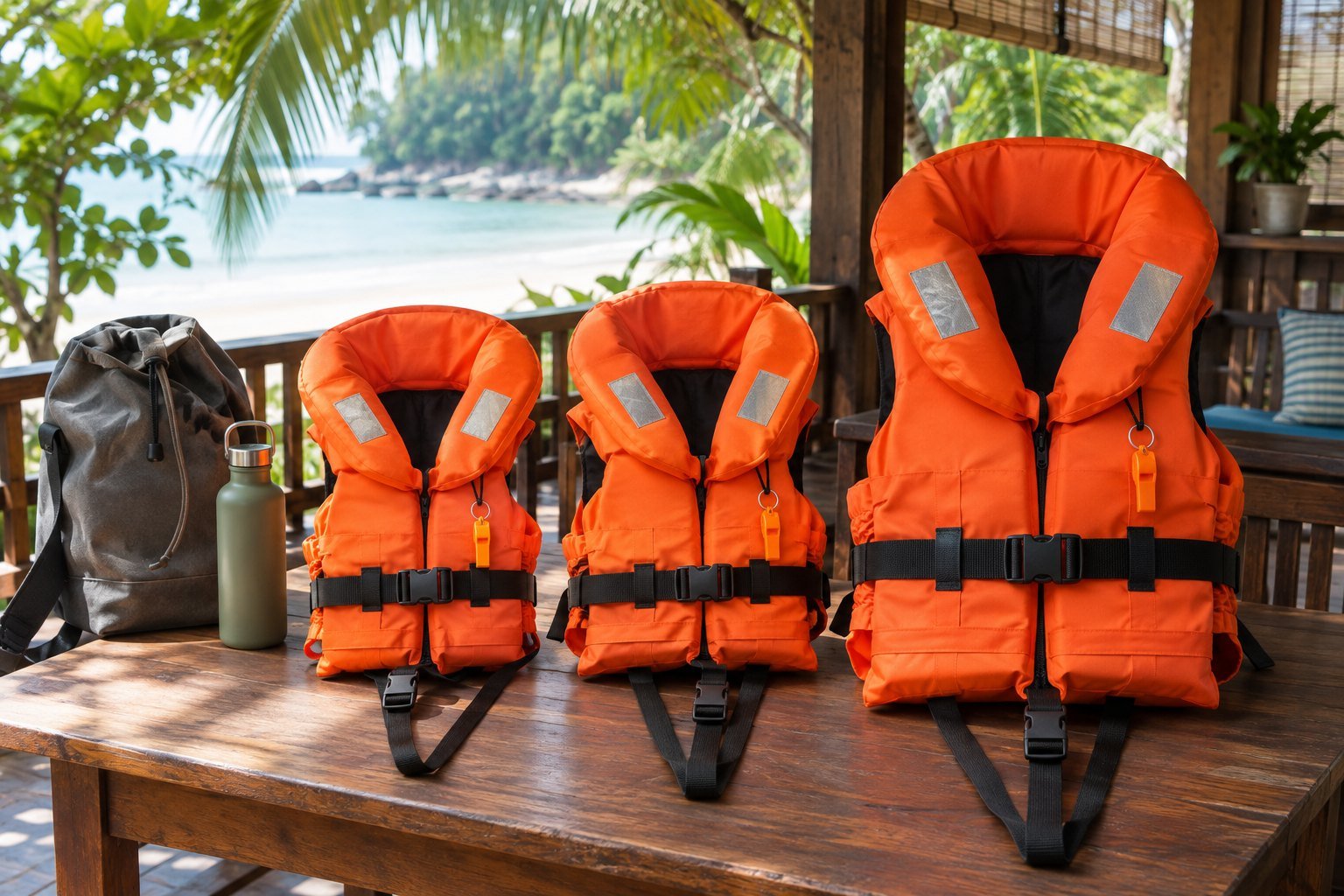
Ask staff to handle heavy bags so an adult can concentrate on each younger child at the landing. Agree a meeting point and keep the hotel’s contact saved offline. A vague promise to “find a taxi when you arrive” is not a useful family transfer plan.
Back to top ↑Make water access part of the accommodation decision
A pool beside the room or the sea outside the terrace can look wonderfully convenient. Before booking, look at the route a child could take from the bed, door or breakfast table to the water. Ask which doors lock securely and what separates play areas from pools, jetties and the beach.
The Red Cross advises close, continuous adult supervision around water, even with a lifeguard present. A responsible adult should be clearly in charge; weak or inexperienced swimmers need an adult within arm’s reach in the water. Inflatable toys and flotation equipment do not replace supervision.[8]
Use photographs to ask practical questions: is the pool open directly from the terrace, are there effective barriers, and where is a shaded place to sit together away from the water? “Pool access” is a room feature to assess carefully with young children.
At the beach, ask about conditions that day, boat movements and any swimming restrictions. FCDO’s Cambodia advice also warns about jellyfish in the sea close to shore.[9] Choose another activity when conditions are unsuitable; yesterday’s calm water does not settle today’s decision.
Share supervision explicitly when adults take turns. Before the watching adult leaves for a drink, photograph or phone call, another adult needs to have taken over. Build quiet games and time in the shade into the day so swimming is one option among several.
Back to top ↑Check meals, rest time and what happens after dark
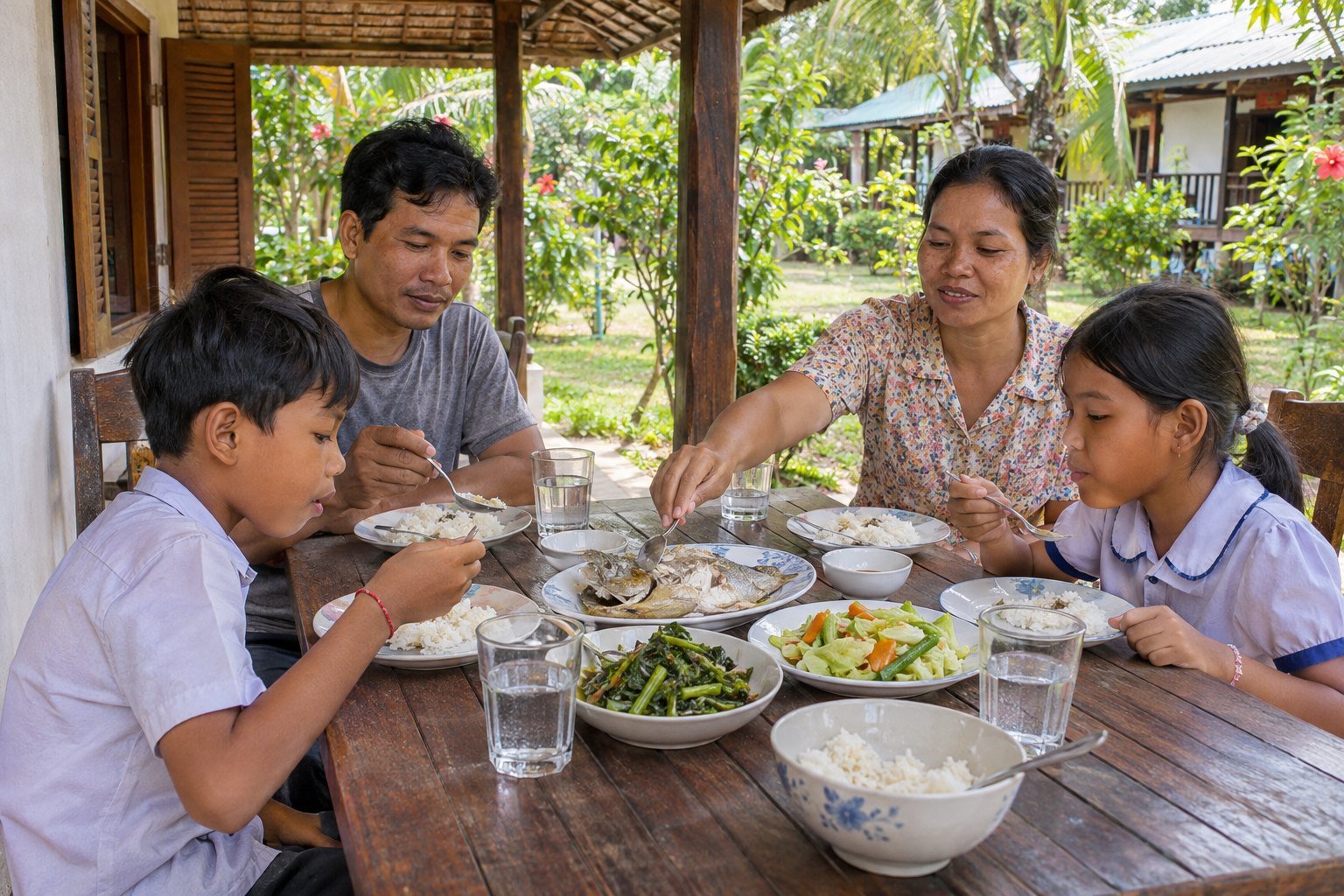
Ask to see a current menu, meal times and breakfast arrangements. Check whether there are simple dishes your children will eat, drinking water available throughout the day and a practical way to manage any dietary requirements. For a significant allergy, get a clear answer about what the kitchen can actually provide.
Room position matters here too. A short, manageable route to dinner can be more valuable than a sea view from a room reached by repeated steps. Ask about lighting on paths and whether a noisy bar, event area or generator is close to the particular room you are offered.
If naps are still part of the day, ask about curtains, ventilation and where an adult can comfortably sit while the child sleeps. Check the cot’s availability and arrangement directly rather than assuming it is included in a family search result.
The Royal Sands lists a staffed Kids’ Corner with shaded craft activities, open 09:00–17:00.[4] If that feature affects your choice, ask about ages, staffing, current opening and whether parents must stay nearby. A play area description should not be read as a personal childcare arrangement.
Leave a little space for everyday pleasures: sand play, a short walk, a book on the terrace and an early dinner. You do not need to book a boat excursion for every day simply because the hotel offers activities.
Back to top ↑Compare the whole family’s stay cost
Put the same dates, adults and children into every comparison. Then add the extras that your family will actually pay: breakfasts, extra beds, ferry tickets, luggage help and the final ride to the property.
For example, suppose two adults and two children are comparing these four-night quotes. All amounts below are hypothetical US-dollar figures, including the family transfer totals; replace them with the offers you receive.
Swipe within the table to see all columns.
| Cost for the whole family | Stay A | Stay B |
|---|---|---|
| Room: four nights | $95 × 4 = $380 | $130 × 4 = $520 |
| Breakfast for four mornings | $24 × 4 = $96 | Included |
| Return ferry and final transfer | $140 | $100 |
| Total for the items shown | $616 | $620 |
The higher room rate costs only US$4 more altogether in this example. You could then choose on room layout, transfer arrangements and cancellation terms, rather than the nightly headline. Other meals, activities, insurance and onward travel are outside these totals.
The Hotel Comparison Calculator can help compare your checked room and extra costs. Use one currency throughout, and put the children’s ages into the booking service itself so its occupancy and meal rules are reflected.
Read what happens if the boat is cancelled or your arrival date changes. A flexible room rate and a flexible ferry ticket are separate things. Save both sets of conditions with your booking confirmations.
Back to top ↑Leave time around the ferry and agree a help plan
Keep the final island night away from an essential flight connection where you can. BeachWalk itself advises against relying on a ferry on the same day as an international flight.[5] An overnight on the mainland gives you more room to handle a changed departure, though it cannot remove every disruption.
FCDO warns that boats between Sihanoukville and nearby islands sometimes operate despite weather warnings.[9] A boat being offered for sale does not settle whether the conditions are acceptable. Follow current warnings and be prepared to stay put.
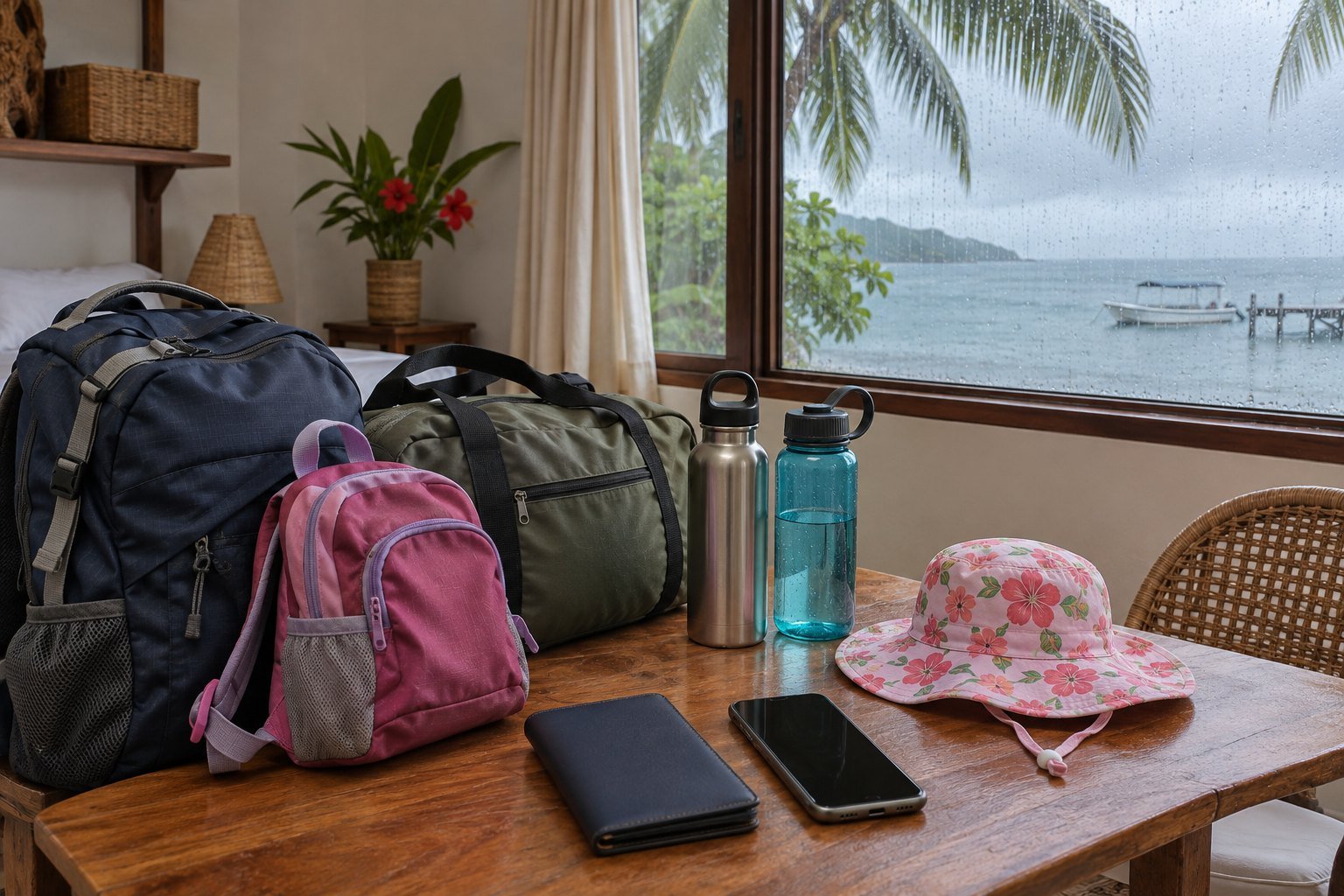
Ask about help before you need it
The Australian Embassy describes emergency care outside Phnom Penh and Siem Reap as very limited; serious cases may need transfer to Phnom Penh.[11] Ask the hotel who is available overnight, which medical facility it would contact and how onward travel would be arranged if normal boats were disrupted.
FCDO recommends checking that your destination can meet your healthcare needs and having cover for treatment and unexpected medical evacuation. Its published ambulance number is 119.[10] Save the hotel’s local emergency contact and your insurer’s assistance number as well. Do not assume a first-aid kit or a regular ferry timetable answers a medical-access question.
If your child needs dependable access to particular treatment, discuss the island part of the itinerary with their usual clinician before booking. A mainland base may be a more comfortable choice for your family.
For everyday messages, Airalo’s store offers Cambodia eSIM options. Check device compatibility, what the chosen plan includes and reception with the hotel. Keep key contacts and confirmations offline too; a data plan is not a guarantee of island coverage or ordinary voice calls.[13]
Back to top ↑The questions worth sending before you book
A good reply should describe your booking clearly. Send the children’s ages and the dates, then ask:
- Which exact room and beds will we have, and are connecting doors guaranteed if requested?
- What separates the room and terrace from the pool or sea, and are there steps on the route to meals?
- Which ferry landing should we book, who meets us, and how do we travel from there with bags?
- Can suitable lifejackets be confirmed for each child’s weight and size?
- Which meals, extra beds and transfers are included in the total?
- Who can help after reception hours, and what is the plan if weather changes the arrival or return?
Choose the stay with a workable room, a clear arrival and answers that fit your family. The island experience can then be pleasantly simple: enough comfort to settle in, time together by the beach and the freedom to change the day’s plans.
Back to top ↑Frequently asked questions
Can we take a pushchair to Koh Rong?
Ask the hotel about the complete route from the landing to your room. Sand, steps and boarding arrangements matter more than the distance alone. Request recent photographs and confirm luggage assistance; a short transfer should not be assumed step-free.
Does a family room mean separate bedrooms?
No. The examples here include connecting bedrooms and larger beds within one room. Compare the actual floor plan and bed arrangement, and make sure the confirmed booking matches the space you want.
Is a hotel’s kids’ area a childcare service?
Ask about the ages accepted, staff supervision, booking requirements and whether parents must remain nearby. A play space may be useful for a break from the beach without offering the childcare arrangement you had in mind.
Should a family split a short stay between two beaches?
Usually, start with one base that meets your needs. A move means packing, checking out and arranging another transfer, which can use much of a short holiday. Split the stay when the second location offers something your family particularly wants and the journey is manageable.
Sources and checks
This guide draws on transport operators, accommodation and activity providers, official advice and destination research. Planning suggestions are editorial recommendations; check time-sensitive details for your travel dates.
- BeachWalk Koh Rong — Accommodation and family-room layout
Checked 15 November 2026. - Long Set Resort — Deluxe Twin Garden View
Checked 15 November 2026. - The Royal Sands Koh Rong — Two-bedroom Oceanview Pool Villa
Checked 15 November 2026. - The Royal Sands Koh Rong — Kids’ Corner
Checked 15 November 2026. - BeachWalk Koh Rong — Arrival, luggage assistance and ferry advice
Checked 15 November 2026. - The Royal Sands Koh Rong — Seasonal boat arrangements
Checked 15 November 2026. - RNLI — Family sailing and fitting children’s lifejackets
Checked 15 November 2026. - American Red Cross — Swimming safety and child supervision
Checked 15 November 2026. - FCDO — Cambodia safety and security
Checked 15 November 2026. - FCDO — Cambodia health and emergency contact
Checked 15 November 2026. - Australian Embassy Cambodia — Emergency medical services
Checked 15 November 2026. - 12Go — Sihanoukville to Koh Rong route search
Checked 15 November 2026. - Airalo — Cambodia eSIM options
Checked 15 November 2026.
Illustrations in this article were created for Taylor’s Trailblazing Travels. Third-party photographs, where used, are credited beside the image or in the source list.