Hiring a Car or Driver in Cambodia: What Travellers Need to Know
A practical guide to choosing the right arrangement, checking the paperwork and comparing the full cost.
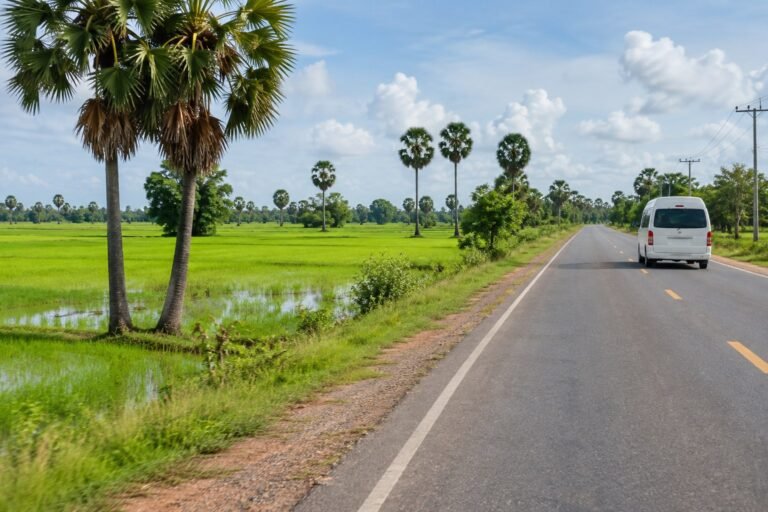
AI-generated illustration: a car with a driver and a self-drive rental involve different responsibilities.
Car hire in Cambodia can mean two quite different things: collecting the keys yourself, or booking a vehicle with someone else driving. Start by deciding which one you actually need. A transfer between hotels, a day with several stops and a week of independent driving deserve different quotes.
For a visitor unfamiliar with Cambodian roads, a well-checked car and driver is a sensible first option to investigate. It leaves you free to navigate the trip rather than the traffic. Self-drive can still suit an experienced, properly licensed traveller, but only after the paperwork, insurance and route have been settled.
This guide contains affiliate links. If you book or buy through them, Taylor’s Trailblazing Travels may receive a commission at no extra cost to you.
For an unfamiliar rural route, first compare a car with a driver against other transport.
Confirm your licence and insurance position before paying a deposit.
Compare the whole journey, including fuel, waiting and any one-way charge.
Specify passengers, bags, seat belts and any child-seat or access needs.
Choose the arrangement before choosing the car
The useful comparison is how much control you need and which responsibilities you want to take on. A hired driver can handle the driving, but you still need to agree the route and assess the vehicle.
Swipe within the table to see all columns.
| Your journey | Start by comparing | Question that decides it |
|---|---|---|
| One hotel to another, with no sightseeing stops | Private transfer, bus or minivan | Does the door-to-door convenience justify the total cost? |
| A day out with several stops | Car and driver with an agreed itinerary | Are waiting time, stops and return travel included? |
| Several days through different regions | A multi-day driver quote and separate transfers | Who pays for the driver’s overnight costs and return journey? |
| Flexible independent driving | Self-drive rental | Are your documents, insurance and every planned road acceptable? |
A city stay with one excursion rarely needs a rental car sitting outside the hotel all week. Equally, a family with bulky luggage may find a private transfer easier than several changes of vehicle. Compare the inconvenience you are actually removing, rather than assuming the largest vehicle offers the best value.
If your itinerary includes Phnom Penh to Siem Reap, you can compare the route’s transport options on 12Go. Select your date and check the individual listing: a seat on shared transport and a whole private vehicle are different purchases.[6]
Check the licence rules for your circumstances
For UK licence holders, GOV.UK lists the 1949 International Driving Permit for Cambodia.[2] FCDO guidance says a UK licence and that permit may be required for car hire, while long-term rental or driving a private car requires a Cambodian driving licence.[1]
Arrange any UK-issued permit before travelling. Then ask the rental company and your insurer to confirm the documents they require for your nationality, vehicle and rental period. Do not treat a company accepting payment as confirmation that you may legally drive.
Cambodia’s Ministry of Public Works and Transport publishes its local licence and exchange process. Its requirements for foreign applicants include identity, visa, residence and medical documents; an exchange is not simply a formality at the rental counter.[3]
Three checks before you commit to self-drive
- Send the supplier the licence category, issuing country and rental dates. Ask for its current document requirements in writing.
- Check the same proposed driving arrangement with the insurer, including any permit or Cambodian licence requirement.
- If the answers conflict or remain unclear, resolve them with the relevant authority before driving. A transfer with a driver is an alternative while you settle the paperwork.
If your licence was issued outside the UK, use guidance for that issuing country as well as the Cambodian authority’s requirements. The UK-specific permit advice above is not a universal rule for every visitor.
Find a provider you can check
Look for a named business, clear contact details, written terms and an identifiable booking. Avis lists a Phnom Penh downtown rental branch, which gives a direct place to ask about self-drive requirements and rental conditions.[4] Grab also advertises car-with-driver rental products for Phnom Penh and Siem Reap.[5] Neither listing establishes suitability for your particular journey.
For a private driver, ask your accommodation for a written quote and compare it with an independently obtained option. A useful response should name the vehicle type, expected passenger capacity, pickup and drop-off points, and the person or business responsible if something changes.
Questions that reveal more than a star rating
- Who will drive, and is the driver licensed for the vehicle?
- Are seat belts fitted and working at every occupied seat?
- What vehicle insurance applies to paying passengers?
- Who provides help if the vehicle breaks down?
- Will another car or driver be substituted, and can you reject an unsuitable replacement?
- What is the cancellation policy, deposit amount and payment method?
Ask for a recent photograph of the actual vehicle where possible. A photograph helps you discuss access and space, but the vehicle that arrives still needs checking. Avoid making a large payment to an unexplained personal account on the strength of a social-media message alone.
Compare the full quote
A useful quote names the route and the total price for your party. Clarify the currency and whether the price is per car, per day or per person. Then ask what changes if the day runs late.
Swipe within the table to see all columns.
| Cost or condition | Car with driver | Self-drive rental |
|---|---|---|
| Basic price | Vehicle, driver, agreed hours and route | Rental period and included mileage |
| Running costs | Fuel, tolls and parking: included or extra? | Fuel policy, tolls and parking |
| Longer itinerary | Driver’s meals, accommodation and return travel | One-way drop-off and extra-day charges |
| Changes | Extra stops, waiting and overtime | Extension, route restrictions and return deadline |
| Protection | Passenger cover and replacement arrangements | Insurance, excess, deposit and exclusions |
A simple worked comparison
Suppose one driver quotes £90 for the whole journey, including the agreed stops and fuel. A self-drive quote starts at £55, but adding £15 for fuel, £12 for extra cover and a £20 one-way fee takes it to £102. Split four ways, those totals are £22.50 and £25.50 each.
These are example amounts to show how to compare quotes. Use the prices offered for your own dates. The cheaper headline figure only helps if both options cover the same journey.
Once you have the total, add it to your trip budget. That calculator uses GBP and your own figures, so convert any quoted riel or US-dollar amount using the rate and fees you expect to pay.

Settle the insurance and route together
Vehicle cover, damage excess and your personal travel insurance answer different questions. Ask what the rental agreement pays for after a collision, what you would owe, and which incidents are excluded. Check the position for tyres, glass, the underside of the car, flooding and unapproved roads rather than assuming a phrase such as “fully insured” settles everything.
With a driver, ask what cover applies to passengers and how the company handles an accident or breakdown. Keep your own travel-insurance details accessible. If a supplier cannot explain the insurance clearly, compare another option.
Agree realistic daytime journeys. FCDO warns of serious road-safety risks and greater accident risk after dark.[1] A lower quote that depends on a very long day or a late return can be a poor fit for a holiday.
Stops need a place in the itinerary
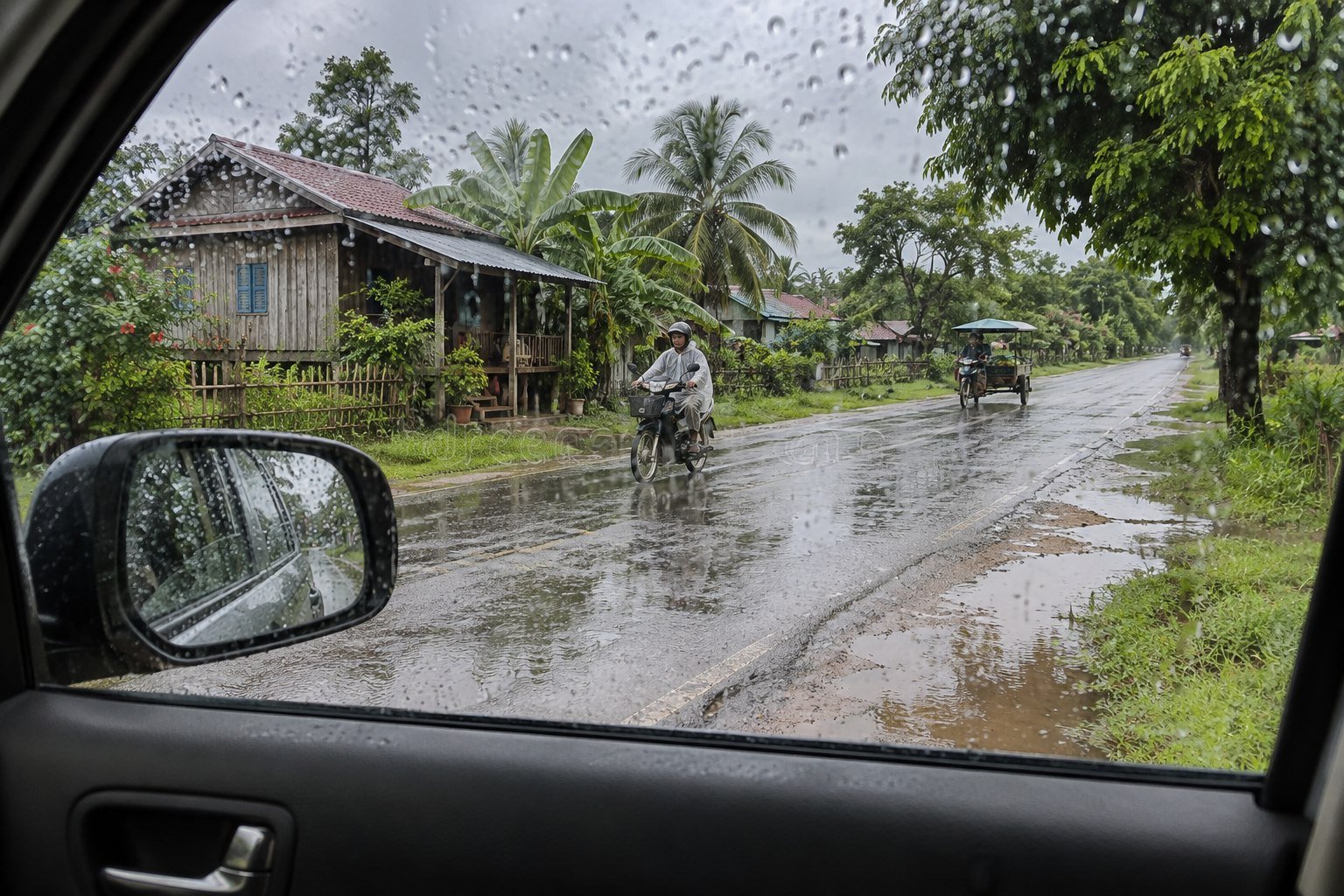
Give the driver the actual stops before agreeing the price. A lunch break beside the main road differs from a long detour to an attraction. Ask whether each proposed road is suitable for the vehicle, especially after heavy rain. Leave room for the driver to recommend a practical change when conditions deteriorate.
For a multi-day trip, put travel days and overnight bases into the itinerary planner. Enter the journey allowance yourself; the planner organises your stops but does not check roads or timings.
Do not plan to take a rental car across a border without specific written permission, insurance and current entry checks. At the 15 November 2026 review, FCDO reported Cambodia–Thailand land crossings suspended and advised against all but essential travel within 20km of that land border.[7] Check the current advice before planning any border-area detour.
Choose space and access for the people travelling
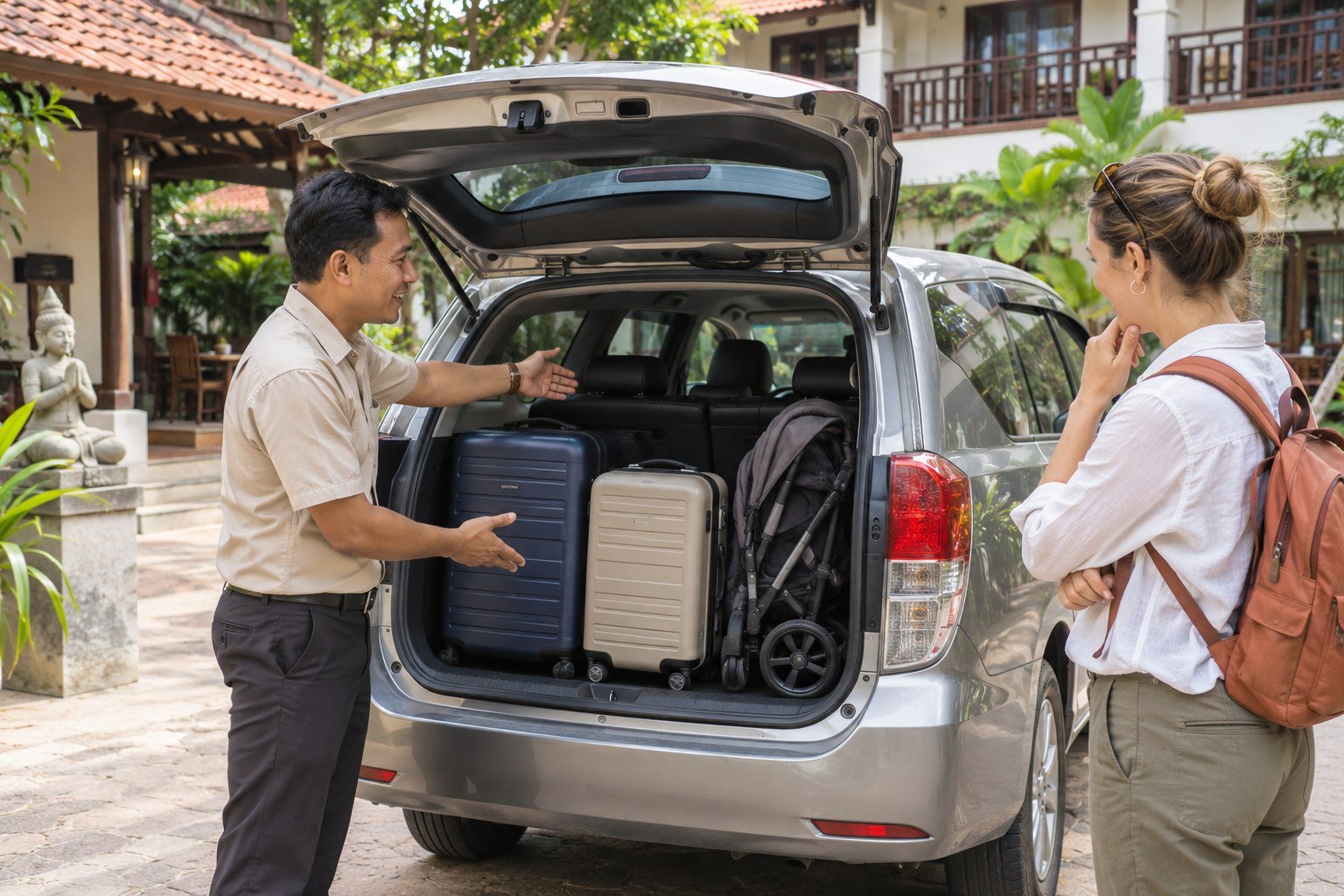
Count bags as well as passengers. A vehicle advertised with enough seats may have little luggage space when every seat is occupied. Send the supplier the number and approximate size of suitcases, pushchairs or mobility aids, and ask how they will be carried without blocking seats or exits.
For children, request an appropriate restraint in advance and ask the provider to confirm the type and installation. A verbal promise of a “family car” gives little useful detail. If you are bringing your own seat, check how it can be fitted in the assigned vehicle.
For limited mobility, discuss the height of the step, door opening, transfer assistance and space for equipment. A larger SUV is not automatically easier to enter. Ask for photographs of the relevant doorway and seat, and describe the assistance needed rather than relying on a general claim that the car is accessible.
Air conditioning, suitable breaks and a pace everyone can manage may be worth more than a newer-looking vehicle. Agree them with the provider while there is time to choose another arrangement.

Check the vehicle before leaving
- Match the arriving vehicle and driver to the booking, and settle any change before loading bags.
- Check the number of usable seats and belts, luggage placement and any requested child seat.
- Repeat the destination, planned stops and expected finishing point. Confirm the total, remaining balance and payment currency.
- For self-drive, photograph existing damage, wheels, glass, fuel level and mileage. Make sure damage is recorded on the agreement.
- Locate the breakdown contact and confirm what to do if there is an incident. Keep copies of the agreement and payment receipt.
- Before moving, test the basic controls or ask the driver to demonstrate the features that matter to your passengers.
Keep the contact details and booking confirmation available offline. Mobile data is useful for messages and navigation, but arrange your pickup before you lose reception. If you need an eSIM, you can browse Airalo and select Cambodia; check your device and the package details before buying. Airalo lists Cambodia plans, and data-only packages do not provide ordinary calls or SMS.[8][9]
Avoid the booking mistakes that cost time
Do not use a generic “airport pickup” description. Send the airport name and code from your booking, flight number, date and accommodation address, then ask where the driver will meet you and what happens after a delay.
A day hire also needs a finishing time. If you want sunrise, a long lunch, several attractions and an evening return, send that full plan before agreeing the price. Adding it afterwards can change both the cost and what the driver can reasonably do.
For a multi-day hire, settle where the driver stays, who pays those expenses and whether the final price includes getting the vehicle home. For self-drive, remember that a security deposit is separate from the quoted rental cost and may affect the funds available on your card.
If the vehicle arrives without agreed restraints, necessary access or a workable seat belt, resolve the problem before setting off. A booking confirmation is useful evidence of what you bought; it is not a reason to accept an unsuitable vehicle.
Questions before you book
Does hiring a driver include a tour guide?
Only if the booking explicitly includes guiding. Ask whether you are paying for transport, guided visits or both, which language is provided, and whether attraction admission is included. A driver may offer helpful local knowledge, but that is different from a contracted guide service.
Can I book a driver for just part of a trip?
Yes, if a provider accepts that itinerary. Compare separate transfers with a continuous hire. Separate bookings can avoid paying for days when the vehicle is unused; a continuous arrangement may suit repeated stops, specific passenger needs or less straightforward routes.
Is a private driver always the cheapest choice for a group?
No. Compare the total vehicle price with all the seats and local transfers your group would otherwise buy. Include luggage, cancellation terms and waiting time. Convenience may justify a higher price, but the group size alone does not prove which option costs less.
Choose the arrangement you can rely on
Start with the journey and your passengers. For a simple transfer, compare the whole private-car price with shared transport. For a varied day or a route with several stops, obtain a clear car-and-driver quote. Choose self-drive only after the document, insurance and road questions have satisfactory answers.
Before paying, you should know who is responsible, what vehicle will arrive, what the price includes and what happens when plans change. Those details make the difference between a convenient booking and a problem to solve on the kerb.
Sources and checks
Sources reviewed on 15 November 2026. Check the operator’s current information for your travel date before booking.
- FCDO: Cambodia safety and security — road travel and licensing
- GOV.UK: International Driving Permit requirements by country
- Cambodia Ministry of Public Works and Transport: driver's licence services
- Avis: Phnom Penh downtown rental location
- Grab Cambodia: transport and car-with-driver products
- 12Go: Phnom Penh to Siem Reap transport listings
- FCDO: Cambodia warnings and insurance
- Airalo: Cambodia eSIM packages
- Airalo: receiving calls and SMS while using a data-only eSIM
Illustrations in this article were created for Taylor’s Trailblazing Travels. Third-party photographs, where used, are credited beside the image or in the source list.