Royal Palace and Silver Pagoda in Phnom Penh: Visitor Essentials
Choose the right visiting session, arrive properly dressed and give the details time.
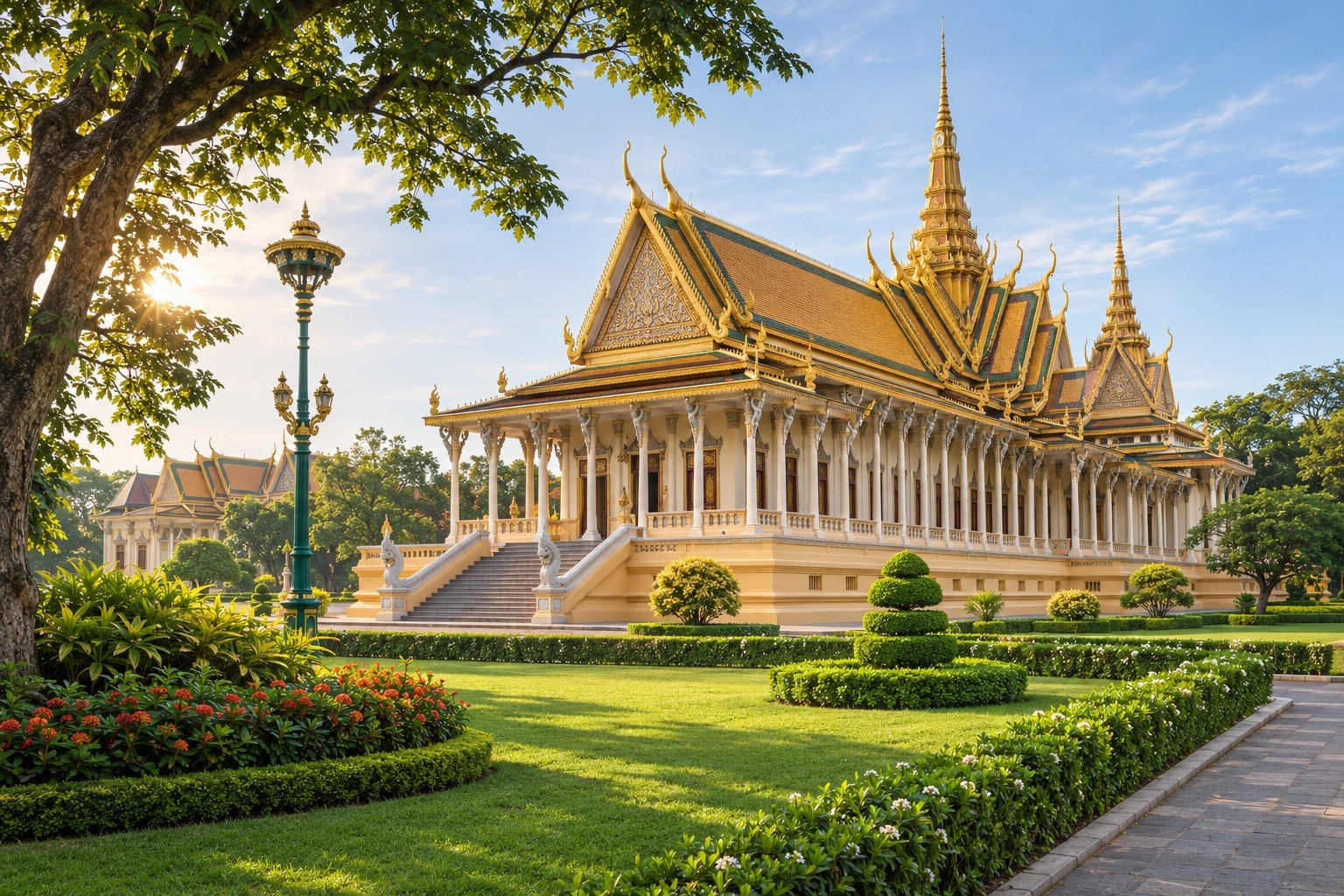
AI-generated reconstruction of the Throne Hall, guided by reference architecture; not an on-location photograph.
The Royal Palace and Silver Pagoda in Phnom Penh are an easy pair to plan badly: arrive near lunchtime, wear unsuitable clothes or expect unrestricted access to a royal residence, and the visit can become frustrating. Choose an early session and leave time for the courtyards, religious buildings and painted details instead.
The palace remains a working royal residence. Visitors see the areas opened to the public, while private quarters stay separate. The adjoining Silver Pagoda adds a religious setting to the royal architecture. [1]
This guide contains affiliate links. If you book or buy through them, Taylor’s Trailblazing Travels may receive a commission at no extra cost to you.
A relaxed two-hour visit is more rewarding than a quick dash between the main buildings.
Go early in either session; do not plan your arrival around the final few minutes of ticket sales.
Choose sleeves and long trousers or a long skirt so you can enter without arranging extra clothing.
The National Museum is nearby and has separate tickets and opening arrangements.
What you can see at the palace and pagoda
The ceremonial palace
The palace developed after the capital moved to Phnom Penh in the 1860s; the present Throne Hall was completed in 1919. Its rooflines and ceremonial setting are a central part of the visit, but you should not expect to wander through private royal rooms. [1]
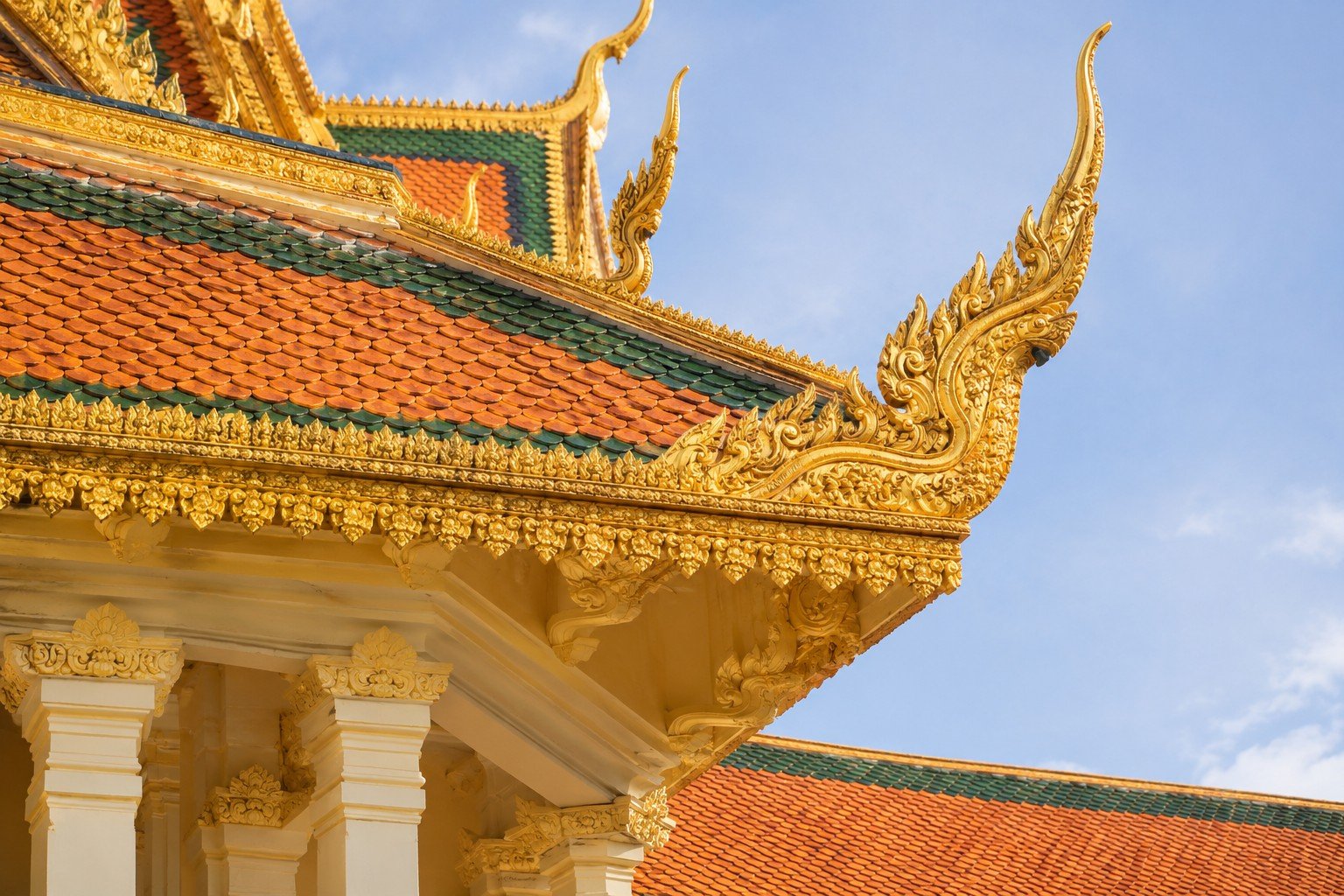
Spend a few minutes looking at the whole building before moving closer to the details. The proportions, layered roofs and colour changes are easier to appreciate from the courtyard than through a phone screen. Then look for something specific—a roof ornament, a column or a carved border—rather than taking the same wide photograph repeatedly.
The Silver Pagoda and its surrounding court
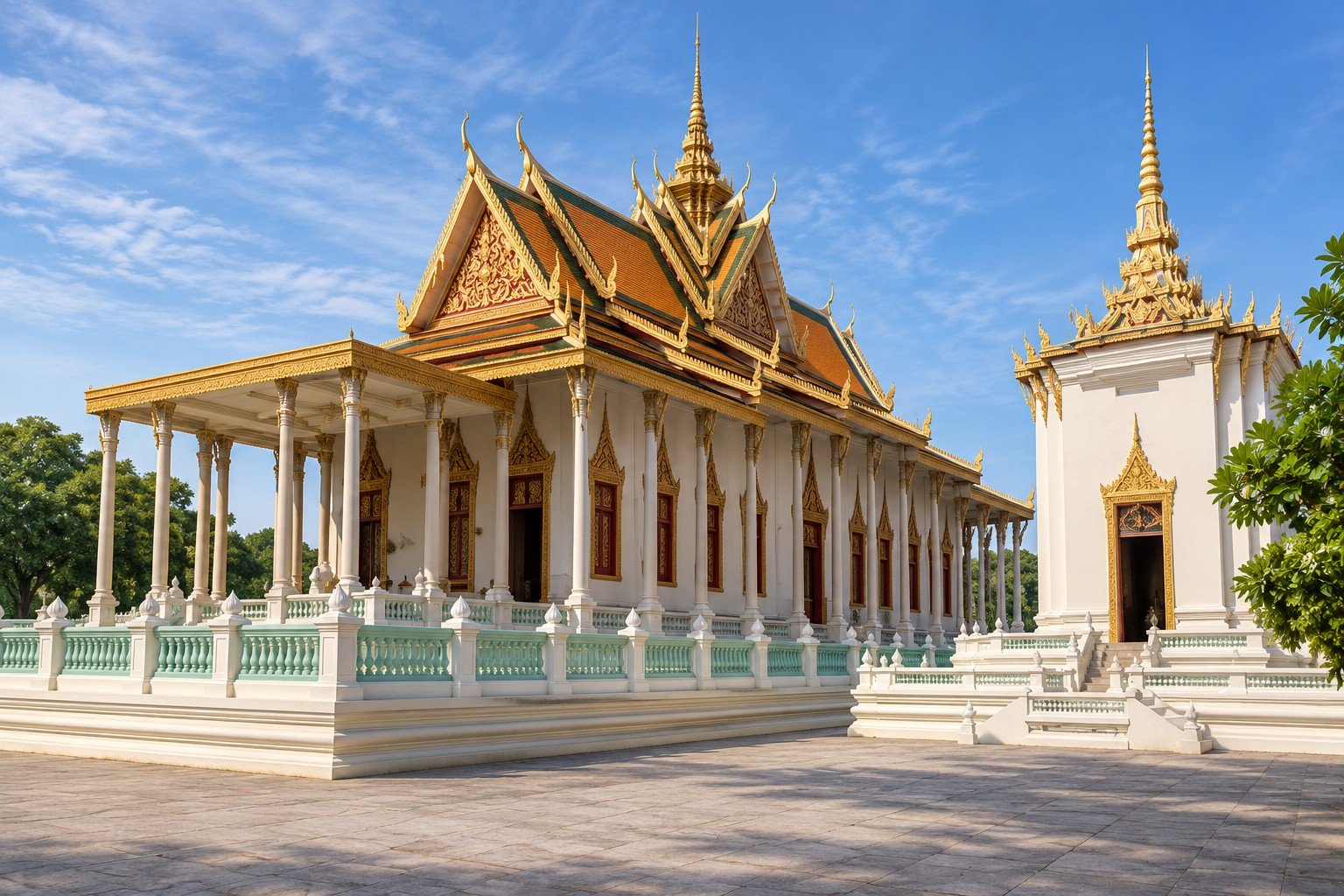
The pagoda’s name refers to its silver floor tiles. Its treasures include the figure known as the Emerald Buddha and a gold Buddha, while the surrounding cloister contains paintings of the Reamker, Cambodia’s version of the Ramayana. [1]
Leave time for those quieter details. If you rush from the palace exterior to the main religious building and straight out again, you miss much of what makes the compound interesting. Follow the open visitor route, pause at signs and ask a guide about a scene or symbol that catches your attention.
Access to a building or exhibition may change. Use the outline below as a way to divide your time, then follow the route staff have opened that day.
Royal Palace hours, tickets and closures
The main scheduling issue is the long break between the two visiting sessions. Current independent visitor guides list 08:00–11:00 and 14:00–17:00. [9] [3]
| Detail | Usual arrangement | What this means for your plan |
|---|---|---|
| Morning session | 08:00–11:00 | Aim for an early start if you want roughly two hours inside |
| Afternoon session | 14:00–17:00 | Have lunch first and arrive near reopening |
| International adult ticket | Commonly listed at US$10; Canby lists KHR40,000 [2] | Carry cash and use the ticket counter’s current tariff |
| Royal ceremonies | May restrict or close visitor areas | Keep another nearby activity available |
| Guide | An additional service | Agree language, duration and total price first |
These are useful planning figures from published visitor information, rather than a day-specific guarantee from the palace. A new ceremony or closure can matter more than the regular hours. Check locally on the morning of your visit, and go to the official counter if someone outside tells you the palace is closed. [3]
The Throne Hall still hosts royal events: the royal household’s own record of the 2024 coronation anniversary shows it being used for a family audience. That helps explain why a normal visitor timetable cannot promise access to every part of the complex. [4]
Keep the different costs separate
For two international adults, allow roughly US$20 for admission at the commonly listed rate. Transport and a guide are extra unless your chosen tour explicitly includes them. Ask whether a guide quote covers your whole party or each person; that one question makes different offers much easier to compare.
You do not need to book a full city tour simply to visit the palace. If you do book one, check that it includes an actual palace visit, rather than only a stop outside the walls.
Back to top ↑A two-hour plan that leaves room for the details
The following is a suggested allocation, not a fixed walking route. It starts once you reach the ticket area and gives priority to the palace, pagoda and cloister. Follow staff directions if a section is closed or the visitor route changes.
| Time to allow | Focus | How to avoid rushing |
|---|---|---|
| 15 minutes | Tickets, orientation and any guide arrangement | Check which areas are open before deciding the order |
| 30 minutes | Ceremonial courtyards and Throne Hall exterior | Take in the building as a whole, then look at the detail |
| 40 minutes | Silver Pagoda and the surrounding cloister | Put your camera away where required and take your time |
| 20 minutes | Other open displays and structures | Follow your interests rather than trying to cover every corner |
| 15 minutes | A pause, final look and exit | Finish without being caught by the session’s end |
With an 08:15 arrival, this plan finishes around 10:15, leaving a little space before the usual morning closure. For an afternoon visit, arriving around 14:00 gives you similar room. Neither plan needs a race to the last admission time.
If you have less time
With only an hour, concentrate on the ceremonial courtyard and Silver Pagoda, subject to what is open. Save the extra displays for another occasion. If you reach the area late in the morning, lunch and a fresh start in the afternoon may be more enjoyable than paying for a rushed final circuit.
If architecture is a main interest
Allow longer, or choose a guide who can explain the buildings and religious imagery. Prepare two or three questions rather than a long list of things to photograph. Asking how a building is used can give the visit more meaning than simply learning its dimensions.
What to wear and where photography stops
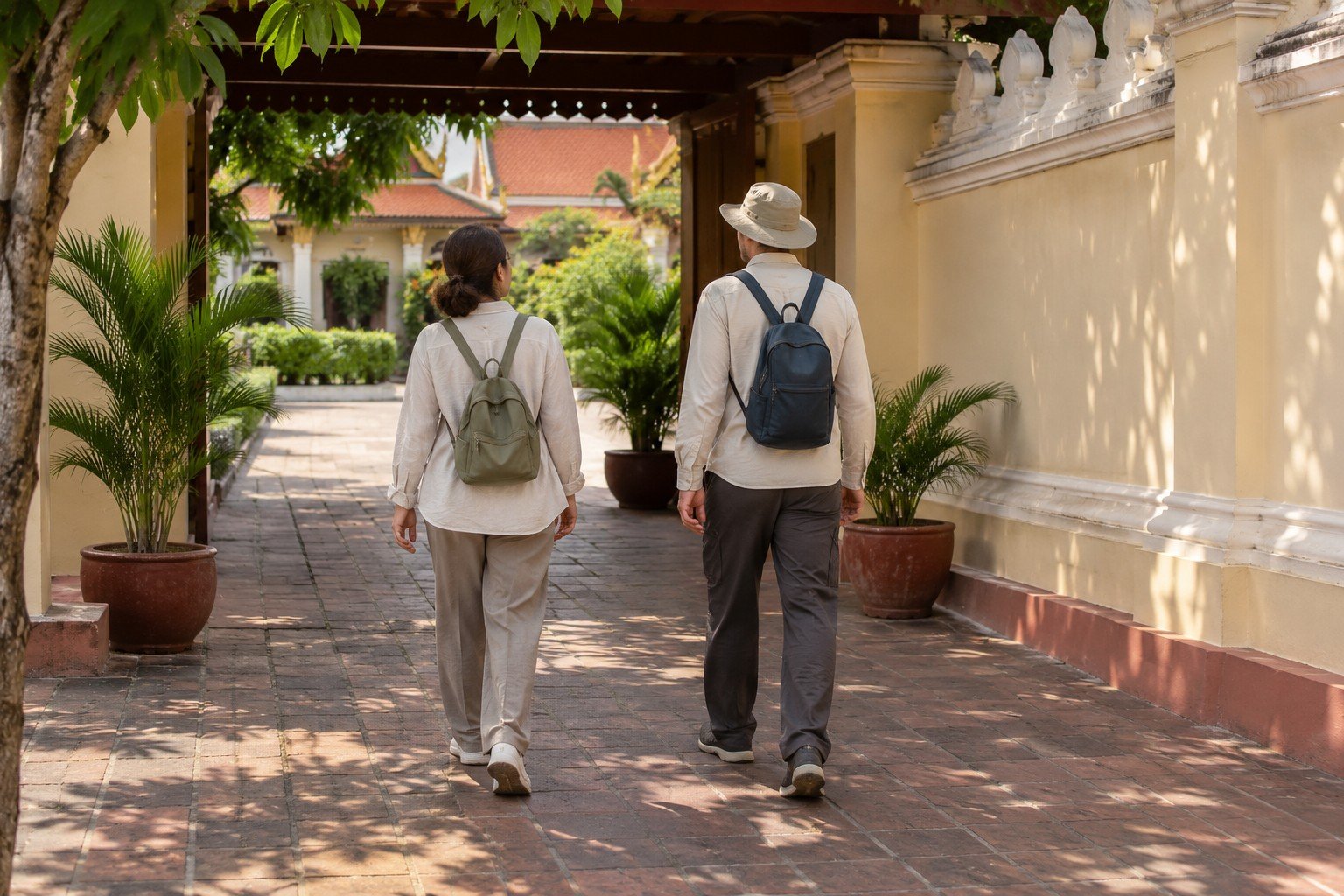
Shoulders and knees need to be covered for the royal and religious compound. A light long-sleeved shirt with loose trousers, or a modest top with a long skirt, is a straightforward choice. Dress properly before leaving your hotel instead of relying on a scarf to make an unsuitable outfit acceptable. [1]
Choose footwear that is comfortable for walking and easy to remove for the Silver Pagoda. Follow the staff’s instructions about where shoes belong. [7] You do not need special sightseeing equipment: comfortable clothes, a manageable bag and enough water for the visit are more useful.
Photography is restricted inside the Throne Hall and Silver Pagoda. Keep your camera for permitted outdoor areas and follow any additional signs. A guide or another visitor taking a picture does not override the rules. [3]
Keep voices low in religious spaces. Avoid blocking doorways while taking photographs, and allow people who are praying or moving through the building some room. Children can enjoy spotting architectural details outside; explain the quieter expectations before entering religious areas.
A quick clothing check
- Your shoulders stay covered when you move.
- Trousers or a skirt cover your knees when sitting.
- You can walk comfortably and remove your shoes easily.
- You have sun or rain protection for the exposed parts of the visit.
Getting to the right entrance and planning for comfort
The royal compound is beside Phnom Penh’s riverfront, on Sothearos Boulevard between Streets 240 and 184. Ask your driver for the visitor ticket entrance and make sure your pickup point is clear if they will be waiting. A grand gate in a photograph is not necessarily the gate open to visitors. [2]
If you are staying nearby, walking can be convenient. Check the route to the entrance rather than only the distance to the edge of the palace grounds. In hot or wet weather, a short ride may leave you with more energy for the visit itself.
Mobility needs deserve a specific answer
Ask about the parts you want to see: the route from the drop-off, steps into religious buildings, places to sit and suitable toilets. A tour described as accessible may still have a different route or require help at particular points. Send the operator your questions before paying and ask them to explain any limitations clearly.
For a slower visit, keep one or two priorities and take breaks between them. You do not have to follow a group that moves too quickly, and a private guide may be useful if you want more control over the pace. Confirm that flexibility in advance.
During heavy rain, pause somewhere permitted rather than hurrying across wet surfaces. A morning or afternoon window gives you more freedom to wait than arriving shortly before closing.
Back to top ↑When a guide is worth paying for
A guide is most useful if you want to understand the symbolism, royal history and religious setting. Independent entry suits travellers who mainly want to explore at their own pace and are happy reading beforehand.
Guides can be arranged near the entrance, and tour companies offer palace visits as part of longer itineraries. [6] Compare what you will actually receive: a palace guide, a driver between several stops and a city walking tour are different services.
| Your priority | Option to consider | Question to ask |
|---|---|---|
| Time to look and photograph permitted areas | Independent entry | Which areas are open today? |
| Understanding the palace and religious details | A guide focused on the compound | What language, duration and group price are included? |
| Transport and several cultural sights | A city tour with a proper palace stop | How long is spent inside, and are admissions included? |
| A slower pace or specific access requirements | A private arrangement | Can the route and stopping time be adapted? |
Be careful with “Royal Palace” in a tour title. Some itineraries stop outside, while others set aside substantial time inside; the attraction lists themselves show this distinction. [6] Also ask what happens if a ceremony closes the palace: the replacement activity and refund terms should be clear before you book.
Compare Royal Palace tour options on GetYourGuide with palace visits listed on Viator if you would like a guide or transport. Open the detailed itinerary before choosing: a cheaper exterior stop will not provide the same visit as time inside the compound. [6] [8]
A paid guide cannot promise access to private rooms or override a closure. Choose the service for explanation and practical help, with enough time at the places you actually want to see.
Back to top ↑What to combine with the palace
For a cultural half-day: add the National Museum
The National Museum is next to the palace, with its visitor entrance at Streets 13 and 178. It publishes daily hours of 08:00–17:00 and an international adult admission price of US$10. It has its own ticket, so palace admission does not cover it. [5]
Visit the palace early, pause for a drink, then decide whether you still want the museum that morning. The museum is also a practical alternative during the palace’s midday break. Its galleries prohibit photography, although the exterior and courtyard may be photographed. [5]
For a lighter outing: stop after the palace
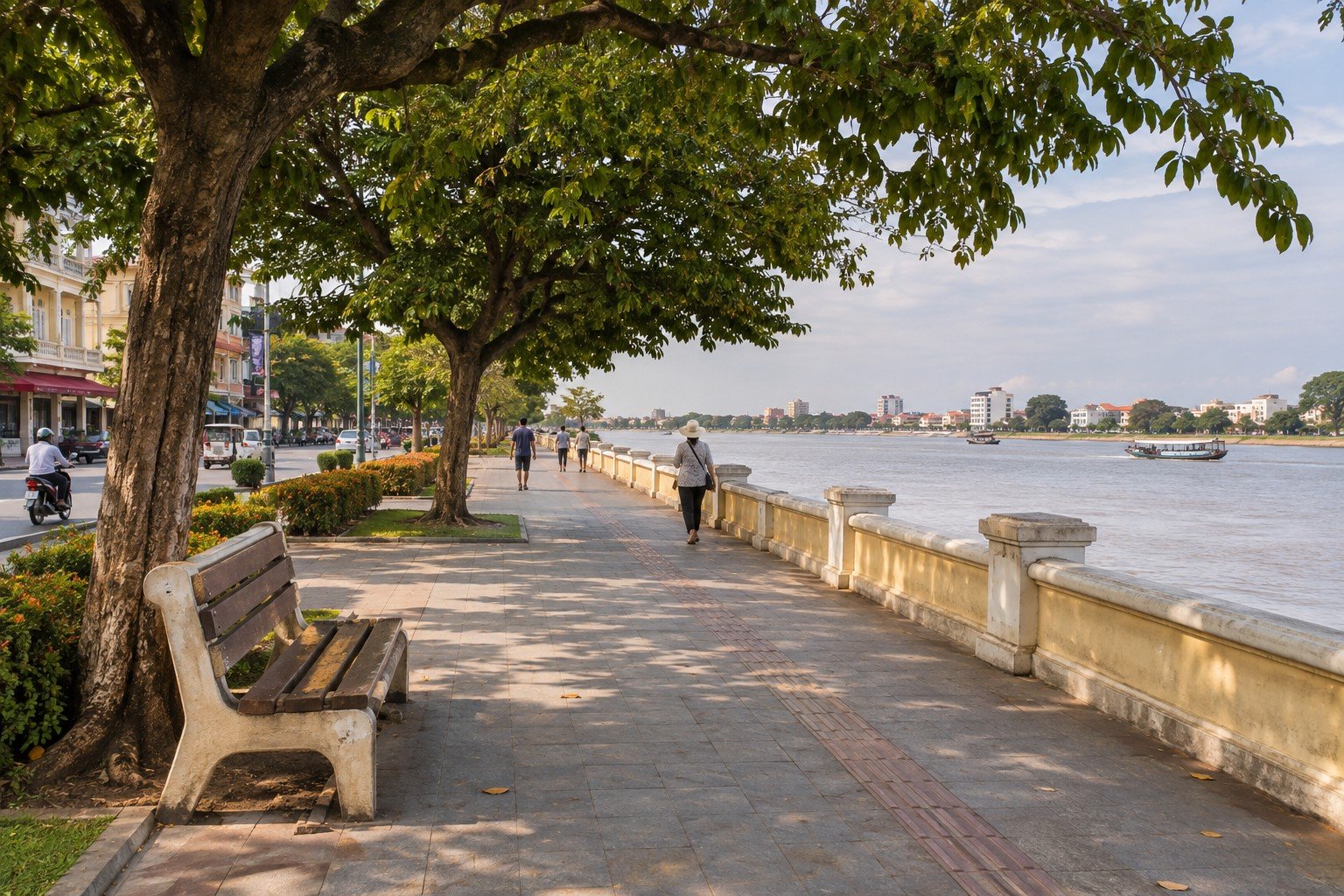
You do not have to fill every free hour with another ticketed attraction. Lunch nearby and time by the riverfront can be enough after a detailed palace visit. This is a useful choice for a first day in the city, or when travelling with people whose appetite for museums differs.
If the palace is closed
First establish whether the closure affects the whole day or only part of it. If staff can give a clear reopening time, rearrange the order of your nearby plans. Otherwise, choose another activity and return on a later day if your stay allows. Do not spend a short city break waiting indefinitely for access no one has promised.
Final questions before your visit
Can you see the palace from outside without entering?
You can appreciate the outer setting from public areas, but that does not replace the courtyards and Silver Pagoda visit. Choose outside views if the palace is closed or you do not want a ticketed visit, while keeping expectations clear.
Is it worth visiting after Angkor?
Yes, if royal architecture and religious art interest you. The palace offers a different setting from the ancient temple sites. If you are already tired of formal cultural visits, shorten the plan or leave it optional; you are more likely to enjoy it when you are interested and unhurried.
Should you put this on your final morning in Phnom Penh?
Only if you are comfortable missing it should access change. When the palace is a priority, visit earlier in your stay so another session remains available. Keep a fixed flight, bus or hotel checkout well clear of the visit.
The most reliable plan
Arrive early in a session, dressed for the compound, with cash and about two hours free. Focus on the palace and Silver Pagoda, then decide how much more you want to do. A nearby backup keeps a closure from wasting the morning.
Continue planning through the Cambodia travel hub.
Back to top ↑Sources and checks
Researched and reviewed on 14 November 2026. Recheck opening times, access and prices before travelling.
- Tourism Cambodia — Royal Palace of Cambodia — Royal residence, architectural history, Silver Pagoda, cloister and dress requirements. (Checked 14 November 2026.)
- Canby Publications — Phnom Penh Pocket Map, 38th edition — Published location, visiting sessions and indicative entry tariff. (Checked 14 November 2026.)
- Royal Palace Phnom Penh — independent visitor guide — An independent guide, not the palace administration; practical hours, cash payment, closures and photography restrictions. (Checked 14 November 2026.)
- Royal Household — Wishes from members of the Royal Family, 29 October 2024 — Primary evidence of the Throne Hall’s continuing ceremonial use. (Checked 14 November 2026.)
- National Museum of Cambodia — Information for visitors — Official location, hours, adult admission and photography policy. (Checked 14 November 2026.)
- Viator — Royal Palace tours and visitor information — Guide arrangements and the distinction between inside visits and exterior-only tour stops. (Checked 14 November 2026.)
- Viator — Silver Pagoda visitor information — Shoe removal and practical clothing guidance. (Checked 14 November 2026.)
- GetYourGuide — Royal Palace tours — Tour comparison listings; check the exact palace stop, admissions and cancellation terms. (Checked 14 November 2026.)
- Visit Koh Rong — Royal Palace visitor guide — Independent corroboration of the split visiting sessions and midday closure. (Checked 14 November 2026.)
Illustrations in this article were created for Taylor’s Trailblazing Travels. Third-party photographs, where used, are credited beside the image or in the source list.