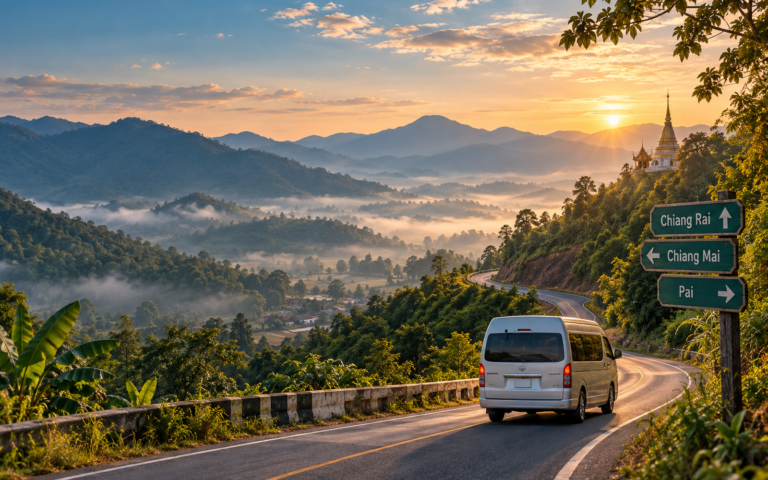
Three full days for Chiang Rai’s old city, contemporary temple-and-art circuit and the Golden Triangle without turning the trip into a race.
A useful Chiang Rai 3-day itinerary needs more than a list of famous temples. The city sights are compact, yet the province’s best-known attractions spread south towards Wat Rong Khun and north towards Baan Dam, Chiang Saen and the Golden Triangle. Trying to combine all of them in one breathless day wastes the quieter character that makes Chiang Rai worth staying in.
This plan gives the first day to the old city and an easy evening, the second to Chiang Rai’s contemporary religious art and the third to the far-northern Mekong landscape. It assumes three genuinely usable sightseeing days. Therefore, a late arrival and an early departure normally mean four nights rather than three.
Opening times, reported admission charges and commercial planning ranges were checked on 18 September 2026. They can change, particularly around Thai holidays, private ceremonies, weather disruption and maintenance. Recheck the linked operator or attraction shortly before travelling and follow the information displayed at the entrance.
Clock Tower or Night Bazaar
Central accommodation keeps Day 1 walkable and makes evening food, Bus Terminal 1 and common tour pickups straightforward.
Driver or small-group tour
Days 2 and 3 cover widely separated sights. A planned vehicle reduces waiting and protects the attraction order.
Hall of Opium
The museum turns the Golden Triangle from a photograph into a more meaningful day about regional history and change.
Three days is not three nights
Unless both travel days are useful, four nights is the safer structure for three complete sightseeing days.
Chiang Rai 3-day itinerary at a glance
This sequence groups sights by geography and opening constraints rather than forcing every famous stop into one marathon tour.
| Day | Main area | Core plan | Pace | Best transport |
|---|---|---|---|---|
| Day 1 | Old city and centre | Wat Phra Kaew, Wat Phra Singh, lunch, gentle city orientation, Clock Tower and Night Bazaar | Light to moderate | Walk plus short ride-app journeys |
| Day 2 | South, north and Rim Kok | White Temple, Baan Dam, Blue Temple and Wat Huay Pla Kang in a logical vehicle circuit | Full but manageable | Private driver or small-group tour |
| Day 3 | Chiang Saen and Golden Triangle | Hall of Opium, Mekong viewpoint, Chiang Saen heritage stop and relaxed return | Long road day | Tour, private driver or confident self-drive |
The order assumes the Hall of Opium is open. It is commonly listed as closed on Mondays, so use the alternative plan later in this guide when Day 3 falls on a Monday.
How this itinerary was created and compared
The stops were selected for first-visit value, geographic logic, cultural variety and realistic time on site.
The ranking method
The itinerary gives priority to attractions repeatedly identified by the Tourism Authority of Thailand and current local visitor sources, but popularity alone did not decide the order. Each stop was assessed against four practical questions: does it add a distinct experience, can it fit without constant clock-watching, does the route avoid unnecessary backtracking, and can a traveller reach it without inventing a transport connection?
That is why Day 1 remains deliberately gentle. Wat Phra Kaew and Wat Phra Singh provide historical context that the modern landmark temples do not, while the Clock Tower and Night Bazaar make an easy first evening. Conversely, Day 2 concentrates the contemporary art sites into one vehicle day. Day 3 then moves north to the Mekong rather than squeezing the Golden Triangle between city temples.
What the plan does not claim
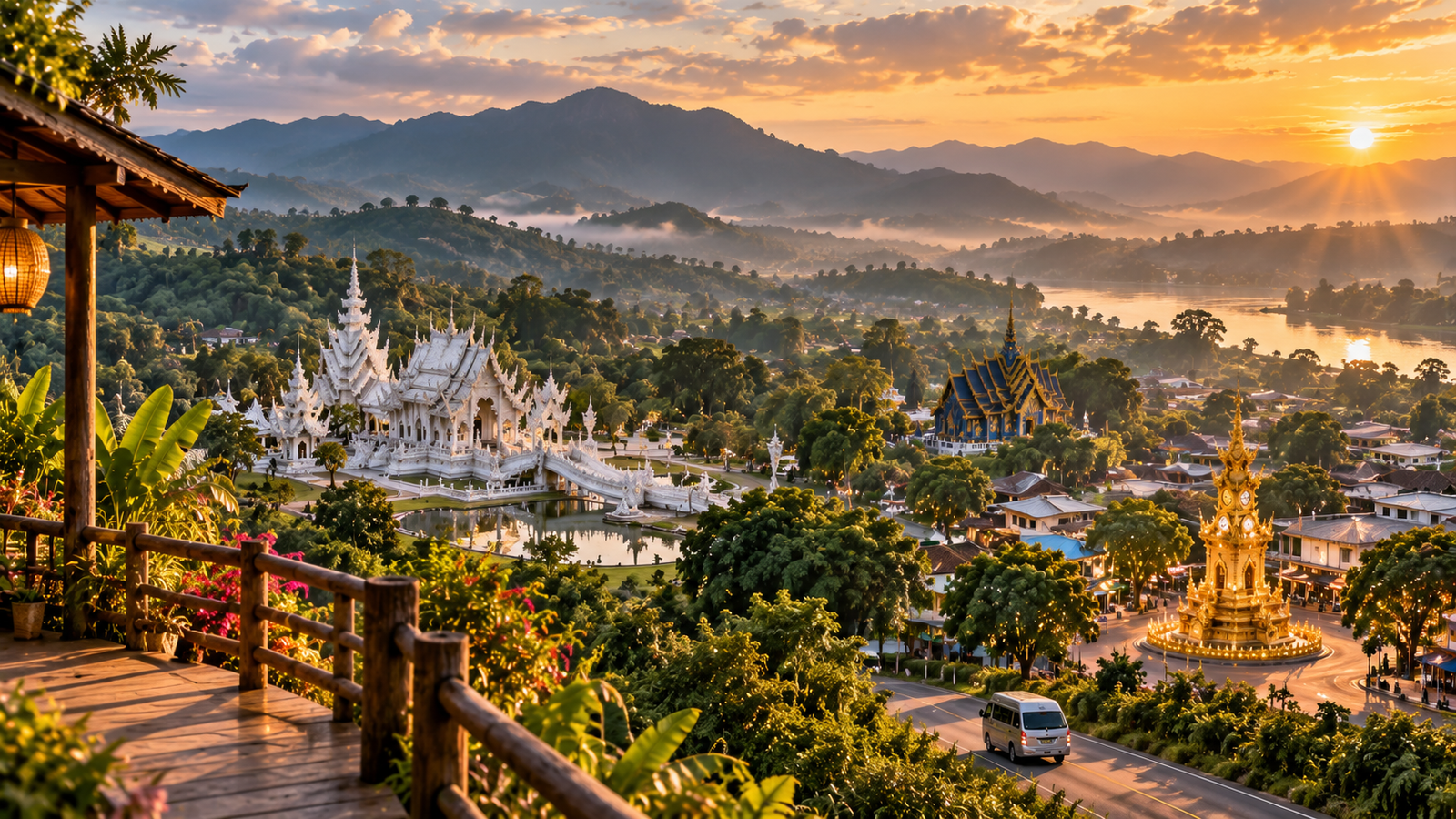
This is research-led planning judgement, not a claim that Karen Taylor personally completed the route on a specific date. Attraction access, ceremonies, traffic and weather can alter a day. In addition, the generated illustrations are editorial scenes rather than documentary photographs of the exact route.
How many nights do you need for three days?
Four nights is the simplest answer unless both arrival and departure times genuinely protect the sightseeing days.
The comfortable pattern
Arrive during the afternoon or evening, sleep, complete Days 1–3, then leave the following morning. This arrangement protects the White Temple opening-time start and the long Golden Triangle day. It also gives you a useful buffer if a domestic flight changes or a road journey from Chiang Mai takes longer than expected.
When three nights can work
Three nights can still provide three useful days when you reach Chiang Rai early on the first morning and leave late after Day 3. However, avoid booking a rigid Day 1 morning tour immediately after a flight or intercity bus. Airport collection, baggage, hotel check-in and breakfast can easily consume more of the morning than the timetable suggests.
| Trip structure | What works | Main compromise | Recommendation |
|---|---|---|---|
| Four nights | Three protected sightseeing days | One extra hotel night | Best for a first visit |
| Three nights, early arrival and late departure | Can retain most of the plan | Travel disruption affects sightseeing | Reasonable with flexible bookings |
| Three nights, late arrival or early departure | Two full days plus fragments | Golden Triangle or city time is squeezed | Drop one major day rather than rush |
Where to stay for this Chiang Rai itinerary
For three days, useful location usually matters more than a long resort-facility list.
Best default: Clock Tower and Night Bazaar area
Choose a hotel within a practical walk of the Clock Tower, Night Bazaar or Bus Terminal 1. This central grid supports the Day 1 walk, gives you several dinner options and usually falls inside common pickup areas. The Clock Tower side feels slightly more boutique and temple-oriented, while the Night Bazaar and Jetyod side often has more budget rooms and immediate evening activity.
When the riverside makes sense
A Kok River resort can suit couples and families who value pools, gardens and quieter evenings. Nevertheless, the location creates more short taxi journeys and makes spontaneous meals less convenient. For this exact schedule, confirm that Days 2 and 3 include hotel pickup or budget for separate transfers to the meeting point.
Compare central Chiang Rai stays
Use the map rather than the hotel’s neighbourhood label. Check the walking route to the Clock Tower or Night Bazaar, recent noise comments, lift access and the exact pickup policy for any tour you plan to book.
Accommodation prices are live and date-specific; the booking search was checked on 18 September 2026.
Getting around Chiang Rai over three days
No single transport type is ideal for every day, so match the vehicle to the geography.
Day 1: walking plus short rides
The old-city temple cluster and central evening area are the most walkable part of the itinerary. Pavements can be uneven and crossings require attention, so a ride app is still useful when heat, rain or mobility makes a 15-minute walk less appealing.
Days 2 and 3: driver or organised tour
A small-group tour is usually the simplest budget option because it combines transport, a published sequence and hotel pickup within a stated zone. A private car costs more but lets you spend longer at Baan Dam, skip an unwanted stop and avoid the ultra-compressed seven-attraction schedules sold by some operators. Before paying, verify included tickets, lunch, pickup zone, group size, guide language and whether any village visit is optional.
Self-driving
A rental car can work well for confident drivers, especially on Day 3. British licence holders should check the current GOV.UK country table, which lists a 1968 International Driving Permit for Thailand, and carry the original licence as well. Confirm insurance, rental terms and the intended route. Do not treat a scooter as a casual solution when you lack the correct motorcycle licence, experience or coverage.
| Option | Best use | Strength | Check before choosing |
|---|---|---|---|
| Walking | Old city and evening centre | Free and flexible | Heat, rain, uneven pavements and safe road crossings |
| Ride app or taxi | Short city hops | Point-to-point convenience | Return availability at outer attractions and pickup location |
| Small-group tour | Temple circuit or Golden Triangle | Lower cost per person with a set plan | Number of stops, ticket inclusions and shopping or village visits |
| Private driver | Families, couples and flexible pacing | Vehicle stays with you | Driver versus licensed guide, fuel, parking, overtime and entrance fees |
| Rental car | Experienced independent drivers | Maximum route control | Licence, 1968 IDP where applicable, insurance, weather and parking |
Compare current Chiang Rai tours
Filter by departure from Chiang Rai, not Chiang Mai. Then compare pickup time, actual stop list, recent reviews and whether the Hall of Opium or the smaller House of Opium is included.
Live tour listings and example prices were checked on 18 September 2026.
Day 1 morning: the old city and its temple story
Begin with the historical Chiang Rai that explains why the modern landmark temples feel so different.
08:00–09:00: Wat Phra Kaew
Start at Wat Phra Kaew, the site associated with the discovery of the Emerald Buddha in 1434. The original image is now in Bangkok, while the Chiang Rai temple contains a jade replica and a small museum. Current visitor information commonly lists opening from 07:00 to 18:00 and no compulsory admission ticket; both details were checked on 18 September 2026. Dress modestly and remove shoes where required.
Allow around 45–60 minutes rather than treating the temple as a quick photograph. The discovery story, Lanna architecture and quieter atmosphere provide useful context before the larger contemporary sites on Day 2.
09:10–09:45: Wat Phra Singh
Walk to Wat Phra Singh, a working old-town temple that should not be confused with the better-known temple of the same name in Chiang Mai. Current visitor information commonly reports daily access from early morning to early evening and no compulsory admission ticket; this was checked on 18 September 2026. Spend 25–35 minutes looking at the carved door panels and main viharn.
10:00–11:30: slow city orientation
Continue through the old-city streets towards Wat Klang Wiang, local cafés or the King Mengrai Monument, depending on heat and interest. The point is not to collect temples. Instead, use the walk to understand the compact centre, note where evening food and transport are located and keep enough energy for the next two full days.
Day 1 afternoon and evening: settle into Chiang Rai
Leave the afternoon flexible, then let the city centre provide an easy first evening.
12:00–16:30: lunch, check-in and one optional stop
Choose lunch near the centre, then check in or return to the hotel. If energy remains, visit the Hill Tribe Museum and Education Center or Mae Fah Luang Art and Cultural Park after confirming current opening arrangements. Alternatively, keep the afternoon free for laundry, a massage, a café and practical errands. A rested traveller gets more from the long vehicle days than someone who uses Day 1 to chase every available attraction.
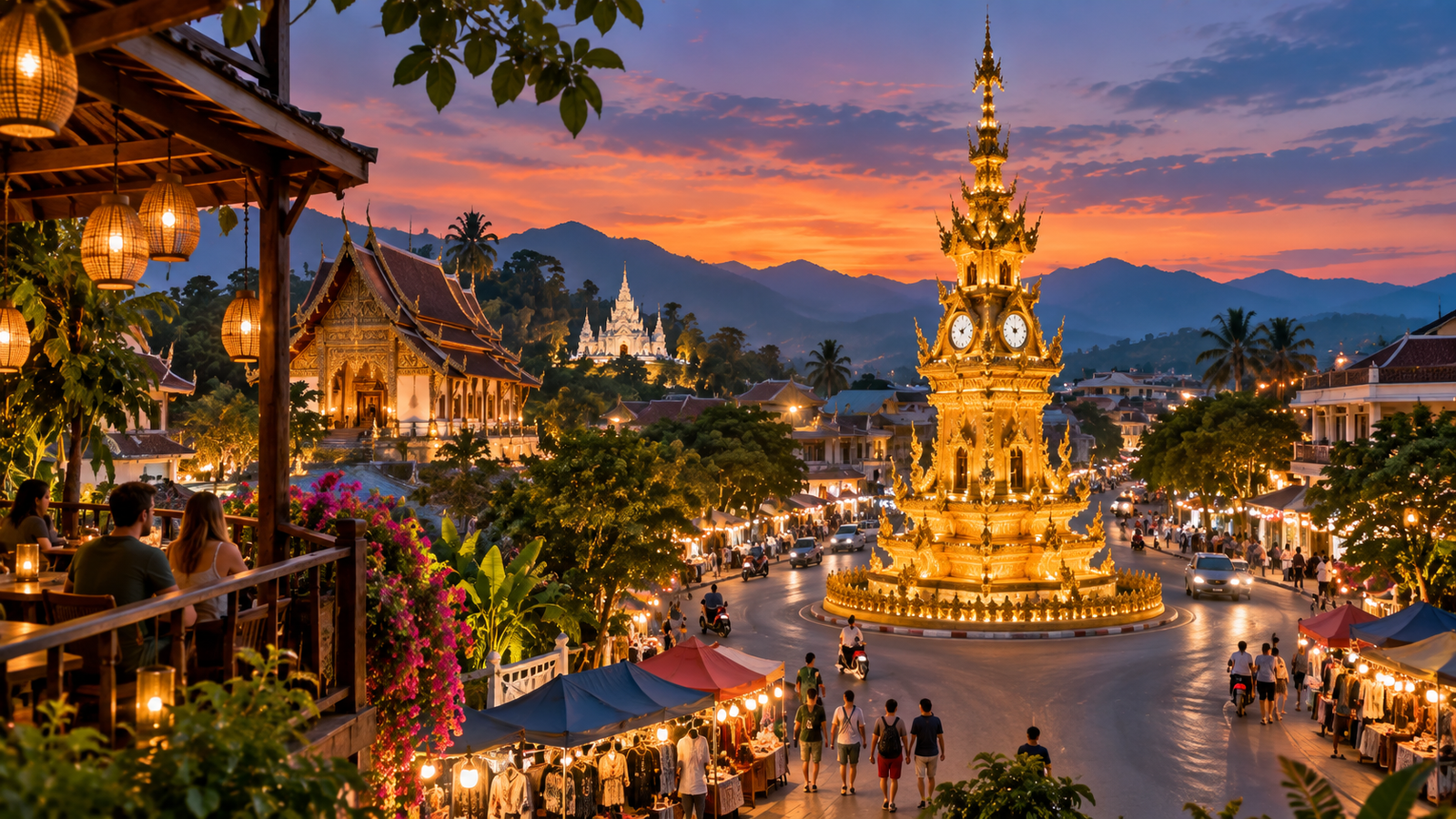
18:30 onwards: Clock Tower and Night Bazaar
Walk towards the golden Clock Tower before the evening display. Current 2026 visitor sources commonly report free light-and-sound shows at 19:00, 20:00 and 21:00, with each display lasting only a few minutes; the schedule was checked on 18 September 2026 but should be confirmed locally because city events or maintenance can change it. Watch from a pavement rather than standing in the active roundabout.
Afterwards, continue to the Night Bazaar for a low-pressure dinner and a look at handicraft stalls. Food-court opening and stall participation can vary by evening, while the Saturday Walking Street offers a different experience when dates align. Keep cash in small notes and choose stalls with clear turnover.
Day 2: White, Black, Blue and Wat Huay Pla Kang
This day compares four very different creative responses to religion, art, mortality and regional identity.
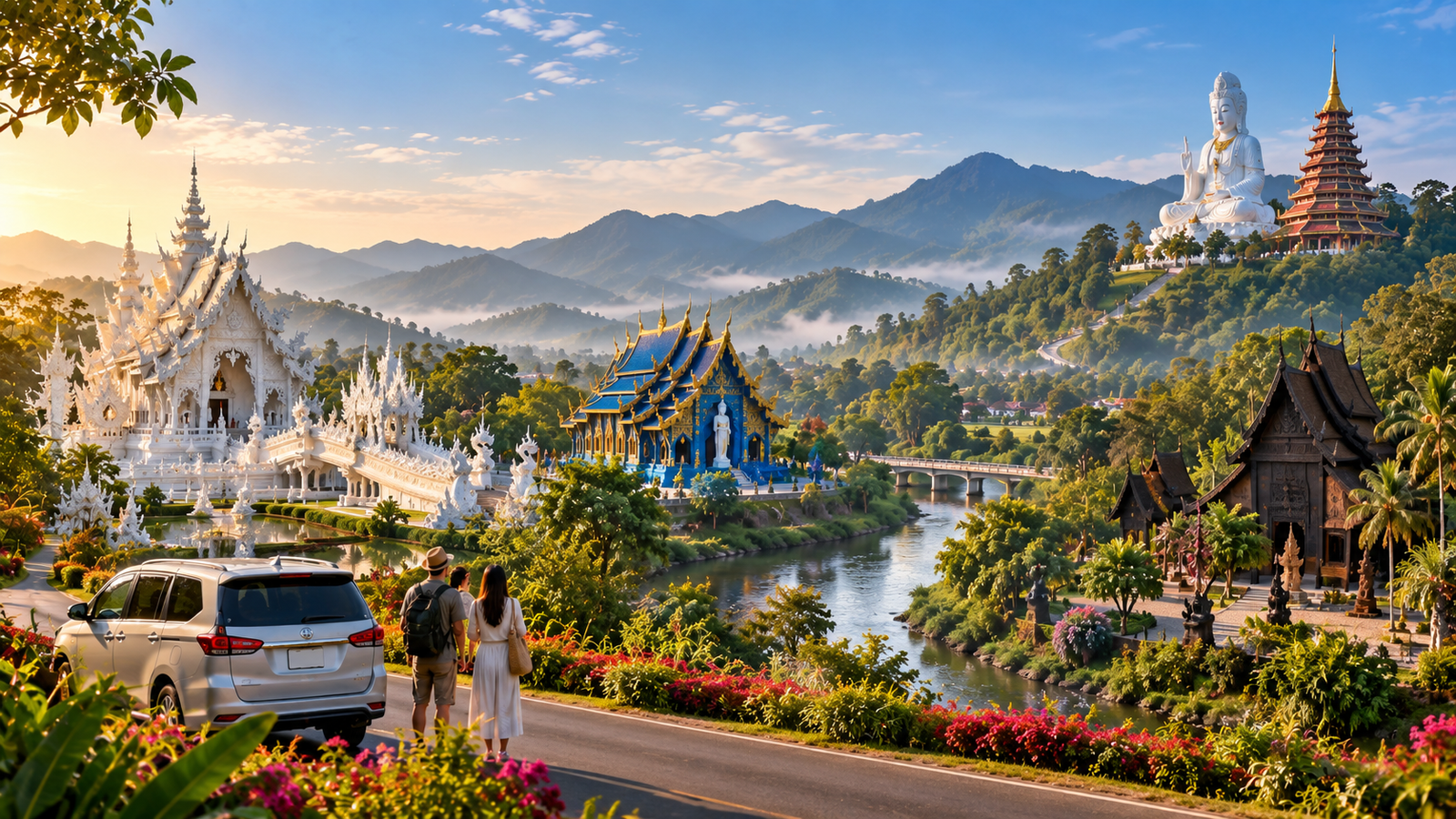
Start at Wat Rong Khun when it opens
Reach the White Temple around 08:00. The foreign-visitor admission increased to 200 THB from 1 January 2026, including access to the Cave of Art according to the announced change; the fee was checked on 18 September 2026. Current visitor sources generally list closing between 17:00 and 17:30, but do not rely on a late entry. Allow 75–90 minutes, follow the one-way route and note that photography is normally prohibited inside the main hall.
Continue north to Baan Dam before midday
Baan Dam is an art museum, not a Buddhist temple. Thawan Duchanee’s dark timber buildings and collections use hides, bones, horns and other materials that some children and adults may find unsettling. Current 2026 listings commonly report 80 THB admission and 09:00–17:00 opening, with some sources describing a midday closure; both details were checked on 18 September 2026. Reconfirm before travel and aim to arrive before noon.
Finish with colour and a viewpoint
After lunch, visit Wat Rong Suea Ten, known as the Blue Temple. Current visitor sources commonly list free entry and daily opening from around 07:00 to 20:00; these details were checked on 18 September 2026. The temple remains an active religious site, so the lack of a ticket does not remove the dress and behaviour rules.
End at Wat Huay Pla Kang. The grounds are currently reported as free, while the lift inside the large Guan Yin image is commonly listed at 40 THB for foreign visitors; the fee was checked on 18 September 2026. The hilltop location adds a broader landscape view, although haze, rain and late-afternoon cloud affect visibility.
Day 2 timing plan and route logic
The times are planning anchors rather than promises, and a driver should adjust them around current opening conditions.
| Approximate time | Stop | Time on site | Planning note |
|---|---|---|---|
| 07:30 | Leave central Chiang Rai | 20–30 min drive | Ask for an early pickup so you reach Wat Rong Khun near opening. |
| 08:00–09:30 | White Temple | 75–90 min | Include the main route, exterior details and Cave of Art if open. |
| 10:15–11:35 | Baan Dam Museum | 60–80 min | Schedule before any reported lunch closure and allow time to walk beyond the main hall. |
| 11:45–12:45 | Lunch | About 1 hour | Keep the meal near the northern side rather than driving back through the centre unnecessarily. |
| 13:15–14:05 | Blue Temple | 40–50 min | Respect active worship and remove shoes before the prayer hall. |
| 14:30–16:00 | Wat Huay Pla Kang | 60–90 min | Allow extra time for the lift queue, hillside movement and views. |
| 16:30 | Return to hotel | Variable | Keep the evening light after a full day in and out of the vehicle. |
Fees in this Day 2 plan were checked on 18 September 2026: White Temple 200 THB for foreign visitors, Baan Dam commonly 80 THB and the Wat Huay Pla Kang lift commonly 40 THB. Confirm each at the entrance.
- Ask whether the price includes entrance tickets or only the vehicle.
- Confirm whether the person accompanying you is a driver or a licensed guide.
- Check pickup and finish time, waiting, fuel, parking and overtime.
- Remove any village or shopping stop you do not actively want.
Day 3: Chiang Saen, Hall of Opium and Golden Triangle
The far-northern day is strongest when it combines scenery with historical context rather than treating the border confluence as a standalone photograph.
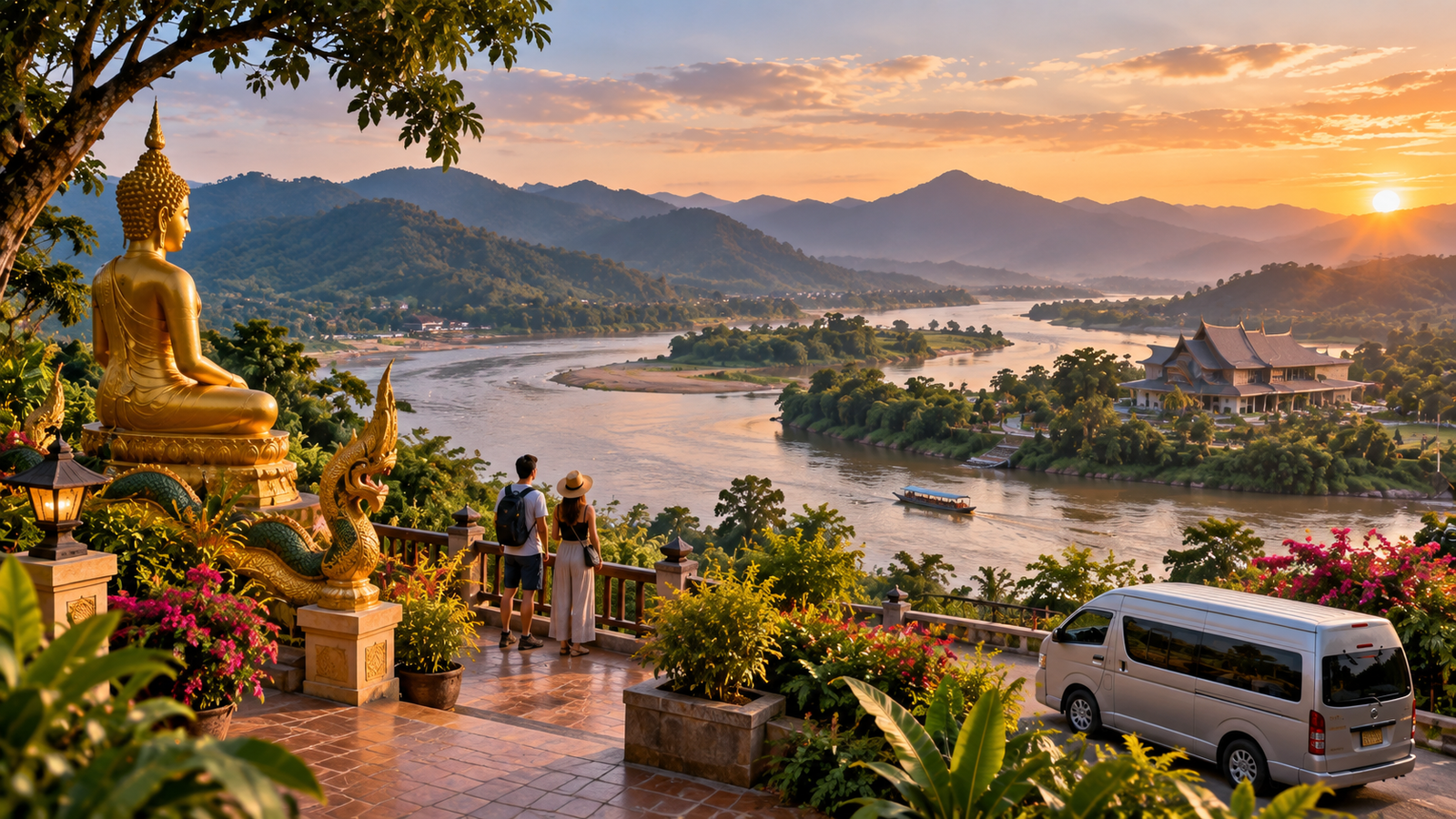
07:45–09:20: drive north
Leave early enough to reach the Hall of Opium near opening. The road day is roughly 65–70 kilometres each way from central Chiang Rai, depending on the exact route and stop. Use the journey to watch the landscape change rather than adding every roadside attraction.
09:30–11:45: Hall of Opium
The Mae Fah Luang Foundation operates the Hall of Opium at Golden Triangle Park. Current 2026 visitor information commonly lists Tuesday–Sunday opening from around 08:00 or 08:30 until 16:00, closure on Monday and 200 THB admission for foreign visitors; the price and schedule were checked on 18 September 2026. Allow around two hours because the exhibition covers opium’s medicinal, commercial, colonial and social history as well as the region’s development response.
12:00–13:30: Golden Triangle viewpoint and lunch
Continue to Sop Ruak, where the Ruak and Mekong meet and the banks of Thailand, Laos and Myanmar can be seen. The public viewpoint is currently reported as free; this was checked on 18 September 2026. River boat trips are separate commercial products, and a quick border-adjacent boat ride should not be confused with formal entry into another country.
14:00–15:00: Chiang Saen heritage stop
Break the return journey in old Chiang Saen, where Wat Chedi Luang and nearby remains provide a quieter historical counterpoint to the contemporary temples. Exact access can change around conservation work and ceremonies, so keep the stop flexible rather than attaching the whole day to one gate time.
15:00–17:00: return to Chiang Rai
Arrive back with enough time for a shower and an easy final dinner. Do not book a flight close to the predicted return; traffic, weather and a longer museum visit can move the schedule.
Monday, rain and air-quality alternatives
A strong itinerary needs a swap that still feels worthwhile when the original day is a poor fit.
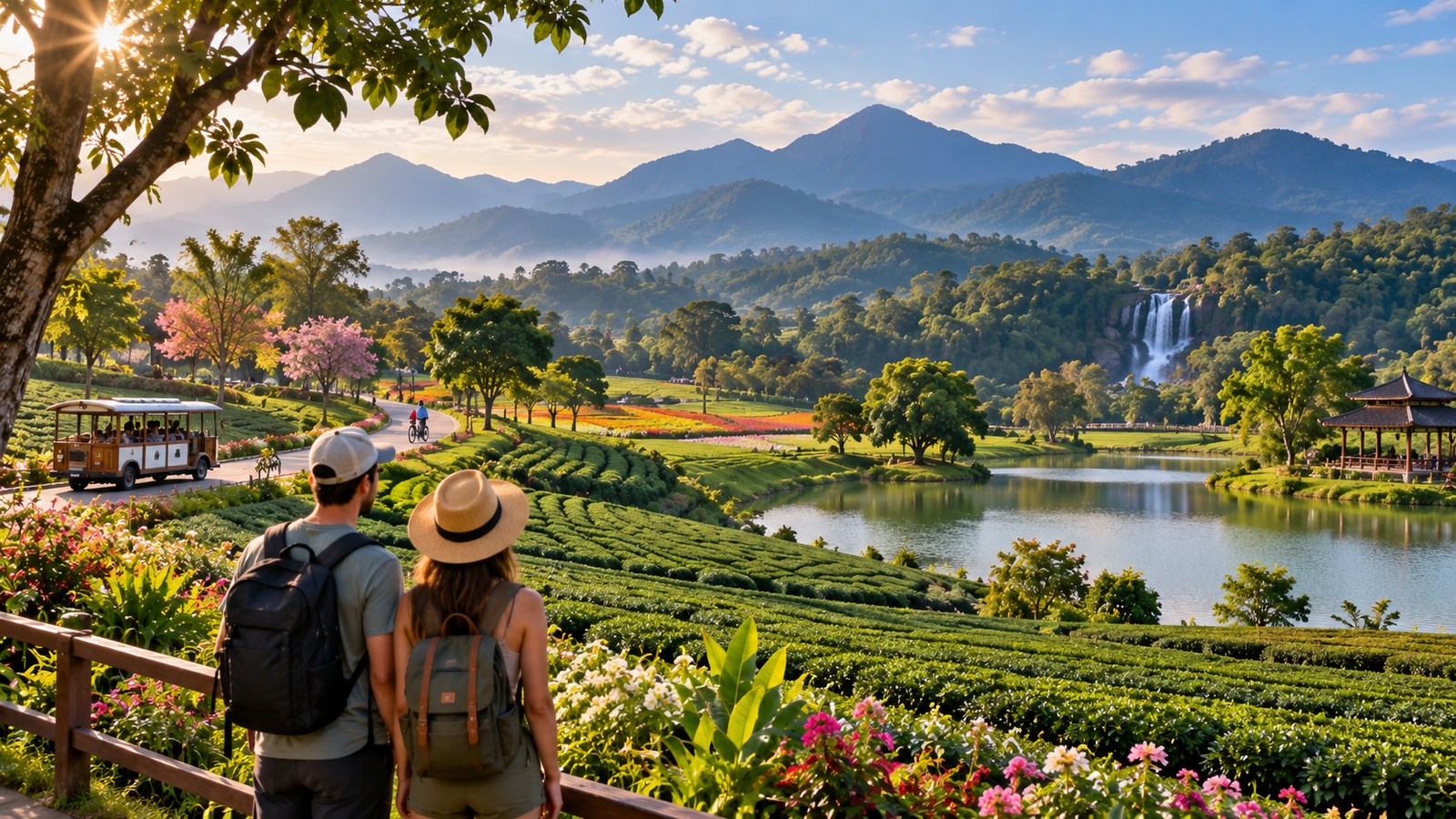
Monday replacement: Singha Park and Khun Korn
When Day 3 falls on a Monday, use a southern nature day rather than travelling north for a closed museum. Singha Park’s official website currently lists daily opening from 09:00 to 18:00. Its farm-tour page reports ticket sales from 08:30, first shuttle at 09:00 and a current adult shuttle price of 150 THB plus a separate 50 THB admission charge; these figures were checked on 18 September 2026 and should be confirmed before arrival.
Pair the park with Khun Korn Waterfall only when the trail is officially open and recent weather makes the walk sensible. Rain can make paths slippery, while dry-season flow varies. Take proper footwear, water and insect protection, and never use an unverified social-media post as proof that the route is open.
Haze replacement
During poor air quality, distant mountain viewpoints and the Golden Triangle panorama may disappoint. Replace the long northern road day with city museums, cafés, indoor cultural stops and a shorter temple schedule. Check Thailand’s official Air4Thai service rather than judging conditions from one photograph or a national forecast.
Heavy-rain replacement
In sustained rain, avoid waterfall trails and leave more time for road travel. The Hall of Opium can still be useful when roads are open, but flash-flood or landslide warnings should take priority over a booked itinerary. Use the Thai Meteorological Department’s provincial forecast and follow local instructions.
| Problem | Best swap | What you retain | What you give up |
|---|---|---|---|
| Hall closed Monday | Singha Park and a confirmed nature stop | Landscape, gentle activity and countryside | Golden Triangle history |
| Poor air quality | Short city and indoor cultural day | Art, food and local atmosphere | Distant views |
| Heavy rain | Museum-led day with flexible transport | Context and sheltered time | Trails and open viewpoints |
| Low energy | Half-day city plus Blue Temple | Meaningful highlights without a long road day | Province-wide coverage |
Singha Park prices in this section were checked on 18 September 2026; attraction and activity charges can change.
What does a three-day Chiang Rai itinerary cost?
The largest variable is not temple admission; it is how you move around the province.
Planning ranges
A budget traveller can keep Day 1 inexpensive, then choose one or two group tours. A couple may find a private driver competitive once the vehicle price is divided by two, particularly when flexibility matters. Families should compare the private-vehicle total with several individual group-tour places and check child-seat availability.
| Style | Three-day local spend per person | Typical approach | Main caveat |
|---|---|---|---|
| Budget independent | About 2,500–4,500 THB | Walk Day 1, shared tour or negotiated group transport, simple meals | Less control over stop duration and pickup |
| Comfortable mid-range | About 4,500–8,500 THB | Good-value tours, ride apps, mixed local and sit-down meals | Ticket inclusions vary between listings |
| Private and flexible | About 7,000–15,000+ THB | Private car or guide on Days 2 and 3, flexible meals | Per-person cost depends heavily on group size |
Planning ranges were checked on 18 September 2026 and exclude accommodation, travel to Chiang Rai, shopping and alcohol. They are estimates, not quoted package prices.
Known attraction examples
As checked on 18 September 2026, the White Temple foreign-visitor fee is 200 THB; Baan Dam is commonly listed at 80 THB; the Wat Huay Pla Kang lift is commonly listed at 40 THB for foreign visitors; and the Hall of Opium is commonly listed at 200 THB for foreign visitors. Wat Phra Kaew, Wat Phra Singh, the Blue Temple, the Clock Tower show and Golden Triangle public viewpoint are currently reported without compulsory admission tickets. Carry cash and treat the sign at the entrance as final.
Food and evening planning
A long attraction list is easier to enjoy when meals are placed where they solve a timing problem.
Day 1: use the centre
Eat lunch near the old city and dinner around the Night Bazaar, Clock Tower or Jetyod Road. The first evening is a good time to try northern dishes such as khao soi, sai ua and nam prik ong, while remembering that recipes and heat levels vary. Choose a busy stall or restaurant, order bottled or properly treated water and ask clearly about allergies.
Day 2: eat near the northern route
After Baan Dam, lunch on the northern side of the city avoids unnecessary backtracking. Tell a driver whether you prefer a quick local meal, air conditioning or a longer restaurant stop because “lunch included” can mean anything from a buffet to a fixed menu.
Day 3: protect museum time
Do not use the Hall of Opium’s final opening hours for lunch. Visit the museum first, then eat around Sop Ruak or Chiang Saen. If dietary restrictions are significant, ask the tour operator in writing how they are handled rather than assuming a buffet has suitable labelling.
What to book first
Book the parts that constrain the route, then leave the flexible city time alone.
- Confirm three usable sightseeing days and choose four nights when travel times are awkward.
- Book a central, refundable hotel and verify the walking route rather than trusting the area label.
- Reserve Day 3 around the Hall of Opium’s opening day, especially when the visit might fall on Monday.
- Choose a Day 2 driver or tour with the exact four-stop sequence you want.
- Book transport into and out of Chiang Rai only after allowing realistic hotel and terminal time.
- Recheck attraction hours, air quality and the weather close to departure.
Intercity transport
Compare departure point, luggage conditions and total journey time rather than looking only at the lowest fare.
Flights and Bangkok routes
For a short trip, a direct flight can protect more useful time than an overnight journey followed by an immediate tour.
Arrival connectivity
An eSIM can help with maps and driver messages when the phone supports it. Compare live data packages and device compatibility.
Transport, tour and eSIM listings were checked on 18 September 2026; prices and terms shown after clicking are the current offer.
What to wear and carry each day
The ideal day bag supports temple etiquette, sudden rain and long vehicle periods without becoming another piece of luggage.
Temple-ready clothing
Wear or carry clothing that covers shoulders and knees. A light overshirt and sarong are more reliable than expecting every entrance to provide a cover-up. Choose footwear that is easy to remove yet stable enough for uneven paths and wet surfaces.
Day-bag essentials
- Refillable water bottle and a small amount of food for long drives.
- Sun protection, insect repellent and a compact rain layer.
- Power bank, charging cable and offline copies of bookings.
- Cash in small notes for tickets, food and donations.
- Any personal medication, plus motion-sickness preparation after suitable medical advice.
What to leave at the hotel
Large luggage has no role on the temple circuit unless Day 2 is also a transfer day. Keep valuables secure, avoid displaying unnecessary cash and use the hotel safe only after understanding its terms.
Season, weather and air quality
Chiang Rai’s most photogenic day can become its least useful when visibility or road conditions are poor.
Cooler high season
November to February often offers more comfortable temperatures and clearer touring conditions, although popular dates raise accommodation demand. Early mornings can feel surprisingly cool on open vehicles or hill routes, so carry a light layer.
Smoke and heat
Late dry-season air quality can vary sharply. Do not rely on a general statement that one month is always safe or always poor. Check Air4Thai for current particulate readings, adjust outdoor exertion to personal health needs and consider changing the Golden Triangle day when visibility is badly reduced.
Rainy season
Rain can produce lush landscapes and lower demand, yet storms affect road time, viewpoints and trails. Build flexibility into the final day, avoid waterfall paths during unsafe conditions and follow Thai Meteorological Department warnings about heavy rain, flooding or landslides.
How to adapt the itinerary to your trip
Keep the three-part structure, then change the pace and stop length rather than adding more attractions.
For families
Use a private vehicle, request an appropriate child seat in writing and shorten Baan Dam if the displays are uncomfortable. Add more time for toilets, food and shade. Singha Park may be a better Day 3 choice than the Hall of Opium for young children, although activities and charges must be checked.
For couples
Stay central for convenience or choose a riverside hotel when the property itself is part of the trip. A private driver on Day 2 allows a slower lunch and fewer group-tour interruptions, while Day 3 can finish with an unhurried riverside stop in Chiang Saen.
For solo travellers
Group tours reduce the cost of the two long road days. Read the stop list carefully because the cheapest tours often include more commercial or village visits. Keep the provider’s contact details and meeting-point instructions offline.
For limited mobility
Ask about steps, lift reliability, walking distances, vehicle height and accessible toilets at every attraction. The Wat Huay Pla Kang complex is hilly, Baan Dam spreads across garden paths and the Hall of Opium has a long exhibition route. A private vehicle can reduce walking between gates but does not make every interior step-free.
For slower travel
Add a fourth day and move Baan Dam to the Golden Triangle route or dedicate a separate day to Singha Park and the southern countryside. The best improvement is usually more time at fewer places, not a longer checklist.
Pros and cons of this three-day plan
Advantages
- Balances historic city temples with modern art and regional history.
- Separates the Golden Triangle from the already busy temple circuit.
- Leaves Day 1 light enough for a realistic arrival recovery.
- Works with group tours, a private driver or confident self-drive.
- Includes a practical Monday and weather alternative.
Trade-offs
- Requires two road-heavy days.
- Misses mountain destinations such as Doi Tung and Mae Salong.
- Works best with four nights rather than a literal three-night break.
- Private transport can dominate the budget for one traveller.
- Attraction hours and visibility still require last-minute checks.
The plan is designed for a first visit, not for completing Chiang Rai province. Travellers who care more about tea landscapes, mountain villages or hiking should replace the Golden Triangle day rather than adding another long excursion.
Common Chiang Rai itinerary mistakes
- Treating a late arrival as Day 1 and then wondering why the city feels rushed.
- Booking a tour departing Chiang Mai when the hotel is in Chiang Rai.
- Assuming every “opium museum” listing refers to the Hall of Opium.
- Planning the Hall of Opium on Monday without checking closure.
- Putting the Golden Triangle, White Temple and every colour-coded temple into one day.
- Ignoring the pickup boundary of a riverside or outer-city hotel.
- Using an old White Temple fee that predates the 2026 increase.
- Arriving at Baan Dam around midday without checking the current entry arrangement.
- Renting a scooter without the correct licence, experience or insurance.
- Assuming northern views will be clear without checking air quality.
- Entering temple buildings in unsuitable clothing or photographing where prohibited.
- Booking a flight too close to the estimated return from the Golden Triangle.
Chiang Rai 3-day itinerary FAQs
Are three days enough for Chiang Rai?
Yes. Three full days can cover the old city, the main contemporary temple-and-art circuit and one northern day around Chiang Saen and the Golden Triangle. Four nights usually protect those three days best.
Should I stay three or four nights?
Choose four nights when arrival is late or departure is early. Three nights works only when the travel timings leave three genuinely usable days.
What is the best area to stay?
The central Clock Tower, Night Bazaar and Bus Terminal 1 grid is the most practical base for this itinerary because Day 1 is walkable and tour pickups are easier.
Can I do the itinerary without a car?
Yes. Walk and use short rides on Day 1, then book group tours or a private driver for Days 2 and 3. Public transport between all individual attractions is too fragmented for this exact schedule.
What time should I visit the White Temple?
Aim for the 08:00 opening period. It reduces heat and coach-tour crowds and protects the rest of the four-stop circuit.
How much is the White Temple in 2026?
The announced foreign-visitor admission is 200 THB from 1 January 2026, including the Cave of Art. This was checked on 18 September 2026; confirm at the entrance.
Is the Blue Temple free?
Current 2026 visitor information reports no compulsory admission ticket, with donations welcome. It remains an active temple and standard dress and behaviour rules apply.
Is Baan Dam suitable for children?
It depends on the child. Baan Dam uses animal hides, bones, horns and dark imagery, so review the content before including it and be ready to shorten the visit.
Is Wat Huay Pla Kang a Buddha statue?
Its large white figure is Guan Yin, associated with compassion, rather than a Buddha image. The grounds are currently reported as free, with a separate lift fee.
Is the Golden Triangle worth a full day?
A viewpoint visit alone may not justify a full day. It becomes more worthwhile when paired with the Hall of Opium and a Chiang Saen heritage stop.
Is the Hall of Opium open on Monday?
Current 2026 visitor information commonly lists closure on Monday and opening Tuesday to Sunday. Check directly before committing to the drive.
How long do I need at the Hall of Opium?
Allow around two hours. The exhibition is substantial, and rushing it removes the context that makes the Golden Triangle day valuable.
Can I include Doi Tung or Mae Salong?
Not comfortably without replacing another major day. Use a fourth day, or swap the Golden Triangle plan when mountain scenery and tea culture matter more.
Is Chiang Rai walkable?
The central old-city and Clock Tower grid is reasonably walkable. The White Temple, Baan Dam, Blue Temple, Wat Huay Pla Kang and Golden Triangle require road transport.
Do I need to book tours in advance?
Advance booking is sensible for weekends, cool-season dates, Thai holidays and private vehicles. Leave the Day 1 city walk unbooked unless you specifically want a guide.
What should I wear?
Cover shoulders and knees for temples, choose easy-to-remove footwear and carry sun and rain protection. Baan Dam is not a temple, but comfortable shoes still help.
What happens during burning season?
Air quality and visibility vary by day. Check Air4Thai, follow health advice and replace long viewpoint days when conditions are poor.
Can I fly out after the Golden Triangle day?
A late flight may be possible, but it creates unnecessary risk. Road delays, weather and museum timing can move the return, so the following morning is safer.
The final recommendation
Use four nights to create three complete days. Stay centrally, let the first day introduce Chiang Rai’s own history and evening rhythm, then use a vehicle for the contemporary temple circuit. On the final full day, travel north only when the Hall of Opium is open and conditions support the journey.
The itinerary works because each day has a different purpose. Day 1 explains the city; Day 2 shows how local artists transformed religious architecture; Day 3 places the province within the Mekong and Golden Triangle story. Keep those distinctions, remove stops when energy drops and recheck the changing details shortly before travel.
Sources and fact-checking notes
This guide was reviewed on 18 September 2026. Official and primary sources were preferred for destination context, weather, air quality, driving requirements and operator information. Where an attraction did not publish a clear current English page, several recent visitor and licensed local-operator sources were compared and the wording remains deliberately cautious.
- Tourism Authority of Thailand — Chiang Rai province overview. Destination context and major attractions.
- Khaosod English — White Temple admission change. The 200 THB foreign-visitor fee effective 1 January 2026 and stated inclusions.
- Singha Park Chiang Rai, including its current contact and farm-tour pages. Hours, shuttle operation and published activity information.
- Mae Fah Luang Foundation — Hall of Opium contact details. Operator identity and direct contact route.
- Air4Thai, Pollution Control Department. Live official air-quality monitoring.
- Thai Meteorological Department — Chiang Rai. Provincial forecasts and warnings.
- GOV.UK — International Driving Permit country table. Current UK guidance listing the 1968 IDP for Thailand.
- GOV.UK — Thailand travel advice. Road, insurance and changing national travel information.
- Current 2026 attraction cross-checks included Thai Holiday Guide, Bon Voyage Thailand, JTTT Travel and other recent Chiang Rai visitor sources. Conflicting hours are presented as ranges with an instruction to confirm locally.
- Commercial planning checks used current Booking.com, 12Go and GetYourGuide search pages on 18 September 2026. Live availability and the issued booking terms always take precedence.
Illustrations in this article were created for Taylor’s Trailblazing Travels. Third-party photographs, where used, are credited beside the image or in the source list.