Koh Phangan Travel Guide: Beaches, Areas, Transport and Costs
A research-led guide to choosing the right coast, reaching the island, planning transport, understanding event dates and building a relaxed first stay.
Koh Phangan is often reduced to one night on Haad Rin. That misses most of the island. Around the same coastline, travellers can choose a practical pier town, a west-coast wellness base, a quiet northern bay, a polished east-coast resort or the concentrated energy of Full Moon week. The right answer depends less on a universal “best beach” and more on where you want to sleep, how you will move around and what the sea is doing on your dates.
However, the island has no airport, so arrival planning matters. A direct flight to Koh Samui still ends with a pier transfer and boat; a cheaper flight or train to Surat Thani adds a longer mainland hand-off. Once ashore, public transport is informal, taxi prices rise with distance and event demand, and steep or wet roads make a scooter a poor default for an inexperienced rider.
Therefore, this Koh Phangan travel guide combines official tourism information, ferry timetables, weather and safety guidance, current booking examples and transparent planning ranges. Prices and schedules were checked on 18 September 2026; your issued ticket, hotel confirmation and the live marine forecast remain the final authority.
West coast or Baan Tai
They balance restaurants, sunset access, pier transfers and enough taxis without committing the trip to Haad Rin.
Thong Nai Pan
Two attractive east-coast bays suit travellers who value resort time and accept a longer road transfer.
Thong Sala
The main ferry gateway has markets, services and the simplest base for travellers without their own vehicle.
Event date changes the island
Full Moon week can alter room prices, boat demand, taxi availability and road traffic well beyond Haad Rin.
Koh Phangan works best for travellers who want a varied island rather than a single-purpose resort. The official Tourism Authority of Thailand profile highlights beaches, waterfalls, mountains, coconut farming, fishing communities and the monthly party culture, which explains why two stays on the same island can feel unrelated.[1]
Who is likely to enjoy it
For example, choose Koh Phangan when you want at least four nights, enjoy smaller-scale accommodation, and value a mix of beach time with cafes, yoga, viewpoints or boat trips. It is especially useful in a Lower Gulf route with Koh Samui or Koh Tao, because the islands can be linked without crossing the country.
Who may prefer another island
Conversely, Koh Samui is easier when an airport, large resorts, hospitals, shopping and broad family facilities matter more than atmosphere. Koh Tao is a stronger starting point when diving is the main reason for the trip. Meanwhile, Phuket offers the widest backup plan for poor weather. Koh Phangan asks for more ferry and final-transfer planning than those larger gateways.
The first decision is not “party or no party”
Instead, decide whether you need walkable evenings, a quiet beach, wellness facilities, a family-friendly resort, easy pier access or direct party transport. Then map the exact hotel against the main road, nearest food cluster and likely taxi price. A beautiful room up a steep unlit lane can be a poor choice without a vehicle.
The recommendations are ordered by practical fit rather than by commission, social-media popularity or one dramatic photograph. Area comparisons use the ferry gateway, road position, evening choice, likely transport dependence, beach character and how Full Moon demand can affect the stay.
How beaches and areas were compared
In practice, each area was checked against six questions: Can a non-rider reach it easily? Is the beach usually the main reason to stay there? Are meals available without a long taxi? How exposed is the area to event demand? Is the road or final lane awkward after dark? What useful alternative exists if the sea or weather is poor?
Why prices are ranges
Meanwhile, hotel and transport prices on Koh Phangan move sharply with room type, cancellation terms, school holidays and Full Moon dates. Therefore, this guide uses dated planning ranges rather than presenting one search result as a permanent fare. Current ferry, room and activity pages should be rechecked before payment.
What this guide does not claim
Crucially, no first-hand visit is invented. Personal-style recommendations are research-led planning judgements based on official sources, live operator information, current listings and route trade-offs. Conditions on beaches, trails and roads can change faster than an annual article update.
Koh Phangan follows the Lower Gulf pattern rather than the Andaman calendar. Taylor’s month-by-month guide identifies April to September as the first planning window for Samui, Phangan and Tao, while the northeast monsoon can make the east coast of southern Thailand wetter later in the year.[2] The Tourism Authority of Thailand’s Surat Thani guidance likewise treats the Gulf islands differently from Phuket and Krabi.[3]
Season planner
| Period | What can work | Main risk | Best adjustment |
|---|---|---|---|
| January–March | Generally improving beach conditions; February and March often feel strong | Peak demand can raise rates; windy days still affect boats | Book useful room types earlier and keep a ferry buffer |
| April–June | Hot, bright and often a strong Lower Gulf window | Songkran demand, heat and short heavy showers | Start walks early; prioritise shade and hydration |
| July–September | Useful European-summer option; green landscape and many operating services | Humidity, showers and rough spells remain possible | Choose refundable plans and check marine forecasts |
| October–December | The Lower Gulf can receive its wettest and stormiest period | Boat disruption, flooded roads and reduced waterfall safety | Use a larger island buffer and avoid fragile connections |
Weather is a transport question
A rain icon does not guarantee an all-day washout. However, a thunderstorm over open water can delay or cancel a crossing. The Thai Meteorological Department publishes daily conditions and wave guidance, including warnings that ships should avoid thunderstorms when winds strengthen.[4] Check the forecast again 48–72 hours before a ferry or boat tour.
Full Moon week is its own season
Even travellers who avoid Haad Rin should check the event calendar. The local schedule source listed the next event after this review for 26 September 2026 and quoted a 200-baht entry charge, while warning that dates can shift around public or religious holidays.[10] Treat that page as event guidance rather than government regulation and reconfirm locally.
Therefore, four to seven nights is the strongest first-stay range. It gives the ferry effort a purpose and leaves room for a poor-weather day. Two nights can work between Samui and Tao, but the trip becomes vulnerable to late arrivals and early departures.
Match the stay length to the plan
| Stay length | What it supports | Planning caution |
|---|---|---|
| 2–3 nights | One beach base and one island day | Works only as a simple add-on; ferry disruption has little recovery space |
| 4–5 nights | Best first-trip balance | Supports one beach day, one inland or boat day and unhurried evenings |
| 6–8 nights | Two moods without rushing | Allows a west/north base plus Thong Nai Pan or Haad Rin when there is a clear reason |
| 10+ nights | Wellness, remote work or slow island living | Choose walkability and practical services before a photogenic isolated room |
One base is normally enough
In practice, changing hotels costs more time than the map suggests because checkout, bags and taxi negotiation interrupt the day. For a five-night trip, choose one area and take day trips. Split the stay only when the second base changes the experience—for example, three nights near Sri Thanu followed by three nights in Thong Nai Pan.
Protect the final international flight
When a separate long-haul ticket follows the island, return to Samui or the mainland at least one night early. A ferry timetable is not a weather guarantee, and airlines do not usually protect a missed flight caused by a separately booked boat.
Koh Phangan has no airport. Almost every traveller reaches Thong Sala by passenger ferry, although some event or local services use other piers. The correct comparison is door to door: flight or train, mainland transfer, check-in, crossing, baggage collection and final island taxi.
Main arrival routes
| Route | Best for | Typical planning time | Main trade-off |
|---|---|---|---|
| Fly to Koh Samui, then ferry | Fastest for many short holidays | Roughly 30–60 min fast ferry plus airport/pier and island transfers | Higher flight cost; check the exact Samui pier |
| Fly to Surat Thani, combined bus + ferry | Often better value | Usually about 3–5h from airport to Thong Sala depending connection | More hand-offs and less recovery after a late flight |
| Train or bus to Surat Thani/Donsak | Overnight budget journey | Commonly 10–16h from Bangkok across the full chain | Confirm whether the ticket ends at the pier or island |
| Chumphon + high-speed ferry | Useful with Koh Tao or an upper-Gulf route | Several hours by boat depending stops and service | Sea comfort and timetable matter |
| Koh Tao or Koh Samui island hop | Logical Lower Gulf route | About 1h from Phangan to Tao on some fast services; Samui can be shorter | Do not book a tight flight connection after the boat |
Fastest is not always easiest
For example, Samui Airport can protect a holiday day, but the wrong pier or a late flight can erase the advantage. Conversely, a combined Surat Thani ticket can be straightforward when one operator coordinates the bus and ferry. Read the voucher for the operating companies, exact pier, baggage allowance and missed-connection terms.
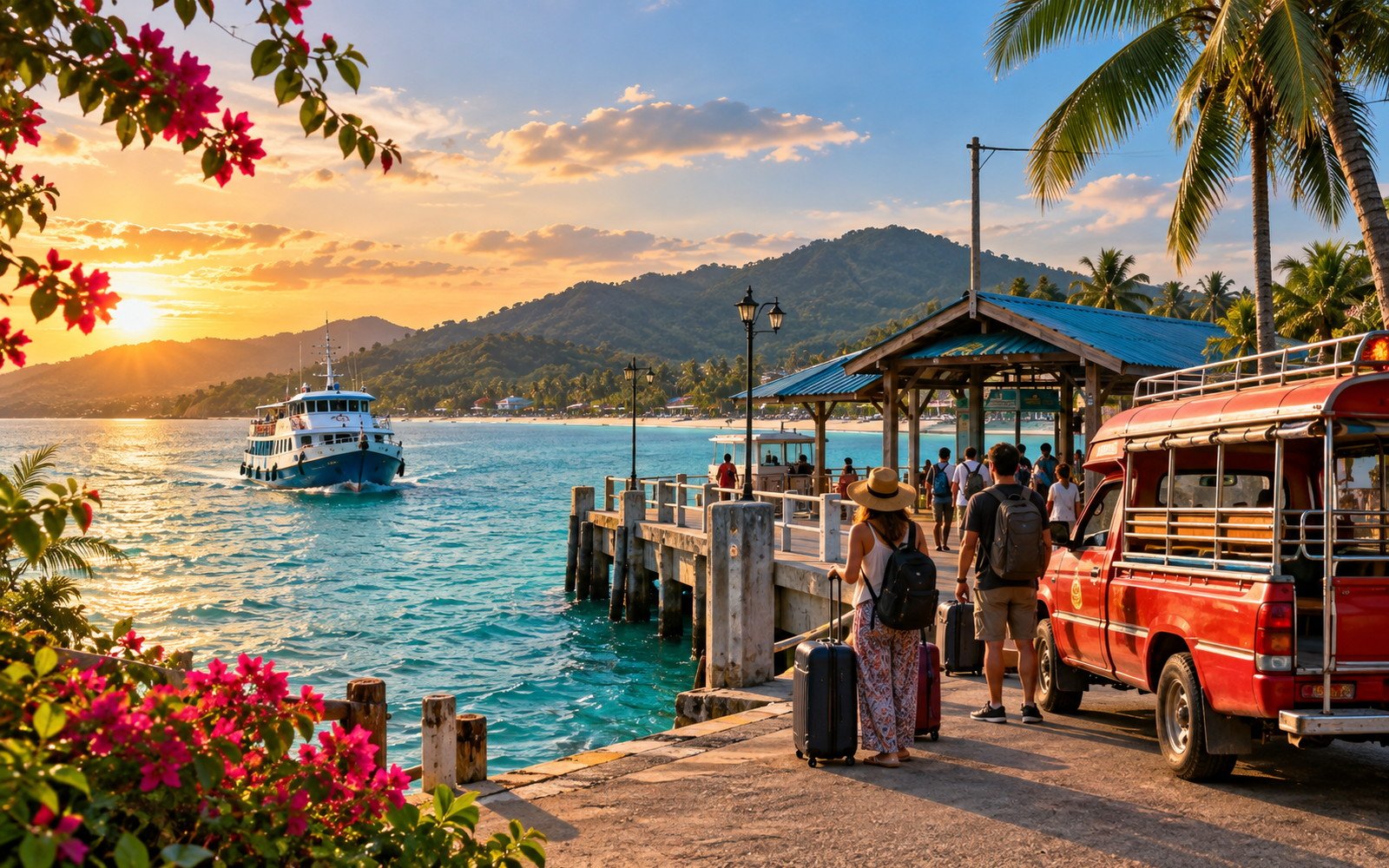
Meanwhile, Thong Sala is the main practical arrival point because it connects ferries with markets, cash machines, shops, taxis and roads to every coast. Nevertheless, a search result that says “Koh Phangan” is not enough. Check the departure pier on Samui or the mainland and the arrival pier on the island.
What current operator information shows
Lomprayah’s 2026 timetable publishes multiple Gulf routes linking Samui, Phangan, Tao, Chumphon and Surat-area connections.[5] Raja Ferry’s published Donsak–Thong Sala schedule describes a roughly 2½-hour vehicle-ferry crossing, with several daily departures and possible via-Samui arrangements.[6] These are operating examples, not promises for every date.
Build a connection buffer
Allow at least 90 minutes between a domestic flight and an independently booked ferry when the airport transfer is short and predictable; use more when changing piers, collecting checked luggage or travelling in poor weather. For a long-haul flight, an overnight buffer is safer than a same-day island crossing.
Final hotel transfer
Therefore, pre-arrange a pickup for remote east-coast or northern resorts, especially after dark. Shared songthaews usually wait at busy arrivals, yet a quoted per-person price can become a private-vehicle price when there are few passengers. Confirm the total before loading bags.
In practice, the best area is the one that reduces repeated transport. A hotel can be cheap and beautiful yet poor value if every dinner requires a private taxi. The comparison below is based on pier access, road position, evening choice, beach character and event exposure.
Area comparison
| Area | Best for | Why it works | Watch-out |
|---|---|---|---|
| Thong Sala | First arrivals, non-riders, markets and short stays | Best services, main pier, broad food and taxi choice | Not the island’s prettiest beach base |
| Baan Tai / Baan Kai | Social travellers and flexible island access | Between Thong Sala and Haad Rin; useful road position | Beach quality varies; road noise in parts |
| Haad Rin | Full Moon access and concentrated nightlife | Walk to the main event and late-night venues | Prices, noise and crowds spike around events |
| Sri Thanu / Hin Kong | Yoga, wellness, cafes and longer stays | Community, sunsets and useful west-coast location | Popular and spread out; some bays are shallow at low tide |
| Haad Yao / Haad Salad | Couples, beach time and west-coast sunsets | Attractive beaches with enough dining for a relaxed stay | Taxi dependence for wider island exploring |
| Chaloklum / Mae Haad | Quiet north, snorkelling and village atmosphere | Fishing village services and access to Koh Ma area | Farther from Haad Rin and some evening options |
| Thong Nai Pan Noi / Yai | Quiet resort holiday and families | Two scenic east-coast bays with established resorts | Longer winding transfer; fewer spontaneous alternatives |
| Bottle Beach / remote bays | Seclusion and simple beach time | Strong escape feeling | Boat or difficult-road dependence; limited backup |
Research-led first-stay choice
For a first visit without a scooter, I would start with Thong Sala, Baan Tai or the more connected west coast. They keep arrival, meals and taxis manageable. Thong Nai Pan is stronger for a self-contained resort break, while Haad Rin makes sense when the event—not simply curiosity—is a central reason for the trip.
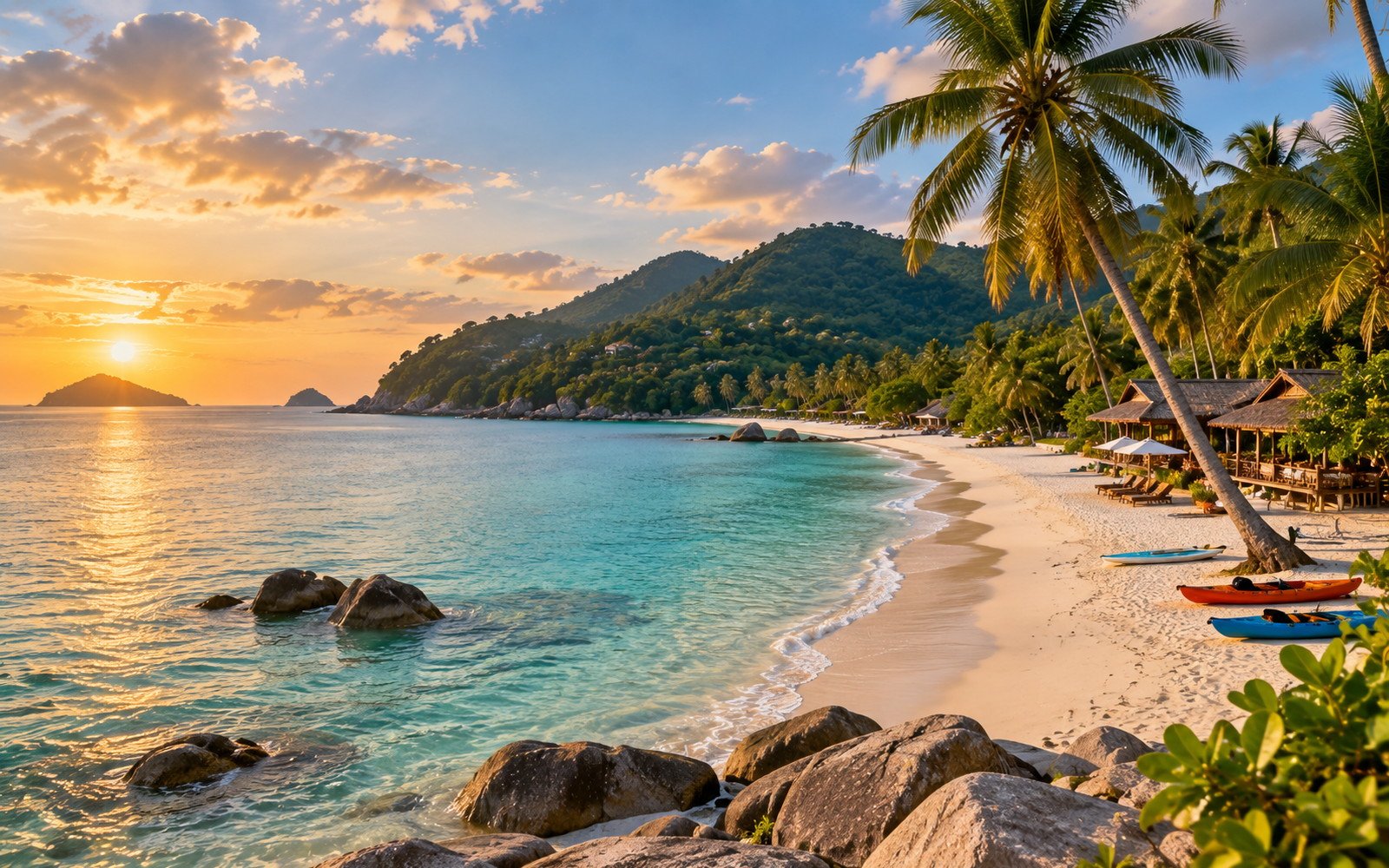
However, no beach wins every category. The list is grouped by the experience each bay solves—resort convenience, sunsets, snorkelling, seclusion or party access—rather than ranked from prettiest to least pretty.
Beach comparison
| Beach | Best for | Strength | Trade-off |
|---|---|---|---|
| Thong Nai Pan Noi / Yai | Scenic resort bays | Good for a quiet, longer beach stay | East-coast transfer and fewer casual alternatives |
| Haad Yao | Balanced west-coast beach | Sunsets, accommodation and restaurants | Can feel busy in popular periods |
| Haad Salad | Couples and calmer beach days | Sheltered feel and compact resort choice | Shallower conditions can vary with tide |
| Mae Haad / Koh Ma | Shore snorkelling when conditions suit | Sandbar scenery and northern location | Visibility, current and reef access are weather-dependent |
| Bottle Beach | Remote escape | Strong scenery and separation | Boat or difficult road; limited services |
| Haad Rin Nok / Nai | Party access or a south-coast stop | Famous setting and broad services | Event-week crowds, noise and higher prices |
| Haad Yuan / Haad Tien | Secluded east/south-east atmosphere | Beach, retreats and a more isolated feel | Boat dependence and limited late alternatives |
Swimming conditions change
Meanwhile, tides, wind, runoff and seasonal currents affect clarity and depth. A west-coast bay can be beautiful at sunset yet shallow for swimming at low tide. Ask the accommodation how the beach behaves in your month rather than relying on one high-tide photograph.
Snorkelling is never guaranteed
Mae Haad and the Koh Ma area are commonly promoted for snorkelling, but reef visibility and safe access depend on sea conditions. Avoid standing on coral, do not chase wildlife and use a life jacket when your swimming confidence or the current warrants it.
In practice, Koh Phangan does not have a fixed public bus network that removes transport planning. Songthaews, private taxis, hotel vehicles, scooters and boats solve different trips. Therefore, the hotel location matters as much as the nightly rate.
Transport comparison
| Mode | Best use | What to confirm |
|---|---|---|
| Shared songthaew | Pier arrivals, common corridors and event transport | Agree price before boarding; it may wait for more passengers |
| Private songthaew / taxi | Door-to-door, luggage, remote areas | Confirm total fare, pickup time and whether return is guaranteed |
| Hotel transfer | Late arrivals and isolated resorts | Often the least stressful despite a higher quote |
| Scooter | Experienced, correctly licensed riders only | Helmet, licence category, 1968 IDP, insurance and road conditions matter |
| Rental car | Families or groups wanting control | Limited supply, parking and narrow roads; check insurance |
| Water taxi | Remote bays such as Bottle Beach or Haad Yuan | Weather, daylight and minimum passenger numbers affect service |
Scooters are not a default island accessory
UK guidance lists a 1968 International Driving Permit for Thailand, and riders also need the correct motorcycle entitlement—not only a car licence.[8] FCDO advice warns about road risks and rental disputes, including handing over a passport as security.[7] Rental availability does not prove legal or insured use.
Use a two-taxi calculation
Therefore, before booking a remote hotel, price the arrival transfer and one return evening trip. If that total erases the room saving, a more central property is better value. Pre-book a late-night return during Full Moon week rather than expecting an empty songthaew at the exact time you want.
However, the Full Moon Party is held at Haad Rin and changes demand across the island. The current local schedule source states that entry is paid at the beach gates and warns against unofficial advance-ticket claims.[10] Dates can shift around Thai public or religious holidays, so verify the event with current local information before locking flights and accommodation.
Stay in Haad Rin only when access is worth the trade-off
Walking back to a nearby room is valuable after a late event, yet the same location brings noise, minimum stays and higher rates. Travellers who want one party night but quieter days can stay in Baan Tai or Thong Sala and arrange a return transfer in advance.
Safety is part of the booking
FCDO guidance notes that assaults are more common around Full Moon parties and late-night bar areas, and warns about drink spiking and methanol poisoning.[7] Keep control of drinks, avoid unsealed alcohol, carry only necessary cash, use closed footwear on the beach, agree transport before drinking and stay with the group.
Full Moon week affects non-party trips
Consequently, rooms, ferries and taxis can fill even when the hotel is far from Haad Rin. If sleep and calm matter, read recent event-week reviews and ask about nearby music. Alternatively, move the stay outside the busiest dates rather than assuming the north is completely insulated.
Meanwhile, the island’s interior is steep, green and more demanding than the beach photographs suggest. Phaeng Waterfall and viewpoints in the national-park area, Than Sadet’s historic waterfall landscape and the Khao Ra route are common starting points. However, water flow and trail safety change with rainfall.
Phaeng Waterfall and Domesila viewpoint
This is a practical half-day from Thong Sala when paths are open and not slippery. Begin early, carry water and turn back before heat or rain removes the enjoyment. A waterfall may be less dramatic late in a dry spell; that is a seasonal condition rather than a failure.
Than Sadet and the east coast
TAT lists Than Sadet National Waterfall among the island’s headline natural attractions.[1] Combine it with an east-coast beach only when road and park access are confirmed. The Department of National Parks publishes changing opening and closure information, so use its current notices instead of an old blog timetable.[9]
Khao Ra and serious walking
The island’s highest routes require more time, footwear and navigation than a casual viewpoint stop. Use a reputable local guide when conditions or route knowledge justify it, and do not begin a long walk late in the afternoon. Mobile signal should not be treated as a rescue plan.
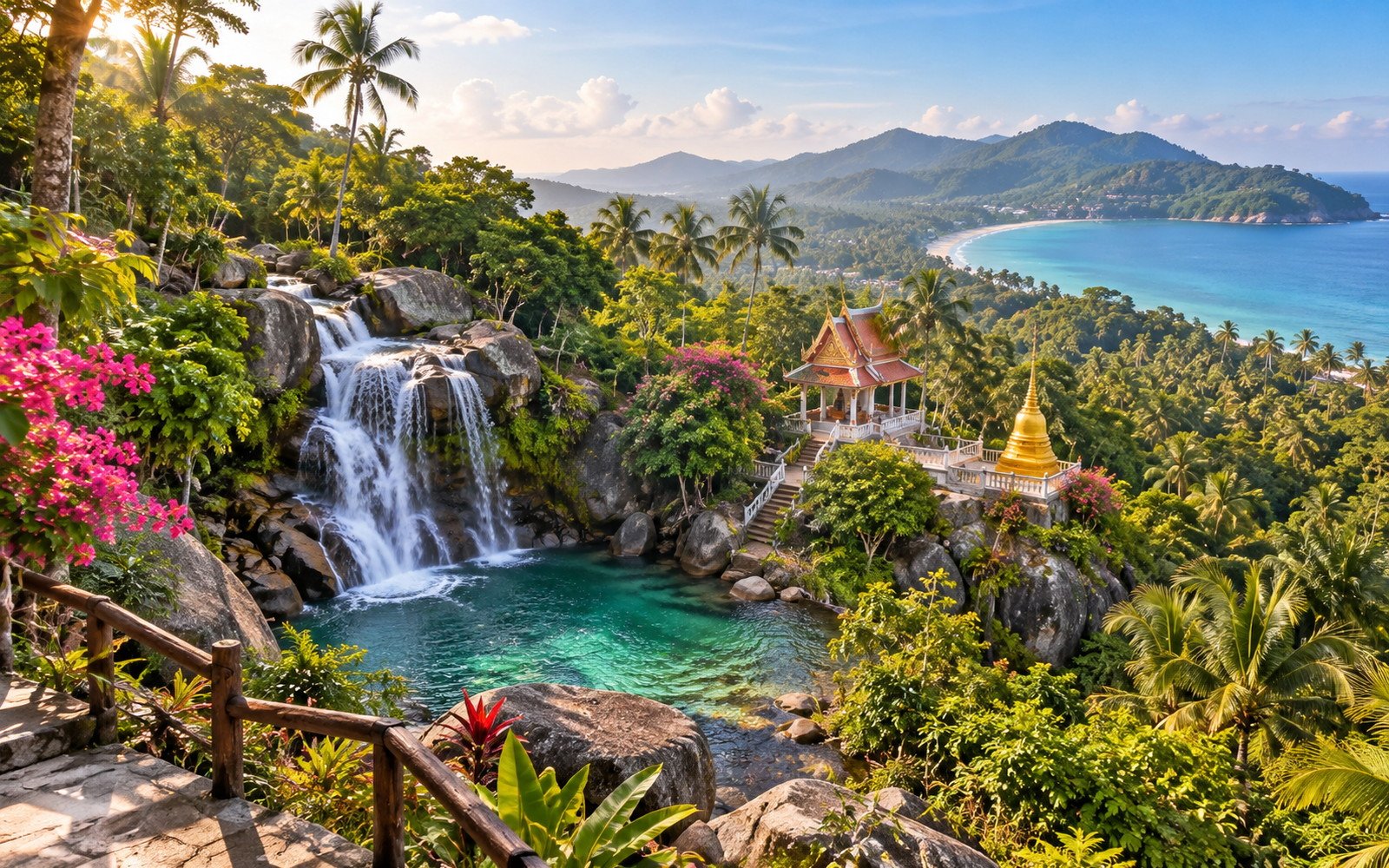
Meanwhile, Koh Phangan’s temples and communities provide a quieter counterweight to the beach calendar. Visits should be planned as respectful cultural stops rather than costume backdrops.
Useful cultural stops
Wat Phu Khao Noi, the Chinese Temple complex near Chaloklum and local temples around Thong Sala and Baan Tai can fit a road loop. Opening access and ceremonies vary, so do not assume every hall is available to visitors. Remove shoes where required, cover shoulders and knees, keep voices low and avoid pointing feet towards Buddha images.
Chaloklum and fishing life
Chaloklum is more than a northern beach base. Its pier, seafood businesses and village services show a working side of the island. Visit without blocking boats or private work areas, and choose food businesses that are open rather than photographing people as scenery.
Coconut farms and local roads
TAT highlights coconut farming and fisheries as part of the island’s character.[1] These are livelihoods, not theme-park displays. Book community or food experiences through operators that explain what is included and how local hosts are paid.
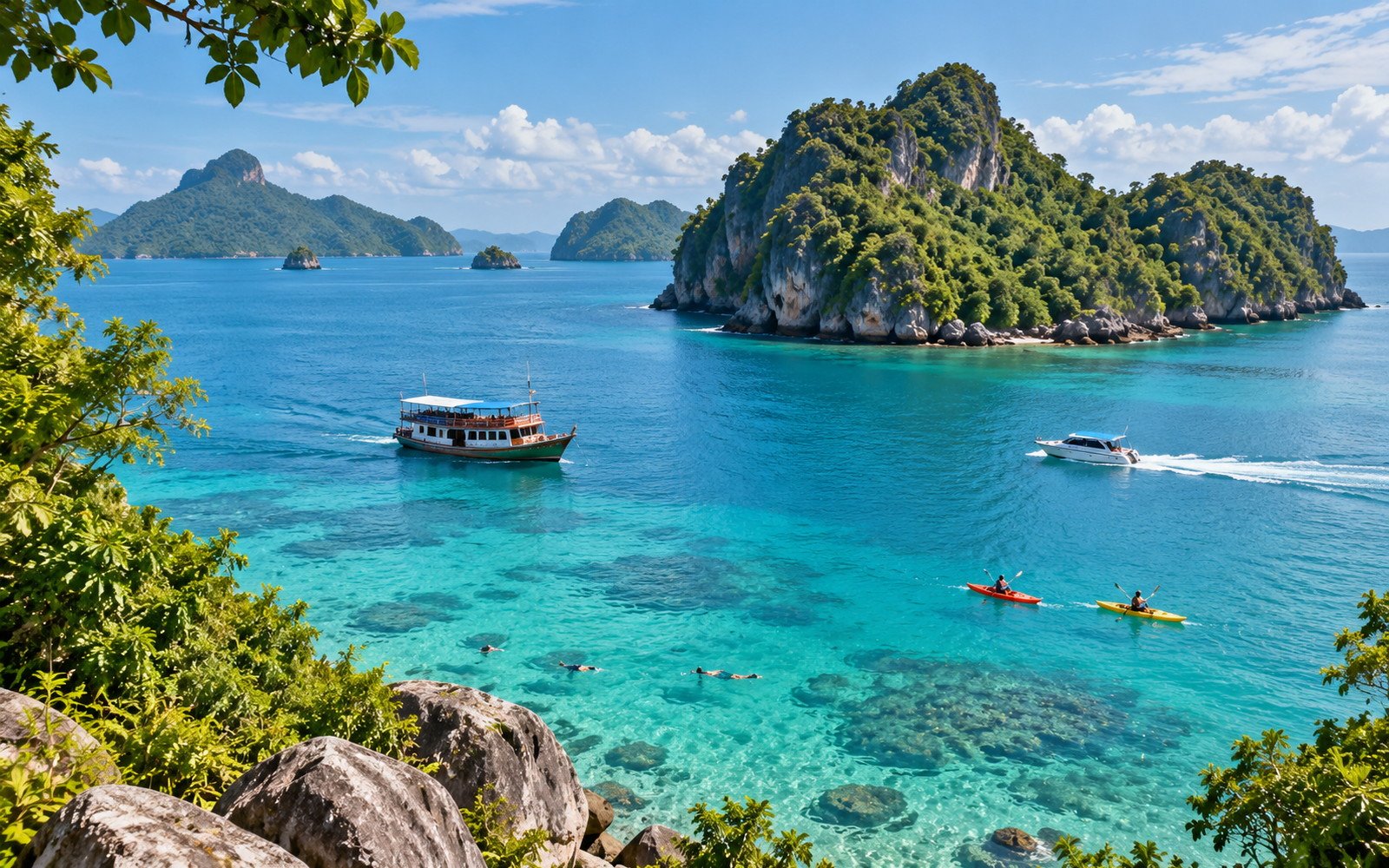
Likewise, Koh Phangan can support a good sea day, but the island’s best option changes with wind, visibility and the route. Compare an island-coast cruise, a Koh Tao snorkelling trip and an Ang Thong excursion by actual sailing time, not by the number of thumbnail photographs.
Three useful trip types
- Koh Phangan coast Shorter day, easier recovery and useful access to remote bays when conditions permit.
- Koh Tao and Koh Nang Yuan Stronger snorkelling focus, but a longer, more exposed boat day.
- Mu Ko Ang Thong Limestone scenery, viewpoints and kayaking; route and park access can be seasonal.
How to compare operators
Therefore, check the licensed operating company, boat type, maximum group size, life jackets, shade, toilet, drinking water, guide language, park-fee treatment and weather-cancellation terms. FCDO guidance recommends checking credentials, equipment and insurance for diving and other water activities.[7]
Meanwhile, Sri Thanu and the west coast have developed a visible yoga, wellness and longer-stay community. This can be a reason to choose Koh Phangan even without nightlife. Nevertheless, the word “wellness” covers everything from a single drop-in class to intensive retreats with accommodation and meals.
Compare the timetable before the room
For a retreat-led trip, check the actual daily schedule, teacher credentials, food policy, cancellation terms, walking distance and whether silence or shared accommodation is expected. A hotel near the centre may be more flexible than a packaged retreat when you want only two or three classes.
Longer stays need practical infrastructure
Reliable internet, workspace, laundry, groceries, pharmacy access and safe evening food matter more after the first week. Ask the property for a recent speed test from the exact room type, not only a lobby result. Carry a backup eSIM or local SIM for short outages.
Respect the resident community
Wellness areas are still neighbourhoods. Keep scooter noise down, park without blocking homes and do not treat beaches as private retreat extensions. The strongest long-stay base is one where daily routines work without constant cross-island journeys.
In practice, food choice is broadest around Thong Sala, Baan Tai, Haad Rin and the west-coast cafe belt. Remote resort bays may have excellent restaurants but less price competition. Therefore, breakfast inclusion and walkable evening food can materially change the true room cost.
Thong Sala markets
Use Thong Sala for a practical mix of local meals, snacks, fruit, seafood and supplies. Market days and individual stall hours change, so check locally rather than building the evening around an old weekly timetable. Carry small cash and choose busy stalls where food is cooked fresh.
What to try
Southern curries, grilled fish, seafood, roti, noodle dishes and fruit are natural starting points. Meanwhile, Sri Thanu has a strong vegetarian and wellness-oriented cafe scene. Ask clearly about fish sauce, shrimp paste, nuts and cross-contamination when dietary needs are strict.
Food-safety rhythm
Drink sealed or properly filtered water, use hand hygiene before eating and avoid ordering more perishable food than can be consumed. A slow island day is better than losing two days because lunch sat in direct heat.
Therefore, the itinerary is paced around one main objective per day. It assumes a west-coast, Baan Tai or Thong Sala base and can be adapted for Thong Nai Pan by reducing cross-island travel.
| Day | Plan | Why it works |
|---|---|---|
| Day 1 | Arrive at Thong Sala, transfer, stay local | Protect the arrival from ferry and baggage delays |
| Day 2 | Beach and west-coast sunset | Learn the area before committing to a long island loop |
| Day 3 | Waterfall, viewpoint and temple loop | Move early; replace with cafes or spa in heavy rain |
| Day 4 | Boat trip or north-coast snorkelling | Use the best marine forecast day |
| Day 5 | Slow morning and departure buffer | Do not book the final ferry too close to a flight |
Day 1: arrival and orientation
Pre-book the final transfer if the hotel is remote. After check-in, identify the nearest breakfast, pharmacy, cash point and reliable taxi contact. Keep the first evening local.
Day 2: beach first, sunset second
Choose one nearby beach rather than collecting five. Swim only when flags and conditions permit, take a midday shade break and use a west-coast viewpoint or beach for sunset.
Day 3: interior loop
Start with Phaeng Waterfall or another open trail, add one temple and stop for lunch before the hottest hours. If rain makes paths unsafe, replace the hike with a cooking class, massage or cafe day.
Day 4: best-sea-condition day
Book a licensed island-coast, Koh Tao or Ang Thong trip with suitable cancellation terms. Place it on the best forecast, not automatically the fourth calendar day.
Day 5: leave margin
Use the morning for breakfast and a final swim near the hotel. Reach the pier with the check-in margin on the ticket and avoid a same-day separate international flight.
How to extend the trip to seven nights
Meanwhile, seven nights allow the holiday to become an island stay rather than a checklist. Keep the five-day framework, then add two days that solve your main interest instead of repeating generic tours.
Option A: split west coast and Thong Nai Pan
Spend four nights near Sri Thanu, Haad Yao or Baan Tai, then move for three quieter east-coast nights. The split works because the second base changes the atmosphere. Pre-arrange the transfer and do not schedule a boat tour on move day.
Option B: one base with two flexible days
Stay put and add a second beach day plus a weather buffer. This is best for families, non-riders and travellers who value routine. Use one flexible day for a wellness class, cooking session or north-coast village visit.
Option C: Full Moon plus recovery
When the event is central, arrive at least two nights beforehand and keep the following day empty. Book the return ferry after sleep rather than assuming an early-morning crossing will feel sensible after an overnight party.
Although Koh Phangan can be budget-friendly, Full Moon demand, remote resorts and repeated taxis can move the total quickly. The figures below are planning anchors checked on 18 September 2026; they are not guaranteed quotations.
| Item | Planning range | What moves the price |
|---|---|---|
| Dorm bed | THB 350–800 | Event dates and air-conditioning change the price |
| Simple private room | THB 900–1,800 | Location and hill access matter more than star labels |
| Comfortable mid-range room | THB 2,000–4,500 | Pool, breakfast and beach position drive value |
| Upscale resort or villa | THB 4,500–12,000+ | Premium dates and villas can exceed this |
| Local meal | THB 70–180 | Tourist beach areas are usually higher |
| Cafe or casual restaurant meal | THB 180–450 | Drinks and imported ingredients increase cost |
| Songthaew / taxi journey | THB 100–500+ per person | Distance, passenger count, time and event demand matter |
| Scooter rental | THB 200–350 a day before fuel | Legal licence and insurance are separate questions |
| Day trip | THB 1,200–3,500+ | Boat type, park fees and route change the total |
Sample daily budgets excluding long-distance arrival
Budget the invisible costs
Add the Samui airport transfer, pier check-in, final island taxi, event-week premium, park fees and a buffer night before a long-haul flight. The cheapest room is not the cheapest trip when it creates two private taxis every day.
Therefore, pack for boats, heat, rain and uneven roads rather than for a staged beach photograph. A small dry bag, waterproof phone protection, sun cover, insect repellent, a refillable bottle and footwear with grip solve more problems than several evening outfits.
Island packing priorities
- Light rain layer and quick-drying clothes.
- Secure sandals plus closed footwear for trails or party nights.
- Dry bag for ferries and boat tours.
- Waterproof phone pouch that still allows emergency access.
- Reef-conscious sun protection and a rash vest for long water days.
- Small torch or headlamp for dark lanes.
- Essential medication and copies of insurance details.
Compact dry bag
Useful for spray, wet swimwear and open boats. Check closure type and packed size.
Waterproof phone pouch
Compare seal design, lanyard strength and touch-screen use before trusting it with a phone.
Connectivity
A travel eSIM can provide maps and hotel messaging immediately after landing, while a Thai SIM may offer stronger value for a longer stay. Check handset compatibility, data allowance and tethering before purchase.
In practice, island safety is mostly about ordinary decisions made before something goes wrong: legal transport, weather-aware swimming, reputable boats, controlled drinking and insurance that covers the planned activities.
Road safety
Wear a proper helmet, never ride after drinking and do not learn on steep island roads. Confirm that the policy covers the engine size and licence held. Photograph rental damage and avoid leaving a passport as security.
Water and weather
Follow lifeguards, flags and local advice. FCDO guidance warns about riptides, jellyfish and strong currents near rivers and waterfalls, particularly in rainy conditions.[7] A red flag is a stop sign, not a challenge.
Party and alcohol safety
Keep drinks attended, reject unsealed alcohol, use known transport and stay with friends. Methanol cannot be identified by taste or smell; urgent symptoms after drinking require medical help. Carry only the cash and identification needed for the evening.
Medical and emergency planning
Save the hotel and insurer numbers offline. Thailand’s Tourist Police can be reached on 1155 and emergency medical services on 1669, but signal and response time may vary. Serious treatment or evacuation can be expensive, so insurance should cover ferries, scooters only when legally used, diving depth and other activities.
Ultimately, Koh Phangan’s value depends on beaches, reefs, forests and communities remaining liveable. Responsible travel is therefore a practical planning choice rather than a decorative promise.
On beaches and boats
Carry refillable water where safe, remove all rubbish, avoid touching coral, do not feed wildlife and choose operators that brief guests on marine behaviour. A quiet cove is not permission for amplified music, drones or private fires.
At waterfalls and viewpoints
Stay on open paths, respect closure signs and avoid soap or sunscreen in freshwater pools. Do not create a new shortcut around mud or erosion. Park access can change, so current DNP notices should override old route descriptions.[9]
Drones need more than a scenic launch point
Thailand’s aviation authority publishes registration and flight-regulation routes for remotely piloted aircraft.[11] Separate permissions, restricted areas, privacy and national-park rules may also apply. Leave the drone packed unless the full legal position is clear.
Spend where the island benefits
Mix resort spending with local food, taxis, guides and small businesses. Ask whether animal encounters, fishing visits or cultural experiences are observation-led and consent-based rather than staged for photographs.
Therefore, the balance below is based on transport, area choice, seasonality and the breadth of activities rather than a blanket verdict.
Advantages
- Several distinct holiday styles on one island.
- Strong mix of beaches, wellness, nightlife and nature.
- Logical ferry links with Samui and Tao.
- Accommodation from dorms to luxury resorts.
- Enough services for longer stays.
- Quiet areas remain possible outside major dates.
Trade-offs
- No airport; every arrival depends on a boat.
- Informal transport can become expensive.
- Steep roads tempt inexperienced scooter use.
- Full Moon dates affect prices across the island.
- Weather can cancel sea plans.
- Remote bays reduce spontaneous dining and backup options.
What makes the island rewarding
Koh Phangan rewards travellers who choose an area deliberately and leave room for the weather. It disappoints when it is treated as one generic beach stop or when transport is improvised after dark.
Finally, the mistakes are ordered by their ability to disrupt the whole trip rather than by how often they appear in reviews.
Booking the room before checking the Full Moon date
Even a quiet-coast stay can cost more or face fuller ferries. Check the calendar first.
Assuming “Koh Phangan” is one ferry pier
Verify both departure and arrival piers, then add the land transfer on each side.
Choosing a remote hotel without pricing taxis
Calculate arrival, one evening return and departure transport before comparing room rates.
Renting a scooter without the correct licence
Availability does not create legal entitlement or insurance cover. Use songthaews or hotel transfers instead.
Planning a waterfall from a dry-season photograph
Flow can be low after little rain and dangerously strong after heavy rain. Check current conditions.
Putting a boat tour on the only possible day
Keep at least one movable day so the marine forecast can choose the excursion date.
Taking the last ferry before an important flight
Return to the airport side or mainland a day early when tickets are separate.
Trying to collect every beach
Road and taxi time can consume the holiday. One excellent beach day is more valuable than six short stops.
Planning, transport and beach questions
Is Koh Phangan only for the Full Moon Party?
No. Haad Rin hosts the famous event, but the island also has quiet northern and eastern beaches, yoga and wellness communities, waterfalls, viewpoints, temples, fishing villages and longer-stay areas.
How many days should I spend on Koh Phangan?
Therefore, four to seven nights is the strongest first-stay range. Two or three nights works only as a simple add-on, while a week gives enough flexibility for weather, one boat day and slower beach time.
Does Koh Phangan have an airport?
No. The nearest practical airport is Koh Samui, followed by a pier transfer and ferry. Surat Thani Airport is often cheaper but adds a longer combined bus-and-ferry journey.
How long is the ferry from Koh Samui to Koh Phangan?
Fast services commonly take about 30 to 60 minutes, depending on the Samui pier, vessel and Phangan arrival point. Vehicle-ferry routes can take longer. Always use the time on the issued ticket.
How long is the ferry from Donsak to Koh Phangan?
Raja Ferry’s published Donsak–Thong Sala schedule describes a crossing of about two and a half hours. Add mainland travel, check-in and the final island taxi.
Where should first-time visitors stay?
Thong Sala or Baan Tai suits travellers who prioritise simple transport. Sri Thanu, Hin Kong, Haad Yao and Haad Salad suit sunsets and cafes. Thong Nai Pan is stronger for a quiet resort stay, while Haad Rin suits event-focused trips.
Can I visit without renting a scooter?
Yes. Choose a connected base, use shared or private songthaews, pre-book hotel transfers and group nearby activities. A central hotel can cost less overall than a remote bargain plus daily taxis.
Do I need an international driving permit for a scooter?
UK guidance lists a 1968 IDP for Thailand. You also need the correct motorcycle entitlement and insurance coverage. A car-only licence does not automatically legalise scooter use.
When is the best weather?
April to September is often the first Lower Gulf planning window, while October to December can be wetter and stormier. January to March can also work well. No month guarantees calm seas, so check the live marine forecast.
When is the Full Moon Party?
It is scheduled around the full moon at Haad Rin, but dates can shift around holidays. Check the current local schedule and accommodation conditions before booking; do not rely on a copied calendar image.
Is Koh Phangan good for families?
Yes, when the base and transfer are chosen carefully. Thong Nai Pan and selected north or west-coast resorts can work well. Families should prioritise safe pool design, easy meals, beach conditions and reliable transport.
Which beach is best for snorkelling?
Mae Haad and the Koh Ma area are common starting points, but visibility and safe access depend on tide, wind and current. A boat trip may be better when shore conditions are poor.
Are the waterfalls open all year?
Access may be possible year-round, but water flow and trail safety vary. Some sites or activities can close after severe weather. Check current national-park and local notices.
How much cash should I carry?
Cards and cash machines are available in developed areas, but small taxis, markets and event entry may require cash. Carry a sensible daily amount rather than all holiday money, and keep a separate backup.
Can I travel from Koh Phangan to Koh Tao?
Yes. Fast ferries link the Lower Gulf islands, with some services taking about an hour between Phangan and Tao. Recheck the 2026 timetable, pier and baggage rules for the exact date.
Is Koh Phangan expensive?
It can be either budget-friendly or costly. Dorms and local meals remain available, but Full Moon dates, private taxis, remote resorts and repeated boat trips increase the total quickly.
Is the island suitable for remote work?
It can be, especially around Sri Thanu, Hin Kong and Thong Sala. Verify the exact room’s internet, backup mobile data, desk setup, noise and walking access before committing to a long stay.
What should I book first?
Book the event-sensitive or scarce elements first: accommodation for Full Moon or peak dates, the island arrival chain and any fixed long-haul connection. Leave ordinary beach days flexible for the weather.
Overall, for a first trip, my research-led recommendation is five or six nights in a connected west-coast, Baan Tai or Thong Sala base. That choice protects the ferry arrival, keeps food and taxis workable and still allows day trips to the north, east coast and interior.
Choose Thong Nai Pan for a different holiday
When the goal is quiet resort time rather than island coverage, Thong Nai Pan is the better answer. Accept the longer transfer and build the stay around the bay instead of commuting across the island each day.
Choose Haad Rin deliberately
Stay there when walking access to the Full Moon Party or concentrated nightlife outweighs noise and price. Otherwise, use Baan Tai or Thong Sala and pre-arrange transport.
The one rule that prevents most problems
Book the complete chain, not isolated pieces: airport or station, mainland transfer, ferry, arrival pier, island taxi and final-flight buffer. Then leave at least one day flexible for sea conditions. Koh Phangan is most rewarding when the route is organised and the island time is not.
This article was checked on 18 September 2026. Official operator pages and government guidance were prioritised. Hotel, meal, taxi and activity figures are planning ranges from current commercial examples rather than guaranteed prices. Recheck the exact ferry, weather, event and park position before travel.
- Tourism Authority of Thailand — Ko Pha-ngan destination profile. Official overview of beaches, waterfalls, mountains, local livelihoods and event culture.
- Taylor’s Trailblazing Travels — Best Time to Visit Thailand. Internal month-by-month route and coast comparison, researched from official weather and tourism sources.
- Tourism Authority of Thailand — Surat Thani. Official regional visitor information for the Lower Gulf islands.
- Thai Meteorological Department — Thailand weather and marine outlook. Official daily rainfall, wind and wave guidance; conditions change continuously.
- Lomprayah — 2026 timetable. Official high-speed ferry timetable for Samui, Phangan, Tao, Chumphon and connected routes.
- Raja Ferry Port — Donsak to Koh Phangan schedule. Operator schedule and approximate 2½-hour crossing information.
- FCDO — Thailand safety and security. Road, party, alcohol, swimming, waterfall and diving-safety guidance.
- GOV.UK — International Driving Permit checker. Lists the 1968 IDP for Thailand; travellers also need the correct licence category.
- Department of National Parks — opening and closure dataset. Official source for changing park and activity closures.
- Full Moon Party Thailand — 2026 schedule. Local event schedule and entry guidance; dates should be rechecked because they can shift.
- Civil Aviation Authority of Thailand — drone registration and rules. Official registration and regulatory starting point for remotely piloted aircraft.
- Taylor’s Trailblazing Travels — Thailand Islands Guide. Internal comparison of Phangan with Samui, Tao and other Thai islands.
- Taylor’s Trailblazing Travels — Thailand Packing List. Temple, island, rain and transport packing guidance.
- Taylor’s Trailblazing Travels — Thailand Transport Guide. Planning framework for comparing flights, ferries, buses and combined tickets.
Illustrations in this article were created for Taylor’s Trailblazing Travels. Third-party photographs, where used, are credited beside the image or in the source list.