Snorkelling and Diving Around Cambodia’s Islands: What to Expect
Choose the right programme, ask better questions and leave room for the sea to change the plan.
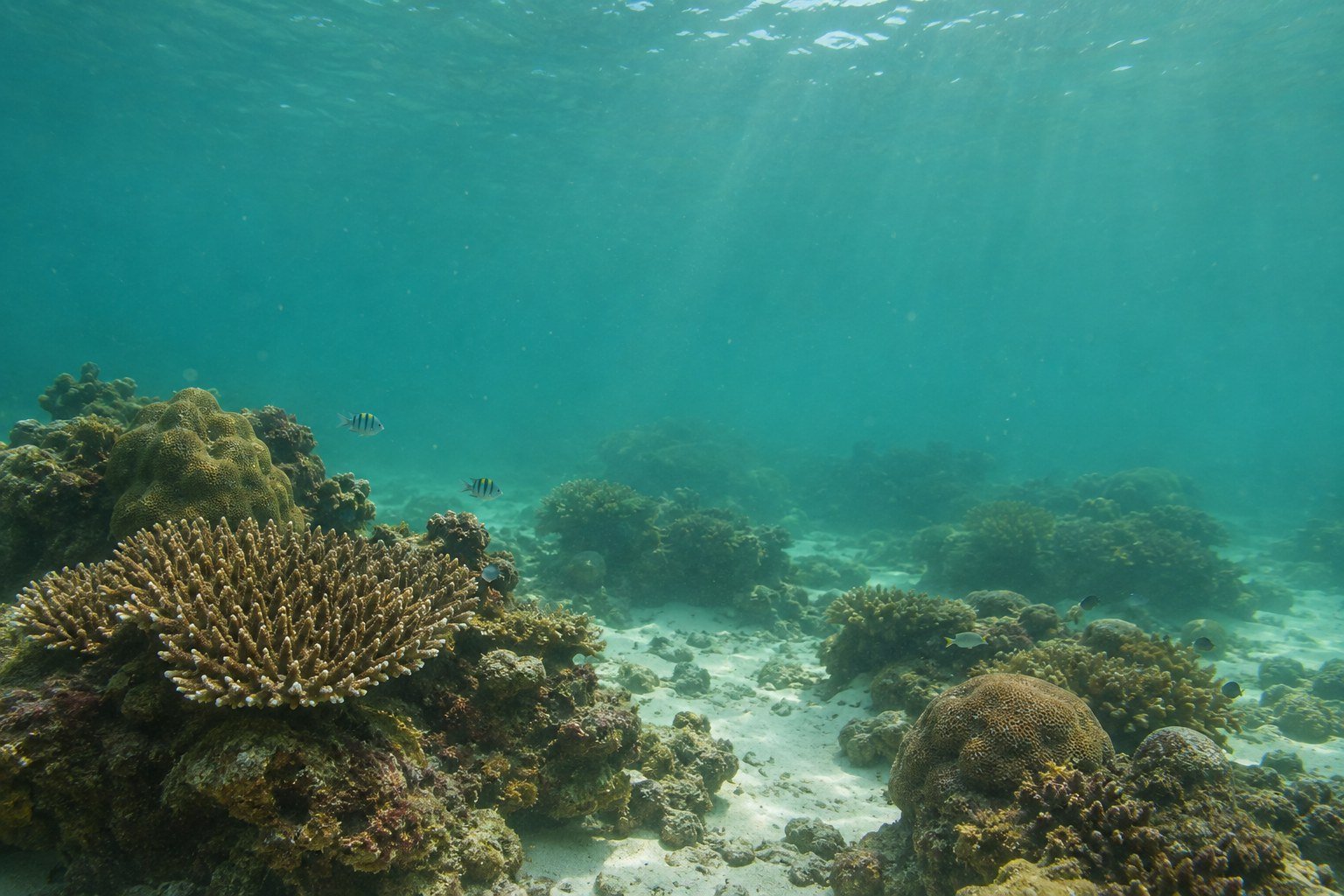
AI-generated illustration of a regional reef setting; visibility and wildlife vary by site and day.
Snorkelling and diving can add a rewarding day to a stay on Cambodia’s islands, but the right booking starts with realistic expectations. Decide whether you want to look from the surface, try scuba with an instructor or join a trip for qualified divers. Then choose the operator and base that make that plan practical.
Koh Rong and Koh Rong Sanloem have current dive-centre and day-trip options. The detail that matters is the particular programme: its site, supervision, equipment, meeting point and response to changing sea conditions. This guide helps you compare those choices without treating every boat carrying snorkels as the same experience.
Some links in this guide are affiliate links. If you book or buy through them, Taylor’s Trailblazing Travels may earn a commission at no extra cost to you.
First decision
Choose the water activity before comparing boat-trip prices.
Best question
Who supervises our group, and how do we leave the water?
Leave room
Weather changes and post-dive flight intervals both affect the itinerary.
Choose the experience before choosing the boat
The first question is what you want to do in the water. A boat excursion with a snorkel stop, an instructed first dive and a trip for qualified divers are different products, even when their photographs show the same blue sea. Start with your experience, confidence and available time.
Scroll within the table on a small screen.
| Programme | Who it suits | What to establish before booking | Time to protect |
|---|---|---|---|
| Guided snorkelling | People who want to observe from the surface. | Water confidence, instruction, flotation, supervision and time actually snorkelling. | The full outing and a flexible alternative day. |
| Introductory scuba / Discover Scuba Diving | Beginners considering a first supervised scuba experience. | Medical screening, skills practice, instructor arrangements and number of dives. | Preparation, the activity and the required interval before flying. |
| Certified-diver trip | Divers with an appropriate qualification and recent, relevant experience. | Certification accepted, site demands, guide grouping and any refresher. | The day trip plus the interval before flying. |
| Open Water or further training | People who want a qualification or to develop skills. | Complete course schedule, learning, practical sessions, assessment and full cost. | Several dedicated days, confirmed with the school, plus flight planning. |
Discover Scuba Diving is an introduction, not a diving qualification. PADI describes an instructed experience with basic skills and an optional open-water dive. A course requires a separate commitment; do not assume a single afternoon gives you the qualification needed to join a certified-diver trip.[5]
For a couple or family with mixed interests, ask whether snorkellers and divers can share the boat and what each person will do while the other group is underwater. A non-diver spending most of the day waiting aboard may prefer a separate beach plan.
Back to top ↑What the reefs can realistically offer
Around Koh Rong and Koh Rong Sanloem, plan for reef fish, coral formations and smaller marine life that reward patient looking. Scuba Nation describes many local trips as fringing-reef dives around Koh Koun, with sites selected for the divers’ experience, wind and weather. That is a more useful expectation than treating every island excursion as the same underwater experience.[2]
Visibility is part of the day’s conditions, not a promise attached to an island name. Before paying, ask which site the crew expects to use, when they last visited it and what they found. A candid answer about current conditions is more useful than a permanent “crystal-clear water” description.
Match the site to the activity
A reef can be interesting for divers but too deep for a rewarding surface view. Ask how much of the snorkelling stop is shallow enough to see clearly from the surface and whether the guide will be in the water. Conversely, a short snorkel stop on a mixed excursion says little about the quality of a separate dive programme.
Do not make a particular animal the reason for buying the trip. Enjoy ordinary reef life and the structure of the habitat, and ask what has actually been seen recently if photography is your priority. Neither a vivid promotional photograph nor our illustrations represents a guaranteed sighting or the condition of a particular reef.
Offshore trips are a separate decision
Operators also advertise trips towards Koh Tang and Koh Prins. Scuba Nation lists those farther-offshore options separately from its nearby island outings. Ask whether the trip is running, the actual sea passage, vessel, group requirements and experience expected before planning around one.[2] An advertised offshore destination is not an easy extra stop on every Koh Rong holiday.
Back to top ↑Choose a base that fits the operator
The practical choice is where you will meet the team, collect equipment and return. A hotel on the right island can still be a poor match for an early start on a different beach.
Scroll within the table on a small screen.
| Base | An example to investigate | What to check |
|---|---|---|
| Koh Touch, Koh Rong | Koh Rong Dive Center is listed here by PADI.[3] | The actual meeting point and how far it is from the room. |
| Long Set, Koh Rong | PADI lists Watersports Cambodia Dive Centre on Long Set.[4] | Whether your selected activity meets here or at another beach. |
| M’Pay Bay, Koh Rong Sanloem | Scuba Nation publishes this as its current base.[1] | Whether to stay locally or use a confirmed pick-up. |
For repeated dives or a course, staying near the operator can simplify the day considerably. Compare Koh Toch Beach accommodation on Booking.com or M’Pay Bay accommodation on Agoda once you know which centre and programme you want. Check the final walk, room facilities and cancellation terms rather than booking on an island label alone.[15] [16]
For a single outing, a pick-up may avoid changing hotels. Scuba Nation advertises collection from selected beaches on both islands; ask whether your specific property is included, the meeting point and any extra charge. “Hotel pick-up” is not a guarantee for every beach.[1]
M’Pay Bay is on Koh Rong Sanloem. If using the Sihanoukville–M’Pay Bay ferry comparison on 12Go, match the exact landing with the host’s instructions before buying. Keep the arrival day for getting settled and speaking to the operator rather than making a prepaid water activity depend on an on-time ferry.[17]

Compare the programme, not just the headline price
One operator’s published prices make the distinction clear. Scuba Nation lists the following day options; these are examples checked for this guide, not a price range for every operator or a quote for your dates.[1]
Scroll within the table on a small screen.
| Programme | Published price per person | Programme listed |
|---|---|---|
| Snorkelling | US$30 | Snorkelling outing. |
| Try Dive / Discover Scuba Diving | US$110 | Two introductory dives. |
| Certified-diver day trip | US$95 | Two dives. |
Its listed inclusions cover the boat, relevant equipment, lunch and non-alcoholic refreshments. Confirm the final price, pick-up and payment method when booking.[1]
For two people choosing different programmes, ask for two clearly itemised places on the booking. Check whether the lower quote elsewhere includes the same number of dives, instruction, equipment and time on the water. A cheaper one-dive session and a full day with two dives are not directly equivalent.
A bookable introductory option on Koh Rong
The Discover Scuba Diving listing on Viator is supplied by Koh Rong Watersports and gives a Koh Touch meeting point with one- or two-dive options. At review, it was non-refundable and not wheelchair accessible. Confirm medical eligibility, the selected option, instructor group size and weather arrangements before paying.[14]
The listing’s total passenger capacity does not tell you how many beginners share an instructor underwater. Ask that question directly. Treat a marketplace description as a starting point for checking the operator, not a substitute for the conversation.
If travelling as a group, agree which costs are shared and which belong to individual activities. Once the expenses are agreed, the Group Holiday Cost Splitter can allocate them to the relevant people and record who paid. Enter one currency throughout; it does not convert money or make payments.
Back to top ↑Questions a good booking conversation should answer
You do not need to arrive knowing every technical term. You do need a clear explanation of what you will do, who will supervise it and how the group will respond if conditions change.
Scroll within the table on a small screen.
| Ask the operator | What you need to understand |
|---|---|
| Who is responsible for our group in the water? | For a beginner dive, the instructor arrangement; for snorkelling, the guide and surface lookout. |
| How is the group divided? | Beginners, experienced divers and snorkellers need arrangements that suit their different activities. |
| Can I try the equipment before departure? | Correct sizing, comfortable fit and time to deal with faults or uncertainty. |
| How do we enter and leave the water? | The actual ladder, steps or shore approach, and any help available. |
| What is aboard for an emergency? | For diving, oxygen, first-aid capability, working communications and a realistic evacuation plan. |
| What changes in poor conditions? | Who decides to change sites or cancel, and what happens to your payment. |
| How long are we actually in the water? | The balance between travelling, waiting, instruction and the activity you want. |
BSAC’s snorkelling advice emphasises a buddy arrangement, a lookout, checked equipment and suitable entry and exit points. DAN also advises a realistic emergency plan. Use those principles to frame the conversation; a cheerful “everything included” is not the same as a clear answer.[7] [9]
FCDO advises divers to check insurance and operator cover and to understand how to obtain help at sea. Confirm that your own policy covers the activity, depth and evacuation arrangements you plan to use.[13]
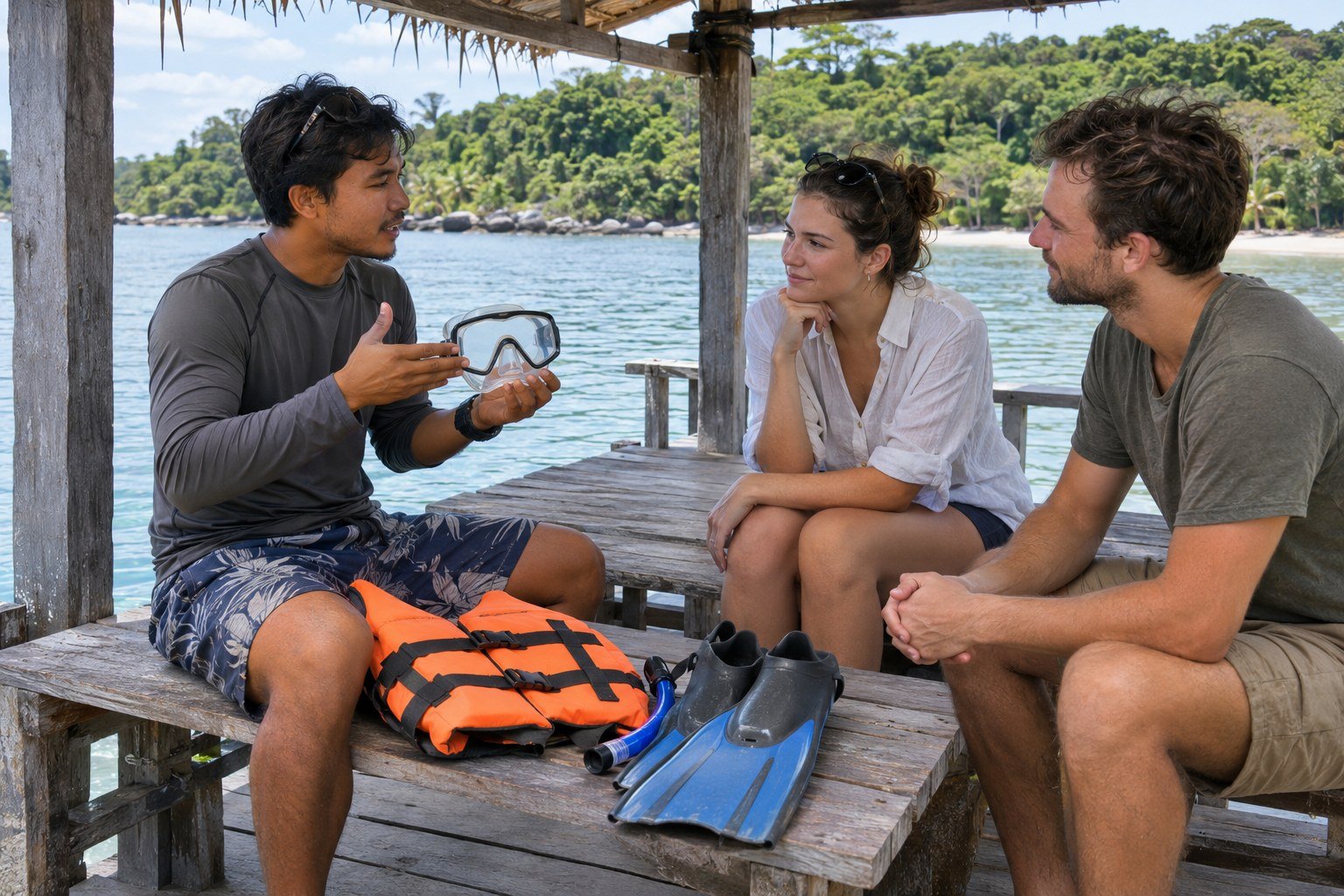
If a health, mobility or confidence concern matters to you, describe it before accepting a non-refundable booking. A centre should have time to explain the relevant arrangements or suggest a more suitable option. You can decide to stay ashore if the answers do not give you confidence.
Back to top ↑Prepare for your actual level of experience
If you are new to snorkelling
Say so when booking. Ask for instruction and an appropriate supervised introduction rather than assuming a mask handed out on a boat is enough. Discuss your swimming confidence and suitable flotation before departure; flotation supports a plan, but does not replace skills, supervision or appropriate conditions.[7] [8]
Choose a trip where you can comfortably get back aboard and where the crew knows if you want to stop early. Stay with your buddy or group, keep away from moving boats and avoid an independent swim beyond the agreed area. Check the equipment before the boat leaves, when solving a poor fit is easiest.[7] [8]
If you are trying scuba for the first time
Complete the medical questionnaire in advance. Depending on the answers, the centre may require a doctor’s statement before participation; resolve that before committing to a rigid booking. PADI’s introductory programme has a minimum age of ten, but individual operators and particular trips can set different suitability requirements.[5]
Allow time for the briefing and skills practice. Tell the instructor if you feel uncomfortable and ask what happens if you decide not to continue. That conversation belongs before payment as well as on the day; find out whether any part of the price is refundable.
If you already hold a qualification
Bring your certification details and be honest about when you last dived and the conditions you know. Ask whether a refresher is appropriate after a gap. PADI’s ReActivate combines refreshed knowledge with practical work alongside a dive professional; the useful aim is confidence and current skills, not simply producing a card.[6]
Explain photography ambitions and equipment needs too. A mixed group should not be pushed into a site chosen for its most experienced member. Agree an outing that suits your present ability and the conditions, even if that changes the original plan.
Weather flexibility and time before flying
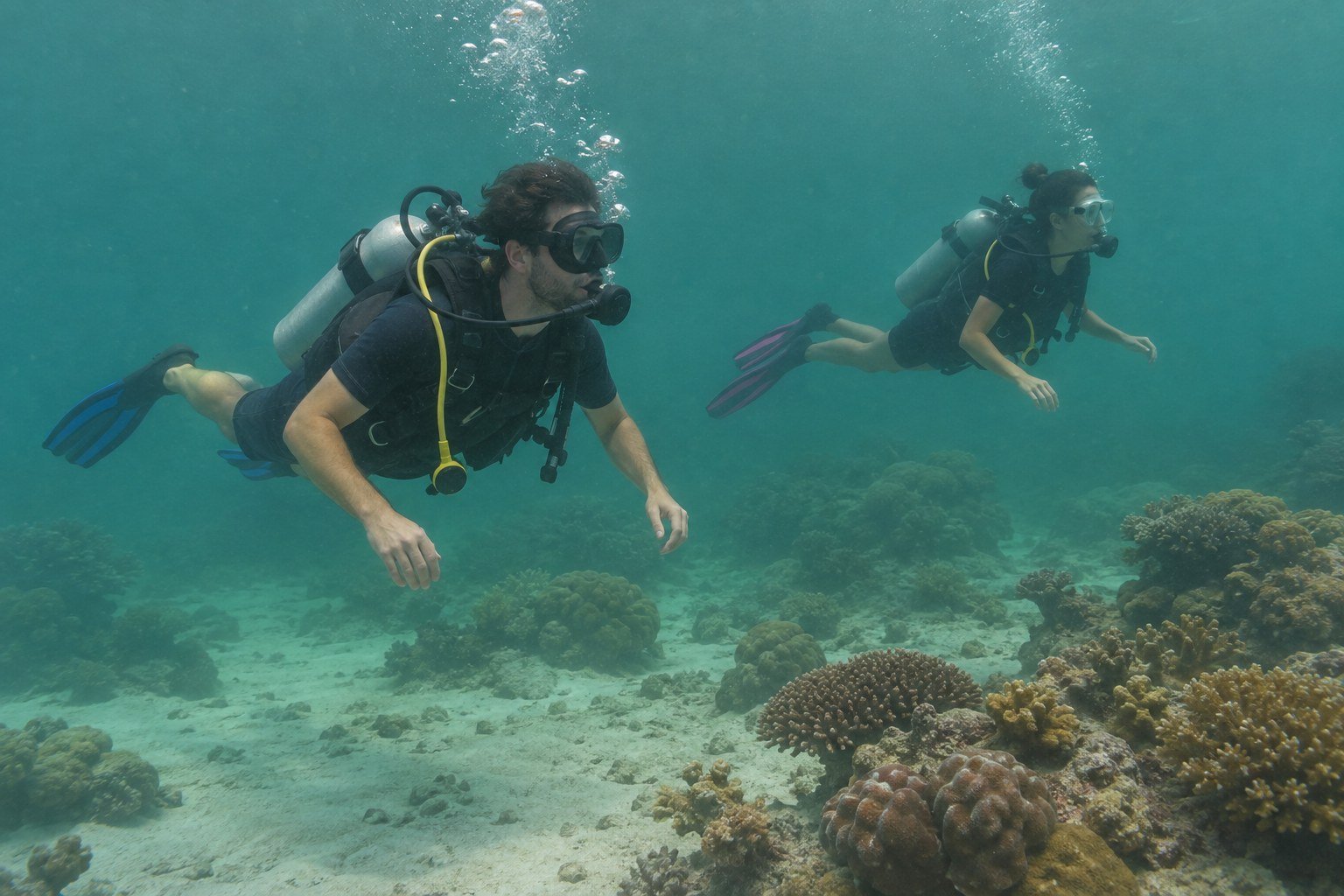
Scuba Nation describes late October to June as its more favourable season while saying it operates year-round. Treat that as an operator’s planning guide: the day’s wind, weather and actual site conditions still determine the outing. Leave an alternative activity day when snorkelling or diving is a main reason for the trip.[2]
Ask about weather decisions before booking, then check again locally. If the sea is unsuitable, moving to a different site or staying ashore can be the sensible outcome. A fixed departure date in your itinerary does not make an unsuitable day suitable.
Build the flight interval into the trip
For divers without symptoms after no-decompression diving, DAN recommends at least 12 hours before flying after one dive, and at least 18 hours after multiple dives in a day or over several days. These are minimum intervals, not guarantees; longer waits may be appropriate. Follow longer requirements from your dive professional or computer.[9]
The interval applies after introductory scuba too. Count from the end of the last dive, not from the time the boat reaches shore. Dives involving required decompression stops need different planning with the operator. If you develop symptoms that might indicate a diving injury, seek urgent medical assessment and do not fly until medically cleared.[9] [10]
Scroll within the table on a small screen.
| Part of the stay | Plan | Reason |
|---|---|---|
| Arrival | Travel to the island, settle in, confirm the programme and equipment. | Ferry delays do not immediately lose a prepaid dive. |
| First suitable full day | Take the planned programme. | You still have room to respond to weather. |
| Flexible day | Use for a postponed outing or a quiet day ashore. | A later dive also moves the earliest suitable flight. |
| Before flying | Protect the required interval and leave a generous transfer margin. | Medical timing and reaching the airport are separate constraints. |
I would normally reserve a full day without diving before a flight rather than scheduling right against a minimum. If weather pushes the dives back, recalculate both the surface interval and the mainland journey. The Trip Itinerary Planner can hold the confirmed dates and times; it does not assess diving safety or validate the route.

Leave the reef as you found it
Keep clear of coral and other marine life. Do not stand on a reef to adjust equipment, touch animals for a photograph or collect shells and coral. Choose entry and exit points that avoid coral and keep enough space around it to prevent accidental contact. These are central principles in the Coral Reef Alliance’s snorkelling guidance.[11]
Do not feed fish. Green Fins explains that feeding alters natural behaviour; an operator offering food to draw a crowd of fish is not improving the encounter. Ask the crew how it protects the sites it uses.[12]
Choose sun protection and clothing that suit the activity, keep rubbish aboard until it can be disposed of properly and secure loose belongings. Ask about equipment included in the booking before buying new kit. For an occasional outing, a correctly fitting rental setup and a good briefing can matter more than owning a bag of unfamiliar equipment.
Is snorkelling worth doing if I do not dive?
Yes, if the site suits surface viewing and the supervision suits your confidence. Ask specifically about depth, visibility and actual time in the water. A dedicated snorkelling outing may fit you better than joining a dive boat simply because there is a spare seat.
Are sunset and plankton cruises the same thing?
No: read the whole itinerary. A cruise may devote much of its time to travelling, fishing, food, music or sunset, with only a short snorkel stop. Night-water activities need their own clear explanation of supervision, entry, exit and the option to remain aboard. Bioluminescence is a natural phenomenon, so build the evening around more than a promised glow.
Should I choose the cheapest trip?
Choose the least expensive option that clearly delivers the programme and arrangements you need. Compare activity time, instruction, equipment, group organisation, access, weather policy and the full return journey. When those details are clear, you can decide whether the trip is worth your holiday time as well as its price.
Back to top ↑Sources and checks
Sources below cover the places, programmes and practical details discussed in this guide. Our comparisons and suggested plans are editorial recommendations. Reconfirm access, departures, inclusions and prices for your dates.
- Scuba Nation — Published prices and day programmes
One operator’s current programme comparison, inclusions and pick-up information. Checked 15 November 2026. - Scuba Nation — Dive trips and sites
Local reef trips, site selection and advertised offshore options. Checked 15 November 2026. - PADI — Koh Rong Dive Center
Koh Touch village base. Checked 15 November 2026. - PADI — Watersports Cambodia Dive Centre
Long Set base; confirm the meeting point for the selected programme. Checked 15 November 2026. - PADI — Discover Scuba Diving FAQs
Introductory programme, medical screening and minimum age. Checked 15 November 2026. - PADI — ReActivate
Knowledge and practical skills refresher for qualified divers. Checked 15 November 2026. - British Sub-Aqua Club — Snorkelling tips
Buddy arrangements, lookout, equipment, entry and exit, and sea conditions. Checked 15 November 2026. - Japan Coast Guard — Snorkelling water safety
General advice on flotation, skills and staying together. Checked 15 November 2026. - Divers Alert Network — Travel health and safety
Minimum intervals before flying and planning for emergency help. Checked 15 November 2026. - CDC Yellow Book — Diving-related injuries and flying
Medical assessment before flying when decompression illness is suspected. Checked 15 November 2026. - Coral Reef Alliance — Responsible snorkelling
Avoiding contact with coral and collecting marine life. Checked 15 November 2026. - Green Fins — Fish feeding information
Why visitors should not feed reef fish. Checked 15 November 2026. - FCDO — Cambodia safety and security
Diving cover and arrangements for help at sea. Checked 15 November 2026. - Viator — Discover Scuba Diving in Koh Rong
The listed programme, meeting point, dive options and cancellation terms. Checked 15 November 2026. - Booking.com — Koh Toch Beach accommodation
Accommodation search near a Koh Rong activity base. Checked 15 November 2026. - Agoda — Mpai Bei accommodation
Accommodation search for the M’Pay Bay area on Koh Rong Sanloem. Checked 15 November 2026. - 12Go — Sihanoukville to M’Pay Bay
A landing-specific ferry comparison; confirm island and pier with the host. Checked 15 November 2026.
Illustrations in this article were created for Taylor’s Trailblazing Travels. Third-party photographs, where used, are credited beside the image or in the source list.