Nagoya Travel Guide: Sights, Museums and Regional Excursions
Give the museums proper time, choose a useful base and make regional trips earn their place.
- Two full city days
- Museums without rushing
- Regional trip choices
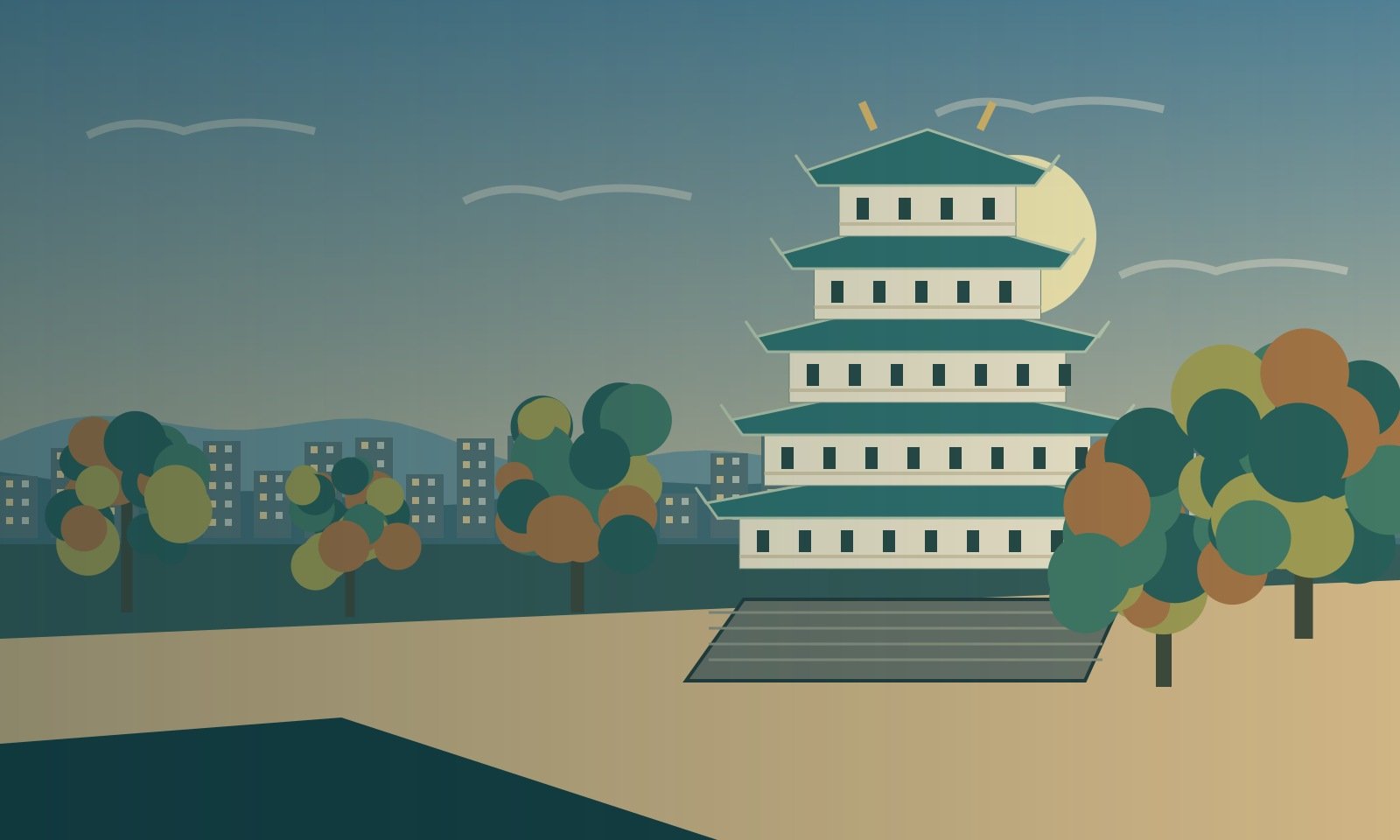
Nagoya-inspired architectural illustration; not a photograph or an exact view of the castle.
Nagoya works best when you stop treating it as a station between Tokyo and Kyoto. Give it a reason to be on your route: industrial heritage, castle architecture, distinctive food, or a convenient base for a particular excursion. The city’s tourism bureau groups its sights into several separate districts, which is a better starting point than a long, unfiltered attractions list. [1]
This Nagoya travel guide uses those districts to build manageable days. The museum comparisons, suggested time allowances and route choices below are editorial planning judgements, not accounts of a personal visit.
This article contains affiliate links. Taylor’s Trailblazing Travels may earn a commission if you book or buy through them, at no extra cost to you.
Time
Two full days for the city; regional excursions need their own time.
Base
Nagoya Station for rail logistics; Sakae/Fushimi for central sightseeing.
Museum choice
Toyota’s industrial story and the railway museum are different half-days.
Before booking
Check closure days and Ghibli Park tickets before fixing the route.
Decide what Nagoya adds to your trip
A museum-led visit is the strongest reason to stay rather than pass through. The Toyota Commemorative Museum explores textiles and automobile manufacturing; SCMAGLEV and Railway Park takes a different direction through railway vehicles, engineering and interactive exhibits. Both can reward attention rather than a quick photograph. [5][7]
For a first Japan trip with very limited time, Nagoya is not compulsory. Keep it when one of those interests genuinely matters, or when an Aichi excursion makes the stop efficient. Dropping a meaningful Tokyo or Kyoto day just to increase your city count is a poor exchange.
Families should choose around the person with the shortest attention span, not the railway enthusiast with the longest. A focused visit followed by lunch and a park usually gives the whole group a better day than a second dense museum.
On a phone, swipe the diagram sideways to read its labels.
Where to stay: station, city centre or a compromise
| Base | Why choose it | Check before booking |
|---|---|---|
| Nagoya Station | Early departures, a short stay, or repeated regional rail journeys. | Which station exit serves the hotel; JR, Meitetsu and other platforms are not one entrance. |
| Sakae / Fushimi | A central sightseeing break with evening meals and shopping nearby. | Walking route to the subway and the noise level on the actual street. |
| Kanayama | A transport-oriented alternative when the route and room quote work better. | Whether savings outweigh extra journeys to your chosen sights. |
The tourism bureau identifies Nagoya Station as an interchange for several railways and separates Sakae/Fushimi from Osu/Kanayama. Use those districts as search areas, then inspect the individual property map. An advertised “station hotel” may still require a substantial walk through the complex. [1]
On a multi-stop journey, place your hotel around the journeys you will actually repeat. One convenient airport arrival does not compensate for an awkward walk every evening. For three nights, paying a little more for a suitable location can be a more useful saving than choosing the lowest nightly figure.
Choose the museum that fits your interests
| Museum | Best reason to go | Allow / practical caution |
|---|---|---|
| Toyota Commemorative Museum of Industry and Technology | The story of machinery, textiles and automobile production. | About 2½–3 hours; check demonstrations and the Monday closure pattern. [5] |
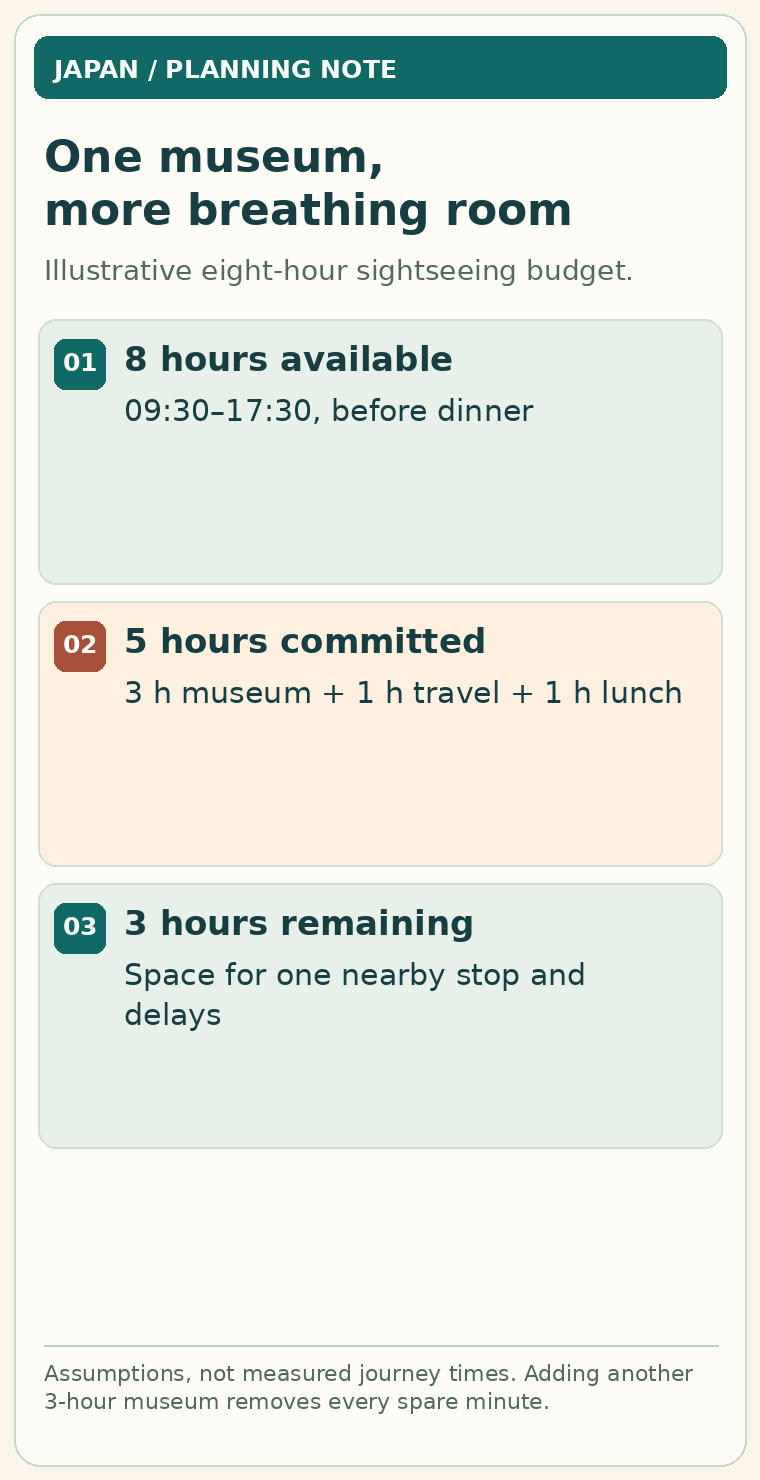
| SCMAGLEV and Railway Park | Historic and modern trains, railway engineering and simulators. | About 2½–3 hours; this is in Kinjofuto, not beside Nagoya Station. [7] |
| Noritake area | A lighter ceramics-related stop on a station-side day. | Choose the particular garden, shop or exhibition you want; do not confuse free outdoor space with paid facilities. [1] |
The Toyota Commemorative Museum is near Sako Station; the museum gives a three-minute walk from that station. It is not the same place as the Toyota Automobile Museum in Nagakute. Enter the full museum name in your route search, particularly when comparing a tour or shared admission ticket. [6][5]
The railway museum is a deliberate trip towards the port. Its current website lists 10:00–17:30 opening, with last entry thirty minutes before closing. A simulator or special activity can have separate arrangements, so general admission should not be read as a promise that every experience is available. [7]
On a phone, swipe the diagram sideways to read its labels.
Castle, Sakae and Osu: choose a contrast
Nagoya Castle: palace rather than a keep climb
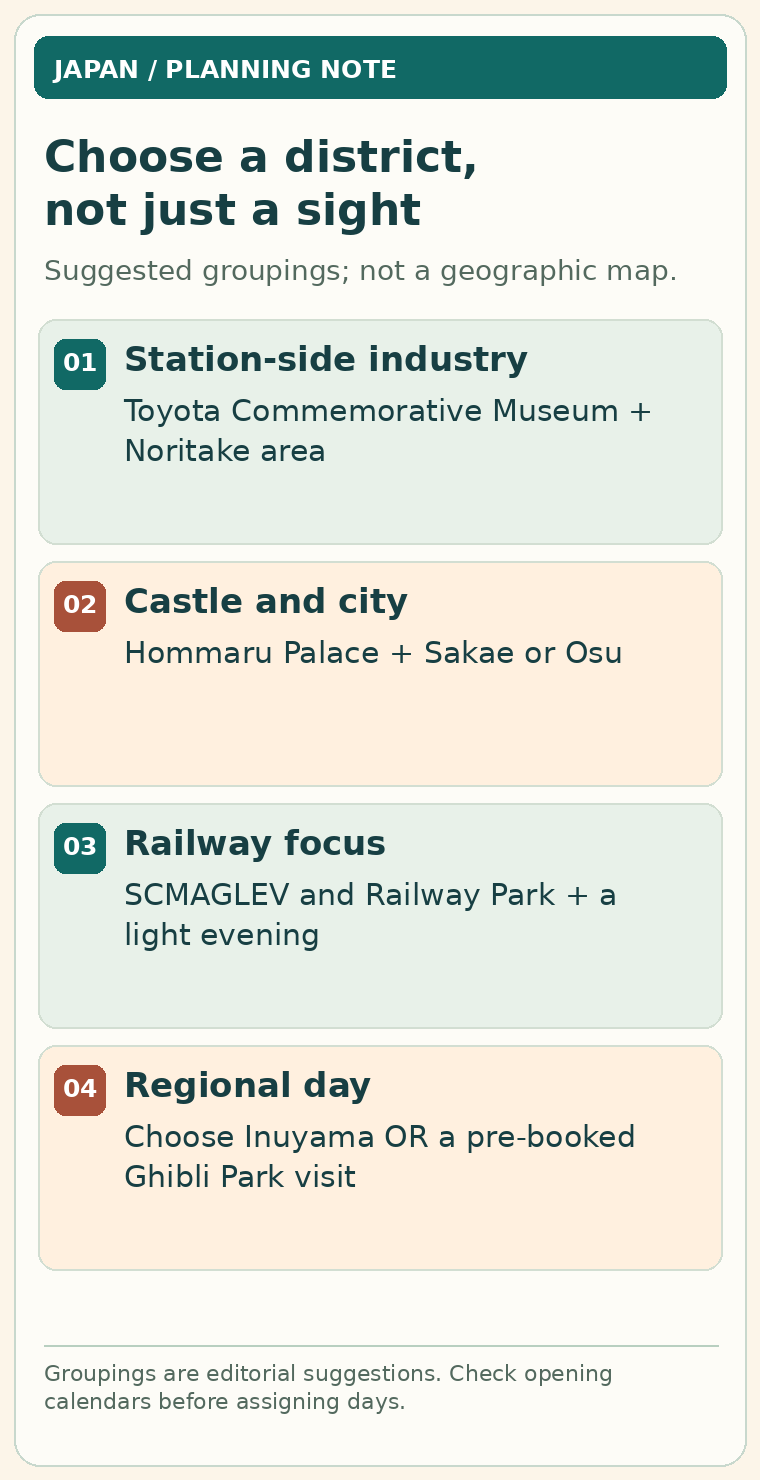
The main keep is closed, but the palace, grounds and other features remain separate attractions. The dated Japanese fee-change notice gives ¥1,000 adult admission from 1 October 2026. An older ¥500 figure remains visible in the English visitor table, so use the dated revision notice for this calculation. [2][3][4]
The visitor page lists 09:00–16:30 opening and a 16:00 cut-off for palace admission. Leave enough time to get from the entrance gate to the palace: reaching the castle gate just before that deadline is not the same as reaching the palace queue. [4]
Then choose a different kind of afternoon
Sakae/Fushimi provides the city-centre contrast; Osu/Kanayama is another distinct sightseeing district. Pick the area whose streets, shops and meals interest you, rather than adding both as mandatory checkpoints. After several hours reading museum labels, an unstructured neighbourhood walk may be the more enjoyable choice. [1]
Independent sightseeing remains a sensible alternative. Do not pay for a guided itinerary that mainly repeats places you have already reserved or researched. [12]
Two full days that leave room to enjoy the city
Arrival evening
Check in, find tomorrow’s station entrance and have dinner near the hotel. Treat any shopping or night view as a bonus. This is particularly useful after a long flight, when a pre-paid attraction slot adds pressure without adding much pleasure.
Day one: castle and central neighbourhoods
Put the castle first while admission time is plentiful, then allow a seated lunch. Spend the afternoon in Sakae/Fushimi or Osu, with one particular shop, garden or exhibition as an optional anchor rather than another long checklist. This is a suggested sequence; confirm each chosen venue’s calendar.
Day two: an interest-led museum day
For industrial heritage, choose the Toyota Commemorative Museum and a nearby Noritake-area stop. For railway enthusiasts, substitute SCMAGLEV and Railway Park, leaving the evening light. Do not treat the substitute as an additional morning attraction. The museum locations are the reason to make this choice. [6][7][1]
Three nights normally give you these two complete days between arrival and departure. With only two nights, you usually have one full day: choose either the castle-and-city plan or the museum plan and use spare arrival/departure hours opportunistically. A suitcase and a departure deadline do not disappear just because the train is fast.
Regional excursions: nearby does not mean effortless
Inuyama: a manageable change of setting
JNTO places Inuyama about thirty minutes from Nagoya by rail. Its castle town is a good candidate for a dedicated half-day or a slower full-day excursion. Add the walk from the station, lunch and any queue rather than describing that thirty minutes as the entire journey. [9]
Ghibli Park: book the experience before the hotel pattern
Ghibli Park uses advance ticket arrangements, with different access depending on ticket type. Its official overseas guidance warns that normal park tickets cannot be bought at the entrances, and that booking changes and refunds are not generally accepted. Read the specific ticket rules and dates before committing the rest of that day. [10]
Longer regional trips: make the travel worthwhile
For places farther into the mountains, compare an overnight stop with a long return excursion. Work backwards from the experience you want: a village stroll and lunch, a substantial hike, or several hours in a museum are very different requirements. Use a dated operator journey plan before calling a destination an easy day trip.
A useful test is to write down outbound travel, local connections, the main visit and the return separately. When the timetable leaves only a short stop in the place you came to see, either choose somewhere nearer or stay there. An organised excursion can simplify transfers, but cannot remove the distance.
Arrival, local transport and meals
From Chubu Centrair International Airport, Meitetsu’s fastest μSKY service reaches Nagoya in twenty-eight minutes. That is the train journey, not the time from aircraft seat to hotel. The airport explains that μSKY and other first-class cars require a supplementary μticket as well as the ordinary fare. [8]
For an arrival from Tokyo, compare your specific Shinkansen or coach choice against luggage, departure point and cancellation terms. Do not choose by the cheapest figure on an undated search result.
The booking link is a comparison service, not the timetable authority. Its displayed options depend on the dates and product selected. [13]
For meals, the city’s official food guide highlights Nagoya dishes including miso katsu, hitsumabushi and tebasaki. Build one such meal into a district you are already visiting rather than crossing the city repeatedly for individual dishes. Check ingredients and the final menu price at the restaurant. [11]
A budget can stay simple: list your actual room quote, intercity tickets, selected admission fees, local fares and meal allowance separately. Two standard adult admissions—Nagoya Castle and the Toyota Commemorative Museum—currently total ¥2,000, before travel and food. This is a specific admission calculation, not an estimate of an entire day’s cost. [3][5]
Questions that change the plan
Is Nagoya worth one night?
Yes, when it breaks a journey you are already making or gives access to one priority sight. It is not enough for two full museum visits, the castle and a regional excursion unless you accept very limited time in each.
Can a Monday still work?
Potentially, but organise the programme around actual calendars. The Toyota Commemorative Museum normally closes on Mondays, moving that closure when Monday is a holiday. Avoid assigning it automatically to the first full day. [5]
Is a car necessary?
Not for the urban programme described here. A car changes parking and navigation tasks rather than eliminating them. Only price one when a specific regional route makes public transport genuinely impractical, and compare collection/return time as well as the rental charge.
What should visitors with limited mobility check?
Check step-free station exits, indoor access, seating and the distance between entrance and exhibit. Ask the venue about the exact rooms or activities that matter to you. A destination being served by rail does not by itself make the entire visit accessible.
The most useful Nagoya plan
For a first visit, choose a hotel that suits your repeated journeys, reserve two full city days and identify one museum you genuinely care about. Pair it with a lighter district visit. Add Inuyama or Ghibli Park only when you have another day and the practical arrangements are clear.
The point is not to prove that Nagoya has enough attractions for a long list. It is to give a few worthwhile places the time that makes the stop distinctive.
Sources and further checks
Sources consulted for the editorial review on 17 October 2026. Where an older page conflicts with a newer dated notice, the relevant correction is identified in the text.
- Nagoya Convention & Visitors Bureau: area information
- Nagoya Castle: keep closure and visitor questions (Japanese)
- Nagoya Castle: admission-fee revision effective 1 October 2026 (Japanese)
- Nagoya Castle: visitor hours and palace access
- Toyota Commemorative Museum: admission and opening information
- Toyota Commemorative Museum: public-transport access
- JR Central: SCMAGLEV and Railway Park
- Centrair: rail access and supplementary tickets
- JNTO: Inuyama and access from Nagoya
- Ghibli Park: official overseas ticket guidance
- Nagoya Convention & Visitors Bureau: local food
- GetYourGuide: Nagoya walking-tour options
- 12Go: Tokyo–Nagoya booking comparison
Illustrations in this article were created for Taylor’s Trailblazing Travels. Third-party photographs, where used, are credited beside the image or in the source list.