Koh Rong Sanloem Travel Guide: Bays, Boat Arrivals and Quiet Escapes
Pick a bay that fits your idea of a break, with an arrival you will be happy to make.
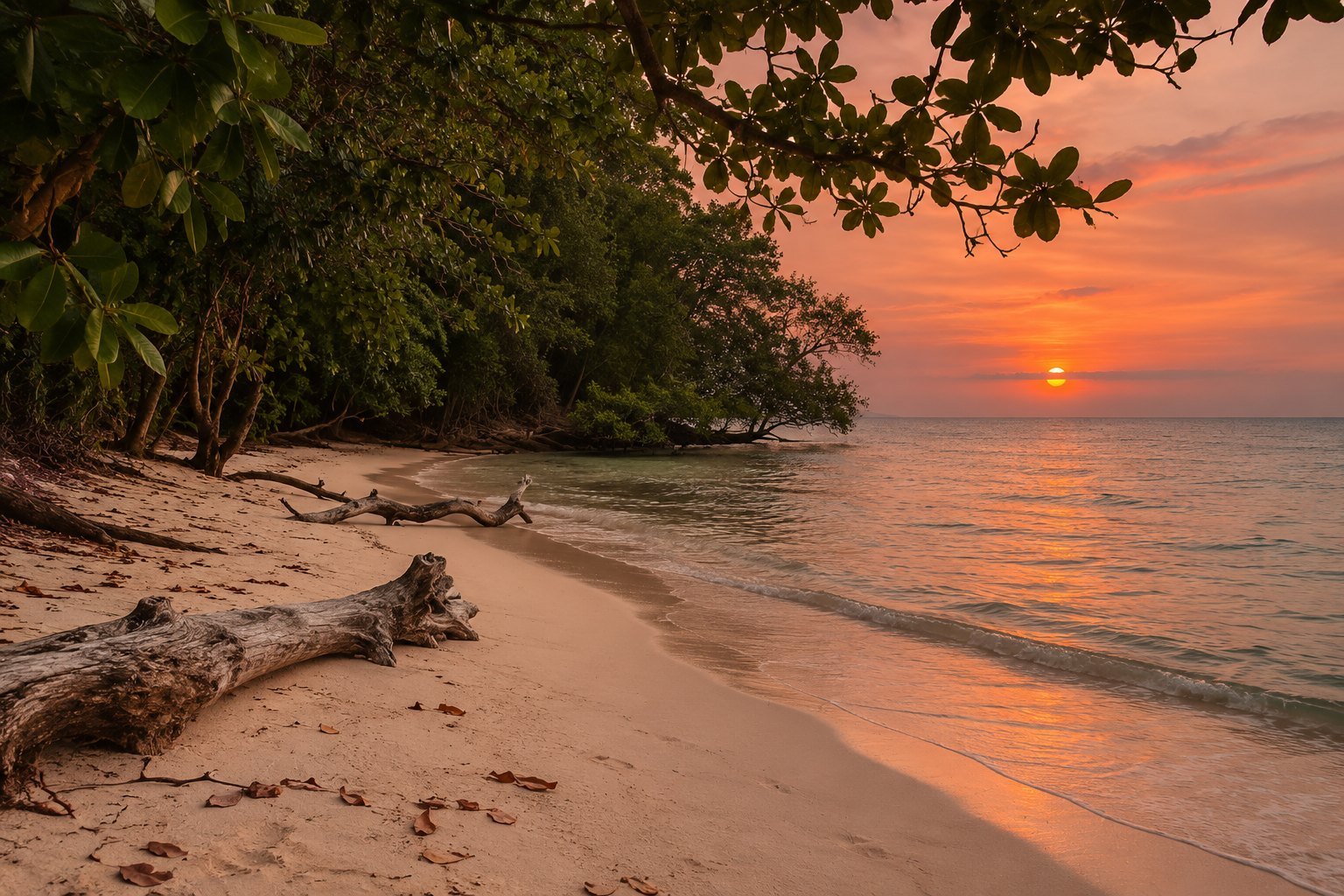
AI-generated illustration inspired by Koh Rong Sanloem’s bays.
The first choice on Koh Rong Sanloem is not which hotel has the prettiest photograph. It is whether you want a broad resort beach, a small village or a quieter cove that takes more effort to reach. Saracen Bay, M’Pai Bay, Lazy Beach and Sunset Beach give you different versions of an island stay.[2]
Also written Koh Rong Samloem, the island sits south of its larger neighbour, Koh Rong. This Koh Rong Sanloem travel guide concentrates on choosing a bay, getting to the right arrival point and leaving enough space in the plan to enjoy being there.[1]
A room on the same island can still need a completely different ferry stop.
Two full days are enough for a quiet beach day and one well-chosen outing.
A cheaper bungalow may need a paid boat or luggage transfer.
Check nearby work, evening noise, room comfort and the return journey.
Where to stay on Koh Rong Sanloem
Use the table to choose the experience you want, then check what the particular property needs from you. The easiest arrival is usually the one with the fewest separate transfers, rather than the one with the shortest advertised ferry time.
Swipe within the table to see all columns.
| Your preferred break | Start your search here | Before you commit |
|---|---|---|
| A broad beach with a resort base | Saracen Bay | Ask which of the bay’s piers the property uses and whether it collects guests. Sara Resort is one example of a stay in the bay; La Passion also gives guests pier-transfer instructions.[3][8] |
| A village base with cafés and small guesthouses | M’Pai Bay | Book a sailing specifically stopping at M’Pai Bay. Koalama’s own arrival guidance directs guests there from Sihanoukville Autonomous Port.[5][9] |
| A simple beach-and-bungalow retreat | Lazy Beach | Ask the accommodation to arrange the arrival and explain current access. The property describes a golden-sand setting, jungle surroundings and beachside dining.[4] |
| A west-coast cove and sunset evenings | Sunset Beach | Allow for an arranged boat or a walking route from Saracen Bay. Establish how you and your bags will reach the room before paying.[2] |
Do not assume that you can move between all four areas as easily as walking between neighbouring hotels. A short stay is more enjoyable when meals, swimming and the outings you want are convenient from one base.
Compare Koh Rong Sanloem stays on Agoda and Koh Rong Sanloem accommodation on Booking.com. The map pin and arrival details deserve as much attention as the room photographs.

Book the whole arrival, not just the sea crossing
Ferry listings from Sihanoukville include Koh Rong Sanloem services with advertised boat legs around 45 minutes. Your own stop, intermediate calls and conditions can change that. Allow separately for reaching the mainland pier, check-in and getting from the island landing to your room.[6]
For a M’Pai Bay stay, Koalama directs guests to GTVC at Sihanoukville Autonomous Port and asks them to specify M’Pai Bay. For Saracen Bay, La Passion asks guests to send their speedboat details so it can arrange collection from the designated pier. Both examples make the same point: your host should help you choose the correct arrival.[5][8]
- Ask the host for the ferry company, exact arrival pier and mainland boarding pin.
- Confirm whether the final leg is on foot, by vehicle or by another boat, and whether the price includes it.
- Ask what happens if the main ferry is delayed or a local boat cannot operate.
- Save the answers, accommodation number and tickets offline before travelling.
- Confirm your return when you arrive, including the pick-up point and any required notice.
Buva Sea currently requires arrival at the designated pier at least 30 minutes before departure and at least 12 hours’ notice to arrange the return leg. Follow the rules for the operator and ticket you actually choose.[7]
Use 12Go’s Sihanoukville–Koh Rong Sanloem options to compare services, then confirm the island pier. A generic destination search is the beginning of the booking, not the final arrival instruction.
For Lazy Beach or Sunset Beach
A west-coast stay can involve a trail or a separately arranged boat. Ask for current directions, whether bags need carrying and whether the plan works in wet weather. Do not arrive with a large suitcase expecting an on-demand transfer. If the arrival would be uncomfortable for you, choose another property with a simpler confirmed route.[2]

How many nights to spend on Sanloem
Three nights is a useful starting point: an arrival day, two full days and a departure day. Two nights can work if you want one beach and are already staying near the mainland port. Four nights gives you more time to slow down or move a boat outing if the weather changes.
Swipe within the table to see all columns.
| Day | If you choose Saracen Bay | If you choose M’Pai Bay |
|---|---|---|
| Arrival | Meet your host at the agreed pier, settle in and explore the immediate beach. | Arrive at M’Pai Bay, find the guesthouse and take a gentle village walk. |
| First full day | Enjoy the bay and, if the host confirms a suitable route, make a daylight outing towards a west-coast beach. | Stay local for cafés, the shore and an unhurried afternoon; enquire about tomorrow’s boat or diving options. |
| Second full day | Choose one supervised water activity or a completely free beach day. | Take a suitable organised activity, or spend another day around the village and nearby beach. |
| Departure | Use the confirmed collection and return ferry. | Check the exact M’Pai Bay departure, then travel back to the mainland. |
For a Lazy Beach or Sunset Beach stay, simplify this further: arrive, enjoy the cove, add one locally arranged activity and leave. You chose the quieter setting for a reason; there is no need to spend each day travelling away from it.
Compare the extra hotel moves in the Itinerary Pace Checker before splitting a short stay between bays. Include the full trip from one room to the next in your travel estimate.
Back to top ↑Beach days, walks and boat outings worth considering
Enjoy the setting you have paid to stay in
Lazy Beach advertises beachside dining, snorkelling from the shore and jungle trails. M’Pai Bay’s Koalama describes local cafés, boat trips and nearby beach time. Those are useful starting points for enquiries, but you do not need a full activity programme to make an island stay worthwhile.[4][9]
Keep at least half a day entirely free. Read in the shade, take a short walk, have a long lunch and swim only where local advice and the conditions make it sensible. A plan that depends on every afternoon being sunny is harder to enjoy.
Make a beach walk a daytime outing
Ask your host which paths are currently open, what surface to expect and how long to allow for your own pace. Carry water and wear footwear with grip. If you are not comfortable with the route, leave it out rather than looking for an unmarked shortcut.
A sunset on the west coast is appealing, but the journey back deserves thought before you set off. Stay nearby, arrange a return that will actually operate or make the outing earlier. Do not let the last light be the moment you discover the way home is unclear.
Book an outing that matches your interests
Sara Resort lists snorkelling and kayaking among the activities it can arrange, while M’Pai Bay has a diving and snorkelling scene. Ask about the actual trip rather than buying a general “island tour”: meeting place, length, equipment, swimming requirements, group size and cancellation arrangements all matter.[3][9]
Bioluminescent plankton outings are also offered locally, but the glow is a natural event and varies. If it is something you would enjoy, ask what has been visible recently and how the trip is supervised. Treat it as a possible extra, rather than the reason the whole holiday has to happen on one exact night.[9]
A cheaper room is not always a cheaper stay
Put the final island transfer beside the room price when comparing accommodation. This matters particularly if one property can collect you from a scheduled ferry and another needs a separate boat.
Swipe within the table to see all columns.
| Example offer | Room total | Extra island transfer | Room plus transfer |
|---|---|---|---|
| US$45 a night with a separate transfer | US$135 | US$80 return | US$215 |
| US$65 a night with collection included | US$195 | US$0 | US$195 |
In this example the more expensive room costs US$20 less overall. Replace the figures with your own quotes and compare the same inclusions. A boat price may be for the whole boat or for each passenger, so ask before multiplying anything.
For a wider spending plan, three nights at US$65 costs US$195 for the room. Add a US$40 daily food allowance for two across four calendar days, US$70 for two return ferry tickets, US$50 for an activity and US$60 spare: US$535 between you, before any extra island transfer or mainland travel. Actual prices depend on the property, dates and bookings you choose.
Use the Hotel Comparison Calculator to put real room offers side by side. Include taxes, breakfast and transfers, and enter everything in one currency. Before paying in pounds, check the conversion and fees from your own bank or card provider.
For a remote stay, ask for the current restaurant menu as well. A room saving means less if all your meals cost more than you expected.
Back to top ↑What to check if you are booking a quiet escape
Quiet is a property-level question. Ask where your room sits, what happens nearby in the evening and whether any work is planned during your dates. Recent photographs and specific answers are more useful than a description calling the whole island “untouched”.
- Ask for a recent photograph of the room category and the beach immediately outside.
- Check whether air conditioning, a fan, hot water and a private bathroom are included.
- Confirm the distance to meals and whether the restaurant operates throughout your stay.
- Ask about power and internet arrangements if you need to charge equipment or work.
- Find out who handles the final transfer and how much notice they need for departure.
- Read cancellation terms alongside the ferry plan, especially in wetter months.
If you have limited mobility, describe what you can manage rather than asking only whether a hotel is “accessible”. Request details of the boat steps, gangway, beach crossing, room entrance and shower. A room can be suitable even when the route to it is not.
Back to top ↑Cash, food, luggage and staying in touch
Sort out money before leaving the mainland
Koalama describes itself as cash-only and warns guests to withdraw money before arrival. Your own property may accept cards, but check the balance due, any charge and the payment methods used by nearby restaurants. Bring a cash reserve for an unexpected extra night.[5]
Keep the small essentials with you
Carry medicines, documents, drinking water and a change of clothes in a small bag you can lift easily. Protect electronics from rain and spray. A torch is useful, and suitable shoes matter more than extra outfits if your arrival includes a trail.
Make dietary needs part of choosing the base
Send questions to the accommodation before booking, particularly if you expect to eat there most of the time. Ask about the specific ingredients you need to avoid and the choices available over several days. A village stay may suit you better if you prefer deciding where to eat each evening.
Mobile coverage and emergency help can be limited on Cambodia’s islands, according to FCDO. Save tickets offline and tell someone your plans before travelling.[10]
If an important work call cannot move, keep it out of the island part of the trip. A listing that says “Wi-Fi” is not a promise about the connection you will have in your room.
For mobile data, Airalo’s eSIM store has Cambodia options. Confirm phone compatibility and package details, and ask your accommodation about reception around your chosen bay.[12]
Back to top ↑When to visit and how much flexibility to keep
Roughly May to October is the wetter period around Sanloem. For a trip built around beach days, start by looking at the drier part of the year, then check forecasts near departure. A seasonal average cannot tell you whether your particular boat or swimming spot will be suitable.[1]
In wetter months, book a room you would be happy to spend more time in, check that meals are available and leave space for an outing to move. A sheltered terrace can be worth more than a photograph of a beautiful beach if you end up spending a rainy afternoon at the property.
Keep enough money and time to wait if a crossing is disrupted. Ask how the hotel treats a delayed arrival, how the ferry handles a cancellation and where you could stay on the mainland. Move back before the day of an important flight; if bad weather is forecast, consider leaving earlier still.
Keep the onward journey as simple as the stay
If you also want to visit Koh Rong, confirm an inter-island sailing for the actual piers you need. Some online combinations go through Sihanoukville, so check the route before paying. Do not build an island-hopping day around the shortest crossing time you have seen.[11]
For only three nights, choose the island and bay that suit you best and stay put. For a longer coast break, add a second base only if it gives you a different experience you actively want, rather than another packing day.
Sanloem works particularly well when you want fewer decisions once you arrive. Saracen Bay is a practical place to start a resort search; M’Pai Bay gives you a village setting; Lazy Beach and Sunset Beach suit travellers comfortable with their confirmed access arrangements. Get those details right, and the rest of the plan can be pleasantly simple.
Back to top ↑Frequently asked questions
Are Sanloem and Samloem different islands?
No. Koh Rong Sanloem and Koh Rong Samloem are alternative spellings of the same island. Koh Rong, without either ending, is the separate larger island nearby.
Can you walk from M’Pai Bay to Saracen Bay?
Do not treat it as a casual walk between neighbouring beaches. They are separate bases. Ask your host about a suitable current boat connection if you want to move between them.[2]
Which area should you consider with young children?
Start with a property that can confirm a simple pier collection, suitable sleeping arrangements and convenient meals. Saracen Bay is a useful area to investigate, but check the actual boat, steps and beach access rather than relying on an island-wide family-friendly label.
Can you take a large suitcase to a west-coast stay?
Only once you have checked the final transfer. Ask whether anyone can carry the bag, whether a boat is arranged and what happens if that boat cannot run. If you need to manage a trail yourself, pack for what you can comfortably carry.
Is one night on Koh Rong Sanloem worthwhile?
It can be if you are already nearby and only want a brief change of scene. For a quiet escape, two or three nights is more rewarding: one night puts check-in and departure close together and leaves little room for disruption.
Sources and checks
This guide draws on transport operators, accommodation and activity providers, official advice and destination research. Planning suggestions are editorial recommendations; check time-sensitive details for your travel dates.
- Travelfish — Koh Rong Samloem travel guide, updated November 2026
Checked 14 November 2026. - Visit Koh Rong — getting around Koh Rong Samloem
Checked 14 November 2026. - Sara Resort — official location and activities
Checked 14 November 2026. - Lazy Beach — official resort information
Checked 14 November 2026. - Koalama — M’Pai Bay arrival and cash advice
Checked 14 November 2026. - 12Go — Sihanoukville to Koh Rong Samloem route options
Checked 14 November 2026. - Buva Sea — travel, boarding and return-ticket policy
Checked 14 November 2026. - La Passion by Achariyak — location and pier collection
Checked 14 November 2026. - Koalama — island activities
Checked 14 November 2026. - FCDO — Cambodia safety and security
Checked 14 November 2026. - Travelfish — Koh Rong Samloem transport and inter-island routes
Checked 14 November 2026. - Airalo — Cambodia eSIM plans
Checked 14 November 2026.
Illustrations in this article were created for Taylor’s Trailblazing Travels. Third-party photographs, where used, are credited beside the image or in the source list.