Best Things to Do in Hoi An: Ancient Town, Crafts and Countryside
Choose experiences that fit your interests, then give each one enough time.
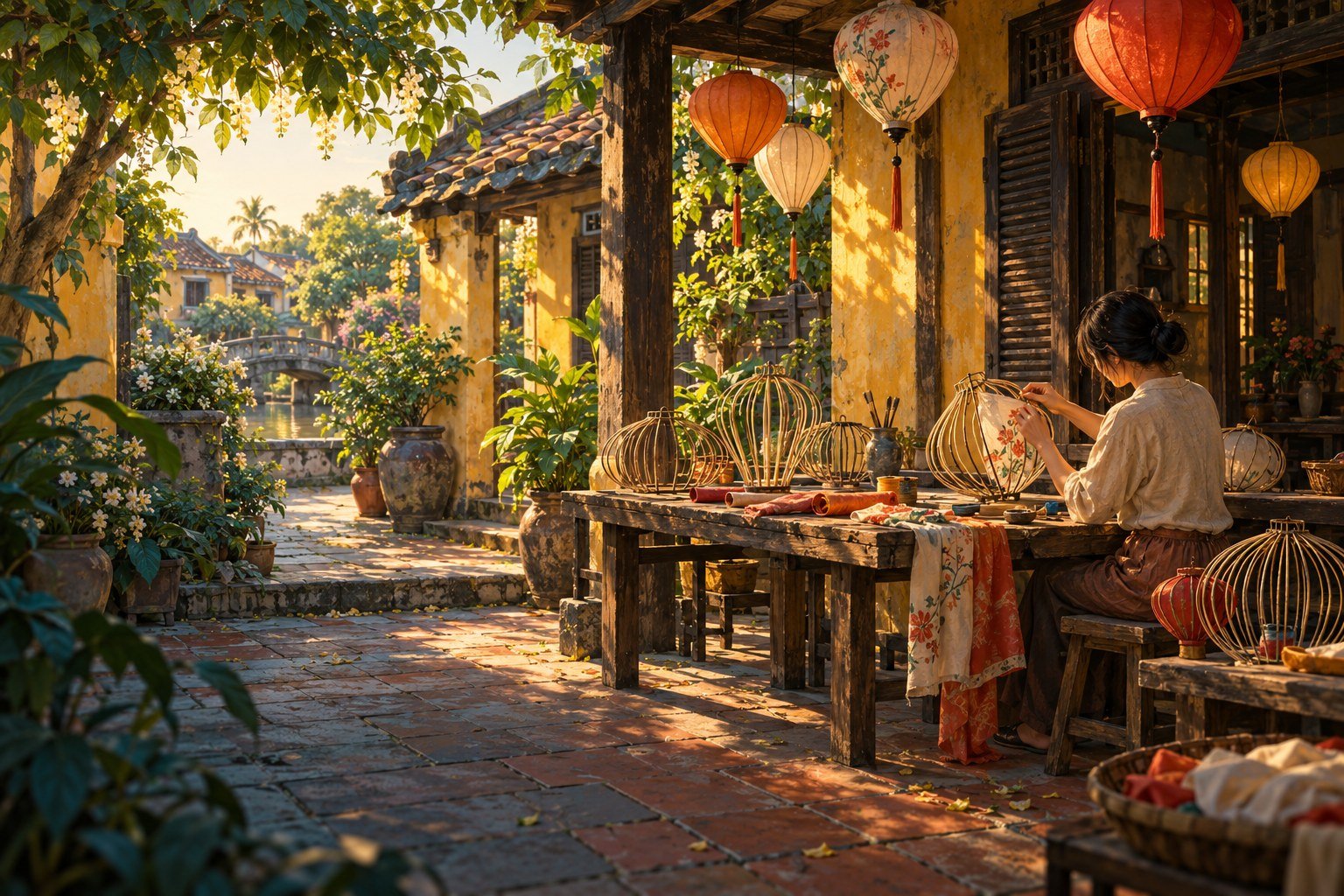
AI-generated editorial illustration inspired by Hoi An craft workshops; it does not portray a named artisan or a visited workshop.
The best things to do in Hoi An become easier to choose when you decide what you want to understand or make. An old house explains how a trading family lived; a workshop can reveal how an object takes shape; a village visit adds something different if its activities match your interests.
This selection favours useful contrasts, genuine participation and sensible combinations. It is researched from heritage authorities, tourism bodies and operators, rather than based on personal visits. Time budgets are editorial planning allowances unless a published session length is identified. Offers and visiting rules were checked on 23 October 2026.
For choosing a base, beach time and arrival logistics, read our Hoi An travel guide.
Visit contrasting interiors: a house, an assembly hall and a museum.
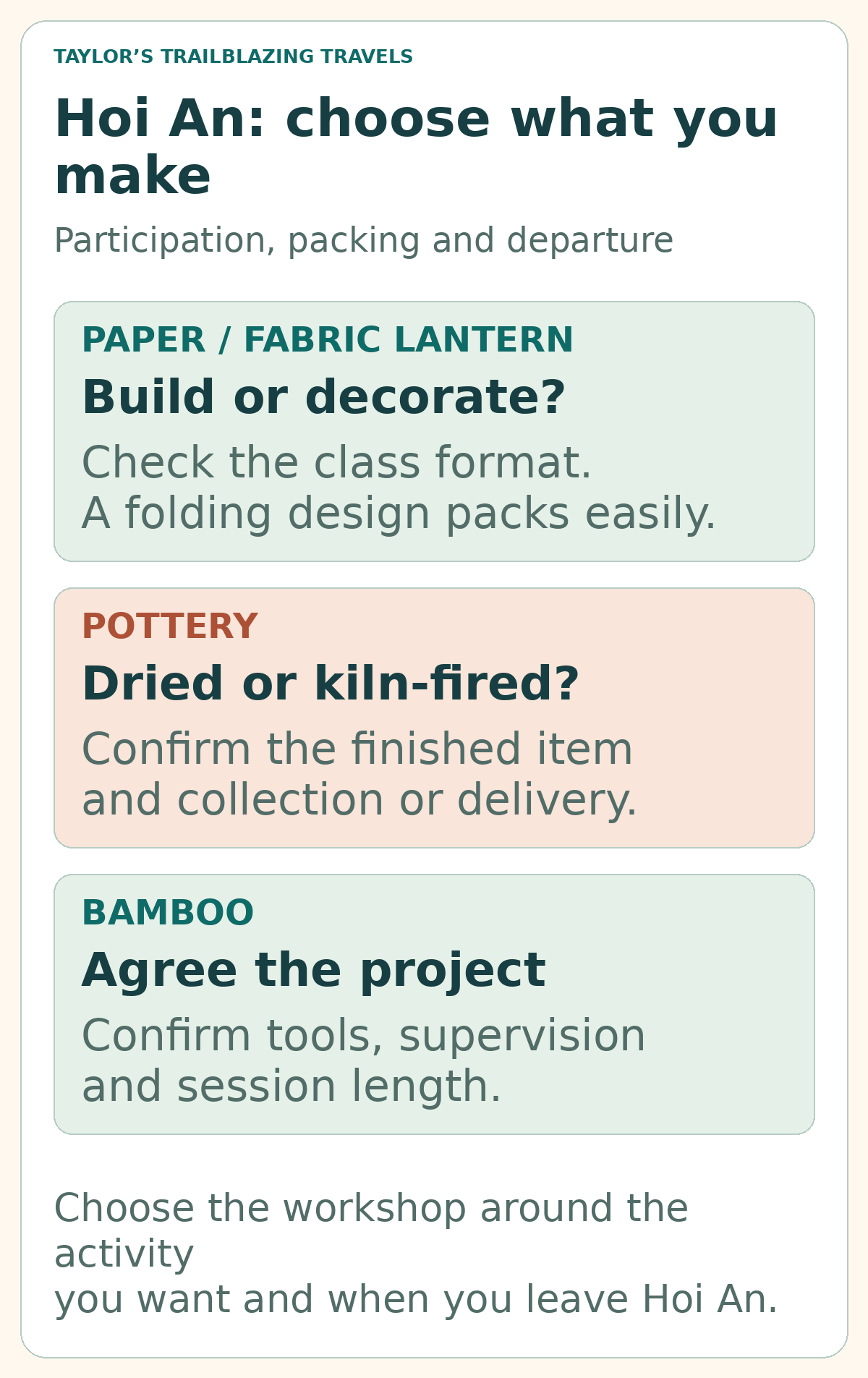
Choose the work you will actually do and how the finished item travels.
Tra Que suits a garden visit linked to cooking and a meal.
Cam Thanh suits a basket-boat outing or a booked bamboo workshop.
Go inside the Ancient Town
Reserve about 2½–3 hours for a compact heritage visit, with pauses between interiors. Choosing different building types gives the morning a clearer purpose than collecting several similar house visits.
A house, an assembly hall and a museum
- Tan Ky House: look at the relationship between its reception space, living quarters and courtyard, then ask how trade shaped the household. The conservation authority describes a combination of Vietnamese, Chinese and Japanese architectural influences. [1]
- Phuc Kien, also called Fujian or Fukian Assembly Hall: choose this for Chinese architectural detail and the worship of the sea goddess Thien Hau. It complements a domestic house by introducing religious and community life. [2]
- Museum of Trade Ceramics, 80 Tran Phu: choose this for the evidence behind the trading-port story. Ceramic fragments and wares connect Hoi An with overseas exchange; it is a useful introduction before visiting Thanh Ha, although traded ceramics and present-day village production are different subjects. [3]
Use these as a shortlist, then confirm which interiors are open and eligible for your ticket at the official desk. Ask before photographing people or religious activity, and follow signs about restricted rooms. A guided visit is worthwhile if you want interpretation of building details; check that it enters your chosen interiors and whether admission costs extra.
Compare Old Town walking tours on GetYourGuide for a guide-led alternative; the link opens a selection of tours, so read each itinerary. [5]
Check the current ticket for your chosen interiors
The municipal fee schedule effective from 10 August 2026 sets VND20,000 per person per heritage building in the Ancient Town, with the same rate for Vietnamese and international visitors. This is the published fee schedule, rather than a confirmed all-in quote for a particular combination of visits. [4]
At the official desk, name Tan Ky House, Phuc Kien Assembly Hall and the Museum of Trade Ceramics. Confirm the ticket covering those three, the total payable, its validity and any performance inclusion before buying. Do not assume an earlier combination-ticket description still gives the complete current arrangement. There is no reason to add extra interiors simply to fill a package.
The tourism authority’s updated performance notice places the traditional art programme in the second-floor hall at Hoai River Square, 01 Cao Hong Lanh, from 7 March 2026. It lists 10:15, 15:15 and 16:15 performances. Confirm that day’s programme, admission and access before arranging a workshop around it. [21]
Back to top ↑Choose a craft by what you will make
A demonstration, decorating a prepared object and building something from its components offer different experiences. All can be enjoyable; ask which you are buying. The most useful questions are how much making time you get, what help is provided and when the item will be ready.
Lanterns: the practical choice before departure
Reaching Out advertises a folding paper-lantern class with one of its artisans, currently Monday–Friday, 09:00–10:00. The finished lantern folds flat. It also welcomes individuals and families to ask staff about seeing the workshop, so there is a distinction between a visit and a booked making session. Confirm the class directly before building your morning around it. [6]
For a fabric-and-bamboo option, the Vietnamese Foldable Lantern Making Class listed on GetYourGuide advertises 1½–2 hours. Its full version includes constructing the frame; the express version starts with a prepared frame and moves to the fabric. Choose the full session if learning the construction is your priority, or the express option if that level of detail would be tiring. [7]
Check the full and express lantern-class options and select the version deliberately. This is a different activity from Reaching Out’s paper-lantern workshop.
Thanh Ha: choose a pottery visit with enough time at the wheel
Thanh Ha remains a place of pottery production: the local tourism authority documents working households and several kinds of ceramic output. That supports a visit to the craft community, but does not establish where every object in every shop was made. Ask the maker which stages happen there. [8]
Thanh Ha Terracotta Park offers a specific participatory option: its potter experience lets visitors shape clay with assistance and choose a finish. The operator distinguishes dried pieces to take away from a ceramic option sent for firing, with approximately a month before completion. A same-day keepsake and a kiln-fired vessel are therefore different purchases; ask about intended use, packing, delivery costs and breakage terms. [9]
Allow a half-day block if you want a village visit as well as making. Treat the village, the park and the workshop as separate inclusions when comparing quotes. A short taster may be enough for curiosity; someone keen to practise should ask for the actual hands-on minutes.
Compare Thanh Ha pottery workshops and village visits. The page includes both short classes and longer combinations. Confirm village admission, park admission and whether your own piece is included before paying. [10]
Add Precious Heritage for photography and textiles
Precious Heritage is a useful change of pace after architecture or making. Photographer Réhahn’s collection brings together portraits, clothing and stories from ethnic communities around Vietnam. Approach it as a curated photographic and collecting project, with the artist’s perspective shaping the presentation. [11]
The museum advertises free entrance at 26 Phan Boi Chau, daily 08:00–20:00, and suggests 45–60 minutes. It therefore works as a flexible addition when you have energy left, without committing to another paid session. Check opening arrangements if weather is disrupting town. [11]
For more than a quick look, choose a garment or photograph and read its accompanying story closely. This gives the visit a focus and leaves time to notice details rather than trying to absorb every display.
Back to top ↑Choose Tra Que or Cam Thanh by the activity
Choose the experience first, then its location. A cooking class, a farming session and a basket-boat ride are separate activities even when a sales page bundles them together. If pottery is your main interest, give the equivalent half-day to Thanh Ha instead.
Tra Que for herbs, cooking and a meal
Tra Que’s appeal is the connection between vegetable growing and the kitchen. The national tourism authority describes gardening participation and cooking workshops here. Book an organised session if you want to help with the work; the presence of cultivated beds is not an invitation to enter or harvest them independently. [12]
Choose between two useful formats. Tra Que Water Wheel advertises a market–garden–cooking programme, which suits someone wanting the ingredient story as well as a meal. Its published page is inconsistent about timing and transfers, so request one written itinerary before booking. [13]
For a shorter commitment, the Tra Que Herb Village Cooking Class listing specifies 2½ hours at Tra Que Rural Charm, with four dishes and some ingredients prepared beforehand. Ask what you will do yourself, whether your dietary requirements can be met and whether the meal replaces lunch or dinner. The listing says the class is unsuitable for wheelchair users. The menu can change, and the supplier flags a public-holiday surcharge. [14]
Check the shorter Tra Que cooking-class option. Compare the final total, meeting point and ingredients with a longer market-and-garden programme.
Cam Thanh for water, or bamboo making
Cam Thanh’s Bay Mau palm waterways suit a different outing. Basket boats and spinning demonstrations are established parts of the visitor experience, so choose it for that activity rather than assuming an undisturbed nature excursion. [15]
One specific comparison option is Lang Dua Xanh’s basket-boat listing: it advertises 50 minutes on the water, with transfers depending on the selected package. Watching a spinning demonstration is different from paying to participate. Ask about the route, whether you can avoid spinning, boarding assistance and life jackets in suitable sizes. [16]
Check the basket-boat options and meeting point. Use the named operator’s location, and check the total excursion length rather than treating boat time as door-to-door time.
For a making activity in Cam Thanh, Taboo Bamboo is documented by Hoi An’s cultural authority as offering guidance in creating bamboo souvenirs. It is worth investigating if working with bamboo appeals more than a boat ride. [17] Contact the workshop through its official enquiry page to agree the project, duration, price and tools involved; establish age and access requirements before reserving. [18]
Make cycling part of the choice
Book cycling because you want to ride, then ask for distance, road surfaces, traffic sections, bike sizes and helmet provision. A “countryside” label does not answer those questions. If cycling would use the energy you want for cooking or making, arrange a direct transfer and spend the time at the activity instead.
Back to top ↑A two-day plan that leaves room to enjoy it
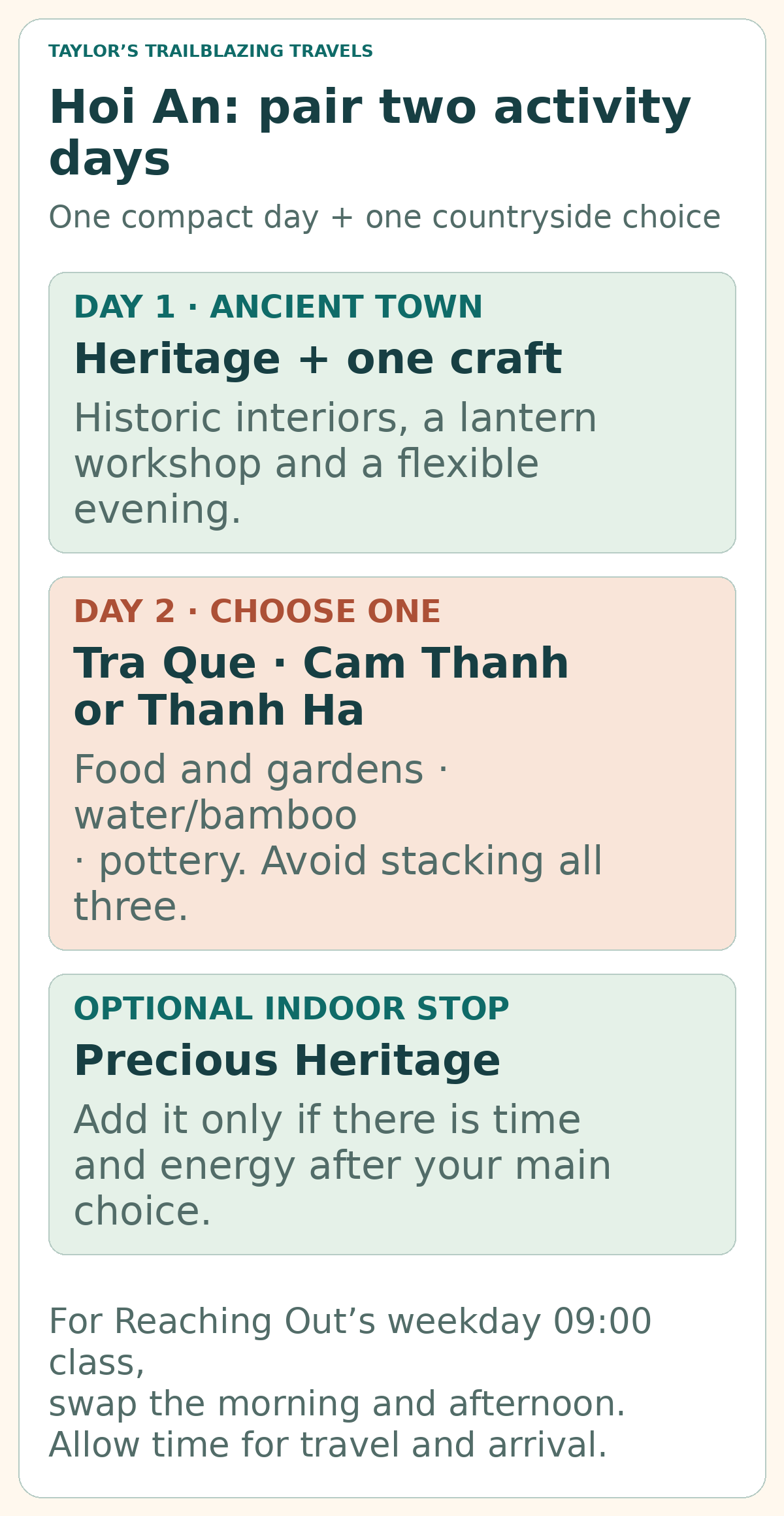
This plan uses one compact town day and one activity-led half-day. Its test is simple: on a six-hour daytime sightseeing budget, 2½ hours of heritage, a two-hour workshop and a one-hour visit to Precious Heritage already use 5½ hours. That leaves too little room for lunch, moving between places and delays. Put the museum on day two or omit it.
Scroll sideways to see all columns →
| Block | Main plan | How to keep it workable |
|---|---|---|
| Day one, morning | Allow 2½–3 hours for a merchant house, an assembly hall and the Trade Ceramics Museum. | Confirm opening and ticket eligibility, then take a proper lunch break. |
| Day one, afternoon | One lantern workshop, followed by unbooked time. | If choosing Reaching Out’s weekday morning class, do that first and move heritage to the afternoon. |
| Day one, evening | A short Ancient Town stroll and dinner. | Keep this flexible; the daytime programme is already substantial. |
| Day two, main block | Tra Que gardens and cooking; or Cam Thanh boat and a confirmed bamboo session; or Thanh Ha pottery. | Choose one area. Reserve an additional hour for local transfers, arrival and waiting, then adjust once the operator confirms the details. |
| Day two, later | Precious Heritage if you still want another stop. | Allow 45–60 minutes. Omit it if the chosen workshop runs longer. |
The evening walk adds a different view of the same streets: Vietnam Tourism highlights the lantern lighting after dark. Treat it as time to wander and eat, rather than another tightly booked tour. [19]
With only one full day, keep the heritage block and choose either a town craft or one countryside activity. With two days and a strong craft interest, replace the town lantern class with Thanh Ha on day two; you do not need a second making session simply because it is available.
Rainy-day alternatives that still make sense
For ordinary showers, the best swap preserves the purpose of the outing: textiles and photographs for looking, a confirmed covered workshop for making, or a cooking-only session for food. Avoid replacing a short outdoor plan with a complicated cross-town sequence.
- If the garden or cycling portion is the attraction, ask to move the booking to a drier period. A sheltered cooking class is a different experience, so agree the revised programme and price.
- If you mainly want to make something, ask the workshop whether the whole session is under cover and whether your route there is clear. A craft village or park should not automatically be treated as an entirely indoor attraction.
- If you prefer to stay central, use one or two confirmed-open interiors and Precious Heritage, with generous breaks. Covered rooms do not remove the exposed walk between them.
During storm or flood warnings, follow local instructions, avoid flooded areas and postpone outdoor plans. Reaching an indoor venue must also be safe. [20]
Back to top ↑Book the scarce session, then leave the rest flexible
Reserve the activity whose start time, language, small group size or making materials matter most to you. Confirm the heritage route afterwards. For a two-day visit, one advance craft or cooking reservation is often enough structure; add another only if it serves a different interest.
Build an activity budget from the selected heritage ticket, each workshop’s final quote and local transport. Then add only items explicitly excluded: village or park admission, ingredients or drinks, firing, delivery, or holiday supplements. A class that includes a meal can replace a restaurant meal in your plan, but it does not make every longer package better value.
Before paying, check five details together: exact meeting point; minutes spent making or cooking; inclusions; what happens if weather changes the programme; and cancellation terms for the date and option selected. Save the confirmation and contact details so a similarly named shop or pier does not become an accidental replacement.
Back to top ↑Frequently asked questions
Can a non-cyclist still enjoy the countryside activities?
Yes. Choose an activity at a fixed venue and arrange transport to it, or ask for a transfer option. Confirm the final walking distance from the vehicle to the kitchen, workshop or pier; a car transfer alone does not establish easy access.
What should a family ask a workshop before booking?
Give the children’s ages and ask which tasks they will do themselves, whether an adult must assist, whether each child gets an individual item and whether there is seating for breaks. Check tool supervision and the total session length rather than relying on a general “family-friendly” label.
How can I check whether a souvenir was made locally?
Ask who made it, where the main materials came from and which stages happen in the workshop you are visiting. A demonstrated technique can be local even when the item for sale was produced elsewhere. Clear answers are more useful than a broad authenticity claim.
Choose the plan that suits your visit
Start with contrasting Ancient Town interiors, choose a craft for the work you want to do, and give the countryside a single clear purpose. Tra Que works best for food and gardens; Cam Thanh for water or bamboo; Thanh Ha for pottery. The most rewarding two-day plan has time to ask questions, finish what you are making and change course when the weather requires it.
Back to top ↑Sources and methodology
Researched and editorially reviewed on 23 October 2026. Official tourism, attraction and transport sources support the destination facts. Suggested visit lengths, activity pairings and example budgets are editorial planning models; they are not reports of personal visits or live booking quotes. Recheck dated prices, access and operating details before travelling.
- Hoi An World Heritage — Old House of Tan Ky
- Hoi An World Heritage — Fukian Assembly Hall (Phuc Kien)
- Hoi An World Heritage — Museum of Trade Ceramics
- Da Nang People’s Council — Resolution 98/2026/NQ-HDND, effective 10 August 2026 (municipal 1022 portal)
- GetYourGuide — Old Town, Hoi An walking tours
- Reaching Out — Tours & Workshops
- GetYourGuide — Vietnamese Foldable Lantern Making Class
- Da Nang Tourism Promotion Center — The Craft of Thanh Ha Pottery in Hoi An
- Thanh Ha Terracotta Park — Be a potter
- GetYourGuide — Thanh Ha Pottery Village workshops and classes
- Réhahn — Precious Heritage Museum
- Vietnam National Authority of Tourism — Tra Que Vegetable Village
- Tra Que Water Wheel — Market & Cooking Class
- GetYourGuide — Tra Que Herb Village Cooking Class
- Da Nang Tourism Promotion Center — Bay Mau coconut forest
- GetYourGuide — Basket Boat Ride in the Coconut Forest
- Hoi An Creative City — Taboo Bamboo Workshop
- Taboo Bamboo Workshop — official contact page
- Vietnam National Authority of Tourism — 10 essential things to do in Hoi An
- FCDO — Vietnam: safety and security
- Da Nang Tourism Promotion Center — Hoi An entrance tickets and updated performance venue, 6 March 2026
Illustrations in this article were created for Taylor’s Trailblazing Travels. Third-party photographs, where used, are credited beside the image or in the source list.