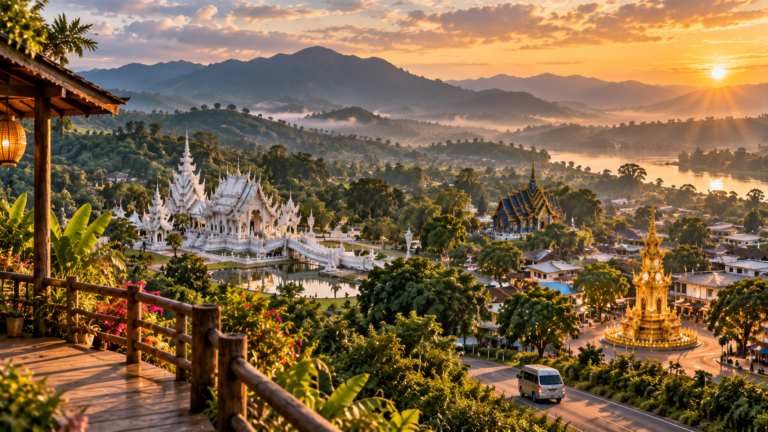
A realistic route through Bangkok’s river sights, old-city temples, food districts and modern neighbourhoods, with enough breathing room to enjoy the city rather than simply count attractions.

A first visit to Bangkok can go wrong in a surprisingly ordinary way: the attractions are good, but the route between them is not. A traveller puts the Grand Palace, Chatuchak, a Sukhumvit lunch and a riverside sunset into one day, then spends the afternoon looking through taxi windows. The city is not impossible. It is simply too spread out for a checklist planned by straight-line distance.
This Bangkok 4 day itinerary fixes that problem by grouping sights around the river, the old city and the rail network. The arrival day is deliberately light, while the second covers the classic temple cluster. Your third-day route changes according to the day of the week; meanwhile, the final day remains flexible enough for Ayutthaya or a slower Bangkok finish. That rhythm works better than forcing every famous place into the same 12-hour sightseeing marathon.
The route is designed as I would plan it for a friend arriving after a long flight: one demanding morning at a time, a sensible escape from the midday heat and no evening that depends on perfect traffic. Travellers with only three days can use the broader Bangkok travel guide and 3-day plan; this page is the more detailed four-day version.
Bangkok 4 day itinerary at a glance
| Day | Main area | Core plan | Pace | Best evening |
|---|---|---|---|---|
| Day 1 | Hotel neighbourhood and river or rail corridor | Airport transfer, check-in, short orientation walk and an easy dinner | Light | Stay close to the hotel or take one simple river ride |
| Day 2 | Rattanakosin and the Chao Phraya | Grand Palace, Wat Pho, Wat Arun and Chinatown | Full | Yaowarat food streets or a quiet riverside meal |
| Day 3 | Chatuchak and Siam, or Siam and nearby neighbourhoods | Weekend market or weekday alternative, Jim Thompson House, shopping and food | Moderate | Guided food tour, Banthat Thong or Bang Rak |
| Day 4 | Ayutthaya or slower Bangkok | UNESCO ruins, or canals, parks, museums and a final flexible evening | Choose your own | Early night before onward travel, or one final neighbourhood dinner |

How this four-day Bangkok itinerary works
Treat it as four sightseeing days, not four calendar dates
The cleanest version is four nights with at least three full days between arrival and departure. A late-evening flight into Bangkok can turn “Day 1” into little more than a taxi and sleep. Conversely, an early flight home can remove most of Day 4. Before booking anything non-refundable, write the usable hours beside each date.
When the trip genuinely contains only three usable days, drop Ayutthaya first. Bangkok rewards time more than frantic coverage, and the city still feels incomplete after the main temples. Ayutthaya is excellent, but it should not cost the only relaxed meal or neighbourhood walk in the capital.
Use three planning rules
- Keep each half-day within one rail, river or walking cluster.
- Put outdoor monuments early, then use museums, malls or a hotel break during the hottest hours.
- Leave at least one evening unbooked until the day itself; heat, rain and jet lag are better decision-makers than an overfilled spreadsheet.
Check the details that can change
Royal ceremonies, religious events, public holidays, storms and transport works can alter access. The Grand Palace publishes a date-specific schedule as well as its usual daily hours, so check it again shortly before the temple day.[1] Weather deserves the same treatment: use the Thai Meteorological Department’s live forecast rather than a generic monthly climate chart.[15]
Where to stay for a Bangkok 4 day itinerary
The most useful hotel is not always the one closest to a famous attraction. For four days, a station within a genuine five-to-ten-minute walk often saves more time than a cheaper room that needs a taxi for every meal. Check the route on street view, not just the distance shown by a booking site.
| Area | Best for | Transport advantage | Main drawback | My verdict for four days |
|---|---|---|---|---|
| Silom / Sathorn | First visits, couples, food and mixed sightseeing | BTS, MRT and access towards Sathorn Pier | Some streets are very business-focused | Best all-round balance when the hotel is genuinely near rail |
| Asok / central Sukhumvit | Rail connections, restaurants and nightlife | Direct BTS–MRT interchange | Busy roads and less old-Bangkok atmosphere | Very easy logistically, especially for late dinners |
| Siam / National Stadium | Shopping, families and rainy-day flexibility | Central BTS interchange and walkable indoor options | Farther from the river temples | Strong choice for Day 3 and anyone who values air-conditioned breaks |
| Riverside | Views, special-occasion hotels and slower evenings | Boat access when the hotel pier is useful | Some properties are awkward without hotel shuttles | Beautiful, but check the exact pier and last shuttle time |
| Old City / Banglamphu | Temples, heritage streets and backpacker atmosphere | Walkable old-city sights | Weaker BTS access; road journeys can be slow | Good for a temple-led trip, less convenient for a balanced four-day plan |
The best all-round base
For most first-time visitors, I would start with Silom/Sathorn or central Sukhumvit, then compare actual hotel-to-station walking routes. Siam is a close third for families, shoppers and travellers visiting during the wet season. Riverside becomes the winner when the hotel itself is part of the trip rather than merely somewhere to sleep.
Whichever area you choose, look for recent comments about street noise, lift queues, construction and station access. “Near BTS” can mean across a footbridge with steps, behind a six-lane road or ten minutes farther than the map pin suggests.
Day 1: arrive, check in and stay local
Choose the airport transfer by luggage and arrival time
| Option | Typical planning cost | Best for | Watch for |
|---|---|---|---|
| Airport Rail Link from Suvarnabhumi | 15–45 THB, depending on distance | Solo travellers, light luggage and rush-hour arrivals | One or two onward interchanges may make the “cheap” route tiring |
| Official metered taxi | Metered fare, plus 50 THB airport surcharge and any tolls | Couples, families, larger bags and late arrivals | Traffic can turn a short map distance into a long journey |
| Pre-booked car | Usually several hundred baht; live quote required | First arrivals after dark, groups and travellers who value a named meeting point | Costs more and quality depends on the operator |
| Don Mueang Red Line plus MRT/BTS | Distance-based rail fares | Light luggage and hotels with a straightforward rail connection | The airport-to-platform walk and interchange matter more than the headline fare |
At Suvarnabhumi, the Airport Rail Link station is on Level B1 and the official airport page lists operations from 05:30 to midnight. The public taxi rank operates around the clock and adds a 50 THB airport surcharge to the metered fare; expressway tolls are separate.[4] Those details make the decision fairly simple: use the train for a clean rail connection and modest luggage, otherwise use the official taxi queue.
Build a 90-minute reset into the plan
After check-in, shower, change clothes, refill water and organise the temple outfit for the next morning. This is also the right moment to pin the hotel entrance in a map app; large Bangkok properties sometimes have several driveways, while smaller hotels can hide inside lanes that drivers do not recognise by English name.
Then walk one compact loop around the hotel. Find the closest station entrance, a convenience store, breakfast option and cash machine. That short reconnaissance saves avoidable decisions when you leave early for the Grand Palace.
Keep the first evening easy
Choose one of three versions. Riverside guests can take a short public or hotel boat ride. Silom/Sathorn visitors can eat around Bang Rak or the local side streets. Sukhumvit and Siam guests have enough food options near rail that there is no reason to cross the city. Unless the flight landed before lunch and everyone feels alert, I would avoid a prepaid dinner cruise on the first night.
Day 2: Grand Palace, Wat Pho, Wat Arun and Chinatown

07:30–08:30: travel before the heat builds
Eat breakfast near the hotel and leave with covered shoulders and knees, water, sun protection and footwear that is easy to remove. The Grand Palace dress code is stricter than a casual “temple appropriate” outfit: sleeveless, short, torn, see-through and tight clothing can be refused.[2] Loose trousers or a below-knee skirt with a sleeved top is the least stressful choice.
MRT Sanam Chai is useful for the old city, while a river approach can be more scenic from Sathorn Pier. However, boat flags, days and stopping patterns change. The Chao Phraya Express operator’s schedule from 24 June 2026 lists the Orange Line at 18 THB on weekdays, so check the live route page instead of relying on an old screenshot.[7]
08:30–10:30: Grand Palace and Wat Phra Kaew
The official schedule lists daily opening from 08:30 to 16:30, with ticket sales to 15:30, and a 500 THB foreign visitor ticket.[1] Arriving near opening does not guarantee an empty courtyard, yet it gives you a cooler, calmer start than arriving after lunch. Allow roughly 90 minutes to two hours, depending on interest and crowd levels.
Do not accept an unsolicited claim outside the entrance that the palace is closed. Instead, check the official schedule or walk to the ticket office. Genuine closures and partial restrictions do happen around royal events; the official calendar is the right source.
10:45–12:15: Wat Pho
Walk south to Wat Pho, home of the Reclining Buddha and one of the most rewarding temple compounds in the city. The temple’s visitor page lists 08:00–19:30 opening and a 300 THB foreign admission fee.[3] The Reclining Buddha draws the crowd, but the courtyards, chedis and quieter corners justify more than a quick photograph.
Wat Pho also operates its traditional massage school. Current published rates start at 340 THB for 30 minutes, although a temple-day massage can create a queue and upset the route. I would treat it as an optional finish rather than a fixed appointment.
12:15–13:30: lunch and a real heat break
Eat around Tha Tien, Tha Maharaj or the streets near Sanam Chai. The smart choice is a shaded, seated lunch rather than a famous venue that requires another taxi. A cold drink, a proper meal and 20 quiet minutes will make Wat Arun more enjoyable than squeezing in a fourth temple.
If the forecast shows an intense storm, reverse the afternoon logic: use a museum or café while it passes, then cross the river later. Tropical rain can be abrupt rather than all-day, so a flexible hour is more useful than a rigid minute-by-minute plan.
13:30–15:00: cross to Wat Arun
Take the short cross-river ferry from the Tha Tien side and allow about an hour at Wat Arun. English-language fee listings are not always consistent, so set aside 200 THB as a planning allowance and confirm the current ticket board on arrival. The Tourism Authority of Thailand maintains an official attraction page for last checks.[18]
The lower terraces and steep steps reward sensible shoes. Meanwhile, the best full-temple photograph is usually taken from the opposite bank rather than directly beneath the prang. Keep the close-up visit and the sunset viewpoint as two different experiences.
17:30 onwards: Chinatown without a restaurant checklist
Return to the hotel for a break when energy is fading; otherwise continue towards Chinatown. MRT Wat Mangkon makes Yaowarat much easier than it once was. Start on the side streets, look for busy stalls with visible turnover and share dishes so one disappointing choice does not become the whole dinner.
Yaowarat is intense, especially on weekends. Travellers who prefer a quieter meal can eat around Talat Noi or Bang Rak, then take a short walk through Chinatown for the atmosphere. The aim is not to queue for the longest line on social media; it is to finish the day with enough energy to enjoy the city.
| Time | Stop | Planning allowance | Key decision |
|---|---|---|---|
| 08:30–10:30 | Grand Palace and Wat Phra Kaew | 500 THB | Check the official schedule and wear the strictest temple outfit |
| 10:45–12:15 | Wat Pho | 300 THB | Allow time beyond the Reclining Buddha |
| 12:15–13:30 | Lunch near the river | 150–400 THB | Prioritise shade and speed over a cross-city “must eat” |
| 13:30–15:00 | Wat Arun | Allow 200 THB and verify | Cross by local ferry and save the full-view photo for the east bank |
| 17:30 onwards | Chinatown | 300–900 THB, depending on appetite | Share several small dishes or choose a guided tasting route |
Day 3: Chatuchak or a weekday alternative, then Siam and food
Weekend route: arrive at Chatuchak near opening
The full market operates on Saturday and Sunday, with the market information site listing 09:00–18:00. Midweek openings cover limited sections, while Friday is mainly wholesale.[9] Arrive around 09:00, carry small notes and photograph the section number when you see something worth revisiting. The market is too large for “one more loop” to be a reliable navigation method.
Two to three hours is enough for most first visits. Pair Chatuchak with nearby Or Tor Kor Market when food is a priority, then leave before the hottest and busiest part of the afternoon. BTS Mo Chit and MRT Chatuchak Park/Kamphaeng Phet offer different exits, so choose the one that matches the section you want.
Weekday route: Talat Noi, Bang Rak or Benjakitti
When Day 3 falls Monday to Friday, do not visit Chatuchak merely because an old itinerary says so. Instead, choose one neighbourhood with a clear theme. Talat Noi works for old shophouses, riverside lanes and street art. Bang Rak works for food and architecture. Benjakitti Park works for an easier green-space morning near Sukhumvit.
Keep the route compact. Talat Noi pairs naturally with Chinatown or the river, while Benjakitti pairs with Asok and Sukhumvit. Crossing between them in the same morning recreates the problem this itinerary is designed to avoid.
Afternoon: Jim Thompson House and Siam
Jim Thompson House is a useful contrast to the royal and religious sites from Day 2. The museum lists daily opening from 10:00 to 17:00, an adult ticket of 250 THB and guided entry to the main house. It also warns that tickets are sold only at the on-site office, not through online platforms.[8]
Allow 60–90 minutes, then continue on foot or by BTS around National Stadium and Siam. This is the right place for a rainy afternoon because museums, Bangkok Art and Culture Centre, shopping centres and food halls sit close together. Shopping is optional; the value is having several weather-proof choices in one area.
Evening: choose a food neighbourhood by mood
| Area | Best for | Atmosphere | Watch for |
|---|---|---|---|
| Yaowarat | Street-food variety and neon-night atmosphere | Busy, loud and exciting | Queues, traffic and sensory overload |
| Banthat Thong | Modern casual restaurants, desserts and younger crowds | Lively and social | Popular venues can have long waits |
| Bang Rak | Old shophouses, bakeries and a more local-feeling evening | Mixed and walkable in clusters | Opening days vary between family businesses |
| Siam food halls | Air conditioning, easy choice and mixed dietary needs | Comfortable and convenient | Less street atmosphere |
Independent eating suits confident travellers who enjoy choosing as they go. A food tour is better when the value comes from context, a planned sequence and not having to judge every stall. Check how many tastings are included, whether drinks are extra, the walking distance and how dietary restrictions are handled.
Day 4: Ayutthaya day trip or a slower final Bangkok day
Should you use the fourth day for Ayutthaya?
Ayutthaya is not simply “more temples”. The former capital is a UNESCO World Heritage property, inscribed in 1991 for the surviving urban and architectural record of the historic city.[10] It deserves a full day and works best for travellers who enjoy archaeology, history and outdoor ruins.
However, the journey adds an early start, heat and another transport layer. Skip it when the next morning includes a flight, the temple day already felt tiring or the group would rather spend time on food, design and neighbourhoods. A flexible fourth day is not wasted; it often becomes the most personal day of the trip.
| Option | Typical time | Cost pattern | Advantages | Limitations |
|---|---|---|---|---|
| Ordinary or commuter train | About 1.5–2 hours each way on many services | Some official 2026 examples are 15–35 THB | Very inexpensive and atmospheric | Basic seating, fixed timetable and local transport still needed in Ayutthaya |
| Van or bus | Often around 1.5 hours, traffic permitting | Live fare varies by operator | More departure choices and central arrival options | Less legroom and departure points can be confusing |
| Organised group tour | Usually 7–10 hours door to door | Higher, often including transport and guiding | Simple logistics and historical explanation | Fixed pace and less freedom at each ruin |
| Private driver | Flexible full day | Highest total, better value for a small group | Door-to-door comfort and control | Guiding may not be included; confirm the vehicle and overtime terms |
A practical self-guided train plan
The State Railway of Thailand’s 2026 timetable shows the 71 km Bangkok–Ayutthaya run taking roughly 1 hour 33 minutes to 1 hour 59 minutes on several ordinary and commuter examples, with fares around 15–35 THB.[11] Those are planning examples, not a promise for your date. Check both outbound and return trains before leaving the hotel.
Ordinary, suburban and local trains may not be bookable through the online D-Ticket system, while eligible rapid and express services can be reserved in advance.[12] On arrival, rent a bicycle only if heat and road confidence allow; otherwise agree a clear tuk-tuk route and duration before setting off. A sensible ruin circuit includes Wat Mahathat, Wat Ratchaburana, Wat Phra Si Sanphet and Wat Chaiwatthanaram, but four well-chosen stops are better than racing through eight.
The slower Bangkok alternative
Build the final day around one missing experience. A canal route in Thonburi adds a side of Bangkok not seen from the main river. Museum-focused travellers can choose the National Museum or MOCA. Families may prefer Sea Life, parks and a relaxed meal. Shoppers can use Siam, Pratunam or a specialist market without watching the clock.
Another strong version is Bang Krachao or a long walk through Lumpini and Benjakitti, followed by a cooking class. Keep the evening near the hotel and pack before dinner. That small decision turns departure morning from a search for chargers and passports into a normal start.
Bangkok transport strategy for four days
Match the vehicle to the journey
| Mode | Use it for | Strength | Limitation |
|---|---|---|---|
| BTS Skytrain | Sukhumvit, Silom, Siam and connections to Sathorn Pier | Predictable above road traffic | Does not directly serve the Grand Palace |
| MRT Blue Line | Old city, Chinatown, Silom and Asok connections | Excellent for Sanam Chai and Wat Mangkon | Separate ordinary ticketing from BTS |
| River boat | Riverside and old-city journeys | Scenic and often faster than riverside roads | Flags, piers and service days can confuse first-time users |
| Metered taxi or ride-hailing app | Luggage, late evenings and awkward last kilometres | Door to door | Time and price rise sharply in traffic |
| Tuk-tuk | One short experience when the fare is agreed first | Fun in the right setting | Usually poor value for long transport and vulnerable to detours |
| Walking | Within one neighbourhood cluster | Flexible and often fastest for short distances | Heat, uneven pavements and wide roads limit range |
Know the rail service window, but check the last useful train
The BTS publishes a broad service window of 05:00–01:00, although the last useful train depends on direction and interchange.[5] The MRT Blue Line lists daily service from 06:00 to midnight, with average headways of no more than seven minutes in normal periods and four minutes in peak periods.[6] Do not plan around the headline closing time alone; check the last train from the station you will actually use.
Carry more than one payment method
Bangkok’s transport is not one fully integrated ticket system. A stored-value card may help on one network but not another, while boats and small ferries can still be easiest with cash. Carry small baht notes, keep a bank card separate and avoid storing all payment methods in the same phone case.
Do not use motorcycle taxis as the default tourist shortcut
They can save time, yet the risk is not theoretical. UK travel advice highlights Thailand’s high road-accident rate, particularly involving motorcycles.[13] For a first visit, rail plus a short walk or car journey is a safer default. When using a taxi, wear the seat belt where available and allow extra time rather than asking a driver to rush.
How much does this Bangkok itinerary cost?
Use ranges, not a false single budget
Bangkok can be inexpensive or very polished within the same street. The ranges below are planning estimates checked against current attraction fees, transport information, hotel searches and activity listings in August 2026. They are not guaranteed quotes and exclude international flights, travel insurance and onward transport.

| Cost area | Lean plan | Balanced plan | Comfort plan |
|---|---|---|---|
| Hotel per room, per night | 800–1,800 THB | 2,000–4,500 THB | 5,000 THB and above |
| Food per person, per day | 500–900 THB | 1,000–2,000 THB | 2,500 THB and above |
| Local transport per person, per day | 120–300 THB | 300–700 THB | 800 THB and above |
| Core paid sights across four days | About 1,000–1,500 THB | Same core sights plus one guided activity | Private guide, premium cruise or several paid experiences |
| Ayutthaya day | Low-cost train plus local transport | Van or group tour | Private driver and guide |
| Practical daily total excluding hotel | 1,000–1,800 THB | 2,000–4,000 THB | 5,000 THB and above |
Where saving money does not damage the trip
- Stay near rail instead of choosing a famous district that needs repeated taxis.
- Use local breakfast, food courts and markets for some meals, then spend on one meal that matters.
- Take rail or boat for long city journeys and a taxi only for the awkward last section.
- Choose either a guided temple tour or a guided food experience, not both by default.
- Book a refundable hotel, then recheck the rate before the cancellation deadline.
What is worth paying more for?
Spend on location, sleep and a guide where interpretation matters. A quieter room five minutes from rail can improve every day. Likewise, a skilled guide at the Grand Palace or Ayutthaya adds context that cannot be recovered by a fast search after the visit. By contrast, premium road transfers rarely beat rail during heavy traffic unless luggage or mobility makes them necessary.
What to carry on a Bangkok sightseeing day
Carry less, but carry the right things
A Bangkok day bag should hold water, a temple layer, tissues, sun protection, a compact rain option, a small power bank and only the cards or cash needed for that day. Leave passports in secure accommodation storage unless a specific activity requires them; carry a secure copy and follow local identification requirements.
| Item | Advantages | Limitations | Buying advice |
|---|---|---|---|
| Compact umbrella | Works for sun and brief rain; quick to deploy | Awkward in dense crowds and wind | Look for a model short enough for the bag but wide enough for shoulders |
| Packable rain shell | Hands stay free and it works on boats | Can feel hot in Bangkok humidity | Choose ventilation and light fabric over heavy waterproofing |
| Disposable poncho | Cheap backup for sudden storms | Uncomfortable, wasteful and poor in wind | Keep one for emergencies rather than making it the main rain plan |
| Small crossbody | Easy in markets and on rail | Limited room for water and a temple layer | Use a secure zip and keep the bag in front in crowds |
| 15–20 litre daypack | Comfortable for a full day and carries layers | Hotter on the back and more cumbersome in busy places | Choose a light bag with two zips and avoid filling it “because space is available” |
As an Amazon Associate I earn from qualifying purchases. Product search pages are used rather than a single untested model, so readers can compare size, weight, recent reviews and price.
What to book first
- Choose flight dates and calculate the four genuinely usable sightseeing days.
- Book a refundable hotel near a useful station or pier, then verify the walking route.
- Check the Grand Palace schedule for the intended temple day.
- Decide whether Day 4 is Ayutthaya before reserving an early tour or private car.
- Book only the activity that solves a real need: historical guiding, food navigation or door-to-door transport.
- Leave ordinary attraction tickets, local rail and flexible meals until closer to the visit unless the official operator says otherwise.
Pros and cons of this Bangkok 4 day itinerary
| What works well | What may not suit everyone |
|---|---|
| Each day uses a logical neighbourhood and transport cluster. | Four days still cannot cover every museum, market and day trip. |
| The temple day starts early and includes a midday recovery period. | Day 2 contains substantial walking and heat. |
| Day 3 changes when Chatuchak is not fully open. | Travellers focused on nightlife may find the early starts conservative. |
| Day 4 can become Ayutthaya or a slower Bangkok day. | Ayutthaya makes the trip noticeably more tiring. |
| Affiliate options appear only where booking can solve a planning problem. | Independent travellers must still check live timetables and attraction notices. |
Common mistakes that make four days feel shorter
Choosing a hotel by neighbourhood name alone
A hotel can be “in Sukhumvit” and still be a long walk from useful rail. Check the door-to-platform route, crossings and station exit before paying.
Starting the Grand Palace after lunch
The site is hotter, busier and vulnerable to last-ticket cutoffs later in the day. Use the morning for the palace and save flexible places for the afternoon.
Visiting Chatuchak on the wrong day
The full experience is a weekend market. A limited weekday section is not a substitute for the Saturday or Sunday version, so use the alternative Day 3 route instead.
Booking every evening before arrival
Prepaid plans remove the ability to respond to heat, rain and energy. Keep one or two evenings free, then decide after the afternoon break.
Using tuk-tuks for long journeys
They are an experience, not a citywide transport strategy. Agree the complete fare and destination first, and decline shop or tailor detours.
Treating Ayutthaya as a half-day add-on
The historic city deserves a full day. A rushed half-day often means more time in traffic than among the ruins.
Weather, air quality and practical safety
Plan around the actual forecast
Bangkok is hot throughout the year, and wet-season forecasts can change the best order within a day. Check the Thai Meteorological Department each morning, then move outdoor sights earlier when heavy afternoon rain is likely.[15] An umbrella and a flexible indoor option are more useful than trying to predict a shower from the colour of the sky.
Check air quality when conditions look hazy
Air pollution varies by season and district. Air4Thai provides official readings from the Pollution Control Department.[16] Travellers with respiratory or heart conditions should follow medical advice, reduce prolonged outdoor exertion when readings are poor and keep medication accessible.
Read current travel advice, not a saved social post
Bangkok is separate from the border areas covered by specific UK warnings, but national advice changes. The FCDO warning page was current in late August 2026 and should be rechecked before travel, alongside insurance terms.[14] In the city, watch belongings in crowds, use official transport points and keep a photo of the hotel address in Thai.
Frequently asked questions
Is four days enough for Bangkok?
Yes. Four days covers the classic river temples, Chinatown, one market or modern-city day and either Ayutthaya or a slower final day. It does not cover every major day trip, so prioritise depth over a second excursion.
Where should a first-time visitor stay for four days?
Silom/Sathorn and central Sukhumvit are the easiest all-round bases when the hotel is close to BTS or MRT. Siam suits shoppers, families and wet-season visits, while Riverside is best when hotel atmosphere and river views are part of the budget.
Can I visit the Grand Palace, Wat Pho and Wat Arun in one day?
Yes. They are the most efficient classic cluster in Bangkok. Start at the Grand Palace near opening, walk to Wat Pho, take a lunch break, then cross the river to Wat Arun before finishing around Chinatown.
How much are the Grand Palace and Wat Pho?
At the checked date, the official Grand Palace site lists 500 THB for foreign visitors and Wat Pho lists 300 THB. Always check the linked official pages before the visit because schedules and fees can change.
What should I wear to Bangkok temples?
Use the Grand Palace standard for the whole day: covered shoulders and knees, loose opaque clothing and no torn, very tight or sleeveless items. Bring footwear that is easy to remove and avoid using a thin scarf as the only plan for a strict dress check.
Is Chatuchak worth visiting?
Yes, when the trip includes Saturday or Sunday and shopping, design, food or markets are genuine interests. Arrive in the morning and leave before fatigue turns the size from impressive into frustrating. On weekdays, use a different neighbourhood rather than forcing the visit.
Should I book a Bangkok food tour?
Book one when you value context, a planned tasting sequence and help navigating busy districts. Skip it when you prefer choosing your own pace, have restrictive dietary needs that the operator cannot confirm or would rather spend the evening on one relaxed meal.
Is Ayutthaya worth a day from Bangkok?
Yes for history and archaeology, particularly with four full sightseeing days. It is less suitable when the next morning is an early flight, the group is already temple-tired or the trip lacks time for ordinary Bangkok neighbourhoods.
What is the easiest way to get around Bangkok?
Use BTS and MRT for long central journeys, boats when the route genuinely matches the river, and taxis for luggage or the last awkward kilometre. Walking works within a cluster, not as a way to cross the city.
How much cash should I carry each day?
Carry enough small notes for local transport, food stalls and attraction tickets, while keeping the rest secured separately. The exact amount depends on the day, but 1,500–3,000 THB covers most independent sightseeing days without carrying the entire trip budget.
What is the best month for this itinerary?
November to February is generally more comfortable, although it is also popular and accommodation can cost more. The itinerary works year-round when outdoor sights start early and rainy or very hot afternoons have an indoor alternative.
The route I would choose
For a first visit, I would book four nights near BTS or MRT, keep the arrival evening local and protect the second morning for the Grand Palace. Day 3 would change according to the week: Chatuchak on Saturday or Sunday, Jim Thompson House and a neighbourhood route on other days. Ayutthaya would remain pencilled in rather than emotionally compulsory until the group knows how the heat and pace feel.
That plan leaves Bangkok room to be a city rather than a list. The temples remain memorable, food decisions stay enjoyable and one delayed taxi does not destroy the whole day. Four days will not make the capital feel finished, but it is enough to make the first visit coherent.
Sources and methodology
The itinerary was rebuilt from current primary and official information checked on 27 August 2026. Attraction fees, operating hours, timetables and commercial prices can change; readers should use the linked operator pages for a final check. Hotel, food and activity ranges are planning estimates rather than guaranteed quotes.
- The Grand Palace — schedules — Bureau of the Royal Household. Daily hours, ticket-sales cutoff and 500 THB foreign visitor ticket.
- The Grand Palace — practical information — Bureau of the Royal Household. Dress code, ticket inclusions and access guidance.
- Wat Pho — visit plan — Wat Pho. 08:00–19:30 hours, 300 THB admission and visitor etiquette.
- Suvarnabhumi Airport — transport options — Airports of Thailand. Airport Rail Link location and hours; official taxi rank and 50 THB surcharge.
- BTS Skytrain — timetable and frequency — Bangkok Mass Transit System. 05:00–01:00 network service window and 2026 timetable context.
- MRT Blue Line — route map and service hours — Bangkok Expressway and Metro. 06:00–00:00 service and typical train frequency.
- Passenger boat routes and fares — Chao Phraya Express Boat. Route flags, current operating pattern and fares from 24 June 2026.
- Jim Thompson House — visitor information — James H. W. Thompson Foundation. 10:00–17:00 hours, 250 THB adult fee and ticket-office-only sales.
- Chatuchak Market opening times — Chatuchak Market. Full weekend market hours and limited midweek sections.
- Historic City of Ayutthaya — UNESCO World Heritage Centre. World Heritage inscription, criterion and protected property.
- 2026 Bangkok–Ayutthaya timetable — State Railway of Thailand. 71 km route, example journey times and ordinary/commuter fare bands.
- SRT D-Ticket booking system — State Railway of Thailand. Advance booking rules and exclusions for ordinary/local services.
- Thailand safety and security — UK Foreign, Commonwealth & Development Office. Road and motorcycle accident risk and general safety context.
- Thailand warnings and insurance — UK Foreign, Commonwealth & Development Office. Current regional warnings and need to check advice before travel.
- Daily weather forecast — Thai Meteorological Department. Official same-day heat, rain and storm information.
- Air4Thai — Thailand Pollution Control Department. Official local air-quality readings.
- Bangkok destination information — Tourism Authority of Thailand. Official destination context and attraction planning.
- Wat Arun attraction page — Tourism Authority of Thailand. Official attraction reference for Wat Arun.
Image credits
Illustrations in this article were created for Taylor’s Trailblazing Travels. Third-party photographs, where used, are credited beside the image or in the source list.