Angkor Grand Circuit: What to See and How to Pace the Day
Five contrasting temples, a realistic time budget and shorter options when you want an easier day.
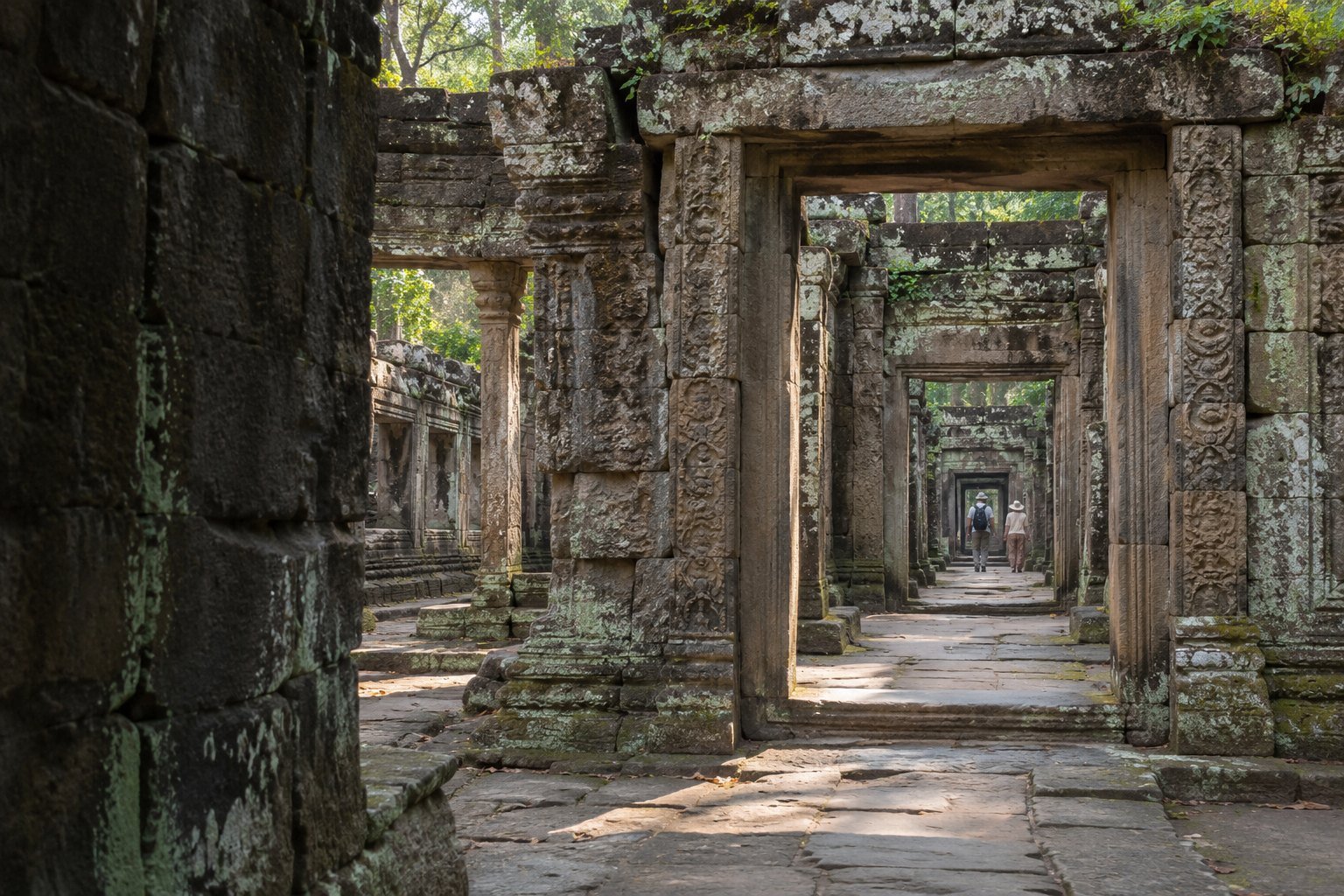
AI-generated illustration of Preah Khan’s layered doorways. Give this larger visit more time than the later stops.
The Angkor Grand Circuit rewards a little restraint. Preah Khan deserves a proper wander, Neak Pean brings water into the landscape, and the brick towers of East Mebon and Pre Rup offer a different view of Angkor. Trying to give every stop exactly the same time misses what makes the route interesting.
This guide builds a day around five main temples, with shorter versions for heat, tired legs or a limited appetite for another climb. It suits travellers who have time beyond Angkor Wat and the best-known Small Circuit stops, or who deliberately prefer these northern and eastern monuments.
This guide contains affiliate links. If you book or buy through them, Taylor’s Trailblazing Travels may receive a commission at no extra cost to you.
A varied temple day beyond the main Angkor Wat, Bayon and Ta Prohm combination.
Around 1½–2 hours for Preah Khan, with room to stop at carvings.
Choose either East Mebon or Pre Rup after the three northern stops.
The actual temples, pickup points, finish time and whether a guide is included.
Choose the Angkor Grand Circuit that suits your day
The circuit name describes a touring route through a much larger heritage landscape. Angkor includes reservoirs, roads, settlements and many monuments; it is not one enclosed attraction with a single entrance and exit.[2] Transport connects the temple visits, so a short-looking list can still occupy most of the day.
A useful starting order is Preah Khan → Neak Pean → Ta Som → East Mebon → Pre Rup. Ask your driver to confirm the roads and collection points for that day. The arrows show the visiting sequence, not a walking route through the forest.
Scroll sideways to read the full table.
| Your priority | Suggested approach | The trade-off |
|---|---|---|
| A broad look at the Grand Circuit | Visit all five, starting at Preah Khan | The two brick temples come later, when you may prefer a shorter visit |
| Less climbing and a shorter day | Preah Khan, Neak Pean and Ta Som | You leave out the elevated brick temples; the remaining route still has uneven surfaces |
| Fresh legs for steps and open terraces | Pre Rup, East Mebon, Ta Som, Neak Pean, Preah Khan | You must reserve enough energy and time for a substantial final visit |
If this is your only Angkor day and Angkor Wat, Bayon or Ta Prohm are your main reasons for coming, prioritise those. The Grand Circuit is most useful as its own outing, rather than a list squeezed into the spare hour after another circuit.
Back to top ↑Give the day a realistic time budget
APSARA suggests 1½–2 hours for Preah Khan, about 40 minutes for Neak Pean, 40–60 minutes for Ta Som, 30 minutes for East Mebon and around 40 minutes for Pre Rup.[3][4][5][6][7] Those are helpful starting points, but they do not include your whole day from the hotel.
Scroll sideways to read the full table.
| Part of the day | Time allowed | What it covers |
|---|---|---|
| Preah Khan | 1 hour 45 minutes | A substantial visit, rather than a quick crossing |
| Neak Pean | 45 minutes | The approach and permitted circuit |
| Ta Som | 45 minutes | The temple and outer gate details |
| East Mebon | 35 minutes | Elephants, brick towers and terrace views |
| Pre Rup | 40 minutes | A visit with an optional climb |
| Hotel journeys | 90 minutes altogether | 45 minutes each way from a Siem Reap base |
| Four journeys between temples | 60 minutes altogether | An average allowance of 15 minutes per move |
| Food, water and proper pauses | 60 minutes | Time out of the sightseeing schedule |
That makes eight hours. A 06:45 hotel departure would put the return around 14:45 if the visits and journeys follow these allowances. Replace the driving times with your driver’s estimate for your hotel; a long lunch, rain or a more detailed guided visit can extend the day.
A government announcement gives 06:00–18:30 for most temples and 06:00–19:00 for Pre Rup, while the temple pages show shorter hours.[15] The 07:30 start in this example fits both. Confirm current access before arranging an earlier start or sunset visit.
Put the expected activity hours into the Itinerary Pace Checker alongside the rest of your Siem Reap stay. It assesses the times you enter, so use your own arrival and departure arrangements rather than treating every hotel night as a full sightseeing day.
Back to top ↑Preah Khan: give the largest visit room to unfold
Preah Khan was dedicated in 1191 during Jayavarman VII’s reign. It served a much wider community than a single shrine, including religious teaching. APSARA highlights the Hall of Dancers, carved pediments, garudas on the outer enclosure and the unusual two-storey structure with round columns.[3]
Choose a few of those details to look for, then allow time between them. Repeated doorways can draw you onwards so quickly that the visit becomes a search for the way out. A guide is particularly useful here if you want help understanding how the buildings relate to each other.
Before entering, agree where the driver will collect you. A pickup on another side only saves walking if that route is open and both of you understand the arrangement. Photograph the vehicle and save the driver’s contact details; the words “outside the temple” are not a precise meeting point.
If Preah Khan absorbs longer than expected, let it. Cut a later stop instead of hurrying through the part of the day you are enjoying most. Equally, if the stone corridors already feel repetitive, that is useful information: the shorter circuit may suit you better.
Back to top ↑Neak Pean and Ta Som: change the rhythm
Neak Pean: include the approach in your visit
Neak Pean occupies an artificial island in the northern reservoir, Jayatataka. Its central sanctuary and pools belong to a design associated with healing water and Buddhist symbolism.[4] APSARA’s later visitor update describes a replacement bridge and marked circuits through the site.[9]
The approach is part of the stop, rather than dead time to subtract from it. Look across the reservoir before focusing on the shrine. Follow the current route around the pools and leave room for people passing on the walkway. A photograph of a water-filled scene cannot tell you what levels or vegetation will look like on your date.

Ta Som: look beyond the tree
Ta Som is a smaller complex from Jayavarman VII’s reign, with face towers on its east and west outer gates. Its tree, carved pediments and figures of devatas reward attention beyond one doorway photograph.[5]
Ask your guide or the staff which permitted route includes the tree-covered gate. A shorter temple does not need to become a race: spend a few minutes looking at the carving, then compare the gate with the structure around it. If a group occupies the view you wanted, continue to another detail without blocking the passage.

East Mebon and Pre Rup: decide how much climbing you want
East Mebon: elephants and an island without its lake
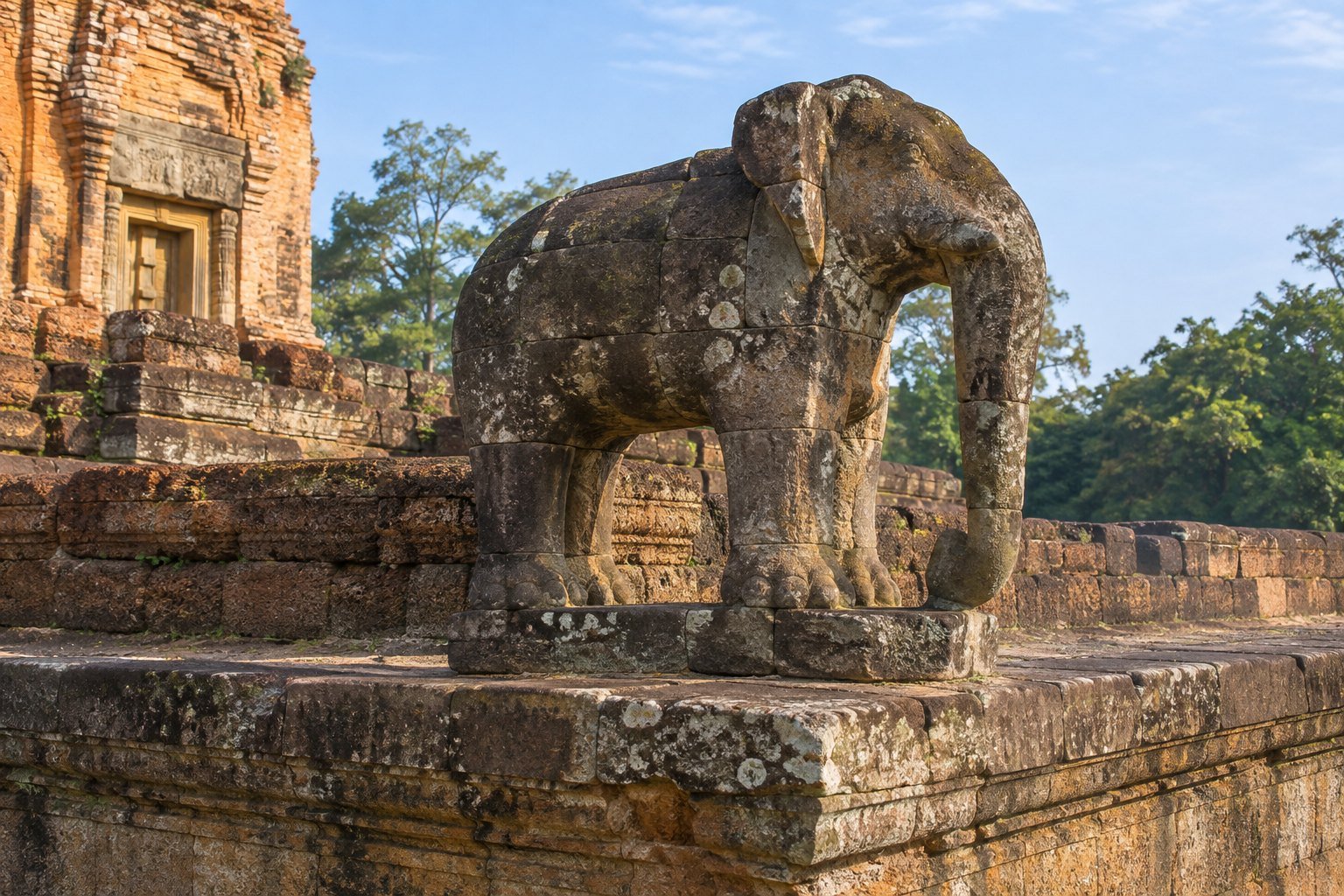
East Mebon once stood within the East Baray reservoir. Today, the surrounding land makes that setting harder to imagine. The elephant sculptures at the corners of its first two levels and the brick sanctuaries help distinguish it from the forest temples earlier in the day.[6]
Make the elephants the focus if you want a shorter visit. There is no need to examine every lintel or climb every available stairway to appreciate the change in architecture. Keep a drink stop before this part of the route, rather than discovering that everyone is tired halfway up.
Pre Rup: make the upper terrace a choice
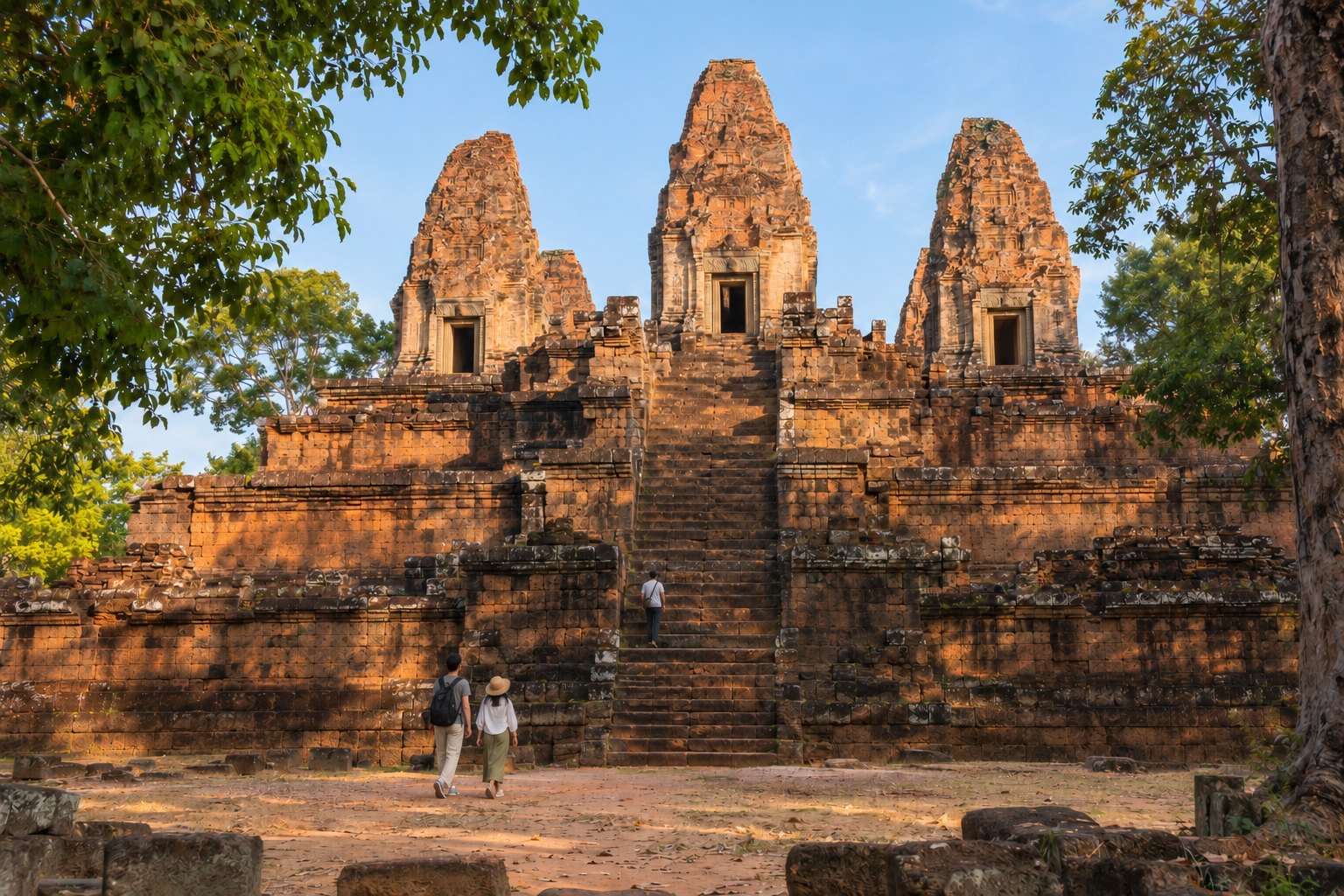
Pre Rup was founded in 961 under Rajendravarman II. Its tiered base and brick towers were built in a different period from Preah Khan and Ta Som; APSARA identifies it with Hindu worship of Shiva.[7]
Look at the steps before deciding whether to climb. If they are uncomfortable for anyone in your party, enjoy the permitted lower areas or finish the day here without going up. The descent deserves as much thought as the ascent.
Sunset at Pre Rup needs a different day plan. Confirm the current closing time, weather and pickup arrangements. A long gap after the other temples may be better spent resting in Siem Reap than waiting at the site. If the main circuit has been enough, keep the afternoon visit and finish there.
What to cut, and when an extra stop makes sense
Decide what you would drop before the day starts. Otherwise, the last temple can become an obligation simply because it was written on the driver’s list.
Scroll sideways to read the full table.
| How the day is going | A useful adjustment |
|---|---|
| You enjoyed Preah Khan and want more detail | Keep the time there; visit Neak Pean and Ta Som, then return to town |
| You want one brick temple | Choose East Mebon for the elephant sculptures, or Pre Rup for its tiered form and optional climb |
| Steps have become tiring | Shorten or omit the elevated visits; do not compensate with another demanding temple |
| You are still interested and have time | Consider a brief Srah Srang stop, with Banteay Kdei only if you want another substantial visit |
Srah Srang is a reservoir beside Banteay Kdei, whose late twelfth- to early thirteenth-century buildings give you another temple option.[10][11] Treat these as additions agreed with the driver, not assumed inclusions. For planning, allow roughly 15–20 minutes for a short waterside pause, or another 45–60 minutes for Banteay Kdei, plus any extra driving.
Banteay Srei is a separate extension. If you want it as well, discuss a different day plan and what will be removed. A tour advertised as “Grand Circuit” may include more or fewer stops than this guide; compare the actual itinerary.
Back to top ↑Buy the right pass and agree the transport
The five main temples are covered by the Angkor Pass. The circuit name does not require a separate Grand Circuit ticket.[1] On 14 November 2026, Angkor Enterprise lists US$37 for one visiting day, US$62 for three days within seven days, and US$72 for seven days within thirty days.[8] Buy through Angkor Enterprise and keep the pass available for checks.
A driver gives you transport and flexibility between stops; a licensed guide adds interpretation inside the temples. Confirm which service you are paying for. A tuk-tuk offers an open-air journey, while a car gives you air conditioning between visits. Neither removes the walking at the monuments.
For a guided comparison, Remorque Cambodia Tour’s Grand Circuit listing on Viator covers these five temples with a licensed guide, air-conditioned transport and hotel pickup. Admission is separate.[14] Check the selected departure, duration and flexibility; its programme need not follow the timings above.
Before confirming any arrangement, agree the vehicle price or per-person price, pickup time, included temples, lunch arrangements, guide language and return point. If you may shorten the outing, establish how that affects the price. A clear agreement makes it easier to finish when you have had enough.
Back to top ↑Make the walking comfortable and the visit respectful
Wear clothing that covers shoulders and knees, keep to the permitted routes and leave carvings and fragile stonework untouched. Angkor’s visitor code also discourages backpacks, tripods and high heels inside temples.[12] Pack lightly, with water, sun protection, your pass and any essentials you need during the walk.
Footwear should already fit comfortably and grip the ground well. APSARA’s wet-weather advice specifically highlights slippery temple stone and the need for suitable shoes.[13] If you need to replace a pair before travelling, the Skechers UK Outlet is one place to compare options. Check the individual shoe’s fit and sole, and wear it in before this full day of walking.
If someone has limited mobility, ask about the actual surfaces, thresholds, stairs and vehicle access at each chosen stop. A shorter itinerary reduces the amount to do; it does not make an ancient temple step-free.
For most travellers, the best starting plan is three northern temples with a choice at lunch: one brick temple, both, or an early return. Anyone keen on architecture can plan for all five by giving the circuit its own day. The successful version is the one that leaves you time to notice what you came to see.
Back to top ↑Questions travellers ask
Is the Grand Circuit automatically quieter than the Small Circuit?
Do not choose it on that promise alone. The five stops offer a different mix of architecture and landscape, but groups can arrive at any of them. Flexible timings and the option to linger at a less busy part of a temple are more useful than expecting an empty route.
Can I cycle this itinerary?
You can plan a cycling version, but rebuild the time budget around the ride from your accommodation, the journeys between temples and your comfort in the heat. The eight-hour example assumes motorised transport. A three-temple outing may be a better starting point than keeping all five and rushing the visits.
Sources and checks
Temple descriptions and visitor information were checked against APSARA, Angkor Enterprise, UNESCO and the government’s revised hours announcement. The eight-hour day is an editorial planning model with explicit visit, transport and break allowances. Route cuts reflect interests and energy rather than measured crowd predictions. Images are AI-generated illustrations, not photographs taken on location.
- Angkor Enterprise — official FAQs and circuit coverage
Checked 14 November 2026. - UNESCO World Heritage Centre — Angkor
Checked 14 November 2026. - APSARA National Authority — Preah Khan
Checked 14 November 2026. - APSARA National Authority — Neak Pean
Checked 14 November 2026. - APSARA National Authority — Ta Som
Checked 14 November 2026. - APSARA National Authority — East Mebon
Checked 14 November 2026. - APSARA National Authority — Pre Rup
Checked 14 November 2026. - Angkor Enterprise — available tickets
Prices and validity checked 14 November 2026. - APSARA National Authority — Neak Pean bridge and visitor circuits
Checked 14 November 2026. - APSARA National Authority — Srah Srang
Checked 14 November 2026. - APSARA National Authority — Banteay Kdei
Checked 14 November 2026. - Angkor Enterprise — Angkor Visitor Code of Conduct
Checked 14 November 2026. - Agence Kampuchea Presse — APSARA wet-weather visitor advice
Checked 14 November 2026. - Viator — Remorque Cambodia Tour Grand Circuit offering
Itinerary and inclusions checked 14 November 2026. - Cambodian government — revised temple visiting hours, August 2024
Checked 14 November 2026; seasonal adjustments are allowed.
Illustrations in this article were created for Taylor’s Trailblazing Travels. Third-party photographs, where used, are credited beside the image or in the source list.