
Cambodia or Laos: Temples, Slow Travel and Nature Compared
Compare the days you want to spend, from Angkor’s stonework to river towns and mountain scenery.
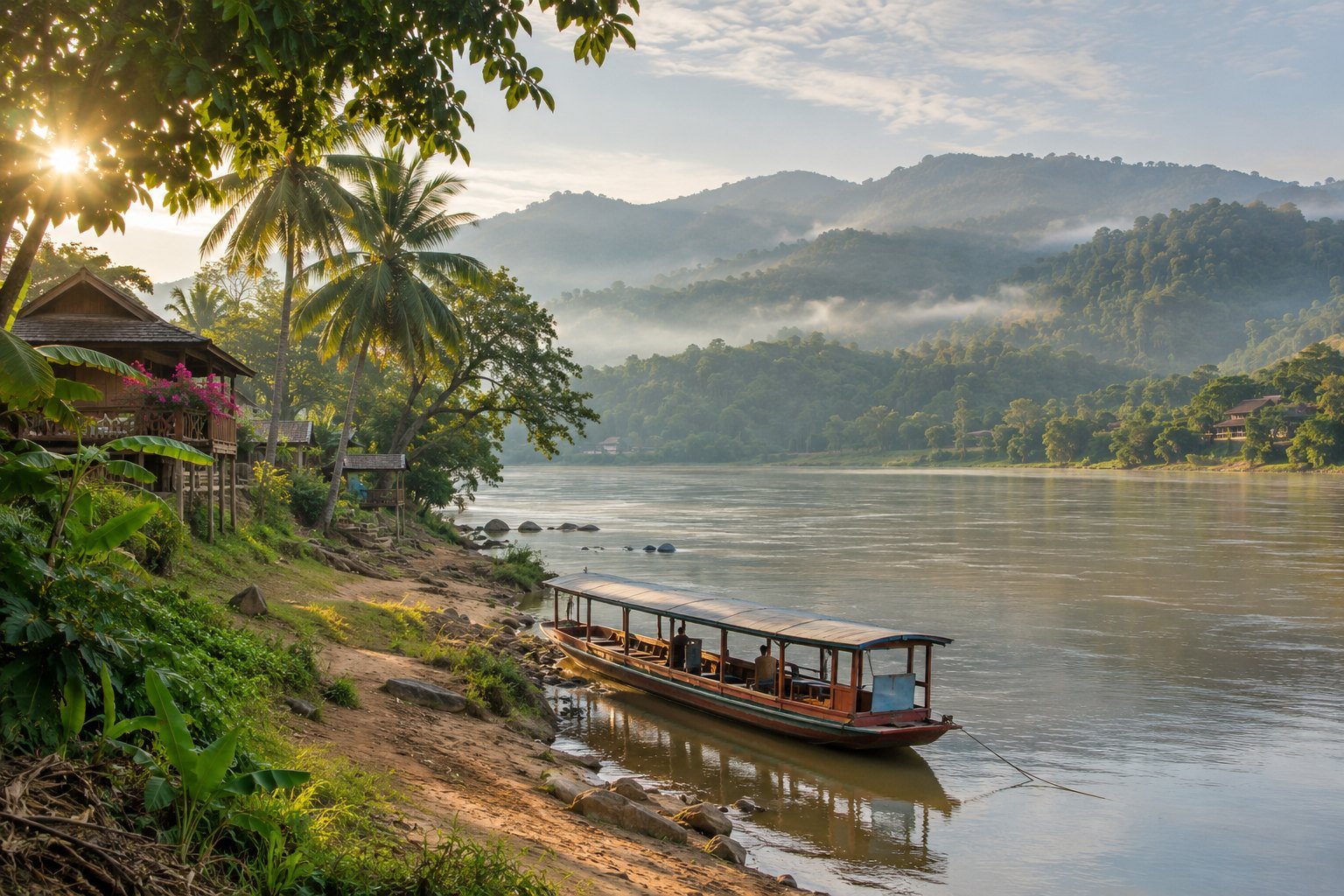
AI-generated illustration inspired by the Mekong landscape around Luang Prabang.
Choose Cambodia if Angkor is the experience you would regret missing. Choose Laos if your ideal trip combines a historic riverside town with limestone scenery, waterfalls and time to linger. For slow travel, the strongest comparison is between a few well-chosen bases: Siem Reap with a carefully planned southern extension, or Luang Prabang with the northern railway corridor.
Neither country guarantees quiet streets, cheap private excursions or effortless journeys. The better choice is the route that leaves you enough uncommitted days to enjoy what brought you there.
This guide contains affiliate links. If you book or buy through them, Taylor’s Trailblazing Travels may receive a commission at no extra cost to you.
Start with Cambodia and allow more than a rushed stop.
Build a Lao route around the landscapes you want to linger in.
Protect full days without changing hotels.
Smoke, rain and local advice can alter the best route.
Cambodia vs Laos: the quick choice
Swipe or scroll sideways to see the whole table.
| Your priority | Start with | Why it fits |
|---|---|---|
| A major archaeological journey | Cambodia | Angkor offers an extensive landscape of Khmer capitals and monuments, rather than one standalone temple.[1] |
| A heritage town with Buddhist life woven into the visit | Laos | Luang Prabang combines monasteries, traditional architecture and a riverside setting.[2] |
| Karst scenery and outdoor activities on one northern route | Laos | Pair Luang Prabang with Vang Vieng, choosing activities and operators carefully.[3][4] |
| Angkor followed by riverside countryside | Cambodia | Kampot adds a different setting, but getting there from Siem Reap requires substantial travel time.[5][7][8] |
| Seven nights with very little moving around | Either | Choose one principal base and resist adding a distant region simply because it is in the same country. |
If you are evenly split, compare flights into your first base and home from your final one before deciding. A convenient arrival and departure can matter more than a small difference in daily spending.
Back to top ↑Temples: Angkor’s archaeology or Luang Prabang’s living heritage?
Angkor suits travellers who want several days of discovery around a major historic landscape. UNESCO describes a site covering roughly 400 square kilometres, with remains of Khmer capitals dating from the ninth to the fifteenth centuries. Angkor Wat is the headline, but the wider complex changes the scale of the experience.[1]
Allow time to absorb what you are seeing. A sensible Cambodian holiday can centre on Siem Reap, with temple days separated by a late breakfast, a pool afternoon or a less structured day. Someone who enjoys archaeological detail may find this more rewarding than repeatedly changing hotels.
Luang Prabang offers a different rhythm. Its heritage includes Lao and European architectural influences, monasteries and religious traditions that remain part of town life. The appeal is the relationship between temples, streets and the rivers, as well as individual buildings such as Wat Xieng Thong.[2]
Both countries mix historic sites with living communities; the difference here is how you want to spend your days. If you observe morning almsgiving in Luang Prabang, treat it as a religious practice, keep a respectful distance and avoid interrupting participants for photographs.[1][3]

What kind of nature and downtime do you want?
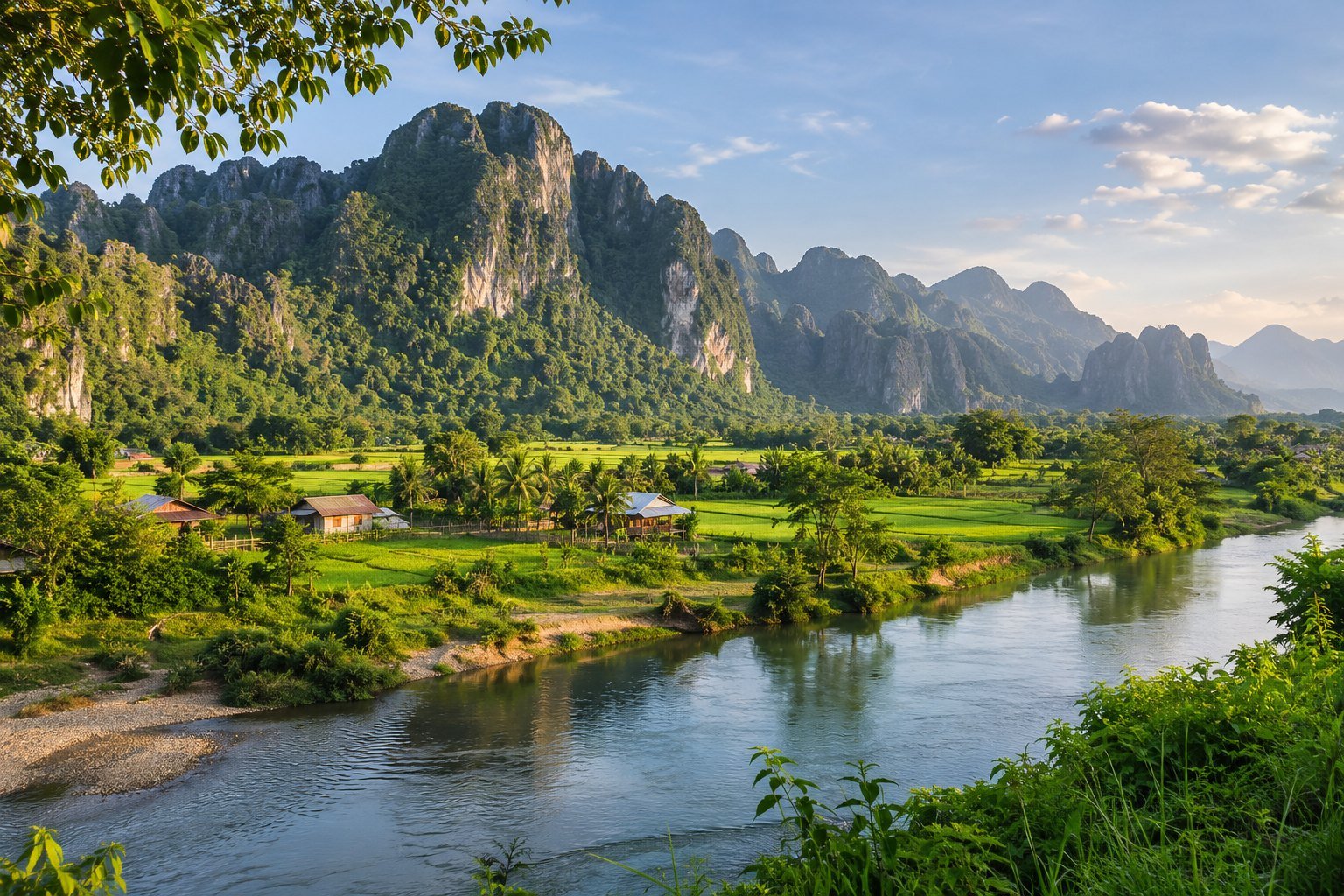
For the northern Laos route, Luang Prabang provides access to Kuang Si waterfall and the Mekong landscape. Vang Vieng adds limestone scenery, caves and activities around the Nam Song. It is an established tourism destination, so choose the location of your accommodation and the character of your excursions carefully; the country name alone does not promise solitude.[3][4]
Kampot offers a gentler change of setting after Siem Reap: riverside time, pepper-growing countryside and outings towards nearby hills or caves. Decide whether you want to stay in town or farther along the river, then include the cost and time of getting out for meals and trips. Kampot itself is a riverside base, so do not book it expecting to walk from your room onto a sea beach.[5]
Southern Laos deserves its own decision. A route around Pakse, the Bolaven Plateau, Wat Phou and Si Phan Don brings waterfalls, coffee-growing landscapes, Khmer heritage and Mekong islands. These are not convenient add-ons to a short Luang Prabang–Vang Vieng holiday. For ten nights, choose north or south unless a particular connection and a faster pace genuinely suit you.[6]
Seven, ten or fourteen nights: leave room to stay still
These are suggested allocations, not packages or promises about available transport. Each assumes arrival near the first base and departure from Phnom Penh or Vientiane after the final stay. Reverse the route if your flights work better that way. These totals count nights in Cambodia or Laos; allow separately for international travel.
Swipe or scroll sideways to see the whole table.
| Time in the country | Cambodia | Laos |
|---|---|---|
| 7 nights | Siem Reap 5 → Phnom Penh 2. One hotel move; leave Kampot for another trip. | Luang Prabang 5 → Vientiane 2. One hotel move; leave Vang Vieng out if unhurried heritage time matters most. |
| 10 nights | Siem Reap 4 → Phnom Penh 2 → Kampot 3 → Phnom Penh 1. Three hotel moves, including the return for departure. | Luang Prabang 5 → Vang Vieng 3 → Vientiane 2. Two hotel moves along the northern corridor. |
| 14 nights | Siem Reap 5 → Phnom Penh 3 → Kampot 5 → Phnom Penh 1. Keep three moves and use the extra nights for rest and outings. | Luang Prabang 7 → Vang Vieng 5 → Vientiane 2. Keep two moves, with space for outdoor plans to shift around the weather. |
The longer examples deliberately add depth rather than destinations. Five nights in Vang Vieng suits someone who wants activities and rest days; it may be excessive if you only want one viewpoint. Move those nights to Luang Prabang, or shorten the holiday, rather than filling them automatically.
Here is a useful test of pace: ten nights normally provide nine full days between arrival and departure. If every hotel change uses a different one of those days, the Cambodian example leaves six full days without changing hotels; the Lao example leaves seven. Transfer days still have usable hours, but this conservative count shows how easily a supposedly relaxed route becomes busy.
For seven nights, another good answer is a single base with suitable return flights. Use the Itinerary Pace Checker to enter your actual stops, nights and estimated door-to-door travel hours before adding another place.

Compare hotel-to-hotel journeys, not just the time on board
The Siem Reap–Kampot combination needs particular care. Giant Ibis advertises six hours from Siem Reap to Phnom Penh and four hours from Phnom Penh to Kampot. That is ten hours on buses across the first two moves, before getting to departure points, boarding and reaching your accommodation.[7][8]
For a planning example, add one hour of combined local travel and boarding time to each journey: seven hours plus five hours, or twelve hours altogether. Allow more if your pickup arrangements require it. The later return from Kampot for departure is additional. Giving Phnom Penh its own stay breaks up the journey, but does not remove the travel.
Laos’ railway makes the Luang Prabang–Vang Vieng route practical, but the station is not your hotel. Luang Prabang’s official tourism site places its railway station about 15 kilometres, or approximately 30 minutes, from town. Add the required arrival time, the train journey and transport at the other end before deciding what else fits that day.[9][10]
Check departures for your actual dates and whether a ticket seller includes local transfers or booking fees. Keep the final night in your departure city when an otherwise tight connection would leave little room for delays. The allocations above include that buffer; they do not assume you can race from a distant base to an international flight.
Which is cheaper? Price the whole route
Neither country is the automatic budget winner. Compare the same number of nights, room standard and organised activities, then add flights, visas, intercity travel, station or airport transfers and any final-night accommodation needed for the journey home.
A cheaper flight can outweigh dearer rooms: for two people, saving £120 each on flights more than covers an extra £20 per room for ten nights, leaving £40 to spare. Use quotes for your own dates to see which route costs less.
Then compare the outings you actually want. A shared sightseeing day and a private guided nature excursion are different purchases, even if both appear under “activities”. Ask what the price covers: transport, admission, equipment, guide, meals and the size of the group. Do not judge the holiday from the cheapest room or a single train fare.
The Travel Budget Calculator can help you compare full-trip totals. Enter your own quotes in pounds and keep shared room costs separate from per-person costs.
Back to top ↑Season, smoke and safety can change the answer
Laos’ tourism authority broadly describes October to March as the drier period, with cooler conditions in northern mountains. Later in the dry season, clearer weather is not assured: an FAO study of earlier years found pollution associated with seasonal fires, with the strongest pattern around March and April. Treat that as a reason to check current air quality and fire conditions, not a prediction for your dates or a guarantee that Cambodia will be unaffected.[11][12]
In wetter months, leave flexibility around outdoor days. FCDO guidance for both countries warns about flooding and transport disruption; in Laos, heavy rain can also cause landslides and make journeys much longer. Waterfalls, caves and river trips need a fresh local conditions check, even when a tour is being sold.[13][14]
For trekking, stay on established routes and use reputable, knowledgeable guides. Both countries have landmine or unexploded-ordnance risks: do not improvise shortcuts into remote countryside or touch unfamiliar metal objects. Check equipment, insurance cover and operator standards for kayaking, climbing or other adventure activities; attractive scenery is not evidence that an activity is well run.[13][14]
At our 15 November 2026 check, FCDO advised against all but essential travel within 20 kilometres of Cambodia’s land border with Thailand, and reported Thailand–Cambodia land crossings suspended. For Laos, it advised against all but essential travel to Xaisomboun Province and urged particular care when choosing crossings from southern Laos towards Cambodia or Thailand. These are specific regional warnings, not a statement that every Laos–Cambodia crossing is closed. Recheck the full official advice before fixing an overland route.[15][16]
Back to top ↑Check entry paperwork, then commit to the better-fitting route
For full British citizen passport holders, current FCDO guidance says tourist visas are required for both countries and normally allow a 30-day visit. Cambodia’s free e-Arrival submission is separate from the visa and should be completed within seven days before arriving by air.[17][18]
Laos’ Digital Immigration Form also sits alongside the visa. FCDO currently specifies completion within three days before arrival and within three days before departure at Wattay, Luang Prabang and Pakse airports and Lao–Thai Friendship Bridge I. Do not assume every border point has identical procedures. Check passport validity and the rules for your nationality and chosen crossing before booking.[17]
Choose Cambodia when Angkor is the centre of the holiday and you are willing to give southern stops the time their transfers need. Choose Laos when the Luang Prabang–Vang Vieng combination best matches the balance of town life and scenery you want.
Back to top ↑Cambodia or Laos: frequently asked questions
Which is better for temples?
Choose Cambodia for several days exploring Angkor’s archaeological landscape. Choose Laos for a holiday centred on Luang Prabang’s monasteries and heritage streets. The distinction is the experience you want.[1][2]
Is Laos always quieter than Cambodia?
No. Vang Vieng is a developed tourism base, and a lively accommodation area can feel very different from a quieter setting nearby. Look at the actual location, recent reviews and the activities you intend to book, rather than treating a whole country as a peaceful retreat.[4]
Can I visit both countries in two weeks?
You can plan it if suitable flights or a carefully checked overland route fit, but combining countries adds another transfer and entry process. For a slow holiday, one country with two or three bases is usually the more coherent choice. Check current border advice before assuming an overland link will work.[15][16]
Does Laos have beaches?
Laos is landlocked. River settings and the Mekong islands of Si Phan Don can offer downtime, but they are not a substitute for a sea-and-sand holiday. If a sea beach is essential, make it a separate requirement when comparing your routes.[6]
Should I avoid northern Laos in March or April?
Smoke is a material planning consideration, especially if clear mountain views and outdoor days are the main reason for travelling. Historical fire-season patterns cannot tell you the conditions on your dates. Check current information and flexible booking terms before deciding.[12]
Which country works better without strenuous activities?
Either can work if you choose outings individually. Make temple steps, uneven surfaces, walking distance, vehicle access and hotel access part of your enquiries. A holiday advertised as relaxed may still include demanding walks, so ask for the actual day’s arrangements.
Sources and further reading
Sources checked on 15 November 2026. Official rules, service details and prices can change; check the linked provider or authority again before booking and departure.
- UNESCO World Heritage Centre: Angkor
- UNESCO World Heritage Centre: Town of Luang Prabang
- Tourism Laos: Luang Prabang Province
- Tourism Laos: Vientiane Province and Vang Vieng
- Cambodia coastal development authority: tourism in Kampot Province
- Tourism Laos: Champasak Province
- Giant Ibis: Siem Reap to Phnom Penh
- Giant Ibis: Phnom Penh to Kampot
- Tourism Luang Prabang: access and transport
- Baolau: Luang Prabang to Vang Vieng trains
- Tourism Laos: Laos is open and simply beautiful in any season
- FAO: agricultural practices and fires as contributors to air pollution in Laos
- FCDO: Laos safety and security
- FCDO: Cambodia safety and security
- FCDO: Cambodia travel advice and regional warnings
- FCDO: Laos travel advice and regional warnings
- FCDO: Laos entry requirements
- FCDO: Cambodia entry requirements
Illustrations in this article were created for Taylor’s Trailblazing Travels. Third-party photographs, where used, are credited beside the image or in the source list.


