A 10-Day Cardamom and Cambodia Coast Eco-Travel Route
Four nights around Chi Phat, three on the mainland coast and enough space to change plans when conditions require it.
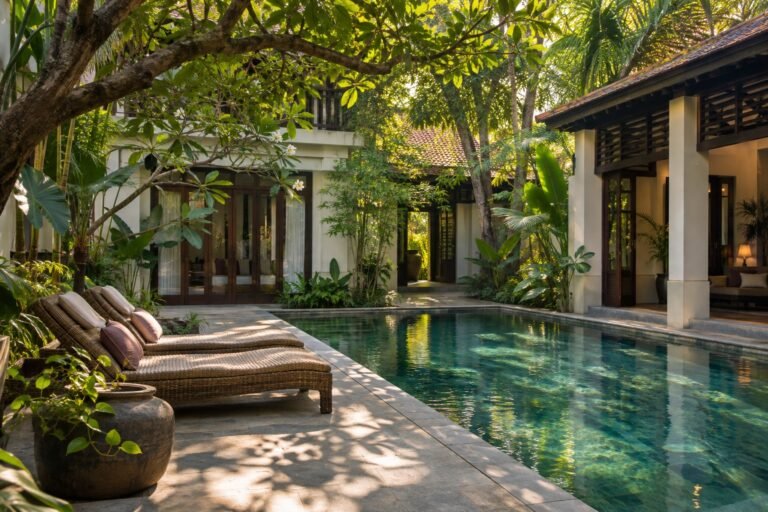
AI-generated illustration of the Cardamom foothills. Guided forest time is the focus of this route.
This Cardamom Mountains coast itinerary gives the forest more than a hurried overnight stop. Spend four nights in Chi Phat, book activities through its community ecotourism team, then move to Kep for three quieter nights beside the mainland coast. Phnom Penh provides an arrival night and a final departure buffer.
The ten days include arrival, three substantial road-transfer days and departure. The plan uses nine nights: Phnom Penh 1, Chi Phat 4, Kep 3, Phnom Penh 1. It suits travellers comfortable with simple village accommodation and flexible outdoor plans. The standard route returns to a room each night; any forest overnight must replace an existing night rather than appear as an uncounted extra.
Phnom Penh 1 → Chi Phat 4 → Kep 3 → Phnom Penh 1.
Named community booking team, suitable guide and agreed route.
A quiet mainland stay in Kep with no island ferry required.
Confirm road access, local conditions and the Chi Phat–Kep transfer first.
The route, nine nights and three decisions before booking
Before paying, check FCDO’s 20 km Thai-border restriction against the exact roads, village and trek. Older onward-Bangkok instructions are unusable while crossings remain suspended.[1] This plan approaches Chi Phat from Phnom Penh through Andoung Teuk and then travels towards Kep. It does not require Koh Kong town, a Tatai lodge or a Thailand crossing. Those are separate location and access decisions, not interchangeable versions of the same stay.
First, obtain an agreed Chi Phat arrival and departure plan. Second, select activities that everyone can complete in the conditions expected. Third, hold a flexible coast booking and the final Phnom Penh night. A province name alone is too broad to assess a particular trail or lodge.
Swipe within the table to see all columns.
| Day | Purpose | Overnight |
|---|---|---|
| 1 | Arrive in Phnom Penh; confirm the next morning’s transfer. | Phnom Penh · 1 night |
| 2 | Full transfer day through Andoung Teuk to Chi Phat; community briefing. | Chi Phat · night 1 of 4 |
| 3 | One guided forest outing, matched to ability and current conditions. | Chi Phat · night 2 of 4 |
| 4 | A river or village activity; keep the rest of the day light. | Chi Phat · night 3 of 4 |
| 5 | Weather reserve or a locally arranged cultural activity. | Chi Phat · night 4 of 4 |
| 6 | Full transfer day from Chi Phat towards Kampot and on to Kep. | Kep · night 1 of 3 |
| 7 | Coastal recovery day with short local outings. | Kep · night 2 of 3 |
| 8 | Optional confirmed nature walk or another quiet coast day. | Kep · night 3 of 3 |
| 9 | Daytime road return to Phnom Penh. | Phnom Penh · final night |
| 10 | Departure, with airport transfer arranged separately. | No night included |
Put these bases into the Trip Itinerary Planner before buying transport. If you arrive late on Day 1, the night still serves its purpose; a dawn arrival followed immediately by the whole Chi Phat transfer is a different, more tiring plan.
Back to top ↑Book a community stay with specific commitments
Wildlife Alliance identifies Chi Phat as a community ecotourism project with resident guides, homestays and guesthouses, managed through an elected community committee. Its project page links directly to the community’s booking channel.[2] That provides an identifiable starting point. It does not certify every environmental claim made by every business in the wider Cardamoms.
Ask the Chi Phat community booking team for one written outline covering your four nights, arrival connection, activity names, guide arrangements, meals, equipment, group size and departure transfer. Its current contact page publishes a booking email and telephone numbers; use the current details there rather than an old forwarded message.[9]
Useful conservation questions are practical: who provides the room and guide, how is the community paid, how is drinking water supplied, and what happens to rubbish? Ask for wildlife viewing without feeding, handling or baiting, and for a clear policy on changing an outing when weather or access makes it unsuitable. A smaller list of well-run activities is enough.
The published accommodation information describes limited electricity and simple rooms without air conditioning or hot water.[6] Confirm your own room’s bathroom, mosquito net, charging arrangements and route back after dinner. If these conditions would make the stay uncomfortable, resolve that before committing to four nights.

Days 1–2: reach Chi Phat without a rushed final connection
Use Day 1 in Phnom Penh to rest, obtain the cash requested by the community, save confirmations and agree where your driver or bus will collect you. Keep the city visit small. The next morning needs an early departure, not an evening spent recovering from an overfilled arrival day.
Chi Phat’s access page directs visitors through Andoung Teuk on NR48, reached from NR4 via Sre Ambel. It describes the final approach as about 17 km by road, roughly 40 minutes before extra waits, or about two hours by boat. A village vehicle transfer also involves the local river crossing; book the complete connection with the community.[3]
Hold the whole day for travel. A seven-to-nine-hour door-to-door block is a cautious planning allowance for the Phnom Penh approach, breaks and the final connection, not a published through-service timetable. Ask the booking team whether the practical choice that week is a vehicle, shared boat or another arranged transfer, and obtain the latest arrival time they can accommodate.
If taking an intercity bus, have both the bus company and community confirm the Andoung Teuk stop, meeting point and what happens if the bus is late. Buy the segment to your agreed meeting point; continuing all the way to Koh Kong town would take you away from this route. Do not rely on the older access page’s fixed bus times or onward Thailand advice.
For a boat, confirm a suitable lifejacket for each passenger, the loading arrangement and whether the trip is running in the current conditions. A road transfer can be worth the extra cost for someone who cannot board a small boat comfortably. Ask about the actual crossing and steps rather than assuming that “private transfer” means door-to-door accessible travel.
Back to top ↑Days 3–5: choose the forest day by distance, not its label
Use a reputable guide and established routes: Cambodia has unmarked mines and unexploded ordnance.[7] The activity briefing should settle the precise route, distance, turnaround time, communications and what happens if someone needs to stop. Save a contact at your accommodation and agree when the group should be back.
Day 3: a full guided outing, if it suits your group
Chi Phat’s published Silver Meadow itinerary lists 26–30 km and eight to nine hours, despite describing it as easy. That is a substantial hot-weather walking day. Choose it only after the community confirms the current walking route and your group is comfortable with that distance.[4]
For a shorter day, request a specific guided alternative with a distance and return time in writing. Its availability is a booking condition, not a guaranteed menu item. If no suitable forest walk is operating, use the river or village option instead. Keep the trip focused on learning about the place rather than reaching a remote viewpoint at any cost.

Day 4: river or village, with a free afternoon
The published sunrise birdwatching outing uses motor and rowing boats and runs about 05:00–12:00. Calling it a half day still means an early start and six to seven hours out. The activity menu also offers a cooking session; confirm the current programme, timing and inclusions rather than assuming both fit in the same day.[4]
Choose the river outing only when the crew confirms it is appropriate. Look for birds and forest scenery without treating sightings as an entitlement. On a village day, pay for the experience you book, ask before photographing residents and avoid turning an informal encounter into an uninvited home visit.
Day 5: preserve the reserve day
Use this day to move an activity postponed by weather, enjoy a quieter village programme or simply rest. Heavy monsoon rain can disrupt roads; fast currents make river activities hazardous.[7] Check conditions again before committing to the next day’s transfer. If the guide cancels a forest or water activity, choose a different activity rather than hiring an unbriefed substitute.
The published activity list marks the Million Tree Nursery visit and ranger patrol as unavailable. They are excluded from this plan. Prices also differ between parts of the community website, so request a current itemised quote instead of using an old tariff to promise a total.[5]

Day 6: give the coast transfer a full day
Arrange this journey when you first book Chi Phat, then reconfirm it before your final village evening. The community access guidance describes morning departures and onward travel towards Kampot and Kep, but it does not establish a single guaranteed through bus for your date.[3]
The intended route leaves through Andoung Teuk, follows NR48 back towards the NR4 connection, and continues southeast towards Kampot and Kep. It avoids an unnecessary journey through Koh Kong town. Ask whether the vehicle can continue after the local river crossing or whether a boat and road pickup must meet. One booking contact should explain the whole chain, including luggage and waiting charges.
Keep an eight-to-ten-hour door-to-door block free as a conservative planning allowance. This includes time for the village exit, possible waiting, the road journey and breaks; it is not a quoted journey duration. Tell the Kep hotel that arrival is uncertain and book no evening tour.
If the only acceptable connection requires an overnight in Phnom Penh, use Day 6 there and continue to Kep on Day 7. That reduces Kep to two nights while preserving the ten-day, nine-night total. If disruption is worse, cut the coast stay before sacrificing the final flight buffer.
Back to top ↑Days 7–8: a quiet mainland base in Kep
Kep gives this route a coastal change of scene without adding a ferry. The government’s coastal tourism page identifies Kep Beach, the Crab Market and Kep National Park as local attractions.[8] Treat the park’s current conditions and any guided route as separate checks when you arrive.
On Day 7, sleep late if needed, take a short seafront walk and choose a relaxed lunch. A market visit can be brief; there is no need to arrange a whole-day circuit to make it count. Ask for the total price before ordering and choose food you actually want rather than treating any particular seafood as compulsory.
Day 8 can hold one locally confirmed nature walk in the morning, with the distance and route agreed in advance. Keep to the current designated route and shorten it if heat or conditions call for it. Otherwise, a second coast day, a book and a shaded terrace are entirely consistent with the purpose of the trip.
Compare Kep accommodation on Agoda and Kep stays on Booking.com using the same dates and room requirements. Check the map, steps, distance to meals, drinking-water arrangements and the complete tax-inclusive price. A property calling itself eco-friendly still needs specific evidence about its practices; the label alone is not a reason to book.

Days 9–10: return to Phnom Penh before departure
Book a daytime road service on Day 9 and leave the rest of the day open. Compare Kep–Phnom Penh transport on 12Go, then verify the actual pickup location, operator, luggage allowance and arrival terminal. A search result for the route is not a confirmed hotel or airport transfer.
Use a six-hour door-to-door planning block until you have a dated service and local transfer details, then add contingency appropriate to your onward booking. Arrange one final Phnom Penh stay through Booking.com or directly with a hotel that confirms the check-in and airport pickup you need. The final night belongs in the itinerary even when it contains no sightseeing.
Day 10 is departure. If your flight leaves very early, prepare the previous evening and agree the pickup time. A buffer reduces the risk of a minor delay affecting the flight; it cannot make a weather-disrupted journey certain.
Back to top ↑Build a transparent budget and make the bookings count
Chi Phat’s current transfer and activity quote is the missing variable that matters most. The worksheet below deliberately keeps it visible. It is for two adults sharing one room, with nine nights and ten daily food allowances. These are suggested allowances, including accommodation taxes; check the current prices and inclusions before booking.
Swipe within the table to see all columns.
| Item | Working assumption | Two-person allowance |
|---|---|---|
| Phnom Penh accommodation | 2 nights × US$55 per shared room | US$110 |
| Chi Phat accommodation | 4 nights × US$20 per shared room | US$80 |
| Kep accommodation | 3 nights × US$70 per shared room | US$210 |
| Meals and drinking water | 10 days × US$18 per person × 2 | US$360 |
| Arrival and departure airport transfers | 2 × US$25 per vehicle | US$50 |
| Kep–Phnom Penh road seats | 2 × US$20 allowance | US$40 |
| Local transfers | Shared allowance | US$50 |
| Baseline subtotal | Excludes the three quote items below | US$900 |
| Add quote A | Complete Phnom Penh–Chi Phat transfer | Obtain a dated quote |
| Add quote B | Complete Chi Phat–Kep transfer | Obtain a dated quote |
| Add quote C | Selected guided activities and equipment | Obtain an itemised quote |
Your working total is US$900 + A + B + C. If those three confirmed quotes total US$300, the model becomes US$1,200; if they total US$500, it becomes US$1,400. Your actual total will depend on the confirmed transfers and activities. Remove any meals already included in an activity to avoid paying for them twice in the worksheet.
Add international flights, visa fees, insurance, personal purchases and a disruption reserve. A solo traveller needs separate room, vehicle and activity quotes; dividing this model by two would understate shared costs. If one extra Phnom Penh night becomes necessary, add its room and food cost before reworking the remaining dates.
Use the Hotel Comparison Calculator for actual accommodation quotes in one currency, then put the complete transfer blocks into the Itinerary Pace Checker. Neither tool verifies road conditions, a departure schedule or the community’s availability.
Carry the footwear and rain protection suited to your agreed activity, a refillable bottle, a small day bag and a way to protect documents from rain. Ask what the community supplies before buying or packing specialist camping equipment. Keep waste with you until an appropriate disposal option is available, and follow the guide’s directions around wildlife.
For ordinary arrival coordination, compare Airalo data options if needed; choose Cambodia and confirm eSIM compatibility and an unlocked phone.[10], [11] Save contacts and booking details offline, and ask the guide what communications arrangements support the forest outing.
Back to top ↑Frequently asked questions
Are ten days enough for both the Cardamoms and the coast?
Yes for this focused route: four Chi Phat nights, three Kep nights and two Phnom Penh nights around the journey. The ten days include travel and departure. Adding another remote lodge or an island stay would require extra days or a shorter stay at one of the existing bases.
Does this itinerary include a night camping in the forest?
The main plan sleeps in Chi Phat each night. If you choose a separately confirmed overnight forest trip, replace the relevant village night and two activity days, and update the room booking. Check the exact route, equipment, meals and current conditions before paying.
Can I explore the forest on my own?
The forest portion is planned with a suitable local guide and an agreed route. A downloaded map does not establish access, trail conditions or an emergency plan. Keep independent exploring to places the community confirms are appropriate, and do not improvise an off-trail shortcut.
Is the Silver Meadow outing suitable for a gentle holiday?
Its published distance makes it a substantial outing despite the operator’s label. Ask for an actual shorter guided option before booking; otherwise use a river or village programme. The route still works without that long walk.
Why choose Kep instead of an island or a Koh Kong lodge?
Kep keeps the coast stage on the mainland and gives the group three nights in one place after the community stay. An island adds ferry arrangements; a different Cardamom or Koh Kong lodge changes the access route and location checks. Choose those as a redesigned itinerary with new timings, rather than an automatic substitution.
Can this route run during a wet period?
Only with current local confirmation of the roads, crossing and selected activities. Keep the bookings flexible and be prepared to spend the reserve day in the village or shorten the forest stage. If a suitable safe activity and transfer plan cannot be confirmed, change destinations rather than forcing the original schedule.
Sources and checks
This guide draws on official visitor information, transport and activity providers, and current travel advice. Day plans and pacing choices are editorial recommendations; check time-sensitive details for your own travel dates.
- FCDO — Cambodia warnings and insurance
Checked 15 November 2026. - Wildlife Alliance — Chi Phat community ecotourism project
Checked 15 November 2026. - Chi Phat community — getting here
Checked 15 November 2026. - Chi Phat community — activity descriptions
Checked 15 November 2026. - Chi Phat community — activity availability list
Checked 15 November 2026. - Chi Phat community — accommodation information
Checked 15 November 2026. - FCDO — Cambodia safety and security
Checked 15 November 2026. - MPSEZ — Kep coastal tourism
Checked 15 November 2026. - Chi Phat community — current booking contacts
Checked 15 November 2026. - Airalo — Cambodia eSIM options
Checked 15 November 2026. - Airalo — using an eSIM and regular SIM
Checked 15 November 2026.
Illustrations in this article were created for Taylor’s Trailblazing Travels. Third-party photographs, where used, are credited beside the image or in the source list.