
Mondulkiri Travel Guide: Sen Monorom and Ethical Nature Trips
Choose a considerate elephant visit, match the walking to your group and make the road days count.
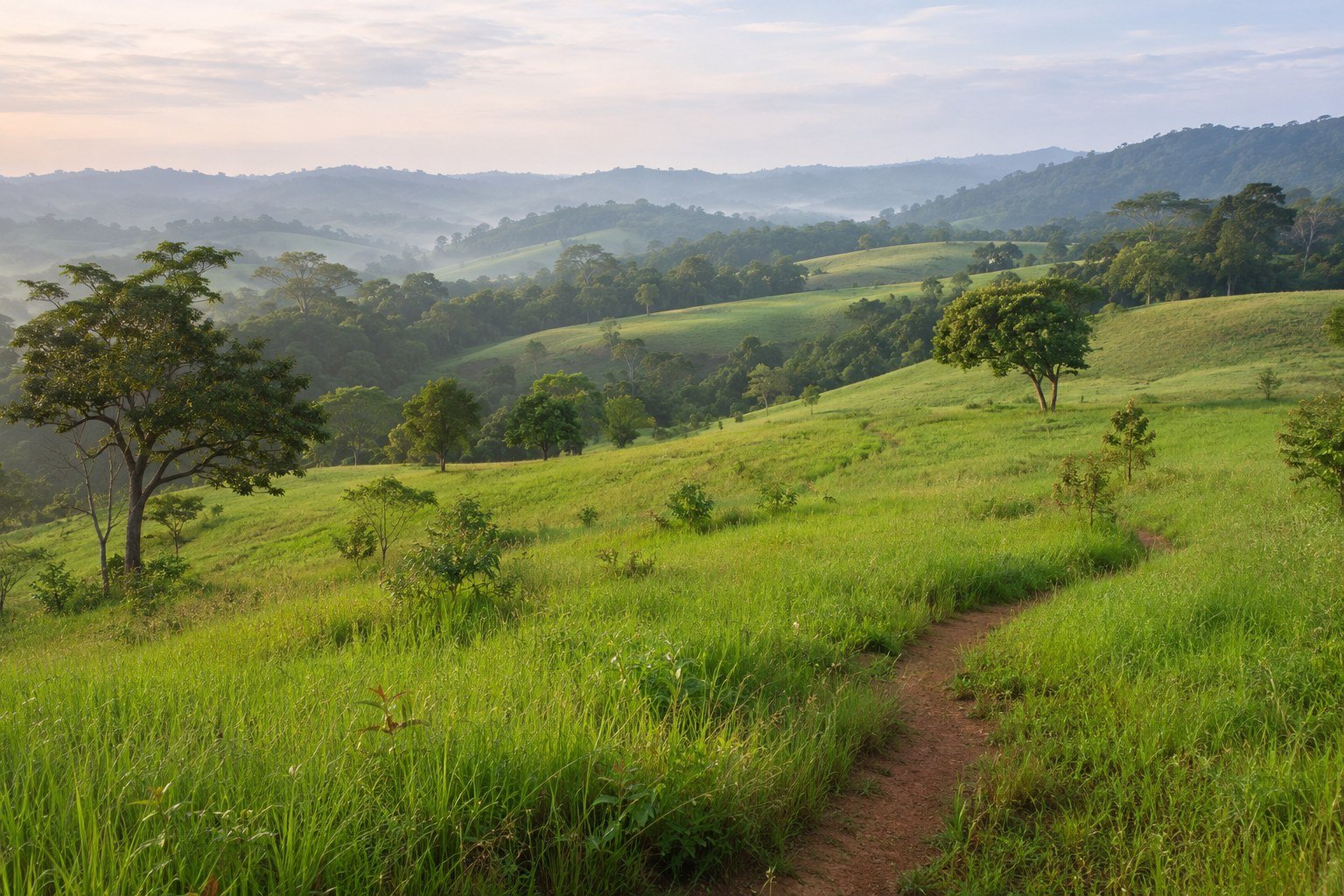
AI-generated illustration inspired by the highlands around Sen Monorom; it is not an on-location photograph.
Mondulkiri asks for a little more planning than a quick stop between Cambodia’s main cities. The reward is time in a highland landscape, with forest walks and nature visits arranged from Sen Monorom. The right programme matters as much as the number of places you see.
This Mondulkiri travel guide helps you choose an elephant experience with clear welfare practices, understand what the walking involves and build a stay that works for your dates, fitness and interest in local communities.
Some links in this guide are affiliate links. If you book or buy through them, Taylor’s Trailblazing Travels may earn a commission at no extra cost to you.
Check the date
Confirm the main programme before fixing the hotel nights.
Ask about the walk
Distance, terrain and breaks matter more than the label “half day”.
Choose observation
Look for space and natural behaviour, with no tourist contact.
Choose your nature day before choosing the hotel dates
Sen Monorom is the practical base for a first Mondulkiri visit. Think in full days: two nights usually gives you one, while three nights gives you two. That second day is useful for a separate forest outing, a waterfall trip or a gentler day after walking.
If Elephant Valley Project is your priority, check its calendar first. Its booking page says visits run Sunday to Friday, with Saturday normally reserved for the elephants and staff to rest. Advance booking is required; submitting the enquiry form is not a confirmed reservation.[1]
Scroll within the table on a small screen.
| Your plan | What it means | A better arrangement |
|---|---|---|
| Friday arrival, Sunday departure | Saturday is your only complete day. | For EVP, change the dates or add Sunday night after a confirmed Sunday visit. |
| Two nights around an operating day | One complete day for your chosen programme. | Keep arrival and departure days free of timed activities. |
| Three nights | Two complete days between the road journeys. | Use one for elephants and one for another interest, with a flexible order. |
For most first visits, three nights is a comfortable starting plan. Four makes sense if you want a longer forest experience or simply dislike moving on immediately after a demanding day. Use the Trip Itinerary Planner to lay out the dates, then confirm each activity separately. A tidy calendar cannot establish whether a particular departure will run.
Back to top ↑Use the animal’s freedom to choose as your starting point
The words “sanctuary”, “rescue” or “ethical” do not establish how an elephant is treated. World Animal Protection advises visitors to choose observation without touching and to look for opportunities for elephants to behave naturally. Its 2026 elephant-friendly guide lists Elephant Valley Project in Cambodia among venues following its elephant-friendly guidelines.[2]
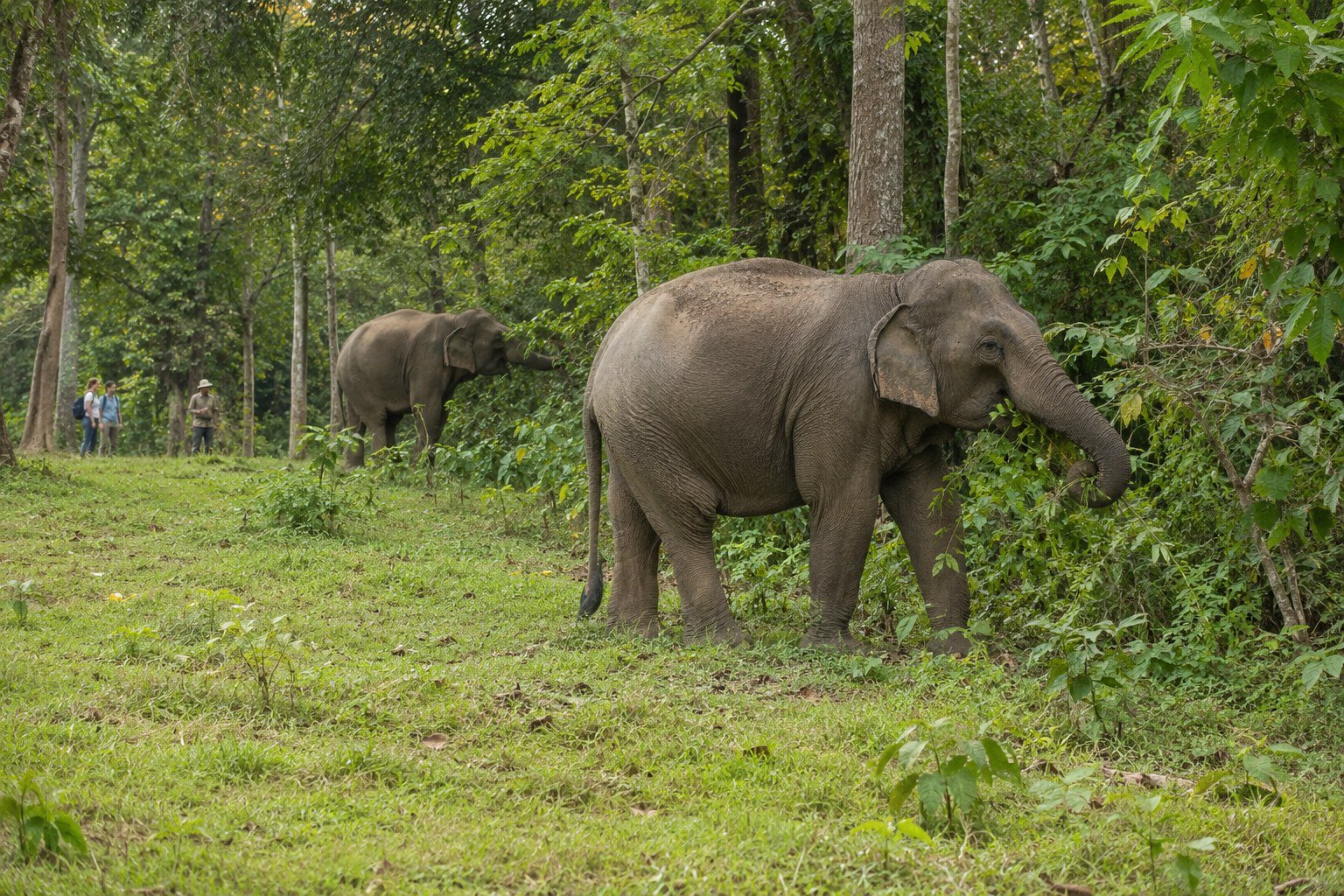
EVP publishes a clear visitor policy: no tourist rides, tricks, feeding or swimming with elephants. That makes it a useful option to investigate for an observation-led visit. This is a managed sanctuary for captive elephants, not a promise of seeing wild elephants on a forest safari.[3]
Ask what visitors actually do during the day. Can animals walk away? Are people kept at a suitable distance? Does the itinerary allow watching while elephants forage, rather than arranging poses? A description centred on bathing, hugging, riding or handing out food does not meet the observation-only choice used in this guide.[2]
Follow the guide’s positioning instructions even when an animal appears calm. The most rewarding moment may be an ordinary one: an elephant choosing a path or concentrating on food. A good visit should leave room for that pace, without asking staff to turn it into a performance.
Pick the programme for the walking and the afternoon
These are EVP’s published foreign-visitor prices, including VAT, Sen Monorom transfers, guiding and lunch. Reconfirm your date and terms.[4]
Scroll within the table on a small screen.
| Option | Day’s emphasis | Walking / days | Price |
|---|---|---|---|
| Quick Trip | Morning elephant observation; lunch. | 3–4 km · Sun–Fri | US$60 |
| Explorer | Elephant morning; forest trek afternoon. | 5–8 km · Mon–Fri | US$75 |
| Ele Lover | Morning and afternoon elephant observation. | 5–8 km · Sun–Fri | US$100 |
For two adults, Ele Lover costs US$80 more than Quick Trip, or US$50 more than Explorer. Choose the second elephant session if that is what you most want; choose Explorer if a varied forest day appeals. The cheaper half-day still involves a substantial walk, so “half day” should not be read as “easy access”.
Ask about gradients, mud, heat, breaks and the possibility of a shorter route before booking. A kilometre figure alone cannot tell you how the day will feel. If someone cannot manage the advertised walk, get a specific answer about a suitable alternative rather than relying on a general assurance that most visitors cope.
EVP asks for payment at least a week ahead; cancellations within seven days are non-refundable. It requires insurance including medical evacuation. Sunday Ele Lover departures have minimum-number conditions in April–May and September–October.[4]
Use EVP’s official booking page to request the programme, date and any access needs together. Keep the written confirmation and read its payment, cancellation and weather terms. If an enquiry is still awaiting a reply, keep dependent transport or accommodation flexible.
Ask how the visit works for local people
Animal welfare and local benefit deserve separate questions. A tour can avoid riding elephants while saying little about who owns the land, leads the walk or receives the visitor income. Equally, a locally owned business still needs sound animal-welfare and visitor-safety practices.
EVP is the tourism project of the local NGO Elephant Livelihood Initiative Environment, usually shortened to ELIE. The organisation describes work with Bunong communities and elephant owners, alongside elephant care. Its published programmes include local employment, community land support, healthcare and school scholarships.[5][6]
Those are the organisation’s stated activities. They are more useful than an unexplained “eco” label, but they do not tell you how every pound of a particular booking is spent. If community benefit is a deciding factor for you, ask for a current explanation of what your chosen programme supports.
Scroll within the table on a small screen.
| Question | Why it helps |
|---|---|
| Who is guiding and who has agreed to host us? | It establishes local involvement and permission, rather than treating a village as an open attraction. |
| What is paid to the guide, host or community? | A concrete description is more informative than a broad claim that the trip helps everyone. |
| Which places and photographs need permission? | Homes, ceremonies and culturally important sites may have boundaries that a visitor cannot guess. |
| What happens if a host or guide changes the plan? | A respectful visit can adapt when everyday life takes priority. |
Ask before photographing people and accept a refusal without bargaining. Buy craft or food because you want it, and agree a fair price before the activity. Choose a hosted visit with a clear purpose over an itinerary that simply promises access to someone else’s daily life.
Back to top ↑Sen Monorom town or the greener outskirts?
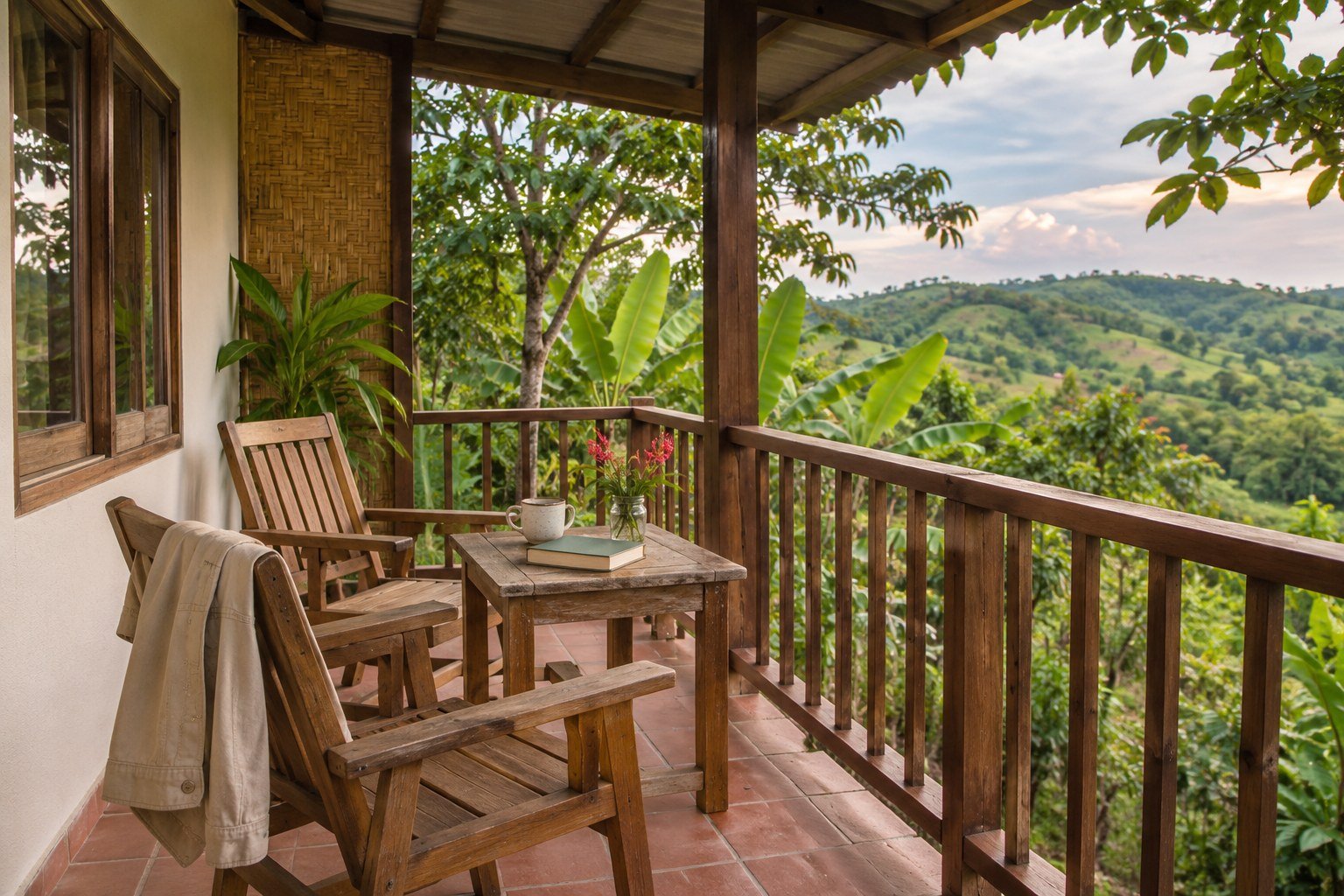
Choose the accommodation around meals and pickup arrangements as well as the view. A town room is practical when you want to walk to dinner and meet an early departure. A quieter property beyond the centre can suit a slower stay, provided you understand the transport it needs.
Scroll within the table on a small screen.
| Base | Best reason to choose it | Check first |
|---|---|---|
| Town or a short walk from your meeting point | Easy meals and a straightforward early start. | Street noise, room ventilation and the actual walk to pickup. |
| A guesthouse or lodge outside the centre | Gardens, hill views and evenings at the property. | Access after rain, dinner availability and the cost of each town ride. |
| An overnight forest programme | More time within one organised nature experience. | Sleeping arrangements, toilets, luggage access, walking and what happens in poor weather. |
Compare Sen Monorom accommodation on Agoda and Sen Monorom stays on Booking.com. Look at the map rather than relying on a property’s use of “Mondulkiri” in its name. Ask whether the tour operator collects there or expects you at a town meeting point.
For example, two three-night offers at £30 and £40 per room differ by £30 in total. If the cheaper property needs three additional return rides at £10 each, that difference disappears. These are sample costs. Compare your actual rates, meals and transfers with the Hotel Comparison Calculator, then choose the surroundings you will enjoy.
Treat the journey to Sen Monorom as a travel day
EVP’s arrival information estimates roughly five to six hours by road from Phnom Penh and ten to twelve from Siem Reap. These are planning estimates, not a guarantee for a particular vehicle or date. They make a strong case for arriving the day before your nature programme.[1]
For Phnom Penh, compare road services to Mondulkiri on 12Go. The route page lists buses, vans and private transfers. Open the selected journey and confirm that its arrival point suits your Sen Monorom accommodation.[7]
Check the full name and map of both stations. “Sen Monorom Express Phnom Penh” can refer to a company’s Phnom Penh stop; the words Sen Monorom in a station name do not by themselves establish the destination. Save the ticket, contact number and boarding location before leaving the hotel.
A private vehicle can be worth comparing when several people travel together or need more luggage space. Ask for the whole-car quote, usable seatbelts, luggage capacity, stops and the exact hotel drop-off. Agree the route and departure in advance; a vague promise of a fast journey is not an advantage.
Prefer daylight road travel: FCDO identifies higher accident risk after dark. For forest trips, it advises choosing a reputable guide.[8]
Keep the return journey separate from an international flight where possible, with a night in the departure city. For Kratie, Banlung or another provincial stop, obtain a dated service or a written transfer arrangement before joining the dots on your itinerary. Distance on a map does not establish a direct connection.
Back to top ↑Make the second day different from the first
A second full day should add something you want, not simply another long list of stops. After a substantial elephant walk, a shorter outing with a relaxed lunch may suit the group better than a second demanding trek.
For a forest walk
Ask a local guide to describe the route in practical terms: walking time, steep sections, crossings, shade, meal stops and the return transport. Establish whose land the route crosses and whether permissions are arranged. Tell the guide what you can manage, including whether anyone needs an easy way to turn back.
Choose a walk for the forest itself. Bird or wildlife sightings are a bonus, and a claim that a rare animal will definitely appear deserves caution. Keep to the agreed route, carry out your rubbish and leave collecting plants or wildlife out of the day.
For Bou Sra waterfall
Bou Sra, also written Bousra, is an established Mondulkiri waterfall excursion. The provincial spatial plan identifies it as a tourism site outside Sen Monorom. Treat that as geographical background, then ask locally about current road access, the open viewing areas and the total transport and entry cost.[9]
Arrange the return ride before setting out. Ask how many steps or uneven sections separate the drop-off from the view you want. A vehicle reaching the entrance does not establish that every viewpoint is suitable for every visitor. Leave swimming out of the plan unless you have reliable, current advice about a specifically permitted place; looking at the falls can be the whole outing.
If weather makes the outing unattractive, keep a quiet town day instead. You do not need to replace a cancelled waterfall with a longer or more difficult journey to justify the stay.

A three-night visit with a flexible second day
Scroll within the table on a small screen.
| Day | Plan | Booking priority |
|---|---|---|
| Day 1 | Daytime journey, check in and dinner near your base. | Correct drop-off, access to the room and tomorrow’s meeting point. |
| Day 2 | The confirmed elephant or forest programme. | A suitable walking level and written confirmation. |
| Day 3 | A different interest: a shorter guided walk, waterfall outing or rest. | Current conditions and the group’s energy. |
| Day 4 | Onward road journey. | Enough time to reach the actual departure stop. |
Swap days two and three around programme availability. If the only suitable elephant date is the final day, add the following night instead of trying to attach a long road journey to the end of the visit.
For a shorter two-night stay, spend the single full day on your main reason for coming. For a longer stay, decide whether you want another town-based day or a fully organised overnight forest experience. The latter changes luggage, sleeping and walking arrangements, so it deserves a separate decision rather than a last-minute extension.
Use the Travel Budget Calculator to combine the programme, room and intercity transport costs. A low room rate does not make an extra destination inexpensive if reaching it consumes another day and another transfer.
Back to top ↑Pack for the route you have actually booked
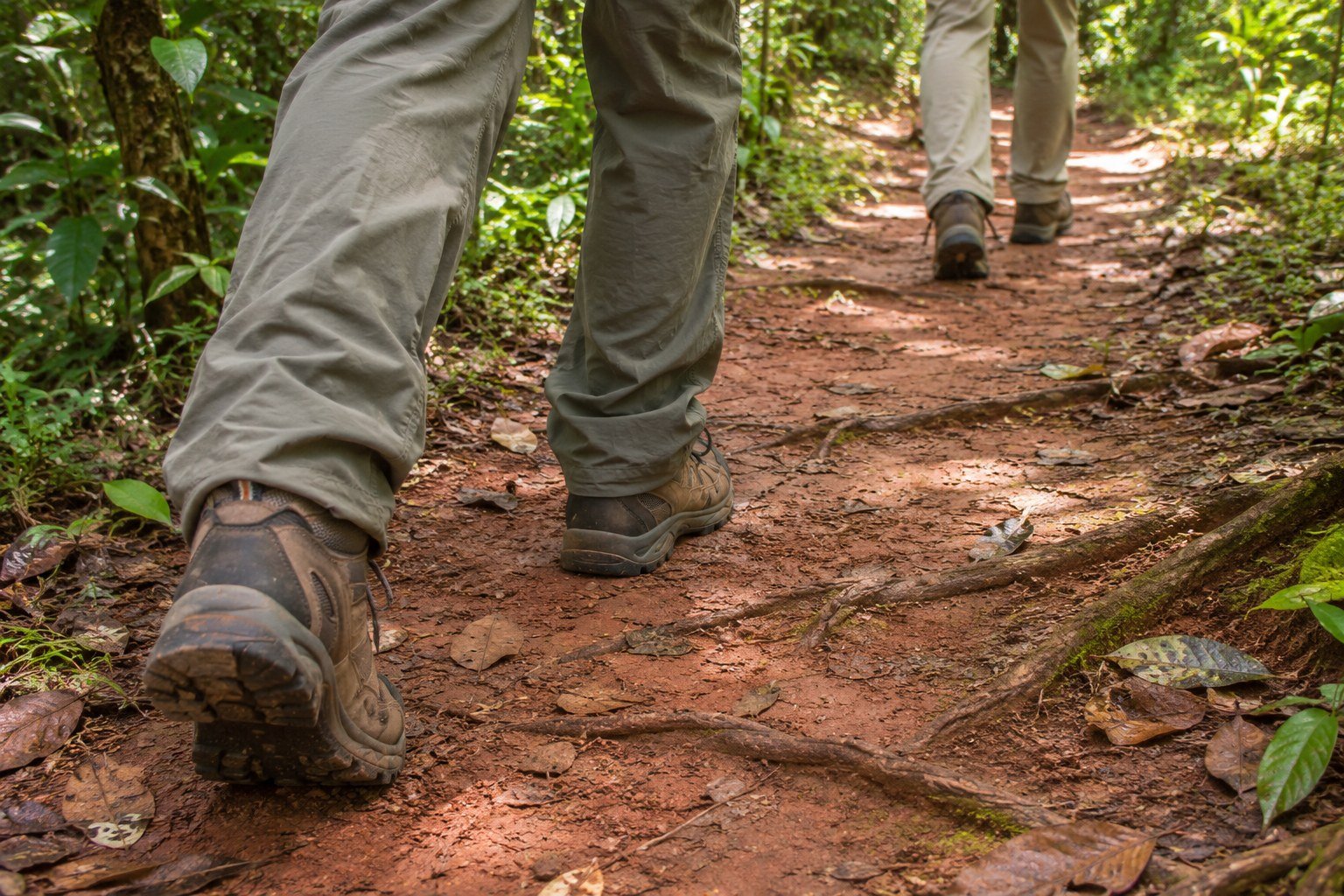
EVP asks visitors to bring suitable walking footwear, modest forest clothing and enough water for the whole morning, with refills at lunch. For overnight stays it warns that rain can mean walking the final 800 metres carrying your own luggage. It also suggests a warm layer for November–February.[10]
That makes a small overnight bag useful if you choose a forest stay. Ask your town accommodation about storing the main case, and confirm what you need for bedding, washing and lighting. For a day visit, comfortable shoes already worn in, rain protection, a refillable bottle and a bag you can carry for the full walk matter more than buying specialist kit.
Send dietary and access requirements through the official booking channel before payment. Tell the organiser what you need in practical terms rather than using a broad label such as “easy”. For example, explain a limit on stairs, walking time or carrying a bag, and ask which parts of the day can be adapted.
Download the meeting point and keep the operator’s contact and confirmation offline. For a data option, browse Airalo’s store and select Cambodia. Check the phone is compatible and unlocked, plus the plan’s activation and validity rules.[11] Mobile data should be a convenience for town logistics, not the only place you keep essential information.
Before leaving town, agree the day’s return arrangements and tell someone where you are going. Keep a little unallocated time after the outing for a shower, a meal and a quiet evening; it is part of making a nature trip enjoyable.
Back to top ↑Is Mondulkiri the right addition to your Cambodia trip?
Is it worthwhile without an elephant visit?
It can be, if forest walks, highland scenery and a slower town base are reasons you actively want to travel there. Choose a specific guided outing and leave time to enjoy it. If you are only adding Mondulkiri because it appears on a long list of destinations, compare the road days with an extra night somewhere already on your route.
Can a half-day elephant programme suit someone who cannot hike?
Do not assume it will. The advertised walking is still substantial. Ask the operator about the exact terrain and any appropriate alternative before booking travel around it. A promise of close animal contact is not a solution to an access problem.
What is the best first booking?
Confirm the programme that matters most, including the day and walking requirements, then arrange the road journeys and accommodation around it. Keep the other full day adaptable.
Back to top ↑Sources and checks
The welfare recommendation uses World Animal Protection’s guidance alongside the project’s own policies. Prices and programme terms are the provider’s published information; suggested pacing and comparisons are our planning choices.
- Elephant Valley Project — Book your visit
Advance enquiries, operating days and indicative road journey times. Checked 14 November 2026. - World Animal Protection — Elephant friendly tourist guide 2026
Observation-led welfare guidance and EVP’s place in the published elephant-friendly list. Checked 14 November 2026. - Elephant Valley Project — Sanctuary ethos
The project’s stated visitor-interaction policy and captive-elephant care approach. Checked 14 November 2026. - Elephant Valley Project — Visit options
Published foreign-visitor prices, walking distances, inclusions and booking conditions. Checked 14 November 2026. - Elephant Valley Project — About ELIE
The local NGO and its stated aims for elephants and Bunong communities. Checked 14 November 2026. - Elephant Valley Project — Programme summaries
First-party descriptions of community, welfare and forest-support programmes. Checked 14 November 2026. - 12Go — Phnom Penh to Mondulkiri
Road-service comparison; inspect the selected operator and station details. Checked 14 November 2026. - FCDO — Cambodia safety and security
Daylight road travel and choosing a guide for jungle trekking. Checked 14 November 2026. - Mondulkiri Provincial Committee — Spatial Plan 2020–2040
2021 geographical and tourism planning background; not a live waterfall-access report. Checked 14 November 2026. - Elephant Valley Project — What to pack
Walking kit, morning water, overnight luggage access and a cooler-season layer. Checked 14 November 2026. - Airalo — Cambodia eSIM plans
Cambodia plan availability and device/plan checks. Checked 14 November 2026.
Illustrations in this article were created for Taylor’s Trailblazing Travels. Third-party photographs, where used, are credited beside the image or in the source list.


