Kratie Travel Guide: Mekong Life and Responsible Dolphin Watching
Make time for river life, choose a practical base and put the dolphins’ space first.
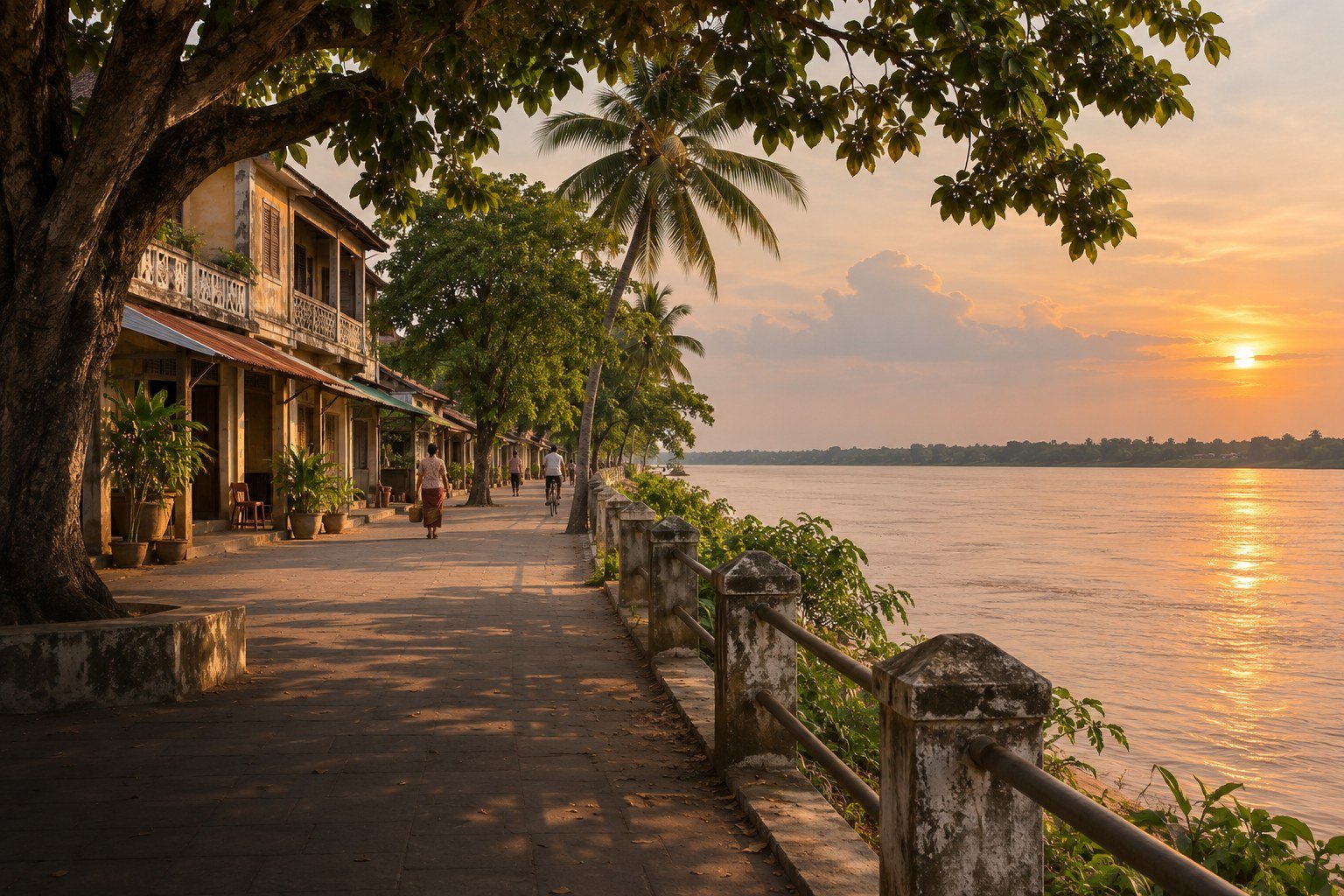
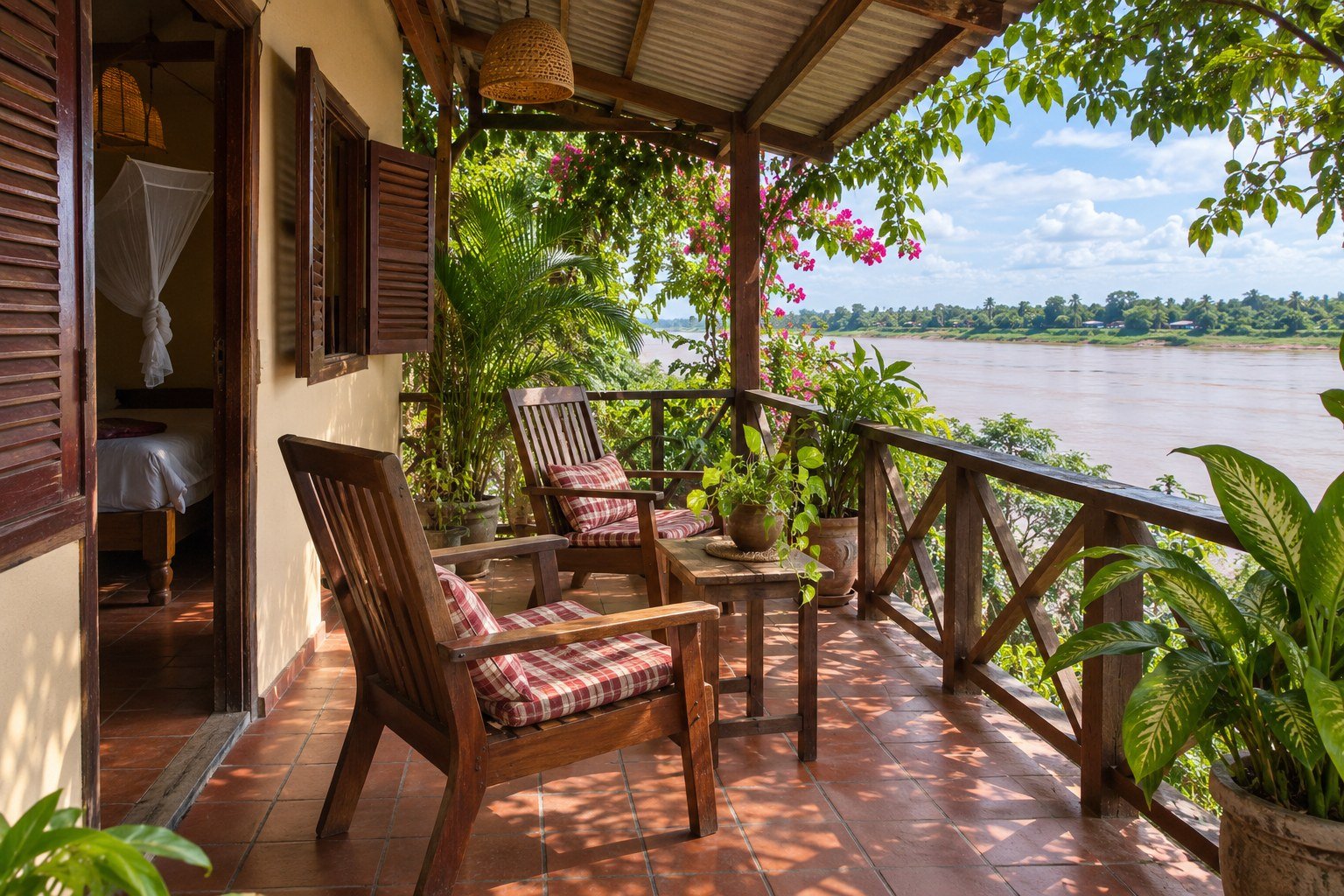
AI-generated illustration inspired by Kratie’s Mekong riverfront; it is not an on-location photograph.
Kratie is a place to put some breathing space into a Cambodia trip. The Mekong gives the stay its shape: a quiet evening by the water, a boat crossing to Koh Trong and a patient outing to look for Irrawaddy dolphins at Kampi.
This Kratie travel guide helps you decide whether the detour fits, how many nights to allow and how to arrange the river activities without making the whole visit depend on a wildlife sighting.
Some links in this guide are affiliate links. If you book or buy through them, Taylor’s Trailblazing Travels may earn a commission at no extra cost to you.
Choose the base
Town simplifies an early road departure; an island room suits a stay built around island time.
Watch patiently
Choose an outing you will enjoy even if dolphins remain distant.
Compare the complete quote
Separate the road ride, guide and boat charges before deciding.
Give Kratie at least one whole day
Kratie suits travellers who enjoy a modest provincial town, a river outing and time between the main events. Make the journey for the whole stay. A wildlife encounter is too uncertain to carry every expectation on its own.
Scroll within the table on a small screen.
| Nights | What fits comfortably | When to choose it |
|---|---|---|
| 1 | Arrival evening and part of the following day. | A deliberate stop along an already confirmed route, with only one priority. |
| 2 | One full day for Kampi, with town time around it. | Your main aim is a measured dolphin outing. |
| 3 | Separate days for Kampi and Koh Trong. | The strongest first-visit plan if you like cycling, food and a slower river stay. |
These plans assume travel on the first and last days. With two nights, you can combine a morning outing and an island visit if the timings cooperate, but three nights removes the need to watch the clock at both a wildlife stop and a ferry landing.
A one-night detour between two long road journeys can leave you with more time in vehicles than beside the Mekong. Count the transfer days in your trip plan before buying tickets. If the wider holiday already feels crowded, choose Kratie or another substantial eastern stop and give it enough time.
Back to top ↑Kampi: make the visit about observation
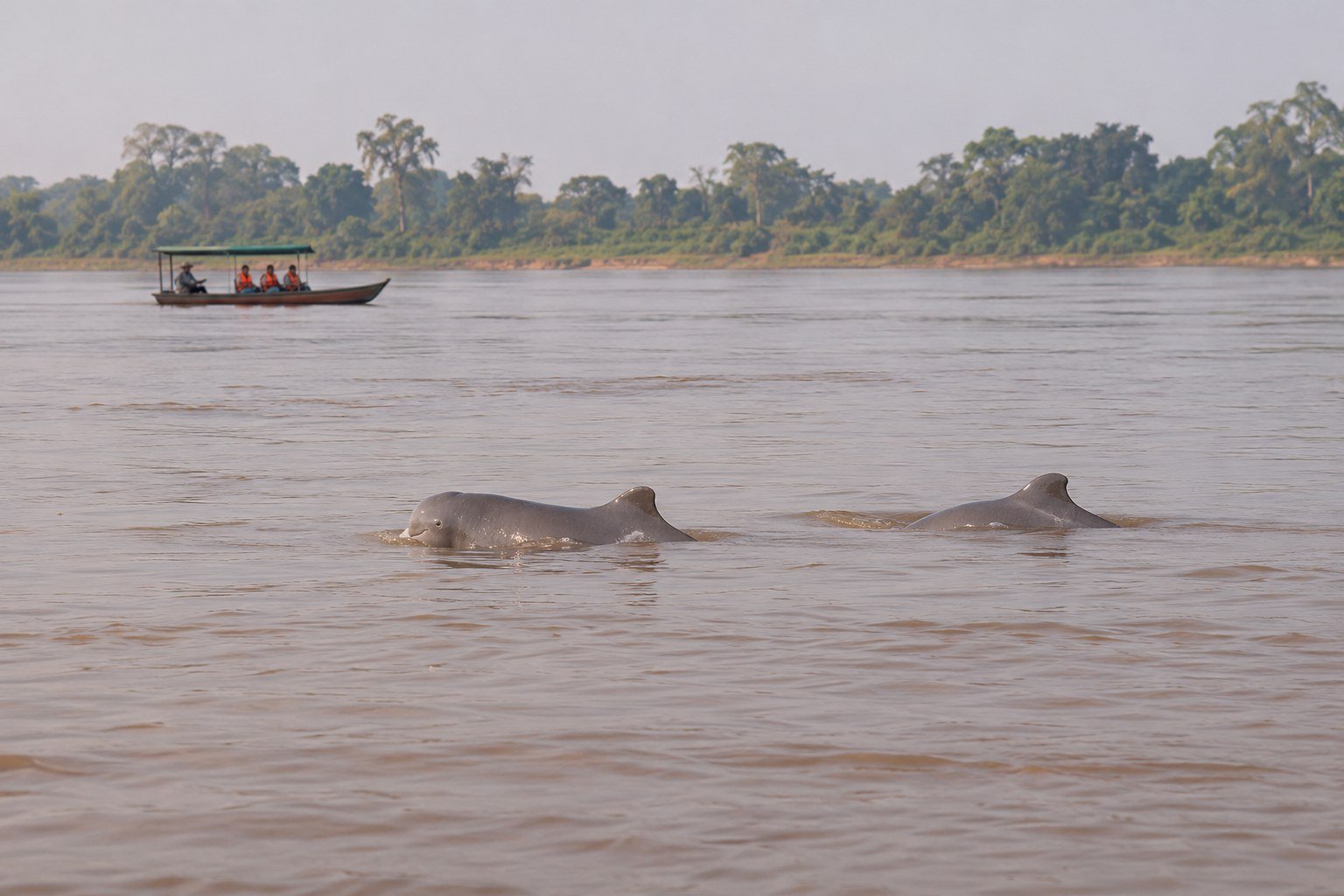
Kampi is the established dolphin-viewing area north of Kratie. The attraction is a wild river population, with no promise about where an animal will surface. Irrawaddy dolphins have rounded heads without the long beaks of bottlenose dolphins, and are not usually acrobatic. The Mekong population is classified as critically endangered.[1]
Expect to look carefully across the water for a back, a small fin or a brief glimpse of a head. Binoculars or a camera’s optical zoom are useful if you already own them. Keep your own eyes on the river for part of the trip; trying to record every second can mean missing the moment altogether.
The International Whaling Commission recommends asking operators about local rules, disturbance, safety and conservation. Use those questions before agreeing a trip, rather than judging it by a promise of close photographs.[2]
Scroll within the table on a small screen.
| Ask about | A useful answer should explain |
|---|---|
| The wildlife approach | The local distance rules, when the engine is reduced or stopped, and what happens if other boats are already watching. |
| Safety and boarding | A lifejacket that fits each passenger, the briefing, seating and help at the landing. |
| The complete price | Whether the quote is per person or per boat, and whether road transport, waiting and the dolphin-area charge are included. |
| Local benefit | Who runs the boat and guiding, and how local people receive income. |
Choose a crew willing to keep its distance and let animals move freely. Do not ask for pursuit, feeding, touching or a swim with dolphins. If the boat approaches too closely, ask calmly for more space. An empty patch of river is an acceptable outcome; pressure to produce a sighting is a poor basis for a wildlife trip.[2][3]
Community income has a real place in this decision. FAO reported in August 2026 that its Kampi work provided boats and tourism facilities to support local livelihoods alongside fisheries management. That describes a community initiative, not an automatic endorsement of every tour sold in town. Ask how your own booking connects to local people.[4]
Choose the outing you can comfortably manage
A locally arranged passenger boat can suit people who want to concentrate on watching. A guided kayak trip is a more active choice, and the journey itself needs to appeal even if no dolphins appear. Ask about paddling time, current, crossings, group size, guide support and the plan if conditions change.
A quiet craft still needs careful handling. The IWC notes that non-motorised vessels can disturb dolphins too; the absence of an engine does not make a close approach harmless.[3]
Tell the operator about swimming ability, children and any difficulty sitting low or climbing into a boat. Ask to see the boarding arrangement if balance or steps matter. For a mixed-interest group, an easier river outing followed by a relaxed lunch may be a better shared day than a long paddle that only one person wants.
You can also enjoy the river from land without buying a wildlife trip. Treat any dolphin view from a bank as a possibility, not a substitute with a guaranteed result.
Back to top ↑Give Koh Trong a slow morning or afternoon
Koh Trong lies in the Mekong opposite Kratie, reached by a local boat crossing. Island accommodation provider Soriyabori describes a crossing of roughly five to ten minutes, with the landing and onward access affected by season and water level. The crossing itself is only one part of getting to an island room.[5]
For a day visit, carry water, small cash and only the bag you want to take on a bicycle or short walk. Ask at the landing about the return arrangement before setting off. Confirm the last usable boat locally that day and leave a comfortable margin; a ferry time quoted in an old guide is a poor reason to rush an island afternoon.
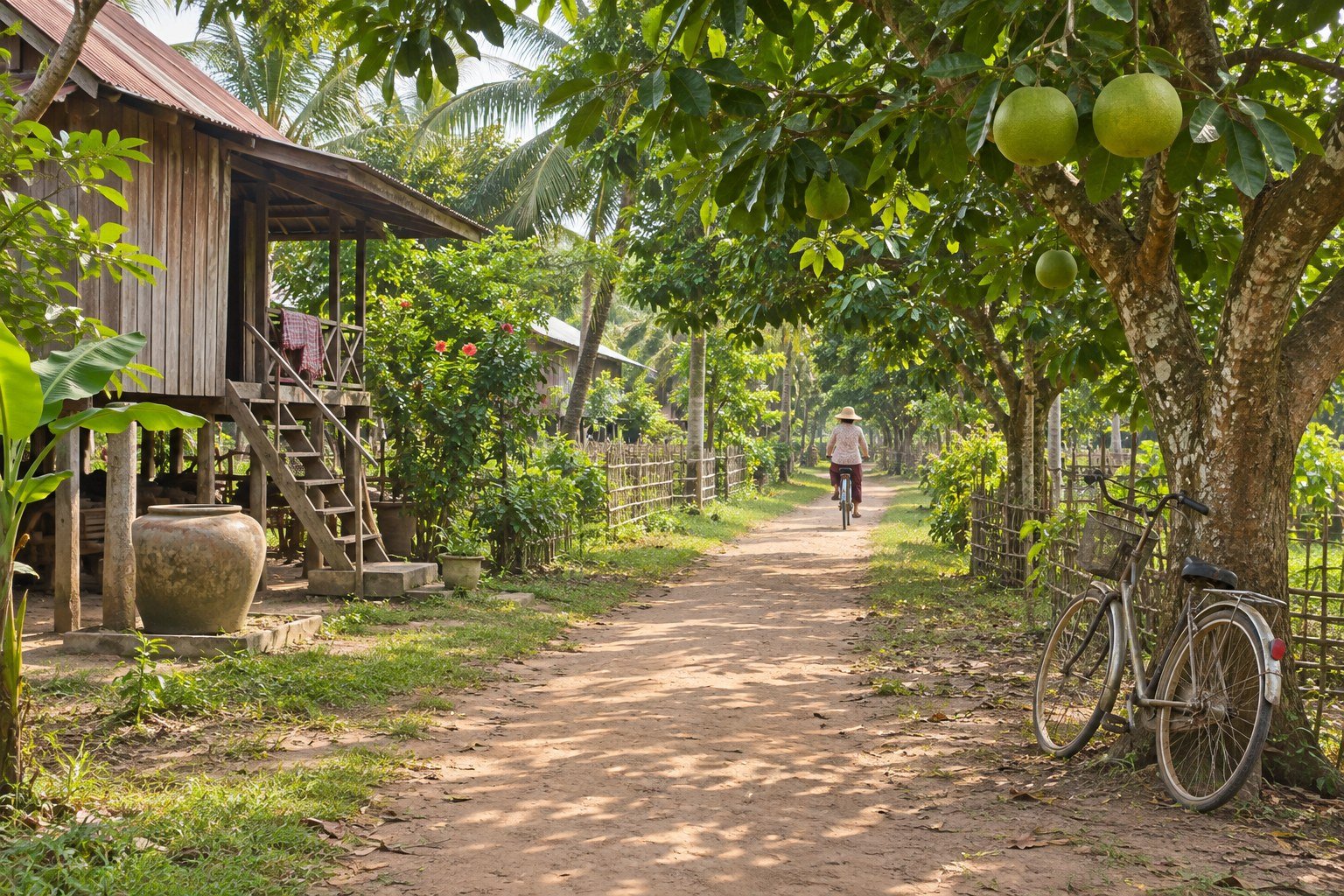
Cycling is a way to enjoy village lanes and orchards at your own pace. Check brakes, tyre condition and saddle height before leaving the rental point. Walk any sandy or awkward stretch. If cycling does not suit you, ask what local transport can be arranged and agree the route and waiting time first.
Pomelo growing is part of the island’s identity. An orchard visit works best when a host has agreed to receive you: ask before entering a garden, picking fruit or photographing someone at work.[8] Buy something you want, pay the agreed price and let residents carry on with their day. There is no need to turn every stop into a staged encounter.
Avoid adding another distant outing immediately afterwards. The pleasure of this half-day is that you can stop for a drink, turn back early or linger somewhere pleasant without losing a prepaid appointment.
Town or island: choose for your departure as well as the view
Scroll within the table on a small screen.
| Base | What you gain | What to arrange |
|---|---|---|
| Kratie town, near the riverfront | A straightforward base for meals, road pickups and a day visit to Koh Trong. | The actual room position, street noise and distance to your operator’s office. |
| Koh Trong | An island evening and time to enjoy the surroundings before day visitors arrive. | Boat crossing, luggage transfer, meals and the return to the mainland before an onward journey. |
For two nights and an early bus departure, town is the easier starting choice. An island stay earns its extra logistics when you deliberately want island time. Ask the property to explain the complete arrival route, including who meets you after the boat; do not assume a map pin opposite town means a quick door-to-door transfer.[5]
Compare Kratie accommodation on Agoda and Kratie stays on Booking.com. Use the same dates and occupancy, then check the map, bathroom arrangement, cooling, cancellation terms and whether a quoted transfer is shared or private.
The cheapest nightly rate need not produce the cheapest stay. For example, a room that is £8 less per night saves £24 over three nights. If that choice adds £30 in boat or local transfers, it costs £6 more overall. These are sample costs: enter your own offers and transfers in the Hotel Comparison Calculator. You may still prefer the island; the point is to choose it with the whole cost visible.
Arrange road travel as a separate part of the holiday
Phnom Penh is the most straightforward road gateway to plan around. The Kratie route pages list daytime vans, with many advertised journeys around four and a half hours. This is scheduled travel between the named stops, before getting to the departure office, checking in and reaching your accommodation.[6]
Compare Phnom Penh–Kratie vans on 12Go for your actual date. Check the operator, exact boarding point, arrival point and luggage allowance. A route search is useful for comparing seats; your confirmation should tell you where to stand and when to be there.
If you are considering a private car, ask for the total vehicle price, luggage capacity, seatbelts, pickup address and agreed stops. Divide the vehicle quote by your group size only after checking that everyone and the bags fit. Flexibility over departure time is useful, but it does not remove the road journey.
FCDO warns about strong river currents and higher road risk after dark. Choose daylight journeys and check conditions before any boat trip.[7]
For an onward journey to Siem Reap, Sen Monorom or Stung Treng, first obtain a dated service or written transfer quote. Ask whether the trip is direct, changes vehicle or only drops you at a junction. Build the stop around the route you can actually book, rather than assuming all nearby-looking towns connect neatly.
Before an international departure from Phnom Penh, return to the city the previous day if you can. That avoids making the flight depend on a long provincial drive, urban traffic and a further airport transfer all behaving as expected.
Back to top ↑A three-night plan that leaves room for the river
Scroll within the table on a small screen.
| Day | Main plan | Leave open |
|---|---|---|
| Day 1 | Travel to Kratie, check in and walk by the river. | A simple dinner and time to confirm the next day’s pickup. |
| Day 2 | A responsible Kampi outing, agreed with the operator. | Lunch, a rest and an unhurried evening in town. |
| Day 3 | Koh Trong by local boat, with cycling or a shorter visit. | Extra island time, or an early return if the heat or weather calls for it. |
| Day 4 | The confirmed onward road journey. | Enough time for an island crossing first, if that is where you stayed. |
Swap the two full days if river conditions or a guide’s availability make that sensible. With two nights, choose which outing matters most and treat the second as optional. With four nights, add a free day before expanding the radius of your sightseeing.
This is also a useful place to slow a longer Cambodia journey. The Itinerary Pace Checker can help you count how often you change accommodation. A spare night here has a different value from a spare night in a major city: it buys flexibility around a small boat crossing or a nature outing.
Back to top ↑Keep the everyday arrangements simple
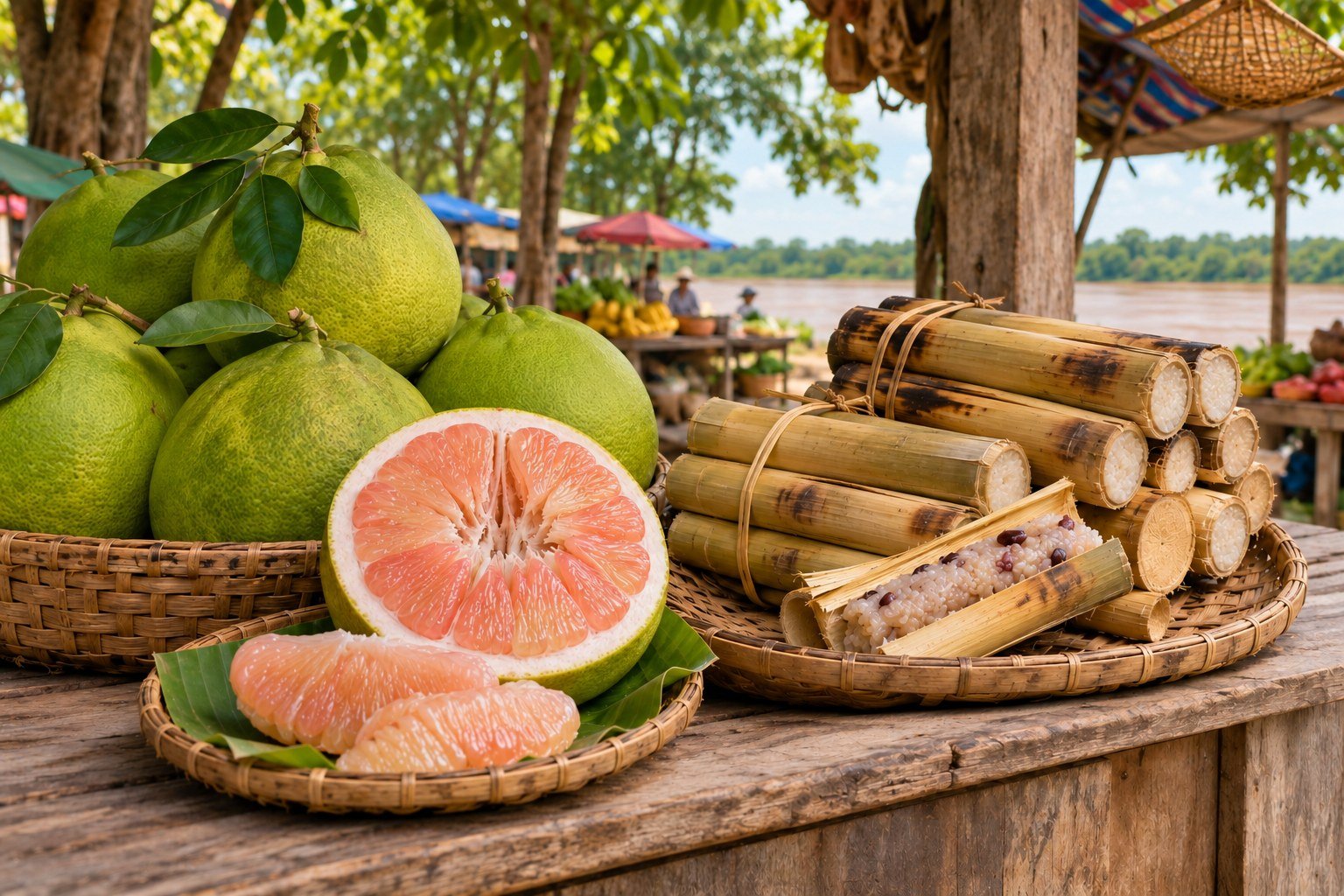
Look for locally grown pomelo and kralan, sticky rice cooked in bamboo. Pomelo is associated with Koh Trong; a kralan cooking event was among the activities announced for Kratie’s 2026 River Festival.[8][9] Ask what is in the rice before ordering if you have allergies, and buy a portion you can finish rather than carrying food through a hot afternoon.
In town, leave room for a market breakfast or a meal after the river trip. Agree food arrangements before a longer island outing, particularly if you have a restricted diet. A photograph of an allergy explanation in Khmer, prepared accurately in advance, is more useful than hoping every small stall can interpret an English ingredient list.
For the budget, separate the room, intercity journeys, local road transport, boat or guide fees, meals and a small reserve. The Travel Budget Calculator lets you put your own quotes together. Record whether each charge is for one person, the whole boat or the entire vehicle; that distinction can matter more than a small difference in the headline price.
Save your hotel location, driver contact and onward ticket offline. If you want a data option before arrival, browse Airalo’s store and select Cambodia. Check device compatibility, unlocked status and the selected plan’s activation and validity rules.[10] Keep the essential details available without a connection, especially for boat departures.
Three decisions to settle before booking
Is Kratie worth the detour just for dolphins?
Choose it if a quiet Mekong stay appeals even without a close wildlife view. If your only acceptable outcome is a particular photograph, the trip is carrying the wrong expectation. Two or three nights gives the place room to be worthwhile on its own terms.
Should you book the boat before arriving?
Advance contact is useful for a guided paddle, a particular language, children or mobility needs. For a locally arranged boat, ask your accommodation about current operation and conditions, then settle the complete price and approach rules before paying. A clear answer matters more than a promise that everything will be fine.
What should you confirm first?
Start with the road journeys, then choose town or island accommodation. Next arrange the wildlife outing around the least flexible requirement in your group. Keep Koh Trong and town time adaptable.
Back to top ↑Sources and checks
Wildlife guidance comes from conservation and intergovernmental sources; access and transport details come from the named providers. The suggested pacing, base comparisons and sample costs are our planning choices.
- International Whaling Commission — Irrawaddy dolphin
Species identification, behaviour and the Mekong population’s conservation status. Checked 14 November 2026. - International Whaling Commission — Questions to ask when booking
Operator questions on disturbance, safety and local conservation. Checked 14 November 2026. - International Whaling Commission — Ways to watch whales and dolphins
Potential impacts of powered boats, kayaks and in-water encounters. Checked 14 November 2026. - FAO — Community livelihoods through aquaculture and ecotourism
13 August 2026 report on community tourism investment at Kampi. Checked 14 November 2026. - Soriyabori Resort — Reaching Koh Trong
First-party island access information; confirm current boat and pickup arrangements locally. Checked 14 November 2026. - 12Go — Phnom Penh to Kratie vans
Advertised road services; check the selected date, operator and stops. Checked 14 November 2026. - FCDO — Cambodia safety and security
River currents and increased road risk after dark. Checked 14 November 2026. - Soriyabori Resort — Koh Trong pomelos
Local first-party background on the island’s pomelo growing. Checked 14 November 2026. - Agence Kampuchea Presse — Kratie River Festival activities
20 March 2026 announcement including traditional bamboo sticky rice. Checked 14 November 2026. - Airalo — Cambodia eSIM plans
Cambodia plan availability and device/plan checks. Checked 14 November 2026.
Illustrations in this article were created for Taylor’s Trailblazing Travels. Third-party photographs, where used, are credited beside the image or in the source list.