

Cambodia Travel Costs: Realistic Budgets for Different Trip Styles
Separate fixed fees from flexible spending, then build a trip total that includes the things a daily headline misses.
AI-generated illustration of trip-budget planning; no displayed price or banknote is a financial reference.
Cambodia travel costs depend heavily on how you travel, whether you share a room and how many paid visits you include. A low hostel price can make the country look exceptionally cheap, while an Angkor pass, airport transfers and several organised tours quickly change the total.
The model here follows one straightforward route: nine nights split between Siem Reap and Phnom Penh, with a single intercity journey. It separates official advertised fees from chosen spending allowances so you can replace each line with your own quote.
Affiliate disclosure: this guide contains affiliate links. If you book or buy through them, Taylor’s Trailblazing Travels may earn a commission at no extra cost to you.
US$530: dorm bed, simple meals and controlled transport spending.
US$943: two adults sharing a private room, with more flexibility.
US$1,867: higher room allowance, private transport and guided time.
A room price is divided by two; solo travellers need to adjust it.
Read these assumptions before comparing budgets
All calculations are for one adult spending ten calendar days and nine nights in Cambodia. The budget column uses a dorm bed; the other columns assume two adults share one double or twin room and split private vehicle costs. Accommodation and meal allowances are illustrative spending envelopes chosen for planning, not a survey of market prices.
- Accommodation: nine nights, including an assumed final price with compulsory taxes and fees.
- Food: ten daily allowances covering meals, drinking water and modest snacks; frequent alcohol and expensive tasting menus are excluded.
- Local transport: a ten-day allowance for city rides and getting to Angkor; intercity and airport travel are separate.
- Sightseeing: a three-day Angkor pass, a separate allowance for other admissions and guided activities where specified.
- Extras outside the model: international flights, insurance, vaccinations or personal healthcare, shopping, large tips and additional domestic flights.
The GBP column uses a deliberately rounded planning conversion of £1 = US$1.30. KB PRASAC’s published GBP/USD buying and selling figures on 13 November 2026 were 1.3067 and 1.3417. Your bank, card or cash exchange service will apply its own rate and fees; the conversion is not a guaranteed transaction rate.[1]
For scale, US$1 is about 4,060 Cambodian riel at the same dated planning reference, rounded from the bank’s published USD/KHR figures. Check which currency a quoted amount uses before comparing it.[1]
Back to contents ↑Cambodia travel costs for ten days: the complete model
Swipe or scroll the table to see every column.
| Cost item | Budget | Mid-range, sharing | Comfort, sharing |
|---|---|---|---|
| Accommodation: 9 nights | $90 | $270 | $630 |
| Meals, water and snacks: 10 days | $150 | $250 | $450 |
| Local transport: 10 days | $70 | $120 | $250 |
| One intercity journey | $20 | $20 | $80 |
| Both airport transfers | $25 | $35 | $55 |
| Three-day Angkor pass | $62 | $62 | $62 |
| Other admissions allowance | $25 | $25 | $25 |
| Guided activities allowance | $0 | $35 | $100 |
| Tourist eVisa government fee | $30 | $30 | $30 |
| Mobile data allowance | $10 | $10 | $15 |
| Subtotal | $482 | $857 | $1,697 |
| 10% contingency, rounded | $48 | $86 | $170 |
| Trip total | $530 | $943 | $1,867 |
| Approximate GBP total | £408 | £725 | £1,436 |
| Average per calendar day | $53 | $94 | $187 |
Rounding explains the difference between the precise totals here and the quick-answer figures. The budget is achievable only if the room, meal and transport choices actually fit the allowances. Replace an unavailable or unsuitable cheap option with its real cost; do not weaken the trip to preserve a spreadsheet total.
For two adults following the mid-range assumptions, the combined model is US$1,886, approximately £1,451 before flights and insurance. That total already contains one shared room, not two separate rooms.
Use the Travel Budget Calculator to replace these allowances with your own quotes and compare the full cost. Convert your quotes to GBP before entering them; the calculator does not convert currencies. Include taxes, luggage and transfers.

What the room and food allowances actually buy
Accommodation: compare the final room bill
The budget model sets aside US$10 per night for a dorm bed. The mid-range model uses US$60 per room per night, divided between two adults. The comfort model uses US$140 per room, again shared. These are spending targets; they do not promise a particular hotel, star rating, location or availability.
When checking rooms, compare air conditioning, room size, cancellation terms and the actual location. A lower room rate can lose its advantage if it adds several paid journeys every day. Confirm whether breakfast, taxes and service charges are included, and whether the quoted rate is for the room or each guest.
A solo traveller taking the entire US$60 room would add US$270 over nine nights compared with the shared mid-range model. Including 10% contingency on that difference raises the trip by about US$297, or £228 at the planning conversion.
Food: make a daily envelope you can recognise
The daily food allowances are US$15, US$25 and US$45 per person. The first requires simple meals and limited extras; the second gives more room for cafés and a mixture of local and visitor-oriented restaurants; the third permits more expensive meals but still needs an overall limit.
Small repeated purchases matter. An extra US$5 a day for coffees, desserts or drinks adds US$50 across ten days, before any contingency. If breakfast is included in the room, reallocate the saving deliberately rather than counting free breakfast while keeping the same full meal allowance.

Replace the room allowance with a real quote: compare Siem Reap stays on Agoda and Siem Reap accommodation on Booking.com, or Phnom Penh stays on Agoda and Phnom Penh accommodation on Booking.com. Use identical nights, guest numbers and room terms, and compare the total at checkout rather than the first displayed nightly rate.
Verified fees to put in the budget separately
Fixed charges help anchor the model. These were checked against the official sources below on 14 November 2026; recheck before payment.
Swipe or scroll the table to see every column.
| Item | Advertised fee | What to check |
|---|---|---|
| Angkor one-day pass | US$37 | One visit day |
| Angkor three-day pass | US$62 | Three visit days within seven days |
| Angkor seven-day pass | US$72 | Seven visit days within thirty days |
| Tuol Sleng adult admission | US$5 | International visitor aged 18 or over |
| Tuol Sleng audio guide | US$5 | Additional fee for non-Cambodian visitors |
| Tourist eVisa government fee | US$30 | Official tourist application; additional third-party service fees are not assumed |
The Angkor figures come from Angkor Enterprise; Tuol Sleng publishes its own admission and audio-guide charges; the tourist fee is listed by Cambodia’s official eVisa service.[2][3][4]
The model’s US$25 other-admissions line can cover the US$10 Tuol Sleng admission-and-audio combination plus US$15 left for another visit. That remainder is an allowance, not a quoted price for a named attraction.
For Angkor, two separate one-day passes would cost US$74, so the US$62 three-day pass is US$12 cheaper when your two intended visit days fall within its seven-day validity. Conversely, buying the three-day pass for a single visit adds US$25 without creating another usable day. Match the ticket to the itinerary.
When comparing a guided excursion, check whether temple admission, transport, meals and the guide are included. A low tour headline can exclude a substantial fixed ticket; a more expensive one may include services you were already budgeting separately.
For a guided visit, compare Siem Reap activities on GetYourGuide and Siem Reap tours on Viator. The relevant figure is the final cost after adding excluded admission and transfers. Deduct anything already covered elsewhere in your budget.

Price the journey, including both ends
The official Siem Reap airport shuttle advertises US$8 each way between the airport and town. Its website also describes local hotel-transfer arrangements. A car, a late arrival or a hotel outside the transfer area changes the calculation, so the model uses a wider airport allowance rather than multiplying the shuttle price mechanically.[5]
The US$20 intercity figure in the budget and mid-range columns is an allowance for one person on a daytime service between the two cities, not a verified fare for your departure. The comfort column allocates US$80 per person, assuming two adults share a private vehicle quote of US$160. Replace that assumption with the operator’s actual final price.
Local-transport allowances average US$7, US$12 and US$25 per day. They are intended to cover the whole trip, including heavier sightseeing days and cheaper days close to your hotel. If a tour includes transport, remove that portion from the separate transport allowance rather than paying for it twice in the calculation.
Ask for an itemised comparison: door-to-door pickup and drop-off, vehicle or seat, baggage, stops, waiting time and cancellation terms. Two quotes are only comparable when they cover the same journey.
An island extension requires a new calculation: mainland transport, ferry, the correct island pier, hotel transfer and the return before your flight. Keep a spare-night allowance. It is not simply the two-city budget plus a beach hotel.
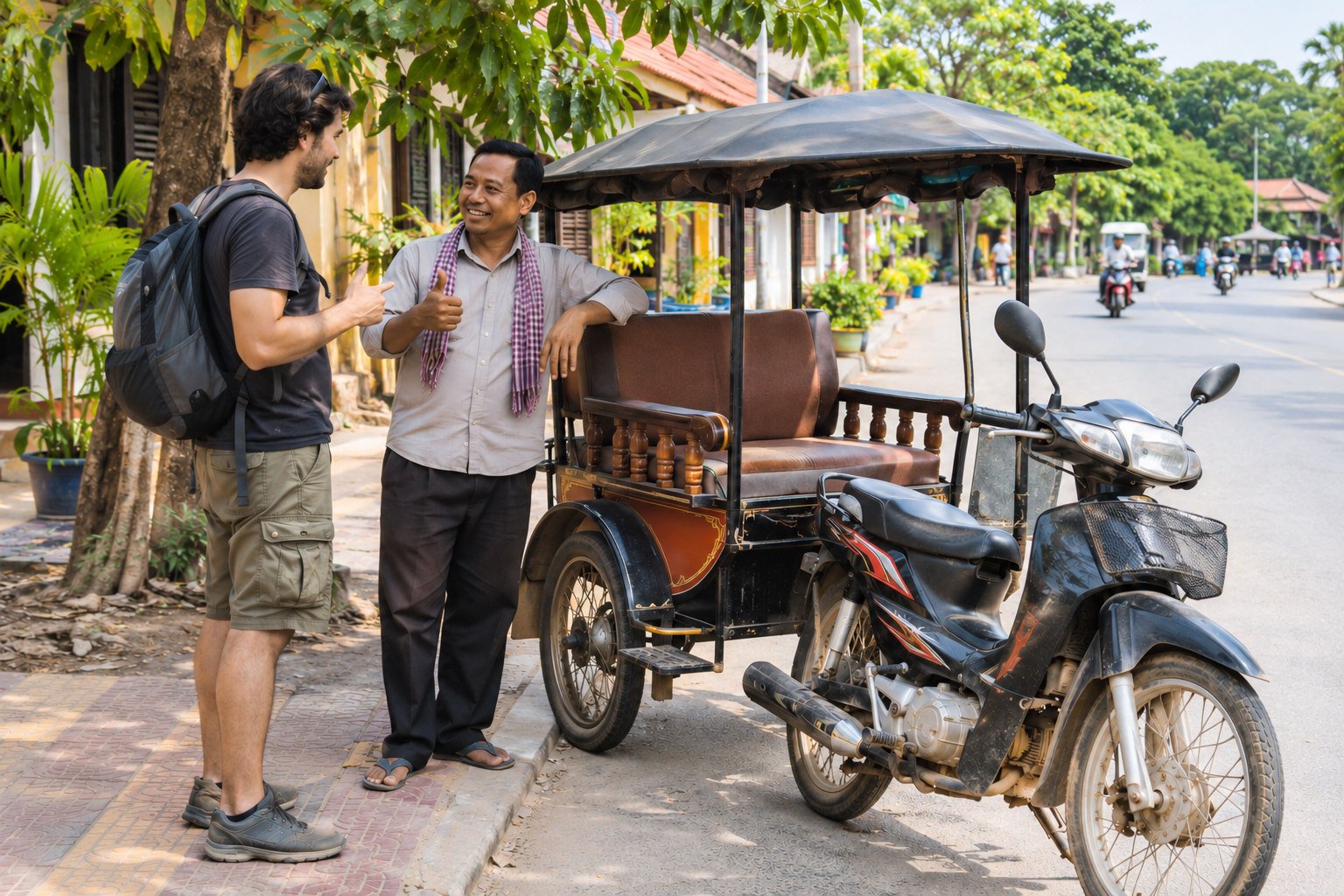
To replace the intercity allowance, compare Phnom Penh–Siem Reap options on 12Go for the date and direction you need, and compare the operator’s direct offer. Check luggage and the departure point; no current departure price is assumed in this model.
Back to contents ↑The changes that move the total most
Swipe or scroll the table to see every column.
| Change | Effect per person | Why it matters |
|---|---|---|
| Room rises from $60 to $90 per night | +$135 over nine nights | $30 extra per room, split between two |
| Add $10 a day to food | +$100 | Daily habits accumulate |
| One $50 activity not already included | +$50 | Check whether transport or tickets replace existing costs |
| Travel solo in the same $60 room | +$270 | You pay the second half of the room |
| Reduce Angkor to one visit day | −$25 | Only worthwhile if one day suits your interests |
An extra night at the same base is a different calculation from an extra destination. Using the mid-range assumptions, one additional room night at US$30 per person, a US$25 food day and US$12 of local transport adds US$67, or about US$74 with 10% contingency. It does not automatically require another visa or Angkor pass, provided the existing permissions and ticket remain valid.
Flight changes can overwhelm those savings. Compare the complete airfare with checked baggage and your actual airport transfers before booking a cheaper-looking arrival that forces an extra intercity return.
Dates also matter: compare your real travel nights, especially around major holidays. A lower-season room offer is useful only if the destination, weather and transport still suit your trip. No seasonal discount is assumed in the model.

Money handling, reserves and costs people forget
Keep spending money and an emergency reserve as separate decisions. The model’s 10% contingency covers ordinary variation, a changed transfer or small unexpected expenses; it is not a substitute for medical insurance or funds for a major disruption.
Check your card’s foreign-currency charges, the ATM’s own fee and whether a cash withdrawal incurs interest. When offered a choice of billing currencies, compare the terms before accepting a conversion. Carry a second payment method separately and some small cash for places that do not accept cards.
Inspect dollar notes when receiving change. FCDO reports counterfeit notes and advises checking that banknotes are genuine and undamaged.[6]
Other easily missed costs include laundry, extra data, early check-in after an overnight flight, bag storage, luggage fees, drinks, a guide you had not budgeted for and a replacement transfer when a service is unsuitable. Add only those relevant to your route, but give them an actual line.
Current route constraint: Cambodia–Thailand land crossings remain suspended according to FCDO advice checked on 14 November 2026. Do not build your budget around an assumed cheap overland arrival from Thailand; price a permitted route after checking the advice.[7]
The mobile-data line is also an allowance. You can compare Airalo eSIM options and select Cambodia, then check the plan’s allowance, validity and your phone’s eSIM compatibility and unlocked status. A data-only plan is not the same as having a local voice number.
Back to contents ↑Ways to spend less without losing the reason for the trip
- Reduce the number of bases. Each move can add transfers, luggage handling and a day of meals bought around transport.
- Share a room or vehicle when that genuinely suits the people travelling. Check the per-person calculation, not just the group headline.
- Choose a location that supports your plans. A room within easy reach of meals and pickup points may cost less overall than a cheaper remote option.
- Use official attraction prices to identify what a tour includes. Avoid buying admission twice through overlapping bookings.
- Keep one or two paid priorities and leave room for unstructured time. A ten-day visit need not contain ten purchased excursions.
- Compare the full cancellation terms. A slightly higher flexible price may be useful if the route remains uncertain, but do not pay for flexibility you will not use.
A good saving keeps the experiences that matter and removes an unnecessary cost. If the only way a proposed budget works is by relying on an unsuitable room, unsafe transport or a connection with no margin, change the route or raise the allowance.
Back to contents ↑Useful questions
Can I spend less than US$530 for ten days?
Yes, if you choose cheaper accommodation and meals, fewer paid attractions or a different route. The model is a transparent allowance, not a minimum price. Keep a separate reserve and use real quotes for the choices that make your own total lower.
Are these costs per person or per couple?
They are per person. The mid-range and comfort columns assume two adults share a room and certain vehicle costs. Multiply by two for the couple total only after checking that your own bookings follow the same sharing assumptions.
How much should I add for flights from the UK?
Add the live fare for your own departure airport, dates, baggage and connection conditions. No airfare is included because a generic number would obscure a large and highly variable part of the total.
Does extending the trip increase the cost at the same daily rate?
Not necessarily. Some charges are paid once, while food and accommodation continue. Use the incremental-night example, then add any new transport, attraction or ticket requirements. Recheck visa permission separately before extending a stay.
Your next decision
Begin with the travel style that resembles your actual choices, then replace the room, transport and activity allowances with final quotes. Keep verified fixed fees separate, allow for sharing correctly and retain a contingency. The useful budget is the one that survives your itinerary, not the lowest daily figure you can find.
Sources
Official information and provider details were reviewed on 14 November 2026. The route choices, time allowances and budget examples are editorial planning analysis, not live booking quotations. Check changing rules and services again before travelling.
- KB PRASAC Bank: foreign exchange rates, dated 13 November 2026 — checked 14 November 2026.
- Angkor Enterprise: official ticket prices and validity — checked 14 November 2026.
- Tuol Sleng Genocide Museum: published admission and audio-guide fees — checked 14 November 2026.
- Cambodia official eVisa: tourist visa fee — checked 14 November 2026.
- Siem Reap Airport Bus: advertised shuttle fares and local transfers — checked 14 November 2026.
- FCDO: Cambodia safety and security, money-related scams — checked 14 November 2026.
- FCDO: Cambodia warnings and insurance — checked 14 November 2026.
Illustrations in this article were created for Taylor’s Trailblazing Travels. Third-party photographs, where used, are credited beside the image or in the source list.


