When Is the Best Time to Visit Japan? Seasons, Crowds and Trade-Offs
Choose the season that suits your route, your priorities and the weather you can comfortably handle.
- Regional climate compared
- Crowds and weather trade-offs
- Flexible-date decisions
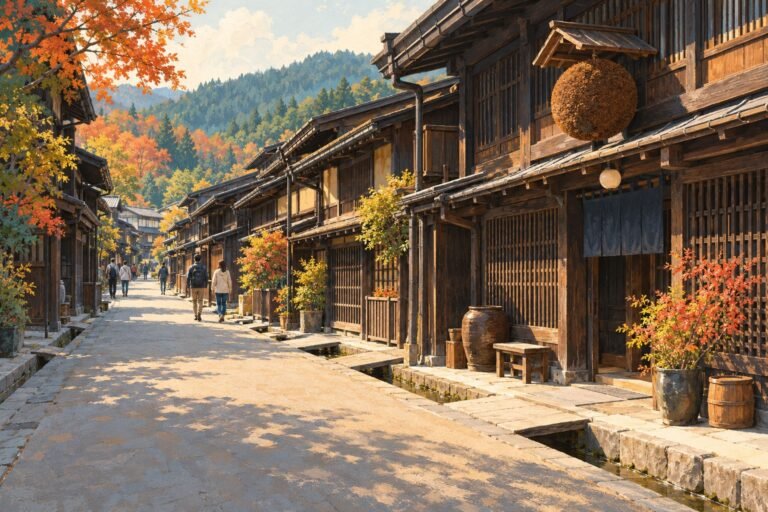
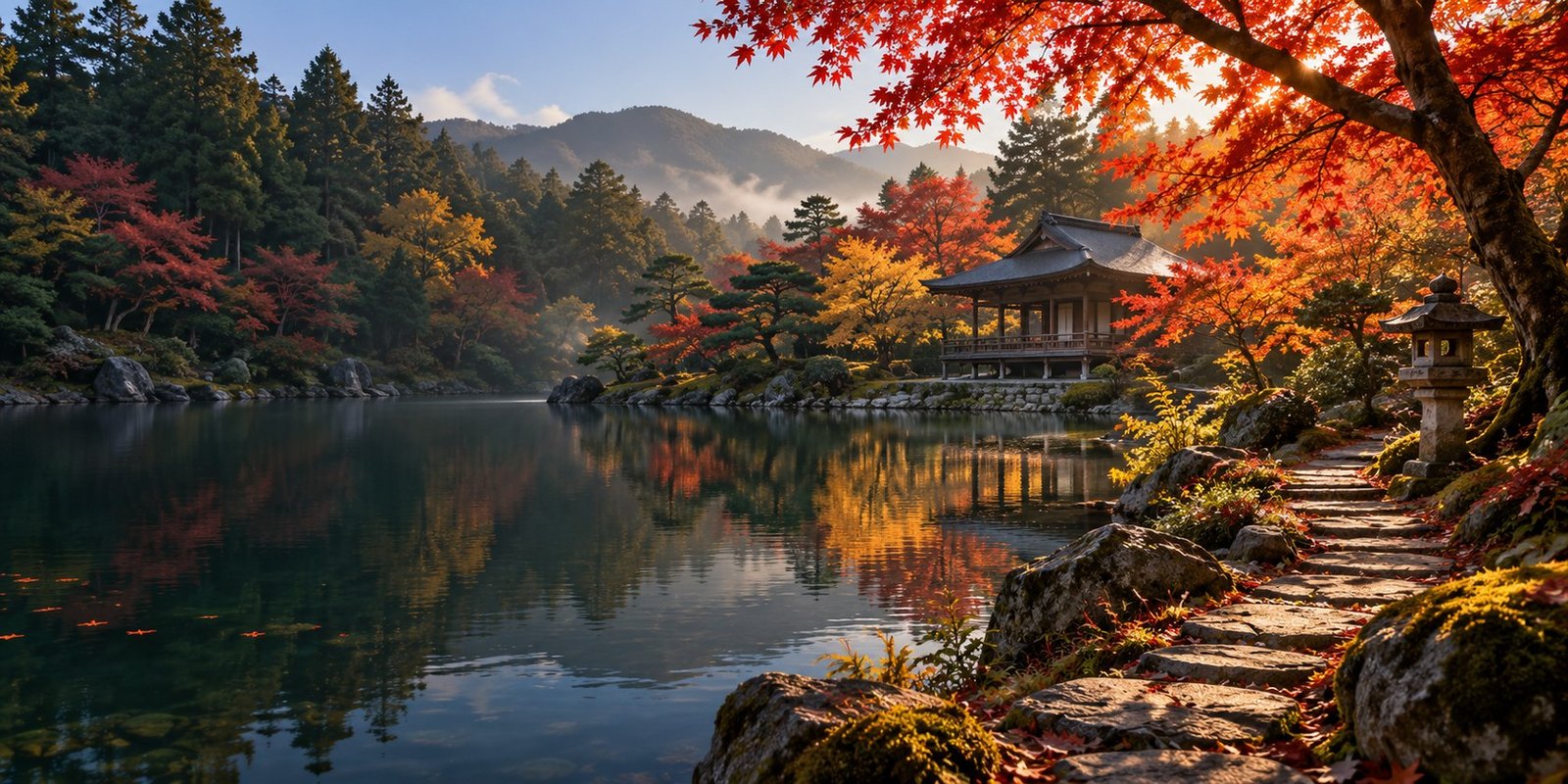
AI-generated editorial illustration of an imagined Japanese autumn garden; it is not a photograph of a named location.
The best time to visit Japan depends on what you want your days to feel like. A comfortable week of city walking, a snow holiday and a beach break require different dates. Even the same month can mean very different conditions in Sapporo, Tokyo and Okinawa. [1]
Start with the places or experiences you would be disappointed to miss. Then compare two possible travel windows against weather, local demand and the complete cost of the trip. This guide uses regional climate evidence and three practical scenarios to make that choice clearer.
City comfort
Compare late May and November, then price your exact route.
Seasonal highlights
Treat flowers, foliage and snow as variable natural events.
Fixed summer dates
Choose your region carefully and plan around heat.
Crowd checks
Look beyond the month to holidays, weekends and local events.
Read the regional weather first
Japan does not have one nationwide sightseeing climate. Hokkaido is much cooler than the southern islands, while mountains and the Sea of Japan side have different winter conditions from the main Pacific-side city route. A city forecast cannot tell you whether a high trail is open. [4]
| Route | What changes the decision | Practical implication |
|---|---|---|
| Tokyo, Kyoto and Osaka | Hot, humid summer; cooler spring and autumn. [1][9] | For long sightseeing days on foot, compare late May and November first. |
| Hokkaido | Colder winter and generally cooler summer. [1] | A strong alternative for summer travel; snow trips need resort-specific dates. |
| Mountains and the Sea of Japan side | Snow, elevation and seasonal access matter. [4] | Check the actual trail, road and transport opening dates before committing. |
| Okinawa | Subtropical conditions and a different rainy-season pattern. [10] | Choose dates around the island and marine activities you want, rather than a mainland calendar. |
The city-walking recommendation is an editorial judgement. Okinawa’s tourism authority places its usual rainy season between mid-May and late June, so the late-May recommendation for Tokyo, Kyoto and Osaka does not transfer neatly to a beach holiday. [10]
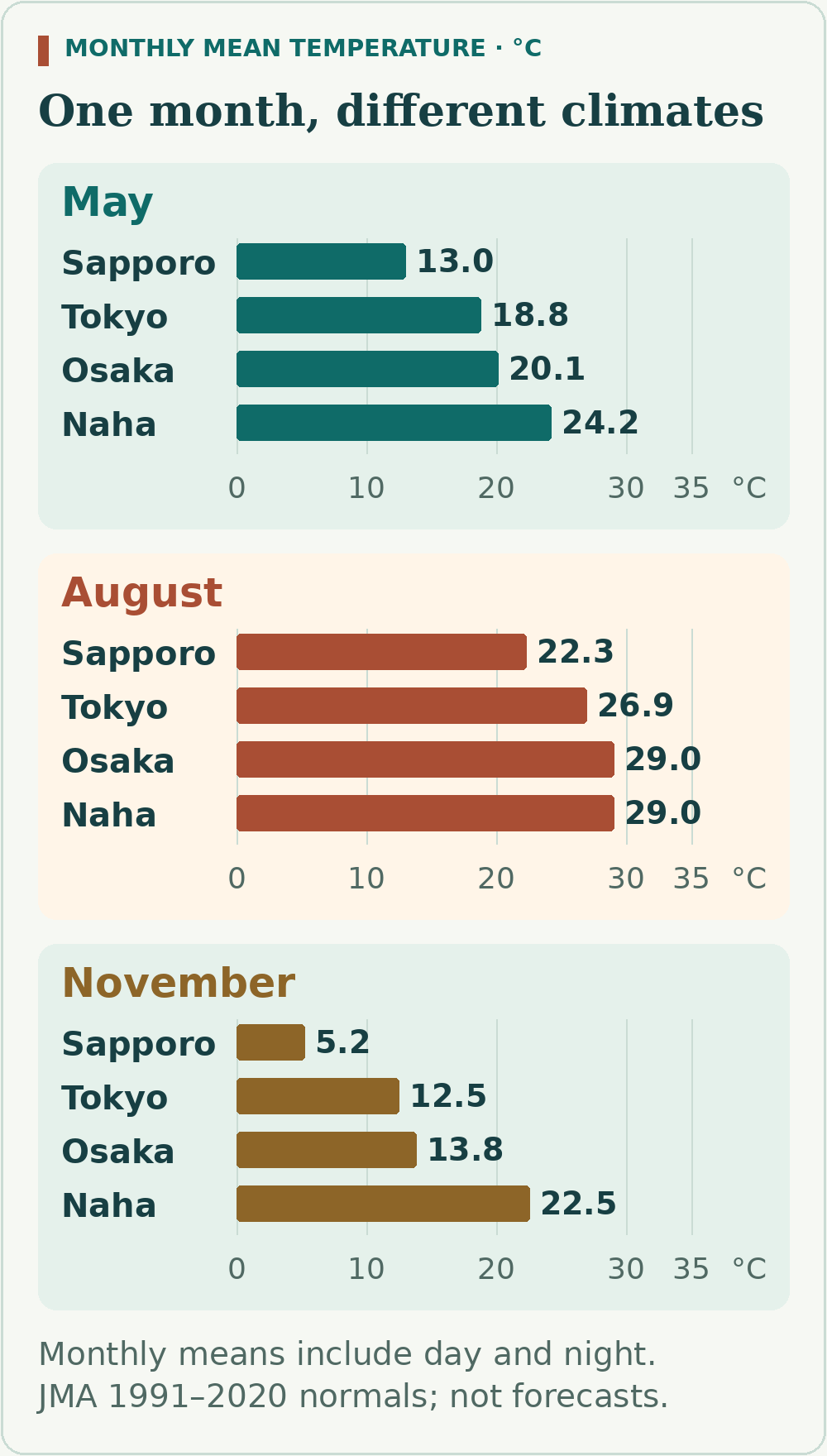
The chart uses JMA’s 1991–2020 monthly mean temperatures. These include day and night; they are not afternoon highs or a forecast for your holiday. For example, the August mean is 22.3°C in Sapporo and 29.0°C in Osaka. The contrast supports considering Hokkaido for summer comfort, while saying nothing about whether an individual day will be cool. [1]
Compare the seasonal windows
Use these broad windows to narrow the search. Flowering dates, leaf colour, snow conditions and seasonal openings vary by place and year; check the local calendar once you have a shortlist. [7][12]
| Window | Why choose it? | Main trade-off | Best planning response |
|---|---|---|---|
| January–February | Winter scenery, snow sports and hot-spring stays. | Cold conditions; snow can complicate travel. New Year is a separate holiday peak. [6][11] | Choose a winter-ready route and check resort access and opening dates. |
| March–April | Spring sightseeing and a chance of cherry blossom in many mainland destinations. | Natural timing is uncertain; popular blossom spots can be crowded. [7] | Choose a trip you would still enjoy if the flowers are early or late. |
| May after Golden Week | A useful mainland sightseeing window before the usual rainy season. | It is not the main blossom period for Tokyo or Kyoto, and Okinawa has different rain timing. [2][10] | Compare the second half of May if walking comfort matters more than a famous seasonal image. |
| June–mid-July | Green landscapes, hydrangeas and trips with good indoor options. | Rainy-season conditions in much of Japan, with regional variation. [4][5] | Keep outdoor visits movable; consider Hokkaido if reducing rain exposure is a priority. |
| Late July–September | Summer activities; northern or mountain routes may suit your dates. | Heat and humidity in many cities, Obon demand and heightened typhoon disruption risk. [6][8][9] | Plan rest and indoor time, check transport updates and avoid brittle connections. |
| October–November | Autumn sightseeing and region-dependent foliage. | Leaf timing moves south and downhill; popular spots fill up. Storm risk is not zero. [8][12] | Match the dates to the region and check local events before booking. |
| December before the year-end peak | Winter city trips and seasonal illuminations. | Cooler days; snow operations and year-end closures need separate checks. [3][6][11] | Verify essential opening hours, especially if extending into New Year. |
The planning responses are editorial suggestions for adapting each window to your trip. None of these periods guarantees good weather or a cheaper holiday.
Choose how much seasonal timing matters
Cherry blossom: build in another reason to go
For many first mainland trips, late March and April are the natural starting point for blossom research. The wider blossom season travels from the southern islands towards Hokkaido, where it can extend into May. Location, variety and the year’s weather affect the result. [4][7]
If seeing blossom is essential, follow local official updates as the season approaches and allow more than one possible viewing day. A single tightly scheduled afternoon is a fragile plan. Keep a garden, neighbourhood or museum you want to see regardless of the flowers, and avoid paying for a long detour solely on the strength of a broad seasonal prediction.
Autumn colour: choose the region before the week
Autumn colour generally starts in northern and higher areas before spreading south and into cities. JNTO’s regional foliage guidance explains this progression and the effect of elevation and the year’s temperatures. Its November guide highlights busy late-November conditions in Kyoto. [3][12]
For a city trip, November is a useful option if you prefer cool walking weather. If your priority is a specific mountain valley, check that area’s leaf reports, transport season and trail access instead. An excellent month for Kyoto is not automatically a suitable month for high-altitude walking.
October is also worth comparing for city sightseeing if you prefer warmer conditions and do not need Kyoto’s later leaf season. JMA’s climate normals put Tokyo and Osaka warmer in October than November. [1][3]
Snow and beaches need their own shortlist
For snow sports, begin with the resort’s operating season and access arrangements; January or February is a sensible research window rather than a snow guarantee. Hokkaido and mountain resorts are distinct choices from a mostly urban winter trip. [11]
For Okinawa, decide whether you primarily want sightseeing, swimming or a particular marine excursion. Its climate is milder in winter, but wind, sea conditions and individual beach or operator rules still affect the day. Warmer water alone does not guarantee a boat trip will run. [10]
Check crowds at three different levels
A promising month can still contain a very busy week. Check national travel peaks, the calendar of your particular destination, and the opening hours of the places that matter to you.
- Golden Week falls around late April and early May. Transport and accommodation can be under pressure.
- Obon brings a major domestic travel period around mid-August.
- Late December and early January combine travel demand with closures or reduced business hours.
These are recurring periods rather than a substitute for the holiday calendar in your travel year. JNTO recommends checking operators because some services may have special reservation arrangements during busy holidays. [6]
Local demand can matter just as much. A foliage weekend, festival or major event can make one town difficult to book while another is manageable. Where your dates allow it, put a popular garden or shrine on a weekday and visit early within its published opening hours. You still need a fallback: quiet timing cannot be guaranteed. [6][12]
If your holiday must overlap a peak, reduce the number of hotel changes, book the accommodation that meets your needs when suitable terms are available, and identify your important train journeys. Avoid treating a full hotel or sold-out departure as proof that an entire region is inaccessible.
Apply the choice to your own trip
The following scenarios combine the climate and calendar evidence with practical preferences. They are original planning judgements, not statistical rankings of months.
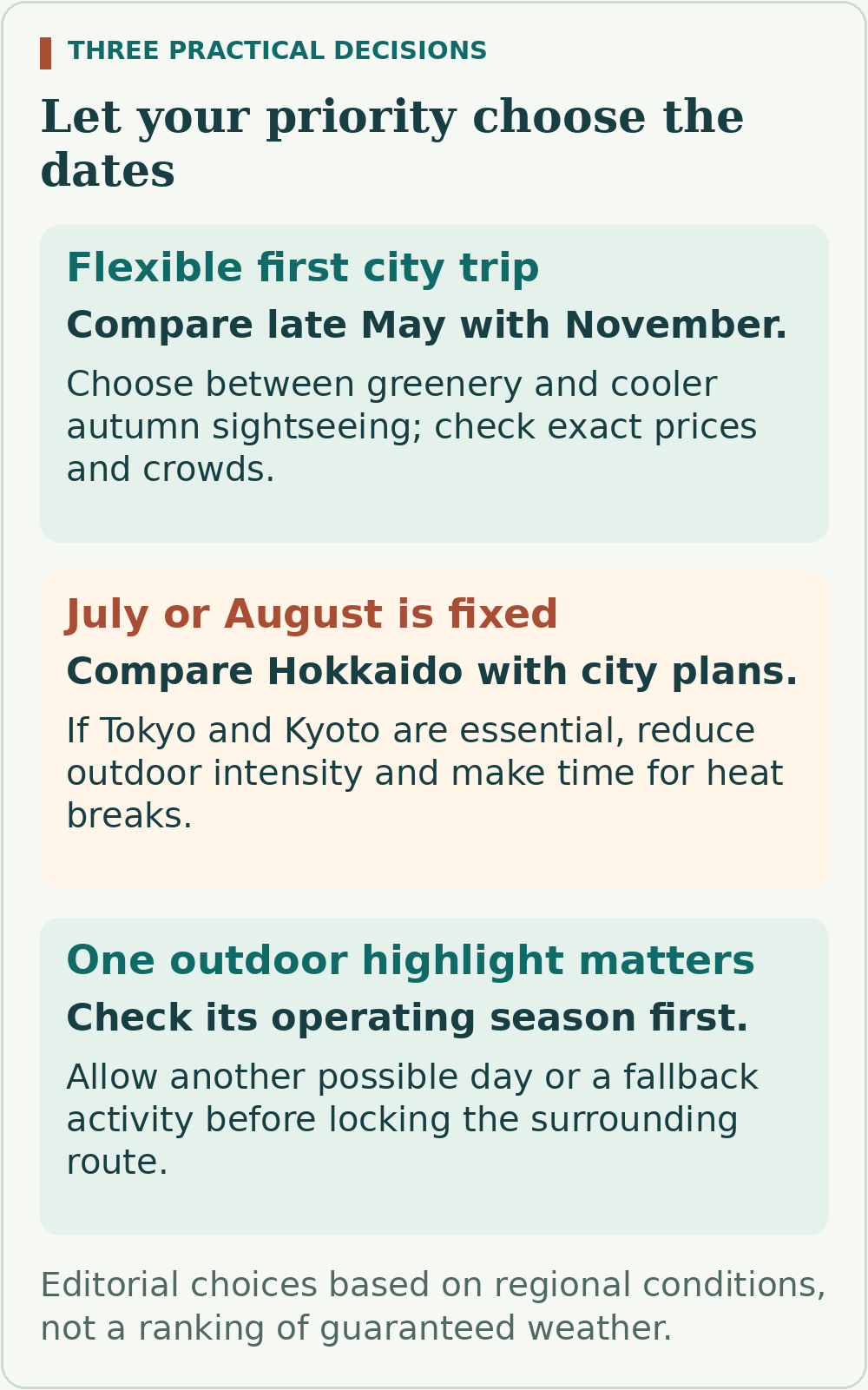
A flexible first visit focused on cities
Suppose you want Tokyo, Kyoto and Osaka, dislike prolonged heat and do not need cherry blossom. Compare a second-half-of-May trip with a November trip using the same number of nights, room standard and flight conditions. May is the stronger starting point if greenery and a post-Golden-Week window appeal; November wins if cooler weather and autumn gardens matter more. Check Kyoto demand if choosing late November. [2][3]
A family whose dates fall in July or August
First decide whether Tokyo and Kyoto are essential. If the region is flexible, Hokkaido deserves a comparison because its climate is generally cooler. If the major cities are the purpose of the holiday, keep them but allow fewer outdoor stops, an indoor midday break and enough rest. A cooler monthly average elsewhere does not cancel your reasons for visiting the cities. [1][9]
A short trip built around one outdoor experience
If a particular hike, island crossing or snow activity is the reason for travelling, check that operation’s season first. Give the activity more than one possible day where the route permits, then book the surrounding stays. When dates are fixed and the activity has no workable fallback, choosing a different experience can be a better decision than adding expensive, tightly linked transfers.
A useful order for the decision
Choose the essential experience, check the region’s conditions, remove dates with unacceptable access or crowd problems, then compare the remaining trips on total cost. Do not let a slightly cheaper flight settle a weather or access problem that would undermine the whole holiday.
Plan for weather without abandoning the season
Rainy season does not mean constant rain every day. It does make it useful to keep a museum, covered shopping area or other indoor visit ready to swap with an outdoor day. Hokkaido is less affected by the main rainy-season pattern, but it still receives rain. [5]
Typhoon risk deserves more flexibility. JMA’s 1991–2020 averages put tropical-cyclone approaches to Japan highest in August and September, with approaches also recorded in October and other months. These are approach counts, not landfalls or the probability that a particular flight or ferry will be disrupted. [8]
For a trip involving islands or a remote final stop, consider returning to the international departure area with a spare night rather than relying on one same-day domestic connection. This is a planning cushion, not protection against a prolonged disruption. Read cancellation terms and check transport operators and official warnings as the date approaches.
During serious weather, follow local instructions and evacuation orders. Heavy rain can bring flooding, landslides and transport disruption; summer heat can also pose a significant health risk. Use the current JMA warnings and the FCDO’s linked safety information rather than assuming the usual seasonal pattern makes the day safe. [9]
Pack for the route: removable layers and rain protection for variable conditions, suitable warm clothing for winter or elevation, and comfortable footwear you can walk in. A forecast for Tokyo is not a packing list for a mountain overnight stay. [4]
Compare complete trips before choosing a bargain
There is no single cheapest month for every UK departure airport, Japanese region and room type. Price two or three date windows with the same assumptions: flights including bags, the actual accommodation you need, internal journeys and any essential activities. A low airfare can be outweighed by a costly stay or extra travel required to reach the right conditions.
Use the Japan trip budget planner to decide which costs belong in that comparison. If weather or crowds suggest changing the route, revisit the trip-length guide before adding another region.
Once you have chosen dates, check cancellation deadlines alongside ticket-release dates. For busy periods, favour a workable room and route over a theoretical bargain that requires you to change bases repeatedly. Keep non-essential outdoor plans flexible until local forecasts and conditions are useful.
Questions that can change your plan
Is September a poor choice for a first visit?
It can work, but it is not the strongest default if avoiding heat and weather disruption is your priority. Much of mainland Japan is still warm, and typhoon approaches are relatively frequent in the long-term statistics. Northern routes and flexible city days can make better use of fixed September dates. [1][8][9]
Can I see snow and warm-weather Japan on one trip?
Potentially, because conditions differ greatly by region. The decision is whether the contrast is worth the extra journey, clothing and hotel move. Check actual snow operations and allow enough nights at both ends; a short city holiday is easily diluted by adding two very different climates. [10][11]
Should I move a whole trip after a blossom forecast changes?
Reprice the complete change first, including cancellation charges and extra travel. If gardens, food and city sightseeing still make the original route worthwhile, keeping it may be the better choice. Change dates only when the seasonal highlight matters enough to justify the cost and the updated local information supports the move.
Make the decision that fits your trip
For flexible first-time city travellers, put late May and November side by side and choose between them using your tolerance for temperature, your interest in seasonal colour and the actual cost of the route. For fixed dates, change the region or daily pace before assuming the whole trip is badly timed.
Your final check is specific: confirm the holiday and event calendar, seasonal access and cancellation terms for the places you intend to visit. A suitable season is a strong starting point; local conditions determine what works on the day.
How this guide was researched
Regional comparisons use JMA’s published 1991–2020 climate normals, not a forecast for 2026 or 2027. The diagrams and traveller scenarios combine those data with official tourism, holiday and weather guidance. Recommendations are editorial judgements about comfort, flexibility and trip purpose; no hotel prices, transport availability or personal visits are claimed.
Sources
Official guidance and operator information reviewed on 17 October 2026. Recheck time-sensitive details for your own travel dates.
- Japan Meteorological Agency — Tables of Climatological Normals, 1991–2020
- Japan National Tourism Organization — Japan in May
- Japan National Tourism Organization — Japan in November
- Japan National Tourism Organization — National parks: seasons and climate
- Japan National Tourism Organization — Japan in June
- Japan National Tourism Organization — Business hours and holidays
- Japan National Tourism Organization — Spring in Japan
- Japan Meteorological Agency — Normal statistics for tropical cyclones
- FCDO — Japan safety and security: extreme weather and natural disasters
- Okinawa Convention & Visitors Bureau — When to visit: climate and seasons
- Japan National Tourism Organization — Winter in Japan
- Japan National Tourism Organization — Autumn leaves: regional timing and forecast
Illustrations in this article were created for Taylor’s Trailblazing Travels. Third-party photographs, where used, are credited beside the image or in the source list.