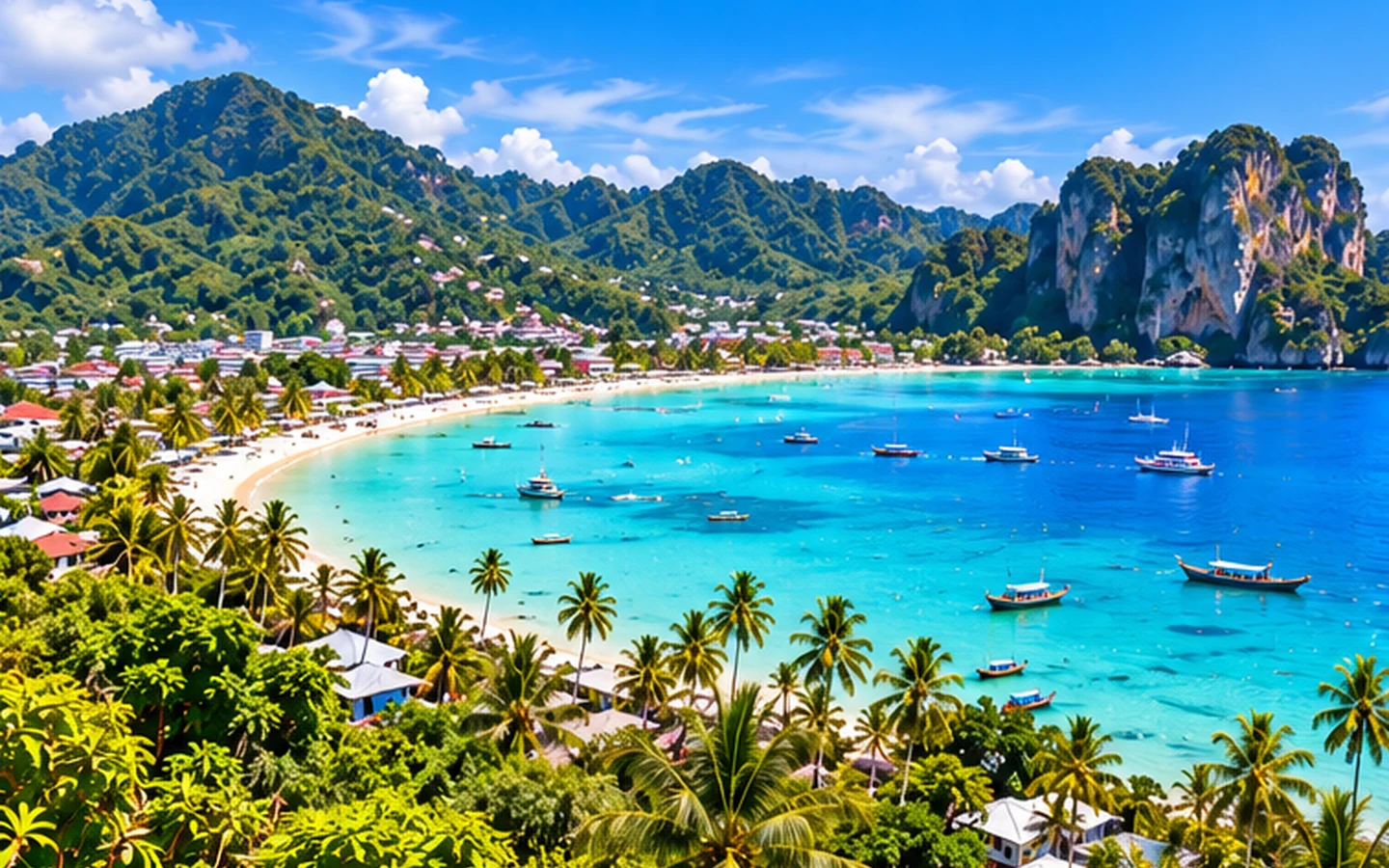
Best Thailand Islands in July
A lower-Gulf shortlist, realistic alternatives and routes with room for mixed weather.
The best Thailand islands in July are usually a shortlist to investigate, not a promise of uninterrupted sunshine. My first comparison would be Koh Samui, Koh Phangan and Koh Tao in the lower Gulf. They offer different holidays within one connected island group, which is more useful than collecting recommendations from opposite sides of the country.
Samui is my starting point for an easier arrival and a broad choice of accommodation. Phangan suits a longer beach stay with a deliberately chosen neighbourhood. Tao earns its place when diving, snorkelling or a compact island atmosphere is central to the trip. Those are research-led planning preferences, not claims that July is rain-free or that every traveller should visit all three.
This guide describes the usual seasonal context for July. It is not a forecast for July 2027, and the review date does not turn a climate pattern into a prediction. Before travelling, check short-range weather, marine warnings and the conditions attached to your actual bookings. A practical July holiday should still work when a boat excursion moves or a beach afternoon becomes a pool afternoon. [1]
Affiliate disclosure: some links in this guide are affiliate links. If you book or buy through them, Taylor’s Trailblazing Travels may earn a commission at no extra cost to you.
Koh Samui
A useful single base for a mixed-interest week.
Koh Phangan
Choose the neighbourhood rather than the reputation.
Koh Tao
Include it when the water activity justifies the journey.
Not every Gulf island
Trat and the lower Gulf need different seasonal checks.
How I selected the best Thailand islands in July
Four tests that matter more than a sunshine slogan
I compared the seasonal setting, the ease of reaching a usable base, the range of activities that do not depend on a long boat crossing, and the consequences of disruption. The lower-Gulf trio leads this particular shortlist because it lets you build several styles of holiday within one regional cluster. The island descriptions come from tourism-authority information; the order is my judgement about July trip planning. [2] [3] [4]
That approach produces a different answer from a list of Thailand's most dramatic beaches. Somewhere can be exceptionally beautiful yet a poor fit for a traveller whose holiday collapses if one sea transfer is cancelled. Likewise, a well-equipped island is not automatically the right choice for somebody who wants quiet evenings and is happy to stay in one place.
Decide what a successful week looks like
Write down three things you would genuinely enjoy: perhaps a comfortable beach hotel, a cooking class and two suitable snorkelling outings. Then ask whether you need three islands to achieve them. For many visitors, one base with an optional second stay is enough. The simplest route is often the one with the greatest freedom to respond to the weather.
| Island | Planning reason | Trip shape | Main condition |
|---|---|---|---|
| Samui | Variety and an easier first base | One settled week | Choose an actual neighbourhood |
| Phangan | A longer beach-focused stay | Second base or main stay | Arrange the pier-to-hotel leg |
| Tao | Diving / snorkelling interest | A purposeful activity stop | Allow a return sea-travel buffer |
| Phuket | Land activities plus a comfortable hotel | Flexible alternative | Do not require daily west-coast swims |
| Lanta | Quiet time and a slower routine | Longer flexible alternative | Check operating facilities and excursions |
Editorial July shortlist, reviewed 3 October 2026; not a forecast or weather guarantee. [1]
July weather: understand the regional difference
Thailand does not have one island forecast
The southwest monsoon influences much of Thailand during July, but exposure differs between coasts and islands. Tourism Authority of Thailand guidance specifically encourages travellers to consider the different beach seasons rather than assume the whole country has identical conditions. Use that regional distinction to choose where to investigate, not to calculate a guaranteed number of sunny days. [1]
The lower-Gulf Samui group should not be confused with the eastern Gulf around Trat. Koh Chang, Koh Mak and Koh Kood occupy a different setting; the tourism authority describes southwest-monsoon rain and potentially rough sea travel in the Trat area. A recommendation for Samui in July cannot simply be copied across to every island labelled 'Gulf of Thailand'. [5]
What the weather pattern cannot tell you
It cannot tell you whether the sea outside a particular room will be suitable at ten tomorrow morning. Nor does it establish that rain will fall only briefly at night. Avoid planning around reassuring but unsupported statements about all showers being short, every morning being clear, or one half of July always being better than the other.
Instead, build a holiday with adjustable outdoor days. Choose a room you would enjoy using, leave gaps between prepaid activities and protect the final journey. These decisions remain useful whether the week is mostly bright, mixed or unusually unsettled. They do not require pretending that a seasonal tendency is a reliable daily timetable.
Koh Samui: my first choice for a straightforward July base
The strongest reason is flexibility
Samui offers a broad range of beach areas and visitor activities, including cooking, wellness and excursions. The tourism authority's overview makes clear that the island supports more than a single beach routine. I would start here when the group has mixed interests or when a relatively straightforward island arrival is worth paying for. [2]
Compare Chaweng, Bophut, Choeng Mon and quieter alternatives by the day you want to have, not just their names. Do you need meals within walking distance? Would a pool compensate for a poor sea day? Can everyone reach the beach comfortably? A room that answers those questions can be a stronger July choice than an isolated bargain with a spectacular view.
Do not overfill a short stay
For six nights, I would keep Samui as the principal base and arrange no more than two weather-dependent outings in advance. Leave other days for beach time when appropriate, a land activity and ordinary rest. The point is not to avoid planning; it is to avoid selling every flexible day before you know which conditions you have.
Travellers arriving after a long international journey should compare the full connection, including baggage arrangements and airport changes where relevant. The cheapest sequence is not necessarily the least tiring. Give the first evening one simple job: reach the room, eat and settle in. That is a useful beginning, not a day that needs rescuing with another activity.
Koh Phangan: choose the neighbourhood before booking the ferry
One island, several different stays
Koh Phangan's official destination information highlights beaches, waterfalls and other landscapes alongside its famous party reputation. For a July holiday, I would investigate a settled beach base rather than assume the whole island shares one atmosphere. The particular accommodation and its surroundings will influence the trip more than the island's broad label. [3]
Thong Nai Pan can appeal for a beach-centred stay, while travellers who value everyday services may prefer a different location closer to their intended activities. Ask about the real driving route, not merely the distance across the map. A quiet room can be a good choice, but only when you are comfortable with the transport needed for meals and outings.
Check events without making them compulsory
A party, retreat or special event can affect the room you choose even when you do not intend to attend it. Check the venue's own current calendar before committing to nearby accommodation, and ask the property about typical late-night noise at your exact address. Do not assume that a quiet-looking photograph explains what happens after dark.
For a first visit, four or five nights gives you a useful amount of settled time. Arrive in daylight, organise the pier transfer and avoid adding another boat outing immediately after check-in. When the basic logistics are simple, you can use the remaining days to decide how active or quiet the stay should be.
Koh Tao: worthwhile when the water activity has a purpose
A smaller island with a clear reason to visit
The tourism authority identifies Koh Tao with diving, snorkelling, Sairee Beach and nearby Koh Nang Yuan. I would choose it in this July shortlist when those interests are important enough to justify the additional sea journey. It is not an obligatory stop merely because you are already visiting Samui or Phangan. [4]
For a traveller who wants to try a new water activity, the quality and suitability of the operator matter more than collecting the cheapest advertised session. Ask about experience requirements, group size, supervision, the actual site and what happens if conditions change. A listing's photograph is not a description of the session you will receive on your date.
Leave room around the main activity
Do not place the only possible activity day between a late arrival and an early departure. Give yourself more than one usable day so that an operator can recommend a suitable option rather than having to fit your entire ambition into a narrow gap. The same principle applies to somebody who simply wants a comfortable first snorkelling experience.
When choosing accommodation, compare the route between the room, meals and the activity meeting point. A hillside view may be attractive but inconvenient if you expect several early starts. You do not need to hire a scooter to justify the island; a deliberately chosen base and arranged collections can support a good stay without one.
Samui, Phangan or Tao: choose by the trip you actually want
For mixed groups and shorter holidays
I would lean towards Samui when people disagree about how much time to spend on boats, how secluded to stay or how active each day should be. That is a judgement about the range of options, not a statement that every Samui hotel is convenient. Choose the beach area and property with the same care you would apply on a smaller island.
For a couple wanting several slow days, Phangan may provide a better fit if the chosen bay, transfer and evening routine work. For a solo traveller interested in an organised water activity, Tao may give the stay a useful focus. In each case, the reason for travelling should be clear enough to justify the extra movement.
The best combination may contain only two islands
A Samui-and-Phangan holiday can deliver a noticeable change of setting without requiring the whole lower-Gulf circuit. Samui-and-Tao can also make sense for a specific activity, provided you accept the travel involved and protect the return. Do not treat a three-island itinerary as inherently more complete than a well-chosen two-island stay.
A useful test is to remove one transfer from the plan and ask what you lose. If the answer is only another name on the list, keep the time. If the removed island provides the main reason for the holiday, retain it and shorten something less important instead. That is a better basis for planning than symmetrical night counts.
Phuket in July: possible, but make the holiday land-friendly
Why it is not simply ruled out
Phuket has established beach towns, food, cultural areas and a wide choice of accommodation. Those features can support a good holiday even when the sea is not suitable for swimming or a planned excursion changes. I would consider it in July for travellers who enjoy the island itself, rather than someone buying a guarantee of calm west-coast beach days. [6]
The distinction is especially useful when comparing attractive hotel offers. A larger room or a better pool can provide real value, but only if you would enjoy using them. A discount does not change the weather exposure, and a low price is not a reason to choose a holiday whose main purpose may be frustrated.
Keep beach decisions local
Use designated swimming areas and obey the flags. The UK travel advice warns about strong currents and monsoon-season sea conditions; a beach's popularity or the presence of other swimmers does not override that warning. A sunny interval should not become an excuse to move beyond the lifeguarded area or ignore instructions. [7]
For a Phuket July stay, I would reserve one main land activity and leave sea excursions conditional until their timing and cancellation terms are clear. A food-focused afternoon, a cultural walk or a cooking session can be a planned highlight rather than a consolation prize. That changes the whole tone of a weather-flexible holiday.
Koh Lanta in July: a slower option with more questions to ask
Suitable for some travellers, not a universal bargain
Koh Lanta's appeal includes a succession of beaches, a coastal road, an old-town setting and a less hurried style of stay. In July, I would consider it for somebody who values quiet time and accepts that a beach holiday may include substantial time away from the sea. It is not my first choice for a short trip built around guaranteed daily swimming. [8]
Before booking, confirm the facilities that matter to you: the pool, restaurant, nearby dining options and the tours you might genuinely take. Do not assume that a service appearing in an old review will operate in the same way during your dates. Ask the property directly and keep the answer with the booking details.
Arrival by road does not eliminate every weather issue
Compare the actual transfer product, including its collection area, vehicle and any ferry element. A route described as a van transfer still deserves a clear explanation of the journey. It may be a useful alternative to a longer open-sea crossing, but it should not be advertised as a guarantee of disruption-free access. [9]
I would choose a well-positioned room and arrange one meaningful land activity rather than promise myself a string of offshore trips. If the reason for visiting is to read, walk when conditions allow and enjoy a slower routine, that can work well. If the reason is specifically a marine-park excursion, check its seasonal access before making Lanta the centre of the trip.
Why Koh Chang, Koh Mak and Koh Kood are not my default July picks
The eastern-Gulf label can be misleading
These islands are often grouped with Samui in broad discussions of 'Gulf islands', but that shorthand is not enough for seasonal planning. Trat's official destination guidance describes heavy southwest-monsoon influence, with rough conditions sometimes affecting sea travel. This is the relevant distinction when deciding where to build a swimming-led July itinerary. [5]
That does not mean nobody should visit the eastern islands in July. A returning traveller who wants a particular hotel, understands the transfer exposure and is content with a quiet stay may make a different choice. The point is to choose deliberately, not to import a recommendation written for another part of the Gulf.
Investigate the complete arrival and exit
Check the operating days, departure pier, final hotel transfer and cancellation terms before paying for a remote stay. If your onward journey is inflexible, plan where you would sleep if a crossing moved. The answer should be a practical mainland or gateway option, not simply an optimistic belief that the last boat will run.
For a first Thai island holiday in July, I would normally make the lower-Gulf comparison before adding this eastern cluster. A simpler regional decision reduces the number of uncertain connections and leaves more time to enjoy the accommodation you have booked. There is no prize for choosing the most complicated route available.
Marine parks and seasonal closures
Do not build July around the wrong excursion
Some marine attractions close seasonally for ecological recovery and weather-related reasons. The Tourism Authority of Thailand publishes a national-park closure resource, and individual park announcements remain the place to confirm the exact attraction and dates. A province being open to visitors does not mean every island excursion within it is operating. [10]
In particular, do not treat the Similan or Surin islands as routine July day-trip commitments. Their established seasonal closure period normally includes July. Before making any alternative marine park the centre of your plans, check that specific park rather than applying a blanket rule to all islands, reefs or beaches in southern Thailand. [10] [11]
Ask what an alternative actually includes
When an excursion substitutes another stop, compare its purpose with the reason you booked. A replacement beach, viewpoint or snorkelling area may still produce an enjoyable day, but it is not automatically equivalent. Read the change and refund terms before purchasing, especially when the named location is the main attraction for you.
A cancellation by a responsible operator should not prompt a search for somebody willing to ignore the same conditions. Instead, move the day, choose a land activity or accept the refund arrangement in the contract. Flexible planning is valuable precisely because it removes the pressure to force a boat day that no longer makes sense.
A seven-day July plan with one base
Six nights on Samui
For a first short visit, I would book six nights in one suitable Samui area. Use day one for arrival, day two for the local beach and surroundings, and day three for a land-based activity. Keep days four and five adjustable for a suitable excursion or a different beach, then leave the final full day deliberately light before departure on day seven.
This is a sequence of priorities, not a weather forecast. Swap the outdoor days when local advice suggests doing so. A good operator should be able to explain what conditions affect the activity, while the hotel can help you understand its own frontage. The plan works because you have not tied every day to a separate expensive booking.
When to add Phangan instead
With seven days, a second island should have a clear purpose: perhaps a particular bay, a longer booked activity or a different atmosphere that matters to the group. Divide the nights around the transport you actually choose and avoid spending the final night on the wrong side of an essential crossing.
For many visitors, however, keeping one base is the better use of a week. A day spent changing hotels is a day not available for the pool, a class, a meal or a swim when conditions allow. The apparent simplicity is a strength, especially when this is your first experience of island transport in Thailand.
A fourteen-day July route through the lower Gulf
Thirteen nights, with the return protected
My fuller route uses four nights on Samui, four on Phangan, three on Tao and two back on Samui. That is thirteen nights across fourteen calendar days, not fourteen nights squeezed into a two-week holiday. The final Samui stay is deliberate: it separates the return sea journey from departure and gives the trip a calmer finish.
Begin with enough Samui time to recover from travel. Move to Phangan for a settled beach stay, then continue to Tao only when its activities justify the journey. Returning to Samui before the final day costs some time, but it is preferable to treating a ferry and an important flight as a single protected connection when they are separate bookings.
| Days / nights | Base | Main purpose | Next stage |
|---|---|---|---|
| Days 1-4 / nights 1-4 | Samui | Arrive and settle | Ferry on day 5 |
| Days 5-8 / nights 5-8 | Phangan | A longer beach routine | Ferry on day 9 |
| Days 9-11 / nights 9-11 | Tao | A purposeful water-activity stay | Return on day 12 |
| Days 12-14 / nights 12-13 | Samui | Buffer and final departure | Leave on day 14 |
Suggested 14-day / 13-night route, not an operator timetable. Recheck actual departures. [12]
A simpler variation for a less mobile group
Replace Tao with extra nights on the first two islands when another crossing would be tiring, when luggage handling is difficult or when nobody has a strong reason to go. The holiday remains complete. You gain longer stays, fewer checkouts and more room to rearrange outdoor activities without renegotiating several reservations.
Alternatively, make Tao the principal stay and reduce Phangan rather than trying to preserve equal attention for every island. A diving or snorkelling interest can legitimately determine the route. Work backwards from that purpose, then check the transport and accommodation together before committing to either in isolation. [12]
Ferry bookings: read the whole product
Check piers, not just island names
A ticket search can include different departure piers, vehicle collections or connecting arrangements under similar island labels. Open the actual product and confirm where you must be, how early to arrive, what baggage is allowed and whether a hotel transfer is included. The operator's current instructions should determine the plan. [12]
Record the arrival side as carefully as the departure. A cheap fare can become less attractive when it leaves you far from the hotel without an included transfer. For a family or a group carrying several bags, the practical cost is the whole door-to-door journey, not just the figure displayed beside the boat icon.
Separate tickets mean separate responsibilities
Do not assume a ferry company will pay for a missed flight booked elsewhere. Read the terms for delays, cancellations and amendments, and decide what buffer matches the consequences of disruption. An overnight gap is useful but cannot guarantee that every possible interruption will be resolved in time.
Keep the booking confirmation accessible offline and save the operator's contact information. If the schedule changes, you need to know which company is actually operating the journey, not merely the name of the website used to buy it. A short preparation step before travel can prevent a much longer search on a wet pier.
Choosing accommodation for mixed weather
A room should be somewhere you want to spend time
Look beyond the pool photograph. Check whether the room has a covered sitting area, usable space for bags, a drying arrangement and enough comfort for an afternoon indoors. Travellers sharing a small room may place more value on those details during a weather-flexible stay than on a distant sea view.
Also check what is within a comfortable walk. Nearby meals, a shop and a straightforward pickup point can make ordinary days easier. A remote property can still be a good choice, but the cost and availability of transport should be part of the decision rather than discovered after arrival.
Understand cancellation and change conditions
Compare refundable and non-refundable rates in the context of your route. A modestly higher room price may be worthwhile when arrival depends on a sea crossing, but the exact terms matter: deadlines, local time, no-show rules and the treatment of a shortened stay can differ between offers.
Keep written confirmation of any promise that is important to the booking, such as a pickup, a specific bed arrangement or an accessible room. General messages saying the hotel will 'help' are not the same as an included service. Clear details protect both you and the property from avoidable misunderstandings.
July budgets: avoid assuming everything is low-season cheap
Work from dates and room requirements
July can include school-holiday travel and different demand patterns between markets. Rather than promise that every island will be cheaper, compare actual rates for your party and dates. A family requiring a particular room configuration may face a different price picture from one adult choosing a simple room at short notice.
Separate per-room costs from per-person costs. Two people can share a room, but usually still need two ferry tickets, two meals and two places on an excursion. This sounds obvious until an itinerary mixes those units and produces a budget that looks comfortably low only because half the transport has been omitted.
A transparent working allowance
For illustration, a budget prepared on 3 October 2026 might allocate THB 2,400 per room-night, THB 1,000 daily for two adults' food and THB 8,000 for their combined local transport and selected activities over a thirteen-night trip. These are editorial allowances, not July 2027 quotations, and they exclude international flights, insurance and major training courses.
Replace each allowance with a real offer before deciding the trip is affordable. Add a separate disruption reserve that could cover another room and a rearranged transfer. The reserve is not an expectation that things will go wrong; it is what makes a change inconvenient rather than financially destabilising.
| Line for two adults | Calculation / allowance | Amount |
|---|---|---|
| Room | 13 nights x THB 2,400 | THB 31,200 |
| Food | 14 days x THB 1,000 | THB 14,000 |
| Local transport and activities | Joint allowance | THB 8,000 |
| Working total | Before flights, insurance and reserve | THB 53,200 |
Editorial inputs prepared 3 October 2026; not July 2027 quotations. Replace with actual offers.
Packing and communication for July island travel
Plan for wet transfers without overpacking
Use luggage you can manage through the actual journey you have booked. Protect documents and electronics, keep essential medication and a dry layer accessible, and do not bury the ferry confirmation at the bottom of a tightly packed bag. A small, organised day bag is more useful on transfer days than a large collection of rarely used accessories.
Bring sun protection even when the forecast looks mixed, and include clothing that dries comfortably. The point is to handle a changing day rather than pack for every imaginable condition. If an activity needs specialist equipment, ask the operator what is provided and what you should bring before buying something unnecessary.
Check how you will contact people
An eSIM can be useful for maps, messages and booking changes, but compatibility, activation conditions and the plan's services need checking. Do not assume a data package includes ordinary voice calls. Keep important addresses and confirmations offline as well, so a temporary connection problem does not remove your whole travel plan.
For families or companions splitting up during the day, agree a meeting place and time that does not depend entirely on live messaging. On a transfer day, everyone should know the accommodation name and who holds the booking. Small practical arrangements make a weather-related change much easier to handle calmly.
Beach safety and water activities in July
A suitable month does not make a suitable sea
Follow local flags, lifeguard directions and marine warnings. The UK travel advice highlights rip currents and monsoon-related sea risks, while the tourism authority provides additional advice about jellyfish and designated swimming areas. Choose a responsible operator and do not treat a marketed island season as evidence that a particular activity is appropriate. [7] [13]
Check the needs of the least confident participant before paying. A boat tour described as suitable for everybody may still involve ladders, deep water, long periods afloat or difficult boarding. Describe any mobility limitation or uncertainty honestly and ask whether the proposed activity can accommodate it, rather than hoping the details will become clear on the boat.
Keep weather decisions free from pressure
Avoid placing your only possible excursion on the day before departure. Giving the operator and yourself another usable day makes it easier to move the activity. It also removes the feeling that you must accept a marginal option because there is no time left, which is a poor basis for a water-based decision.
If conditions are unsuitable, choose a genuinely enjoyable alternative. A planned cooking session, a slow meal or a comfortable pool afternoon is better than spending the day searching for an excursion that somebody will still sell. Good July planning is partly about making the sensible choice easy to accept.
Pros and cons of a July island holiday
Where July can work well
A carefully chosen island base can provide a rewarding holiday without following the busiest dry-season itinerary. The lower-Gulf cluster gives you several ways to organise a stay, from a single comfortable base to a more active route. You can match the journey to your interests rather than assume that every famous Andaman stop belongs in the plan.
A flexible approach also encourages longer stays and fewer hotel changes. Those choices can improve the holiday regardless of weather: less packing, more familiarity and a better chance to discover an ordinary restaurant or daily routine you enjoy. The value lies in how the days work, not in proving that the season is universally underrated.
The limitations to accept
Weather-dependent activities can move or disappear, and a short holiday offers fewer opportunities to rearrange them. Boat connections need care, particularly before major onward travel. A traveller who would be unhappy without daily sea swimming should take those constraints seriously rather than trying to solve them with an optimistic hotel description.
The solution is not to avoid July automatically. It is to choose a trip with enough alternatives and financial flexibility to remain enjoyable. When the room, local area and non-boat activities appeal in their own right, a changed excursion becomes one adjustment rather than the collapse of the holiday.
Advantages
- Several holiday styles in one lower-Gulf cluster
- Longer stays leave room for adjustments
- A smaller route can reduce administration
Trade-offs
- Weather-dependent outings can change
- The final sea connection needs protection
- Not every Gulf island shares the same pattern
Common July planning mistakes
Confusing a regional tendency with a guarantee
The most expensive mistake is buying a holiday on the promise of certain weather. A seasonal preference can help choose a coast, but it cannot guarantee rain timing, sea visibility or a cancellation-free week. Be especially cautious with precise percentages or day-by-day claims that are not supported by an appropriate forecast for your dates.
Another mistake is treating all Gulf islands as interchangeable. Samui, Phangan and Tao belong to one practical cluster; the Trat islands require a different seasonal and transport assessment. Grouping them under the same sea name can hide the very distinction you need when choosing a July beach holiday. [5]
Creating a route with no spare decisions
Do not book a chain in which every hotel, ferry and activity depends on the previous service being punctual. Leave space around the most consequential connections and decide in advance which stop could be shortened or removed. Flexibility works best when it has been designed into the route rather than demanded after a problem appears.
Finally, avoid adding an island because it feels wasteful to be nearby without visiting. A ferry, check-in and unpacking still use real holiday time. Stay longer when another move offers little beyond a new location label. The most satisfying July itinerary may be the one you deliberately make smaller.
Frequently asked questions
Which island is your first recommendation for July?
Samui is my starting point for a first visit because it supports several styles of stay and makes a single-base holiday plausible. Phangan or Tao may be better when a particular beach setting or water activity drives the trip. Compare the whole holiday rather than treating the first recommendation as a weather guarantee.
Is July the dry season on Koh Samui?
I would not describe a July booking as a promise of dry weather. The lower Gulf can be a useful seasonal alternative to the Andaman coast, but rain and unsettled conditions remain possible. This guide uses regional patterns to organise the shortlist, not to certify a month or predict the weather for a future year. [1]
Is early July always better than late July?
There is no reliable basis here for promising that one half of the month will always suit your trip better. Choose dates around the practical matters you can verify, such as room availability and transport, then use forecasts closer to departure. Do not pay more solely because an unsupported calendar rule promises sunshine.
Can I still enjoy Phuket in July?
Yes, particularly when you like its food, accommodation and land-based activities as well as the beach. Keep swimming and sea excursions conditional on local advice. Phuket is a less suitable match when the holiday's success depends on calm west-coast water every day and there is no appealing alternative plan. [7]
Should I visit all three lower-Gulf islands in a week?
Usually I would not. A week can be more enjoyable with one principal base, or two places when the second has a clear purpose. Each transfer consumes more than the time spent on the boat. Three islands make more sense with a longer stay and enough room to protect the final connection.
Are the Similan Islands a normal July day-trip option?
No. Their usual seasonal closure includes July, so they should not be the fixed centre of a July itinerary. Check the relevant national park's current announcement for exact access information, and do not assume that another attraction in the same province follows identical dates or rules. [10] [11]
Will my ferry ticket protect a separately booked flight?
Do not assume so. Read the ferry terms and the airline terms separately, and allow a buffer that reflects the cost of missing the flight. Returning to the departure gateway before the final day is a sensible planning measure, although it cannot remove every possible disruption. [12]
What is the most useful hotel feature for July?
An accommodation arrangement you would enjoy even without a sea swim is the most useful starting point. That might mean a good pool, covered sitting space, comfortable room and nearby meals. A beautiful view matters less when the practical setting makes every ordinary task difficult during mixed weather.
My final July recommendation
Begin with Samui, Phangan and Tao, then select the smallest combination that provides the holiday you actually want. For a week, one base is often enough. For two weeks, the lower-Gulf route can work well when each stop has a purpose and the return journey is protected with time on the departure island.
Choose Phuket, Lanta or the eastern islands only when their particular setting and trade-offs fit your plans, not because a discount makes the seasonal questions disappear. July rewards a realistic route, a comfortable base and the freedom to change a day. It does not need a promise of perfect weather to become a worthwhile holiday.
Sources and fact-checking notes
Research reviewed on 3 October 2026. Official destination, meteorological, safety and provider material informs the factual context. The comparisons, routes and budget allowances are editorial planning judgements, not personal inspection reports, forecasts or guaranteed quotations. Confirm current access, conditions and booking details for your own dates.
- Tourism Authority of Thailand: choosing a beach seasonRegional seasonal context. Climate patterns are not forecasts for a particular date or year. Reviewed 3 October 2026.
- Tourism Authority of Thailand: Ko SamuiIsland setting and activity variety, not live hotel or flight availability. Reviewed 3 October 2026.
- Tourism Authority of Thailand: Ko Pha-nganBeach names and the distinction between the wider island and its party reputation. Reviewed 3 October 2026.
- Tourism Authority of Thailand: Ko TaoIsland activities and responsible observation of marine life. Promotional or undated practical claims were not adopted. Reviewed 3 October 2026.
- Tourism Authority of Thailand: TratEastern-Gulf geography and southwest-monsoon exposure; not interchangeable with the Samui island group. Reviewed 3 October 2026.
- Tourism Authority of Thailand: PhuketDestination setting and variety of visitor activities. Reviewed 3 October 2026.
- FCDO: Thailand safety and securityCurrent swimming, sea and transport cautions. Follow local warnings; this is not a beach safety certification. Reviewed 3 October 2026.
- Tourism Authority of Thailand: Ko LantaBeach variety, old-town and island-setting context. Undated practical absolutes were not adopted. Reviewed 3 October 2026.
- 12Go: Krabi and Koh Lanta transfer comparisonShared/private and road/sea product differences. Reverse journeys require their own dated search. Reviewed 3 October 2026.
- Tourism Authority of Thailand: 2026 national-park closure resourceAnnual and partial closures differ by attraction. Reconfirm the individual park for the year and date of travel. Reviewed 3 October 2026.
- Thai Public Relations Department: Similan and Surin seasonal closureOfficial May 2026 announcement places July within the seasonal closure. Future years and individual access require reconfirmation; Thai-language source. Reviewed 3 October 2026.
- Lomprayah: official ferry informationActual services, piers and issued booking conditions must be checked for the chosen date. Reviewed 3 October 2026.
- Tourism Authority of Thailand: jellyfish safety adviceDesignated swimming areas, warnings and the Thai medical emergency number. Detailed treatment instructions are not reproduced here. Reviewed 3 October 2026.
Illustrations in this article were created for Taylor’s Trailblazing Travels. Third-party photographs, where used, are credited beside the image or in the source list.