Best Thailand Beaches and Islands for Swimming
Choose the right beach, season and daily conditions for a holiday built around the water.
The best Thailand beaches and islands for swimming are the ones that suit your travel month, your confidence in the water and the conditions on the particular beach that morning. A beautiful cove is not automatically a good swimming beach, and a hotel description saying 'beachfront' tells you very little about the sea immediately outside.
For a practical shortlist, I would investigate Choeng Mon and Lipa Noi on Koh Samui, Thong Nai Pan on Koh Phangan, Kata or Nai Harn on Phuket, and Khlong Dao on Koh Lanta. Phra Nang near Railay, Koh Kood and Koh Lipe offer other appealing possibilities, with different access and boat-traffic compromises. These are research-led choices, not a certification that any beach is safe.
The useful decision is usually smaller than an island: which stretch of sand, at which tide, in which season, with what supervision? This guide separates relaxed beach swimming from reef snorkelling, compares the bases that make repeated swims convenient, and explains when a pool day is the better choice. Local warnings always override the recommendations below. [1]
Affiliate disclosure: some links in this guide are affiliate links. If you book or buy through them, Taylor’s Trailblazing Travels may earn a commission at no extra cost to you.
The travel month
Choose a regional shortlist before a room.
The actual frontage
Ask where guests swim, not just whether the hotel is beachfront.
Local instructions
A recommendation never overrules flags or lifeguards.
A good pool day
Choose somewhere enjoyable when the sea is unsuitable.
How I chose the best Thailand beaches and islands for swimming
Start with the entry, not the postcard
I compared sandy access, the likelihood of finding usable water near accommodation, seasonal exposure, separation from working boats, and the ease of changing plans. The aim is a holiday with convenient opportunities to swim, not a competition to find Thailand's whitest sand. Tourism-authority destination descriptions identify the places; safety advice provides the non-negotiable checks. The final selection is my planning judgement rather than a measured ranking. [2] [1]
A confident adult who likes a deeper swim may dislike a shallow bay that suits a parent paddling with a young child. Meanwhile, somebody wanting twenty quiet minutes in the sea before breakfast needs a different base from a snorkeller joining a guided boat excursion. Decide which experience matters before comparing accommodation photographs or island reputations.
The shortlist at a glance
Treat the table as a starting point for investigation. Beach shape does not guarantee shelter from every wind direction, and facilities can differ between neighbouring sections. Before booking, ask the accommodation where guests actually enter the water, whether lifeguards normally cover that area, and what happens when conditions are unsuitable. A specific answer is more useful than another photograph of an empty beach.
| Area to investigate | Reason to consider it | Question before booking | Main caution |
|---|---|---|---|
| Choeng Mon, Samui | A beach-based daily routine | Where is the recommended entry? | Tide and local conditions |
| Lipa Noi, Samui | A quieter west-coast stay | Is the depth suitable for your type of swim? | Shallow does not mean risk-free |
| Thong Nai Pan, Phangan | A settled bay stay | Which bay and transfer are included? | Check the exact frontage |
| Kata / Nai Harn, Phuket | Beach access with other activities | What is the local warning today? | West-coast seasonal exposure |
| Khlong Dao / Long Beach, Lanta | A longer slower stay | Are there rocks or depth changes here? | Individual sections differ |
| Phra Nang / Railay West | Scenery with beach time | How does the return boat work? | Working boat approaches |
| Koh Kood | A quiet longer visit | What changes at low tide? | Eastern-Gulf season and access |
| Koh Lipe | A compact beach holiday | Where is the designated swimming area? | Boat traffic and reef entries |
Research-led comparison, reviewed 3 October 2026; not a safety ranking. [1] [3] [4] [5] [6] [7] [8] [9]
Choose the coast for your month
Seasonal preference is not permission to enter
Thailand's coasts do not share one dependable beach season. The southwest monsoon affects the Andaman coast, while the northeast monsoon can bring substantial rain to the southern east coast later in the year. The Thai Meteorological Department specifically notes continued southern rainfall into December, particularly on the east coast. These are broad seasonal patterns, not a forecast for an individual holiday. [10]
For a December trip, I would normally investigate the Andaman shortlist first. For July, I would start by comparing the lower-Gulf islands, especially Samui and Phangan, rather than assuming a west-facing Phuket beach will provide daily swims. However, I would still choose accommodation with an appealing pool and something enjoyable nearby when the sea is not suitable.
A forecast for an island is not a beach assessment
A sunshine symbol does not describe rip currents, shorebreak, boat movements or a local water-quality warning. Equally, a dry morning after unsettled weather does not establish that conditions have recovered. Ask locally each day and use designated swimming areas with lifeguard cover where available. Never enter when a red flag or an instruction from staff says not to swim. [1]
Koh Samui: Choeng Mon for an easy beach-based stay
Why it makes the shortlist
Choeng Mon is a northeastern Samui beach with accommodation close to the sand. Bangkok Airways describes its sandy bay and comparatively shallow water, which makes it worth investigating for a relaxed beach holiday. That description is not a promise about the tide or conditions during your stay, and it should not replace an on-site check. [3]
I would shortlist it for travellers who want their swimming routine to be simple: leave the room, find a suitable section of beach, and return without organising a taxi. The practical advantage is proximity rather than a claim that the whole bay is harmless. Choose a property whose actual pedestrian route to the beach works for your group, including any steps or road crossings.
What to ask before paying
Ask for an unedited description of the water immediately outside the property at low tide. Then ask whether boats operate there and where the recommended swimming section is. Families should also establish whether shade, toilets and somewhere to buy drinking water are accessible without repeatedly packing everything away. These everyday details can matter more than the room's sea-view category.
A three- or four-night stay lets you find a comfortable routine before deciding whether another island adds anything. For a short swimming-focused break, moving accommodation midway across Samui may create more disruption than benefit. Investigate one base carefully and use a day outing for variety instead.
Koh Samui: Lipa Noi for a quieter west-coast base
A different holiday from the northeast
Lipa Noi is another Samui possibility, particularly for visitors drawn to a less busy beach setting. The airline's beach guide describes its shallow water and sandy character. I would use that as a reason to investigate the area, while still asking about the exact hotel frontage, tidal depth and current swimming arrangements. [3]
The attraction of a quieter base is being able to spend a whole afternoon in one place. Nevertheless, quietness brings its own practical question: can you get a meal, drinking water or a suitable ride without depending on one venue? Map the ordinary evening as carefully as the beach. A peaceful hotel becomes less relaxing when every small errand requires negotiation.
Shallow does not mean suitable for everybody
Some travellers want waist-deep water close to shore; others want enough depth to swim comfortably without walking a long way out. Describe your preference to the property rather than asking whether the beach is simply 'good'. A useful reply will mention the tidal variation and point to a specific entry, not merely reassure you that everybody enjoys it.
For children, shallowness never replaces active supervision. For adults, it is not a reason to keep walking towards deeper water without understanding the seabed and conditions. A short swim in an appropriate area is a better outcome than chasing the depth suggested by a promotional photograph. [11]
Koh Phangan: investigate Thong Nai Pan as a settled base
Choose the bay before the island
Thong Nai Pan Noi and Thong Nai Pan Yai are among the beaches highlighted by the Tourism Authority of Thailand on Koh Phangan. They deserve consideration when your priority is a beach-based stay rather than the island's best-known party area. The two names matter: confirm which beach your accommodation actually occupies before comparing rooms. [4]
I would favour a settled stay here over a schedule involving different beaches every day. Once you have an appropriate swimming area, familiar access and somewhere comfortable to retreat from the sun, there is no need to turn every afternoon into an excursion. A good swimming holiday can be deliberately repetitive without feeling wasted.
Arrival is part of the decision
The room rate does not include the effort of reaching the hotel unless the listing explicitly says so. Confirm the arriving pier, transfer arrangement, luggage handling and last practical collection. Travellers with mobility limitations should ask about the vehicle-to-room route and beach access as separate questions. A property may manage one well but not the other.
For a Samui-and-Phangan combination, arrange the island transfer around a daytime arrival and leave your departure day unhurried. Compare the ferry operator's actual piers rather than assuming all services use the same waterfront. The final hotel transfer can change which sailing makes sense. [12]
Phuket: Kata for facilities, with seasonal caution
Convenient is the reason to consider it
Kata combines a beach setting with accommodation, dining and other visitor services. Tourism Authority of Thailand information describes Kata and neighbouring Karon as established west-coast beach areas. For this guide, the appeal is the ability to have an enjoyable day even when swimming is not appropriate, rather than a promise of year-round calm water. [5]
Choose a room based on the walking route you will use in wet swimwear and sandals. A hotel can be geographically close to the sea yet require a road crossing, a hill or a longer route around private grounds. Check the location of the public beach access and do not rely solely on a map's straight-line distance.
Keep the whole day flexible
When conditions allow, use the designated area and follow the lifeguards' instructions. When they do not, substitute the pool, a meal or a land-based outing. The ability to change plans without losing an expensive excursion is one of the strongest reasons to choose an established beach town for a first swimming-focused holiday. [1]
I would not book a July Kata stay on the assumption that every morning will involve sea swimming. It can still suit somebody who enjoys the wider Phuket setting and accepts weather-led days. The mistake is treating an attractive off-season room deal as a guarantee that the sea will match a dry-season photograph.
Phuket: Nai Harn when the beach is the main outing
Assess the practical setting
Nai Harn is a crescent-shaped Phuket beach surrounded by hills, with nearby viewpoints adding interest beyond the sand. Its setting makes it appealing for a beach-first day, but the same general warning applies as elsewhere: scenery does not establish the conditions in the water. Check the local flags before unpacking for a swim. [13] [1]
Consider how you will get back to your accommodation before arriving. A relaxed morning becomes awkward if your phone loses power and your return plan depends on arranging a ride from an unfamiliar pickup point. Save the accommodation address, agree where to meet a driver when relevant, and keep enough dry clothing for a comfortable return journey.
Avoid turning a swim into an endurance test
Choose a manageable time on the beach rather than trying to justify a whole day in strong sun. Have drinking water and shade available, and build the visit around the least confident swimmer in the group. Nobody should feel obliged to go farther out because another traveller is comfortable doing so.
A nearby pool is a useful backup, but pool depth and supervision still need checking. In particular, a hotel pool marketed as family-friendly is not automatically a supervised children's facility. Ask what is actually provided rather than relying on the tone of the listing or the presence of colourful floats in photographs.
Koh Lanta: Khlong Dao and Long Beach for different routines
Start by choosing the kind of depth you want
Koh Lanta's west coast has a succession of beaches rather than one interchangeable resort strip. The tourism authority describes an island with beach accommodation, a coastal road and a generally more settled pace. For a swimming holiday, I would investigate Khlong Dao first for an easy beach-based routine, then compare Long Beach when a longer stretch of sand appeals. [6]
Do not assume the entire length of either beach has the same entry. Ask about the section immediately outside the property, including rocks, changes in depth and any tidal limitations. A recommendation for a beach name is only the first filter; the useful booking decision concerns the frontage and access at your actual address.
Match the beach to the daily plan
A family that returns to the room for lunch may place a high value on direct access and nearby food. An adult couple might accept a longer walk in exchange for a quieter room. Meanwhile, somebody who expects to swim several times daily should avoid choosing a remote bargain that makes each visit a small expedition.
I would give Lanta at least four nights on a swimming-led itinerary. That is an editorial preference, not a minimum-stay rule: it allows arrival, a couple of ordinary beach days and an unhurried departure. Add an offshore excursion only when its conditions and purpose genuinely improve the holiday, rather than because it appears on a standard checklist.
Krabi: Phra Nang and Railay West are not island stays
Understand the geography before booking
Railay is a boat-accessed peninsula, not a separate island. Tourism Authority of Thailand information identifies Railay West and the nearby Phra Nang setting among the area's attractions. These beaches can be rewarding additions to a Krabi holiday, but reaching them by boat does not make the transfer or shoreline identical to a resort beach reached by road. [7]
For a swimming visit, establish the return arrangement before leaving your mainland base. Ask where boarding takes place, whether you will step through water, and what changes when the tide or weather shifts. Travellers who need step-free access should obtain a specific description rather than accepting the broad phrase 'easy transfer'.
Choose between a day visit and an overnight stay
An overnight stay reduces the need to fit every moment around the return boat. On the other hand, a mainland base can make airport access and alternative land activities simpler. I would decide by the value of the morning and evening beach time, not by treating one arrangement as automatically more authentic.
Keep clear of boat approaches and use the appropriate swimming area. If the preferred stretch is too busy or conditions are not suitable, enjoy the walk and scenery instead. A sightseeing day that includes no swim is not a failed day; it is a different use of a place whose appeal is much wider than the water.
Koh Kood: choose the hotel frontage as carefully as the island
Why a slower stay can work well
Koh Kood, also written Ko Kut, is identified by the tourism authority for beaches including Bang Bao, Ao Taphao and Klong Chao. It is a useful alternative for travellers who want to settle into a quieter beach routine rather than combine several busy resorts. The longer arrival process makes the exact accommodation choice particularly important. [8]
I would ask the property for a practical description of the beach at different tides, the nearest alternative entry and the availability of a pool. Also check the everyday meal arrangement. A beautiful frontage does not resolve whether you can comfortably find dinner elsewhere or whether most meals will be taken at the hotel.
Do not confuse the eastern Gulf with Samui's weather pattern
Koh Kood belongs to the Trat island area, not the lower-Gulf Samui group. The tourism authority describes the eastern region's southwest-monsoon exposure and the possibility of rough weather affecting sea travel. Therefore, a general recommendation for Samui in July should not be transferred automatically to Koh Kood. [14]
For a suitable-season visit, give the island enough nights to justify the journey. Booking four or five nights rather than two is my preferred starting point when swimming and rest are the purpose. Check the current boat connection from the mainland and build the arrival around the actual operator's instructions, not a remembered timetable. [15]
Koh Lipe: clear-looking water still needs a boat-traffic check
Look for a suitable section, not just a famous beach
The tourism authority describes Koh Lipe's Pattaya, Sunrise and Sunset beach areas, with different accommodation and visitor-service settings. Travellers who want a compact beach stay may be drawn to the island, but boats are part of the shoreline's daily use. The best position for boarding an excursion is not necessarily the best position for a relaxed swim. [9]
Before entering, identify the designated swimming area and the routes used by working boats. Do not cross an active approach simply because the water is shallow or somebody else has done so. A propeller hazard has little to do with swimming ability, and clear water is not a substitute for separation from traffic.
Reef interest and beach swimming are different activities
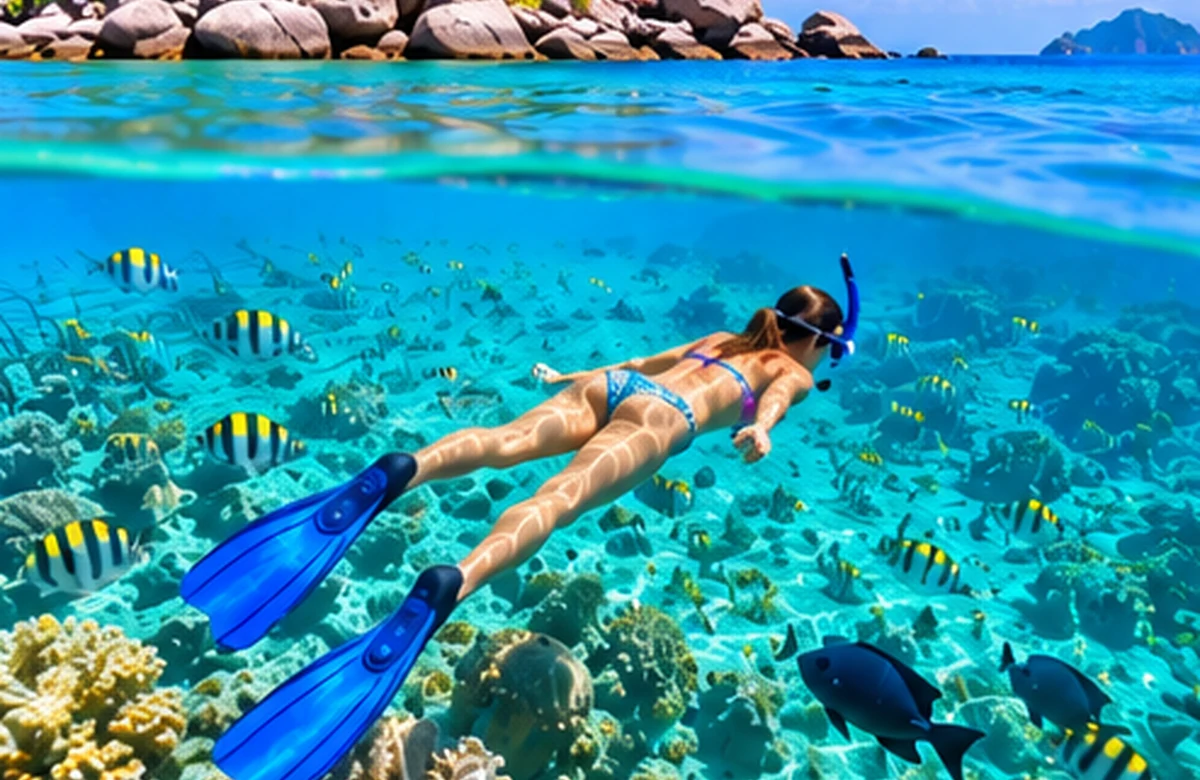
A reef can be wonderful to observe while making the entry less convenient for somebody who only wants to swim. Avoid standing on or touching coral, and choose an entry appropriate to your ability. For an unfamiliar offshore location, a responsible guided activity may be more suitable than treating a map pin as permission to explore alone. [16]
Lipe is not my automatic choice for a very short holiday with a tight onward flight. The beach may be excellent for your interests, yet the extra transfer exposure still needs a place in the decision. A longer settled visit and a mainland buffer before a major flight produce a more forgiving plan.
Why some famous places are missing
A photographed bay may not be a swimming stop
Maya Bay is the clearest example of why a beach list should not simply follow famous photographs. The operating guidance from a Phi Phi excursion provider states that swimming in the bay is prohibited. Treat a visit there as a managed sightseeing stop, subject to the park's current instructions, rather than the swimming highlight of your holiday. [17]
Similarly, a beach promoted for snorkelling may have a reef, rocky entry or boat activity that makes it less comfortable for casual swimming. That does not make it a poor destination. It means the recommended activity and the actual shoreline need to match what you want to do.
Quietness is not a safety credential
An empty bay can feel reassuring, yet it may also lack supervision, information and an easy way to get help. I have not rewarded remoteness for its own sake. For a less confident swimmer, a busier but well-managed area can be more useful than an isolated cove with no clear local advice.
Avoid interpreting this shortlist as permission to swim between islands or across a bay. Those are different activities requiring different preparation and assessment. This article concerns ordinary holiday beach swimming, not endurance swims, open-water training routes or independent crossings.
A beach-day check that takes minutes
Before anybody gets in
Look for current warnings, ask about the designated area and identify who is supervising. Check the entry and exit rather than assuming you can leave the water anywhere along the shore. Follow local instructions about weather and marine life; Thailand's tourism authority advises particular care with jellyfish warnings and avoiding swimming at night or after heavy rain. [18]
Discuss the plan with the group. Establish where you will meet, who is staying with children, and whether anyone is uncomfortable with the depth. A vague arrangement in which everybody assumes somebody else is watching is not supervision. Younger children need close, active attention, even when the water initially looks gentle. [11]
While you are on the beach
Reassess when conditions change. Wind, visibility, boat traffic or a new warning can make the afternoon different from the morning. Get out when instructed, and do not let the cost of reaching a beach become a reason to stay in unsuitable water. The money has already been spent; the next decision should be about conditions.
Keep a charged phone and the location of your accommodation available. Thailand's national medical emergency number is 1669. If someone is in difficulty, alert the lifeguard or emergency services rather than making an unprepared rescue attempt that creates another casualty. [18] [11]
Book a room that supports the swimming you want
Five useful questions for the property
Ask where guests enter the sea, how that changes with the tide, whether the recommended area is supervised, what boat activity occurs nearby, and what alternative the property recommends when swimming is unsuitable. Those questions reveal more than asking whether the sea is 'safe', which invites an answer too broad to be useful.
Request details about access as well. Steps, loose sand, a steep path or a water landing can matter more than the advertised distance to the beach. For older travellers or anyone using a mobility aid, describe the requirement plainly and ask for current photographs of the route. A general assurance about accessibility is not enough to plan around.
Build value around usable days
A room with a pool and nearby meals may be better value than a cheaper isolated bungalow, even before you calculate transport. Compare the total stay, including airport or pier transfers, breakfast, shade arrangements and cancellation conditions. None of those services should be assumed from the word 'resort'.
As an illustrative planning exercise prepared on 3 October 2026, set aside THB 2,500 per night for a room and THB 1,000 per day for two adults' local food, then add transfers and activities separately. These are chosen budget allowances, not checked hotel quotes or a claim about island-wide average prices. Replace them with actual offers for your dates.
| Budget line | Worked input | What to check |
|---|---|---|
| Room for two | THB 2,500 per night | Actual room, breakfast and cancellation terms |
| Local food for two | THB 1,000 per day | Your eating preferences and included meals |
| Transfers / activities | Add actual offers | Party size, luggage and final hotel leg |
Illustrative allowances prepared 3 October 2026, not hotel quotations or island averages.
Compare two rooms using an ordinary swim
Imagine leaving each room with a towel, drinking water and a child or companion who may want to return early. Trace the route to the recommended swimming area, then the route back to a toilet, shade and lunch. Ask whether that journey works without climbing a steep path, crossing an awkward road or paying for another ride.
Next, imagine the same afternoon with the sea closed to swimming. Would the room, pool and nearby area still provide a pleasant day? This comparison does not establish water safety, but it helps distinguish a genuinely convenient swimming base from a property whose strongest feature is its photograph. Paying for a location you can comfortably use can be better value than paying less for a view you mostly admire from a distance.
Two swimming-led routes that avoid unnecessary moving
Seven days with one principal base
For six nights, choose one well-researched beach base and allow two optional outings rather than three hotel changes. A Samui stay might include a different beach for comparison and a land-based activity when conditions favour staying ashore. A Phuket stay can follow the same logic without committing to an offshore tour before the weather is known.
Use the first full day to learn the immediate surroundings. Find the recommended swimming section, an ordinary place for lunch and the practical return route. Once those details work, repeating the day can be a pleasure. There is no requirement to keep travelling simply because another named beach appears nearby on a map.
Fourteen days with two contrasting bases
For thirteen nights, I would start with six nights on one island, six on another within the same regional cluster, and a final gateway night where it meaningfully protects the flight. Alternatively, keep all thirteen nights on one island and use the saved transfer day for rest. The right number of destinations is the number that improves the holiday.
Do not connect a final inter-island boat with an expensive onward flight on the assumption that the published sailing duration is the whole journey. Check-in, boarding, unloading and road transfers all need time, while cancellations can exceed any same-day buffer. A separate final night is a planning safeguard, not a guarantee against disruption. [12] [19]
What to pack without overcomplicating a beach stay
Prioritise comfort and communication
Bring comfortable swimwear, sun-protective clothing, suitable sun protection, a hat and a way to keep dry items separate. A rash vest may help reduce exposed skin, but it does not remove marine-life risk or make an unsuitable location appropriate. Follow local warnings rather than relying on clothing as a safety solution. [18]
Pack footwear for getting to the beach, but do not use shoes as a reason to walk across coral. Likewise, an inflatable toy is not a substitute for a correctly selected flotation device or supervision. The simplest useful kit is often enough; equipment should support a sensible plan rather than persuade you to attempt something beyond your comfort or ability. [11]
Prepare for an ordinary inconvenience
Save ferry confirmations, hotel addresses and the local contact number before leaving reliable Wi-Fi. Check whether a travel eSIM supports your handset and whether the plan includes the communication you need. Data access can help with messages and maps, but it should not be mistaken for guaranteed coverage or an included voice-calling service.
Keep documents and electronics protected during boat transfers and separate wet clothing after a swim. A small dry change can make a delayed return much more comfortable. For this kind of holiday, practical organisation usually adds more value than buying a collection of specialist accessories that will remain in the bag.
Pros and cons of choosing a holiday around swimming
The advantages
A swimming-led holiday has a clear, simple rhythm. You can spend less time arranging transport and more time enjoying the place you have chosen. Selecting accommodation around a suitable beach, pool and ordinary meals also makes it easier for different members of a group to take breaks without everyone moving together.
There is another benefit: you can compare a small number of practical details instead of trying to optimise every attraction in a whole country. When the room location, shoreline access and alternative activities work, the holiday does not need constant planning. Repeated enjoyable days are a legitimate aim, especially after a long journey.
The compromises
The sea remains outside your control. A trip that depends entirely on daily swimming can become frustrating when local conditions change, even in a generally favourable month. Build a holiday you would still enjoy with several pool or land days, rather than treating those as emergency scraps of a failed itinerary.
The most convenient base may also be less secluded than the photograph you first imagined. Nearby services, clearer information and easier transport are useful advantages, not evidence that you have chosen badly. Balance atmosphere against the needs of the least confident or least mobile person travelling with you.
Advantages
- A simple daily beach routine
- Less time lost to transfers
- Room and pool can support flexible days
Trade-offs
- Sea conditions cannot be guaranteed
- Beach sections differ within one island
- A convenient base may be less secluded
Common mistakes to avoid
Booking the island instead of the beach
An island-wide recommendation does not establish the conditions at one hotel. Check the actual frontage, access and nearby alternatives before paying a non-refundable rate. The same principle applies when friends recommend somewhere: ask which month, which section of beach and what kind of swimming they enjoyed.
Another mistake is choosing a hotel solely because it has a beach photograph. The image may show a nearby public beach, a high-tide moment or a view from somewhere else on the property. Read the map, ask precise questions and check what the room description actually includes before treating the picture as a promise.
Letting a previous good swim decide the next one
Conditions can change during a stay. Yesterday's calm water, another person's confidence or a tour's advertising does not override today's flags. Equally, a cancellation should not trigger a rushed search for somebody willing to operate regardless. Accepting a different plan is often the most practical decision available. [1]
Finally, avoid spending the entire holiday chasing the next supposedly perfect beach. Travel days reduce the time available to use the places you have already reached. A sensible first base, a flexible second choice and a realistic departure plan usually work better than an exhausting sequence of postcard stops.
Frequently asked questions
Which island would you investigate first for easy beach swimming?
I would start with Samui when an airport-based island and a choice of beach areas appeal, or Phuket when wider facilities and land activities matter. Then I would narrow the search to a specific beach and hotel frontage. The best choice changes with the month and the group's swimming confidence; neither island is a blanket safety recommendation.
Is a shallow beach always better for families?
No. Shallow water may suit paddling, but children still need active supervision and the entry, currents, boat activity and weather all matter. A long shallow approach can also be inconvenient for adults who want a proper swim. Choose an appropriate designated area and ask about the exact conditions rather than using depth as the only test.
Can I swim in Thailand in July?
Potentially, but do not expect the same conditions on every coast. I would investigate lower-Gulf options first for a swimming-led July holiday and choose a pool as a useful alternative. The decision to enter the sea still depends on that day's local advice. A month-based recommendation is not a forecast or permission to ignore warnings. [2]
Should I choose Samui or Phuket in December?
For a trip built primarily around beach swimming, I would usually investigate Phuket and other Andaman options first. Samui can still appeal for its accommodation and atmosphere, but the southern east coast can remain affected by late-year rain. Compare the complete holiday and keep swimming conditional rather than promising yourself a particular number of sea days. [10]
Are Railay and Phra Nang islands?
No. They belong to the Railay peninsula on the Krabi mainland, although access is normally by boat. That distinction matters for planning accommodation and transfers. Treat boarding, luggage and the return journey as part of the visit, especially when somebody in the group needs an easy entry or step-free access. [7]
Can I use Maya Bay as a swimming stop?
Do not plan it that way. The operator guidance checked for this article states that swimming in Maya Bay is prohibited. Follow the national park's instructions during any visit and choose an appropriate, permitted location for swimming elsewhere. A tour including several bays does not mean the same activities are allowed at every stop. [17]
Is snorkelling equipment necessary for a swimming holiday?
Not necessarily. You can enjoy ordinary beach swimming without buying a mask and fins. Reef exploration is a separate activity, with different entry, supervision and environmental considerations. Start with what you actually intend to do, and choose a responsible guided session when you need support rather than assuming equipment alone provides the necessary knowledge.
What should I do when a red flag is flying?
Stay out of the sea and follow the lifeguard or local authority's instructions. Choose a pool or a land-based activity instead. Do not interpret other people entering the water as evidence that it is acceptable, and do not move to an unmonitored beach simply to avoid the warning. [1]
My final recommendation for a swimming-focused Thailand holiday
Choose a travel month, shortlist two suitable coast-and-beach combinations, then investigate the exact accommodation frontage. For many first visits, a well-positioned room on Samui, Phuket or Lanta will be more useful than a complicated journey to the most remote possible cove. Phangan, Koh Kood, Koh Lipe and Railay can also be rewarding when their access and daily setting match your needs.
The strongest booking is the one that works even when the sea does not. Prioritise a sensible swimming area, straightforward access, a good alternative and enough nights to settle in. Then let the local conditions decide the swimming, rather than asking the sea to honour the photograph that persuaded you to book.
Sources and fact-checking notes
Research reviewed on 3 October 2026. Official destination, meteorological, safety and provider material informs the factual context. The comparisons, routes and budget allowances are editorial planning judgements, not personal inspection reports, forecasts or guaranteed quotations. Confirm current access, conditions and booking details for your own dates.
- FCDO: Thailand safety and securityCurrent swimming, sea and transport cautions. Follow local warnings; this is not a beach safety certification. Reviewed 3 October 2026.
- Tourism Authority of Thailand: choosing a beach seasonRegional seasonal context. Climate patterns are not forecasts for a particular date or year. Reviewed 3 October 2026.
- Bangkok Airways: Samui beach guideBeach descriptions for Choeng Mon and Lipa Noi. Airline destination material is not a lifeguard assessment. Reviewed 3 October 2026.
- Tourism Authority of Thailand: Ko Pha-nganBeach names and the distinction between the wider island and its party reputation. Reviewed 3 October 2026.
- Tourism Authority of Thailand: Kata and KaronBeach-area and visitor-facility context; not a guarantee of swimming conditions. Reviewed 3 October 2026.
- Tourism Authority of Thailand: Ko LantaBeach variety, old-town and island-setting context. Undated practical absolutes were not adopted. Reviewed 3 October 2026.
- Tourism Authority of Thailand: Railay BeachPeninsula beaches and boat-access context. No fixed fare or guaranteed departure is assumed. Reviewed 3 October 2026.
- Tourism Authority of Thailand: Ko KutKoh Kood beach names and island setting. Reviewed 3 October 2026.
- Tourism Authority of Thailand: Ko LipePattaya, Sunrise and Sunset beach areas and visitor-service context. Reviewed 3 October 2026.
- Thai Meteorological Department: seasons of ThailandOfficial seasonal explanation, including continued late-year rain on the southern east coast. Thai-language source. Reviewed 3 October 2026.
- Royal Life Saving Society UK: beach water safetyGeneral supervision and water-safety principles. UK emergency numbers and flag conventions are not presented as Thai instructions. Reviewed 3 October 2026.
- Lomprayah: official ferry informationActual services, piers and issued booking conditions must be checked for the chosen date. Reviewed 3 October 2026.
- Tourism Authority of Thailand: Nai HarnBay setting and surrounding landscape. Current flags take priority over descriptive material. Reviewed 3 October 2026.
- Tourism Authority of Thailand: TratEastern-Gulf geography and southwest-monsoon exposure; not interchangeable with the Samui island group. Reviewed 3 October 2026.
- Boonsiri: 2026 timetable and combined journeysDistinguishes combined road-and-boat journeys from individual sailings. Reconfirm future schedules. Reviewed 3 October 2026.
- Tourism Authority of Thailand: Ko TaoIsland activities and responsible observation of marine life. Promotional or undated practical claims were not adopted. Reviewed 3 October 2026.
- Simba Sea Trips: Maya Bay visitor rulesOperator guidance supports the no-swimming restriction. The page contains inconsistent current-open wording, so no live opening claim or specific future timetable is taken from it. Reviewed 3 October 2026.
- Tourism Authority of Thailand: jellyfish safety adviceDesignated swimming areas, warnings and the Thai medical emergency number. Detailed treatment instructions are not reproduced here. Reviewed 3 October 2026.
- Bundhaya Speed Boat: official booking informationAndaman route and booking reference. Departures, boat types and availability are date-dependent. Reviewed 3 October 2026.
Illustrations in this article were created for Taylor’s Trailblazing Travels. Third-party photographs, where used, are credited beside the image or in the source list.