KOH LANTA / BEACH GUIDE
Best Beaches in Koh Lanta
Find the right stretch of coast for easy evenings, a daily beach routine or a deliberately slower southern stay.
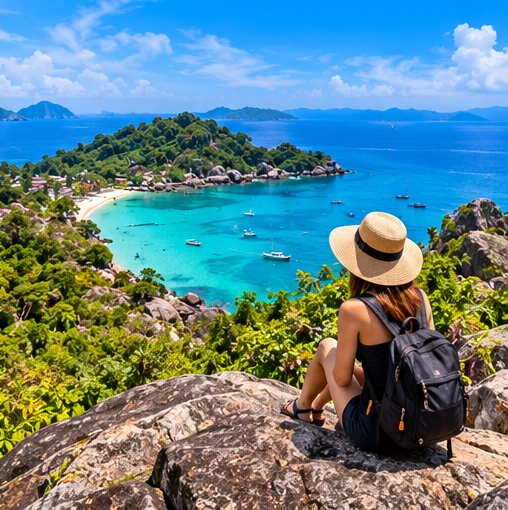
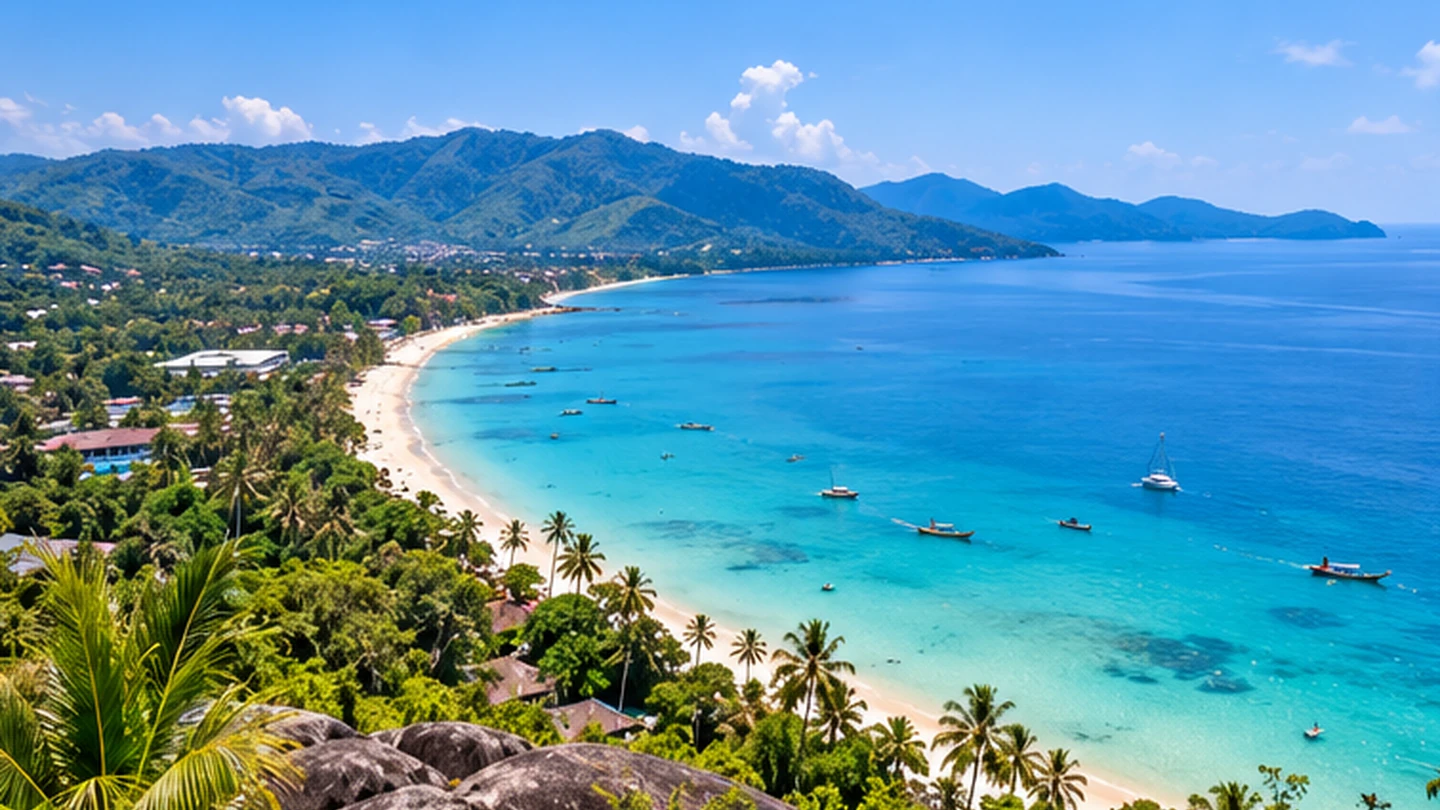
Original illustration inspired by Koh Lanta’s west-coast bays; shore conditions vary with place, tide and weather.
Choosing the best beaches in Koh Lanta is really a decision about how you want your days to work. Long Beach gives you room to spread out, Klong Dao keeps you closer to the northern arrival area, Klong Nin offers a useful middle-ground base and Kantiang Bay makes a stronger case for a slower southern stay. The island’s main holiday beaches lie along the western side of Koh Lanta Yai. [1][2]
The mistake is to assume that every attractive bay offers the same swimming, restaurant choice and access. A rocky low-tide shoreline may be lovely for sunset but frustrating when a daily sea swim is your priority. Meanwhile, a remote beach can be wonderfully restful until every forgotten item or dinner reservation needs another journey.
My research-led recommendation is Long Beach or Klong Dao for a straightforward first stay, Klong Nin for a more central beach routine and Kantiang for travellers deliberately choosing the south. Use the smaller bays as excursions unless their limited facilities are part of the attraction. These are editorial choices based on published beach descriptions and practical planning, rather than claims that I have recently inspected every hotel or swimming area.
First-stay shortlist
Long Beach
Compare the actual room and shore access.
Northern convenience
Klong Dao
Useful for a straightforward arrival routine.
Mid-island balance
Klong Nin
A beach base with everyday options nearby.
Southern setting
Kantiang
Best when you intend to enjoy the bay itself.
KOH LANTA / PRACTICAL CHOICES
Best beaches in Koh Lanta: the useful comparison
Decide what must be easy
Before choosing a beach, write down the things you expect to do without transport. That might be breakfast, a short evening walk, a pharmacy visit or finding dinner that suits children. Then compare properties against that list. A beautiful remote bay is not a bargain if it makes your everyday routine awkward.
This guide covers ten main beach choices, with the national-park shore as a separate sightseeing option. The sequence runs broadly from practical northern bases towards smaller southern bays. It is not a league table: a beach suited to a quiet couples’ stay may be a poor fit for somebody wanting independent evenings and frequent excursions.
Separate swimming from scenery
There are sandy stretches, rocky sections, tidal changes and differing levels of development along the coast. Even Long Beach’s government description warns about depth and rocks in parts of the water. Therefore, no entry in the table should be interpreted as a guarantee of safe swimming. Choose the right base, then assess the conditions each day. [3]
Editorial beach comparison. National-park shore access is covered separately in the guide; no beach description guarantees safe swimming.
| Beach or area | Why it may suit you | Check before choosing |
|---|---|---|
| Klong Dao | A practical northern first stay | Room policy and the route to meals and sand. |
| Kawkwang | A smaller northern corner | Actual walking routes around the headland. |
| Long Beach / Phra Ae | A flexible all-round base | The particular section, rocks and swimming entry. |
| Relax Bay | A smaller-scale beach routine | Food choice and the route to alternatives. |
| Klong Khong | Evenings and a relaxed beach setting | Rocks at low tide; a useful pool if needed. |
| Klong Nin | A settled mid-island routine | Road crossing, room position and immediate frontage. |
| Nui near Klong Nin | A short cove detour | The correct pin, approach and return climb. |
| Kantiang | A scenic southern base | Hillside access and excursion pickup details. |
| Klong Jark | A quieter southern stay | Current food options and everyday services. |
| Bamboo Bay | Remoteness as a deliberate choice | Arrival and return transport; open facilities. |
KOH LANTA / PRACTICAL CHOICES
Klong Dao: best for a simpler first arrival
Why convenience matters here
Klong Dao sits near Saladan in the north and is a well-established beach base. The local Amazing Lanta guide describes accommodation and restaurants along the bay and road behind it. I would use that proximity as the main reason to choose the area, rather than repeat sweeping claims that shallow-looking water is always safe for children. [4]
A shorter onward journey after reaching the northern part of the island can be useful when you arrive tired. More importantly, a base with several everyday options nearby gives you flexibility once the bags are unpacked. You can change dinner plans or return to the room without turning a small decision into a trip across the island.
Look beyond the family-friendly label
Confirm the actual room layout, cot or extra-bed arrangement and route to the beach. Some properties suit families better than others, and a beach area’s reputation says nothing about an individual hotel’s age restrictions. Check those rules directly before paying.
For a first full day, I would keep the schedule local: learn the beach access, find two possible dinner places and enjoy the shore at different times. That gives you a useful sense of the setting before committing to a longer outing. However, do not expect proximity to Saladan to make every activity pickup immediate; the operator’s route still matters.
KOH LANTA / PRACTICAL CHOICES
Kawkwang: a quieter northern corner to investigate
Close to the north, but not the same daily routine
Kawkwang lies around the northern headland near Klong Dao and Saladan. Amazing Lanta describes its connection to the Klong Dao shoreline and a smaller selection of immediate amenities. That makes it a useful alternative when you want a northern location without assuming the same concentration of nearby businesses as the main bay. [5]
Consider it at property level rather than booking solely because it sounds like a quieter version of Klong Dao. A headland room can have a different route to the shore, restaurant or road. Ask where your actual room sits and whether the easiest walking route changes with the tide.
Check the practical meaning of nearby
A location that is close on a map can still involve an awkward evening walk. Confirm the route to the places you expect to use and decide whether you would be comfortable doing it after dinner. Alternatively, choose a property whose own facilities meet your needs and plan transport for the occasional outing.
For a day visitor, Kawkwang can be a short northern-coast comparison rather than a separate excursion. There is no need to manufacture a full itinerary around every small bay; sometimes the useful discovery is simply that the larger beach already suits you better.
KOH LANTA / PRACTICAL CHOICES
Long Beach: the most flexible all-round base
A broad beach with several different sections
Long Beach is also called Phra Ae. Thailand’s tourism directory places it south of Klong Dao and describes a long shore with trees, a sloping seabed and some rocky or deeper sections. That is a more useful description than the blanket claim that you can swim equally easily along the entire beach. [3]
Choose it when you want a balance between time on the sand and access to a choice of places to eat. Its length means the address matters: two hotels using ‘Long Beach’ can create noticeably different walking routines. Rather than assume the whole beachfront is one compact village, identify the immediate area around your shortlisted accommodation.
Make the room location earn its price
A beachfront room can be worthwhile when you return several times a day. Conversely, someone planning full-day dives or excursions may find a comfortable inland room adequate. Compare what you will use, not only which photograph looks more impressive.
For a couple, I would first check the walk to breakfast and dinner, then the beach entrance and pool. For a solo traveller, easy evening access may outweigh a larger room. In either case, ask whether the convenient route shown on a map remains usable after dark or requires walking along a busy section of road.
KOH LANTA / PRACTICAL CHOICES
Relax Bay: a smaller-scale alternative near Long Beach
A beach for staying put
Relax Bay is a smaller bay beside the wider Long Beach area. The local destination guide identifies a cluster of accommodation and dining rather than a long resort strip. Treat that smaller scale as the appeal, but do not assume the number of businesses or their opening arrangements stays fixed between seasons. [6]
It is worth considering when you want a modest, self-contained beach routine without choosing the far south. A short bay can be easier to understand on arrival: you quickly learn where you like to sit, which direction the light falls and where to get lunch. Nevertheless, a smaller selection of nearby businesses means you should check whether it covers your actual needs.
Test the evening before booking the week
Look at the route to alternative restaurants rather than only the distance to Long Beach. Ask whether the walk is on a beach, a lane or a larger road, and whether it is sensible after dark. A ten-minute map estimate does not describe lighting or the condition of the path.
My preference would be a property that makes the immediate bay enjoyable even on a day when you do not go anywhere. That might mean shade, comfortable seating or a pool rather than a long list of activities. Also, confirm outside-guest arrangements before planning to use another resort’s restaurant or facilities.
KOH LANTA / PRACTICAL CHOICES
Klong Khong: best for atmosphere rather than easy low-tide swimming
Know what the rocks change
Klong Khong has beachside accommodation, cafés and bars, but exposed rocks can make swimming difficult at low tide. Baan Thai Lanta’s own beach guide explains the exposed rocks and changing swimming access. It is a reason to choose a property carefully, not a reason to dismiss the area altogether. [7]
Someone who enjoys a relaxed evening beside the water and has no need to swim directly outside the room may be very happy here. On the other hand, a keen daily swimmer should ask detailed questions about the beach section and tide before booking. An attractive high-tide image can hide the feature that most affects that decision.
A pool changes the daily options
Compare properties with a pool when reliable access to a place to swim is important. The relevant questions include its size, opening arrangements and whether it is actually usable by the people travelling, not simply whether a pool icon appears on a booking site.
Consider noise as well as facilities. A room close to the places you would like to spend the evening may also hear those places after you want to sleep. Therefore, ask about the room’s position rather than demanding that a whole beach be described as either quiet or lively. Both impressions can be true at different addresses.
KOH LANTA / PRACTICAL CHOICES
Klong Nin: best for a balanced mid-island stay
A practical compromise for mixed plans
Klong Nin is one of the west-coast beaches identified by TAT, and the local beach guide describes a village-style cluster of eating places behind the shore. It is a useful candidate when you want a beach base while keeping both northern services and southern outings in the plan. [1][2]
I would shortlist it for a stay long enough to develop a routine: breakfast, a beach morning, a meal somewhere familiar and occasional excursions. That is a different priority from choosing the most isolated possible bay. You may gain more from a convenient café and a comfortable room than from adding another dramatic headland to the view.
Check the individual beach frontage
The name does not tell you exactly how a hotel meets the sand. Ask whether you cross the road, descend steps or use a separate entrance. Also, check the room location if the property has both hillside and beachside accommodation.
On an exploratory day, visit the stretch you are considering at more than one tide if possible. That is particularly useful before extending a stay. Instead of moving immediately because another bay looks prettier online, test whether Klong Nin already gives you the combination of food, shore access and comfort that you actually wanted.
KOH LANTA / PRACTICAL CHOICES
Nui Beach: a worthwhile short detour with a name to double-check
Pin the location before setting off
The small Nui Beach just beyond Klong Nin is described by Amazing Lanta as a tucked-away cove reached from the road above. Its guide also notes rocks in parts of the swimming area. Importantly, ‘Nui’ is not a precise enough instruction on its own: similar bay names and variable spellings can confuse searches and conversations. [8]
Send the driver your selected map pin and confirm that it is the cove near Klong Nin. A little preparation prevents a disappointing journey to a different beach. For a day visitor, the attraction is the change of scale from the longer beaches, not a promise of total isolation.
Account for the climb back
Ask about the current approach, steps and any business-controlled route before you go. Paths and access arrangements can change, particularly after bad weather. Bring what you need for a short visit rather than assume there will be a convenient shop or changing area.
Leave enough energy for the uphill return, and avoid carrying equipment you will not use. I would make this a flexible stop during a central-coast outing rather than the only activity in a tightly timed day. If the path or sea conditions are unappealing, a view from a legitimate stopping place can be enough.
KOH LANTA / PRACTICAL CHOICES
Kantiang Bay: best for a scenic southern base
A deliberate change of pace
Ba Kantiang is a curved bay towards the southern part of the west coast. The government tourism directory describes its hillside setting, beach resorts and exposed rocks at low tide. Those features explain its appeal while also showing why the precise shore conditions matter. [9]
Choose Kantiang because you want to spend time there, not just because a particular resort appears on a luxury-hotel list. The longer journey south should buy you something you value: quieter days, the bay setting or a property you intend to enjoy. Otherwise, you may be paying for seclusion while repeatedly travelling away from it.
Compare a hillside room with a beach-level room
A view can come with stairs, slopes or a shuttle. Ask how you reach the restaurant, pool and shore from the exact room category you are considering. For anyone with limited mobility, ‘the hotel has a beach’ is much less useful than a description of that route.
The bay can also work as a leisurely lunch stop during a southern outing. However, check whether a restaurant welcomes outside guests and organise the return before settling in for sunset. A quiet evening is more relaxing when transport is already agreed than when you are watching the light fade while searching for a ride.
KOH LANTA / PRACTICAL CHOICES
Klong Jark: a smaller southern beach for unhurried days
Understand the trade-off
Klong Jark, also encountered as Khlong Chak, lies in the southern beach sequence. Local destination information describes a smaller choice of resorts and fewer nearby everyday services than at the northern beaches. That makes it more suitable for a stay built around the immediate setting than one requiring frequent independent errands. [10]
I would consider it when a quiet room, the shore and a small number of familiar places are enough. It is less attractive for a traveller who wants to compare a dozen restaurants on foot every evening. Neither preference is wrong, but knowing yours prevents a peaceful location from feeling inconvenient.
Keep a waterfall outing separate from a beach assumption
The area is associated with the Khlong Chak waterfall route, but that does not make the inland walk an automatic extension of a sandal-clad beach visit. The waterfall’s appearance depends on recent rain, and a suitable guided walk needs appropriate footwear and current route advice. [10][11]
Before choosing a southern property, ask how activity pickup works and whether there is an extra transfer stage. A quoted trip time may begin at a meeting point elsewhere on the island. Meanwhile, stock up on genuine essentials before arriving, without treating the south as somewhere you must bring an entire suitcase of supplies.
KOH LANTA / PRACTICAL CHOICES
Bamboo Bay: best when remoteness is the point
Let the destination set the rhythm
Bamboo Bay is one of Koh Lanta’s far-southern beach choices, with forested surroundings and a smaller collection of accommodation. Amazing Lanta describes its limited amenities and road access, although older descriptions elsewhere still imply that every approach is an unpaved track. Check the current route to your specific property instead of relying on that generalisation. [12]
A stay here makes most sense when you are content for the view, meals and time outside to occupy much of the day. Rather than ask how many excursions can be fitted around it, ask whether you would enjoy two days with no reason to leave. That is the test a secluded base needs to pass.
Make fewer assumptions about facilities
Confirm food availability during your dates, especially for late arrival or a stay outside the busiest months. Also, ask about the approach after heavy rain and whether the property arranges collection. These questions are more valuable than another photograph of a deserted shoreline.
For a day trip, agree a clear collection time and place. Do not depend on finding a return ride at the exact moment you decide to leave. I would combine Bamboo Bay with only one other southern stop, leaving enough daylight for the road journey rather than collecting every bay in the area.

KOH LANTA / PRACTICAL CHOICES
The national-park shore: choose it for landscape and a walk
Not simply another resort beach
Laem Tanod, at the southern end of Koh Lanta Yai, is associated with the lighthouse and Mu Ko Lanta National Park. It is a different kind of outing from arriving at a hotel beach for lunch. Plan for a protected-area visit, suitable walking footwear and whatever access rules are in force. [1][1]
The appeal is the combination of coast, headland and forested setting. You can enjoy that without expecting the entire visit to be a swim. Equally, a traveller who mainly wants a comfortable afternoon on the sand may find a nearby resort beach a better use of limited time.
Check the exact part of the park
The national park includes offshore islands as well as the southern land area. Consequently, a statement that ‘the park is closed’ or ‘the park is open’ may not answer the question about the attraction you intend to visit. Official national-park guidance confirms that closures can apply to particular attractions, with timing affected by conditions. [13]
Ask directly about Laem Tanod access, the trail, the visitor category and the current entry charge. Published pages do not always distinguish every component of the wider park tariff clearly enough for a reliable all-purpose price. Avoid assuming that an offshore excursion receipt automatically covers a separate land visit.
KOH LANTA / PRACTICAL CHOICES
Swimming, rocks and seasonal conditions
Choose a beach, then choose a safe day
A sensible beach choice does not remove the need for a daily decision. Look at warnings, local advice, the entry point and conditions before entering the sea. Long Beach and Kantiang’s official descriptions mention depth or rocks, while Klong Khong is particularly sensitive to low tide for practical swimming. [3][9][7]
Do not use water shoes as a reason to walk across reefs or enter rough water. Their purpose is limited foot protection where walking is appropriate, not a way to make every shoreline usable. Similarly, a mask and snorkel do not turn somebody into a confident open-water swimmer.
Make the low-season plan honest
A quieter, lower-demand holiday can appeal, but it should not rely on every boat, beach business and swimming day operating as in the busiest months. The official Koh Lanta destination guide identifies seasonal closures among the surrounding islands, while national-park notices require current checking. [14][13]
The FCDO advises following beach warnings and notes Thailand’s rip-current risks. Therefore, a red-flag day is a day to stay out, not a chance to find an unmarked stretch and try again. Choose a hotel and a few land-based interests that still make the trip worthwhile when the sea is unsuitable. [15]
KOH LANTA / PRACTICAL CHOICES
Beach access without hiring a scooter
Plan by clusters
You do not need a scooter to enjoy Koh Lanta’s beaches. Choose a base where the everyday things you need are close, then arrange a driver for an exploratory half-day or a specific southern trip. That can be more relaxing than repeatedly navigating unfamiliar roads just to tick off names.
A northern-and-central outing might compare Klong Dao, Long Beach and Klong Nin. A southern outing could focus on Kantiang and one smaller bay, with the park added only when it fits the available time and your energy. The aim is to spend meaningful time outside the vehicle, not prove that you can reach both ends of the island.
Agree the service, not just a number
Ask whether the quote covers waiting, the return to your hotel and the actual number of stops. Give the driver the map pins, particularly for Nui and the smaller southern beaches. Also, check seatbelts and child-seat availability for the vehicle you will use.
For arrival from the mainland, TAT describes the car-ferry approach to Lanta Noi followed by the bridge to Lanta Yai. That route is different from booking a passenger boat to Saladan. Make sure your ticket ends where you think it does and account for the onward drive to your beach. [1]
KOH LANTA / PRACTICAL CHOICES
A realistic beach budget
The room is only one part
A northern room and a remote southern room at the same nightly price can produce very different holiday totals. Add the meals you are likely to buy, transfer costs, any pool or day-use arrangement and the number of excursions. This is especially important for a family, where a per-person charge can exceed a private-vehicle quote.
The example allowances below were prepared on 3 October 2026 as transparent planning exercises. They are not live accommodation rates, fare quotations or evidence that a particular beach is cheaper. Replace the assumptions with the offers for your dates and compare like with like.
Illustrative allowances prepared 3 October 2026, not accommodation quotes or claims that a particular beach costs this amount. Flights and paid excursions are excluded.
| Three-night model for two adults | Explicit assumptions (THB) | Model total (THB) |
|---|---|---|
| Practical local base | Room 1,800 x 3 + meals 2,400 + transfers 1,000 | 8,800 |
| More hotel time | Room 3,000 x 3 + meals 3,000 + transfers 1,500 | 13,500 |
| Quieter higher-room-budget stay | Room 4,500 x 3 + meals 3,600 + transfers 2,000 | 19,100 |
Spend on the thing you will notice
For a stay centred on the beach, a convenient entrance, comfortable outdoor seating or a useful pool may matter more than room size. However, someone away diving each day might put that money towards the activity instead. There is no single correct spending pattern.
Check breakfast inclusions and the final cancellation terms before comparing totals. Then keep a modest amount of local cash for small purchases without carrying everything you brought to Thailand onto the sand. A waterproof pouch can protect a phone from splashes, but it should be tested before trusting it with anything valuable.
KOH LANTA / PRACTICAL CHOICES
How to judge beach photographs and room descriptions
Look for the information outside the frame
A photograph usually shows a beach at a favourable moment. It may not show the access road, the rocky section just beyond the lens, the steps from the room or the distance to dinner. When comparing accommodation, use several recent views and a map rather than treating one wide-angle image as a complete description.
Ask the property where the photograph was taken in relation to the room category you will book. A view photographed from a hillside restaurant does not establish that a standard room has the same outlook. Equally, a beachfront location can still involve a long walk through the grounds, especially at a larger property.
Read recent comments for specific patterns
Look for repeated, dated details rather than relying only on an overall review score. Comments about the same staircase, beach entrance or evening noise are more useful when they describe something that would matter to you. However, one person’s disappointment with remoteness may describe exactly the quiet setting another person wants.
Send one clear message covering your essential questions before committing. That is easier for the property to answer accurately than a stream of vague requests about whether the beach is good. Keep the reply with your booking so that the arrangement you understood can be checked again before arrival.
KOH LANTA / PRACTICAL CHOICES
A two-day beach comparison without moving hotels
Day one: find your everyday beach
Start with the area around your accommodation and one nearby alternative. Spend enough time at each to notice the walk, shade, swimming entry and available food. A beach you enjoy for two hours tells you more than five beaches seen from a car window.
For somebody based near Long Beach, that could mean a local morning and a later look at Klong Nin. For a Klong Dao stay, use the first afternoon to explore the northern bay before going further south another day. Keep the evening simple so the comparison does not become a full-day transport exercise.
Day two: make the south a deliberate outing
Arrange a driver, choose Kantiang and one smaller bay, and agree the return before leaving. Add the national-park area only after checking access and deciding whether a walk is genuinely part of the day you want. Take suitable shoes separately from your beach sandals.
If you discover that a southern bay is exactly your style, consider a future longer stay or a carefully planned split at the end of this holiday. Do not move rooms for a single night merely to say you stayed there. Checkout, luggage and another check-in can consume the time you hoped to gain.
KOH LANTA / PRACTICAL CHOICES
Families, couples and solo travellers: different good choices
Match comfort to the people travelling
For families, my initial shortlist is Klong Dao or a carefully chosen part of Long Beach because a practical everyday routine can outweigh a more secluded setting. Verify the room’s child policy, sleeping arrangements and actual beach approach rather than relying on a ‘family’ search filter.
Couples should decide whether privacy means a quiet room, fewer nearby venues or simply enough space on the shore. Those are different requirements. A centrally located property with a well-positioned room may be more restful than a remote place that forces you to organise every meal.
Independence matters as well as scenery
Solo travellers may prefer an easy evening walk and a choice of places to sit without committing to a full resort meal. Meanwhile, travellers with limited mobility need a detailed description of stairs, slopes, surfaces and the route to the water. Request recent photographs of the approach if a verbal answer remains vague.
For a group with mixed preferences, choose the base that meets the least flexible need, then use a day outing for the optional preference. It is usually easier to take keen explorers south for a few hours than to make a remote bay convenient for somebody who needs nearby facilities every day.
KOH LANTA / PRACTICAL CHOICES
Pros, cons and common beach-planning mistakes
What Koh Lanta does well
The spread of different beach bases gives you a chance to choose your own pace rather than accept one dominant resort-town model. You can build a stay around familiar local routines, longer shore time and occasional exploration. Moreover, several beaches can be compared without changing accommodation.
Where expectations go wrong
The main compromises are distance, tide-sensitive shorelines and the temptation to treat ‘quiet’ as automatically better. A small bay is not necessarily a better swimming beach, and a photo of empty sand does not show where dinner comes from. Ask these practical questions before becoming attached to a room.
Common mistakes include confusing similarly named Nui locations, underestimating a hillside room’s access, planning too many southern stops and assuming that a national-park notice covers every part of the park. Another is renting a scooter purely because an online itinerary treats it as compulsory. Build the trip around transport you can use confidently instead.
Advantages
- A choice of practical northern and quieter southern bases.
- Several beaches can be explored without changing hotels.
- Room location and everyday routine can guide a personal choice.
Compromises
- Rocky or tidal shorelines may not match the photographs.
- Remote addresses can add journeys for meals and errands.
- A smaller bay does not guarantee safer swimming.
KOH LANTA / QUESTIONS ANSWERED
Frequently asked questions about Koh Lanta beaches
Which beach is best for a first stay?
My starting choices are Long Beach or Klong Dao, with the final decision made at property level. Long Beach offers a broad shore and several different accommodation areas, while Klong Dao keeps you near the northern part of the island. Compare your daily walking needs rather than declaring one universally superior. [3][4]
Is Long Beach the same as Phra Ae?
Yes. Phra Ae is the name used for Long Beach in Thailand’s government tourism directory. Both names appear in hotel listings and transport conversations, so use the property name and pin as well. The beach is long enough that the name alone does not identify a precise pickup or meeting place. [3]
Which beach should I choose for a daily sea swim?
Start by investigating the actual entry and conditions around your shortlisted Long Beach, Klong Dao or Kantiang accommodation, rather than choosing from a generic island ranking. No beach guarantees daily swimming. Klong Khong’s exposed low-tide rocks deserve particular attention when direct access to swimming water is your main requirement. [3][9][7]
Is Klong Khong a bad choice because it is rocky?
Not necessarily. It can suit travellers who value its setting and nearby businesses more than swimming at every tide. A property with a suitable pool may resolve the practical issue for your group. The mistake is booking it while expecting the same uninterrupted swimming experience at all water levels. [7]
Can I enjoy the island without a motorbike?
Yes. Pick accommodation around the places you expect to use each day, then arrange transfers or a driver for longer outings. The compromise is less spontaneous beach-hopping, not an inability to enjoy the island. Agree return collection and waiting arrangements for smaller bays rather than relying on a ride appearing when needed.
Is Kantiang too far south for a short holiday?
It depends on the purpose of the stay. Kantiang makes sense when the bay or chosen property is the main attraction and you are content to spend time there. A traveller planning frequent northern departures or wide restaurant exploration may find a more central base easier. Include the road stage in every excursion comparison.
Are Bamboo Bay and the national-park beach the same place?
Treat them as separate stops when planning. Bamboo Bay is a southern accommodation and beach area, while the Laem Tanod shore belongs to a protected-area outing associated with the lighthouse. Confirm the exact destination with your driver and do not assume access rules or charges are the same. [12][1]
Should I book accommodation before seeing the beach?
For a short or busy-period trip, having the main stay arranged removes uncertainty. For a flexible longer visit, an initial booking with suitable terms can give you time to inspect another area before extending. In either case, clarify the room location, shore access and cancellation deadline rather than relying on photographs alone.
Is snorkelling from any beach a substitute for a boat trip?
No. Clear-looking water does not establish reef quality, safe entry or suitable conditions. A properly organised offshore snorkelling trip is a different product with its own boat, supervision and seasonal constraints. Choose between shore time and that excursion deliberately instead of assuming a mask makes them equivalent. [14]
How many beaches should I try to see?
For a typical short stay, three contrasting areas are enough to understand what you enjoy: your local beach, a more central alternative and a southern bay. Spend longer at the one that suits you. A list is useful for making a choice, but visiting every entry is not a requirement for a successful holiday.
When is a split beach stay worthwhile?
A split can work during a longer visit when each part serves a different purpose, such as a practical northern start followed by several slower nights in Kantiang. Give both parts enough time to feel settled. Moving for one night often adds packing and check-in effort without providing the relaxed southern routine that motivated the change.
How should I plan an arrival after a long journey?
Choose a first evening that works even if you are tired or delayed. Confirm food availability, the final transfer and the property entrance before travelling. Then keep the next morning free enough to recover and learn the immediate area. A long arrival is not the ideal moment to decide whether an unfamiliar route to a remote bay is manageable.
KOH LANTA / PRACTICAL CHOICES
My recommended Koh Lanta beach choice
Book Long Beach or Klong Dao when an easy first visit matters most, shortlist Klong Nin when you want a settled mid-island routine and choose Kantiang when the southern setting is the reason for the holiday. Then use one exploratory day for the smaller bays rather than moving every time a new view appears.
The decisive question is not which stretch looks best from above. It is where you will enjoy breakfast, reach the shore comfortably, find a satisfying evening and still like the place when the sea is unsuitable. Choose for those ordinary moments and the beach scenery becomes a pleasure rather than a daily logistical problem.
Sources and fact-checking notes
Editorial review: 3 October 2026. Official tourism and government information is used for destination context, with operator pages for their own programmes, prices and booking conditions. Older listings can retain legacy details, so a reviewed page is not a guarantee of live availability.
The selections, sample itineraries and explicitly labelled budget models are research-led editorial judgements. Published prices are dated examples; reconfirm the exact visitor category, date, route and inclusions before paying. Illustrations are not evidence of current access or conditions.
- TAT: Ko Lanta beaches, cape and arrival route
- Amazing Lanta: west-coast beach overview
- Department of Tourism: Phra Ae / Long Beach
- Amazing Lanta: Klong Dao Beach
- Amazing Lanta: Kawkwang Beach
- Amazing Lanta: Relax Bay
- Baan Thai Lanta: Klong Khong shore and tide considerations
- Amazing Lanta: Nui Beach near Klong Nin
- Department of Tourism: Ba Kantiang Bay
- Amazing Lanta: Klong Jark and the seasonal waterfall
- Pimalai: island setting and nature activities
- Amazing Lanta: Bamboo Bay access and setting
- Thailand Government / DNP: 2026 national-park closure guidance
- TAT: Ko Lanta destination overview and offshore seasonality
- FCDO: Thailand safety and security
Third-party booking searches can show several different businesses. Match the actual operator and programme to the guidance above rather than assuming every search result is the same experience.
Illustrations in this article were created for Taylor’s Trailblazing Travels. Third-party photographs, where used, are credited beside the image or in the source list.