KRABI / BEACH GUIDE
Best Beaches in Krabi
Choose the right mainland beach, peninsula or island outing for the holiday you actually want.
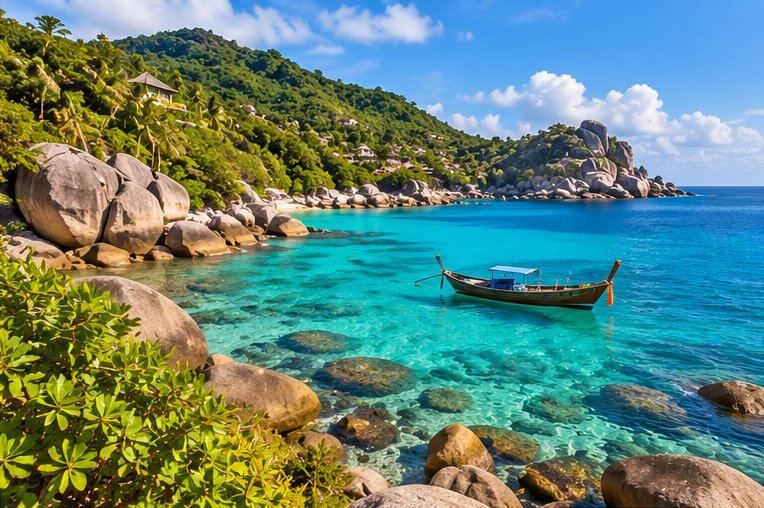
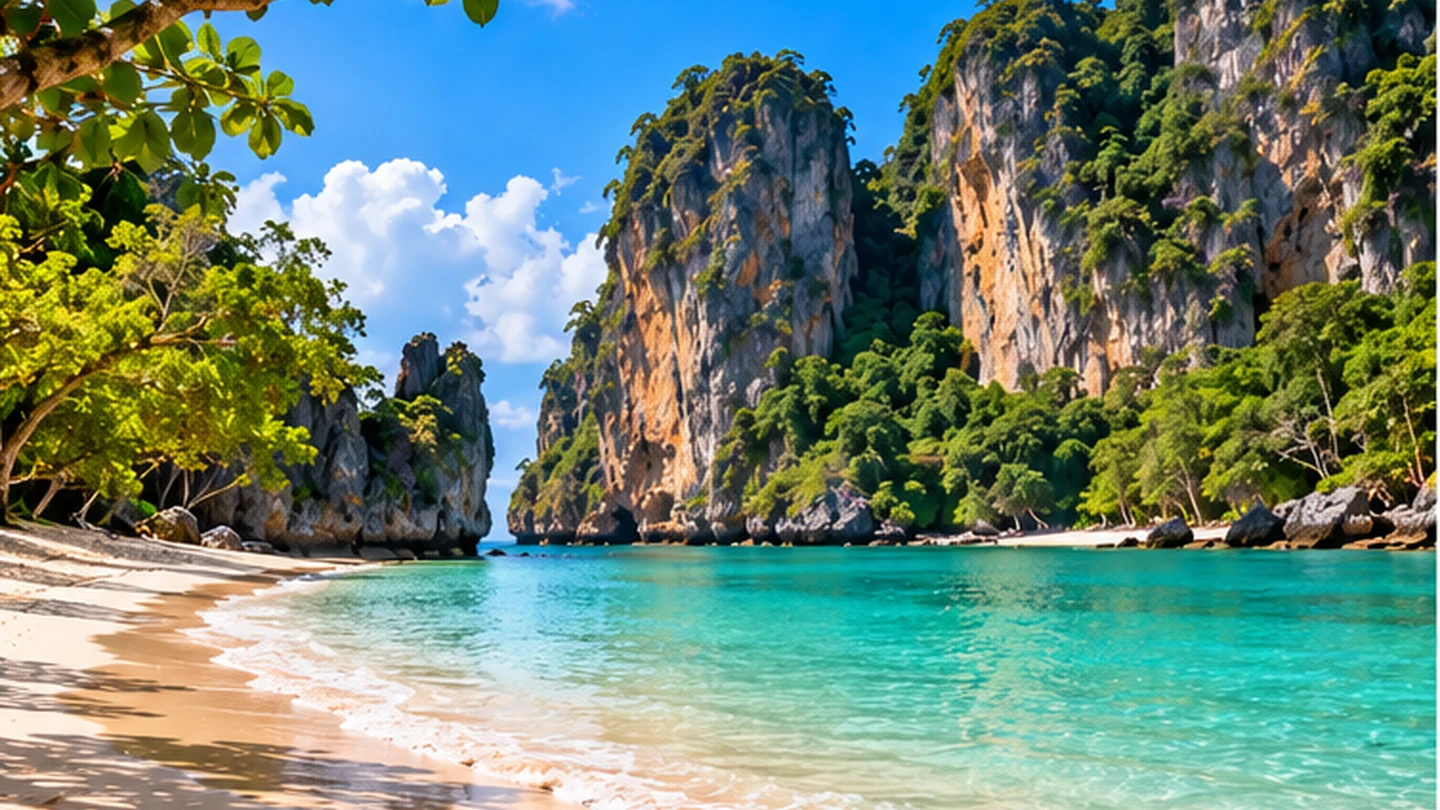
Original illustration inspired by Krabi’s limestone coast; not a documentary photograph.
The best beaches in Krabi are not all useful in the same way. Phra Nang delivers the limestone scenery many travellers imagine; Railay West combines that setting with places to eat; Ao Nang makes a convenient base rather than a secluded escape. Meanwhile, Klong Muang and Tubkaek suit a quieter stay, and the offshore beaches ask you to organise a boat rather than simply walk outside. [1][2][3][4]
My research-led first-visit choice is a day around Railay and Phra Nang, followed by either Koh Poda or Hong Island on a suitable sea day. That gives you contrasting scenery without spending the whole holiday changing boats. However, a family prioritising easy meals and a reliable afternoon rest might enjoy a beachfront base more than another island excursion.
This guide concentrates on the Ao Nang and Railay coastline, the quieter mainland beaches to the north and islands commonly reached on excursions from that area. Krabi Province also includes Koh Lanta and the Phi Phi islands, but squeezing them into the same beach-hopping list would disguise the extra travel involved. The recommendations are planning judgements based on published destination information, access and practical trade-offs, not claims of personal inspections.
Scenery pick
Phra Nang
Cliffs and beach time on the Railay peninsula.
Rounded day out
Railay West
A shore visit with a practical lunch break.
Convenient base
Ao Nang
Useful services and excursion arrangements.
Quieter stay
Tubkaek
Choose the property and its setting carefully.
KRABI / PRACTICAL CHOICES
Best beaches in Krabi: choose by the day you want
Nine choices, rather than one universal winner
A useful beach comparison starts with your least flexible requirement. Someone who needs a pushchair-friendly journey should not use the same shortlist as a couple happy to board a longtail and spend the day out. Similarly, a traveller seeking swimming should distinguish a broad sandy bay from a low-tide sandbar that is interesting mainly as a short sightseeing stop.
I have grouped nine beach choices by scenery, practical access, shore time and the surrounding facilities. The order follows a sensible first-visit shortlist, not an official ranking or a safety score. Within that shortlist, Phra Nang is my scenery pick, Railay West the rounded day-out option, Ao Nang the easiest organising base and Tubkaek the quieter hotel-led choice.
Read the access column first
A beach does not become inconvenient simply because it needs a boat. It becomes inconvenient when that boat journey clashes with your luggage, mobility, child’s nap or fixed evening booking. Therefore, compare the whole day, including waiting and the return, before comparing photographs. Allowing yourself to leave whenever you have had enough is a genuine advantage of a mainland beach.
Editorial comparison. Current weather, tides and local warnings take priority over every beach description.
| Beach choice | Best reason to choose it | Practical trade-off |
|---|---|---|
| Phra Nang | Limestone scenery and a beach-focused peninsula visit | Boat approach; respect the shrine and marked bathing areas. |
| Railay West | A balanced beach day with a lunch pause | Confirm the arrival shore and return arrangement. |
| Ao Nang | A convenient first evening and organising base | More transport activity; choose swimming areas carefully. |
| Noppharat Thara | A shaded shore walk | Low tide changes the shoreline substantially. |
| Klong Muang | A hotel-led beach routine | Meals and excursion pickups depend on the property. |
| Tubkaek | A quieter view-focused stay | Arrange transport for independent evenings. |
| Koh Poda | A straightforward island-beach priority | Compare actual beach time, not the number of stops. |
| Hong Island | Beach, lagoon and optional viewpoint | Check the exact island, tide and park-fee inclusions. |
| Thale Waek | A tide-timed sandbar stop | Not a permanent dry walkway or a full beach day. |
KRABI / PRACTICAL CHOICES
Phra Nang Beach: the first choice for limestone scenery
Why it earns a place
Phra Nang brings together sand, a cliff-backed shoreline and the cave setting at the end of the Railay peninsula. The cave includes a shrine respected by local seafarers, so this is more than a backdrop for holiday photographs. TAT identifies it as one of the area’s beach and climbing attractions. [5][2]
For a first visit, allow enough time to do something other than photograph the headland. Settle on the sand, assess the swimming area and enjoy the changing light. A rushed stop on a multi-island itinerary may technically include Phra Nang while giving you little chance to appreciate it. Ask how long the advertised beach stop actually lasts before choosing that kind of trip.
Make the visit comfortable
Carry drinking water, sun protection and a way to protect your phone during the boat stage. Then keep your possessions compact enough to move when the tide, shade or boat activity changes. Rather than choosing a spot immediately beside a landing area, look for the designated bathing space and follow local instructions.
Treat the shrine quietly and leave offerings alone. Also, do not assume that every visible cave opening is a casual walking route: the beach visit and a guided climbing or cave activity are different undertakings. My suggested allocation is two or three unhurried hours here within a longer Railay outing, not a promise that a tour operator provides that duration.
KRABI / PRACTICAL CHOICES
Railay West: the most rounded beach day
Sand, scenery and a practical pause
Railay West is the peninsula’s principal sandy sunset-facing bay, while Railay East has mangrove shore rather than the same beach experience. TAT also describes restaurants and accommodation around the western side. Those distinctions matter when a hotel listing says only ‘Railay’ and leaves you to imagine the shoreline. [6]
Choose West when you would like a beach day with a proper lunch break, somewhere to sit out the strongest heat and the option of exploring the peninsula. It is particularly useful when members of your group have different appetites for swimming. One person can enjoy the shore while another prefers a drink and a view, without everyone immediately needing a separate excursion.
Check both ends of the journey
TAT’s Railay listing describes passenger-boat access from Ao Nang and gives roughly 20 minutes on the water. Treat that as orientation, not your total journey time: finding the right departure, waiting and disembarking are additional stages. Current boats, landing points and conditions should be checked before setting out. [2]
Ask how the return works before paying for the outward ticket. A return arrangement might involve a particular operator, a meeting place or an agreed time rather than any boat you happen to see. Meanwhile, families should ask about boarding steps and properly sized lifejackets, not merely whether a child ticket is available.
KRABI / PRACTICAL CHOICES
Ao Nang Beach: best for an easy first evening
Convenience is its strongest feature
Ao Nang has a concentration of accommodation, restaurants, shops and excursion businesses, as well as boat connections to the surrounding coast and islands. That makes it a useful starting point for a mixed Krabi holiday. It does not mean every stretch of sand will feel quiet or separate from daily transport activity. [7]
I would choose Ao Nang for arrival afternoon, a sunset walk or a day when the group wants to keep decisions simple. After a flight, finding dinner and learning where your next pickup happens can be more valuable than chasing the supposedly perfect beach. You can still enjoy the coastal setting without making the first day another transport project.
Choose your hotel for the actual walk
Compare the route from the room to the shore, not just the map distance. A property described as ‘Ao Nang’ may suit someone happy to use transfers but disappoint someone expecting to step onto the sand. Ask about slopes, road crossings and the particular entrance you will use.
For swimming, look at the current marked area and boat movements rather than following somebody else’s photograph. On a boat-heavy beach, a convenient place to board a tour is not automatically the right place to enter the water. However, visitors who mainly want shops, meals and a lively promenade should not apologise for choosing convenience over seclusion.
KRABI / PRACTICAL CHOICES
Noppharat Thara: best for a shaded coastal walk
Enjoy the shore on its own terms
Noppharat Thara is associated with casuarina and coconut trees, exposed shore at low tide and the neighbouring national-park setting. TAT explains that its older local name refers to a canal drying out as the water retreats. In other words, a receding sea is part of this beach’s character rather than evidence that you arrived at the wrong place. [8]
It suits an easy outing built around walking, shade and a view. Plan to enjoy the shoreline rather than assuming a swim will be the highlight. For a family, that could mean a short exploration followed by lunch; for a couple, a slower afternoon without another boat booking. Bring footwear suitable for whatever shells and uneven patches are exposed.
Do not turn low tide into a crossing challenge
A visible strip of sand can make an offshore feature look invitingly close. Nevertheless, the return can change as water rises, and a casual photograph does not show channels or the tide’s timing. Stay within locally advised areas instead of walking out simply because somebody else has done so.
The beach also sits within a broader area containing piers and protected land. Ask which part your driver or tour operator means when using its name. Finally, park tariffs shown on broad destination pages should not be assumed to apply identically to every roadside walk, pier or island visit; establish the charge for the exact activity you are buying.
KRABI / PRACTICAL CHOICES
Klong Muang: best for a hotel-led beach holiday
When the base matters more than a daily excursion
Klong Muang is worth considering when your ideal day includes breakfast, shore time, a pool and dinner without a complicated route in between. Dusit Thani Krabi Beach Resort, for example, confirms its location on Klong Muang and describes beachfront pools and on-site dining. That illustrates the area as a resort-base option, not a recommendation that every hotel has equivalent facilities. [3]
The most useful booking question is what you can comfortably do from your particular property. Check whether your room sits near the beach, across a road or further uphill. Then consider the evening: a peaceful address is appealing until you discover that the restaurants you chose require a separate ride each night.
Compare the complete cost of staying quieter
Do not compare only room prices against Ao Nang. Include the number of transfers you expect, whether meals will mostly be at the property and whether tours collect from that address. A slightly dearer room with the facilities you use can make a simpler holiday; equally, paying for a resort while leaving all day may offer poor value.
My planning preference is to give Klong Muang at least a full unstructured day rather than use it only as somewhere to sleep between excursions. Ask about the shore at different tides and current swimming conditions. A pool is a useful alternative, but it is not evidence that the adjacent sea is safe.
KRABI / PRACTICAL CHOICES
Tubkaek: best for a quieter view-focused stay
Choose a slower rhythm
Tubkaek, also written Tup Kaek or Thap Khaek, is another northern-coast option for travellers who value a quiet setting. The Tubkaak resort describes its position between forested Hang Nak mountain and a beach looking towards offshore islands. Use that as location information, while treating the resort’s promotional claims about year-round calm as marketing rather than a personal swimming guarantee. [4]
This is the type of base I would choose for reading, looking across the water and making a deliberate decision not to fill every morning. It makes less sense for someone who wants to sample a new busy street each night. Quietness is a preference, not a higher class of holiday, and the right choice depends on how you actually relax.
Make a day visit without assuming resort access
Before visiting a resort for lunch, ask whether outside guests can book and what that booking includes. A restaurant reservation is not automatically permission to use pools, loungers or changing rooms. Similarly, beach access and access through private grounds are separate questions.
Arrange the return journey before committing to an evening meal far from your own hotel. That removes the temptation to leave early simply because you are unsure about transport. For a coastal outing, I would pair Tubkaek with one other nearby stop, rather than bolt it onto a morning in Railay and an afternoon island tour.
KRABI / PRACTICAL CHOICES
Koh Poda: best for a straightforward island-beach outing
Make time on the sand the point
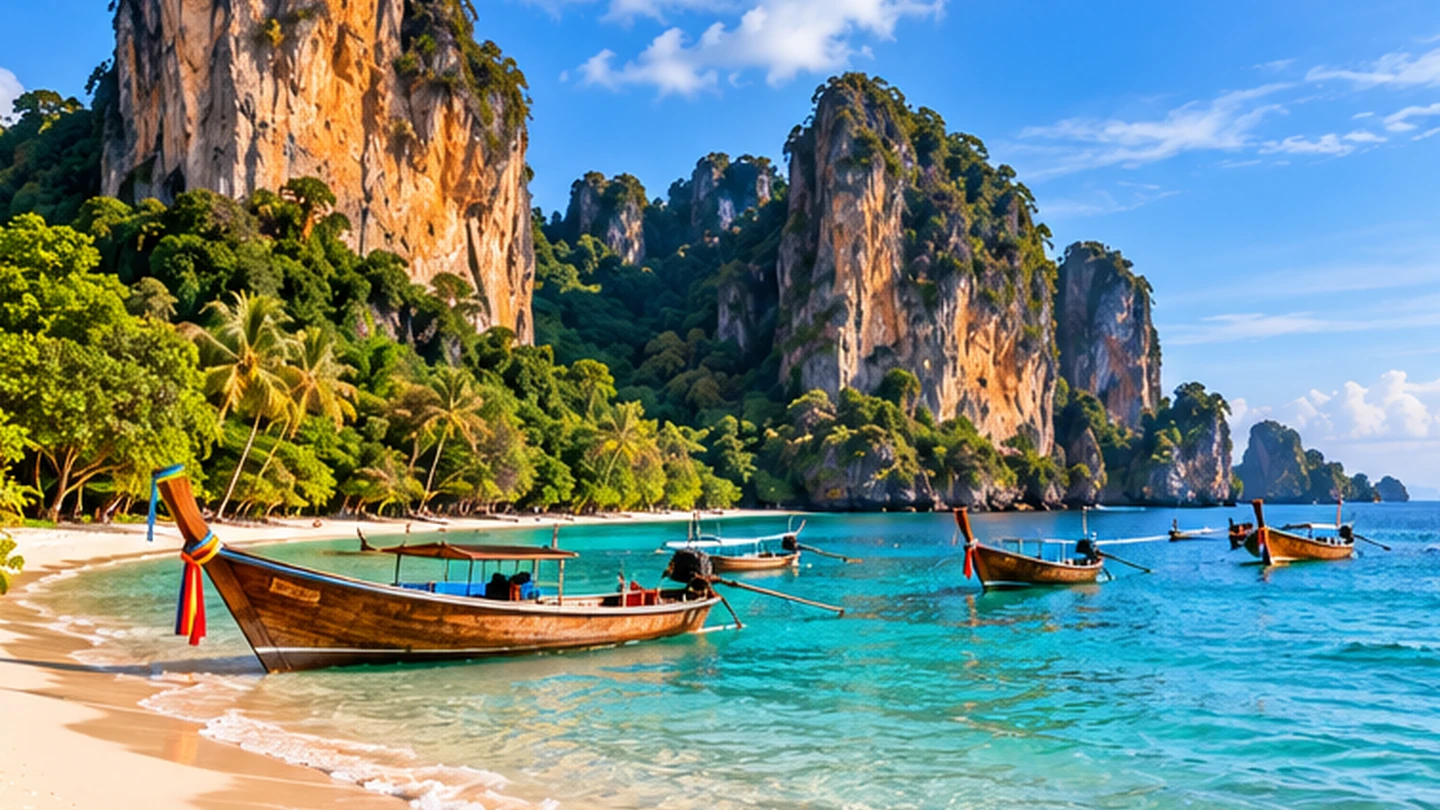
Koh Poda lies offshore from Ao Nang and has beaches around several sides, with its familiar small rock formation visible from the shore. TAT describes roughly half an hour by longtail from Ao Nang and includes it among the usual Four Islands circuit stops. Actual routing and journey time remain dependent on the boat and conditions. [9]
For travellers whose main wish is an island beach, Poda deserves more than a hurried photograph. Compare an itinerary that offers a meaningful stay here with one that maximises the number of named stops. The latter may suit a sightseeing priority, while the former is more likely to feel like the beach day you had in mind.
Ask about shade, landing and included fees
Check the exact meeting point, the planned beach time and whether park entry is included in the displayed price. Also, ask how the operator handles a changed route. A trip that substitutes another stop for safety reasons is not necessarily a poor trip, but you should understand the terms before booking.
Keep a dry set of clothes or a light layer for the return if being wet on a moving boat bothers you. Protect valuables in a small dry bag, yet remember that ordinary roll-top bags have different water-resistance limits. My suggested Poda outing occupies half a day or more overall, even when the crossing itself appears short.
KRABI / PRACTICAL CHOICES
Hong Island: best for a beach, lagoon and viewpoint combination
It offers more than a stretch of sand
The Krabi Hong Island, also identified as Ko Laopilae, belongs to Than Bok Khorani National Park. TAT describes its curved beach, separate lagoon and a viewpoint reached by hundreds of steps. Boats enter the lagoon through a restricted channel whose usability depends on the water level. [10]
That mixture suits someone who enjoys switching between beach time and looking at the landscape from another angle. However, the viewpoint is optional. You do not need to climb every staircase to justify visiting, particularly when heat, footwear or mobility make the ascent unattractive.
Verify which Hong is on the itinerary
Ask for the full route rather than assuming any excursion with ‘Hong’ in its title goes to this particular beach. Tour names can refer to different bay or island experiences. The useful questions are where the boat departs, whether it lands on the Krabi island and what time remains after any lagoon and viewpoint stops.
For budgeting, TAT lists a foreign-adult park fee of THB 300, checked on 3 October 2026. Confirm the current child category and charge directly when booking instead of treating every online child tariff as interchangeable. Also, do not add the adult fee twice when a quoted excursion already includes it. [10]
KRABI / PRACTICAL CHOICES
Thale Waek: best as a tide-timed stop, not a whole beach day
Understand the attraction before booking
Thale Waek, the ‘Separated Sea’, is the sandbar phenomenon around Koh Thap, Koh Mo and Koh Kai. As the tide falls, connecting sand becomes visible. TAT places it on the same general island-tour circuit as Poda, but the amount of exposed sand depends on the tide rather than the tour company’s timetable. [11]
Choose it because the changing shoreline interests you, not because a photograph promises a permanently dry walkway. Your guide may alter the sequence of stops to work with the water level. Therefore, a different running order can be a sign of sensible planning rather than a missing benefit.
Keep expectations proportional
This is a stop for looking around, photographing the setting and following the permitted walking area. It is less convincing as the sole answer to someone asking for a long, spacious afternoon on the sand. Combine it with a longer Poda visit when the operator’s route makes that possible.
Follow the guide back promptly when asked and avoid treating an increasingly wet crossing as an adventure challenge. A few more photographs are not worth missing the safe access window. Families should agree who is watching children while the other adult takes pictures, because a beautiful, shallow-looking setting can distract everyone at once.
KRABI / PRACTICAL CHOICES
Where to stay for the beaches you have chosen
Match the base to your pattern
Use Ao Nang when you want many meals and departure options within a manageable area. Consider Railay when enjoying the peninsula outside a short day trip is the reason for coming. Look at Klong Muang or Tubkaek when the hotel and surrounding coast will occupy a substantial part of the holiday. These are travel-style choices, not claims that one area is universally better. [7][6][3][4]
A useful exercise is to write out three evenings. Where will you eat, how will you get there and what happens when somebody is tired? This often reveals the right base more quickly than comparing room photographs. Similarly, a balcony with a sea view is not the same as a level walk to the bathing beach.
Read the details that photographs omit
Ask about room location, stairs, beach access and any shuttle that is necessary rather than optional. For families, confirm the actual sleeping arrangements and pool supervision requirements. Meanwhile, solo travellers may value an easy dinner walk more than a remote, romantic setting.
Choose flexible terms when your itinerary still depends on unresolved flights or boats. However, read the cancellation deadline in the property’s local time and check whether taxes or breakfast are separate. Saving a small amount on a restrictive reservation makes little sense when a necessary date change would erase the saving.
KRABI / PRACTICAL CHOICES
Getting between mainland and boat-access beaches
Group journeys instead of criss-crossing
A practical grouping is Railay West with Phra Nang, the Ao Nang and Noppharat shoreline together, and the northern mainland beaches on another outing. Offshore islands belong on their own suitable-weather day. This keeps each journey purposeful instead of turning a beach holiday into repeated packing and waiting.
For road transfers, give the driver the accommodation entrance or agreed meeting point, not just a beach name. For boats, establish the departure point, landing area and return arrangement. These details matter more than shaving a few minutes from an optimistic map estimate.
Build a boarding plan
A beach landing may involve sand, water and a step between the boat and shore. Describe access needs to the operator before payment and ask for a specific explanation of the boarding method. ‘Suitable for everyone’ is not an adequate answer when somebody cannot manage that step independently.
Keep the phone, payment method and booking confirmation accessible without opening your whole bag. Then pack the rest so that you can use your hands when boarding. The Foreign, Commonwealth & Development Office advises attention to boat safety and lifejackets; choose an operator whose arrangements make that advice practical. [12]
KRABI / PRACTICAL CHOICES
Weather, tides and swimming: three different decisions
A sunny forecast does not settle everything
Weather, tide and water conditions answer different questions. Sunshine may improve the view, but it does not tell you whether the boat crossing is appropriate or whether a current is present. Likewise, a photograph from a sheltered hour cannot promise the same conditions later in the day.
Before an excursion, check the operator’s latest advice and official restrictions. Thailand’s government guidance explains that national-park attractions can close seasonally or temporarily for weather, safety and ecological recovery. A mainland beach being accessible does not establish that an offshore park attraction is open. [13]
Keep a real alternative
Make the replacement day something you would actually enjoy: a relaxed meal, a hotel pool, shopping or a shorter land-based outing. An unusable backup such as ‘try another boat company’ does not remove the same rough-sea problem. Instead, keep one unbooked day in a longer stay so a postponed excursion has somewhere sensible to move.
At the shore, follow warning flags and local instructions even when other people enter the water. The FCDO specifically highlights rip-current risks and beach warnings in Thailand. Do not treat a beach described as family-friendly as supervised or safe in every condition. [12]
KRABI / PRACTICAL CHOICES
Choosing a beach with children or limited mobility
Start with the least flexible part of the day
For a child who needs an afternoon rest, the useful question is how easily you can leave the beach, not how many attractions are nearby. A mainland hotel with straightforward shore access may produce a better day than a famous island that requires everyone to stay until the boat returns. Similarly, having lunch close at hand can matter more than finding the palest sand.
For limited mobility, separate the room-to-beach route from the mainland-to-destination route. A hotel may provide an accessible room while the excursion’s landing still involves an unsupported step into shallow water. Describe the actual movement that is difficult and ask how it is handled at both ends; a general assurance of assistance is not enough.
Use different versions of the same outing
A group can enjoy Railay without everybody climbing, kayaking or swimming. Choose a meeting place, explain the optional activity and ensure there is a comfortable alternative for the people not joining it. However, do not assume somebody can remain on a tour boat unless the operator has agreed that arrangement.
For younger children, pack the small essentials in one accessible bag: water, a change of clothing, sun cover and the items that make an unexpected wait manageable. Keep one adult free to concentrate on boarding rather than asking both to carry every bag. This is a reason to travel lighter, not a reason to buy a large collection of specialised equipment.
KRABI / PRACTICAL CHOICES
What a beach day costs: use a complete allowance
Separate the charge from the estimate
A beach budget can contain five different items: return transport, an excursion or charter, entry charges, food and optional equipment. Some are per person and others per vehicle or boat. Consequently, the cheapest headline price is not necessarily the lowest total for your group.
The examples below are editorial allowances prepared on 3 October 2026, not observed average prices or guaranteed quotes. Replace each amount with a current offer before booking. They deliberately show the arithmetic, so a couple can compare a nearby beach afternoon with a more expensive day afloat without pretending that every operator charges the same.
Planning assumptions prepared 3 October 2026, not fare quotations or market averages. Entry allowances are not universal park tariffs; replace them with your actual inclusions.
| Illustrative day for two adults | Assumed components (THB) | Total allowance (THB) |
|---|---|---|
| Walkable mainland afternoon | Food 600 + incidentals 200; no paid transfer assumed | 800 |
| Private road outing | Return vehicle 1,500 + food 700 + incidentals 300 | 2,500 |
| Shared island day | Trip 2,400 + entry allowance 800 + extra food 300 | 3,500 |
Avoid paying twice or buying the wrong thing
When comparing an island trip, ask whether the price covers hotel pickup, the park, lunch and equipment. Then confirm whether the advertised pickup applies to your actual address. A northern-coast property may require a different arrangement from an Ao Nang meeting point.
For equipment, prioritise the small items that solve a real problem. A dry bag helps organise belongings during boarding, while a refillable bottle and sun cover are useful on shore. Nevertheless, buying a large kit for one excursion can cost more than choosing a trip that already provides the relevant essentials.
KRABI / PRACTICAL CHOICES
Two beach days that complement one another
Day one: peninsula rather than a race
Use the first day for Railay West and Phra Nang, with enough time for lunch and a rest. Begin by confirming the return, then decide which beach to spend longer on after seeing the conditions. Leave the optional climb or other activity out unless it was something you genuinely wanted before arriving.
This plan works because the beaches offer related but different experiences without demanding a new long journey between every decision. However, do not add an offshore island merely to increase the number of stops. The day is already successful when you have enjoyed the landscape and returned comfortably.
Day two: choose an island or a quieter mainland coast
In suitable conditions, choose Poda with a tide-aware Four Islands itinerary or Hong for the lagoon and viewpoint combination. Pick one, not both. Alternatively, spend the second day around Klong Muang or Tubkaek and let lunch, the view and a slower pace be enough.
For a four- or five-night stay, put a flexible day between your preferred boat outing and departure. That gives a cancellation somewhere to move without forcing a risky last-minute dash. On the final afternoon, return to the beach nearest your accommodation instead of creating another deadline across the water.
A useful decision for a mixed group
Imagine two adults travelling with a child who enjoys the water but becomes tired after lunch. The most successful version of the peninsula day might be one main beach, a shaded meal and an early return, with a second beach left optional. Another group might happily spend the same afternoon moving between Phra Nang and Railay West. The destination has not changed; the right amount of activity has.
Use that principle when deciding whether to pay for a private arrangement. Its value is the flexibility you will actually use, not the word private itself. If you are content with the published shared schedule, keep the saving for the accommodation or meal that matters more. Conversely, a fixed return that clearly does not suit the group is not made convenient by a lower price.
KRABI / PRACTICAL CHOICES
The advantages and compromises of a Krabi beach holiday
What works particularly well
The combination of mainland bases, the Railay peninsula and nearby island outings gives you several ways to shape the same holiday. You can stay in one room while changing the scenery, which is useful for travellers who dislike repeated packing. Moreover, you do not need every day to have the same purpose: one can centre on a beach, another on a landscape and another on doing very little.
What can disappoint
The compromises are waiting, changing sea conditions and the gap between a beautiful beach photograph and the logistics around it. A famous bay can still feel busy, and a quiet resort can make independent evenings harder. These are reasons to choose carefully, not reasons to avoid the destination.
My judgement is that Krabi works best when you select a small number of complementary beach experiences. Trying to visit every name usually increases transfers faster than enjoyment. Spend your extra time at the beach that suits you, rather than worrying that somewhere else might look marginally better in a photograph.
Advantages
- Several different beach experiences from one base.
- Independent and organised outings can be mixed.
- A quieter mainland stay is a credible alternative to daily tours.
Compromises
- Boat access and tides can shape the day.
- Hotel and beach names can hide different shore conditions.
- Famous scenery does not guarantee a quiet or supervised beach.
KRABI / PRACTICAL CHOICES
Common mistakes to avoid
Booking a name instead of an experience
The first mistake is booking ‘Railay’ without checking East or West, or booking ‘Hong’ without checking the full destination. Another is assuming a Four Islands trip includes generous time at every stop. Read the route, ask about the longest beach stay and choose based on what the day actually contains.
The next mistake is building the whole holiday around a boat trip on the last available day. Instead, use an earlier slot with room for changes. Also, avoid assuming that a cheaper boat is a bargain before comparing group size, boarding method, safety arrangements and what happens when the route changes.
Making the return an afterthought
Do not leave the mainland without understanding how you will return, especially when children or a fixed evening booking are involved. Likewise, do not assume that a sunset meal at a quiet beach automatically comes with easy transport afterwards.
Finally, remember that facilities belong to particular businesses. Being on a beach does not entitle you to a resort’s chairs, pool or changing room. Ask politely, pay for the arrangement you use and leave the shoreline as you would hope to find it.
KRABI / QUESTIONS ANSWERED
Frequently asked questions about Krabi beaches
Which beach should I visit first?
My first-visit recommendation is Phra Nang together with Railay West. The pairing combines the area’s characteristic cliff scenery with somewhere practical to pause for lunch. However, start with Ao Nang instead when arrival fatigue, access needs or uncertain sea conditions make a boat outing an unnecessary complication. [2][6]
Is Ao Nang or Railay better for a hotel?
Choose Ao Nang for organising outings and having a broad choice of everyday services around your base. Choose Railay when spending time on the peninsula is a major part of the holiday. Check the particular hotel’s shoreline and access before deciding; the place name alone cannot answer that question. [7][6]
Can I drive to Railay Beach?
Treat Railay as a boat-access destination when planning from the mainland. TAT describes passenger boats from Ao Nang and Noppharat Thara, rather than a through-road arrival. A road transfer offered with a hotel or tour usually covers the approach to a pier, so ask where the boat stage begins. [2]
Which option suits a non-swimmer?
Railay West for scenery and lunch, Noppharat Thara for a shore walk or a quieter mainland hotel can all make sense. Choose the experience without assuming entering the sea is necessary. For an island excursion, explain swimming ability before booking and confirm that staying comfortably aboard or ashore is a supported option.
Is Hong Island better than the Four Islands trip?
Hong suits a beach-plus-lagoon-and-viewpoint priority, while a Four Islands itinerary usually provides several shorter coastal stops, including the Poda and Thale Waek area. Neither automatically offers better value. Compare the actual time ashore, route, group arrangements and your interest in the optional activities. [10][9][11]
Are the quieter mainland beaches always safe to swim at?
No beach name or hotel category provides that guarantee. Current conditions and local warnings take priority over a description such as peaceful, sheltered or family-friendly. A pool can help keep a holiday enjoyable when the sea is unsuitable, but it does not change the safety of the water outside. [12]
Should I stay in several beach areas?
For a short visit, I would usually keep one base and choose outings from it. A split stay makes more sense when you have enough nights to enjoy two genuinely different routines, such as a convenient Ao Nang start and a slower northern-coast finish. Include packing, checkout and transfer time in the decision.
Can I include Koh Lanta in the same beach day?
I would not plan Koh Lanta as an extra stop in an Ao Nang beach-hopping day. It deserves separate travel time and, ideally, its own stay. Keep this shortlist focused on the mainland coast and nearby excursions; otherwise, a relaxed beach day becomes a very different transport-heavy itinerary.
Which beaches are best for snorkelling?
Treat a dedicated snorkelling excursion as a separate decision from choosing a pretty beach. Poda and Hong feature in marine sightseeing itineraries, but the operator should identify the actual water-entry site, conditions and supervision. Do not assume that the best view from the sand also marks the best place to snorkel, or swim across a boat route to reach something that looks interesting. [9][10]
How can I choose between a morning and afternoon visit?
Choose around transport, tide and how your group handles the heat rather than relying on a universal rule that early always means empty. A morning can leave a useful afternoon buffer; a later shore visit can suit a relaxed arrival day. For a boat-access beach, confirm the return options before allowing the preferred light or sunset to determine the whole schedule.
KRABI / PRACTICAL CHOICES
My recommended first Krabi beach plan
Choose the base that makes your evenings easy, then plan one Railay and Phra Nang day. Add either a Poda-focused outing or Hong Island when the operating conditions suit, and leave another day without a fixed boat departure. That combination gives you the familiar limestone scenery, a different offshore setting and enough flexibility to enjoy both.
For a quieter holiday, make Klong Muang or Tubkaek the main base and reduce the number of excursions. For a more independent, mixed itinerary, start with Ao Nang and judge the beaches as visits rather than competing hotel locations. The best beach in Krabi is ultimately the one you have enough time, comfort and freedom to enjoy.
Sources and fact-checking notes
Editorial review: 3 October 2026. Official tourism and government information is used for destination context, with operator pages for their own programmes, prices and booking conditions. Older listings can retain legacy details, so a reviewed page is not a guarantee of live availability.
The selections, sample itineraries and explicitly labelled budget models are research-led editorial judgements. Published prices are dated examples; reconfirm the exact visitor category, date, route and inclusions before paying. Illustrations are not evidence of current access or conditions.
- TAT: Krabi destination overview
- TAT: Railay Beach and passenger-boat access
- Dusit Thani Krabi: Klong Muang location and facilities
- The Tubkaak: beach and mountain setting
- TAT: Phra Nang Cave Beach
- TAT: Ao Railay, west and east shore differences
- TAT: Ao Nang
- TAT: Noppharat Thara Beach
- TAT: Ko Poda
- TAT: Ko Hong, lagoon, viewpoint and listed park fee
- TAT: Thale Waek tidal sandbar
- FCDO: Thailand safety and security
- Thailand Government / DNP: 2026 national-park closure guidance
Third-party booking searches can show several different businesses. Match the actual operator and programme to the guidance above rather than assuming every search result is the same experience.
Illustrations in this article were created for Taylor’s Trailblazing Travels. Third-party photographs, where used, are credited beside the image or in the source list.