Koh Tao Travel Guide: Beaches, Diving & a Realistic First Visit
Choose the right base, protect your ferry connection and leave room for the island beyond its dive boats.
This Koh Tao travel guide starts with the decision that most changes your holiday: are you coming to learn to dive, or to enjoy a small island with swimming, viewpoints and a little snorkelling? Both work. However, trying to fit a diving course, a boat tour and several remote beaches into two nights usually means spending the visit watching the clock.
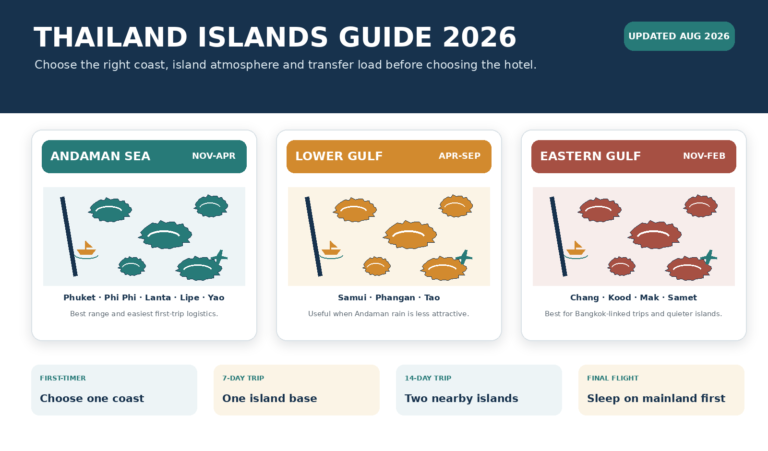
Koh Tao sits in the Gulf of Thailand, north of Koh Phangan, and is known for its diving scene. Non-divers also have a reason to stay: beach days and smaller bays give the island a different rhythm from a large resort destination. [1]
The recommendations below are research-led planning judgements, not claims of a personal visit. They favour manageable travel days, sensible access and time to enjoy each stop. Published examples were checked on 2 October 2026; confirm the actual boat, room and activity for your dates.
Sairee, chosen carefully
Convenient dinners and beach time; check the exact room location and nearby nightlife.
Mae Haad
Reduce arrival-day moving around when ferry timing matters more than a secluded setting.
A dive course
Choose teaching quality and enough time to learn, not simply the cheapest advertised rate.
A transfer buffer
Leave the island before the day of a separate long-haul flight whenever practical.
Koh Tao travel guide: decide what kind of trip you want
Pick the purpose before the hotel
A good island plan starts with your priorities rather than a long attraction list. For a diving holiday, choose the school and its timetable first. For a beach break, choose a room with practical access to the places you will actually use. A dramatic hillside view is less appealing when every dinner requires another transfer.
| Your priority | Suggested nights | What to leave out |
|---|---|---|
| Beaches and a snorkelling day | 3 | A full diving qualification squeezed between ferries |
| A beginner diving course | Around 5 | A flight immediately after the final dive |
| A slower stay with children | 4-5 | Multiple exposed boat trips on consecutive days |
| An island-hopping stop | 2-3 | A checklist of distant bays |
These suggestions are ranked by usable time and complexity, not by hotel spending or affiliate commission. Two nights can be worthwhile, but they give you only one full day. Consequently, a late arrival or a cancelled boat activity matters much more.
When to go: use Gulf weather, not a Phuket calendar
A sensible starting point
The Tourism Authority of Thailand highlights February to April for Koh Tao. Treat that as a starting point rather than a guarantee of cloudless days. Meanwhile, the northeast monsoon can bring substantial rain to southern Thailand’s east coast later in the year; the TMD’s October-December outlook reinforces the need for flexible plans. [1] [12]
For a water-focused holiday, keep at least one uncommitted day. That gives your operator a chance to move a trip rather than forcing you to accept the only remaining departure. A beautiful forecast icon for the beach says less about the crossing than the marine forecast does.
What to check before leaving
Check the TMD’s southern east-coast forecast, messages from the ferry company and your hotel’s local advice. Ask about the return journey too. A boat operating in the morning does not establish that your later sailing will run normally. [6]
Getting to Koh Tao without a fragile connection
The boat is only one part of the trip
Normal visitor routes reach Koh Tao by boat, including connections from Chumphon, the Surat Thani side, Koh Samui and Koh Phangan. Mae Haad is the principal arrival point used in current route listings. A flight described as part of a Koh Tao journey therefore still needs a ground and sea connection. [10]
Chumphon is a useful approach from Bangkok; Samui can be convenient when a flight and the onward ferry fit together. However, compare the complete door-to-door journey. A cheaper airport may create a much longer transfer, and a pier-only fare does not include reaching the pier.
| Departure point and service | Printed timing | Published adult example |
|---|---|---|
| Thung Makham Noi Pier: ferry | 06:00-08:30 | THB 450 |
| Thung Makham Noi Pier: catamaran | 07:00-08:45 or 13:15-15:00 | THB 750 |
| Chumphon station: transfer + catamaran | 06:00-08:30 or 12:00-15:00 | THB 900 |
The examples come from Lomprayah’s timetable, not a live seat search. They illustrate why a station ticket and a pier ticket should not be compared as identical products. Check baggage conditions and the required check-in time on your own confirmation. [2]
Booking a workable arrival
Send your hotel the operator name and scheduled arrival before travelling. Keep the pickup instructions available offline, and leave the first afternoon loose enough for a delay. Separately purchased trains, flights and ferries should not be assumed to protect one another when a connection is missed.
Where to stay: convenience versus seclusion
Choose a small everyday radius
For a first visit without a scooter, my default is a convenient part of Sairee or Mae Haad rather than an isolated hillside property. The west has the main arrival and activity infrastructure, while reaching eastern bays involves more deliberate transport planning. [10]
| Area | Main reason to choose it | Question before booking |
|---|---|---|
| Sairee | Easy beach-and-dinner routine | How close is the actual room to bars or late music? |
| Mae Haad | Straightforward ferry logistics | Is the room on a quiet lane or near the busy waterfront? |
| Chalok Baan Kao / southern bays | A slower base and a south-island focus | Which restaurants are comfortably walkable after dark? |
| East-coast bays | A stay centred on one scenic bay | Are transfers included, and when is the last one? |
Ask for the room’s access details, not just the resort entrance. Stairs, steep slopes and a long approach can make a significant difference with a pushchair, limited mobility or heavy luggage. A map pin beside the coast does not tell you whether the room is level with it.
Check the whole room offer
Compare air-conditioning, breakfast, cancellation terms and transfer arrangements on the same basis. For a diving course, price any school-linked accommodation separately against a normal room. Otherwise, a superficially cheaper course-and-room combination can conceal a location that does not suit the rest of your stay.
Beaches and snorkelling: make one bay the main event
Match the beach to the day
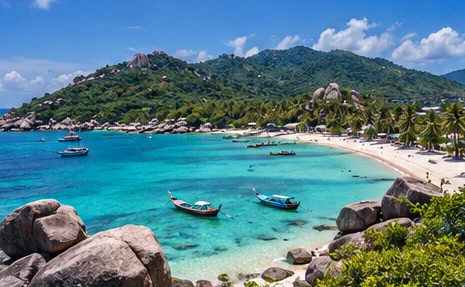
Sairee works well for a sunset-and-dinner day. Tanote is an east-coast bay, while Aow Leuk sits on the south-east side; both are established choices for visitors interested in shore snorkelling. Wildlife sightings and underwater visibility vary; no encounter should be promised. [8]
My preference is to choose one of the smaller bays and give it half a day. That leaves time to assess the water, find shade, eat and arrange the return rather than paying for a sequence of rushed stops.
Choose conditions over a famous name
Ask locally about current access, any fee and swimming conditions before setting off. Stay out of boat channels. When the entry looks difficult or the water is unsettled, make it a beach visit instead of treating snorkelling as compulsory. Avoid rock jumping just because other visitors are doing it. [7]
For a guided trip, ask how beginners are supervised, what flotation is supplied and whether people can remain on board. Green Fins advises against touching or feeding wildlife and against contact with the reef. A close-up photograph is not a reason to chase an animal. [9]
Koh Nang Yuan: check the day-visitor rules
A half-day plan, not an arrival-day gamble
Koh Nang Yuan’s resort currently lists day access from 10:00 to 15:00 and admission of THB 250 per person, checked 2 October 2026. Its viewpoint approach is described as about 15-20 minutes, with steep sections; queues and the descent add time. Confirm the current arrangements before paying for a boat. [3]
Agree a return meeting point and time rather than merely asking for a return fare. Keep enough time to get back from the viewpoint, retrieve belongings and find the right boat. For families, the beach and a short swim may be the better use of the visit than waiting for the viewpoint photograph.
Choosing a dive course: ask better questions than the price
One current example, not a school ranking
Black Turtle Dive advertises a three-day PADI Open Water course at THB 12,950, checked 2 October 2026. Its listed inclusions cover training materials, equipment, certification and the course’s dive activities. The three-day format assumes online study before arrival. Budget for meals and accommodation separately unless your written offer includes them. This is a transparent price example, not evidence that it is the cheapest or best school for everyone. [4]
Before paying, ask about instructor language, maximum group size, where confined-water training takes place and how extra practice is handled. Also check the medical questionnaire in advance. An unanswered eligibility question is much easier to resolve before you have a tightly scheduled island stay.
Leave space around the course
Around five nights is my suggested starting point for arrival, a three-day course and some breathing room. Learners progress differently, so avoid promising yourself that certification will finish at a particular hour. A short introductory dive experience is not the same qualification as an Open Water course.
What to do when you are not diving
A viewpoint is not automatically an easy walk
John-Suwan appears among Koh Tao’s established viewpoint attractions, alongside other lookout and yoga options in current activity listings. However, a popular name tells you little about today’s access, surface or suitability. Ask locally before setting off and use daylight for the walk. [11]
Choose footwear with grip, carry drinking water and tell someone where you are going. After rain, a shorter coastal walk or a cafe stop may be a better decision than a steep route. Do not climb past a closure or continue simply because a route appears on an old map.
Build a worthwhile slow afternoon
Try a late breakfast, one beach, a shaded lunch and a west-coast sunset rather than three separate excursions. A slower afternoon also gives non-diving partners something they can enjoy without matching a dive boat’s timetable. Agree a simple meeting point and avoid relying on a last-minute message from offshore.
When rain settles in, use the time for a class, reading or sorting the next transfer. Booking another weather-dependent boat trip is not much of a backup plan. Instead, keep one option that can be enjoyed close to your accommodation.
A realistic three-night Koh Tao itinerary
Arrival day: keep it deliberately light
Meet the hotel transfer, settle in and work out the local dinner options. Afterwards, take a short walk near your base. Save paid activities for a full day so that a delayed ferry does not immediately become a missed booking.
First full day: choose your main water activity
Pick a guided snorkelling trip or an independent Koh Nang Yuan visit, subject to conditions. Those are alternatives rather than compulsory back-to-back bookings. Have a quiet evening afterwards, especially when an early start or a long boat day has used more energy than expected.
Second full day: one bay and an optional viewpoint
Use the morning for the beach that best suits the day’s conditions. Add a viewpoint only when the weather, access and your energy make it sensible. Otherwise, stay for lunch and return in time for an unhurried sunset.
Departure day: make the connection the priority
Allow time for checkout, the transfer and the operator’s check-in requirement. Keep valuables, medication and the next booking confirmation in your hand luggage. For a five-night diving version, replace the two activity days with the course and add a land-based day after it; confirm the diving-to-flight interval separately.
What to budget: separate allowances from quoted prices
An adjustable daily model
The table is an editorial spending model checked on 2 October 2026, not a survey of guaranteed room or restaurant prices. It assumes two adults share one room and split its cost equally. Replace each allowance with actual quotes before booking.
| Item | Lower-spend plan | More-comfortable plan |
|---|---|---|
| Half of a shared double room | THB 600 | THB 1,200 |
| Meals and non-alcoholic drinks | THB 500 | THB 800 |
| Local transport and small extras | THB 250 | THB 500 |
| Illustrative daily total | THB 1,350 | THB 2,500 |
Both totals exclude getting to and from the island, paid water activities, diving, insurance and substantial shopping. Single travellers cannot automatically halve a room’s advertised price, while a remote hotel can shift much more spending into transport.
Choose the expensive commitment first
Put the diving course or your main boat trip into the budget before choosing optional extras. Then compare the total with adding another night. Often the more useful question is not whether you can buy one more tour, but whether you have enough time to enjoy the activity already booked.
Keep a separate disruption reserve for an extra room night and a changed transfer. That reserve is not spending money for the first evening. The point is to avoid turning a weather decision into a financial pressure to travel.
Getting around and staying sensible
You do not need to learn to ride here
Walking within a carefully chosen base, hotel transfers and pre-agreed taxis can cover a short visit. FCDO warns about Thailand’s road and motorcycle risks; using a scooter requires the correct licence and insurance cover, not simply a rental shop willing to hand over a key. [7]
For any taxi or boat transfer, agree whether the price covers the whole party or each person and whether it includes waiting. Photograph the meeting point and keep the driver’s contact details. A confirmed return arrangement matters more at a quiet bay than shaving a little off the outward fare.
Small preparations that earn their place
Carry some cash, an offline booking copy and a charged phone. Keep essential medication and one change of clothes accessible during the sea crossing. For the rest of your bag, use the Thailand packing list rather than treating every beach day as a full expedition.
Follow swimming warnings and avoid isolated late-night walks. Save your hotel’s contact details and arrange a ride home before an evening out. These are ordinary precautions, not a claim that one area is completely safe or another should be avoided. [7]
Koh Tao: the advantages and the compromises
Why it can work well
A focused island stay can give you a repeatable rhythm: one base, familiar places to eat and a small number of meaningful activities. For learners, organising the holiday around one dive school also reduces daily decision-making. Non-divers can use the same slower pace without following a course timetable.
Where it may not suit
A ferry-dependent island is less convenient for a very short trip tied to fixed flights. A remote room can make spontaneous evenings awkward, and a water-heavy plan is more vulnerable to poor conditions. Travellers who want many easy land-based attractions may prefer a larger island.
My judgement is that Koh Tao is strongest when you can commit a few nights and accept a flexible activity order. It is less convincing as a rushed detour undertaken only because a famous photograph is on the itinerary.
Common mistakes that make the trip harder
Confusing cheap with good value
A low room rate can lose its advantage after repeated transfers. Similarly, a low boat-tour price may exclude island admission or use a meeting point far from your accommodation. Compare the whole day’s cost and effort before deciding.
Planning from photographs
A picture does not establish a safe swimming entry, easy access or a quiet beach at your arrival time. Ask current, practical questions instead: how steep is the approach, where does the pickup happen and what is the alternative when the water is unsuitable?
Using every day as a fixed booking
Keep some room for changes. A flexible day helps with weather, tiredness and extra learning time. It also allows you to repeat the beach you enjoyed instead of leaving it too soon simply to complete a list.
Frequently asked questions about Koh Tao
Is Koh Tao worth visiting without diving?
Yes, when beaches, a guided snorkelling day and a slower pace are what you want. I would allow three nights and avoid building the stay around numerous remote stops. Travellers wanting a large menu of land-based attractions should compare a larger island instead.
How many nights should I spend on Koh Tao?
Three nights is my starting suggestion for a first non-diving visit. Around five nights gives more breathing room for a three-day diving course, arrival logistics and a land-based day. These are planning suggestions; your actual ferry and course schedule should decide the final length.
Can I reach Koh Tao without a ferry?
Normal visitor journeys require a boat connection. Flying to a nearby airport does not remove the ground transfer and sea crossing. Compare the complete route and check the actual departure pier on the confirmation. [10]
Should I stay in Sairee or Mae Haad?
I would lean towards Sairee for a longer beach-and-dinner routine, and Mae Haad when arrival logistics dominate a short stay. The exact room location matters more than the area name, especially when you care about quiet nights or step-free access.
Can children or non-swimmers enjoy a snorkelling trip?
Do not assume that every trip is suitable. Ask the operator about minimum age, supervision, correctly fitting flotation, boat access and whether participants may stay aboard. For a non-swimmer, a beach-based day may be more appropriate than an open-water excursion.
Should I return from Koh Tao on the day of my international flight?
I would avoid doing so for a separately booked long-haul flight. A night on the airport side of the route is a useful buffer against a delayed or cancelled sailing. Diving-to-flight restrictions must also be considered independently.
Is the daily budget a guaranteed current price?
No. The daily figures are an editable spending model, not hotel quotations. Confirm the room, transfers and activities for your exact dates, then add a separate disruption reserve. Published operator examples elsewhere in the guide are dated and can change.
The Koh Tao plan I would start with
For a first non-diving visit, start with three nights in a walkable part of Sairee or Mae Haad. Book the arrival transfer, choose one principal water activity and keep the other full day flexible. That structure gives you enough purpose without turning the island into a transport exercise.
For a diving holiday, choose the school before the room and allow around five nights, adjusting for the actual training programme and onward flight. In either case, protect the final connection. The best version of Koh Tao is the one that leaves you time to stop looking at the timetable.
Sources and fact-checking notes
Research was checked on 2 October 2026. Published fares, operating hours and activity programmes may change. Suggested budgets, visit lengths and itineraries are editorial planning guidance, not guarantees of availability or access. Provider information is identified below and is not an independent audit of a business.
- Tourism Authority of Thailand: Ko Tao. Checked 2 October 2026.
- Lomprayah: official 2026 timetable. Checked 2 October 2026.
- Koh Nangyuan Resort: visiting the island. Checked 2 October 2026.
- Black Turtle Dive: Open Water course. Checked 2 October 2026.
- Divers Alert Network: flying after diving. Checked 2 October 2026.
- Thai Meteorological Department: southern east-coast forecast. Checked 2 October 2026.
- FCDO: Thailand safety and security. Checked 2 October 2026.
- Black Turtle Dive: Koh Tao beaches. Checked 2 October 2026.
- Green Fins: sustainable snorkelling. Checked 2 October 2026.
- 12Go: Bangkok to Koh Tao route listings. Checked 2 October 2026.
- GetYourGuide: Ko Tao activity listings. Checked 2 October 2026.
- TMD: October-December 2026 climate outlook. Checked 2 October 2026.
Check your exact booking and current local instructions before travelling. Illustrations show the character of the destination; they are not evidence of present-day conditions or a personal visit.
Illustrations in this article were created for Taylor’s Trailblazing Travels. Third-party photographs, where used, are credited beside the image or in the source list.