
Thailand by month / February
Thailand in February
Give the beaches time, keep the north flexible and let the calendar influence bookings without dictating the whole holiday.
Original conceptual illustration. Seasonal coastal illustration, not a forecast of visibility, crowds or sea conditions.
Thailand in February works particularly well when the holiday is built around time on one coast rather than a hurried circuit of the whole country. The historical rainfall pattern is useful for beach planning, while the transition towards hotter weather makes the shape of the day more important. Northern Thailand remains a separate decision because temperature and air quality are different questions.
Begin with what you want the trip to feel like: a settled beach stay, a city-and-coast combination, a family holiday or a longer journey with northern culture. Then choose the region and transport that support it. February offers plenty of possibilities, but a good fortnight does not require every island, festival and viewpoint on the same booking list.
This article distinguishes historical regional climate averages, confirmed calendar information and editorial suggestions. The weather table uses 1991-2020 normals, not a forecast for February 2027. The itineraries and cost model are constructed examples, and the festival section does not convert last year’s programme into next year’s promise.
Best simple route
One coast plus Bangkok
Spend time enjoying the base instead of paying to cross the peninsula.
Northern caveat
Check air quality daily
A dry forecast does not tell you how clean the air will be.
Upcoming date
6 February 2027
Lunar New Year date, not a nationwide closure or event timetable.
Daily rhythm
Mornings outdoors
Make room for shade, air-conditioned breaks and a slower afternoon.
Thailand in February: begin with the purpose of the trip
Choose the experience before the route
For a straightforward beach holiday, compare the Andaman and Gulf options, then give one base enough nights to be useful. A traveller who wants easy meals and a pool may need a different location from someone planning diving, long walks or several boat trips. Decide which ordinary day you would enjoy before choosing the most recognisable island name.
TMD’s seasonal description places February around the transition from the cooler season towards hotter conditions in upper Thailand. Rainfall on the southern east coast is normally lower than in the preceding month. Those patterns support a coast-focused plan, but they cannot predict the conditions during a particular hotel stay. [1] [2]
Keep the north as a deliberate choice
A northern stop can add cultural variety, but it should not appear automatically in every itinerary. Consider the time required to reach it, your tolerance for warmer afternoons and the need to monitor air quality. Travellers particularly vulnerable to pollution should seek individual medical advice before making a non-refundable outdoor-focused commitment. [5]
A two-base holiday can still feel varied when the bases offer different daily experiences. Bangkok plus a coast is not merely the shortened version of a supposedly complete Thailand trip. It can be the better-designed choice when rest, simple logistics or travelling with children matters most.
February weather: use the correct comparison
Regional normals, not resort forecasts
The figures below come from the normal columns of TMD’s January-March bulletin, using the 1991-2020 baseline. Mean daily minimums and maximums describe typical regional averages, not the lowest and highest temperature you could encounter. Rainfall refers to the month as a whole. [1]
On a small screen, swipe the table sideways to read every column.
| Region | Mean daily minimum | Mean daily maximum | February rainfall |
|---|---|---|---|
| Northern Thailand | 17.4°C | 33.8°C | 9.8 mm |
| Northeastern Thailand | 19.5°C | 33.0°C | 15.6 mm |
| Central Thailand | 21.7°C | 34.8°C | 10.6 mm |
| Eastern Thailand | 23.4°C | 33.0°C | 28.4 mm |
| Southern east coast | 22.9°C | 31.6°C | 44.2 mm |
| Southern west coast | 23.3°C | 33.7°C | 30.2 mm |
| Bangkok and vicinity | 24.3°C | 33.5°C | 17.7 mm |
Do not turn a low average into an all-day sunshine claim
A relatively dry month can still contain rain, wind, thunderstorms or an unsuitable sea day. The practical response is to keep outdoor plans adaptable and use the current TMD forecast before departure and during the stay. A monthly chart is a route-planning tool, not a swimming permission slip. [4]
Early and late February: expect a transition, not a switch
Earlier dates may retain cooler northern mornings
TMD places the usual end of the cooler season around mid-February, while actual conditions vary. If a mountain dawn is part of the plan, check the forecast for the specific elevation and departure time rather than packing only for a warm city afternoon. A regional average is not a summit forecast. [2]
Bring a compact layer that can be removed and carried easily. The goal is not to take a British winter wardrobe to the beach, but to avoid being uncomfortable during the one activity that starts before sunrise. A useful layer should also work in air-conditioned transport.
Later dates usually need a more heat-aware routine
The seasonal description points towards rising temperatures as the month progresses, but no single date guarantees the same change everywhere. Treat the later part of the month as a reason to plan shade, earlier sightseeing and a slower afternoon, not as a forecast that every day will be hotter than the last. [1] [2]
Avoid making the daily plan depend on maximum walking during the hottest-feeling part of the day. Put the main outdoor activity earlier, then choose lunch, a museum, a shaded rest or the hotel as appropriate. The calendar can inform the rhythm without dictating every hour.
Andaman choices: settle on the right base
Think about the day between excursions
Phuket, Krabi and Koh Lanta can all feature in an Andaman itinerary, but they create different amounts of travel depending on the area selected. Compare how you reach restaurants, the beach and planned outings. A hotel that looks peaceful in photographs may require transport for every meal.
The west-coast historical rainfall normal is low in February, supporting consideration of the Andaman side for a beach-led trip. Nevertheless, local flags, currents and the marine forecast still decide whether swimming or a boat activity is appropriate. Do not describe a particular beach as safe simply because the regional monthly average is favourable. [1] [8]
Do not combine islands just to use the map
Give the chosen area several nights before adding another base. Extra time can provide a second chance for an excursion, a slower morning and a day when nobody has to repack. Those are useful parts of a holiday rather than empty spaces that need another destination.
If adding Koh Lanta, consider the full transfer and the place you will stay, not only the island name. A beach, a road connection and a restaurant area all affect daily convenience. Ask how the room connects to the activities you actually intend to do.
Gulf choices: a stronger February comparison than a January assumption
Use the regional improvement without promising perfection
The southern east-coast normal falls from 112.0 mm of rainfall in January to 44.2 mm in February in the TMD table. That is a meaningful seasonal comparison, but it is not a percentage chance of rain at a specific Koh Samui resort. Regional totals do not describe every island or every week. [1]
For travellers drawn to Koh Samui, Koh Phangan or Koh Tao, February can therefore be worth comparing carefully rather than dismissing the whole coast from a January weather summary. Choose the base for the activities and pace you prefer, and keep crossings responsive to the actual conditions.
One island can be enough
A single island with an enjoyable local area may suit a short break better than three islands connected by several transfers. Check how far the room is from meals and what travel is required for the outing you most want. That is more useful than counting beaches you could theoretically visit.
If combining islands, allow enough nights that a changed ferry does not remove the entire stay. Keep the final flight connection protected by a sensible buffer. A regional climate advantage does not remove the consequences of an unprotected same-day sea and air itinerary.
Mainland stays and the value of fewer connections
Removing a ferry can solve a practical problem
For someone uncomfortable at sea, travelling with bulky equipment or managing limited mobility, a mainland beach base may simplify the trip. Compare the road or rail journey and the property’s actual access rather than assuming every coastal hotel is equally convenient. A shorter transfer can be more valuable than a distant island label.
Check the everyday route from the room to the places you will use. Steps, steep paths and busy roads can matter more than the straight-line distance to the sand. Ask specific questions and request current information from the property when a feature is essential.
Do not let weather advice replace route-risk advice
The FCDO publishes regional warnings that can affect particular border areas and routes independently of the season. Before booking an eastern or border-adjacent journey, check the current advice for the exact destination and the roads used to reach it. This guide does not reproduce a changing boundary as a permanent map. [9]
The same applies to insurance. A pleasant weather outlook does not remove a policy exclusion associated with travelling against official advice. Confirm the actual route and the insurer’s conditions rather than assuming that a nationally familiar destination name settles the issue. [11]
Northern Thailand: make air quality part of the booking decision
Avoid a calendar-based guarantee
The FCDO warns that Bangkok and Chiang Mai can be affected by high pollution and seasonal smoke haze. A dry forecast does not tell you the particulate level, and the start or severity of a poor-air period cannot be reduced to a dependable switch on one calendar date. Check current information close to the trip and during the stay. [5]
For a traveller with a relevant respiratory or other health condition, seek individual advice and keep the plan especially adaptable. The correct decision may differ between two people travelling on the same dates. Do not rely on another visitor’s report that they felt fine as a medical assessment for you.
Build a northern stay around more than distant views
Choose a base that remains enjoyable if an outdoor excursion is cancelled or a viewpoint is obscured. Leave room for an indoor cultural activity, a meal or a quieter day. A city with alternatives can be easier to manage than a remote stay whose entire purpose is a clear mountain panorama.
If the north is the main reason for travelling, compare dates and flexibility before buying the rest of the itinerary. If it is a small addition to a beach holiday, ask whether the extra flights and packing are worthwhile. Keeping it optional can be more sensible than treating it as compulsory.
Bangkok in February: control the walking, not just the checklist
Plan a morning with a clear geographical focus
The Bangkok and vicinity normal has a mean daily maximum of 33.5°C in February. Use that as a reminder to plan breaks, not a prediction of the exact temperature outside your hotel. Group nearby places and avoid a sequence of distant timed appointments that leaves little room to slow down. [1]
Choose the first sight, a realistic lunch area and an easy return route. Then add another stop only if it improves the day. The attraction list should serve the traveller, rather than turning the afternoon into a test of how much discomfort can be tolerated.
Let dinner be the main evening event
A Bangkok Chinatown food experience can help organise an evening when the meeting point, walking and dietary arrangements fit your group. Read the actual route and inclusions before booking. A food tour is one way to explore, not a requirement for eating well in the city.
For heritage outside the city, compare Ayutthaya day trips by transport, time at stops and the amount of exposed walking. Avoid judging solely by the number of sites included. A shorter, more comfortable itinerary may let you appreciate the places rather than simply photograph their entrances.
Lunar New Year 2027: the confirmed date and the unanswered questions
The calendar date is 6 February
Treat celebration-related demand as a planning consideration around the dates relevant to your chosen area. Check the property and transport you need instead of assuming the whole country will either close or operate normally. Local programmes and business decisions can differ substantially.
Book around an interest, not a vague festival promise
Decide whether a celebration is a main reason for the visit or a welcome extra. If it is central, wait for the responsible organiser’s programme before paying for a tightly timed itinerary. If it is an extra, select a base and dates that you would enjoy even if the specific event changes.
For crowded evening areas, agree a meeting place and the route home before the group separates. A child or less mobile traveller may need a quieter viewing position or a shorter visit. The best plan is the one that lets the group enjoy the occasion without making escape, rest or transport difficult.
Chiang Mai flowers: do not recycle last year's dates
A historical programme is evidence of variation
TAT’s February 2026 events page lists the Chiang Mai Flower Festival for 13-15 February 2026. That historical programme is useful precisely because it warns against turning a familiar “first weekend” description into a confirmed date for every year. This guide does not claim that a particular 2027 programme has been verified. [7]
Check current announcements from the organiser and local official tourism channels before fixing a flower-focused stay. Confirm the parade date separately from park displays or other activities. Arriving during a broad festival period does not necessarily mean the event you most want happens on that day.
Make the trip worthwhile without one display
Seasonal planting and flowering respond to conditions as well as a calendar. A photograph from another year cannot guarantee the same colours, viewing access or crowd pattern. Treat the display as part of a broader northern visit rather than the sole justification for an expensive detour.
If the flowers are an optional interest, keep the booking flexible and assess conditions nearer the time. If they are essential, allow enough nights to avoid a single-day dependency. The distinction makes the planning more honest than promising a perfect display based on an old promotional image.
Two thirteen-night routes for a two-week holiday
Option A: Bangkok and the Andaman side
This example uses fourteen calendar days and thirteen nights. Spend the first three nights in Bangkok, the next eight in one Andaman base or a carefully chosen two-base split, and the final two in the departure city or another practical mainland position. The internal services must be checked for your actual dates.
On a small screen, swipe the table sideways to read every column.
| Stage | Nights | Purpose | Decision to make |
|---|---|---|---|
| Bangkok arrival | 3 | Recover, explore a few areas and enjoy an evening meal. | Choose a base that reduces daily cross-city travel. |
| Andaman stay | 8 | Beach time, rest and selected activities. | Keep one base unless a second clearly improves the trip. |
| Departure positioning | 2 | Remove pressure from the final journey and add a flexible city day. | Match the correct departure airport and booking conditions. |
Option B: Bangkok and the Gulf side
Use the same thirteen nights differently: three in Bangkok, seven on Koh Samui, two on Koh Phangan if that move genuinely appeals, and one in a confirmed departure position. Alternatively, keep all nine island nights on one island and use day activities where appropriate. There is no requirement to add a second island.
Both examples deliberately leave the northern region out. That keeps the trip beach-led and avoids adding another flight sequence simply to make the map look complete. Travellers strongly interested in the north can replace part of the island stay, but should remove nights elsewhere rather than expanding the holiday on paper.
A shorter February trip should become simpler
Eight nights can still feel like a holiday
For nine calendar days, consider two nights in Bangkok, five in a single coastal base and one practical night before departure. That leaves eight hotel nights with travel time acknowledged. It is an editorial layout, not a claim that every international flight schedule fits those exact stages.
The middle five nights are valuable because you can unpack and choose activities rather than moving daily. Avoid using the coastal base as a launching point for several distant overnight detours. A good local area, one planned excursion and unstructured time may be more satisfying than a list of rushed arrivals.
A direct beach arrival may suit some travellers
If a suitable international journey reaches the region you prefer, compare beginning and ending there instead of automatically routing through Bangkok. Check the real flight, transfer and total cost first. A direct regional arrival can simplify a short trip, but it is not automatically available or cheaper for every departure airport.
The choice depends on priorities. A traveller keen on Bangkok food and culture may value the city nights, while someone mainly seeking rest may prefer to remove them. Neither route needs to be defended as the only proper way to visit Thailand.
Longer stays: add depth where the transport is sensible
Three weeks allow more than another flight
An additional week can mean a slower second coastal base, a northern stay with flexible dates or several days devoted to a particular activity. Choose the addition whose travel is reasonable and whose purpose is clear. Do not spend the extra week collecting one-night stops just because the overall trip is longer.
Keep practical tasks visible. Laundry, replacing toiletries, a quiet afternoon and an unplanned weather day are ordinary parts of a longer holiday. Allowing for them makes the itinerary more accurate, not less ambitious.
Consider the order before making separate bookings
A north-and-coast trip can work in either order depending on the flights, air-quality position and priorities. Compare the complete journey and cancellation deadlines before locking the pieces individually. Changing one regional stay is easier when it does not force several unrelated tickets to move with it.
For extended stays, check the permitted stay and entry conditions for your nationality through the official source. Do not assume that a longer holiday automatically fits the same arrangements as a fortnight. The weather decision and the immigration decision are separate. [10]
Transfers: know what each ticket actually includes
Gulf journeys often have more than one stage
For an onward island stay, review Koh Samui to Koh Phangan departures and confirm the named piers. The island name does not identify the exact arrival point or the transport needed to reach your room. Save the operator’s contact information separately from the marketplace receipt.
Andaman moves need the same attention
Compare Krabi to Koh Lanta transport by actual route and arrival arrangements. A road-based option and a boat service can make different demands on luggage, mobility and timing. Choose the one appropriate for the people travelling, then reconfirm it close to departure.
Do not build an international-flight day around the last possible connection. Consider a final mainland night where a sea crossing is involved, and distinguish protected through-ticket journeys from separately purchased legs. A departure advertised online is not a guarantee against weather or operational changes.
Accommodation: choose the neighbourhood before the room photograph
Match the location to the ordinary evening
Compare Bangkok stays using the areas you expect to visit, with a manageable return after dinner. Search Koh Samui rooms by the beach and local area that suit your pace, not simply a general island result. A beautiful property can still be inconvenient for the way you want to spend the day.
For an Andaman option, compare Koh Lanta accommodation and check the exact beach, nearby meals and transfer arrangements. Confirm the booked room’s features rather than assuming that every photograph belongs to the cheapest rate.
Read the cancellation date as carefully as the room description
The label “free cancellation” is useful only alongside its deadline and conditions. Compare that date with the point at which you need to decide about air quality, a festival programme or transport. A flexible-looking rate can become fixed before the uncertainty you care about is resolved.
Ask for specific access information where relevant: steps, distance to meals, vehicle access, room layout or the route to the pool. Keep the answer in writing and make sure it refers to the actual room type. A broad accessibility label cannot answer every individual need.
Couples: decide what makes the stay feel special
A quieter base may beat a longer excursion list
For a couple, a comfortable evening area and time together can matter more than adding every well-known island. Choose whether the priority is privacy, walkable restaurants, a lively setting or easy activity pickup. Those preferences can lead to different bases even on the same coast.
February includes Valentine’s Day, but a restaurant package or hotel promotion is not automatically good value for your trip. Read the actual inclusions and conditions rather than assuming the date requires a special booking. A relaxed meal chosen for the setting can be enough.
Choose one shared highlight and leave space around it
Pick the outing that both people are genuinely interested in, then avoid loading the same day with another long transfer or timed dinner. If one person is uncomfortable at sea, choose an alternative that does not require persuasion at the pier. The activity should improve the holiday for both travellers.
A private trip may offer more control over pace, but it is not automatically safer or better equipped. Ask the same questions about operator, vessel and conditions that you would ask for a group trip. The word “private” describes the booking arrangement, not a quality guarantee. [8]
Families: protect the routine around the holiday dates
Check the actual school calendar
Family travel dates vary by school and local authority, so verify the calendar that applies to your household rather than assuming all UK half-term weeks coincide. Then investigate the room and flight arrangement you need. A generic monthly guide cannot determine the correct school dates for every reader.
Think about the full day of travel, including meals, waiting, baggage and the final transfer. A connection that looks efficient for two adults may be tiring with small children. Allow the first day at the base to be simple enough that delays do not create a chain of missed activities.
Ask what the child will do during the adult activity
On a boat tour, confirm child equipment and supervision arrangements before booking. At the accommodation, consider shade, pool supervision, safe access and nearby food. A children’s pool in a photograph does not establish that an adult can stop watching or that every path is suitable for a pushchair.
Keep one easy alternative that the child actually enjoys. A shorter activity, pool session where appropriately supervised or familiar meal can rescue a difficult day without another major booking. The itinerary should support the family routine rather than repeatedly breaking it for attractions that mainly interest the adults.
A February budget model you can replace with real quotes
Use arithmetic with visible assumptions
The following is an illustrative model prepared on 05 October 2026, not measured February pricing. It assumes two people, one shared room, thirteen nights and fourteen days. The figures are deliberately shown as inputs so you can replace them rather than mistake the subtotal for a quoted holiday package.
On a small screen, swipe the table sideways to read every column.
| Item | Chosen assumption | Calculation | Example amount |
|---|---|---|---|
| Room | THB 2,200 per room per night | 13 x THB 2,200 | THB 28,600 |
| Meals and ordinary drinks | THB 1,400 per couple per day | 14 x THB 1,400 | THB 19,600 |
| Local movement | THB 500 per couple per day | 14 x THB 500 | THB 7,000 |
| Selected activities | Whole-trip allowance | Chosen example | THB 9,000 |
| Model subtotal | Before exclusions | Sum of the four rows | THB 64,200 |
Long-distance transport, international flights, insurance, shopping and contingency are not included. Add actual quotes for those items before deciding whether the route is affordable. A different room choice or several private excursions can change the total substantially.
Do not compare this model with another month as a price survey
A lower example subtotal does not prove that February is cheaper than January. Different assumptions produce different answers. To compare months, hold the room standard, length, route and inclusions constant, then obtain quotes for the actual dates.
Keep a small list of acceptable alternatives before searching. It is easier to make a sensible budget decision between two workable bases than between an ideal itinerary and a collection of compromises that do not meet the trip’s purpose.
Where to spend for a more comfortable trip
Pay for the feature that removes friction
For some travellers, a better location saves repeated taxis. For others, a suitable room layout, a quieter setting or a direct transfer is worth more than a decorative upgrade. Decide which problem the extra spending solves before paying for the most expensive version of every component.
A final buffer night can also be a practical purchase when the route depends on a ferry. Compare its cost with the disruption caused by a missed long-haul flight, while recognising that no single night removes all risk. The aim is a resilient plan, not a guarantee bought through one extra booking.
Keep optional spending genuinely optional
Do not prepay every activity merely because it is available to book now. A weather-sensitive tour may be better chosen closer to the day, subject to availability and your priorities. Read its cancellation terms and understand which party decides whether conditions justify cancellation.
Retain room in the budget for an ordinary change: a different meal, a transport adjustment or a quieter afternoon. A holiday planned to the last available pound can make sensible decisions feel impossible. Appropriate insurance and an accessible contingency serve different purposes, so consider both. [11]
Activities: choose the conditions as well as the experience
Boat excursions need a current decision
Compare Koh Samui excursions by the actual operator, departure point, equipment and route. Ask how the itinerary changes with conditions and whether the activity suits your swimming ability or other needs. A favourable February climate pattern does not inspect a vessel or ensure a particular beach is safe. [8]
Keep the day after a demanding outing lighter rather than automatically booking another early departure. Time to rest, wash clothes or enjoy the base is part of making the trip work. An activity that is enjoyable once does not need to become the template for every day.
Diving needs time after the final dive
Follow the dive centre’s screening and specialist guidance, and confirm insurance for the actual activity. DAN recommends minimum preflight intervals for specified symptom-free recreational dive profiles, with longer intervals after more demanding diving. Plan the flight around the appropriate advice rather than fitting one more dive into a convenient-looking gap. [13]
Anyone with symptoms that might indicate decompression illness should seek medical advice and avoid flying. The ordinary journey to the airport is not a substitute for the required interval or assessment. Keep the dive operator and medical contacts available until the activity is fully complete. [13]
Pack for heat without forgetting protection
Light clothing should still serve several purposes
A lightweight long-sleeved shirt can be useful for sun exposure, a cooler indoor setting and modest clothing where required. Choose something comfortable enough to wear repeatedly, not a specialist garment that will remain in the case. Check the actual dress rules for the venues on your plan.
Take footwear already known to suit your feet and the amount of walking expected. Add a compact layer for northern mornings or strong air-conditioning, plus simple rain protection. The dry-season label should not determine whether documents and electronics are protected from water.
Carry the everyday essentials accessibly
A reusable water bottle can help keep drinking water accessible, but it does not make untreated water safe. Refill from an appropriate source and follow individual medical advice where relevant. A water-resistant phone pouch is useful only within its stated limits; test it before trusting a valuable device.
Compare these categories with items you already own. The links are optional product searches, not a tested packing ranking. A useful bag is one you can carry and organise through the actual transfers, with medication and essential documents accessible rather than buried beneath beach gear.
A health-aware day is a better-paced day
Keep preparation separate from self-diagnosis
Check current travel-health information before departure, including advice relevant to existing conditions, medication and the activities planned. The FCDO recommends appropriate insurance and consideration of local healthcare access, particularly for travellers with health conditions or pregnancy. A general seasonal guide cannot provide individual medical clearance. [5]
Once travelling, take breaks before the day becomes uncomfortable. Seek help for concerning symptoms rather than assuming everything is ordinary heat or a minor stomach upset. When a person is seriously unwell, local medical assessment matters more than finishing a pre-booked activity.
Use indoor options without treating them as a failed holiday
A shaded meal, museum, comfortable room or quiet afternoon can be a deliberate part of February travel. Pick options that you would enjoy, not merely places to wait until you can resume a crowded schedule. This also helps if air quality or weather changes the outdoor plan.
For a group, make it easy for someone to stop without cancelling everybody’s day. A shared base and clear return route can allow different activity levels. The person who needs rest should not have to choose between overdoing it and being stranded far from accommodation.
Keep bookings and connectivity ready for changes
Make essential information available offline
Compare Airalo plans for routine data access after checking your phone, validity and inclusions. Airalo distinguishes data-only service from a normal voice or SMS line, so retain another route for important calls or verification messages. Coverage cannot be assumed for every remote or offshore location. [12]
Download the first accommodation address, current transport confirmation and useful contacts. Make sure a companion can access the essentials independently rather than relying on one unlocked phone. A clear offline record is particularly helpful after a long arrival day or an unexpected change of pier.
Replace old confirmations instead of collecting contradictions
When a booking changes, identify which confirmation is current. Archive the old version so it does not appear beside the new one in a rushed search. Keep the operator’s actual contact separate from the booking marketplace’s general customer-service page.
If a ferry or activity is cancelled, clarify the available alternatives before buying a second service. An unofficial offer may not solve the underlying weather or safety problem. Ask who operates it, what the conditions are and whether the route remains appropriate; the willingness to sell a ticket is not enough.
A final-week check for February 2027
Recheck the information that was never guaranteed
Read the current FCDO route advice and entry requirements for your nationality, then the latest TMD forecast and relevant local notices. Check any festival programme with the responsible organiser. The confirmed lunar date does not tell you whether a particular road, museum, hotel restaurant or transport service will operate normally. [4] [6] [9] [10]
Review cancellation deadlines while there is still time to act. For a northern stay, consider the current air-quality information and your own health needs. For an island stay, check the ferry and final flight arrangement together, rather than treating each confirmation as an independent success.
Keep the first and last days simple
Confirm the arrival time, check-in arrangements and a practical first meal. At the other end, identify the correct departure airport and the complete route to it. The most useful final check is whether the itinerary still works when one ordinary part takes longer than hoped.
Remove anything that depends on too many perfect transitions. An excursion can be changed, a room can be selected closer to the needed transport and an extra base can be left for another trip. A simpler itinerary at this stage often improves the holiday more than one more booking.
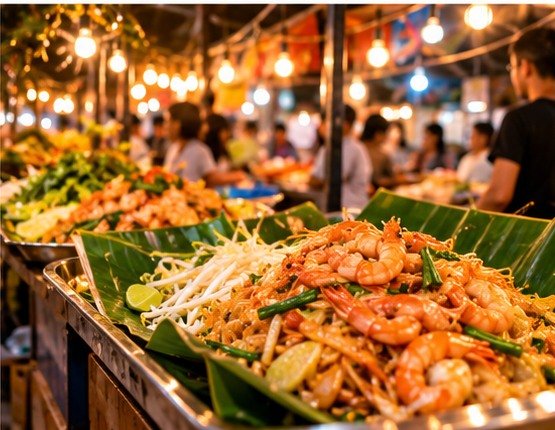
Different travellers can make different February choices
A couple wants rest and good evenings
For this pair, a single coastal base with convenient meals may be more useful than several island transfers. Add a short Bangkok stay only if the city is genuinely part of the appeal. Choose one shared excursion and leave time around it, rather than filling the calendar to justify the international flight.
The room location becomes important because it shapes every evening. A place requiring a long transfer for dinner can undermine the intended relaxed holiday. Compare the ordinary daily routine before paying for a distant view or an upgrade that does not solve a practical need.
A photographer wants northern scenery and a festival
This traveller has a different dependency: clear views and a specific event. Check current air quality, the actual programme and flexible booking conditions before fixing the northern dates. Allow for a useful cultural visit even if the ideal view or display does not materialise.
A backup plan should still interest the photographer, such as architecture, food or another subject permitted by local rules. Do not assume that a different hill will escape a regional haze problem or that access to a festival is unrestricted. The route needs to respond to the subject, not force it to match an old image.
A family has fixed holiday dates and limited energy for transfers
For this group, protect the essential room configuration and choose a manageable arrival. A coast that can be reached with fewer awkward stages may be preferable even when another one has a slightly lower historical rainfall figure. Climate is one input, not the only measure of a good trip.
Keep the child’s routine, supervision and the adults’ rest visible in the itinerary. A longer stay at a suitable property can offer more genuine holiday time than a sequence of attractive but tiring moves. The best February decision is the one that the whole group can use comfortably.

Pros and cons of February travel
Why the month can work well
The regional rainfall pattern makes both southern coasts worth comparing for a beach-led holiday. A city-and-coast route can fit a fortnight without needing constant movement, and the seasonal transition supports a deliberate mix of earlier outdoor activity and relaxed afternoons.
February can also include cultural interests, provided the actual year’s dates and programmes are checked. The variety is useful when it supports the purpose of the trip rather than becoming a requirement to include everything.
What needs more care
Rising heat affects the daily pace, northern air quality needs attention and event-related dates can complicate availability. A favourable monthly average does not guarantee calm crossings, clear mountain views or an unchanged festival schedule.
Some travellers will benefit from a simpler coast-first plan, while others need more flexibility or a different date. There is no single February itinerary that is equally suitable for every health, mobility or family circumstance.
Common February mistakes
Assuming the north remains cool all day
A cooler morning does not describe the whole afternoon. Use a removable layer and plan the walking around the conditions rather than carrying a winter expectation into the city. For high ground, check the local forecast separately from the regional mean.
Treating a festival pattern as a confirmed programme
The historical Chiang Mai event dates show why copying a customary weekend can be misleading. Confirm the event and year, and distinguish the parade from other displays. The lunar calendar answers a date question, not every practical question about transport or opening hours. [6] [7]
Crossing between coasts without counting the lost time
A road transfer, boat connection and new check-in can consume much more of the holiday than the map suggests. Choose both coasts only when the extra travel serves a clear purpose and the stay is long enough. Otherwise, spend the time enjoying the coast already selected.
Frequently asked questions
Is February a good time for Thailand beaches?
It is a useful month to compare both southern coasts because their historical rainfall normals are relatively low. That does not guarantee calm seas or safe swimming at every beach. Check current marine forecasts, local flags and the actual activity arrangements. A beach-led itinerary should still have an enjoyable alternative when conditions change. [1] [4] [8]
Is Koh Samui a reasonable February choice?
The southern east-coast normal is drier in February than January, making the Gulf side worth considering for its own attractions and pace. The figure is regional, not a resort forecast. Choose a suitable local base, read the actual ferry arrangement and leave a sensible buffer before an important international flight. [1]
Should I avoid northern Thailand in February?
There is no universal answer for every traveller and year. Check current air quality and consider your health and the purpose of the visit. The FCDO warns about pollution and regional haze affecting cities including Chiang Mai. A flexible cultural stay has different dependencies from a trip built entirely around strenuous outdoor activity and distant views. [5]
When is Lunar New Year in 2027?
The Hong Kong Observatory calendar places it on 6 February 2027. Local Thai celebrations, business arrangements and road closures require separate confirmation. Do not assume that every event occurs only on that day or that the whole country follows one identical closure schedule. Verify the programme for the particular place you intend to visit. [6]
Is the Chiang Mai Flower Festival always on the first weekend?
Do not rely on that as a confirmed annual rule. TAT’s official 2026 programme listed 13-15 February, demonstrating the need to check the actual year’s announcement. This article does not present an unverified 2027 parade date as settled. Confirm the organiser’s programme before booking travel that depends on seeing the parade. [7]
Is February cheaper than January?
This guide does not claim a measured nationwide price difference. Compare actual quotes using the same route, room standard, length and inclusions. A holiday date, room requirement or event can matter more than the month label. The budget model is illustrative arithmetic and should not be used as evidence that one season has a particular discount.
How many nights should I allow on the coast?
For a two-week trip, a substantial coastal block can give time for rest, a selected outing and an alternative weather day. The examples use eight or nine coastal nights rather than several one-night island stops. Adjust the balance to your interests, but remember that transfers, packing and check-in use time that cannot also be counted as a full beach day.
What should I pack differently for February?
Prioritise light, repeatable clothing, sun protection, suitable shoes and an accessible water supply, while retaining a compact layer for air-conditioning or northern mornings. Protect documents and electronics from rain or boat spray. Check activity and baggage requirements before adding equipment, and seek personal medical advice where your health needs affect the packing list.
Final recommendation: choose one coast, then add only what earns its place
Start with the coastal experience that best fits your ordinary holiday day. Add Bangkok, the north or a festival only when the extra travel and uncertainty are worthwhile to you. This keeps February’s variety available without turning a relaxing trip into a sequence of obligations.
Use the climate table to compare broad patterns, current information to make safety and health decisions, and real quotes to set the budget. For 2027, keep the confirmed lunar date separate from local event programmes. A flexible, well-chosen route is more useful than a supposedly perfect monthly forecast that no source can honestly provide.
Sources and fact-checking notes
The climate table uses 1991-2020 regional normals, not resort measurements or a February 2027 forecast. The 2027 lunar date was checked against the Hong Kong Observatory calendar. The Flower Festival example is explicitly historical: no 2027 programme is claimed. Budget scenarios are assumptions, and health information has not had independent clinical review.
Official pages and provider information were checked on 05 October 2026. Examples, priorities and suggested itineraries are editorial planning judgements, not quotations, guarantees or personal inspection reports.
- TMD: January-March bulletin, 1991-2020 normals – Only the labelled historical normal columns in tables 1-3 are used, not the January-March 2026 forecast.
- TMD: Seasons of Thailand – General seasonal boundaries; onset varies and southern coasts differ.
- Tourism Authority of Thailand: February – Seasonal trip ideas; individual openings and dates need separate checks.
- Thai Meteorological Department – Current regional forecasts, marine conditions and warnings.
- FCDO: Health in Thailand – Travel-health preparation, air pollution and care access.
- Hong Kong Observatory: 2027 lunar calendar – Lunar New Year date only; not a Thai festival programme or holiday notice.
- TAT: February 2026 festivals and events – Historical example showing the Flower Festival ran 13-15 February 2026, not a confirmed 2027 schedule.
- FCDO: Safety and security in Thailand – Swimming, transport, crime and activity precautions.
- FCDO: Thailand travel advice – Current regional and disruption warnings; recheck immediately before travel.
- FCDO: Thailand entry requirements – Passport status, permitted stay, overstay and current arrival requirements.
- FCDO: Foreign travel insurance – Activities, existing conditions, emergency costs and policy exclusions.
- Airalo: Data-only eSIMs, calls and messages – Data access is separate from a normal voice and SMS line.
- Divers Alert Network: Flying after diving – Minimum intervals for specified recreational dive profiles and warnings about symptoms.
Illustrations in this article were created for Taylor’s Trailblazing Travels. Third-party photographs, where used, are credited beside the image or in the source list.